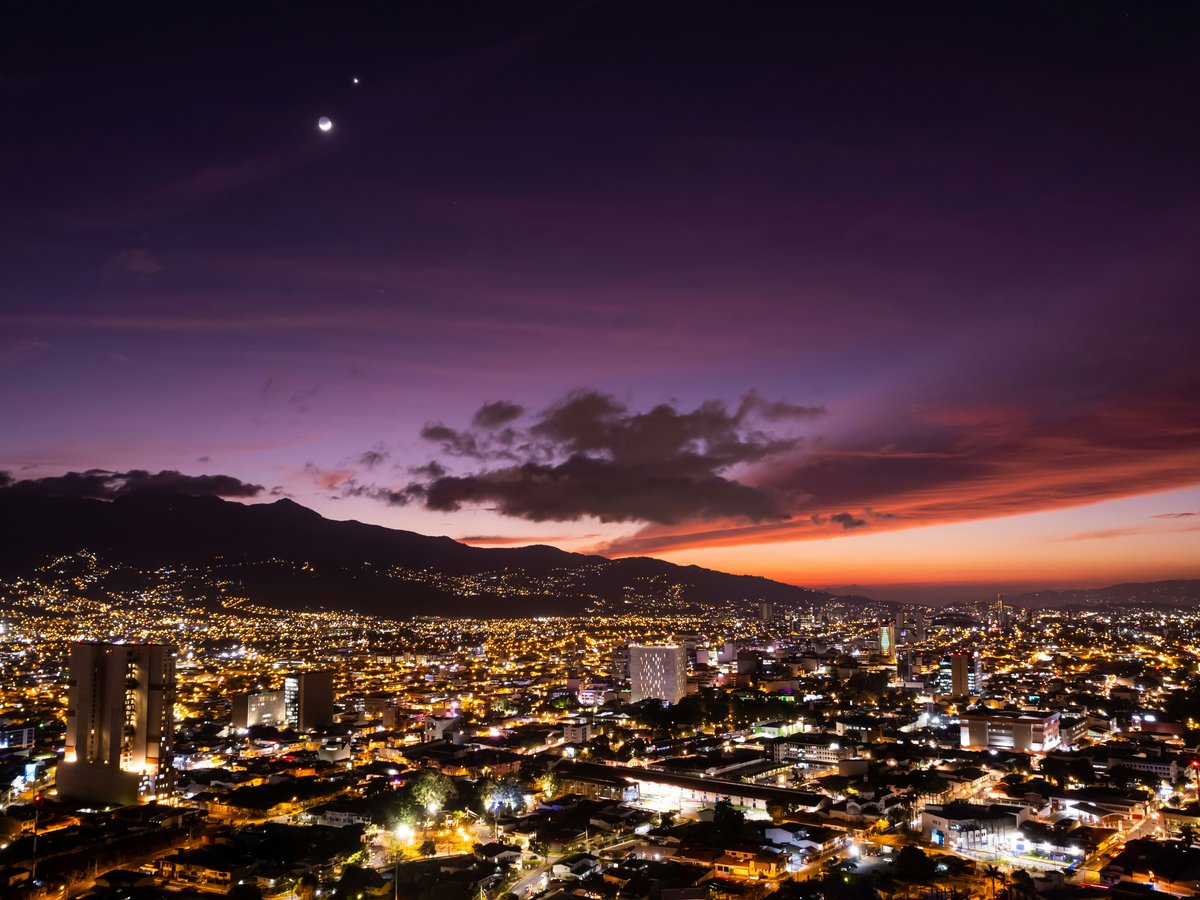
Best Time to Visit San José, by Season
San José's Central Valley swings between 23.8°C and 27.1°C across the entire year: a spread smaller than most cities see in a single week. The real trade-offs are rain, crowds, and cost. Here is the month-by-month breakdown, with one best window named for every kind of traveller.
Published · Updated
1 The Central Valley's 3.3-Degree Secret: Why Temperature Is the Wrong Question in San José
Step off the plane at Juan Santamaría and the air hits different from what you braced for. No heavy coastal wall of humidity. No tropical furnace. What touches your skin is something closer to a mild spring afternoon: except it stays that way in every month of the year.
The numbers bear this out with almost boring consistency. March, the warmest month, averages a daily high of 27.1°C. November, the coolest, still reaches 23.8°C. That is a total annual swing of just 3.3°C in daytime highs: less variation than most cities experience between a warm Tuesday and a cool Thursday in the same week. Overnight lows show even less movement: January posts the year's coldest nights at 15.7°C, while July's 17.0°C marks the warmest. The spread between the coldest and warmest nights in San José across all twelve months is a mere 1.3°C.
What does this mean staring at a booking calendar? Temperature is the wrong axis for choosing your month. December's highs of 24.6°C and August's 24.9°C would feel nearly identical standing on the same street corner. February at 26.2°C and October at 24.3°C both call for the same light jacket after dark. The thermometer never punishes you here, not during the rains, not during the dry weeks, not ever.
The trade-offs that matter are rain, crowds, and price, and those shift sharply while the mercury barely moves. December through April delivers dry skies and peak pricing. May through November brings afternoon downpours and green-season discounts. The transitions between those two worlds are where the real opportunities sit, and they are surprisingly precise: April at 26.8°C with its first rains looks nothing like October's 24.3°C during the deluge's peak, even though both fall in the wet half of the calendar.
Mind you, this steadiness is specific to the capital and its highland valley. Head to Guanacaste or the Caribbean slope and the temperature rules change entirely. This guide covers San José itself: the city where most international flights land and where the weather makes far more sense once you stop thinking in coastal-tropical terms.
The difference between San José's warmest and coolest month is 3.3°C: less than most cities see between Tuesday and Friday.
2 December Through February: Everyone Pays for the Dry Season; January Is Where the Overpaying Stops
Walk through Barrio Escalante on a January morning and the light has a quality you would not expect this close to the equator: low-angled, warm, cutting sharp shadows across café terraces while the air sits at maybe 20°C and climbing toward the day's eventual 25.2°C. The sky is scrubbed clean. This is the dry season at its most persuasive, and the tourism industry knows exactly what to charge for it.
December opens the window with average highs of 24.6°C and overnight lows around 16.2°C. Pleasant, never cold, but you will want a layer if you are out past nine. The holiday crowds are real: end-of-year travel fills hotels across the valley, and rates reflect the demand without apology. January settles into warmer days at 25.2°C while posting the year's coldest overnights at 15.7°C. That 15.7°C is genuine sweater weather by local standards: hoodies on the street, vendors selling hot chocolate along Avenida Central, a crispness to the mornings that makes the coffee taste sharper. By February the warmth builds: highs reach 26.2°C, lows hold at 15.8°C, and the city starts to feel distinctly summery even by its own relaxed tropical criteria.
The case for January over December is mostly arithmetic. December's 24.6°C highs are cooler than January's 25.2°C, but you pay a holiday premium for the privilege of slightly lower temperatures and larger crowds. By the first week of January the surge recedes, the weather warms by half a degree, and the bargaining power shifts to the guest. February at 26.2°C is warmer still: the second-warmest month after March's 27.1°C, but by then North American and European visitors arrive in numbers for the extended dry season, and the window starts to feel competitive again.
That said, do not romanticise this stretch into something it is not. Dry in the Central Valley does not mean parched. The hills stay green year-round, and even February surprises with the occasional light shower. The real difference is predictability: mornings are reliably clear, afternoons stay bright, and you can plan a full outdoor day knowing that December's 24.6°C or January's 25.2°C will hold through sunset without a washout.
3 March Hits 27.1°C and the Peak Crowds Are Gone: the Warmest and Most Underrated Window
The smell of roasting coffee carries further in March. Something about the drier air and the still mornings and the way the valley seems to hold its breath before the rains arrive: aromas from corner torrefactoras drift two, three blocks instead of the usual one. March is San José's warmest month, and at an average high of 27.1°C it is the closest this highland city ever comes to feeling properly hot.
That 27.1°C peak tells an interesting story when you hold it against the months on either side. February averages 26.2°C, so March jumps nearly a full degree in four weeks. April pulls back to 26.8°C as the first rains drag temperatures down. March sits at the apex: the tipping point between the dry season's final stretch and the green season's opening act, the last month where afternoon skies stay reliably clear across the valley.
Nights remain pleasant. March's average low of 15.9°C is barely above February's 15.8°C, so you still get the kind of overnight cooling that makes sleeping without air conditioning perfectly comfortable. Worth noting: the daily swing in March; from a high of 27.1°C down to a 15.9°C predawn low: is 11.2°C, the widest gap of the year. Morning and afternoon feel like different cities. A light layer at seven, stripped to a T-shirt by noon. You get used to the routine quickly.
For the weather-focused traveller, March tends to be the slot this dry season offers that genuinely delivers on its promise. The December and January crush has cleared. February's wave is thinning. March provides the year's highest temperatures alongside noticeably fewer visitors: the gap that budget-conscious travellers mention in forums without ever pinning down specifics. Here are the specifics: 27.1°C days, 15.9°C nights, dry skies, and a pricing curve that has not yet bottomed to green-season levels but sits well below the December peaks. May follows at 26.1°C with consistent afternoon rain, which makes March the last month that feels like uninterrupted summer.
4 April Straddles Two Seasons at 26.8°C: Book Green-Season Prices for Nearly Dry-Season Weather
There is a particular sound that marks April in the Central Valley: a low, building insect hum in the late afternoon, audible from any park bench, thickening as the first clouds stack over the western ridgeline. Then the rain arrives. Not the grey all-day soak of October, but a theatrical downpour lasting an hour or two that leaves the streets smelling of wet concrete and blooming jacaranda. April is the hinge month, and it rewards flexibility more than any other window on the calendar.
The data frames the transition cleanly. April averages a high of 26.8°C, just 0.3°C below March's peak of 27.1°C: still warm, still in the upper range for San José's year. But overnight lows step up to 16.6°C, a noticeable jump from March's 15.9°C, signalling that moisture is building in the atmosphere. That 16.6°C ties April with June for the fourth-warmest nights of the year, behind July's 17.0°C and May's 16.9°C. The mornings feel different: heavier, softer, less of that dry crispness that defines January's 15.7°C predawn air.
Here is what most visitors miss in the calculation. April's 26.8°C delivers nearly March-level warmth, and the rains still mostly confine themselves to late afternoon. Mornings and early afternoons stay clear and fully usable. The hotel industry, though, has already flipped to green-season pricing because the calendar draws the line at the first rain, not at the actual visitor experience on the ground. The gap between perceived and real weather quality works directly in your favour.
To be fair, April is not the month for every kind of trip. If your plans depend on a full outdoor day with no rain contingency, March's 27.1°C and reliably dry afternoons are the safer pick. But if you can structure around the weather (mornings out, afternoons under cover or in a museum) April's 26.8°C highs and 16.6°C nights offer genuinely comfortable conditions at rates that already reflect the green season. May at 26.1°C brings more consistent rain, so April is the last month that keeps one foot in each world.
5 May Through August: Clear Mornings at 24–26°C That Cost a Fraction of the Dry Season
Step onto a café terrace along Paseo de los Estudiantes on a July morning and you would swear the dry season never ended. Pale blue sky, air somewhere around 21°C and climbing, the valley stretching out green and sharp-edged in every direction. By two in the afternoon clouds will mass, the temperature will have topped out at July's average of 24.9°C, and the rain will come hard. But those mornings (clear, mild, carrying a faint smell of damp earth drying in the sun) are what green-season regulars keep returning for.
May opens the wet season with highs of 26.1°C and overnight lows of 16.9°C, still warmer during the day than several dry-season months. The rain is establishing a rhythm but has not reached its peak intensity. June drops temperatures more noticeably: highs fall to 24.3°C, the coolest the city feels until October matches that figure again months later. That June dip is tangible: nearly 2°C below May's warmth, and the first time since December that the Central Valley feels genuinely mild rather than warm. June's overnight low of 16.6°C matches April's figure exactly, so the sleeping weather stays comfortable.
July and August settle into a holding pattern. Both average the same 24.9°C high, making them essentially interchangeable on the thermometer. July's overnight low of 17.0°C is the warmest of the entire year: a counterintuitive distinction for a month most people file under rainy season. August's low drops to 16.4°C, a 0.6°C dip from July. The practical difference across a week-long stay: July sleeps warmer, August sleeps crisper.
The value equation across this four-month window is one clean trade. You accept afternoon rain (typically two to four hours of heavy downpour) in exchange for room rates that run well below the December-to-February peak. The weather itself is not punishing. May's 26.1°C is warmer than December's 24.6°C. July and August at 24.9°C sit just 0.3°C above December's figure. You are not roughing it; you are shifting your daily schedule around a predictable rain window and keeping the savings.
May's 26.1°C is warmer than December's 24.6°C. You are not roughing it: you are shifting your schedule.
6 September Through November Hits the Year's Floor at 23.8°C: Still Comfortable, Half the Price
Rain on corrugated tin in Barrio Amón sounds like applause: steady, rhythmic, drowning out conversation and turning every covered walkway into a dry island surrounded by vertical water. In October, that drumming is your constant companion from about two in the afternoon onward. This is the deepest trough of the green season, the three-month stretch that tests whether a traveller's rain tolerance is real or just something they claim while booking.
September holds at 24.9°C for a daily high, identical to July and August, with the same 16.4°C overnight low as August. On paper, September looks like a carbon copy of the two months before it. The practical difference is that storms tend to arrive earlier and last longer, shrinking the usable dry morning window. October matches June at 24.3°C for the joint-coolest daytime high of the year. Its overnight low of 16.1°C is the second-coldest across all twelve months, behind only January's 15.7°C. Then November drops further: 23.8°C for the daily high, the absolute floor across the entire year. November's 16.4°C lows are a touch warmer than October's 16.1°C, a minor comfort when the skies stay grey and the afternoons feel cool.
The pricing logic is simple. These are the lowest-demand months for Central Valley tourism. September at 24.9°C and October at 24.3°C are still perfectly comfortable temperatures: you would pay premiums for weather like this in Berlin or London in their own summers. But the rain shapes every decision: covered market days replace hikes, museums replace volcanoes, and the spontaneous outdoor afternoon largely disappears.
Who wins this window? Budget travellers who restructure their days around weather rather than against it. Remote workers on monthly rentals who need a productive base, not a postcard. Coffee and food enthusiasts whose interests are mostly indoors. If your trip can flex with the rain, November's 23.8°C highs and gradually clearing skies at month's end preview the dry season ahead: December's 24.6°C highs are only weeks away, and the pricing has not caught up yet.
7 The Single Best Month for Each Kind of Traveller, No Hedging, Just the Numbers
Sit in Mercado Central with a café chorreado: the Costa Rican pour-through, dark and slightly sweet, dripping through a cloth sock filter into a ceramic cup, and think about what you came here for. San José's daytime highs across the entire year range from 23.8°C to 27.1°C. Overnight lows span 15.7°C to 17.0°C. That is a city where the thermometer never makes you uncomfortable. The decision branches on rain tolerance and budget: nothing else.
For the weather-first traveller who wants dry skies and peak warmth: March. Its 27.1°C average high is the year's warmest, the rains have not started, and the December-January crowds have moved on. February at 26.2°C is the runner-up: about a degree cooler, marginally busier, but firmly in the dry window. January at 25.2°C with its 15.7°C overnight lows is the pick if you prefer crisp mornings over warm ones.
For the budget-first traveller who wants savings without suffering: late April into May. April's 26.8°C straddles both seasons and catches early green-season pricing before the discounts fully take hold. May at 26.1°C is warmer than any month from June through December and still manages afternoon-only rain patterns. The overlap of above-average warmth and below-average pricing is the window value-conscious travellers should circle.
For the long-stay visitor or remote worker: July or August. Both hit 24.9°C: comfortable, stable, predictable. July's overnight low of 17.0°C makes it the warmest month for sleeping, a quality-of-life detail that matters across a 30-day stay. August at 16.4°C overnight runs a touch cooler.
The one month to steer first-time visitors away from: December. Not because it is bad: 24.6°C days and 16.2°C nights are fine, but because the holiday premium buys weather that January delivers for less money. January's 25.2°C highs are warmer than December's 24.6°C, its 15.7°C lows are the year's crispest, and the value is better along every axis except festive atmosphere. Save December for a city where winter weather is a deciding factor.
One last thought. San José is a gateway: most visitors pass through on their way to a beach or a volcano. But match the month to your priorities and the city rewards the pause: March's 27.1°C for sun-seekers, January's 15.7°C mornings for dry-season value, July's steady 24.9°C for long-stay rhythm, November's 23.8°C floor for the deepest discounts. The weather cooperates year-round here. The only real question is what you want the rest of the trip to cost.
December's holiday premium buys weather that January delivers cheaper and a full half-degree warmer.
Last verified by automated review (v1.7.0_onboard-san-jose-flagship-2026-05-31) on . What is automated review?