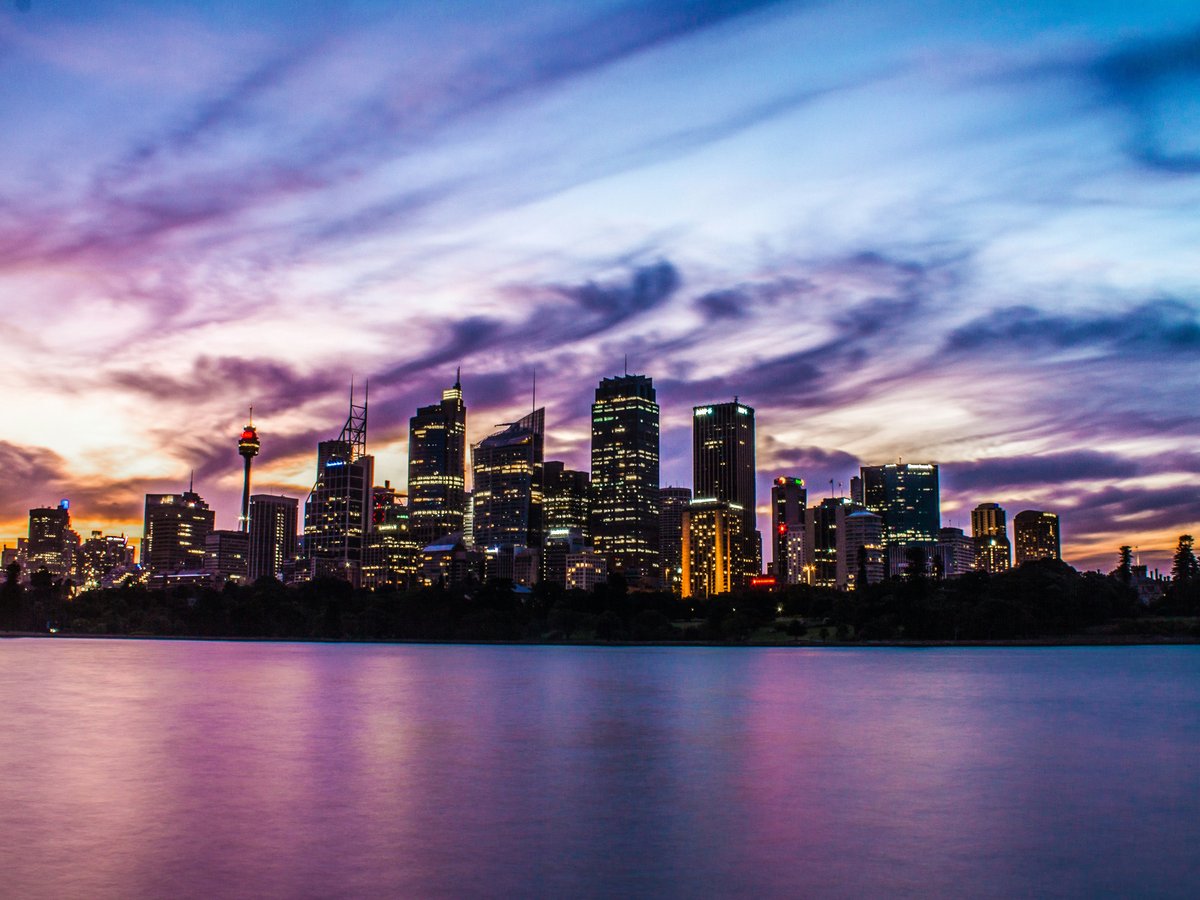
Sydney has this odd reputation as an expensive city — and fair enough, the harbour-view cocktails and bridge climbs will set you back. But here's the thing: the city's best bits tend to be the ones that cost nothing. The harbour itself is free. The coastline is free. Some of the country's strongest art collections sit behind doors that never charge admission. You can spend a full week here, walking from headland to headland, ducking into galleries, sprawling across parkland that would be gated and ticketed in most world capitals, and never once reach for your wallet. The weather helps, obviously. Sydney is fundamentally an outdoor city, and the outdoor city is yours for the taking. What tends to surprise visitors is how much of the indoor city is free too — major museums, contemporary art spaces, heritage precincts. It's a place where your budget constrains what you eat and where you sleep, but rarely what you actually do with your days.
Free attractions
-
Art Gallery of New South Wales
The permanent collection here is genuinely world-class — strong on Australian art from colonial-era landscapes through to contemporary Indigenous work, plus solid European and Asian wings. The newer Sydney Modern building, which opened in late 2022, doubled the gallery's exhibition space and sits partly underground with views across Woolloomooloo. General admission to both the original building and Sydney Modern is free. Some travelling blockbuster exhibitions carry a separate ticket, but the permanent collection and many temporary shows cost nothing. You could spend a morning here easily, and the sculpture terrace looking out toward the harbour is worth the visit on its own.
The DomainArt gallery -
Museum of Contemporary Art Australia
Right on Circular Quay, the MCA occupies a handsome Art Deco building that used to be the Maritime Services Board offices. General admission is free, and the rotating exhibitions lean toward provocative, large-scale installations — the kind of work that fills entire rooms. The rooftop café has one of the better casual harbour views in the city, and the sculpture terrace up there is free to access. Mind you, some of the ticketed exhibitions can be hit or miss, but the free floors consistently deliver.
Circular QuayArt gallery -
Royal Botanic Garden Sydney
Thirty hectares of manicured gardens wrapping around Farm Cove, right next to the Opera House. This is not some token city park — it's a proper botanical institution dating to 1816, and the collection of Pacific and Australian native species is substantial. The Calyx glasshouse hosts rotating horticultural displays, also free. Early morning is the best time: the light on the harbour through the fig trees has a particular quality, and the parrots are out in force. Mrs Macquaries Point, at the garden's eastern tip, gives you that classic postcard framing of the Opera House and Harbour Bridge together.
CBDPark and garden -
Barangaroo Reserve
Sydney's newest major parkland sits on reclaimed industrial headland at the western edge of the CBD. It opened in 2015 and still feels underappreciated by visitors. Six hectares of native plantings — banksias, lomandras, sandstone boulders — built to echo the harbour foreshore that existed here before European settlement. The waterfront promenade connects through to Darling Harbour, and there's a sense of openness and wind off the water that the more sheltered botanic gardens don't quite have. Good spot to watch ferries at dusk.
BarangarooPark and waterfront -
Hyde Park
The oldest public parkland in Australia, laid out in 1810 — so older than the Botanic Garden, though considerably smaller. The Moreton Bay fig trees along the central avenue are enormous and ancient-looking, creating this cathedral-like canopy effect that's unexpectedly atmospheric for a park wedged between office towers. The Archibald Fountain at the northern end and the ANZAC Memorial at the southern end are both free to visit. The memorial's lower hall, which reopened after a major renovation in 2018, is worth seeking out — the sculptural centrepiece is arresting.
CBDPark -
Bondi Beach
Needs no introduction, but worth stating plainly: Bondi is a free public beach with consistently good surf, reliable lifeguard patrols, and a sweep of sand that manages to feel spacious even when crowded. The southern end tends to be calmer for swimming. The pavilion building dates to the 1920s and has recently been restored. What people don't always realise is that the beach faces almost due east, so sunrise here — especially in autumn when the light goes amber — is genuinely spectacular. The water stays swimmable from about October through April, though locals push those dates in both directions.
BondiBeach -
Centennial Parklands
A 189-hectare expanse of lakes, eucalyptus woodland, and open playing fields about four kilometres southeast of the CBD. This is where Sydney goes to run, cycle, ride horses, and generally escape the harbour-centric intensity of the inner city. The Lachlan Swamp section has a boardwalk through paperbark forest that feels genuinely remote — you can hear bellbirds and see water dragons sunning on the rails. Altogether different character from the Botanic Garden, more spacious and wilder at the edges.
Centennial ParkPark -
Mrs Macquaries Point
A sandstone headland at the eastern end of the Botanic Garden, with a carved stone bench — Mrs Macquaries Chair — dating to 1810. The point itself is the viewpoint: you get the Opera House to your left, the Harbour Bridge to your right, and the full sweep of Farm Cove in between. Early morning and late afternoon light work best for photographs. It's a ten-minute walk from the Art Gallery of New South Wales, so the two pair naturally.
The DomainViewpoint -
Brett Whiteley Studio
A small, intimate space in Surry Hills where the painter Brett Whiteley lived and worked during the last years of his life. Now operated as a satellite of the Art Gallery of New South Wales, it's free to visit and tends to be quiet — you might have the place to yourself on a weekday morning. The studio has been left largely as it was, with unfinished works, paint-spattered floors, and personal objects scattered around. It's a glimpse into a creative process rather than a polished gallery experience, which is exactly what makes it interesting.
Surry HillsArt studio and gallery
Free activities
-
Bondi to Coogee Coastal Walk
Six kilometres of clifftop track connecting five beaches — Bondi, Tamarama, Bronte, Clovelly, and Coogee. The path is paved the whole way and well-signposted. Allow about two hours at walking pace, longer if you stop to swim, which you should. The section between Bondi and Bronte is the most dramatic, with sheer sandstone cliffs dropping into churning whitewater below. Tamarama is tiny and beautiful but has a fierce rip, so swim at Bronte instead if you're not confident in the surf. The Waverley Cemetery section, perched right on the cliff edge, has a strange and lovely atmosphere — Victorian headstones against an infinite Pacific horizon.
Eastern SuburbsCoastal walk -
The Rocks Discovery Walk
A self-guided wander through Sydney's oldest neighbourhood, where convict-era sandstone warehouses sit in the shadow of the Harbour Bridge. You'll find heritage plaques and interpretive panels marking the key sites, but honestly the best approach is to drift — up the narrow lanes like Suez Canal and Nurses Walk, past the old Cadmans Cottage (the oldest surviving residential building in the city, built 1816), and into the warehouses that now house galleries and shops. The textures here are good: rough-cut sandstone, worn bluestone gutters, the faint smell of coffee from a dozen cafés layered over something older and slightly damp.
The RocksHeritage walking -
Manly to Spit Bridge Walk
A ten-kilometre bushwalk that runs along the harbour's northern foreshore, connecting Manly with The Spit. This is a proper bushwalk, not a paved promenade — expect sandstone steps, narrow tracks through coastal scrub, and the occasional scramble over boulders. You'll pass Aboriginal rock engravings at Grotto Point, secluded harbour beaches (Forty Baskets Beach, Reef Beach), and stretches of dense banksia woodland where the city feels very far away. Allow four hours one way. The smell of eucalyptus oil in warm weather is thick enough to taste. Take the ferry to Manly and walk back toward the city — the bus connection from The Spit back to the CBD is straightforward.
Northern Beaches to MosmanBushwalk -
Paddington Markets browsing
Every Saturday from 10am at the Paddington Uniting Church grounds on Oxford Street. The stalls lean toward handmade jewellery, vintage clothing, and local design — it's been running since 1973, so it has a settled, community feel rather than a pop-up vibe. Free to walk around and browse, and the church grounds themselves are pleasant: big shady trees, the sound of buskers drifting between the stalls. The surrounding streets of Paddington are lined with Victorian terrace houses — wrought iron lacework balconies, narrow coloured facades — and worth a detour on their own.
PaddingtonMarket -
Circular Quay to Barangaroo waterfront walk
An easy two-kilometre stroll along the harbour foreshore, starting at the Opera House and finishing at the headland park in Barangaroo. You pass through the heart of the working harbour — ferries churning in and out, buskers along the promenade, the Museum of Contemporary Art at the quay itself — before the path quiets down through Walsh Bay's old finger wharves, now converted to theatres and apartments. The whole stretch is flat and paved, with the bridge looming above you for the second half. On a mild evening, with the last light catching the sails of the Opera House behind you, it might be the best free walk in any city.
CBD to BarangarooWaterfront walk -
Newtown street art and King Street walk
King Street in Newtown runs for about two kilometres and is lined with an ever-changing rotation of murals, paste-ups, and stencil work on building facades and laneways. The street itself is a strip of independent bookshops, record stores, Thai restaurants, and vintage clothing shops — browsing costs nothing. The feel is deliberately scruffy, student-adjacent, and less polished than the inner west has become elsewhere. Side streets like Mary Street and Church Street have some of the better mural work. The famous I Have a Dream mural near the corner of King and Church streets has been there since 1991 and is still one of the city's most photographed pieces of street art.
NewtownStreet art and walking
Free events
-
Art After Hours at the Art Gallery of New South Wales
Wednesday evenings, generally from 5pm to 9pm or 10pmThe gallery stays open late on Wednesday evenings with free programming that typically includes live music, artist talks, film screenings, and guided tours. The format shifts each week, but the consistent draw is having the galleries to yourself in a quieter, more atmospheric setting — the lighting changes, there's a glass of wine if you want one (not free, but the programme itself is), and the crowd skews younger and more social than the daytime visitors. It's been running for years and remains one of the better regular free cultural events in the city.
Art Gallery of New South Wales, The Domain -
Vivid Sydney light installations
Late May to mid-June annually, nightly from 6pmAn annual festival running roughly three weeks in late May and June. The free component is the light walk — large-scale light art projections and installations along the harbour foreshore, concentrated around Circular Quay, the Opera House, and The Rocks, with satellite installations at Barangaroo and sometimes Chatswood. The Opera House sails become a projection surface, and the crowds come out in force — expect slow going on the quay itself on weekend nights. The music and ideas programme at Vivid has ticketed elements, but the outdoor light walk, which is genuinely the main attraction, is free. Best seen after about 8pm when the projections hit full intensity against properly dark sky.
Circular Quay, The Rocks, Barangaroo, and satellite locations -
Sydney Festival free events
January annually, approximately three weeksSydney's major summer arts festival runs for about three weeks every January and includes a substantial programme of free outdoor events — concerts in The Domain and Hyde Park, circus performances, large-scale public art installations, and family events in Parramatta and other suburban hubs. The free programme has varied in size year to year depending on funding, but it's consistently strong. The Domain concerts in particular can draw tens of thousands and tend to feature headline acts. Check the specific year's programme closer to the date, as the free/ticketed split changes annually.
Various venues across Sydney, concentrated in the CBD and The Domain -
Sculpture by the Sea, Bondi
October to November annually, approximately three weeksA free outdoor sculpture exhibition installed along the coastal walk between Bondi and Tamarama, typically running for about three weeks in October or November. Over a hundred sculptures sit on the cliff edges, beach platforms, and grassy headlands — the scale ranges from intimate to monumental, and the ocean backdrop does most of the curatorial work. It draws big crowds on sunny weekends, so weekday mornings are calmer. The sculptures change entirely each year, so returning visitors get a fresh show. It's been running since 1997 and has become one of Sydney's defining cultural events.
Bondi to Tamarama coastal walk -
The Rocks Markets
Saturdays and Sundays, approximately 10am to 5pmA weekend market operating every Saturday and Sunday in the heritage precinct of The Rocks, under the shadow of the Harbour Bridge. Saturday tends toward handmade crafts, artisan food, and local design; the Friday Foodie Market (currently running on Fridays) adds a street food dimension. Free to wander and browse — the setting itself, among the sandstone warehouses with the bridge pylons overhead, is half the draw. Buskers add a soundtrack, and the smell of paella and smoked meats drifts between the stalls. It can get packed by midday on sunny Saturdays, so earlier is better.
The Rocks, George Street North and surrounds -
Taronga Zoo free ferry views
Daily, ferries run approximately every 30 minutesThis is less an event and more a permanent free experience that people overlook: the public ferry from Circular Quay to Taronga Zoo Wharf (Opal card fare applies, but the harbour transit itself is a regular commuter fare, not a sightseeing premium) gives you a twelve-minute crossing with Opera House, bridge, and harbour panorama views that rival any paid cruise. The zoo itself is ticketed, but the wharf area and the adjacent Bradley's Head walking track — which leads to a secluded harbour beach and an old naval fortification — are free. The track through the bush at Bradley's Head, with harbour glimpses through the angophoras, is one of the quieter pleasures of the lower north shore.
Circular Quay to Taronga Zoo Wharf
Where to swim for free — and which beaches locals actually prefer
Every ocean beach in Sydney is free and publicly accessible — that's a legal right, not a courtesy. Bondi gets the attention, but locals often prefer the smaller beaches nearby. Bronte has a tidal ocean pool (the Bronte Baths) that's free and calmer than the open surf — good for laps if you don't mind salt water and the occasional wave crashing over the wall. Clovelly is a narrow inlet that functions almost like a natural swimming pool, sheltered from the swell, and popular with snorkellers who spot blue gropers along the rock walls. On the northern side, Shelly Beach near Manly is small, north-facing, and genuinely sheltered — the water there is often glassy when Manly itself is chopped up. And the harbour beaches — Milk Beach in Vaucluse, Parsley Bay with its old shark net, Nielsen Park at the end of a quiet residential street — have warmer, calmer water than the ocean beaches and a completely different feel. The sand is coarser, the light bounces off the harbour differently, and you'll hear boat engines instead of surf. Worth noting: almost every beachside suburb has a free ocean pool or rock pool maintained by the local council. The Icebergs pool at Bondi is ticketed, but the Bondi Baths at the northern end are free. Mahon Pool at Maroubra, Wylie's Baths at Coogee (small entry fee, actually), McIver's Ladies Baths at Coogee (free, women and children only) — the list goes on. Sydneysiders treat these pools as a birthright, and the morning regulars will nod at you like you belong after about the third visit.
Getting around Sydney on a budget
Public transport in Sydney runs on the Opal card system — a reloadable smartcard or a contactless bank card tapped at the reader. There's a daily cap currently sitting around $17.80 on weekdays and $8.90 on Sundays, which means Sunday is the day to do your longer trips. The ferry network is the transport system's real asset for visitors: the run from Circular Quay to Manly takes thirty minutes and costs a standard Opal fare, not a tourist-boat premium, and the harbour views from the upper deck of the Freshwater-class ferries are worth considerably more than the fare. The light rail from Circular Quay to Randwick via Surry Hills is useful for reaching the eastern beaches without a bus transfer. Walking, though, is genuinely the best way to cover the inner city — the CBD is compact, and the most interesting neighbourhoods (The Rocks, Darlinghurst, Surry Hills, Newtown) are all within walking distance of each other or a short bus ride apart. One tip that locals take for granted: the bus from Bondi Junction to Bondi Beach is included in your train fare if you tap on within an hour, so the transfer costs nothing extra.
Free viewpoints that rival the paid ones
The BridgeClimb is a $300+ experience, and the Sydney Tower Eye charges admission. Both give you elevated views. But Sydney's best free vantage points are arguably better because they include the landmarks rather than standing on top of them. Mrs Macquaries Point gives you the classic Opera House and bridge framing from water level. The Pylon Lookout on the Harbour Bridge (a modest fee applies) is sometimes confused with the BridgeClimb, but the pedestrian walkway across the bridge itself is free — you can walk from The Rocks to Milsons Point on the eastern side and get harbour views that are, to be fair, not dramatically different from what the BridgeClimb offers at three hundred times the price. North Head at the entrance to the harbour, accessible by bus from Manly, gives you a sweeping view back toward the city skyline with the ocean at your back. South Head, reachable from Watsons Bay (bus or ferry), offers the reverse angle — ocean in front, harbour behind. The less obvious viewpoint: the Dudley Page Reserve in Dover Heights, a small grassy park on the cliff edge above the ocean, facing due east. At night, with the coastal suburbs lit up below and the ocean dark beyond, it's the city seen from an angle most visitors never find.
FAQ
Are the major museums in Sydney really free to enter?
The Art Gallery of New South Wales and the Museum of Contemporary Art Australia both offer free general admission to their permanent collections and many rotating exhibitions. Some special blockbuster exhibitions at the Art Gallery carry a separate ticket price, but these are clearly marked and the free galleries are extensive — you could spend hours without hitting a paywall. The Australian Museum and the Powerhouse Museum (now called the Powerhouse) currently charge general admission, so they don't qualify as free unless a specific promotion is running. The Brett Whiteley Studio in Surry Hills, operated by the Art Gallery of NSW, is free. Always worth checking individual museum websites closer to your visit, as policies do shift.
Is it safe to swim at Sydney's beaches without paying for a pool?
Yes — all of Sydney's ocean beaches are patrolled by surf lifesavers during the warmer months, roughly from late September through April, and the service is free. Swim between the red and yellow flags, which mark the safest area assessed by the lifeguards on duty that day. The flags move depending on conditions, so check their position when you arrive rather than heading to where they were last time. Rip currents are the primary hazard and are present at most beaches to some degree. If you're not a confident ocean swimmer, the harbour beaches (Nielson Park, Balmoral, Parsley Bay) and the free ocean rock pools (Bronte Baths, Mahon Pool at Maroubra) are calmer alternatives. Water temperature hovers around 18-22°C from about November through March, dropping to 15-17°C in winter.
What free things can you do in Sydney when it rains?
The Art Gallery of New South Wales and MCA are the obvious choices — both are free, climate-controlled, and large enough to fill a few hours each. The State Library of New South Wales in Macquarie Street has free exhibitions in its galleries and the Mitchell Library reading room is architecturally striking and open to the public. The Queen Victoria Building on George Street is worth wandering through just for the Romanesque revival architecture and the Royal Clock on the upper levels — browsing is free even if the shops aren't. The Strand Arcade nearby has a similar heritage-building appeal. If you're in Surry Hills, the Brett Whiteley Studio is a good rainy-day visit. And the Australian War Memorial at Hyde Park South — the ANZAC Memorial — is free, recently renovated, and quietly powerful.
How much should I budget per day if I'm only doing free activities in Sydney?
If accommodation is sorted, you can have a genuinely full day in Sydney spending only on food and transport. Opal card transport might run $8-18 depending on the day and how far you travel (remember the Sunday $8.90 cap). Food is the variable — a bakery breakfast runs $5-8, a lunchtime banh mi in Cabramatta or a kebab in Lakemba costs around $8-12, and supermarket supplies for picnic lunches at the beach can bring that down further. Realistically, $30-50 AUD per person per day covers transport, three meals, and incidentals if you're being thoughtful about it. That said, Sydney's tap water is excellent and free, and many parks have bubblers (drinking fountains), so you don't need to buy bottled water.
Are the coastal walks in Sydney suitable for all fitness levels?
The Bondi to Coogee walk is paved and well-maintained the entire way, with handrails on the steeper sections and regular beach access points where you can cut the walk short. It's suitable for most fitness levels, though there are stairs and some moderate inclines. Allow two hours at a comfortable pace. The Manly to Spit Bridge walk is longer and more demanding — ten kilometres of bush track with some rocky, uneven sections and a fair amount of up-and-down over sandstone ridgelines. It's not technical, but it's a proper half-day walk and you'll want sturdy shoes and water. The harbourside walks around Barangaroo, the Botanic Garden, and Circular Quay are flat and paved — accessible for strollers and wheelchairs for the most part, though some sections of the Botanic Garden have gravel paths.
When is the best time of year to visit Sydney for free outdoor activities?
Sydney is genuinely a year-round outdoor city, but the sweet spot tends to be March through May and September through November. Autumn brings warm days, cooler evenings, and thinner crowds at the beaches — the water is still warm from summer and the light has a softer, golden quality that photographers chase. Spring is similar but with the jacarandas blooming in late October, which turns streets in Kirribilli, Paddington, and Grafton into purple canopies. Summer (December through February) is prime beach season but also the most crowded and humid, with temperatures occasionally pushing past 35°C. Winter (June through August) is mild by northern hemisphere standards — daytime temperatures around 12-18°C — and the coastal walks are at their most dramatic with bigger swells and fewer people. Vivid Sydney runs in winter, which gives the cooler months a cultural anchor.
Last verified by automated review (v1.7.2) on May 31, 2026. What is automated review?