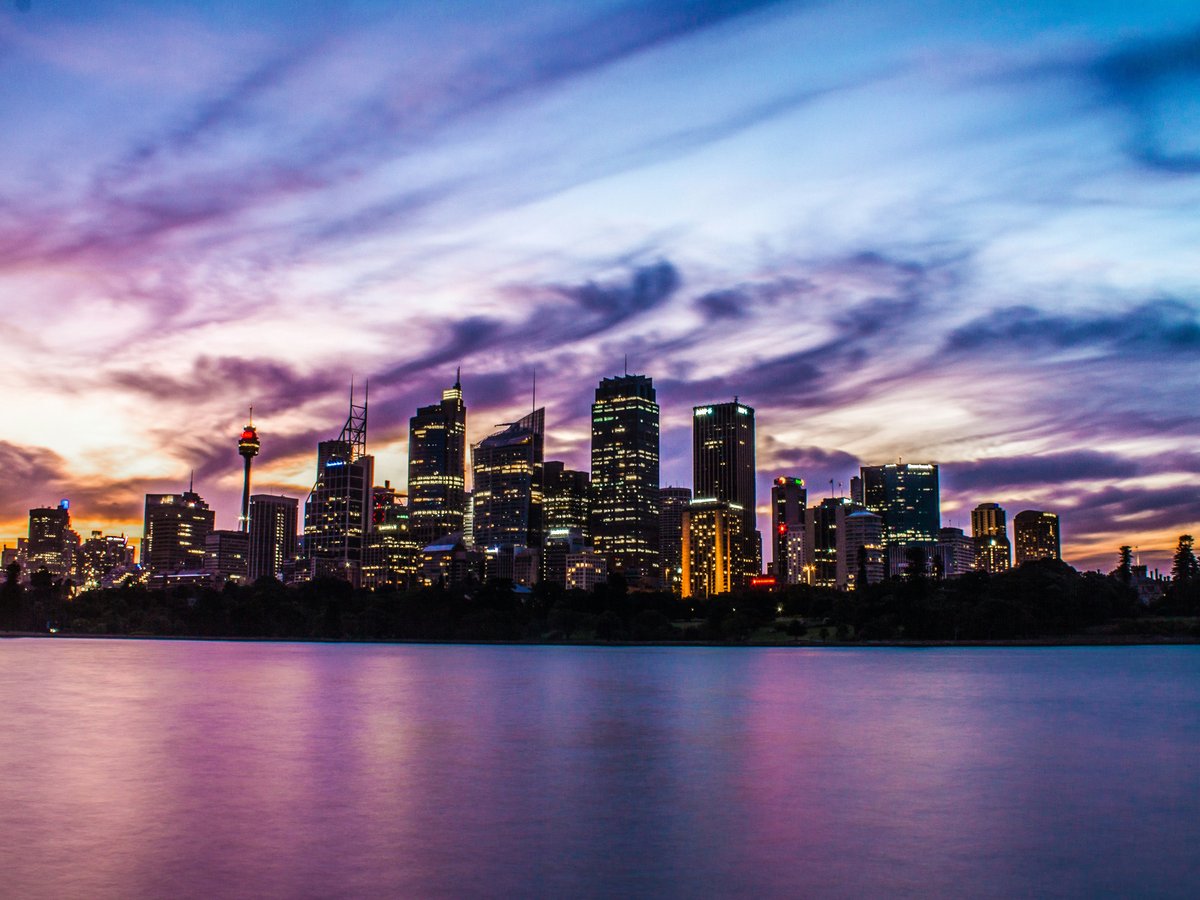
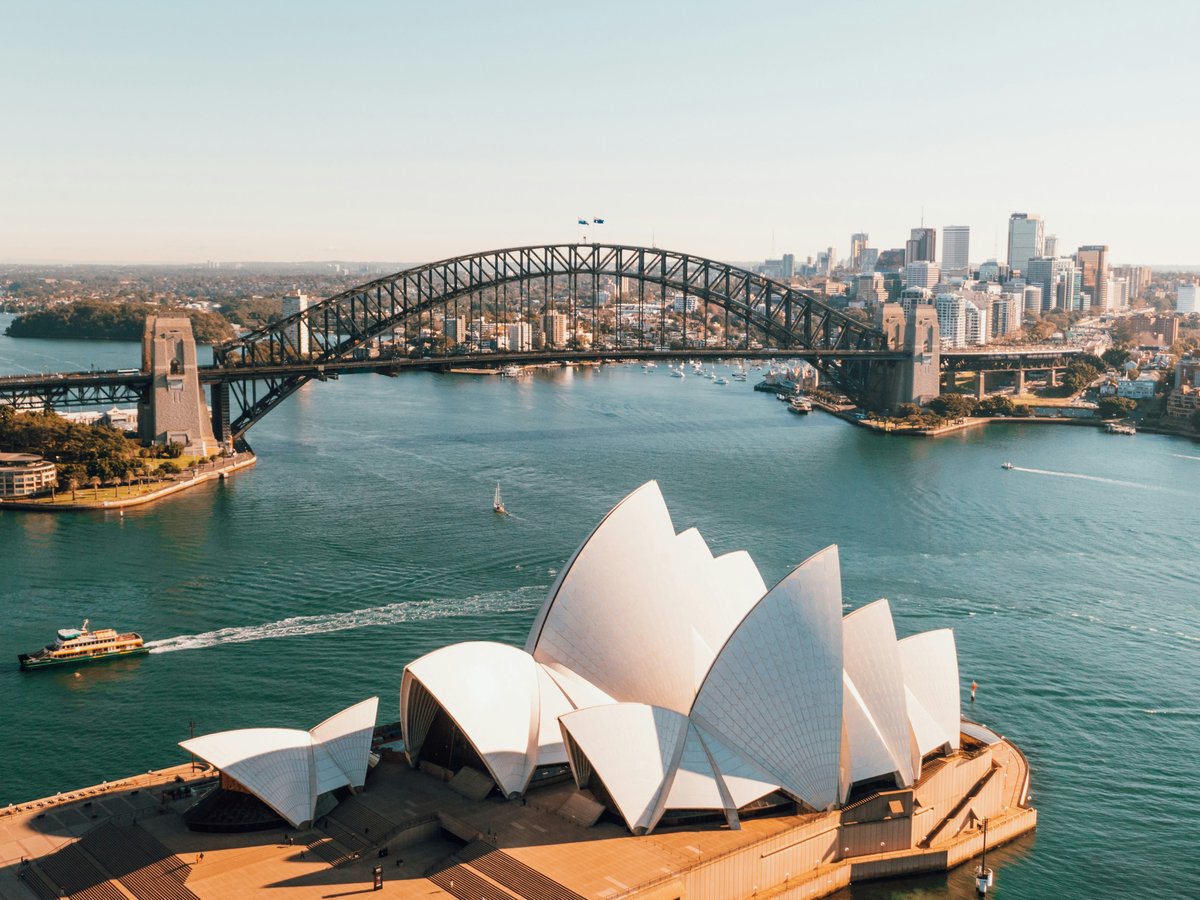
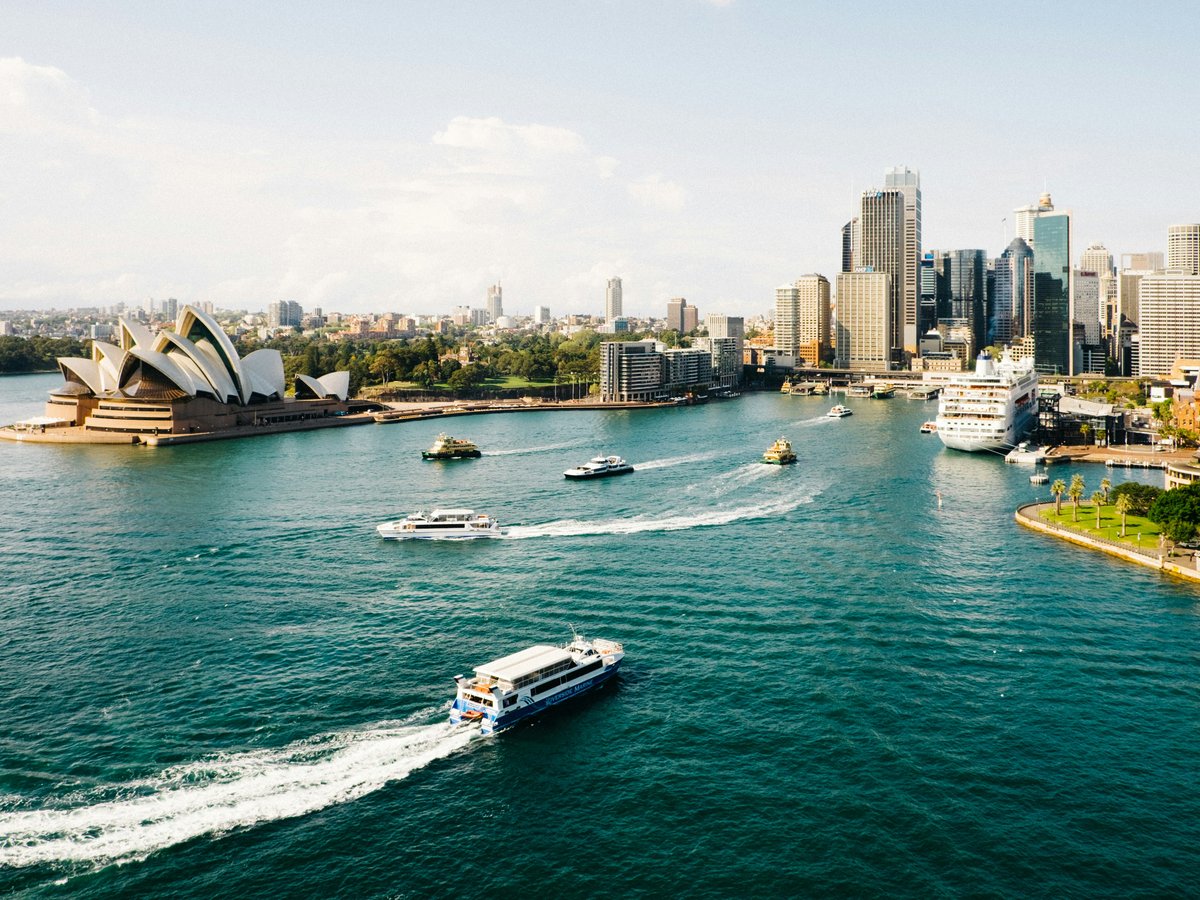
Sydney sits on one of the largest natural harbours in the world, a fact that shaped everything from the First Fleet's landing in 1788 to the placement of Jørn Utzon's opera house on Bennelong Point, its sail-shaped roof visible from ferries that still serve as commuter transport rather than tourist novelty. The city sprawls across sandstone headlands and more than seventy beaches, which means your first real decision is east or west: the eastern suburbs (Bondi, Bronte, Coogee) run along a coastal walk carved into cliff faces where you can swim in ocean pools fed by the tide before nine in the morning, while the inner west (Newtown, Marrickville, Enmore) is where the dining scene has quietly shifted, with Thai, Vietnamese, and Lebanese kitchens operating out of former pubs on King Street. Sydney's relationship with water is not decorative; it is structural. Commuters catch the Manly ferry from Circular Quay, a thirty-minute crossing that passes the Harbour Bridge and drops you at a beachside town that still feels like a separate place despite sitting within city limits. The Rocks, directly beneath the bridge's southern pylon, compresses two centuries into a few blocks of sandstone warehouses that survived demolition campaigns in the 1970s only because resident unions refused to clear them: a piece of labour history most visitors walk past without knowing. Summer means daylight past eight-thirty, water temperatures that make wetsuits optional, and smoke haze from bushfires that periodically turns the sky orange and forces a recalibration of what "good weather" means in a city that otherwise delivers it relentlessly. Winter is mild enough that outdoor dining never fully stops, though locals will insist that fourteen degrees qualifies as cold. The sheer scale catches first-timers off guard: distances that look short on a map routinely take an hour by train.
Sydney in photos
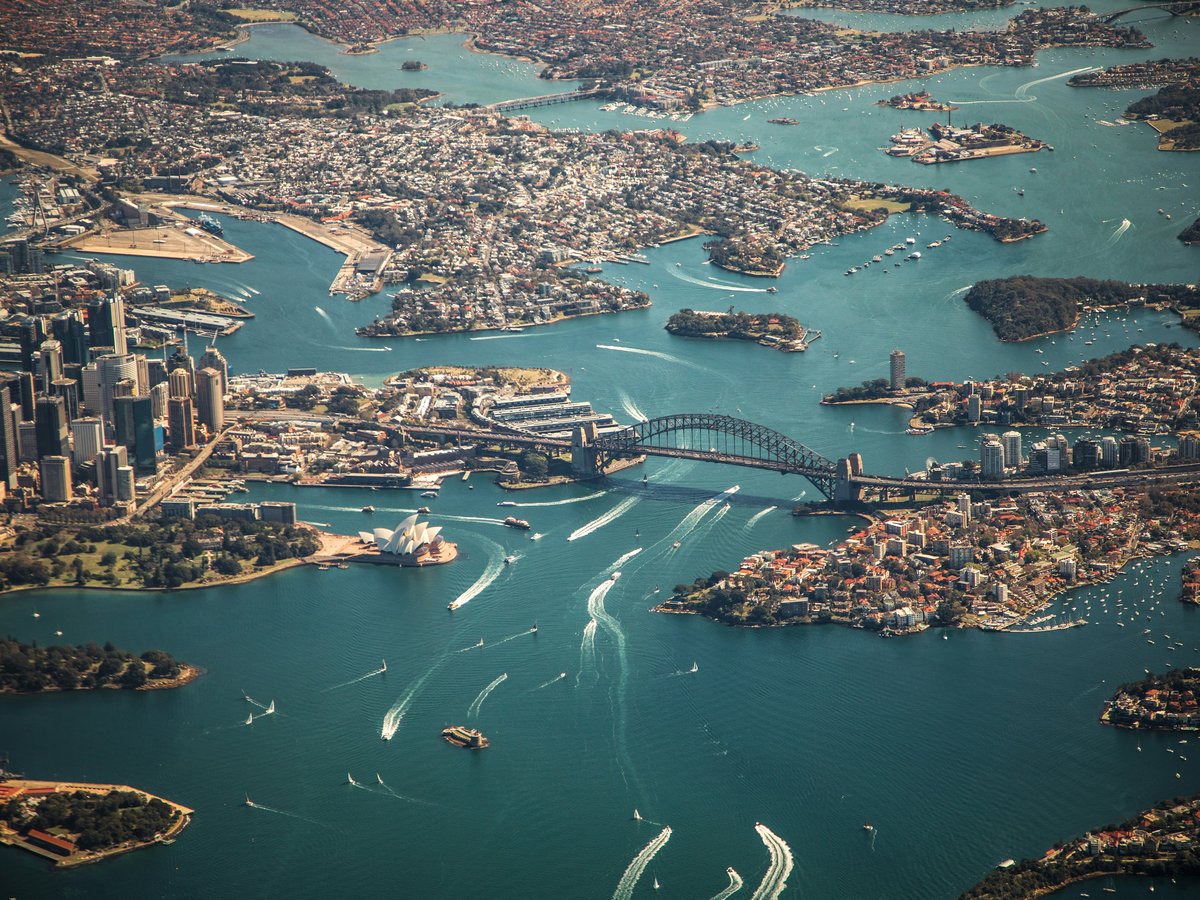
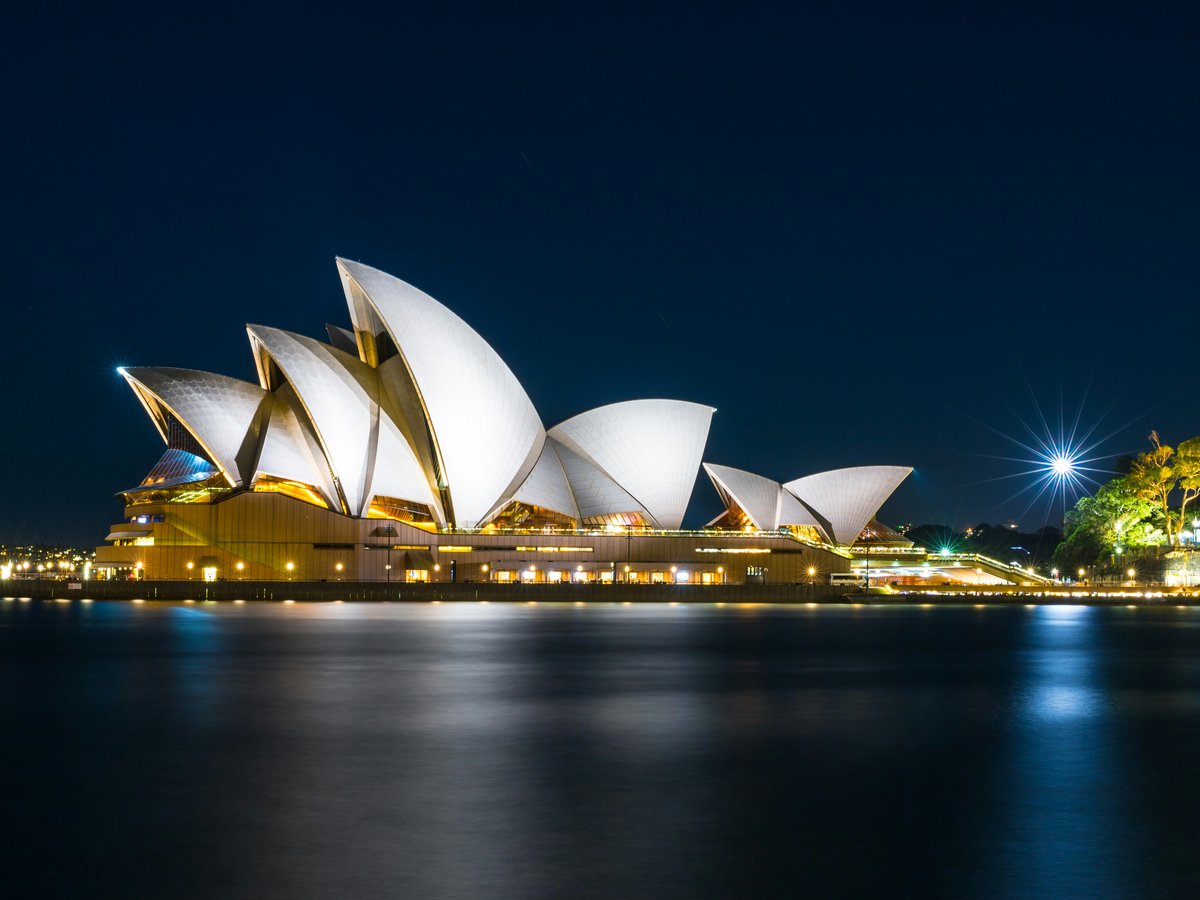
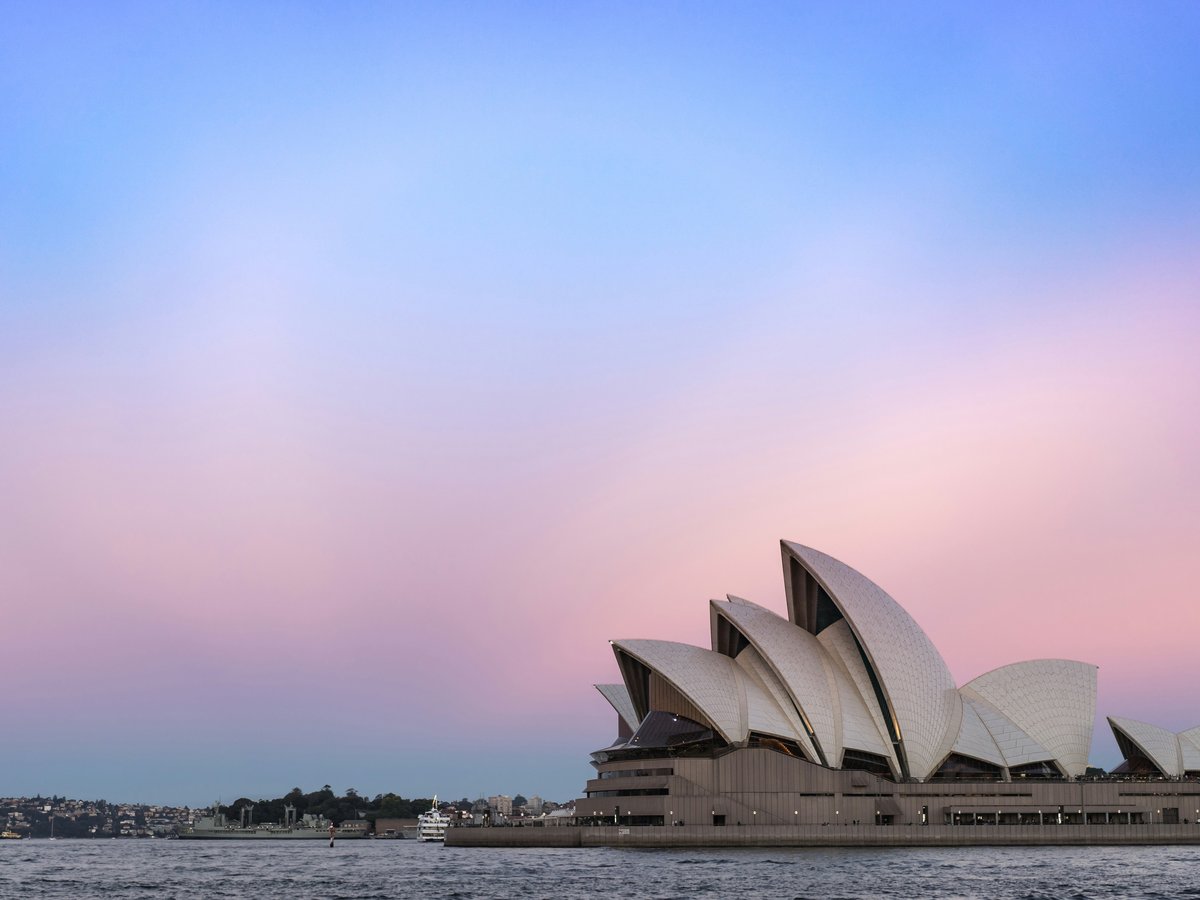
Sydney right now
Answers about Sydney
-
Airport to city
Take the Airport Link train from Sydney Airport (SYD): around $18.70 AUD ($13 USD), 13 minutes to Central station, trains every 10 minutes from 5am to midnight. After midnight, Uber or Didi from the arrivals pickup zone runs $40-55 AUD ($29-39 USD) to the CBD. Skip the taxi queue unless surge pricing is extreme.
Read the full answer → -
Best time to visit
Go in March or early April, when the sea at Bondi hits its warmest, around 22 to 23°C, the January school-holiday crowds have gone home, and harbourside hotel rates have fallen from their summer peak. November comes second, with jacarandas in Kirribilli and long evenings. Skip late December and January unless you're after the New Year's Eve fireworks and don't mind paying peak prices for them.
Read the full answer → -
Cost per day
A budget day in Sydney runs about AUD 90 (USD 65), covering a hostel dorm in Surry Hills or Glebe, capped Opal transit, and meals split between supermarket runs and Chinatown lunch plates at AUD 12-16. The free tier is strong. The Art Gallery of NSW, Museum of Contemporary Art, and Royal Botanic Gardens charge nothing.
Read the full answer → -
Cultural etiquette
Sydney runs on casual egalitarianism: nobody bows, nobody expects tips, and overdressing gets you more side-eye than underdressing. The biggest social mistake visitors make is not buying a round when it's your turn at the pub. Say 'cheers' freely, skip the formality, and swim between the red-and-yellow flags at the beach.
Read the full answer → -
Best day trips
Blue Mountains over Hunter Valley for a single day: the train from Central to Katoomba runs every hour, takes two hours, and costs under $7 AUD on Opal. Hunter Valley's wine country has no useful train to the vineyards, so one of you drives sober or you pay $180 for a tour bus. Royal National Park's coastal walk from Bundeena is the quieter alternative.
Read the full answer → -
Digital nomads
Sydney scores 6.2/10 for digital-nomad suitability (sourced from TTDI's editorial rubric). The internet is mostly reliable, and a 100 Mbps NBN plan in a fibre-connected flat will typically hold 80-95 Mbps. Rent is the problem: budget about A$6,500 (roughly US$4,500) a month. Australia has no nomad visa, so most people arrive on an ETA or eVisitor, capped at three months per entry.
Read the full answer → -
Family-friendly
Sydney scores 8.5/10 for family friendliness (see the TTDI Family-Friendliness Index). Ferries connect Circular Quay to Taronga Zoo in 12 minutes and Manly Beach in 30. Kids under 4 ride all public transport free, and the child Opal card caps at AUD 4.20 daily. The Australian Museum and Royal Botanic Gardens are free for under-16s. Strollers work on most footpaths and all ferries, though older train stations may lack lifts.
Read the full answer → -
Food culture
Sydney's food identity comes from its immigrant communities spread across suburbs most visitors never reach. The best pho is 40 minutes west in Cabramatta, not the CBD. Lebanese charcoal chicken thrives in Lakemba. Cantonese barbecue fills Haymarket. The harbour-side dining looks good, but the real eating happens on suburban train lines radiating out from Central Station.
Read the full answer → -
Getting around
Tap a contactless bank card on trains, buses, ferries, and light rail: the whole network takes it. The airport train has a steep surcharge (around A$16 per person) that catches everyone off guard. Ferries double as the best sightseeing in the city. Uber for late nights. Sydney is walkable in clusters, but the clusters are far apart.
Read the full answer → -
How to get there
Sydney Kingsford Smith Airport (SYD) sits 8 km south of the CBD: the train to Central takes 13 minutes. Direct flights run from Los Angeles (14.5 hours on Qantas, United, or Delta), Singapore (8 hours), and Auckland (3.5 hours). No nonstop from London; most connect through Singapore, Dubai, or Doha at 22-24 hours total.
Read the full answer → -
Is it safe?
Sydney is very safe for solo travelers of any age. The honest risks are phone theft along the Bondi-to-Bronte walk, UV that hits extreme by 10am in summer, and rip currents at the eastern beaches. Night trains run until midnight; NightRide buses fill the gap to 4:30am. Call 000 for any emergency.
Read the full answer → -
Layover guide
Yes. Kingsford Smith airport connects to Circular Quay by train in under half an hour. Seven hours is the realistic floor after accounting for Australian immigration, biosecurity screening, station access fees, and a conservative return buffer. Most passports need a pre-approved ETA before leaving the terminal.
Read the full answer → -
LGBTQ-friendly
Sydney is 9/10: Australia legalised same-sex marriage in December 2017, and Sydney's queer scene is among the oldest and most visible in the Southern Hemisphere. Oxford Street in Darlinghurst remains the anchor, though the scene has spread to Newtown, Erskineville, and Surry Hills. Mardi Gras alone draws 300,000+ spectators every late February or early March.
Read the full answer → -
Where locals go
Sydney locals spend Saturday mornings at Carriageworks Farmers Market in Eveleigh, Sundays at the Addison Road markets in Marrickville, and weeknights in Inner West pubs like the Courthouse Hotel in Newtown. If you're working remotely, City of Sydney libraries beat cafes: most cafes close their kitchens by 3pm and get frosty about laptops on weekends.
Read the full answer → -
Must-see
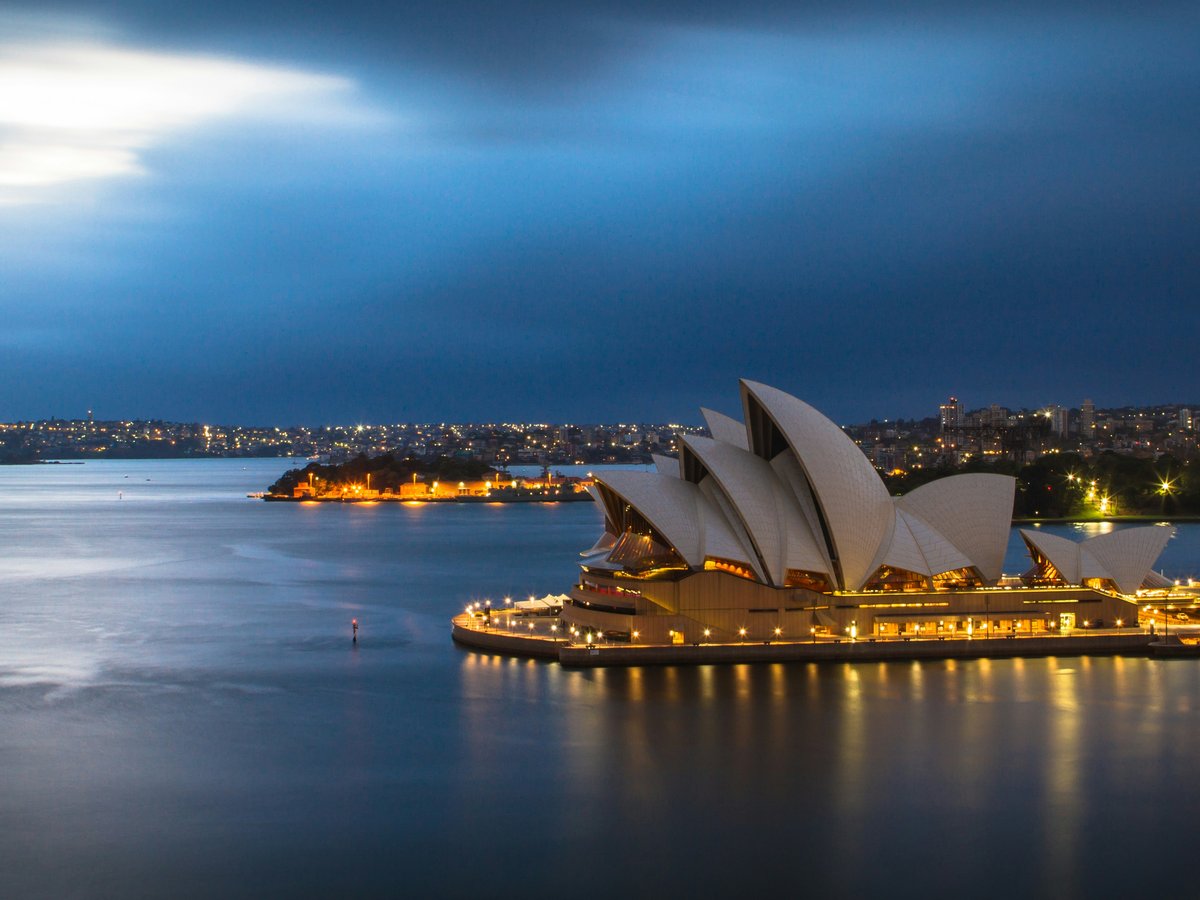
Sydney Opera House, approached on foot from Circular Quay. Not because it's obvious: because the moment you round the quay wall and those ceramic-tile sails appear against the harbour, you understand why this city orients itself around water. Go in late afternoon when the western sun turns the shells pink-gold. Free to walk around; guided tours from A$43.
Read the full answer → -
Solo travel
Sydney rates 8/10 for solo travel: safe, English-speaking, and the Opal transit card works until midnight without confusion. The single-supplement hit is real at A$180–250/night for hotels, but counter that with free coastal walks, bar-seating dining that expects solo eaters, and a hostel scene in Surry Hills and The Rocks that generates dinner plans by 6pm.
Read the full answer → -
This week
Sydney's winter weeks run on a steady rhythm, with 10°C mornings and harbour fog that clears by mid-morning. Tuesday through Thursday is the best window for the Art Gallery of New South Wales and the Australian Museum. Weekend markets at Paddington (Saturday from 10am) and Bondi (Sunday from 9am) run year-round. Sunset falls near 5:20pm, so plan dinner by 7pm.
Read the full answer → -
3-day itinerary
Day 1 covers the harbour on foot: Opera House at 8 AM, Royal Botanic Garden, Harbour Bridge walk, lunch in The Rocks. Day 2 walks Bondi to Coogee along the sandstone cliffs and finishes with dinner in Surry Hills. Day 3 ferries to Manly for Shelly Beach and North Head. About 25 kilometres of walking across the three days.
Read the full answer → -
What to avoid
Skip the Sydney Tower Eye, the waterfront restaurants on Circular Quay and Darling Harbour, and any Blue Mountains coach tour on your first day. At Bondi, stay between the red and yellow flags. Wear SPF 50 even on mild October days, and before you order on a Sunday, check the bottom of the menu for the surcharge line.
Read the full answer → -
What to pack
The UV here will surprise you: Sydney's ozone layer is thinner than most Northern Hemisphere cities, and you'll burn in fifteen minutes at Bondi even under cloud cover. Pack SPF 50+ sunscreen, a wide-brim hat, polarized sunglasses, layers for 10–25°C swings between harbour breezes and midday heat, and a Type I power adapter: Australia's three-pin plug fits nothing else.
Read the full answer → -
Where to stay
Potts Point for first-timers. You're ten minutes on foot from the CBD, three stops on the T4 line from Central Station, and surrounded by Macleay Street's restaurant row without paying Circular Quay prices. Budget $130–200 USD for a solid mid-range hotel. The Rocks if you want the harbour view and don't mind $350+.
Read the full answer →
Deep guides for Sydney
Curated lists for Sydney
accommodation
-
Best boutique hotels
Sydney spreads its accommodation across corridors that feel nothing alike. The harbour core clusters hotels between Circular Quay and the Rocks, where morning ferries and the Opera House set the pace. South of there, Chinatown and Darling Harbour trade harbour light for laneway food and convention traffic. The eastern beaches put sand within walking distance but add a bus commute to the center. West of the CBD, university neighborhoods like Camperdown offer quieter streets and lower rates. The northern shore runs from North Sydney's harbour panorama through Chatswood's retail corridor to Macquarie Park's corporate campus. Near the airport, Mascot has grown into its own precinct, and Green Square sits on the new metro line between the terminal and the city. Nightly rates in this set run from $100 at Mascot to $190 in the Darling Harbour corridor, with Trip.com ratings between 8.7 and 9.2 for the picks that carry them. What separates these neighborhoods is not quality but rhythm: some wake early with joggers and ferry horns, others stay loud past midnight with bar noise on the pavement.
See the picks → -
Best hostels
Sydney's hostel inventory stretches from the international terminal gates to a ferry ride across the harbour, and the neighborhood you choose shapes the trip more than the bed. The CBD and its southern fringe cluster the most beds near Central Station, where backpacker corridors run along George Street and spill into Chinatown's late-night dumpling houses. East of the city center, the quieter pockets around Potts Point and Woolloomooloo trade nightlife volume for tree-lined walks and harbour proximity. South of the tracks, Chippendale and Redfern offer cheaper rooms in neighborhoods that reward curiosity over convenience. Manly stands apart on the northern beaches, a ferry commute from Circular Quay that suits travelers who came for the coast, not the city. Near the airport, two adjacent suburbs serve the red-eye crowd with functional beds and shuttle-bus proximity. Across all ten neighborhoods, nightly rates for hostels and budget hotels range from $18 to $80, and the spread says more about location than quality.
See the picks → -
Best luxury hotels
Sydney's luxury hotels cluster in two patterns. Most stack indoor pools, executive lounges, and bars between George Street and the harbour. A smaller set bets on the perimeter, trading proximity for something the CBD cannot offer. The gap between a USD 202 night and a USD 711 night is wide enough to matter, and brand alone will not tell you which end earns its price. What follows is a curated list of 12 properties, each selected because it carries a detail its tier and name do not predict. The ratings, nightly rates, and amenity inventories come from Trip.com's current listings; the editorial judgements are ours.
See the picks → -
Where to stay
Sydney spreads its accommodation across harbor-front towers, beach suburbs, and transit-corridor nodes: which strip you book matters as much as which hotel. The central business district splits into distinct pockets: the harbor edge near Circular Quay, the southern fringe around Chinatown and Darling Harbour, and the Hyde Park corridor running toward the station. Beyond the center, Bondi draws coastal travelers, Mascot serves the airport, and satellite hubs at Macquarie Park and North Sydney offer corporate rates a bridge or a train ride from the Opera House steps. Price tiers overlap considerably; a $27 hostel bed at Central Station and a $328 harbor-view suite sit within walking distance of each other. The right neighborhood depends less on budget than on what you want outside the lobby door.
See the picks →
attractions
-
Best free attractions
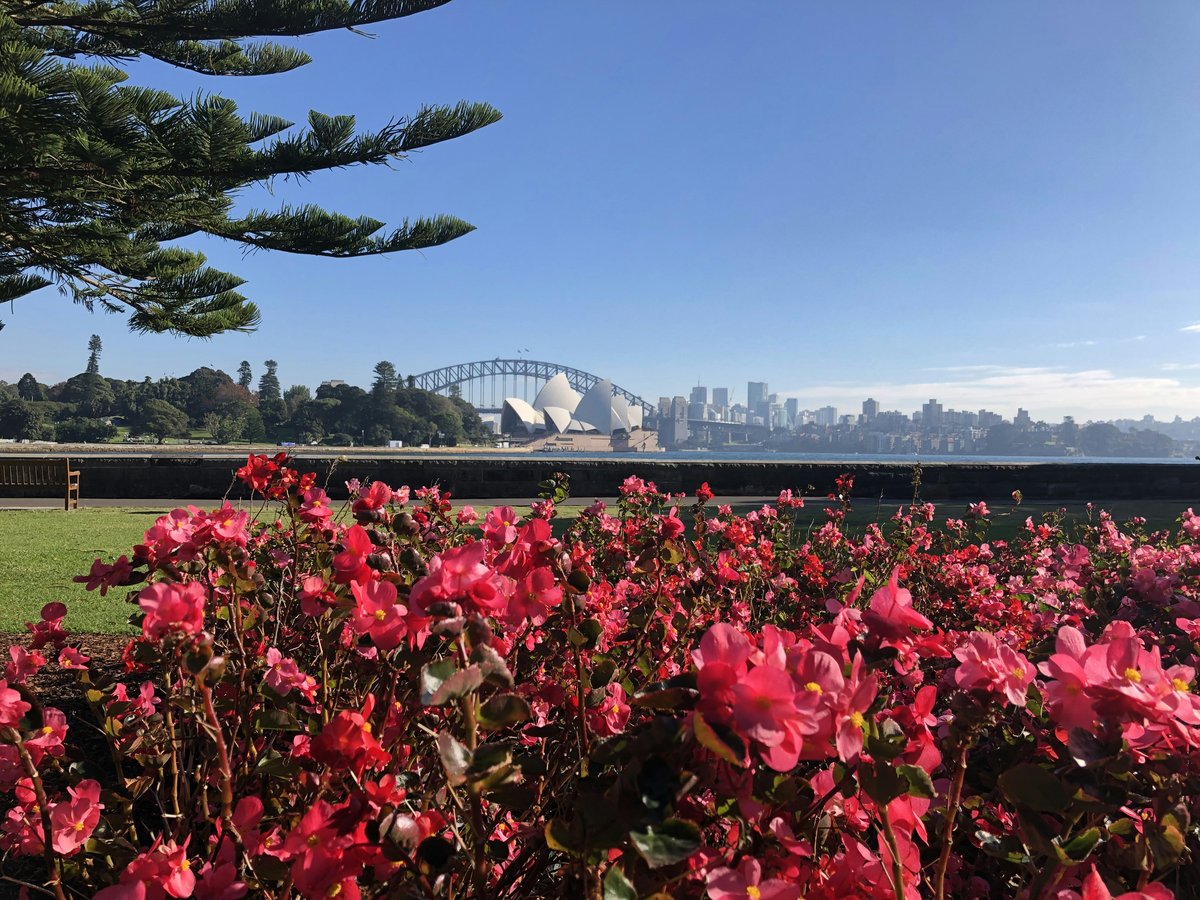
Sydney's best free hours are spent outside, and everything here is built around open ground: botanic gardens, city parks, and national parks that ask for your time rather than your wallet. Some go back a long way. Hyde Park dates from 1810 and the Royal Botanic Gardens from 1816, while the Chinese Garden of Friendship is newer, opening in 1988, as is Lane Cove National Park, which dates from 1992. Several are protected on the State Heritage Register. The range runs from small city parks, Wynyard Park on York Street among them, good for a quiet lunch, to national parks in New South Wales that need a whole day. This list is for the early riser, the long walker, and the visitor who wants a break from the city without leaving it. Read it as a set of moods: pick the one that matches your day.
See the picks → -
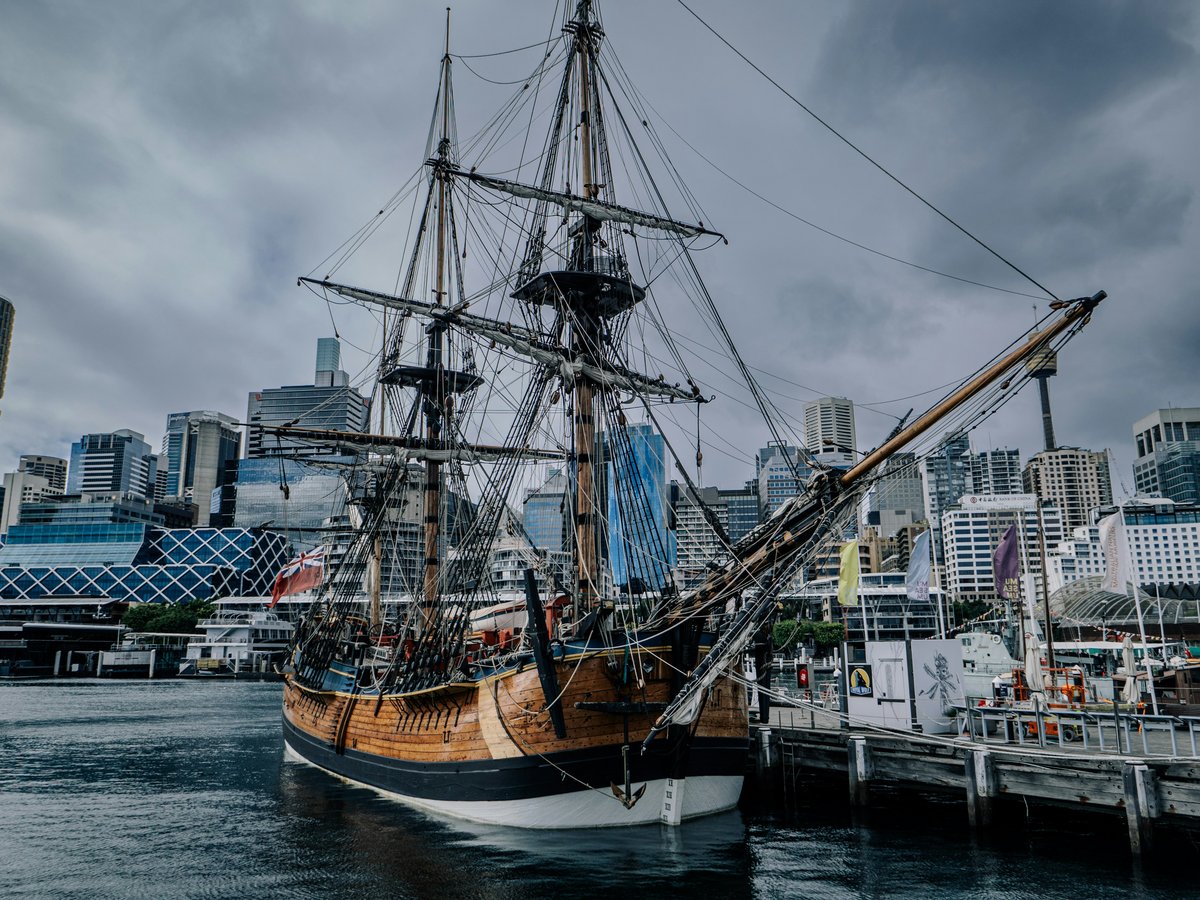
Best museums
Sydney's museums argue for the city rather than merely display it. The collections here range from the deep-time natural history of a continent to the convict ledgers that opened the colonial chapter, from a working harbour's maritime spine to art galleries that treat contemporary practice as a civic obligation. Several of the buildings are themselves the exhibit: a Georgian barracks on Macquarie Street, a Colonial Regency house above Elizabeth Bay, a mint that predates the federation. Others are purpose-built civic institutions, publicly funded and free to enter on their standing collections. Together they map the city's arguments with itself, about First Peoples and settlement, about science and applied craft, about war and remembrance, about what a harbour town owes its own past. The 12 that follow are grouped for a visitor with a week: two natural-history and science anchors, the harbour trio at Pyrmont, Circular Quay and Millers Point, the sandstone quartet on Macquarie Street, and the domestic and memorial rooms that fill the gaps. Skip the packaged bus tours; a museum day here is a walking day, and the walks between them are half the point.
See the picks → -
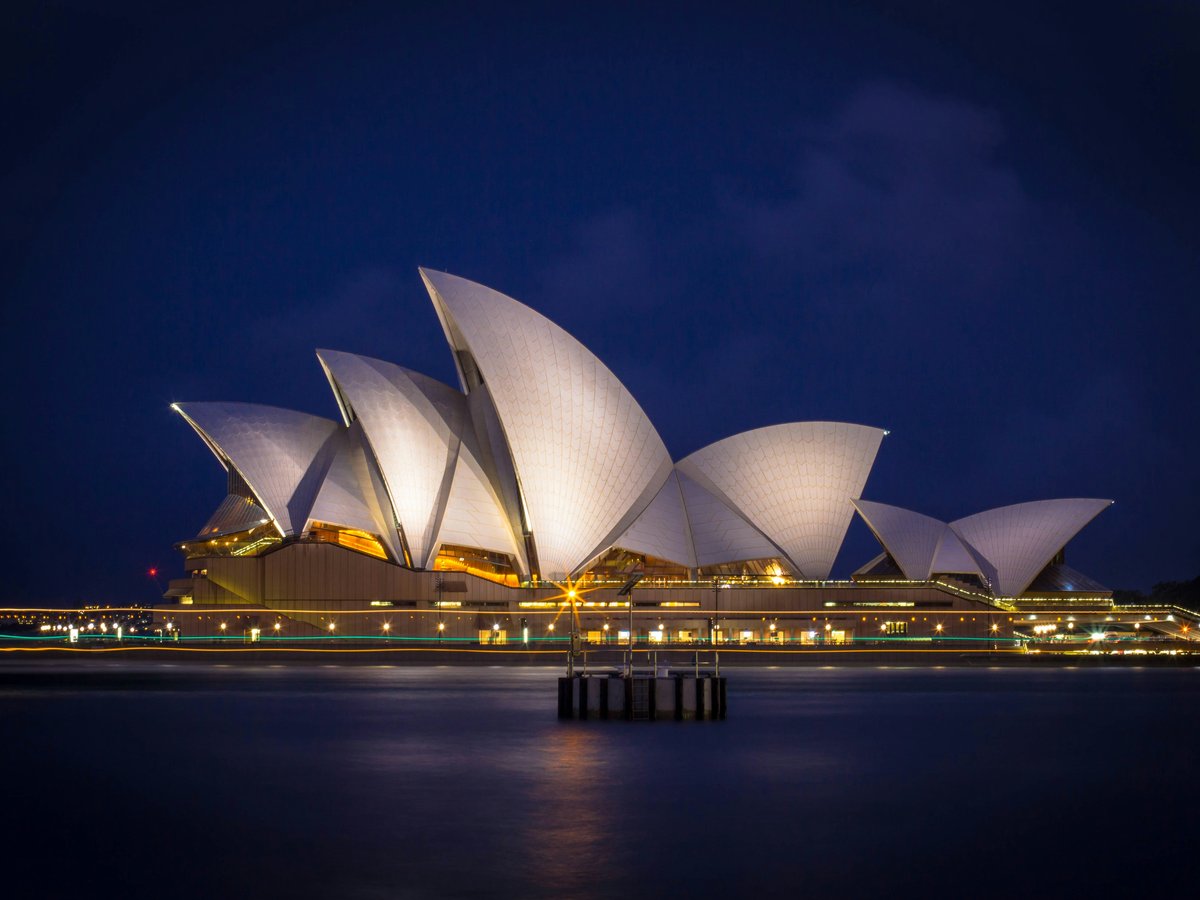
Must-see attractions
Sydney's must-sees are, for the most part, buildings that still earn their keep: a multi-venue performing arts centre, a bridge across the harbour, an Anglican parish church in the inner city, a fountain in Hyde Park, and a site that works as both memorial and museum. We've kept this list to places where something happens at the address, not places that look good in photographs and do little else. It runs from a UNESCO World Heritage Site out to a mosque at 65-67 Wangee Road, with a Catholic church out in Randwick. Most stops fall in the 2000 postal area, and several sit on the State Heritage Register. This is a list for visitors who would rather buy a ticket, sit through a service or walk a crossing than tick off a skyline. Take the order loosely, and give the quieter entries the same hour you would give the famous ones.
See the picks →
food
-
Best cafes
Sydney's coffee culture is not a scene you visit; it is a working infrastructure. The city runs on a short, dense weekday ritual: 07:00 open, 15:00 close, a flat white in a keep-cup, a piece of sourdough eaten standing, and the twelve rooms below are the ones that do it with conviction. Skip the harbour-view chains that charge you for the postcode; the cafes that matter here are wedged into terraces in Surry Hills, Chippendale, Redfern and Potts Point, staffed by people who know their regulars' orders and their beans' farm of origin. Some are pastry-first, some are all-day brunch, one is Middle Eastern at 06:00, one bakes the bun everyone else in the neighbourhood copies. What they share is a refusal to perform: no gimmicks, no signature latte art on Instagram, just the coffee, the room, the hours, the phone number, and a door that opens when it says it will. Read this as an operator's map of where the city eats breakfast: twelve addresses, twelve reasons, in rank order.
See the picks → -
Best restaurants
Sydney's CBD eats better than its reputation suggests. Between Martin Place and King Street Wharf, a compact grid of laneways and Georgian arcades hides kitchens doing serious work across a dozen cuisines: a Japanese counter on the financial spine, a Malaysian kopitiam on York, a Merivale brasserie in a converted piano showroom, an Indonesian sambal specialist off Kent. The list below sticks to the walkable core between roughly George, Kent, Sussex and Clarence: twelve rooms you can string into a week without leaving the 2000 postcode, or into a single ambitious day of grazing. It leans on OpenStreetMap-verified addresses, phone numbers and hours; the opinions are mine. What Sydney has, more than any headline chef, is depth in the middle: neighbourhood Chinese that stays open past midnight on weekends, Indian vegetarian that runs every day of the week, French bistro cooking in a laneway that most visitors walk past. That is the shape of this list, not the harbour-view splurge, but the working city's dinner.
See the picks →
Browse by traveler type
- For foodies
Sydney for foodies
- For families with kids
Sydney for families
- For digital nomads
Sydney for digital nomads
- For solo travelers
Sydney for solo travelers
- For couples
Sydney for couples
- For budget travelers
Sydney on a budget
- For luxury travelers
Sydney for luxury travelers
- For first-timers
Sydney for first-time visitors
Book experiences in Sydney
 Free cancellation
 Blue Mountain Small Group Tour All Inclusive
Day trip: 10 hours, free cancellation.
via Viator Free cancellation
 Blue Mountains Day Trip from Sydney Including Scenic World
Day trip: 10 hours, free cancellation.
via Viator Free cancellation
 Sydney The Rocks Guided Walking Tour
City tour: 1.5 hours, free cancellation.
via Viator Free cancellation
 Blue Mountains Day Tour Including Parramatta River Cruise
Day trip: 10 hours, free cancellation.
via Viator Free cancellation
 Blue Mountains authentic tour Scenic World waterfalls lookouts
Day trip: 9.5 hours, free cancellation.
via Viator Free cancellation
 WILD Wombat and Kangaroo Day Tour, All Inclusive
Day trip: 10.5 hours, free cancellation.
via Viator Free cancellation
 Sydney Whale-Watching Cruise Including Lunch or Breakfast
Cruise: 4 hours, free cancellation.
via Viator Free cancellation
 Sydney Harbour Sightseeing Cruise Morning or Afternoon Departure
Cruise: 1.5 hours, free cancellation.
via Viator Free cancellation
 Taronga Zoo Entry & Return Ferry - Sydney Harbour
Day trip: free cancellation.
via Viator Free cancellation
 Small Group: Blue Mountains with Zoo, Koala Photo & Scenic World
Day trip: 10.8 hours, free cancellation.
via Viator Free cancellation
 Chef-Led Hunter Valley Gourmet Food and Wine Day Tour from Sydney
Day trip: free cancellation.
via Viator Free cancellation
 Blue Mountains Small Group Tour with Waterfall Walk & Fresh Lunch
Day trip: 10.5 hours, free cancellation.
via ViatorBrowse by interest
Find a flight to Sydney
Live fares to Sydney appear here once cookies are accepted.
Last verified by automated review (v1.7.2) on . What is automated review?