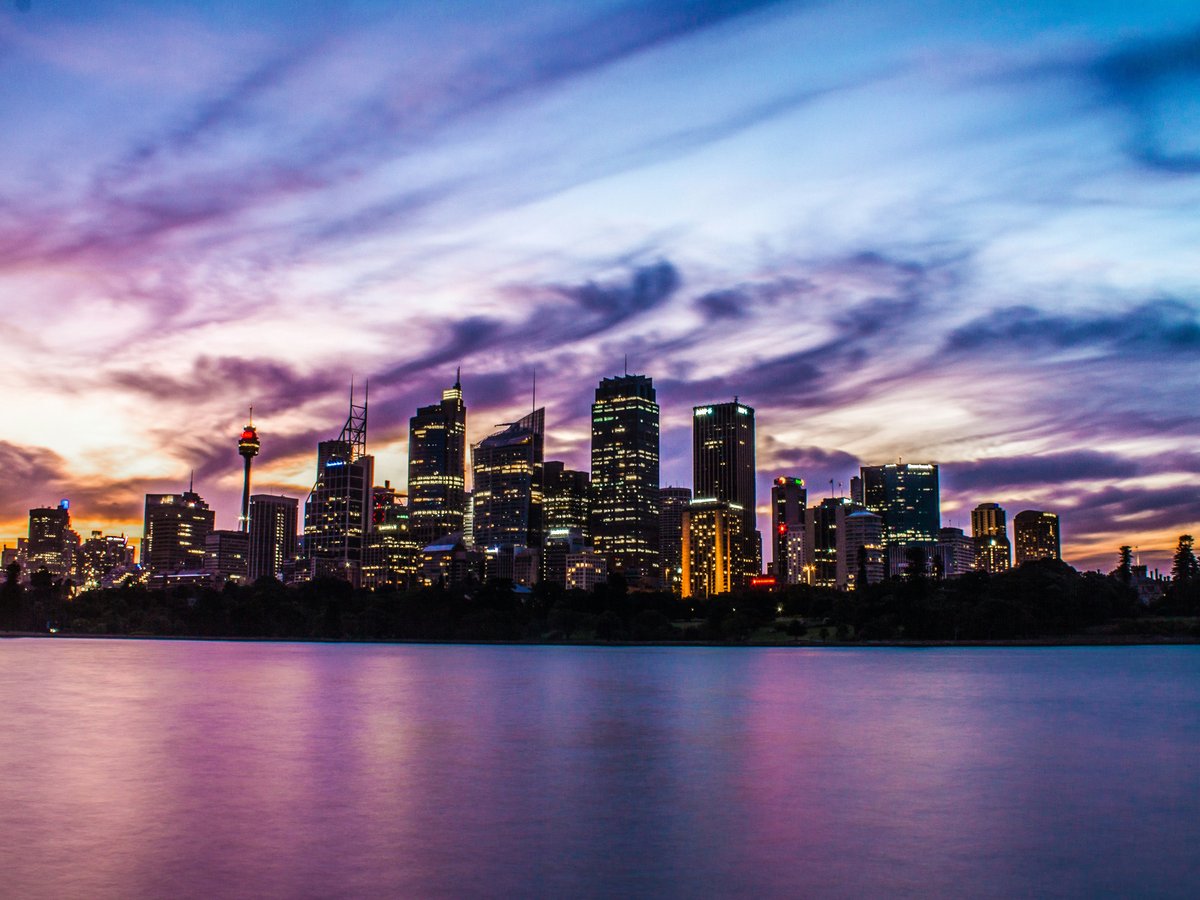
Sydney sits on a stretch of coast where sandstone cliffs drop into the Pacific and bushland creeps right up to the suburban fringe. It's a city that never quite decided where the wilderness ends and the pavement begins, which is exactly what makes it work for anyone who likes being outside. The harbour carves deep into the landscape, creating dozens of coves and headlands, while national parks press in from the north and south. You can be standing in the CBD at lunch and swimming in a rock pool by two o'clock. The climate cooperates most of the year, though summer humidity and UV will humble you fast if you're not prepared. Worth noting: even locals sometimes underestimate the sun here. The ozone layer is thinner over Australia than most places, and a December afternoon can cook you in under twenty minutes without sunscreen. That said, the temperate winters (dry, clear, often around 17°C) make Sydney one of the few cities where outdoor season genuinely runs year-round.
Outdoor activities
-
Coastal Rock Climbing at Lindfield Rocks and Balancing Rock
Sydney's sandstone geology creates some surprisingly good climbing. The Lindfield Rocks area in Lane Cove National Park has routes ranging from beginner top-ropes to more technical leads. The rock tends to be grippy when dry but gets slippery fast after rain: sandstone absorbs water and weakens, so experienced local climbers generally avoid it for a day or two after any serious downpour. You'll find a small but dedicated community out there on weekday mornings. Balancing Rock near the Spit Bridge is another spot, though access can be fiddly at high tide.
- Difficulty
- Beginner to intermediate depending on route
- Duration
- Half day
- Best season
- Autumn (March–May) for dry rock and mild temperatures
-
Mountain Biking in Manly Dam Reserve
Manly Dam has been a go-to for Sydney mountain bikers for years. The trail network runs about 12 km through coastal scrub and sandstone ridges above the dam itself. Some sections get technical: exposed rock, off-camber roots, a few drops that'll test your nerve. The Koorool Trail loop is probably the most ridden. It can get crowded on weekend mornings, so showing up early helps. Mind you, the trails are shared-use in places, so keep an eye out for walkers. After rain the clay sections turn to grease.
- Difficulty
- Intermediate; some advanced sections
- Duration
- 1.5–3 hours depending on route
- Best season
- Year-round, but autumn and winter offer drier trails and cooler riding
-
Stand-Up Paddleboarding on Sydney Harbour
Paddling across the harbour at dawn, before the ferries start churning the water, is one of those quietly spectacular things. Several operators rent boards from Rose Bay, Manly, and Balmoral Beach. The harbour is generally sheltered, but wind can pick up sharply in the afternoon, especially in spring. Stick to the coves if you're a beginner: Balmoral is calm almost always. More confident paddlers sometimes cross from Rose Bay toward Shark Island, though you need to be aware of ferry routes and the current that runs through the heads.
- Difficulty
- Easy to moderate depending on conditions
- Duration
- 1–2 hours
- Best season
- October through April, early mornings before the wind builds
-
Abseiling and Canyoning in the Blue Mountains
The Blue Mountains, about 90 minutes west of the CBD by car, have some of the best canyoning in the country. Empress Canyon near Wentworth Falls is a classic: cold water, dark narrows, a couple of short abseils into pools. Claustral Canyon is more committed: full-day, genuinely remote, and requires solid rope skills. The water is cold even in summer, maybe 12–14°C in the shaded slots. Commercial operators run guided trips out of Katoomba for beginners. Going unguided requires canyoning experience, proper gear, and a realistic assessment of your fitness.
- Difficulty
- Moderate (Empress) to advanced (Claustral)
- Duration
- Full day including travel
- Best season
- Late spring through early autumn (November–March) for tolerable water temperatures
-
Surf Lessons at Maroubra or Cronulla
Sydney has dozens of surf breaks, but for learning, Maroubra and Cronulla tend to offer the most forgiving conditions. Maroubra's south end has a sand-bottom break that works on smaller swells, and several surf schools operate right off the beach. Cronulla has a gentler vibe and slightly warmer water thanks to its southern exposure. The locals at Maroubra can be territorial at the main break, so as a learner, stick to the designated lesson areas. Board rental runs around $25–35 for two hours at most places along these beaches.
- Difficulty
- Beginner-friendly at the right breaks
- Duration
- 2-hour lesson or half-day session
- Best season
- Autumn (March–May) has clean swells and manageable water temperatures around 20–22°C
-
Sea Kayaking from Bundeena to the Royal National Park Coast
Launching a kayak from Bundeena and paddling south along the Royal National Park coastline is a proper adventure. The sandstone cliffs rise straight out of the water, and you'll pass sea caves, small beaches only reachable by boat, and (if conditions are right) pods of dolphins working the current. The paddle to Wattamolla and back is roughly 16 km return. It's exposed ocean, so you need calm conditions, a sea kayak (not a recreational sit-on-top), and the fitness to handle swell. Guided trips are available from several operators in Cronulla and Bundeena.
- Difficulty
- Intermediate to advanced; ocean swell experience required
- Duration
- 5–7 hours return to Wattamolla
- Best season
- November through March, on days with light winds and small swell
Day hikes
-
Bondi to Coogee Coastal Walk
Probably the most walked trail in Sydney, and for good reason. The 6 km path follows the cliff tops from Bondi Beach south through Tamarama, Bronte, and Clovelly to Coogee. The sandstone is sculpted by salt wind into shapes that look almost deliberate. You'll pass the Bronte ocean pool, the Waverley Cemetery perched right on the cliff edge, and Gordons Bay, which is calm enough for a mid-hike swim. It gets crowded (particularly the Bondi end on weekends) but early morning or late afternoon thins the traffic. The path is paved or well-formed throughout.
- Difficulty
- Easy; mostly flat with some stairs
- Duration
- 2–2.5 hours one way without swimming stops
- Best season
- Year-round; autumn mornings are particularly good for light and fewer crowds
-
Spit Bridge to Manly Walk
A 10 km trail that strings together harbour beaches, headlands, Aboriginal engravings, and patches of bushland that feel remote despite being surrounded by suburbs. The Grotto Point engravings (whale and fish figures carved into rock platforms) are easy to miss if you're not looking. The trail undulates constantly: down to a beach, up over a headland, repeat. Forty Baskets Beach about two-thirds through is a good rest stop. You finish at Manly, where the ferry back to Circular Quay makes the logistics painless. Some sections are sandy and can be slippery.
- Difficulty
- Easy to moderate; well-marked but hilly
- Duration
- 3–4 hours one way
- Best season
- Autumn through spring; summer heat on the exposed headlands is punishing
-
Grand Canyon Track, Blue Mountains
Not the American one: this is a 6.3 km loop near Blackheath that drops into a narrow sandstone canyon thick with ferns, mosses, and the sound of trickling water. The track descends steeply via metal staircases into the canyon floor, where overhanging rock ledges create natural shelters that were likely used by the Gundungurra and Dharug peoples. It's cool and damp down there even on hot days. The climb back out on the Evans Lookout end is the hardest section. Footing can be tricky when wet: the metal grates get slippery.
- Difficulty
- Moderate; steep sections and uneven surfaces
- Duration
- 3–3.5 hours for the loop
- Best season
- Spring (September–November) when the ferns are at their greenest and water flow is steady
-
The Coast Track, Royal National Park
A 26 km point-to-point trail from Bundeena to Otford that runs along sandstone cliffs above the Tasman Sea. Most people split it over two days with a camp at North Era, but fit hikers do it in one long push. The trail passes through heath, along clifftop platforms, and down to several beaches: Marley, Wattamolla, Garie. There are stretches where the only sounds are waves and wind. The track has been improved in recent years but still has rough, rocky sections and some exposed clifftop walking that demands attention. Water is scarce on the trail, so carry at least 3 litres.
- Difficulty
- Hard; long distance, elevation gain, exposed sections
- Duration
- 8–10 hours one way, or two days with camping at North Era
- Best season
- Autumn (March–May) or spring (September–November); summer heat and UV on the exposed cliff sections is serious
-
West Head to Resolute Beach, Ku-ring-gai Chase National Park
A 6 km return walk that drops from the West Head lookout down through dry sclerophyll forest to Resolute Beach on Pittwater. The lookout itself has long views north to Barrenjoey Head and the Central Coast. The descent is steep (about 200 metres of elevation loss over a short distance) and the return climb will remind you of every beer you've had recently. The beach at the bottom is small, secluded, and backed by bush. Swimming is generally safe in the sheltered Pittwater side. National park entry fees apply for vehicles.
- Difficulty
- Moderate; steep descent and return climb
- Duration
- 2.5–3 hours return including time at the beach
- Best season
- Year-round; winter days are crisp and the bush is less crowded
-
Figure Eight Pools Walk, Royal National Park
The pools themselves (wave-eroded rock formations on the coastal platform near Burning Palms Beach) have become enormously popular via social media, and that popularity has caused problems. The walk from Garawarra Farm car park is about 4 km each way. The pools are ONLY safely accessible at low tide and low swell: waves wash across the platform unpredictably, and people have been seriously injured and killed here. Check the tide charts and Bureau of Meteorology swell forecast before going. If the swell is above 1.5 metres, do not attempt access to the rock platform. This is not a casual walk.
- Difficulty
- Moderate trail, but dangerous rock platform access
- Duration
- 3–4 hours return
- Best season
- Autumn and winter when swells tend to be smaller and more predictable; always check conditions on the day
Water activities
-
Ocean Pool Swimming at Bronte, Coogee, and Icebergs
Sydney's ocean pools are one of those things that seem obviously good once you've tried them. Saltwater, wave-fed, free in most cases. Bronte Baths sit right at the south end of Bronte Beach: the pool fills and flushes with the tide, so the water is genuinely ocean water at ocean temperature. The Coogee Women's Baths (women and children only) are small and intimate against the rocks. And then there's the Icebergs Club pool at the south end of Bondi, which charges entry but gives you a lap pool cantilevered over the ocean. In winter, the Icebergs swimming club members do their weekly swims in unheated water. Tough crowd.
- Difficulty
- Easy; suitable for all swimmers
- Duration
- As long as you like
- Best season
- Year-round; the ocean pools are usable in all seasons, though winter water drops to around 16–17°C
-
Kayaking on Middle Harbour from The Spit
Middle Harbour is the quieter arm of Sydney Harbour: fewer ferries, more bushland on the shore, the occasional sea eagle overhead. You can rent kayaks from The Spit and paddle upstream past Clontarf Beach and into the mangrove-fringed upper reaches near Bantry Bay. The water is generally flat and sheltered. A half-day paddle up to Bantry Bay and back covers maybe 8–10 km, depending on how much you explore the side creeks. Morning paddles before the westerly picks up are best.
- Difficulty
- Easy to moderate; sheltered harbour water
- Duration
- 2–4 hours
- Best season
- September through May; mornings before wind builds
-
Snorkelling at Cabbage Tree Bay, Manly
The aquatic reserve at Cabbage Tree Bay, just around the headland from Manly Beach at Shelly Beach, is likely the easiest quality snorkelling you'll find in Sydney. The reserve status means the fish are plentiful and surprisingly unafraid: blue groper, cuttlefish, wobbegong sharks resting on the bottom. Entry is from the beach at Shelly, and the reef extends out from the rocky edges. Visibility depends on recent weather: after heavy rain, runoff muddies things up for a day or two. A 3mm wetsuit is comfortable from November through April; winter snorkelling is doable but bracing.
- Difficulty
- Easy; calm water, shore entry
- Duration
- 1–2 hours
- Best season
- November through April for warmest water and best visibility
-
Sailing on Pittwater from Bayview or Church Point
Pittwater, on Sydney's northern beaches peninsula, is one of those places that feels further from the city than it is. The waterway is long, sheltered from ocean swell by the headlands, and dotted with boats at anchor. Several sailing schools and bareboat charter operators work out of Bayview and Church Point. The wind patterns are reasonably consistent: a nor'easter fills in most afternoons in summer, giving reliable sailing conditions. If you're not a sailor, crewing opportunities come up regularly through the local yacht clubs during twilight racing season.
- Difficulty
- Varies; crewing is beginner-friendly, skippering requires certification
- Duration
- Half day to full day
- Best season
- October through March for consistent afternoon sea breezes
-
Swimming at Parsley Bay, Vaucluse
A tiny harbour beach with a shark net and a suspension footbridge across the inlet. The water is calm, clean, and protected from harbour chop. Families with small kids use it heavily in summer, but midweek it's quiet enough to feel like you've stumbled onto something. The surrounding reserve has a few short walking paths through low scrub. There's no surf here: it's harbour swimming, which means flat water and a sandy bottom. The park has picnic facilities and a small grassy area. Street parking fills fast on weekends.
- Difficulty
- Easy; sheltered, calm, netted
- Duration
- 1–3 hours
- Best season
- October through April; water temperature is comfortable from about November
Parks & gardens
-
Royal Botanic Garden Sydney
FreeTucked between the Opera House and the Domain, the botanic garden occupies some of the most valuable real estate in the country and somehow still feels unhurried. The collection is genuinely impressive: old Moreton Bay figs with root systems that look like they're swallowing the paths, a rainforest gully that drops the temperature a few degrees, and a succulent garden that gets oddly peaceful in late afternoon light. The eastern fence line gives you harbour views without the crowds at Circular Quay.
Highlights: The Calyx glasshouse, the fernery, harbour views from Mrs Macquaries Point, and the old fig tree avenue near the palm grove
-
Centennial Parklands
FreeA 189-hectare sweep of lakes, woodland, and open grassland about 4 km from the CBD. Runners and cyclists loop the grand drive (3.6 km), horse riders use the dedicated equestrian track, and on weekday mornings you might have whole sections to yourself. The paperbark groves around Lachlan Swamp have a moody, almost primordial quality: all filtered light and bird calls. It doesn't try to be manicured in the European sense. The edges are deliberately left a bit wild.
Highlights: Lachlan Swamp boardwalk through the paperbarks, the duck ponds near Musgrave Avenue, and the Federation Pavilion
-
Sydney Park, St Peters
FreeA former brickworks turned into rolling hills and wetlands. The industrial heritage is still visible (old chimneys and kiln remnants dot the landscape) and the wetland system that filters stormwater is quietly one of the better urban ecology projects in Sydney. It's not beautiful in a postcard way. It's interesting. The hills give you unexpectedly good views toward the CBD, and the off-leash dog area on weekends is pure chaos in the best sense.
Highlights: The brick kilns, the stormwater harvesting wetlands, sunset views from the highest hill, and the bioretention swales
-
Nielsen Park, Vaucluse
FreeA pocket of harbourside bushland in one of Sydney's wealthiest suburbs, with a netted shark-proof swimming enclosure at Shark Beach. The water is calm, clean, and genuinely swimmable most of the year. The surrounding parkland has short walks through remnant Sydney bushland: the kind of coastal scrub that used to cover the whole harbour foreshore before settlement cleared it. On a weekday you might share the beach with a handful of retirees and some school groups. Weekends in summer get packed.
Highlights: Shark Beach swimming enclosure, the Hermitage Foreshore Walk connection, Greycliffe House, and views across to Clark Island
-
Wendy Whiteley's Secret Garden, Lavender Bay
FreeThis one was never meant to be a public park. Artist Wendy Whiteley started clearing the overgrown railway land below her house in the 1990s and just kept going: planting, shaping, dragging in stones. The result is this slightly feral, deeply personal garden that tumbles down the hillside toward the harbour. It's small, maybe twenty minutes to wander through, but the layering of plants and the unexpected harbour glimpses through the canopy make it feel larger. North Sydney Council eventually adopted it, but it still has that handmade quality.
Highlights: Harbour views framed through mature plantings, the jacaranda canopy in October–November, and the winding stone paths
-
Barangaroo Reserve
FreeThe newest major green space on the harbour, built on a former container terminal. Six hectares of reconstructed sandstone foreshore planted with species that would have grown here before European settlement. It still feels new (the trees haven't filled in yet and the sandstone blocks are sharp-edged) but the intention is good and the waterfront promenade connects through to Darling Harbour. The headland point catches the afternoon breeze nicely.
Highlights: The reconstructed sandstone headland, native plantings, foreshore walk, and views to Goat Island
Practical tips
- Sun Protection
- Australian UV is genuinely dangerous: this is not marketing. The UV index regularly hits 11+ in summer, which means unprotected skin can burn in under 15 minutes. SPF 50+ sunscreen, a broad-brimmed hat, and sunglasses are non-negotiable for any outdoor activity. Reapply sunscreen every two hours, more often if swimming. A lightweight long-sleeve sun shirt is worth the minor discomfort on hikes. Melanoma rates in Australia are among the highest on earth, and the locals take this seriously.
- Water and Hydration
- Carry more water than you think you need, especially on coastal walks where there's no shade. A minimum of 2 litres for a half-day hike, 3+ litres for anything longer. Most Sydney trails have no reliable water sources. The combination of humidity, heat, and wind dehydrates you faster than you'd expect. If you're hiking in the Blue Mountains, creek water should be treated before drinking: giardia is present in some catchments.
- Trail Conditions and Footwear
- Sydney's sandstone trails can be deceptively slippery when wet: the rock develops a thin algal film that turns it into a skating rink. After rain, expect doubled difficulty on any trail with rock surfaces. Proper hiking shoes with decent grip are worth it, even for the seemingly casual Bondi to Coogee walk where people routinely slip on wet stairs. In the Royal National Park and Blue Mountains, ankle support matters on the rockier descents.
- Marine Hazards
- Bluebottle jellyfish (Portuguese man-of-war) wash up on Sydney beaches periodically, especially on easterly winds in summer. Their stings are painful but rarely dangerous: rinse with hot water, not vinegar. Sharks are present in Sydney waters but attacks are rare; netted beaches and drum lines reduce risk at the main swimming beaches. Rip currents are the real danger. If you're caught in one, swim parallel to the shore, not against it. Swim between the red and yellow flags at patrolled beaches.
- National Park Entry Fees
- Royal National Park and Ku-ring-gai Chase National Park charge vehicle entry fees: currently $12 per vehicle per day if you buy online, more at the gate. If you're planning multiple park visits, a multi-park pass is better value. Walking or cycling into the parks is free. Annual passes cover all NSW national parks and pay for themselves after a few visits.
- Getting to Trailheads Without a Car
- Several of Sydney's best walks are accessible by public transport, which is unusual for a city this size. The Bondi to Coogee walk starts at Bondi Junction station plus a short bus. The Spit to Manly walk starts at The Spit (bus from the CBD) and ends at Manly Wharf (ferry back). Bundeena, for the Royal National Park Coast Track, is reached by ferry from Cronulla station. The Blue Mountains are on the Western Line from Central: trains run to Katoomba, Blackheath, and other trailhead towns roughly every hour.
FAQ
Is it safe to swim at Sydney's beaches year-round?
Broadly yes, though water temperature drops to around 16–17°C in winter (July–August), which most people find cold without a wetsuit. Patrolled swimming hours at the main beaches typically run from late September through April, with volunteer patrols on weekends through winter at some locations. Ocean pools are available year-round regardless of patrol hours. The biggest safety factor isn't temperature: it's rip currents. Always swim between the flags at patrolled beaches, and if you're unsure about conditions, ask the lifeguards.
Do I need to worry about snakes on Sydney hiking trails?
Eastern brown snakes and red-bellied black snakes are both present in the bushland around Sydney. That said, snake encounters on popular trails are uncommon because foot traffic and noise tend to drive them away. Wear closed shoes, watch where you step (particularly over logs and rocks) and give any snake you see a wide berth. They're not aggressive unless cornered or stepped on. The vast majority of hikers in Sydney never encounter one. Bites are rare and antivenoms are effective, but it's sensible to carry a compression bandage in your first aid kit for longer bush walks.
When is the best time of year for outdoor activities in Sydney?
Autumn (March through May) is arguably the sweet spot: the summer humidity drops, water temperatures are still comfortable at 20–22°C, UV is slightly less brutal, and the light has that golden quality that makes the sandstone glow. Spring (September–November) is also excellent, with wildflower season in the national parks and warming water temperatures. Winter is dry and mild (daytime temperatures around 15–18°C) and perfectly fine for hiking, though swimming requires commitment. Summer works but the combination of heat, humidity, crowds, and extreme UV means you need to plan around the conditions.
Are the Blue Mountains worth a day trip from Sydney for hiking?
Absolutely, though the travel time (about 90 minutes each way by car, two hours by train) means you want to leave early to get a full day on the trails. The Grand Canyon Track, the National Pass at Wentworth Falls, and the walks around Govetts Leap at Blackheath are all achievable as day trips. The train to Katoomba or Blackheath is reliable and drops you close to trailheads. If you only have time for one hike, the Grand Canyon Track gives you the most concentrated experience of what makes the Blue Mountains special: the canyon, the ferns, the enclosed feeling of being deep in sandstone country.
Do I need a wetsuit for water activities in Sydney?
It depends on the season and your cold tolerance. From December through March, water temperatures sit around 21–24°C and most people are comfortable without a wetsuit for swimming and snorkelling. A shorty or spring suit extends comfortable water time from about October through May. For winter ocean swimming (June–August), a 3/2mm full wetsuit makes it genuinely pleasant rather than just endurable. Kayaking and paddleboarding in any season benefit from a rashguard at minimum for sun protection, even if the water is warm enough to go without.
What should I pack for a day hike in the Sydney area?
At minimum: 2–3 litres of water, SPF 50+ sunscreen, a hat, sunglasses, a basic first aid kit, a phone with offline maps downloaded (some trails have poor reception), and snacks. Wear proper closed-toe shoes with grip, not sandals, not fashion sneakers. A lightweight rain jacket is worth carrying from May through September when showers can roll in quickly. For coastal walks, pack swimmers and a quick-dry towel because you'll almost certainly want to jump in somewhere. A compression bandage for snake bite is good practice on longer bush trails. Keep it light: Sydney day hikes don't require a massive pack.
Outdoor experiences in Sydney
 Free cancellation
 Blue Mountains Deluxe Small-Group Eco Wildlife Tour from Sydney
Outdoor experience: 10 hours, free cancellation.
via Viator Free cancellation
 Nature & Wildlife: Australia's Hidden Side, Private Tour
Outdoor experience: free cancellation.
via Viator Free cancellation
 Blue Mountains Wild Kangaroos & Sunset from Sydney - w/Sparkling
Outdoor experience: free cancellation.
via Viator Free cancellation
 Blue Mountains Sunset Nature-based & Waterfall Tour from Sydney
Outdoor experience: 10.5 hours, free cancellation.
via Viator
Shark Dive Xtreme at SEA LIFE Sydney Aquarium
Outdoor experience: 2.5 hours.
via Viator Free cancellation
 Sydney: Luxury Blue Mountains Adventure as a Small Group Day Tour
Outdoor experience: 9 hours, free cancellation.
via Viator Free cancellation
 Flying Fox Experience, Thousands of Australia's Largest Bat
Outdoor experience: 2.5 hours, free cancellation.
via Viator Free cancellation
 Blue Mountains Mercedes Tour: Scenic World, Falls & Leura
Outdoor experience: 10 hours, free cancellation.
via Viator Free cancellation
 Private Luxury Tour: Blue Mountains Day Trip from Sydney
Outdoor experience: 9 hours, free cancellation.
via Viator Free cancellation
 Private 2-Hour Sydney Harbour Morning Cruise inc Beach Stop
Outdoor experience: 2.5 hours, free cancellation.
via Viator Free cancellation
 Jervis Bay Tour with Dolphins, Kangaroos & World's Whitest Beach
Outdoor experience: 12 hours, free cancellation.
via Viator
Sydney Grand Tour by Helicopter
Outdoor experience: 30 minutes.
via ViatorLast verified by automated review (v1.7.2) on . What is automated review?