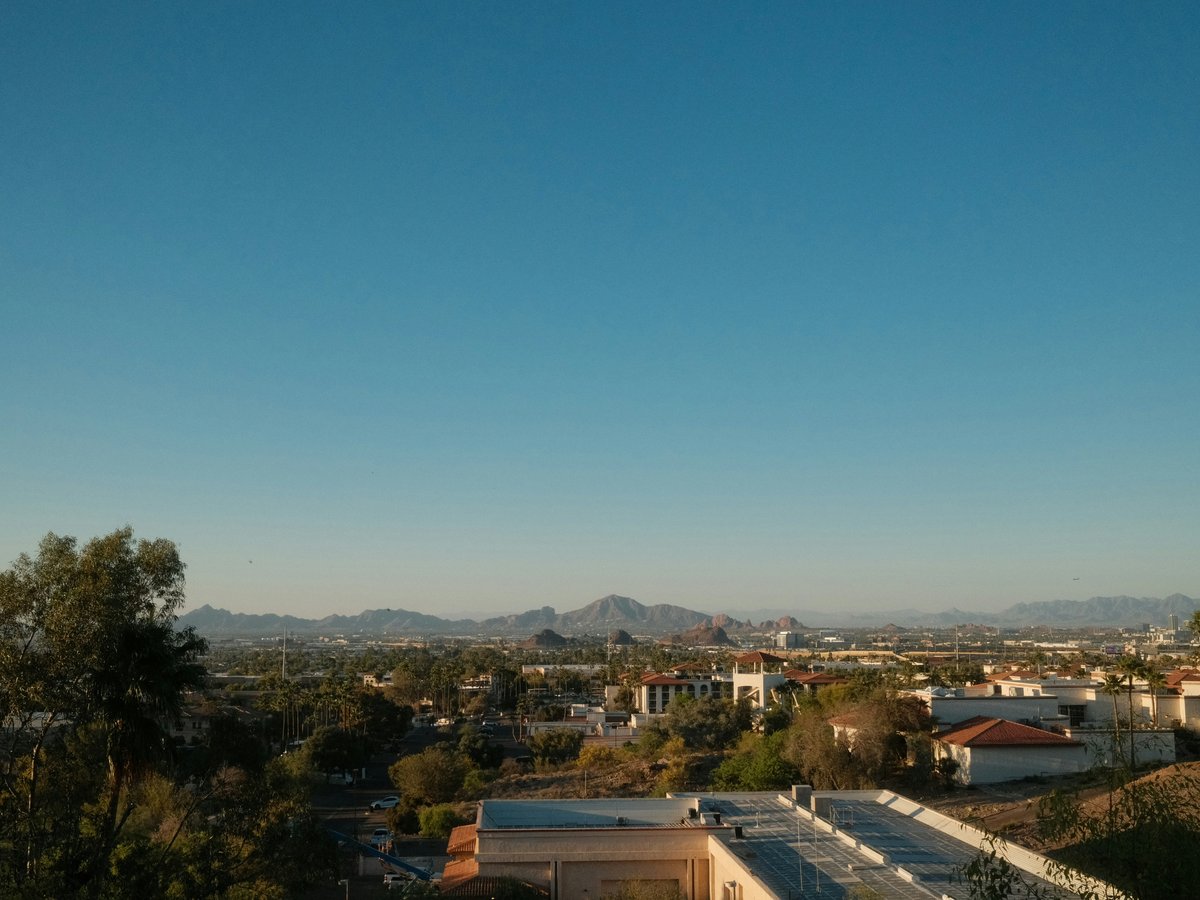
Is Phoenix safe?
Phoenix is safe enough for a careful solo trip, and we score it 5.8 out of 10 for solo-traveler safety (see the TTDI Solo-Safety Index). It is heat and traffic, not crime, that put most visitors in difficulty. After dark, keep to Roosevelt Row, Old Town Scottsdale, or Mill Avenue in Tempe, and give the 27th Avenue corridor and Van Buren Street west of downtown a wide berth. Dial 911 in an emergency.
Heat is the risk that puts Phoenix visitors in hospital. Maricopa County's public health department counted 645 heat-associated deaths in 2023, a year when the city logged 31 consecutive days at or above 110°F (43°C). From June to September the asphalt on Central Avenue radiates through shoe soles by 10am, and a car door handle can burn your palm. The city now closes the Echo Canyon and Cholla trails on Camelback Mountain and the Piestewa Peak Summit Trail during the hottest hours on Excessive Heat Warning days. Solo hikers are the ones Phoenix Fire carries down, because nobody is there to notice the slurred speech. Our advice for Camelback is blunt: start before 6am, carry one litre of water per hour, and turn back when half of it is gone. October is kinder, and Open-Meteo recorded 21.9°C at 10am on 13 October 2026, with 71% humidity and partial cloud, which is hiking weather by Sonoran standards. A Viator small-group hike on Camelback or in South Mountain Park gives you company on the trail, and those tours tend to price per person with no single supplement.
Crime in Phoenix is concentrated, and most of it sits well away from where visitors sleep. What you're more likely to encounter is property crime: car break-ins at the Echo Canyon trailhead lot and around Papago Park are common enough that locals leave nothing visible on the seats. The 27th Avenue stretch between Indian School Road and Northern Avenue has a long record of street prostitution and drug dealing, and Van Buren's motel strip is much the same once the sun goes down. Maryvale and parts of South Phoenix below the Salt River post higher violent-crime figures, though a visitor has little reason to be there at night. Downtown Phoenix is a different matter. The encampment known as The Zone, around 12th Avenue and Madison Street, was cleared in November 2023, but you'll still pass people sleeping rough between the Arizona State Capitol and Central Station. We'd call that mile uncomfortable more than dangerous in daylight, and we'd take a car through it after 9pm.
Three districts hold enough foot traffic to walk alone after dark. Roosevelt Row carries the smell of mesquite smoke and spilled beer on First Fridays, when thousands fill the galleries along Roosevelt Street. Old Town Scottsdale's bar blocks near Scottsdale Road and Camelback Road are loud and well lit until 2am, the statewide last call. Mill Avenue runs on Arizona State University students, and the worst you'll likely face there is a drunk 20-year-old. Valley Metro Rail connects downtown Phoenix and Tempe, its bell clanging along Washington Street until around midnight on most nights, though the platforms are thinly staffed late, and solo women tell us the 19th Avenue leg toward Metrocenter feels edgy after 10pm. Waymo's driverless Jaguars are our pick for late rides: they cover downtown, Scottsdale, Tempe and Phoenix Sky Harbor, and no driver means no conversation you didn't ask for. The Heard Museum and Phoenix Art Museum both sit on Central Avenue beside rail stops, so a daytime museum run needs no car at all.
Traffic in Phoenix deserves more respect than muggers do. Arterials like Indian School Road run six or seven lanes at 45mph, with signalled crossings as much as half a mile apart, and Arizona regularly ranks among the worst US states for pedestrian deaths. Cross at the lights, and expect drivers on 7th Street to turn right on red without looking for you. Monsoon season runs from 15 June to 30 September. A storm can drop the temperature 10 degrees in minutes, fill the air with the resin smell of wet creosote, and flood a dry wash faster than you can reverse out of it. A haboob dust wall on Interstate 10 is the scarier version, though, and the state's rule is to pull off, switch your lights off and wait. For dinner alone, bar counters near Roosevelt Street seat singles without a booking for two, and a bartender there is the fastest source on which blocks to skip tonight. Phoenix Police take non-emergency calls on 602-262-6151. World Nomads cover is worth pricing before a solo desert hike, since an Arizona emergency-room visit for heat exhaustion can run into four figures.
Emergency number: 911
Official travel advisories
Normal precautions the most cautious of 1 government assessment
- Government of CanadaLevel 1Take normal security precautions View advisory
Verified from the issuing governments' own feeds.
Areas to avoid
- 27th Avenue corridor between Indian School Road and Northern Avenue
- Van Buren Street motel strip west of downtown, after dark
- Maryvale at night
- South Phoenix below the Salt River at night
- Blocks between the Arizona State Capitol and Central Station after 9pm
- 19th Avenue light rail platforms toward Metrocenter after 10pm
Common concerns
- Heat exhaustion and heat stroke from June to September
- Solo hiking rescues on Camelback Mountain and Piestewa Peak
- Pedestrian collisions on six- and seven-lane arterials
- Car break-ins at trailhead parking lots
- Flash floods in washes during monsoon storms
- Haboob dust storms on Interstate 10
- Thinly staffed light rail platforms late at night
- Visible homelessness west of downtown
Last verified by automated review (v1.7.2) on . What is automated review?