Anchorage sits on a strip of coastal lowland between Cook Inlet to the west and the Chugach Mountains to the east, which rise above 8,000 feet within 10 miles of the city center. Around 290,000 people live here at 61 degrees north latitude. Chugach State Park, established in 1970, covers nearly 500,000 acres along the city's eastern edge, and its trailheads start where suburban streets in neighborhoods like Prospect Heights and Glen Alps dead-end at the tree line. Summer days in June stretch past 19 hours of usable light, which tends to throw your sense of time completely. You might find yourself lacing up boots at 9 PM in the Glen Alps parking lot and returning home in full daylight. The city scores 7.2 out of 10 for family friendliness (see the TTDI Family-Friendliness Index), partly because so many trails charge nothing beyond a $5 vehicle parking pass. Current mid-August conditions sit around 16.5°C with overcast skies and 59% humidity. The Hillside neighborhoods smell like spruce sap and wet gravel from May into September. By October, termination dust appears on the peaks above town, and the trail traffic drops sharply.
Outdoor activities
-
Cycling the Tony Knowles Coastal Trail
The Tony Knowles Coastal Trail runs roughly 11 miles from Elderberry Park near downtown to Kincaid Park, following the Cook Inlet shoreline on pavement. The route is mostly flat, passing Westchester Lagoon, Earthquake Park, and Point Woronzof. On clear days, Denali appears across the water to the northwest, about 130 miles away. Moose wander onto the trail regularly near the Westchester Lagoon section, so keep your speed in check. You'll likely hear the hum of floatplanes from Lake Hood, the world's busiest floatplane base, which sits beside the trail near Ted Stevens Anchorage International Airport. Bike rentals are available from several shops downtown and along Spenard Road for roughly $30 to $50 per half day.
- Difficulty
- Easy
- Duration
- 1.5 to 3 hours one way by bike
- Best season
- May through October
-
Mountain Biking at Kincaid Park
Kincaid Park covers roughly 1,500 acres on the western tip of the Anchorage bowl, where the land drops toward Cook Inlet. The singletrack network runs about 20 miles through birch and spruce forest, with rolling terrain and a few steep pitches on the north side. After rain, the clay soil turns soft and tacky. You'll hear magpies screaming and, often, the heavy rustle of a moose feeding in the brush 20 feet off the trail. The park doubles as Anchorage's primary Nordic ski venue in winter, so the trail infrastructure stays well maintained year-round.
- Difficulty
- Moderate
- Duration
- 2 to 4 hours
- Best season
- June through September
-
Wildlife Viewing along Turnagain Arm
The Seward Highway follows Turnagain Arm south from Anchorage for about 50 miles, with pullouts every few miles. Dall sheep tend to appear on the rocky slopes near Windy Corner, about 20 miles south of downtown. Beluga whales move through Turnagain Arm in summer and early fall chasing salmon. You'll see cars pulled over at Bird Point and Beluga Point when a pod surfaces. Mind you, the water looks brown and opaque from glacial silt, so the white whales are surprisingly easy to spot against the dark surface. The pullout at Beluga Point has interpretive signs about the Cook Inlet beluga population, which numbers around 300 animals.
- Difficulty
- Easy (roadside pullouts)
- Duration
- Half day to full day
- Best season
- May through September for belugas, year-round for Dall sheep
-
Cross-Country Skiing
Anchorage maintains more groomed Nordic ski trails than most cities in North America. Kincaid Park and the trails in the Hillside area near Far North Bicentennial Park make up the core network. The city typically grooms from late November through March, depending on snowfall. Temperatures on the trails can drop below minus 25°C in January, so layering is critical. December brings fewer than 6 hours of daylight, and the dry cold creates a particular kind of quiet on the trails. You'll hear your own breathing and the scrape of wax on snow and not much else.
- Difficulty
- Easy to Moderate depending on terrain
- Duration
- 1 to 4 hours
- Best season
- December through March
-
Glacier Trekking at Matanuska Glacier
Matanuska Glacier sits about 100 miles northeast of Anchorage along the Glenn Highway, making it a long but feasible day trip. The glacier is roughly 27 miles long and 4 miles wide at its terminus. Several guided operators run trips onto the ice from around Mile 102, typically charging $75 to $125 per person for a 3-to-4-hour guided walk with crampons provided. You'll walk on blue ice, peer into crevasses, and feel cold air rising off the surface even on a warm July afternoon. The texture of the ice under crampons is gritty, almost like frozen sandpaper.
- Difficulty
- Moderate (guided, crampons provided)
- Duration
- Full day including 2-hour drive each way
- Best season
- June through September
-
Fat Tire Biking
Fat tire bikes with 4-inch-plus tires are Anchorage's answer to winter cycling. Several trails in Kincaid Park and along the coastal trail corridor stay rideable through winter, packed by foot traffic and snowmachines. Rental shops on Spenard Road and Northern Lights Boulevard typically stock fat bikes starting around $40 per half day. The sensation of riding on packed snow is strange at first. Almost like wet sand. Night rides in December under headlamp, with the northern lights sometimes flickering green overhead, have turned into a local tradition.
- Difficulty
- Easy to Moderate
- Duration
- 1 to 3 hours
- Best season
- December through March
Day hikes
-
Flattop Mountain
Flattop Mountain is the most-climbed peak in Alaska, and the Glen Alps trailhead sits about 15 minutes from midtown Anchorage. The trail gains roughly 1,300 feet over 1.6 miles to the 3,510-foot summit. The lower section follows a well-maintained gravel path through alpine meadow. The upper third gets steep and rocky, requiring hand-over-foot scrambling on loose scree near the top. Wind picks up fast above treeline, and it can gust hard enough to knock you off balance near the summit. On clear days, the top gives you Cook Inlet, the Alaska Range, and the full city spread below. The parking lot at Glen Alps fills by mid-morning on summer weekends.
- Difficulty
- Moderate to Strenuous
- Duration
- 2 to 4 hours round trip
- Best season
- June through September
-
Wolverine Peak
Wolverine Peak starts from the Prospect Heights trailhead on the east side of Anchorage and climbs roughly 3,500 feet over about 5.5 miles to the 4,455-foot summit. This is a full-day effort. The first 2 miles cross relatively gentle terrain through birch and alder, then the route breaks above treeline and steepens considerably. The ridge walk to the summit is exposed, with weather that can change in 20 minutes. Carry rain gear and an extra layer even if the morning looks sunny. The trail is less crowded than the Flattop route, and you'll likely have more company from arctic ground squirrels than other hikers above 3,000 feet.
- Difficulty
- Strenuous
- Duration
- 6 to 8 hours round trip
- Best season
- June through September
-
Thunderbird Falls
Thunderbird Falls is a short, easy hike near the community of Eklutna, about 25 miles north of downtown Anchorage off the Glenn Highway. The trail runs roughly 1 mile each way through dense forest on a well-maintained boardwalk and dirt path to a viewing platform above the 200-foot cascade. The mist keeps the air cool and damp even on warm days. You can hear the water from about a quarter mile out. This is a solid pick for families or anyone wanting a quick leg-stretch after arriving in town. The falls run strongest from May through July as snowmelt peaks.
- Difficulty
- Easy
- Duration
- 1 to 1.5 hours round trip
- Best season
- May through October
-
Rendezvous Peak
Rendezvous Peak starts from the Arctic Valley Road trailhead, about 20 minutes from downtown through Joint Base Elmendorf-Richardson. The trail climbs about 1,500 feet over roughly 2 miles to the 4,050-foot summit. The route is steep but straightforward, crossing alpine tundra where wildflowers bloom in late June and July. The summit sits on a broad ridge with views into Ship Creek valley and the mountains beyond. Worth noting, you need to pass through the military base gate to reach the trailhead, which currently requires a valid photo ID.
- Difficulty
- Moderate
- Duration
- 2 to 3 hours round trip
- Best season
- June through September
-
Winner Creek Trail
Winner Creek Trail starts near the Alyeska Resort in Girdwood, about 40 miles south of Anchorage on the Seward Highway. The trail follows a gorge through old-growth Sitka spruce and hemlock for about 2.5 miles to a hand-operated tram that crosses the creek on a cable. The forest is dark and damp, with moss covering everything and the sound of rushing water constant. The hand tram is memorable. You pull yourself across the gorge on a small platform, maybe 30 feet above the creek. Some people love it. Some find it terrifying. The return trip follows the same route back for a roughly 5-mile round trip.
- Difficulty
- Easy to Moderate
- Duration
- 2 to 3 hours round trip
- Best season
- May through October
-
McHugh Peak via Turnagain Arm Trail
The McHugh Creek trailhead sits about 15 miles south of downtown on the Seward Highway, right along Turnagain Arm. From here, you can walk the Turnagain Arm Trail south along the bluff above the water, or climb steeply toward McHugh Peak at about 4,300 feet. The peak route gains roughly 3,700 feet over about 5 miles and is relentless in places. The lower Turnagain Arm Trail is more forgiving, a rolling path with views down to the bore tide in the inlet below. Both routes pass through bear country, so carry spray and make noise, especially around berry patches in August.
- Difficulty
- Strenuous (McHugh Peak), Moderate (Turnagain Arm Trail)
- Duration
- 6 to 9 hours round trip for the peak, 3 to 5 hours for the lower trail
- Best season
- June through September
Water activities
-
Kayaking Eklutna Lake
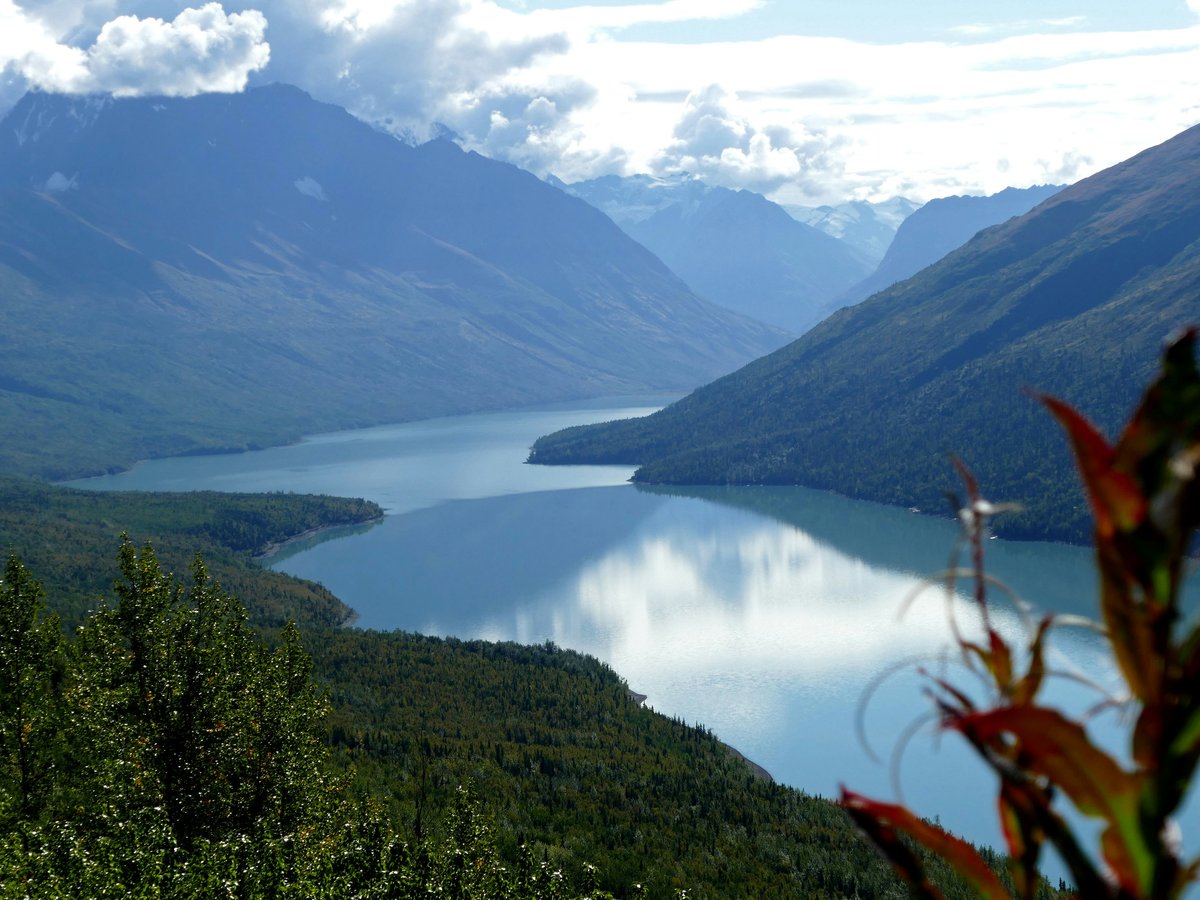
Eklutna Lake sits about 35 miles north of downtown Anchorage, a turquoise glacial lake roughly 7 miles long in a valley surrounded by mountains. The color comes from glacial flour suspended in the runoff. Kayak and canoe rentals are available at the trailhead parking area from a seasonal outfitter, typically running $50 to $75 for a half day. The water is cold, around 4 to 7°C even in August, so a dry suit or dry top is wise. Wind can build through the afternoon as thermals rise off the surrounding slopes. Paddle in the morning for calmer conditions, and stay close to the shore if the wind picks up.
- Difficulty
- Easy to Moderate depending on wind
- Duration
- Half day to full day
- Best season
- June through September
-
Salmon Fishing on Ship Creek
Ship Creek flows through downtown Anchorage, passing behind the railroad depot and under the C Street bridge before emptying into Cook Inlet. King salmon run from late May through July, and silver salmon arrive in August and September. You can fish from the banks near the Ship Creek Small Boat Launch, standing shoulder-to-shoulder with locals during peak runs. A 1-day Alaska sport fishing license costs around $25 for non-residents, plus a king salmon stamp if you're targeting kings. Urban fishing in the truest sense. You'll hear traffic noise and smell diesel from the rail yard between casts.
- Difficulty
- Easy (shore fishing)
- Duration
- 2 to 6 hours
- Best season
- Late May through September
-
Stand-Up Paddleboarding on Goose Lake
Goose Lake, near the UAA campus, is the calmest flat water for stand-up paddleboarding inside city limits. The lake is small enough that wind chop rarely becomes an issue. Rental boards are sometimes available from the beach concession during July and August. Morning sessions before 10 AM tend to offer the smoothest surface. The water is shallow near the edges and deepens to about 6 meters near the center, with a clean sandy bottom.
- Difficulty
- Easy
- Duration
- 1 to 2 hours
- Best season
- June through August
-
Bore Tide Watching on Turnagain Arm
Turnagain Arm produces one of roughly 60 bore tides known worldwide, a tidal wave that can reach 6 to 10 feet as incoming water funnels into the narrow arm. The best viewing is from Bird Point and Beluga Point, about 15 to 20 miles south of Anchorage on the Seward Highway. The wave moves at roughly 10 to 15 mph, and on good days you can watch it roll past for several minutes. Timing depends on the tide table. The largest bores tend to occur 2 to 3 hours after low tide during new and full moon phases. A handful of surfers and kayakers ride the bore, though the silty, cold water and strong currents make it a serious undertaking.
- Difficulty
- Easy (watching), Advanced (surfing the bore)
- Duration
- 1 to 2 hours including drive
- Best season
- July through September for the largest tides
-
Whitewater Rafting on Sixmile Creek
Sixmile Creek runs near the town of Hope, about 90 miles south of Anchorage via the Seward and Hope Highways. The creek is a Class IV to V run through a narrow canyon with fast water fed by Sixmile Glacier. Several outfitters run guided trips from late May through September, typically charging $100 to $175 per person for a half-day trip. Water temperature stays around 4°C, so you'll be in a dry suit. The rapids have names like Suckhole and the Toilet Bowl. Not a casual float. Previous rafting experience is generally recommended for the full canyon sections.
- Difficulty
- Strenuous (Class IV-V, guided)
- Duration
- Full day including 2-hour drive each way
- Best season
- Late May through September
Parks & gardens
-
Alaska Botanical Garden
The Alaska Botanical Garden covers 110 acres in East Anchorage, founded in 1993 on land along Campbell Airstrip Road. The garden proves that plenty grows at this latitude when someone pays attention. Wild species are the star here, not imported tropicals. A 1-mile loop trail winds through birch and spruce forest, passing a rock garden, herb garden, and wildflower meadow. A boardwalk section cuts through wetland where you might spot a moose drinking from a pond 30 feet from the path. Admission runs about $12 for adults.
Highlights: Rock garden, herb garden, wildflower meadow, 1-mile nature loop through boreal forest, seasonal wildflower displays
-
Earthquake Park
FreeEarthquake Park sits on the bluff above Cook Inlet along the coastal trail, about 4 miles west of downtown. The park marks the 1964 Good Friday earthquake, a magnitude 9.2 event that remains the second most powerful earthquake ever recorded. The ground here still shows the lumpy, displaced terrain that resulted from the subsidence. Interpretive signs explain what happened to the Turnagain Heights neighborhood, which slid toward the inlet during 130 seconds of shaking. On a clear day, Mount Susitna fills the view across the water.
Highlights: Interpretive earthquake displays, displaced terrain from the 1964 event, Cook Inlet and Mount Susitna views
-
Far North Bicentennial Park
FreeFar North Bicentennial Park covers about 4,000 acres on Anchorage's east side, bordering the state park. The trail system crisscrosses through dense spruce and birch forest, used for mountain biking and running in summer and Nordic skiing in winter. The Spencer Loop is popular with runners. Loops range from 2 to 10 miles depending on how you connect the segments. The undergrowth can be thick enough to hide a moose at 15 feet, so make noise on the tighter trails. Black bears pass through in late summer and fall, following the salmon runs in Campbell Creek.
Highlights: Spencer Loop running trail, Hillside trail network connections, dense boreal forest, seasonal Nordic ski trails
-
Delaney Park Strip
FreeDelaney Park Strip runs 9 blocks through downtown Anchorage between 9th and 10th Avenues. The park dates to the 1920s when it served as a landing strip for early bush pilots. In summer, weekend softball games, festivals, and picnics fill the open lawn. The grass is often wet from drizzle. Soccer fields and basketball courts line the eastern half. It's one of the few places in central Anchorage where you can lie on grass and see sky without mountains directly overhead.
Highlights: Downtown green corridor, sports fields, weekend festivals, historic bush-pilot airstrip origins from the 1920s
-
Goose Lake Park
FreeGoose Lake sits near the University of Alaska Anchorage campus, and the city maintains a small beach area with a roped swimming zone, picnic tables, and a grassy bank. Lifeguards are on duty during peak summer hours from June through August. The sandy bottom and gentle slope make it popular with families. On weekends in July, the beach fills with sunbathers who've made peace with the fact that 18°C water qualifies as warm at this latitude.
Highlights: Lifeguarded swimming beach, sandy bottom, picnic facilities, proximity to UAA campus
Practical tips
- Layering and Rain Gear
- Anchorage weather changes fast, especially at elevation. A typical summer hiking kit includes a moisture-wicking base layer, a fleece or light down mid-layer, and a waterproof shell. Cotton dries slowly and chills you. Even in July, temperatures above treeline can drop to 5°C with wind chill. Pack a rain jacket on every hike, regardless of the morning forecast. Conditions in the Chugach can shift from sun to sideways rain in 20 minutes.
- Bear Safety
- Both black bears and brown bears live in and around Anchorage. Carry bear spray, sold at outdoor retailers throughout the city for $40 to $60, and know how to deploy it before you need it. A hip holster keeps it accessible. Make noise on trails, especially around blind corners, stream crossings, and berry patches in August. Store food in bear canisters or hang it if camping overnight.
- Sun Protection
- Summer days in Anchorage last long enough to accumulate serious UV exposure even under partly cloudy skies. From late May through mid-July, the sun is up for 18 to 22 hours, and reflected light off snow and water compounds the effect. Wear sunscreen and sunglasses on any full-day outing. Lip balm with SPF is easy to forget and hard to do without after 8 hours above treeline.
- Water and Hydration
- Bring at least 2 liters per person for day hikes above treeline. Stream water in the Chugach appears clean but should be filtered or treated, especially below areas with heavy moose traffic. The dry, cool air at elevation masks fluid loss. On a longer hike like Wolverine Peak, plan for 3 liters or more.
- Trail Conditions and Timing
- Most trails above 2,500 feet hold snow into late May or early June. Check conditions on the Chugach State Park website or local hiking groups before heading out. Mud season runs from mid-April through late May on lower trails. August and September typically offer the driest, firmest surfaces, but daylight starts shrinking noticeably after the solstice. By September, you're down to about 14 hours of light.
- Solo Hiking
- Anchorage scores 4.8 out of 10 for solo-traveler safety (see the TTDI Solo-Safety Index). On popular trails like Flattop, you'll rarely be alone in summer. On longer, less-trafficked routes, you might not see another person for hours. Tell someone your plan and expected return time. Carry a personal locator beacon or satellite communicator if heading above treeline alone. Cell service is unreliable above the Glen Alps parking area and nonexistent in most backcountry valleys.
FAQ
Do I need bear spray for hiking near Anchorage?
Both black and brown bears are active along trails from the city's edge into the backcountry. Carry bear spray in a hip holster, not buried in your pack, and practice deploying the safety clip before you're on the trail. Make noise at blind corners and near streams. Most wildlife encounters in the Anchorage area are with moose, which are arguably more dangerous because they're more common and harder to predict.
What is the best month for hiking in Anchorage?
July tends to be the warmest and driest month, with average highs around 18°C and the longest daylight. August is also strong, though rain becomes more frequent toward the end of the month. June offers peak daylight but trails above 2,500 feet may still hold snow. September brings fall colors and fewer crowds but shorter days and the possibility of early snow at higher elevations.
Can I swim in the lakes around Anchorage?
A few lakes warm up enough for swimming by midsummer. The lifeguarded beach at Goose Lake is the most popular option, with sandy bottom and gentle slopes. Jewel Lake and Mirror Lake are also swimmable on warm days, though neither has formal beach facilities. Rivers and glacial lakes stay below 7°C and are not suitable for recreational swimming. Cook Inlet is off limits due to extreme tidal currents, cold water, and heavy glacial silt.
Do I need a parking pass for trailheads near Anchorage?
Several trailheads within the state park, including Glen Alps and Prospect Heights, require a daily vehicle parking pass. Annual passes are also available for frequent visitors and cover all state park trailheads across Alaska. City parks like Kincaid and Far North Bicentennial have free parking with no pass needed.
Is Anchorage a good base for seeing glaciers?
Anchorage provides access to several glaciers within a few hours by car. Matanuska Glacier, along the Glenn Highway, is the most accessible for guided walks on the ice. Portage Glacier sits about 50 miles south on the Seward Highway, visible from a boat tour on Portage Lake. Byron Glacier, near Portage, is reachable via a short and easy 1.5-mile round-trip trail. Exit Glacier near Seward is roughly 130 miles south but worth the drive for anyone staying multiple days.
What outdoor activities work for families with young children in Anchorage?
Thunderbird Falls makes a good family hike with its boardwalk sections and short distance. The Alaska Zoo, established in 1969 on O'Malley Road, has outdoor walking paths through natural forest settings and houses animals native to Alaska, including brown bears, moose, and muskox. The Alaska Native Heritage Center, which opened in 1999 on Muldoon Road, has outdoor exhibits including traditional village sites from several of Alaska's indigenous cultural groups. Both are manageable in half a day with kids.
Outdoor experiences in Anchorage
 Free cancellation
 PRISTINE - Wilderness, Wildlife, Glacier Experience in Anchorage
Outdoor experience: 6 hours, free cancellation.
via Viator Free cancellation
 Grand Knik Helicopter Tour - 2 hours 3 landings - ANCHORAGE AREA
Outdoor experience: 2 hours, free cancellation.
via Viator Free cancellation
 Full-Day Matanuska Glacier Hike And Tour
Outdoor experience: 8.5 hours, free cancellation.
via Viator Free cancellation
 Wildlife Conservation Center & Portage Valley Glaciers
Outdoor experience: 4.5 hours, free cancellation.
via Viator
Bears, Trains, & Icebergs Tour
Outdoor experience.
via Viator Free cancellation
 Anchorage Northern Lights Tour
Outdoor experience: free cancellation.
via Viator Free cancellation
 Alaska Wildlife Conservation Center & Turnagain Arm Tour
Outdoor experience: 4.5 hours, free cancellation.
via Viator Free cancellation
 Hike Matanuska Glacier w/Alaska Local Honey, Wine Tasting
Outdoor experience: 8.5 hours, free cancellation.
via Viator Free cancellation
 Matanuska Glacier Guided Hike from Anchorage with Gear Included
Outdoor experience: 8 hours, free cancellation.
via Viator Free cancellation
 Knik Glacier Helicopter Flight-90 Mins-1 Landing-Anchorage Area
Outdoor experience: 1.5 hours, free cancellation.
via Viator Free cancellation
 Summer Valley and Forest Hike
Outdoor experience: 5 hours, free cancellation.
via Viator Free cancellation
 Winter Waterfall Walk
Outdoor experience: 3 hours, free cancellation.
via ViatorLast verified by automated review (v1.7.2) on . What is automated review?