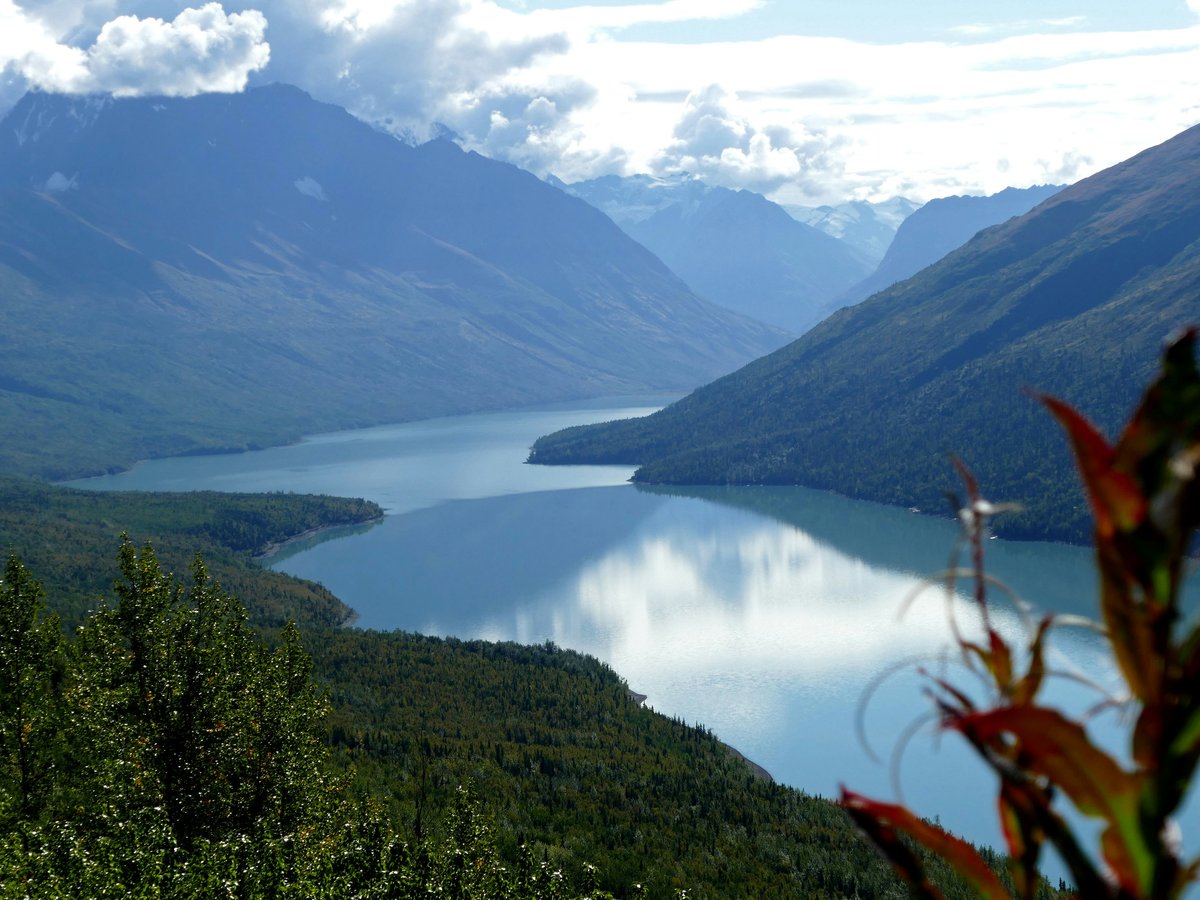
Anchorage sits where the Chugach Mountains meet Cook Inlet, and that geography alone makes it one of the more rewarding zero-budget cities in North America. One of the largest state parks in the country shares a border with the municipality. Salmon swim through downtown each summer. Moose wander Anchorage side streets year-round, which still catches newcomers off guard. Mid-August temperatures currently hover around 16°C, comfortable for long days on foot. Those days are long, too. In June, Anchorage gets roughly 22 hours of daylight, and even by August you'll have about 16 hours to work with. The city scores 7.2 out of 10 for family friendliness (see the TTDI Family-Friendliness Index). That tracks. So many of its strongest draws are parks, trails, and viewpoints that never charge admission.
Free attractions
-
Chugach State Park
Established in 1970, Chugach State Park covers roughly 495,000 acres along Anchorage's eastern edge. You can reach several trailheads within a 20-minute drive from downtown. Flattop Mountain, the most-climbed peak in Alaska, starts from the Glen Alps trailhead. Worth noting that while the park itself charges no entrance fee, some trailheads require a $5 daily parking pass. The tundra-and-scree landscape above the treeline feels genuinely remote for being so close to a city of 290,000 people.
East AnchorageState park -
Kincaid Park
Kincaid Park spreads across about 1,400 acres on Anchorage's western tip, where the city meets Cook Inlet. In winter, the Nordic Skiing Association of Anchorage maintains cross-country ski trails here. In summer, those same trails become walking and mountain-biking paths through birch and spruce forest. Moose sightings are common enough that the park posts warning signs at most trail junctions.
Sand LakeCity park -
Earthquake Park
Earthquake Park sits on the bluffs above Cook Inlet in the Turnagain neighborhood. Interpretive signs explain the 9.2-magnitude earthquake of March 27, 1964, the most powerful recorded quake in North American history. The ground here still shows the original landslide scars from that event. On a clear day, you can see Denali from this spot, roughly 130 miles to the north.
TurnagainHistoric park and viewpoint -
Alaska Public Lands Information Center
The Alaska Public Lands Information Center occupies the ground floor of the old Federal Building at 4th Avenue and F Street downtown. Free every day it is open. Rangers from the National Park Service, the Forest Service, and Fish and Wildlife Service staff the center and can help plan backcountry trips anywhere in the state. The exhibits cover topics from glaciology to subsistence fishing, and a small theater screens free documentary films throughout the day.
DowntownMuseum and information center (always free) -
Anchorage Museum at Rasmuson Center
The Anchorage Museum on C Street is the largest museum in Alaska. It normally charges admission, but on First Friday evenings, typically the first Friday of each month from about 6 PM to 9 PM, entry has traditionally been free. Check their current schedule before going, as details can shift season to season. The permanent collection spans Alaska Native art, Arctic studies, and contemporary work.
DowntownMuseum (free on First Fridays) -
Cathedral of the Holy Family
The Cathedral of the Holy Family on 5th Avenue traces its parish to 1915, making it one of the oldest Catholic congregations in Anchorage. The current building is newer, but the interior rewards a visit. Clean timber framing and wide windows pull in the northern light. Free to enter during regular hours.
DowntownHistoric church -
Fort Richardson National Cemetery
Fort Richardson National Cemetery was established in 1942, on what was then a military post built during World War II. Like all national cemeteries, it is open to the public at no cost. The grounds are quiet and carefully maintained, set against the Chugach range. It sees fewer visitors than most Anchorage landmarks, which tends to add to the solemnity.
JBERNational cemetery -
Resolution Park and Captain Cook Monument
Resolution Park sits on a bluff at the west end of 3rd Avenue downtown, overlooking Cook Inlet and the Alaska Range beyond. A bronze Captain Cook statue faces the water, commemorating Cook's 1778 survey of the inlet. On clear evenings the sunset views from here are some of the best in the city. Free and open at all hours.
DowntownViewpoint and monument -
Delaney Park Strip
Delaney Park Strip runs for about 9 blocks through downtown Anchorage between 9th and 10th Avenues. It started life as a landing strip in the 1920s and became public green space by the 1940s. The park hosts softball leagues in summer and serves as a staging ground for several of the city's free festivals. Flat and central, it works as a useful orientation landmark.
DowntownUrban park and green space
Free activities
-
Tony Knowles Coastal Trail
The Tony Knowles Coastal Trail runs about 11 miles from downtown Anchorage to Kincaid Park, following the shoreline of Cook Inlet the whole way. The path is paved and flat enough for strollers, wheelchairs, and casual walkers. You pass Westchester Lagoon, Earthquake Park, and Point Woronzof along the route. The stretch near Woronzof tends to smell like mudflats at low tide, which is honest Alaska coast. Moose occasionally stand in the middle of the trail, and the protocol is simple. Wait. Let them move on their own terms.
Downtown to Sand LakeWalking and cycling trail -
Ship Creek Salmon Viewing
Ship Creek runs through downtown Anchorage near the Alaska Railroad depot, and from mid-July through August, king and silver salmon push upstream to spawn. A free viewing platform and fish-counting station sit along the north bank, within walking distance of most downtown hotels. The creek gets crowded with combat anglers shoulder-to-shoulder during peak runs. Mind you, fishing itself requires a license and is not free. But watching the spectacle from the viewing deck costs nothing. You can smell the fish on warm days.
Ship CreekWildlife viewing -
Lake Hood Seaplane Base
Lake Hood, about 3 miles west of downtown, is the world's busiest seaplane base. On a summer day, floatplanes take off and land roughly every 90 seconds during peak hours. A paved walkway along the eastern shore lets you watch the traffic for free. The sound of radial engines warming up on a still morning carries across the water. No admission, no barriers between you and the flight line.
SpenardAviation sightseeing -
Downtown Anchorage Public Art Walk
Downtown Anchorage has dozens of public artworks installed between 2nd and 9th Avenues, many commissioned through the municipality's Percent for Art program. The whale mural near 5th Avenue Mall and bronze wildlife sculptures along 4th Avenue are easy to find on foot. A self-guided loop takes about 90 minutes at a comfortable pace.
DowntownPublic art and walking route -
Point Woronzof
Point Woronzof sits at the end of a short spur off the Coastal Trail, about 5 miles from downtown. The bluff overlooks Cook Inlet and the silhouette of Mount Susitna, which locals call the Sleeping Lady, on the far shore. Sunset watchers gather here in summer, though in June the sun does not go down until around 11:40 PM. The wind off the inlet can be sharp even in August, so bring a layer.
West AnchorageViewpoint -
Westchester Lagoon
Westchester Lagoon connects to the southern end of the Coastal Trail and freezes solid in winter for free ice skating. In summer, it is a calm spot for birdwatching. Arctic terns dive for fish in the shallows. A paved loop around the lagoon is about 1 mile and connects to the Chester Creek Trail heading east through midtown. Benches along the south bank face the Chugach range.
South AdditionWalking and birdwatching
Free events
-
First Friday Art Walk
First Friday of each month, year-round, typically 5 PM to 8 PMGalleries, studios, and some restaurants along G Street and nearby blocks open their doors on First Friday. The scene is casual, and you can cover most participating locations within a 10-block radius. Some venues serve complimentary drinks. The atmosphere shifts with the season. Winter First Fridays feel more intimate. Summer ones tend to spill onto the sidewalks.
Downtown Anchorage, concentrated along G Street -
Anchorage Market and Festival
Saturdays and Sundays, mid-May through mid-SeptemberThe Anchorage Market and Festival sets up near 3rd Avenue downtown on summer weekends. Browsing the 300-plus vendor stalls is free. You will find local produce, handmade crafts, and reindeer sausage samples if you time it right. Live music plays on a small stage most Saturdays.
3rd Avenue, Downtown Anchorage -
Summer Solstice Events
Around June 20 to 21, annuallyAnchorage marks the solstice with outdoor concerts, street performers, and community runs near the longest day of the year. Specific programming varies annually, so check local listings closer to the date. The general atmosphere across the city on solstice weekend tends to be festive and walkable, with most outdoor events free to attend.
Various locations, primarily downtown and Delaney Park Strip -
Town Square Park Summer Concerts
Weekends in July and August (schedule varies annually)Anchorage Parks and Recreation runs free outdoor concerts at Town Square Park on 5th Avenue and E Street downtown during summer months. The schedule changes each year, but weekend afternoon performances are common in July and August. Bring a folding chair or sit on the grass. The sound carries well in the open square.
Town Square Park, Downtown Anchorage
Wildlife encounters at no cost
Moose live in Anchorage year-round. The Alaska Department of Fish and Game estimates roughly 1,500 within the municipality, and they regularly appear in yards, on bike paths, and in parking lots. Give them at least 25 feet of space. Cow moose with calves in spring, particularly May and June, are defensive and will charge. Bald eagles perch in cottonwood trees along Campbell Creek, especially near the fish hatchery. Black bears and occasionally brown bears pass through urban greenbelts, more commonly in late summer and early fall. None of these encounters require a guided tour or an admission fee. You might see a moose on the walk back to your hotel. That kind of thing happens here.
What charges admission (and is still worth knowing about)
The Alaska Zoo, founded in 1969, charges admission and sits on about 25 acres in the O'Malley Road area south of downtown. The Alaska Native Heritage Center, which opened in 1999, also has an entrance fee, though it remains one of the more important cultural institutions in the state. The Alaska Botanical Garden, established in 1993, charges a modest fee for its 110-acre campus off Campbell Airstrip Road. The Alaska Aviation Museum near Lake Hood is similarly ticketed. To be fair, all four are worth a visit if your budget allows. The Glenn Highway drive north toward Palmer is free in the sense that driving is free, but it requires a car.
FAQ
Is Anchorage safe for solo travelers on foot?
Anchorage scores 4.8 out of 10 for solo-traveler safety (see the TTDI Solo-Safety Index). The downtown core is reasonably well-lit and walkable during summer daylight hours, which in peak summer means nearly the full day. Parts of 4th Avenue have historically seen more street-level issues after dark. That said, most visitors walk the city without incident during daylight. Standard awareness applies. Keep valuables out of sight in your car at trailhead parking lots.
What is the best season for free activities in Anchorage?
Late May through September offers the widest selection. Mild temperatures, accessible trails, and most free outdoor events cluster in those months. Winter brings its own possibilities for anyone comfortable in subzero conditions, with free cross-country skiing and ice skating available at several of the parks listed above. January temperatures average around minus 10°C, so plan layers accordingly.
Are there genuinely free museums in Anchorage?
Yes. The two described in the attractions section, the public lands center and the Anchorage Museum's First Friday program, are the most reliable options. Beyond those, expect to pay in the $10 to $25 range at most Anchorage museums.
Can you see wildlife without paying for a tour?
Regularly. The wildlife section above covers the main encounters you can expect within city limits, none of which require a ticket or guide. Brown bears are less frequent in the urban core but do appear on trails in the Chugach foothills, particularly during berry season in late August and September.
How walkable is downtown Anchorage?
The downtown core is compact, roughly a dozen blocks from the waterfront south to the Park Strip. The Coastal Trail extends that range significantly for anyone comfortable with longer walks. People Mover, the city bus system, covers more ground, with single rides currently running about $2. For trailheads outside the urban core, you will likely need a car, a rideshare, or a bicycle.
Is Anchorage welcoming for LGBTQ+ visitors?
Anchorage scores 6.2 out of 10 for LGBTQ+ friendliness (sourced from TTDI's editorial rubric). The city is generally more progressive than rural Alaska, with a visible community and several welcoming venues downtown. Annual Pride events typically take place in June.
Last verified by automated review (v1.7.2) on . What is automated review?