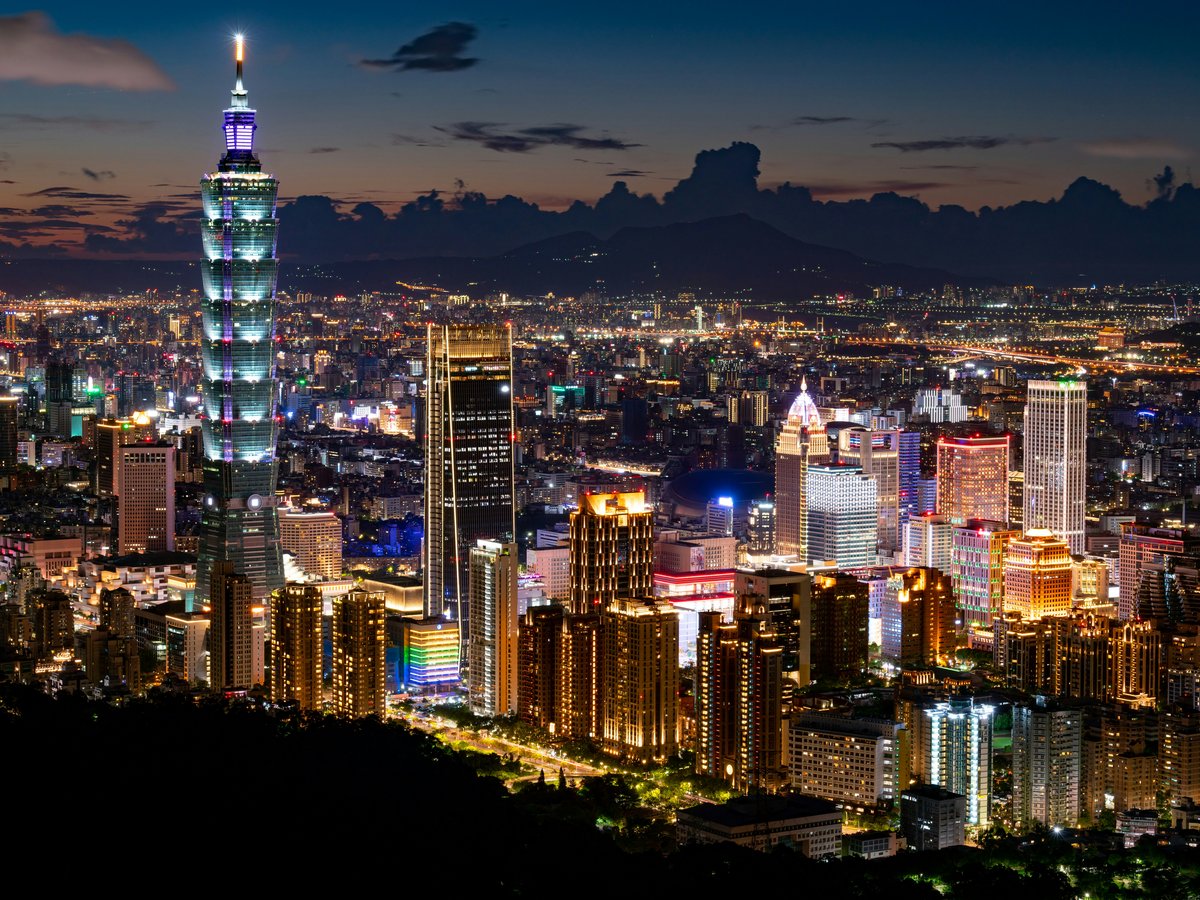
Stay in Taipei in September
75 hotels in the Trip.com pool for Taipei, from US$14 a night.
Opens Trip.com on Fri 25 Sep to Sun 27 Sep 2026; change the dates there.
September in Taipei means typhoons. That's the single most important thing to know. The city sits in the peak window of the northwest Pacific typhoon season, and September has historically brought more direct hits to northern Taiwan than any other month. Daytime temperatures hover around 32°C (90°F), dropping to about 25°C (76°F) at night, with 79% humidity that wraps around you like a damp towel the moment you step outside Taoyuan Airport. Rainfall reaches 206mm across roughly 15 rainy days, often arriving as sudden, heavy afternoon downpours that flood the lower streets around Wanhua for 20 minutes before draining away.
That said, September has a genuine draw. The Mid-Autumn Festival, one of Taiwan's three major holidays, often falls in late September, and the city fills with the smell of charcoal smoke drifting from barbecue setups on apartment balconies and parking lots across Da'an and Songshan. Pomelo fruit appears at every fruit stand, mooncakes fill the display cases at bakeries along Dihua Street in Dadaocheng, and the Taipei Confucius Temple holds its annual ceremony on September 28 for Teacher's Day. Hotel rates drop noticeably from the July and August summer peak, and popular spots like Taipei 101's observation deck have shorter queues.
If you can tolerate the heat and accept that a typhoon might rearrange your plans for 2 or 3 days, September rewards the flexible traveler. But if your trip is short and tightly scheduled, the typhoon risk alone might be reason to pick November instead.
Why visit in September
- Mid-Autumn Festival often falls in late September, bringing one of Taiwan's most celebrated holidays with citywide barbecue gatherings, mooncake culture, and evening moon-watching events along the Tamsui River.
- Hotel rates drop 20-30% from the July and August summer peak, and popular attractions like the National Palace Museum and Yangmingshan trails have noticeably fewer visitors on weekdays.
- Pomelo and late-season Irwin mangoes are at peak ripeness in September, and fruit stands across Shilin and Dadaocheng sell them at lower prices than tourist-heavy months.
- Evening temperatures around 25°C (76°F) make night market crawls at Raohe Street and Shilin more comfortable than the 33°C highs of July and August.
Worth knowing
- September is statistically the most active month for typhoons hitting northern Taiwan. A direct hit can ground flights for 1-2 days, close MRT stations, and shut down mountain trails in Yangmingshan for a week or more after landslides.
- 206mm of rainfall across 15 days means you will get rained on, often without warning. Afternoon storms can turn the narrow lanes of Ximending into ankle-deep streams within minutes.
- At 32°C (90°F) and 79% humidity, midday outdoor sightseeing is genuinely unpleasant. The heat index regularly pushes past 38°C (100°F) between noon and 3 PM.
- Some mountain trails, particularly the Qingtiangang and Xiaoyoukeng routes on Yangmingshan, may close for days after heavy rain due to mudslide risk.
Best for
Think twice if
September in Taipei is hot, humid, and punctuated by heavy afternoon storms. The air feels thick and warm from early morning onward, rarely dipping below 25°C even at night. Rain tends to arrive in short, intense bursts rather than all-day drizzle, though a typhoon can bring 48 hours of continuous downpour. Morning hours before 10 AM are the most comfortable window for outdoor activity. The sun, when it appears between clouds, is strong enough to burn through sunscreen within 2 hours.
Seasonal caution
- Typhoon season peaks in September. The Central Weather Administration may issue sea or land warnings with 24-48 hours notice, triggering flight cancellations, MRT service reductions, and mandatory closures of mountain trails. Check the CWA forecast daily and keep 1-2 flexible days in your itinerary.
- Heat index regularly exceeds 38°C (100°F) between noon and 3 PM due to the combination of 32°C air temperature and 79% humidity. Heat exhaustion is a real risk during midday outdoor activity, particularly on exposed trails and at temples without shade cover.
- Flash flooding affects low-lying areas around Wanhua, the Keelung River banks, and MRT underpasses during heavy downpours. Avoid underground passages during active storms.
Year-round climate
Averages from the last 5 years.
| Month | Avg high (°C) | Avg low (°C) | Rainfall (mm) |
|---|---|---|---|
| Jan | 19 | 13 | 50 |
| Feb | 20 | 14 | 89 |
| Mar | 23 | 16 | 113 |
| Apr | 26 | 19 | 117 |
| May | 29 | 22 | 248 |
| Jun | 32 | 25 | 221 |
| Jul | 33 | 26 | 176 |
| Aug | 33 | 26 | 166 |
| Sep | 32 | 25 | 206 |
| Oct | 28 | 23 | 261 |
| Nov | 25 | 19 | 81 |
| Dec | 20 | 15 | 62 |
Headline events
Mid-Autumn Festival (Moon Festival)
Mid-to-late September or early October, varies yearly by lunar calendar
One of Taiwan's three major traditional holidays. Families and friend groups gather to barbecue outdoors on sidewalks, rooftops, and parking lots across the entire city. Pomelo fruit and mooncakes are exchanged as gifts. Riverside parks along the Tamsui River fill with people watching the full moon. The holiday typically falls in mid-to-late September or early October depending on the lunar calendar.
Best things to do in September
Mid-Autumn Festival barbecue along the Tamsui River
culturalJoin the citywide outdoor barbecue tradition on the evening of the Mid-Autumn Festival. Riverside parks along the Tamsui River in Dadaocheng and near Guandu fill with families grilling corn, sausages, and squid over portable charcoal setups. The smell of smoke and soy-garlic marinade hangs in the warm evening air. Some groups bring guitars, and the full moon rises over Yangmingshan to the north.
The Mid-Autumn Festival falls in September or early October by the lunar calendar, and this is the one night of the year when outdoor barbecue takes over the entire city.Booking tipNo booking needed. Buy charcoal and supplies at any 7-Eleven or Family Mart. Arrive at riverside parks by 5 PM to claim a good spot.
Hot springs soak in Beitou
wellnessBeitou's sulfur hot springs sit at the northern end of the MRT Red Line, about 30 minutes from Taipei Main Station. The public outdoor pools at Millennium Hot Spring hold around 100 people across 6 pools of different temperatures, from 38°C to 42°C. The valley smells faintly of sulfur, and steam rises off the thermal creek that runs through the neighborhood. September rain on hot spring water creates a misty, almost cinematic atmosphere.
Rainy September afternoons are ideal for Beitou. The hot springs run regardless of weather, and a soak during a downpour, with rain hitting the steaming water around you, is one of Taipei's singular sensory experiences.Booking tipMillennium Hot Spring is the most accessible public facility. Private-room springs at nearby hotels can be booked same-day on weekdays in September.
Dadaocheng walking tour through Dihua Street
culturalDihua Street in the Dadaocheng neighborhood stretches about 800 meters and dates to the 1850s. The baroque and southern Fujian-style shopfronts house dried goods merchants, traditional Chinese medicine shops, fabric stores, and newer craft tea rooms. In September, the shops pile mooncake gift boxes and pomelos near their entrances. The smell of dried shiitake mushrooms and Chinese herbs drifts from the older establishments.
Mid-Autumn Festival transforms Dihua Street into a mooncake and gift-shopping corridor. The area is busy but not overwhelmed, unlike the Lunar New Year rush in January or February.Night market crawl at Raohe Street
foodRaohe Street Night Market runs about 600 meters along Raohe Street in Songshan, starting at the ornate Ciyou Temple gate. The first stall on the right sells pepper buns baked in a clay oven, and the queue typically stretches 20 minutes. Further in, you'll find stinky tofu, oyster omelets, medicinal herb ribs soup, and grilled squid. The air is thick with frying oil, star anise, and sesame smoke.
Evening temperatures around 25°C in September make the walk far more comfortable than July or August, when the market's enclosed sections trap heat above 35°C.Taipei Confucius Temple ceremony for Teacher's Day
culturalThe Taipei Confucius Temple in Dalongdong holds its annual ceremony on September 28 at 6 AM. Performers in Song Dynasty-era robes carry out the Eight Row Dance to drums and stone chimes. The ceremony dates to 1879 in Taipei's version. Visitors who arrive before dawn can watch the full ritual, which lasts about 90 minutes. Afterwards, the temple distributes wisdom cakes and ox-hair brushes.
September 28 is Teacher's Day in Taiwan, the only date this ceremony takes place each year. The temple grounds are otherwise open but quiet the rest of the month.Booking tipFree to attend. Arrive by 5:30 AM to get a spot near the main hall. MRT Yuanshan Station is the closest stop, about a 10-minute walk.
Yangmingshan National Park hike on a clear morning
natureOn days without typhoon warnings, the trails in Yangmingshan offer cooler temperatures than the city below, with elevations reaching 1,120 meters at Qixing Mountain. The Lengshuikeng trail is paved and takes about 40 minutes round-trip. The higher trails pass fumaroles venting sulfur steam and offer views of the Taipei basin when the clouds break. After rain, the green is almost unnaturally vivid.
September's intermittent rain keeps the trails lush and the waterfalls full. The Juansi Waterfall trail is at its most dramatic after a heavy storm, though you'll need to check trail status with the park office first.Booking tipCheck the Yangmingshan National Park website the morning of your visit. Trails can close with less than 12 hours notice during typhoon season.
National Palace Museum visit on a rainy afternoon
culturalThe National Palace Museum in Shilin houses nearly 700,000 artifacts spanning 8,000 years of Chinese history. The jadeite cabbage and meat-shaped stone draw the longest crowds, but the rotating ceramics and calligraphy galleries on the 3rd floor are often nearly empty on September weekday afternoons. The building is heavily air-conditioned, which feels particularly welcome after walking from the bus stop in 32°C heat.
September's lower tourist numbers mean shorter queues at the entrance and more room in the popular galleries. Rainy afternoons especially thin the crowds, since fewer tour buses make the trip.What to eat in September
In season: fruit
Wendan pomelo
The signature fruit of Mid-Autumn Festival season in Taiwan. Madou in Tainan grows the most famous ones, but Taipei fruit vendors along Dihua Street and at Binjiang Market in Songshan stack them in pyramids through September. The thick rind peels back to reveal sweet-tart segments that Taiwanese families eat while moon-watching. Kids wear the rind as hats. Peak ripeness runs from late August through mid-October.
Late-season Irwin mango
The tail end of Taiwan's mango season still produces Irwin mangoes through mid-September. The sweetness peaks in July and August, but September fruit tends to be slightly less expensive at markets like Binjiang in Songshan. The flesh is deep orange, fragrant, and less fibrous than Southeast Asian varieties.
Street food peaks
Barbecue skewers
Mid-Autumn Festival has become synonymous with outdoor barbecue in Taiwan, a tradition that started in the late 1980s after a barbecue sauce commercial caught on. On the festival evening, the smell of grilled corn, sausages, and marinated pork belly drifts through nearly every neighborhood in Taipei. Convenience stores like 7-Eleven and Family Mart stock charcoal, tongs, and marinade kits for weeks beforehand.
Aiyu jelly
A cooling dessert made from the seeds of a fig variety native to Taiwan's mountains. Vendors at Shilin Night Market and Ningxia Night Market serve it over crushed ice with lime juice and honey. September's heat makes this one of the most refreshing street snacks in the city. The texture is wobbly and slippery, somewhere between gelatin and aloe vera.
Festival food
Mooncakes
Bakeries across Taipei produce thousands of mooncakes in September for Mid-Autumn Festival gifting. The Taipei style tends toward lighter crusts than Cantonese versions. Chia Te Bakery in Songshan is famous for its pineapple cakes year-round, but its mooncake boxes sell out weeks before the festival. Flavors range from traditional red bean and lotus paste to newer variations with mochi, taro, and salted egg yolk. Gift boxes of 6 or 8 are the standard.
Regular events in September
Taipei Confucius Temple Teacher's Day CeremonyFree
The annual dawn ceremony on September 28 at the Taipei Confucius Temple in Dalongdong features the Eight Row Dance, traditional music with stone chimes and drums, and the distribution of wisdom cakes. The only public performance of this ritual each year.
September 28Taipei Arts Festival (varies yearly)
The Taipei Arts Festival, organized by the city's Department of Cultural Affairs, often runs performances through September at venues including Zhongshan Hall and the Taipei Performing Arts Centre in Shilin. Programming tends toward contemporary theater, dance, and cross-disciplinary work.
August through September, varies by yearWeekend flower and farmers' markets at Taipei Expo ParkFree
The weekend markets at Taipei Expo Park in Zhongshan continue through September with local vendors selling seasonal produce, flowers, and prepared foods. September stalls feature pomelos, guava, and late-season dragon fruit alongside honey and mountain tea from Pinglin.
Weekends throughout SeptemberBest places this September
Dihua Street, Dadaocheng
culturalAn 800-meter stretch of 19th-century shopfronts selling dried goods, traditional medicine, fabric, and seasonal mooncakes. The Baroque and southern Fujian architectural mix is unique in Taipei. In September, pomelo pyramids and mooncake displays fill the storefronts.
DatongBeitou Hot Springs Valley
wellnessA thermal valley with public and private hot spring baths fed by natural sulfur springs. The free Beitou Hot Spring Museum occupies a 1913 Japanese-era bathhouse. The Thermal Valley viewpoint shows the milky green water steaming at nearly 100°C. September rain adds atmosphere to outdoor soaks.
BeitouRaohe Street Night Market
foodA 600-meter night market anchored by Ciyou Temple. Famous for its clay-oven pepper buns at the entrance and medicinal herb ribs soup further inside. September's cooler evenings make the walk more comfortable than midsummer.
SongshanTaipei Confucius Temple
culturalBuilt in 1879, the temple in Dalongdong holds its annual Teacher's Day ceremony on September 28. The southern Fujian-style architecture includes carved stone columns and painted eaves. The surrounding neighborhood has some of Taipei's oldest street food stalls.
DatongNational Palace Museum
culturalOne of the world's largest collections of Chinese art and antiquities, housed in a grand building in Shilin's hills. The 3rd-floor calligraphy and ceramics galleries rotate frequently. September weekdays see noticeably fewer visitors than summer months.
ShilinTamsui Old Street and riverfront
scenicThe old port town at the end of the MRT Red Line has a waterfront boardwalk, colonial-era Fort San Domingo, and a street lined with vendors selling iron eggs, fish crackers, and agei (fried tofu stuffed with noodles). September sunsets over the Tamsui River, when visible between clouds, turn the water orange.
TamsuiNingxia Night Market
foodA compact night market in Datong District known for traditional Taiwanese dishes. The taro balls, oyster omelets, and lu rou fan (braised pork rice) stalls here have been operating for decades. Shorter and less overwhelming than Shilin, with mostly local customers in September.
Datong
Your packing checklist
Tick items off as you pack. Your progress saves in this browser.
All packed — have a great trip.
Insider tips
The MRT runs until midnight on most lines, but the last trains from outlying stations like Tamsui leave before 11:30 PM. Check the last-train schedule on the Taipei Metro app if you're doing a sunset trip to Tamsui or Beitou.
Convenience stores are genuinely useful in typhoon season. Every 7-Eleven and Family Mart has hot meals, phone chargers, rain gear, and ATMs. During a typhoon day when restaurants close, the convenience store hot food counter becomes the default meal plan.
Taipei's tap water is treated to drinking standards but most locals boil it first due to older building pipes. Every MRT station has a free water fountain. The water from the cold tap at newer buildings in Xinyi is generally considered safe.
If a typhoon is approaching, the Central Weather Administration posts updates in English on their website. Hotels will typically adjust check-out times without a fight during a typhoon day, since nobody is going anywhere anyway.
The Eslite Spectrum bookstore on Songshan Road in Xinyi stays open late and is one of the best air-conditioned refuges on a hot, rainy September afternoon. The basement food court has better-than-average Taiwanese lunch sets.
Raohe Night Market's pepper bun line moves faster than it looks. The stall produces about 4 buns per minute from 2 clay ovens. A 15-person queue takes roughly 4 minutes.
Avoid these mistakes
- Packing only closed-toe shoes. Taipei sidewalks flood in minutes during a downpour, and soggy sneakers for the rest of the day is a common September complaint. Waterproof sandals solve the problem.
- Ignoring typhoon warnings. Some visitors assume a typhoon warning means light rain. A direct hit means 48 hours of sustained wind above 100 km/h, flooded underpasses, and no MRT service. Take the Central Weather Administration warnings seriously.
- Scheduling every outdoor activity back-to-back with no flexibility. September weather can cancel a full day's plans. Build in at least 1 indoor alternative for every 2 outdoor activities.
- Going to Yangmingshan without checking trail status first. The park's trails close on short notice during and after heavy rain. The Yangmingshan National Park website posts closures, but not always in English. Call the park office if unsure.
- Walking long distances at midday instead of using the MRT. The heat index above 38°C between noon and 3 PM makes even a 15-minute walk draining. Taipei's MRT covers most tourist areas and is air-conditioned to about 22°C.
Practical tips for September
September is the month to over-prepare and under-schedule in Taipei. Check the Central Weather Administration forecast every morning before leaving your hotel. Keep at least 2 days in your itinerary unassigned so a typhoon or heavy rain day doesn't wreck your plans. The MRT system is the most reliable way to get around, running from 6 AM to midnight, and the EasyCard stored-value pass works on buses and at convenience stores too. Buy an EasyCard at any MRT station. Most temples, parks, and night markets are free, so your main costs are accommodation and food. Pharmacies and convenience stores are on nearly every block in central Taipei, so you don't need to pack a full medicine kit. For currency, ATMs at 7-Eleven and Family Mart accept international cards and dispense New Taiwan Dollars. The Taipei Metro app has English-language route planning and real-time updates during service disruptions.
FAQ
Is September a good time to visit Taipei?
September is a fair-to-mixed month. The Mid-Autumn Festival and lower hotel rates are genuine draws, but typhoon risk and intense heat are real downsides. If you have flexibility to shift plans around weather disruptions, September can be rewarding. If your schedule is rigid, October or November typically offer better weather with fewer typhoon threats.
How likely is a typhoon during a September trip to Taipei?
September is historically the most active typhoon month for northern Taiwan. Not every September week brings one, but the probability is high enough that you should plan for it. Check the Central Weather Administration forecast daily and keep 1-2 buffer days. Flights, MRT service, and mountain trails may all be disrupted during a typhoon warning.
What should I wear in Taipei in September?
Lightweight, breathable fabrics like linen or moisture-wicking synthetics work best in the 32°C heat and 79% humidity. Carry a thin layer for air-conditioned MRT cars and malls. Waterproof sandals handle the frequent sidewalk flooding better than closed shoes. A rain jacket or folding umbrella is necessary every day.
Is the Mid-Autumn Festival worth timing a trip around?
If you're interested in Taiwanese food culture, yes. The citywide outdoor barbecue tradition on the festival evening is unlike anything else in Taipei's calendar. Dihua Street fills with mooncake shoppers for weeks before. The festival date shifts yearly by the lunar calendar, so check the exact date before booking.
Can I still hike Yangmingshan in September?
On clear days between storms, yes. The trails are lush and the waterfalls are at their fullest after rain. But trails close frequently during and after typhoons due to mudslide risk. Check the Yangmingshan National Park website or call the park office on the morning of your planned hike. Have a backup plan ready.
Things to Do in Taipei in September
 Free cancellation
 Full-Day Private Custom Taipei City Tour
Day trip: 8 hours, free cancellation.
via Viator Free cancellation
 Full-Day Private Northern Taiwan Tour from Taipei with Pickup
Day trip: 8 hours, free cancellation.
via Viator Free cancellation
 The Award-Winning Private Food Tour of Taipei: The 10 Tastings
City tour: 3 hours, free cancellation.
via Viator Free cancellation
 Small-Group: Yehliu, Jiufen & Pingxi Day Tour from Taipei
Day trip: 9 hours, free cancellation.
via Viator Free cancellation
 4-Hour Morning Cycling City Tour (incl. breakfast)
City tour: 4 hours, free cancellation.
via Viator Free cancellation
 Yehliu & Jiufen & Shifen Day Tour (Departure from Ximending)
City tour: 9 hours, free cancellation.
via ViatorFind a flight to Taipei
Live fares to Taipei appear here once cookies are accepted.
Last verified by automated review (v1.7.2) on . What is automated review?