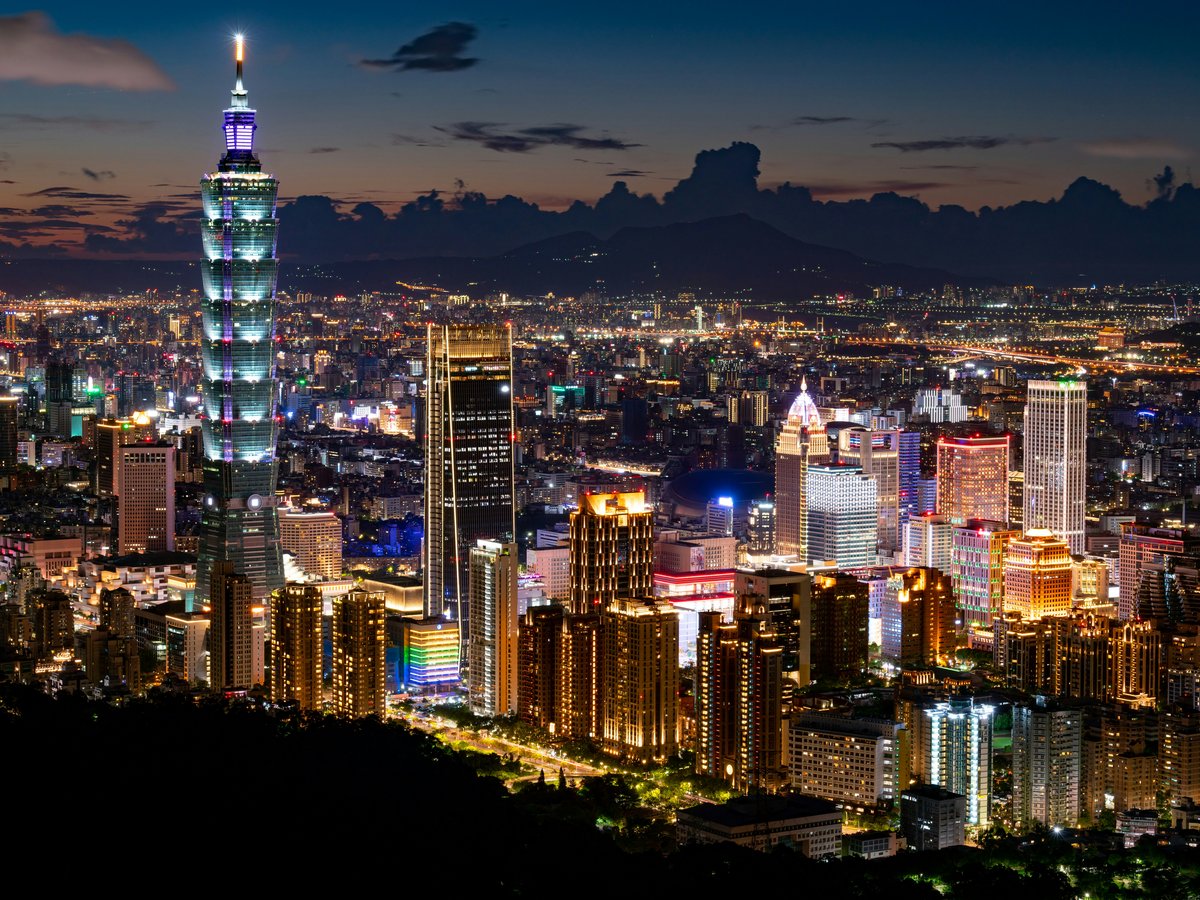
Stay in Taipei in January
75 hotels in the Trip.com pool for Taipei, from US$14 a night.
Opens Trip.com on Fri 1 Jan to Sun 3 Jan 2027; change the dates there.
January is Taipei's coolest month and, perhaps surprisingly, its driest. Daytime highs sit around 19°C (66°F) and overnight lows settle near 13°C (56°F), with only about 50mm of rain across roughly 10 days. The 78% humidity makes that chill feel sharper than the thermometer suggests, and most Taipei apartments and older restaurants lack central heating. You will see locals in Xinyi District wrapped in heavy down jackets at temperatures that might seem mild to anyone arriving from Seoul or Toronto.
The month has two bookend moments worth knowing about. The Taipei 101 New Year's Eve Countdown on December 31 sends fireworks off the tower at midnight, drawing over a million spectators into the streets around the Xinyi commercial district. The first week of January still carries that celebratory energy. By late January, the Dihua Street Lunar New Year Market (年貨大街) opens in the Dadaocheng area of Datong District, turning century-old shophouses into a corridor of dried squid, candied kumquats, roasted melon seeds, and red-and-gold decorations. The warm, nutty scent of sesame and peanut candy drifts through the crowd. If Lunar New Year falls in mid-February, you will catch the market's opening weeks at their least frantic. The earliest Taiwan cherry blossoms (山櫻花) sometimes appear along the trails of Yangmingshan National Park in the final days of the month, though the main bloom tends to peak in February.
This is not Taipei at its most photogenic. Grey skies settle over the basin for days, and the mountain ridgeline disappears behind low clouds. But rainfall is at its annual minimum, the summer crowds at Shilin Night Market and Longshan Temple have thinned considerably, and the cool air makes walking Taipei's hilly neighborhoods genuinely comfortable. The penetrating damp also turns Beitou's sulfur-scented hot springs from a sightseeing activity into something closer to a survival strategy.
Why visit in January
- Lowest rainfall of any month at 50mm, making January the most reliable for outdoor plans across Taipei's parks and trail networks
- Cool 19°C (66°F) temperatures are comfortable for walking Da'an, Datong, and the hilly lanes of Wanhua without the summer sweat that makes July and August exhausting
- The Dihua Street Lunar New Year Market opens in late January with traditional snacks, dried goods, and festive decorations at lower crowd levels than the final pre-holiday rush
- Peak hot spring season in Beitou, where 13°C (56°F) nighttime air makes the 38-42°C sulfur water feel transformative
- Hotel rates in Zhongshan and Da'an run roughly 20-30% below the October-November autumn peak and well below Lunar New Year week pricing
Worth knowing
- Persistent grey overcast limits views from Yangmingshan and Elephant Mountain (象山), and Taipei's famous skyline loses its punch without blue sky behind Taipei 101
- Damp cold around 13°C (56°F) with no central heating in many older buildings, tea houses, and budget accommodations can wear on you after several days
- Shorter daylight with sunset around 5:20 PM cuts into afternoon sightseeing at outdoor spots like the Tamsui waterfront and Maokong tea plantations
- The northeast monsoon brings intermittent drizzle to northern Taipei and the Keelung coast, particularly around Shilin and Beitou districts
Best for
Think twice if
January brings Taipei's coolest temperatures and its lowest rainfall. The northeast monsoon dominates, delivering overcast skies and intermittent light drizzle rather than heavy downpours. Mornings across the Taipei basin tend to be grey and cool, with temperatures climbing slowly toward 19°C by early afternoon. Nights regularly dip to 13°C, and occasional cold fronts (寒流) from Siberia can push lows toward 8-10°C for 2-3 days at a stretch. The 78% humidity makes the cold feel damp and clingy rather than the dry, crisp chill of a continental winter.
Seasonal caution
- Cold fronts (寒流) occasionally push through northern Taiwan in January, dropping Taipei temperatures to 8-10°C (46-50°F) for 2-3 consecutive days. The Central Weather Administration typically announces these 48 hours in advance. Pack an extra warm layer if your trip spans more than a week.
- The northeast monsoon can bring persistent drizzle to Taipei's northern districts, particularly Shilin, Beitou, and the Keelung coast. Yangmingshan trails become slippery during and after rain, and visibility on exposed ridgelines can drop to under 50 meters.
Year-round climate
Averages from the last 5 years.
| Month | Avg high (°C) | Avg low (°C) | Rainfall (mm) |
|---|---|---|---|
| Jan | 19 | 13 | 50 |
| Feb | 20 | 14 | 89 |
| Mar | 23 | 16 | 113 |
| Apr | 26 | 19 | 117 |
| May | 29 | 22 | 248 |
| Jun | 32 | 25 | 221 |
| Jul | 33 | 26 | 176 |
| Aug | 33 | 26 | 166 |
| Sep | 32 | 25 | 206 |
| Oct | 28 | 23 | 261 |
| Nov | 25 | 19 | 81 |
| Dec | 20 | 15 | 62 |
Headline events
Taipei 101 New Year's Eve Countdown
December 31 midnight into January 1
Over a million people fill the streets of Xinyi District to watch fireworks launch from Taipei 101 at midnight on December 31. The display typically lasts about 300 seconds, synchronized to music broadcast on local radio. The surrounding blocks close to traffic by late afternoon, and the Taipei Metro runs all night to handle the crowd. The energy in the packed streets is loud, cold, and charged with anticipation.
Dihua Street Lunar New Year Market (迪化街年貨大街)
Late January through Lunar New Year's Eve (dates shift annually with the lunar calendar)
Taipei's oldest and largest Lunar New Year shopping street fills the historic Dadaocheng corridor of Dihua Street with vendors selling dried goods, candied kumquats, peanut and sesame brittle, dried squid, red decorations, and gift sets. The market has operated for over 100 years. The smell of roasting nuts and dried longan fills the narrow lanes, and free samples appear at nearly every stall. When Lunar New Year falls in mid-February, the market typically opens in late January and builds to a dense, shoulder-to-shoulder peak in the final 3 days before the holiday.
Best things to do in January
Beitou hot springs soaking
wellnessThe sulfuric hot springs of Beitou district sit a 25-minute MRT ride from Taipei Main Station. Public bathhouses and private hotel pools draw from the same geothermal source in the valley. The outdoor pools let you soak in 38-42°C water while cool January mist drifts above the surface. The sulfur smell is strong and lingers on skin and swimwear.
The 13°C nighttime air creates the widest temperature contrast with the hot water, and January crowds at public bathhouses are a fraction of the autumn tourist peak.Booking tipPublic bathhouses like Millennium Hot Spring operate on a first-come basis. Weekend mornings before 9 AM tend to be quietest.
Dihua Street market browsing and tasting
cultureThe 800-meter stretch of Dihua Street in Dadaocheng fills with temporary stalls selling dried goods, snacks, and Lunar New Year supplies from late January. Free samples of dried mango, peanut brittle, candied kumquat, and pork jerky are handed out constantly. The surrounding lanes hold preserved Japanese-era shophouses, fabric stores, and traditional Chinese medicine shops.
The Lunar New Year market only operates in the weeks before the holiday. Late January catches the opening days before the final-week crush makes movement difficult.Booking tipNo booking needed. Weekday mornings have lighter foot traffic. The market typically opens around 9 AM and runs until 9 PM.
Yangmingshan National Park winter hiking
natureThe volcanic terrain of Yangmingshan rises directly north of central Taipei. January offers cool, comfortable hiking temperatures on trails like Qixingshan (七星山, 1,120m), the Lengshuikeng loop, and the sulphur-vented Xiaoyoukeng path. Steam rises from fumaroles year-round, but the cool air makes the volcanic vents more visually dramatic.
Cool 12-15°C temperatures at elevation make the steep Qixingshan ascent far less punishing than summer's 34°C heat and 90% humidity. Trail congestion is minimal on weekdays.Booking tipCheck the Yangmingshan National Park website for trail closures after heavy rain. Bus S15 from Jiantan MRT station reaches the park entrance in 30 minutes.
Longshan Temple prayer and incense ceremony
cultureTaipei's oldest temple (built 1738) in Wanhua district sees increased prayer activity through January as worshippers seek blessings for the coming year. The heavy sandalwood incense, rhythmic chanting, and clatter of divination blocks (筊杯) create a dense sensory atmosphere. The temple courtyard holds offerings of fruit, rice, and sometimes whole roast chickens.
The pre-Lunar New Year prayer season (拜拜) intensifies in January. Devotees visit to settle spiritual accounts for the outgoing year and request good fortune for the next.Booking tipNo booking. Visit before 8 AM or after 7 PM for thinner crowds. Photography is welcome but keep voices low during active ceremonies.
Maokong Gondola and tea tasting
food and drinkThe 4.3km cable car climbs from Taipei Zoo station to the Maokong tea-growing hillside, passing over subtropical canopy. At the top, family-run tea houses serve Tieguanyin and Baozhong oolongs with valley views. On clear January days you can see Taipei 101 from several of the terrace cafes.
Cool weather makes the enclosed gondola cabins comfortable (summer temperatures inside can reach 40°C). Clear winter days, when they occur, offer the longest visibility across the basin.Booking tipThe gondola closes on Mondays for maintenance. Crystal-floor cabins have longer queues. Late afternoon visits catch sunset light over the city, but the last car down leaves around 9 PM.
Shilin Night Market winter eating
food and drinkTaiwan's largest night market covers several city blocks near Jiantan MRT station. January's cooler temperatures make standing and eating in the crowded lanes far more comfortable than summer. Stalls sell oyster omelettes (蚵仔煎), pepper buns (胡椒餅), stinky tofu (臭豆腐), and flame-grilled squid. The underground food court has seating.
January's low tourist numbers mean shorter queues at popular stalls. Cool air reduces the smell intensity that overwhelms some visitors in humid summer months.Booking tipNo reservation needed. Most stalls open around 5 PM and close after midnight. Go after 8 PM for the full experience.
National Palace Museum extended visit
cultureThe museum in Shilin district holds over 690,000 Chinese imperial artifacts, including the famous jade cabbage and meat-shaped stone. The collection rotates regularly. January's low visitor numbers mean you can spend time with individual pieces without being pushed along by tour groups that dominate October and November.
Lowest crowd levels of the year make extended viewing of major pieces possible. A good rainy-day option when Yangmingshan is socked in by cloud.Booking tipAudio guides are available in multiple languages at the entrance. The museum café on the 4th floor has valley views.
Tamsui waterfront sunset walk
natureThe old port town at the end of the Red MRT line faces west across the river mouth. January's early 5:20 PM sunset means you can catch the golden light over Guanyin Mountain without staying out late. The waterfront promenade runs about 2km, lined with iron-egg vendors, fish ball shops, and agei (阿給) stalls.
Early sunset timing makes the golden hour accessible in the late afternoon. Winter light hits the river at a low angle that photographs well against the mountain silhouette.Booking tipTake the MRT Red line to Tamsui station. The ferry to Bali Left Bank (八里左岸) runs every 15-20 minutes and offers views from the water.
What to eat in January
In season: fruit
Strawberries (草莓)
January is peak strawberry season in northern Taiwan. Dahu Township in Miaoli (about 90 minutes from Taipei by train) is the picking hub, but Taipei's fruit vendors and dessert cafes in Da'an and Zhongshan stock fresh berries daily. Sweeter and firmer in cool weather.
On menus now
Ginger duck (薑母鴨)
Winter-only stalls and dedicated restaurants across Taipei serve this slow-simmered duck in a ginger-heavy rice wine broth. The aroma of old ginger and sesame oil fills the street-side seating areas along Nanjing East Road and in Wanhua. Peak demand runs December through February.
Sesame oil chicken (麻油雞)
A warming soup of chicken pieces poached in toasted black sesame oil and rice wine. Traditional postpartum food that becomes a city-wide winter comfort dish. Strongly aromatic, slightly sweet from the wine reduction. Neighbourhood shops in Da'an and Songshan serve it in clay pots.
Hot pot (火鍋)
January is peak hot pot season in Taipei. Mala (Sichuan-spicy), milky tonkotsu-style, and traditional Taiwanese sour cabbage broths are the main variants. Linsen North Road in Zhongshan has a particularly high concentration of hot pot restaurants, some open past midnight.
Street food peaks
Tangyuan (湯圓)
Glutinous rice balls filled with black sesame paste or crushed peanut, served in sweet ginger soup. Sold at dessert shops and night market stalls throughout the month, with demand peaking around the Lantern Festival if it falls in late January.
In markets
Dried mullet roe (烏魚子)
A Lunar New Year luxury item, thinly sliced and lightly seared with garlic shoots. Vendors along Dihua Street sell whole slabs during the New Year market, and restaurants in Zhongshan serve it as a celebratory appetizer through the holiday period.
Regular events in January
Taipei Lantern Festival preparationsFree
City workers begin installing lantern displays along sections of the Keelung River in late January when the festival falls in February. The half-built installations are visible from riverside cycling paths in Songshan and Nangang districts.
Late January (setup phase)Republic of China Founding DayFree
January 1 is a national holiday in Taiwan, marking the founding of the Republic of China in 1912. Government buildings fly flags, and some offices and shops close. The Presidential Office Building in Zhongzheng opens for public tours on this day.
January 1Winter temple fair circuitFree
Smaller neighborhood temples across Wanhua, Datong, and Dalongdong hold prayer fairs (拜拜) through January as families prepare for the Lunar New Year. Offerings of oranges, rice cakes, and incense create a fragrant atmosphere. The fairs at Bao'an Temple and Xiahai City God Temple are particularly active.
Throughout JanuaryTaipei International Book Exhibition (preview events)
Taiwan's largest book fair typically runs in late January or early February at the Taipei World Trade Center in Xinyi. Publisher previews, author signings, and discounted sales draw large domestic crowds. Over 500 publishers from 50+ countries participate in a typical year.
Late January to early February (dates vary annually)Best places this January
Beitou Hot Spring Valley (北投溫泉)
wellnessA cluster of public and private hot spring facilities built around a geothermal valley 25 minutes from central Taipei by MRT. The green sulfur spring at Thermal Valley (地熱谷) steams at 80-100°C, too hot to enter but dramatic to see. Public soaking pools nearby maintain a comfortable 38-42°C.
BeitouDihua Street (迪化街)
cultureAn 800-meter stretch of Qing and Japanese-era shophouses in Dadaocheng, now home to dried goods merchants, fabric stores, traditional medicine shops, and a growing number of renovated cafes. In late January, temporary New Year market stalls line the entire street.
DatongYangmingshan National Park
natureVolcanic national park on Taipei's northern boundary, with fumaroles, sulfur vents, and hiking trails through grassland and forest. Qixingshan peak reaches 1,120m. January brings cool temperatures at elevation and the possibility of early cherry blossoms along lower trails.
Beitou/Shilin borderLongshan Temple (龍山寺)
cultureTaipei's oldest temple, built in 1738 in Wanhua district. A working place of worship, not a museum. Heavy incense smoke, carved stone dragons, and the sound of divination blocks create an immersive sensory environment. Especially active in January during pre-New Year prayer season.
WanhuaElephant Mountain (象山)
natureA 20-minute steep climb from Xiangshan MRT station to a series of viewpoints overlooking Taipei 101 and the Xinyi skyline. Popular for sunset photography, though January's overcast skies limit clear views to perhaps 2-3 days per week. The rocky outcrop at the top has no railings.
XinyiDadaocheng Wharf (大稻埕碼頭)
leisureA riverside promenade and cycling path along the Tamsui River in Datong district, connecting to the Dihua Street area. Sunset views face west toward Guanyin Mountain. In January, the combination of early sunset and proximity to the New Year market makes it a natural evening wind-down spot.
DatongTaipei 101 Observatory
landmarkThe 89th-floor indoor observatory and 91st-floor outdoor deck of Taipei's tallest building offer 360-degree views across the basin. On clear January days, visibility can extend to the distant mountains. The outdoor deck closes during high winds, which are more common in winter months.
XinyiNational Palace Museum
cultureOne of the world's largest collections of Chinese imperial art and antiquities, housed in a grand complex in Shilin district. Over 690,000 pieces rotate through the galleries. January is the quietest month for visiting, with minimal tour-group congestion.
Shilin
Your packing checklist
Tick items off as you pack. Your progress saves in this browser.
All packed — have a great trip.
Insider tips
The Taipei Metro (MRT) runs extended hours on New Year's Eve, typically operating all night until around 2 AM on January 1. Check the metro website in late December for the exact timetable, as it varies by line.
Beitou's public hot spring bathhouses enforce strict swimwear requirements. Men need trunks (not board shorts) and women need one-piece suits at most public pools. Private rooms have no dress code but require advance booking on weekends.
Dihua Street's New Year market vendors typically offer better free samples and less aggressive selling in the first week of operation. By the final weekend before Lunar New Year, the crowd density makes browsing nearly impossible, with 3-4 abreast shuffling.
Many of Taipei's ginger duck (薑母鴨) restaurants are open-air street stalls with low plastic stools and no walls. The combination of cold air on your back and boiling broth in front creates a weirdly enjoyable contrast. Look for stalls with the longest local queues in Wanhua and Sanchong.
The Central Weather Administration posts cold-front (寒流) warnings 48 hours ahead on its website and app. When a front hits, Taipei can drop 8-10°C in a single day. Locals call these drops "sudden winter" (急凍) and pharmacies sell out of hand warmers.
If Yangmingshan is socked in by cloud, Bitan (碧潭) in Xindian offers a riverside walk and suspension bridge at lower elevation where January skies tend to be clearer. It is reachable by the Green MRT line in about 35 minutes from Taipei Main Station.
Avoid these mistakes
- Underestimating the indoor cold. Taipei's lack of central heating in many older buildings, tea houses, and budget accommodations means indoor temperatures can match outdoor temperatures on cold days. Layers you can add and remove are more useful than one heavy coat.
- Planning a Yangmingshan hike without checking the weather forecast. The mountain's elevation means it sits in cloud far more often than the city below. Checking the Yangmingshan webcams the morning of your visit saves a wasted trip.
- Booking a hotel for the final week of January without checking the Lunar New Year calendar. If the holiday falls in late January or early February, hotel rates in central districts can double or triple during the holiday week.
- Assuming all hot spring facilities are the same. Beitou has multiple spring types, from acidic green sulfur (strongest smell, highest mineral content) to white sulfur and iron springs. Sensitivity to sulfur varies, so try a short soak first.
- Visiting Dihua Street on the final Saturday before Lunar New Year expecting a pleasant browse. The market on that day is a wall-to-wall shuffle with minimal ability to stop, compare, or negotiate. Go in the first week of operation instead.
Practical tips for January
January Taipei requires a cold-weather mindset despite the subtropical latitude. Carry layers you can add inside unheated spaces and remove on the MRT (which is well heated). The EasyCard stored-value card works on all metro lines, buses, and at convenience stores for hot drinks. Convenience stores (7-Eleven, FamilyMart) appear on nearly every block and serve as warming stations with hot food counters, seating, and free Wi-Fi. The northeast monsoon tends to ease by mid-afternoon most days, making mornings the wettest period. If planning any day trip outside Taipei (Jiufen, Yehliu, Keelung), check the north coast weather separately as it is typically wetter and windier than the Taipei basin itself. The Taipei Metro operates from 6 AM to midnight (later on NYE), with trains every 3-7 minutes on main lines.
FAQ
Is January a good time to visit Taipei for first-time visitors?
January works well for first-timers who prefer cool weather and smaller crowds. You will get the city's best hot spring season, the Lunar New Year market atmosphere on Dihua Street, and shorter queues at major sites like the National Palace Museum. The trade-off is grey skies on many days and damp cold that requires proper layering. If clear skies and outdoor photography are priorities, October or November tends to be more reliable.
How cold does Taipei get in January?
Average highs sit around 19°C (66°F) and lows around 13°C (56°F). That sounds mild, but 78% humidity makes it feel colder than dry climates at the same temperature. When cold fronts push through from Siberia, which happens a few times each January, lows can reach 8-10°C (46-50°F) for 2-3 days. The bigger issue is the lack of central heating in many indoor spaces, which means you cannot always warm up by going inside.
Does it rain a lot in Taipei in January?
January is Taipei's driest month, with only about 50mm of rainfall across roughly 10 wet days. The rain tends to come as light drizzle from the northeast monsoon rather than heavy downpours. Mornings are more likely to be damp than afternoons. Compared to the June plum rain season (over 300mm) or typhoon-prone September, January is remarkably dry for Taipei.
What should I wear in Taipei in January?
Layer for variable indoor and outdoor temperatures. A medium-weight insulated jacket, warm base layers for unheated buildings, a waterproof shell for drizzle, and closed-toe waterproof shoes for wet temple steps and hiking trails. A scarf is useful on the windy Tamsui waterfront and Yangmingshan ridgelines. The MRT is heated, so you will want to remove outer layers on longer rides.
Is the Lunar New Year market open for the whole month of January?
No. The Dihua Street Lunar New Year Market (年貨大街) typically opens about 2-3 weeks before Lunar New Year's Eve. Since the lunar calendar shifts annually, this might mean late January or early February. In years when the holiday falls in mid-February, the market tends to open in the final week of January. Check local news in early January for the confirmed opening date.
Can I see cherry blossoms in Taipei in January?
Possibly, but only the very earliest blooms. Taiwan cherry blossoms (山櫻花) sometimes begin appearing on Yangmingshan's lower trails in the final days of January, particularly along the road to Pingjing Street. The main bloom typically peaks in mid-to-late February. If cherry blossoms are your primary reason for visiting, February gives you much better odds of catching the full display.
Things to Do in Taipei in January
 Free cancellation
 Full-Day Private Custom Taipei City Tour
Day trip: 8 hours, free cancellation.
via Viator Free cancellation
 Full-Day Private Northern Taiwan Tour from Taipei with Pickup
Day trip: 8 hours, free cancellation.
via Viator Free cancellation
 The Award-Winning Private Food Tour of Taipei: The 10 Tastings
City tour: 3 hours, free cancellation.
via Viator Free cancellation
 Small-Group: Yehliu, Jiufen & Pingxi Day Tour from Taipei
Day trip: 9 hours, free cancellation.
via Viator Free cancellation
 4-Hour Morning Cycling City Tour (incl. breakfast)
City tour: 4 hours, free cancellation.
via Viator Free cancellation
 Yehliu & Jiufen & Shifen Day Tour (Departure from Ximending)
City tour: 9 hours, free cancellation.
via ViatorFind a flight to Taipei
Live fares to Taipei appear here once cookies are accepted.
Last verified by automated review (v1.7.2) on . What is automated review?