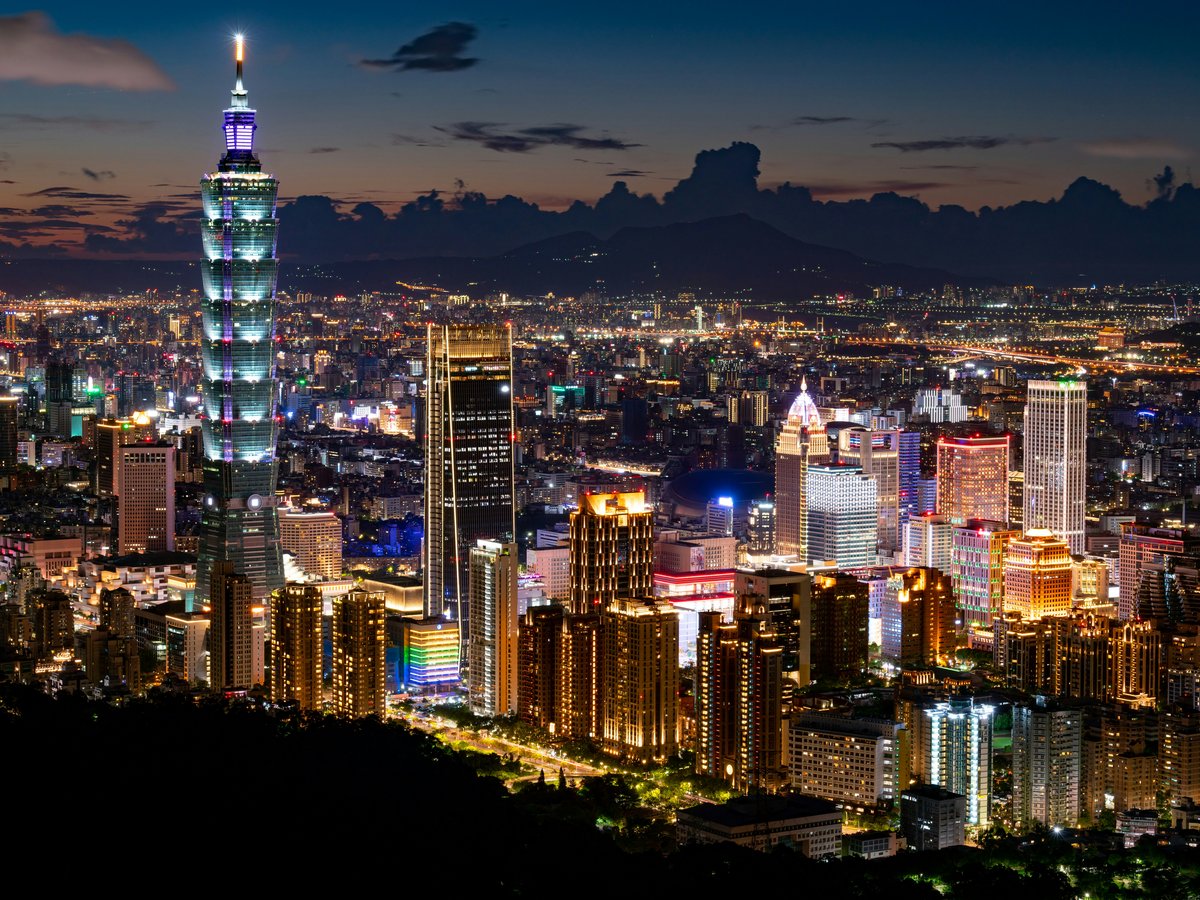
Stay in Taipei in July
75 hotels in the Trip.com pool for Taipei, from US$14 a night.
Opens Trip.com on Fri 2 Jul to Sun 4 Jul 2027; change the dates there.
July in Taipei is hot. Not theoretically hot, not dry-heat hot, but the kind of sticky 33°C (92°F) that settles into your clothes within 5 minutes of stepping outside the MRT station. Humidity sits around 78%, and the air feels thick enough to chew on most afternoons. This is also peak typhoon season for Taiwan, which means you might wake up to a perfectly blue sky or to a government-declared typhoon day that shuts down transit and businesses across the city. Worth noting that rainfall drops from June's 221mm to July's 176mm, so it's not the wettest month by far. The showers tend to be intense but brief, usually rolling in between 2pm and 5pm.
That said, July has its defenders. Taiwan's summer school holiday fills the city with domestic tourists and gives the night markets a particular energy after dark, when temperatures drop to a more bearable 26°C (78°F). Mango season peaks right now. The fruit stalls in Yongkang Street and Shilin Night Market pile up golden Irwin mangoes at some of the lowest prices you'll see all year. If you can tolerate heat and plan your outdoor time for early morning or after sunset, Taipei in July still functions well as a food-and-culture destination. You'll spend more time in air-conditioned spaces than you might like, but those spaces happen to include some of Asia's finest museums, department stores, and tea houses.
Why visit in July
- Mango season peaks in July, with Irwin and Jinhuang varieties at their sweetest and cheapest at markets across the city
- Night markets like Raohe and Shilin stay open past midnight, and the evening temperatures around 26-28°C make them far more comfortable than daytime sightseeing
- The Gongliao International Ocean Music Festival draws 30,000+ attendees to Fulong Beach for free rock and indie performances over 3 days
- Afternoon thunderstorms tend to last 30-60 minutes then clear, leaving dramatic sunset skies over the Tamsui River
- Fewer Western tourists than the peak October-December season means shorter queues at the National Palace Museum and Taipei 101 observatory
Worth knowing
- Daytime humidity of 78% combined with 33°C heat makes extended outdoor walking genuinely draining by mid-morning
- Typhoon risk is real. The Central Weather Administration issues roughly 3-4 typhoon warnings for Taiwan between July and September, and a direct hit can cancel 2-3 days of plans
- UV index regularly reaches 10-11 in July, making sunburn likely within 20 minutes of unprotected exposure
- Air quality occasionally dips when Pacific high-pressure systems trap pollution over the Taipei Basin, pushing AQI above 100
Best for
Think twice if
July is Taipei's hottest month alongside August. Expect thick, humid heat from morning through late afternoon, with brief but intense thunderstorms most days between 2pm and 5pm. Mornings start warm at 26°C and climb rapidly after 10am. The Pacific high-pressure system parked over Taiwan keeps skies mostly clear between storms, and you'll get genuine sunshine for 5-6 hours on most days. Nights cool slightly but still feel warm. The rain tends to arrive all at once rather than drizzling throughout the day.
Seasonal caution
- Typhoon season is active July through September. Taiwan averages 3-4 typhoon warnings per season, and a direct-hit typhoon triggers government-mandated closures of public transit, schools, offices, and most businesses for 1-2 days
- UV index frequently reaches 10-11 between 10am and 3pm. Sunburn is possible within 15-20 minutes of unprotected exposure
- Heat index regularly exceeds 38°C (100°F) when factoring humidity. Heat exhaustion risk is genuine for visitors unaccustomed to subtropical conditions, particularly on exposed urban streets without shade
Year-round climate
Averages from the last 5 years.
| Month | Avg high (°C) | Avg low (°C) | Rainfall (mm) |
|---|---|---|---|
| Jan | 19 | 13 | 50 |
| Feb | 20 | 14 | 89 |
| Mar | 23 | 16 | 113 |
| Apr | 26 | 19 | 117 |
| May | 29 | 22 | 248 |
| Jun | 32 | 25 | 221 |
| Jul | 33 | 26 | 176 |
| Aug | 33 | 26 | 166 |
| Sep | 32 | 25 | 206 |
| Oct | 28 | 23 | 261 |
| Nov | 25 | 19 | 81 |
| Dec | 20 | 15 | 62 |
Headline events
Ho-Hai-Yan Gongliao International Ocean Music Festival
Mid-July (usually the second or third weekend)
Taiwan's largest outdoor rock festival, running since 2000, brings 30,000+ music fans to Fulong Beach over 3 days for free live performances by Taiwanese indie bands, international acts, and emerging artists. The beach setting 90 minutes from Taipei by train makes it a summer pilgrimage for the island's music community.
Best things to do in July
Night Market Circuit After Sunset
foodRaohe Street Night Market runs 400 meters along Songshan's temple district, while Shilin Night Market sprawls across multiple covered lanes in Shilin. Both open around 5pm and stay active past midnight. The pepper buns at Raohe's entrance arch draw a steady line by 6pm.
Evening temperatures drop to 26-28°C, making the 4-5 hours after sunset the most comfortable window for walking and eating outdoors.Booking tipNo booking needed. Arrive at Raohe by 5:30pm to beat the pepper bun queue. Shilin gets crowded after 8pm on weekends.
Beitou Hot Springs (Indoor Facilities)
wellnessBeitou's geothermal valley feeds hot spring water to dozens of facilities along Zhongshan Road. The public Millennium Hot Spring sits at the end of the MRT Red Line, 30 minutes from Taipei Main Station. Mind you, the outdoor pools feel less appealing in 33°C heat, but the indoor private rooms with cold plunge options still draw locals year-round.
Indoor hot-cold plunge circuits feel best when you arrive overheated from the summer streets. The contrast between 40°C spring water and cold plunge is particularly sharp.Booking tipWeekday mornings have the shortest waits at public facilities. Private room bookings fill up on weekends.
National Palace Museum
cultureThe world's largest collection of Chinese imperial artifacts sits in Shilin, housed in a climate-controlled building that stays around 22°C year-round. The Jadeite Cabbage and Meat-Shaped Stone draw the most attention, but the rotating calligraphy and ceramics galleries on the 3rd floor tend to be quieter. Plan for 3-4 hours.
July's outdoor heat makes air-conditioned museum time especially welcome. Fewer Western tourists than the autumn peak means shorter waits at the main galleries.Booking tipOnline tickets skip the entrance queue. The Southern Branch in Chiayi has overflow exhibitions if you want a day trip.
Tamsui Waterfront at Sunset
sightseeingThe MRT Red Line ends at Tamsui, where a long riverside promenade faces west toward the Taiwan Strait. Fisherman's Wharf sits 10 minutes further by bus, with a pedestrian bridge that frames the sunset. The old colonial street behind the ferry pier has iron-egg shops and agei (stuffed tofu) stalls.
July sunsets over the Taiwan Strait happen around 6:45pm, and the sea breeze along the Tamsui River drops the felt temperature by 3-4°C compared to central Taipei.Jiufen and Jinguashi Day Trip
day_tripThe old gold-mining town of Jiufen clings to a hillside above the northeast coast, about 90 minutes from Taipei by bus from Zhongxiao Fuxing MRT. The narrow Jishan Street fills with taro ball shops and tea houses overlooking the Pacific. Jinguashi's Gold Museum sits 10 minutes further along the coast road.
The coastal elevation tends to be 2-3°C cooler than the Taipei Basin. Afternoon clouds roll in from the Pacific and soften the light for photography along Jishan Street.Booking tipTake the 1062 bus before 9am to arrive ahead of tour groups. Return buses after 4pm are standing-room on weekends.
Dadaocheng Riverside Cycling
outdoorThe Dadaocheng Wharf bike path runs along the Tamsui River from Yanping North Road toward Guandu. YouBike 2.0 stations sit every 300-400 meters along the route. The path is flat, paved, and separated from traffic for most of its 15km length.
Early mornings before 8am and evenings after 6pm offer 26-28°C riding temperatures. The river breeze picks up in the evening and makes the northbound stretch toward Guandu particularly pleasant.Booking tipYouBike 2.0 unlocks with an EasyCard or credit card registration via the app. Stations near Dadaocheng Wharf tend to have full racks in the early morning.
Maokong Gondola and Tea Houses
cultureThe Maokong Gondola runs 4km from Taipei Zoo station up to Maokong, where tea plantations cover the hillsides above Wenshan. Several tea houses serve Tieguanyin and Baozhong teas with views over the Taipei Basin. The crystal-floor cabins (cabin number with a marking) offer a see-through bottom for the ride up.
The elevation at Maokong sits around 300 meters, which typically shaves 2°C off the basin temperature. Evening rides offer city light views after 7pm.Booking tipThe gondola closes on Mondays for maintenance. Weekday afternoons have the shortest cabin waits. Check the gondola website for typhoon-day closures.
What to eat in July
In season: fruit
Irwin Mango (愛文芒果)
Peak harvest from Tainan and Pingtung floods Taipei markets in July. The flesh is deep orange, honey-sweet, and almost custard-textured when fully ripe. Prices drop to their annual low at traditional markets during peak harvest.
Passion Fruit (百香果)
Taiwan's passion fruit season starts in July. The wrinkled purple-skinned fruits appear at juice stands and fruit stalls across the city, often blended into drinks or spooned over shaved ice. Tart, fragrant, intensely tropical.
Dragon Fruit (火龍果)
Both white-fleshed and the sweeter red-fleshed varieties from Changhua and Pingtung hit markets in July. Binjiang Market in Songshan tends to have good selection at seasonal prices.
Lychee (荔枝)
The tail end of Taiwan's lychee season overlaps with early July. Heiyelichi (black-leaf lychee) from Taichung and Nantou still appears at fruit vendors, with a floral sweetness and thin, peelable skin. They tend to sell out fast once August hits.
On menus now
Mango Shaved Ice (芒果冰)
Ice Mountain (冰鄉) on Yongkang Street and Smoothie House (思慕昔) pile fresh-cut Irwin mango over shaved milk ice with condensed milk and mango sorbet. This is the dish that defines Taipei summers.
Bitter Melon with Salted Egg (鹹蛋苦瓜)
A classic Taiwanese summer homestyle dish. Bitter melon is at its seasonal peak, sliced thin and stir-fried with crumbled salted duck egg. The bitterness mellows against the rich, sandy yolk. Look for it on the daily specials board at bento shops in Zhongzheng and Da'an.
What to drink
Aiyu Jelly (愛玉冰)
Made from the seeds of a fig native to Taiwan's mountains, served cold with lime juice and honey. You'll find it at night market stalls and traditional dessert shops across Dadaocheng and Wanhua.
Regular events in July
Taipei Children's Arts Festival
A month-long program of theater, puppet shows, and interactive installations for families, running at venues across Zhongshan and Songshan. The festival is organized by Taipei City Government and typically features 40+ performances across July.
Throughout JulyLGBTQ+ Pride Events at Red HouseFree
The Red House (西門紅樓) in Ximending hosts community events, film screenings, and outdoor gatherings in its plaza throughout the summer. The open-air bars around the Red House courtyard fill up on weekend evenings.
Weekend evenings throughout JulyTaipei Riverside Music FestivalFree
Free outdoor concerts along the Dadaocheng Wharf section of the Tamsui River, typically featuring Taiwanese folk, jazz, and pop acts. Bring a mat and arrive early for a riverfront spot.
Saturday evenings in JulyBest places this July
Shilin Night Market
night_marketTaipei's largest and most well-known night market, with a basement food court and street-level stalls stretching across several blocks. The oyster omelette and stinky tofu stalls in the basement food court draw the longest lines.
ShilinTaipei 101 Observatory
landmarkThe 89th-floor outdoor observation deck sits 382 meters above Xinyi. On clear July evenings, visibility can extend to the coast. The indoor section stays cool at around 22°C.
XinyiLongshan Temple
templeBuilt in 1738, Taipei's oldest temple sits in Wanhua. The main hall's carved stone columns and the smoke from incense offerings create one of the city's most atmospheric spaces. Evening visits after 7pm are quieter and cooler.
WanhuaElephant Mountain (象山)
hikingA 20-minute climb from the Xiangshan MRT station to a series of rock platforms overlooking Taipei 101 and the Xinyi skyline. The trail is paved with stone steps. In July, go at 5:30am or after 6pm to avoid the worst heat.
XinyiDadaocheng (大稻埕)
historic_districtTaipei's oldest commercial district, centered on Dihua Street, mixes Baroque-era shophouses with tea merchants, dried goods shops, and a growing number of craft cafes. The weekend riverside market at Dadaocheng Wharf runs until 10pm.
DatongBeitou Public Library
architectureA wooden-framed green building set among the trees near Beitou Hot Spring Park. The reading rooms have floor-to-ceiling windows facing the surrounding forest. One of Taipei's coolest retreats on a hot afternoon, both in temperature and atmosphere.
BeitouHuashan 1914 Creative Park
artsA converted sake brewery in Zhongzheng that now hosts rotating art exhibitions, indie film screenings, and design markets. The indoor galleries stay climate-controlled, and the outdoor courtyard has shaded seating under mature trees.
Zhongzheng
Your packing checklist
Tick items off as you pack. Your progress saves in this browser.
All packed — have a great trip.
Insider tips
The EasyCard stored-value transit card works on the MRT, buses, YouBikes, convenience stores, and many restaurants. Load one at any MRT station and it eliminates the need to carry cash for most daily spending.
Typhoon days are not wasted days. Department stores like Breeze Nanshan and Shin Kong Mitsukoshi in Xinyi stay open, and many restaurants in underground malls continue service. Locals treat typhoon days as impromptu holidays.
The afternoon storm pattern is predictable enough to plan around. Schedule outdoor activities for 7-11am, retreat to museums or malls from 1-5pm, then go back outside for night markets and evening walks.
Eslite Spectrum bookstore in Songyan Creative Park stays open until 10pm and has air-conditioned reading areas, a food hall, and rotating art exhibitions. It's where Taipei's creative class spends humid evenings.
Traditional markets like Shuanglian Morning Market (open 6am-noon) and Nanmen Market in Zhongzheng sell seasonal fruit at better prices than tourist-facing night market stalls. Go before 9am for the widest selection.
The Maokong Gondola's crystal-floor cabins have a longer wait than regular cabins, but the line moves faster on weekday afternoons. The mountain tea houses stay open until 9-10pm and offer night views of the basin.
Avoid these mistakes
- Underestimating the UV intensity because it's overcast. Cloud cover in Taipei still lets through 60-70% of UV radiation, and visitors regularly sunburn on days that look grey. Wear sunscreen regardless of cloud cover.
- Planning a full day of outdoor walking between 11am and 3pm. Heat exhaustion is a genuine risk at 33°C and 78% humidity, especially for visitors arriving from cooler climates. Split the day into morning and evening outdoor blocks.
- Not checking the Central Weather Administration website before booking day trips. A typhoon warning can emerge 48-72 hours before landfall, and mountain trails (Yangmingshan, Wulai) close before urban areas feel any impact.
- Ignoring the MRT's last train times. Trains stop running between midnight and 12:30am depending on the line. Night market visits that run past 11pm need a taxi or ride-hail plan for the return trip.
- Packing only summer clothes. The temperature gap between outdoor heat and indoor air conditioning is 8-11°C. A light layer prevents the chill that settles in after 2 hours in an over-cooled museum or mall.
Practical tips for July
July in Taipei demands a split-schedule approach. Plan outdoor sightseeing for early morning (6-10am) or evening (after 5:30pm), and fill the midday hours with air-conditioned activities like the National Palace Museum, Eslite bookstores, or department store food courts in Xinyi. Carry a compact umbrella at all times for the 2-5pm thunderstorms. Download the Central Weather Administration app (CWA) for real-time typhoon tracking and rain radar. The MRT runs from 6am to midnight and covers most tourist areas efficiently. Convenience stores (7-Eleven and FamilyMart appear every 2-3 blocks) sell cold drinks, onigiri, and emergency rain ponchos. Tap water in Taipei is safe to drink after boiling, but most visitors rely on bottled water or the filtered dispensers in MRT stations. Budget an extra rest day for potential typhoon disruption, especially if you're traveling in the second half of July when storm probability tends to be higher.
FAQ
Is July a good time to visit Taipei?
July is a fair time to visit. The heat and humidity are at their peak, and typhoon risk is real, but mango season, lively night markets, and lower hotel rates compared to autumn make it workable if you plan around the weather. Expect to shift outdoor time to mornings and evenings.
How often do typhoons hit Taipei in July?
Taiwan averages 3-4 typhoon warnings per season (July through September), but a direct hit on northern Taiwan happens roughly once every 2-3 years. More commonly, you'll experience a day or two of heavy rain and wind from a passing storm. Government-declared typhoon days shut down transit and most businesses.
What should I wear in Taipei in July?
Lightweight, moisture-wicking fabrics work best. Cotton stays damp in the humidity. Bring a light long-sleeve layer for heavily air-conditioned spaces like the MRT, malls, and museums, where temperatures can drop to 22-24°C. Closed-toe shoes that can handle wet pavement are more practical than sandals for sudden downpours.
Can I still enjoy Taipei if it rains every day in July?
The rain pattern in July is typically predictable. Mornings tend to be sunny, storms roll in between 2pm and 5pm, and evenings clear up. This leaves 6-8 usable outdoor hours per day. Indoor options like the National Palace Museum, Huashan 1914 Creative Park, and the underground shopping networks at Taipei Main Station fill the rainy window well.
Are night markets open during typhoons?
During a government-declared typhoon day, most night market vendors close. However, night markets in covered areas like the basement food court at Shilin sometimes stay partially open. Department stores and hotel restaurants are more reliable options during typhoon conditions.
Things to Do in Taipei in July
 Free cancellation
 Full-Day Private Custom Taipei City Tour
Day trip: 8 hours, free cancellation.
via Viator Free cancellation
 Full-Day Private Northern Taiwan Tour from Taipei with Pickup
Day trip: 8 hours, free cancellation.
via Viator Free cancellation
 The Award-Winning Private Food Tour of Taipei: The 10 Tastings
City tour: 3 hours, free cancellation.
via Viator Free cancellation
 4-Hour Morning Cycling City Tour (incl. breakfast)
City tour: 4 hours, free cancellation.
via Viator Free cancellation
 Yehliu & Jiufen & Shifen Day Tour (Departure from Ximending)
City tour: 9 hours, free cancellation.
via Viator
Small-Group Tour: Jiufen, Yehliu Geopark, and Shifen from Taipei
Day trip: 9 hours.
via ViatorFind a flight to Taipei
Live fares to Taipei appear here once cookies are accepted.
Last verified by automated review (v1.7.2) on . What is automated review?