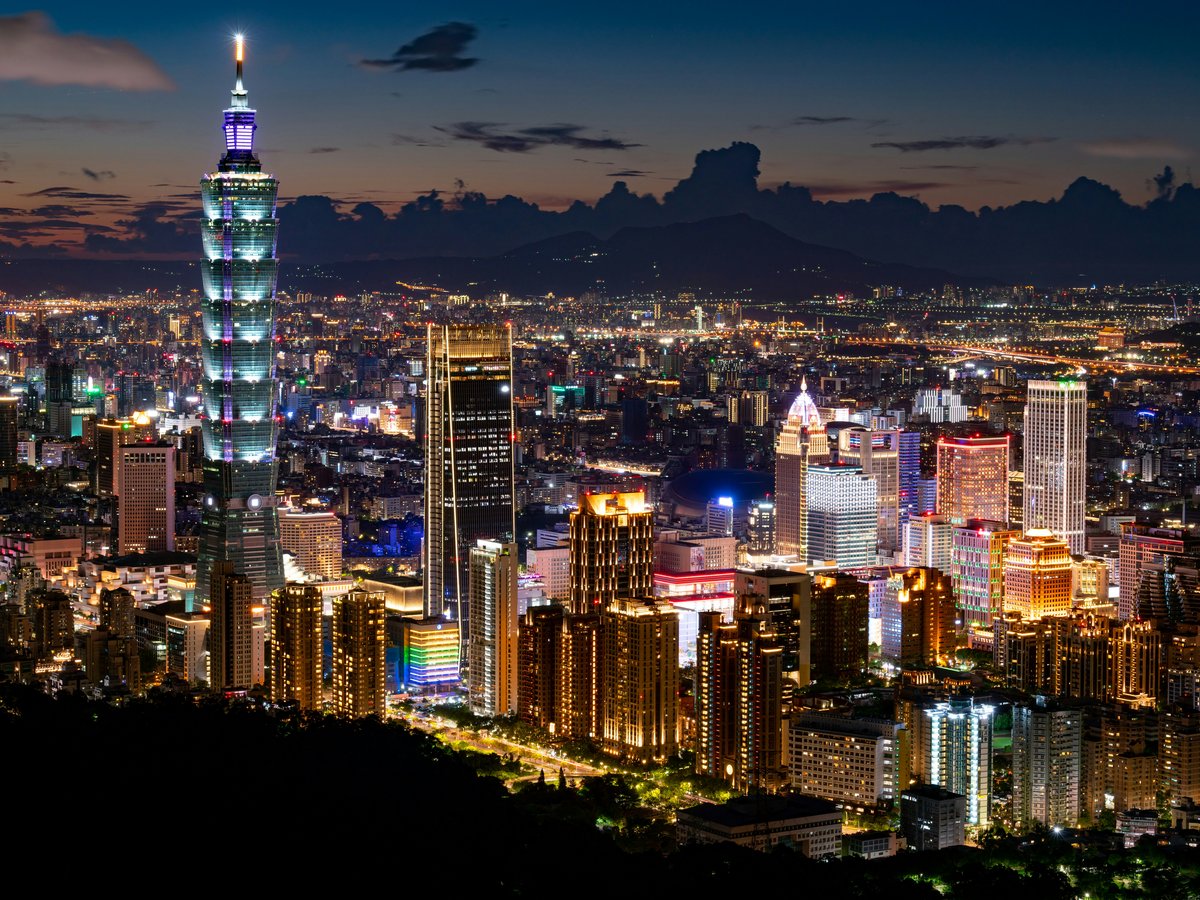
Is Taipei safe?
Taipei scores 8.5 out of 10 for solo-traveler safety (see the TTDI Solo-Safety Index). Violent crime against visitors is close to nonexistent, the MRT runs until midnight with well-lit stations, and 7-Eleven stores on nearly every block serve as informal safe points. Real risks are scooter traffic at crosswalks and typhoons from June through October.
Taipei is one of the safest major cities in East Asia for solo travelers. Taiwan's intentional homicide rate runs around 0.8 per 100,000, roughly on par with Germany and about a fifth of the United States figure. Pickpocketing exists but at levels well below Barcelona or Rome. Your real risk in Taipei is traffic. The high-pitched whine of 125cc scooters fills every intersection from Zhongzheng to Songshan, and riders routinely run red lights and mount sidewalks in both districts. At busy junctions like Zhongxiao-Fuxing, wait for the walk signal even when locals don't. Typhoon season runs June through October. September brings the strongest storms on average. The Central Weather Administration posts warnings 24-48 hours ahead, and convenience stores like 7-Eleven and FamilyMart (over 13,000 across Taiwan) serve as shelter points during heavy rain.
Solo women report feeling comfortable walking Da'an, Zhongshan, and Xinyi districts well past midnight. Night markets like Shilin and Raohe stay packed until 11pm or later. You smell Shilin before you see it. On Jihe Road, the smell of sizzling oyster omelets and fermented stinky tofu drifts from every other stall, and the shoulder-to-shoulder crowd at 10pm is its own reassurance. The walk back to Jiantan MRT takes 5 minutes on well-lit streets. The one area that gets flagged is Wanhua district near Longshan Temple, where Guangzhou Street and Huaxi Street feel rougher after dark, with visible homelessness and some street-level drug activity. To be fair, it is not dangerous the way Johannesburg or parts of São Paulo are. Linsen North Road in Zhongshan has a strip of hostess bars between Nanjing East Road and Civic Boulevard. Solo women who walk through between 9pm and 2am will hear solicitation from touts, but taking parallel Xinsheng North Road avoids the strip entirely. Taiwan legalized same-sex marriage in May 2019, the first country in Asia, and Taipei scores 8.5 out of 10 for LGBTQ+ friendliness (sourced from TTDI's editorial rubric).
The Taipei MRT operates from 6am through the last trains, with services every 3-7 minutes on most lines during the day. Stations are air-conditioned to about 24°C, which matters when September humidity pushes the feels-like temperature past 36°C outside. Each of the 6 MRT lines has CCTV in every car and emergency intercoms at both ends. Women-only waiting zones, marked in pink at the front of platforms on lines like Bannan and Tamsui-Xinyi, operate as a courtesy rather than an enforced rule. After the last train, Taipei taxis are metered and straightforward. Fares start at 85 TWD (about 2.70 USD at current rates), and drivers do not typically overcharge. Uber and LINE Taxi both operate throughout the city. For solo travelers staying longer than a week, the EasyCard (100 TWD for the card at any MRT station) works on buses, trains, YouBike rentals, and convenience store purchases. YouBike 2.0 stations sit every 300-400 meters in central Taipei, with the first 30 minutes at 5 TWD.
Scams targeting tourists are rare in Taipei compared to Bangkok or Ho Chi Minh City. The main one is the tea-ceremony invitation near Taipei 101 or the National Palace Museum, where friendly English-speaking strangers steer you to a tea shop and you leave with a bill for 3,000-5,000 TWD. Decline anyone approaching with unsolicited English near those 2 landmarks. Earthquakes are part of life on the Pacific Ring of Fire, and small tremors in Taipei happen monthly. Buildings follow seismic codes updated after the September 1999 Chi-Chi earthquake that killed 2,415 people. Taiwan's Central Weather Administration sends smartphone alerts within seconds of a tremor. The national earthquake drill, reinforced in Taipei classrooms after that disaster, is to drop under a desk, cover your head, and hold on. Emergency numbers are 110 for police and 119 for fire and ambulance. Police in tourist areas around Ximending and Xinyi District often speak basic English. The Taiwan Tourism Bureau operates a 24-hour helpline at 0800-024-111 with English, Japanese, and Korean support.
Emergency number: 110 / 119
Official travel advisories
Normal precautions the most cautious of 3 government assessments
- Government of CanadaLevel 1Take normal security precautions View advisory
- UK Foreign OfficeLevel 1No FCDO travel restriction View advisory
- US State DepartmentLevel 1Exercise Normal Precautions View advisory
Verified from the issuing governments' own feeds.
Areas to avoid
- Wanhua district (Guangzhou Street and Huaxi Street area) after dark
- Linsen North Road hostess bar strip between Nanjing East Road and Civic Boulevard, 9pm-2am
Common concerns
- Scooter traffic running red lights at pedestrian crosswalks
- Typhoon season from June through October with strongest storms in September
- Monthly earthquake tremors on the Pacific Ring of Fire
- Tea-ceremony scam near Taipei 101 and National Palace Museum (bills of 3,000-5,000 TWD)
- MRT stops running at midnight, requiring taxis or rideshare after hours
- Extreme humidity from May through September with feels-like temperatures above 36°C
Last verified by automated review (v1.7.2) on . What is automated review?