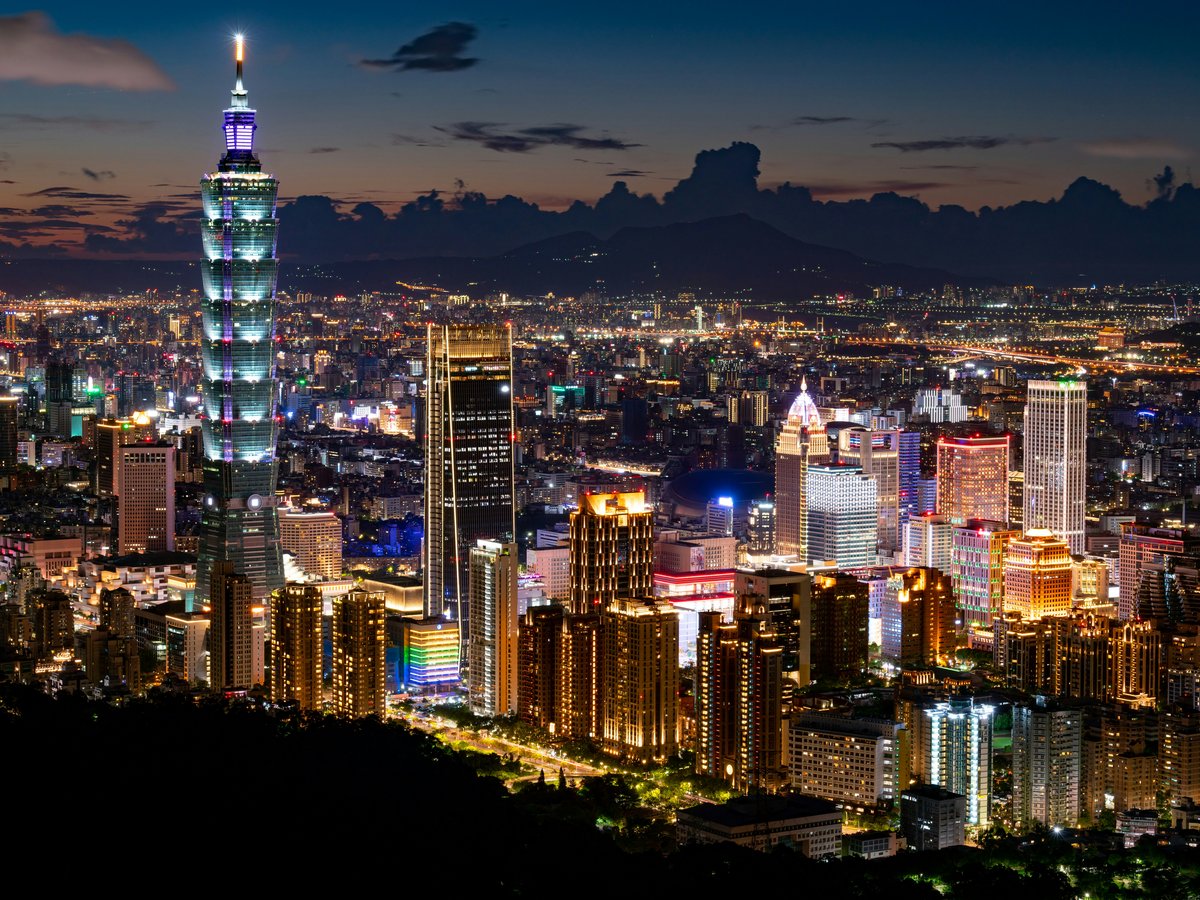
What language is spoken in Taipei?
Mandarin Chinese is Taipei's primary language, written in Traditional Chinese characters. English works in tourist areas like Xinyi District and around Taipei 101 with younger locals, but drops off sharply with older residents and at traditional markets. The MRT announces stops in Mandarin, Taiwanese Hokkien, Hakka, and English. Most restaurant menus near tourist sites carry photos or English text.
Mandarin Chinese is what you'll hear across Taipei, but it's the Traditional Chinese characters on every sign that will likely disorient you first. Mainland China uses Simplified characters. Taiwan kept the older, denser forms. Where the mainland writes 龙 (lóng, dragon) in 5 strokes, Taiwan writes 龍 in 16. Multiply that across every temple gate, shop sign, and MRT display. If you've studied Mandarin for the mainland, the spoken language transfers but the signs look unfamiliar. Taiwanese Hokkien, a Min Nan dialect, is the second language you'll catch in older neighborhoods like Wanhua near Longshan Temple, where shopkeepers over 60 switch between Mandarin and Hokkien mid-sentence. The Taipei MRT announces every stop in Mandarin, Taiwanese, Hakka, and English. Four languages at every station.
Taiwan currently sits in the "moderate proficiency" band on the EF English Proficiency Index, but that national average masks a sharp generational split in Taipei. Locals under 40, especially in Xinyi District around Taipei 101, tend to hold a conversation in English without much trouble. Hotel staff and department store clerks at Shin Kong Mitsukoshi speak functional English. Same at the tourist information desk inside Taipei Main Station. Over 60, English proficiency drops to a few words at best. At Shilin Night Market, where the hiss of stinky tofu hitting hot oil mixes with arcade sound effects and the sticky warmth of summer crowds, the vendor grilling pepper bao (胡椒餅) on a clay drum will understand 'one please' and a pointed finger. Don't expect a conversation about fillings. Raohe Street Night Market is similar. Taxi drivers are the toughest communication challenge in Taipei. Fewer than 1 in 5 speak enough English to parse a destination by ear. Show the address in Chinese characters on your phone. The Uber app sidesteps this since it sends the map pin directly to the driver.
Mandarin has four tones plus a neutral tone. The word 'mā' means mother on tone 1, hemp on tone 2, horse on tone 3, and scold on tone 4. That sounds intimidating, but messing up tones in Taipei is low-stakes. Taiwanese people tend to be patient with tonal mistakes from foreigners, and context fills the gaps. The two phrases that unlock the most are 'xièxiè' (謝謝, thank you) said with a slight nod after a night market vendor hands you a steaming bag of jiān bāo (煎包) that smells of pork and chives, and 'duō shǎo qián' (多少錢, how much). At Yongchun Market or any traditional market where prices aren't posted, 'duō shǎo qián' replaces 30 seconds of calculator-passing. Mind you, 'bù hǎo yì si' (不好意思, excuse me) might be the single most useful phrase in a crowded MRT car during Taipei's 8 AM rush.
You don't need to read Traditional Chinese to navigate Taipei. MRT station names appear in English and Mandarin on every platform sign, and Google Maps labels streets in both scripts. The handful of characters worth recognizing are 出口 (chū kǒu, exit), 男 and 女 (nán and nǚ, on restroom doors), and 站 (zhàn, station). Google Translate's camera mode handles menus that lack English, and it works offline if you download the Chinese language pack before landing at Taoyuan International Airport. Worth noting, LINE is Taiwan's dominant messaging app, not WhatsApp. About 21 million Taiwanese use it daily. If a hotel or tour operator asks for your contact, they mean your LINE ID, not your phone number.
Languages spoken
Chinese
Primary language: Mandarin Chinese (Traditional characters).
Useful phrases
- Hello你好nǐ hǎo
- Thank you謝謝xièxiè
- Excuse me / Sorry不好意思bù hǎo yì si
- How much?多少錢?duō shǎo qián
- I want this one我要這個wǒ yào zhè ge
- The bill, please結帳jié zhàng
- Where is the bathroom?廁所在哪裡?cè suǒ zài nǎ lǐ
- I don't understand我聽不懂wǒ tīng bù dǒng
- Not spicy, please不要辣bù yào là
- Delicious好吃hǎo chī
Last verified by automated review (v1.7.2) on . What is automated review?