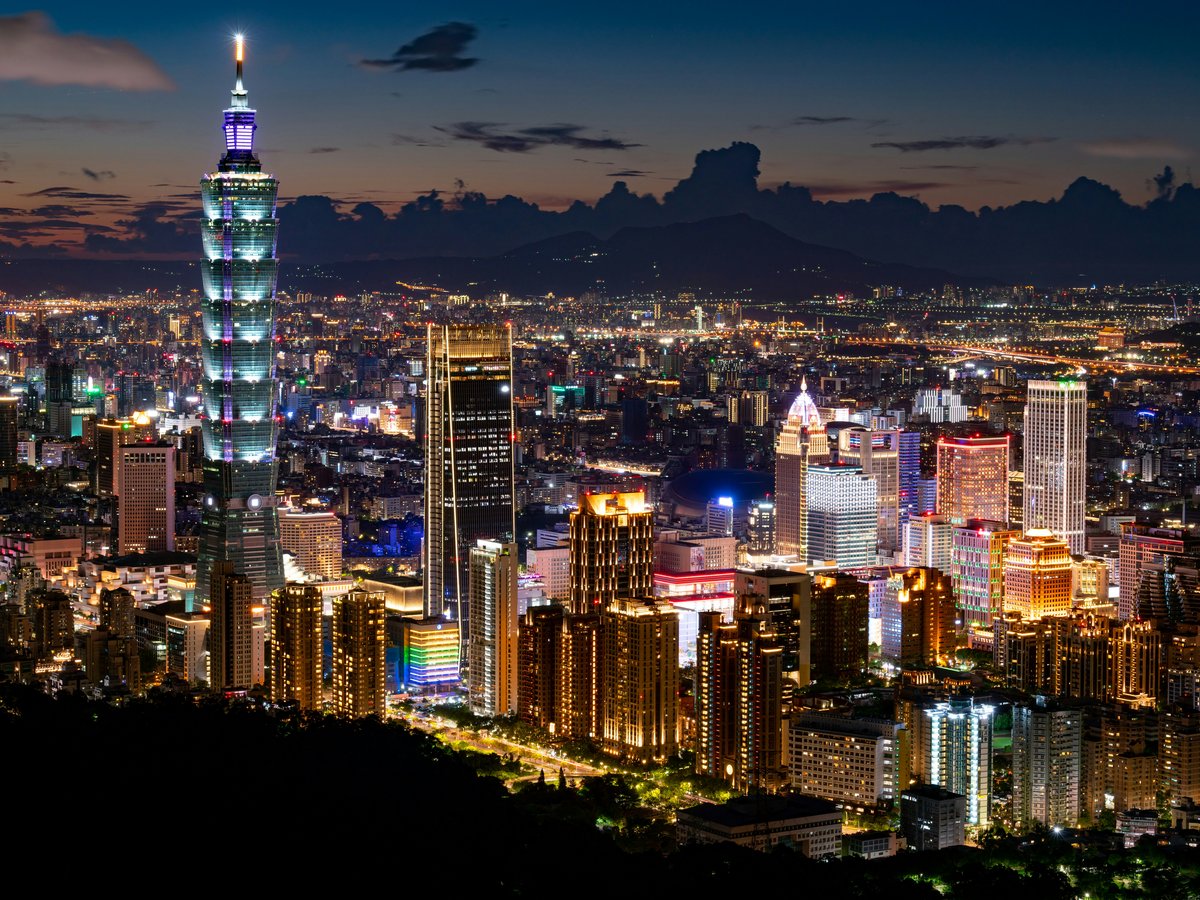
Stay in Taipei in February
75 hotels in the Trip.com pool for Taipei, from US$14 a night.
Opens Trip.com on Fri 5 Feb to Sun 7 Feb 2027; change the dates there.
February in Taipei is defined by one thing above all else. Lunar New Year typically falls somewhere between late January and mid-February, and it reshapes the entire city for roughly two weeks. Shops along Dihua Street in Dadaocheng fill with dried goods, candied fruits, and red paper decorations starting in early February. The smell of roasted melon seeds and dried squid drifts through the narrow lanes. Then, when the holiday itself arrives, large sections of the city go quiet. Family-run restaurants close for a week or more. Night markets thin out. Many residents head south to visit relatives, and Taipei takes on an oddly peaceful quality that you'll rarely see at other times of year.
The weather tends to hover around 20°C (68°F) during the day and drop to about 14°C (57°F) at night, with roughly 89mm of rain spread across 12 or so days. That does not sound dramatic on paper, but the combination of 80% humidity and persistent northeast monsoon winds makes it feel colder than the thermometer suggests. Most buildings in Taipei lack central heating, so the chill follows you indoors. You will want layers. That said, February sits in a comfortable window between the coolest weeks of January and the increasingly wet spring months that follow. It is not peak season, it is not the prettiest weather, but the Lunar New Year atmosphere and the early cherry blossoms on Yangmingshan give February a character that no other month quite matches.
To be fair, if you are coming for beaches or outdoor hiking in t-shirt weather, February is not your month. But if cool, moody weather and a front-row seat to Taiwan's most important cultural holiday sound appealing, Taipei in February has a lot going for it.
Why visit in February
- Lunar New Year transforms Dihua Street and Longshan Temple into sensory experiences you cannot get at any other time of year, with weeks of pre-holiday markets selling dried goods, traditional sweets, and handmade decorations.
- Taiwan cherry blossoms (山櫻花) begin blooming on Yangmingshan in mid-to-late February, and the crowds are a fraction of what they will be by March when the trails fill with domestic tourists.
- Beitou's hot springs feel best in February's damp 14°C evenings, when the contrast between cold air and 40°C mineral water is at its sharpest.
- Hotel prices outside the 5-7 day Lunar New Year holiday window drop well below annual average, making February's shoulder weeks genuine value for money.
- The city is noticeably less crowded once the holiday passes and residents return to work, giving you easier access to places like the National Palace Museum and Shilin Night Market.
Worth knowing
- Persistent drizzle from the northeast monsoon can produce 4-5 consecutive gray days with light rain, the kind of weather that does not ruin plans but slowly wears down enthusiasm for outdoor sightseeing.
- Many family-run restaurants, independent shops, and smaller temples close for 5-10 days during Lunar New Year itself, so travelers arriving during the holiday week may find their dining and shopping options limited to chain stores and hotels.
- The damp cold at 80% humidity penetrates more than the 14°C low suggests, and the absence of central heating in most buildings, MRT stations, and budget hotels means there is no warm refuge between outdoor excursions.
- Flights in and out of Taiwan during the Lunar New Year week are among the most expensive of the year, and booking fewer than 6 weeks ahead typically means paying 2-3x normal fares on regional carriers.
Best for
Think twice if
February in Taipei brings cool, damp conditions shaped by the tail end of the northeast monsoon. Daytime highs reach about 20.2°C (68°F), comfortable enough for walking if you have a light jacket. Nights drop to 14.1°C (57°F), which feels noticeably colder than it reads because of the 80% humidity that clings to everything. Expect roughly 89mm of rainfall spread across about 12 days, mostly as light drizzle or intermittent showers rather than heavy downpours. Fog is common in the mornings, particularly around Yangmingshan and the hills ringing the Taipei Basin. The occasional cold front (寒流) can push daytime temperatures down to 12-13°C for 2-3 days, bringing wind that makes it feel closer to 8°C on exposed ridgelines.
Seasonal caution
- Cold fronts (寒流) can arrive with little warning 2-3 times in February, dropping temperatures to 10-12°C during the day and as low as 7-8°C at night. The damp wind makes it feel several degrees colder. Yangmingshan trails can drop below 5°C during these events, and occasional frost forms above 800m elevation.
- Most buildings, MRT stations, and budget hotels in Taipei lack central heating. Indoor temperatures during cold snaps can sit at 15-17°C, which catches visitors off guard. Portable space heaters are sold at convenience stores and electronics shops in Zhongshan and Ximending if needed.
Year-round climate
Averages from the last 5 years.
| Month | Avg high (°C) | Avg low (°C) | Rainfall (mm) |
|---|---|---|---|
| Jan | 19 | 13 | 50 |
| Feb | 20 | 14 | 89 |
| Mar | 23 | 16 | 113 |
| Apr | 26 | 19 | 117 |
| May | 29 | 22 | 248 |
| Jun | 32 | 25 | 221 |
| Jul | 33 | 26 | 176 |
| Aug | 33 | 26 | 166 |
| Sep | 32 | 25 | 206 |
| Oct | 28 | 23 | 261 |
| Nov | 25 | 19 | 81 |
| Dec | 20 | 15 | 62 |
Headline events
Lunar New Year (春節)
Varies by lunar calendar, typically late January to mid-February
Taiwan's most important holiday transforms Taipei for roughly two weeks. The build-up starts in early February with the Dihua Street New Year market (年貨大街), where hundreds of vendors sell dried goods, candied fruits, tea, and traditional decorations in a 200-year-old commercial district. On New Year's Eve, temples like Longshan Temple and Xingtian Temple fill with worshippers burning incense and offering prayers for the coming year. The air turns thick with sandalwood smoke. Firecrackers echo through older neighborhoods in Wanhua and Datong. Most of Taipei shuts down for 3-5 days after New Year's Day, with families gathering for reunion dinners and children receiving red envelopes (紅包). The Taipei Lantern Festival, which marks the end of the New Year period 15 days later, fills areas around Zhongshan or Ximending with elaborate light installations.
Yangmingshan Cherry Blossom Season
Mid-February through early March
Taiwan cherry trees (Prunus campanulata) begin flowering on the slopes of Yangmingshan National Park in mid-to-late February, producing deep pink blossoms along trails near the Flower Clock and Yangming Park. The blooming period lasts about 2-3 weeks depending on temperatures, and February catches the earliest flowers before the larger crowds arrive in March. On clear mornings, the contrast between pink petals and misty green hillsides is striking. The park sits at 200-1,120m elevation, so temperatures run 3-5°C cooler than central Taipei.
Best things to do in February
Dihua Street New Year Market (年貨大街)
culturalTaipei's oldest commercial street in Dadaocheng transforms into a 600-meter-long open-air market every February in the weeks before Lunar New Year. Hundreds of vendors line the narrow lane selling dried fruits, nuts, candied fish, oolong tea, and calligraphy supplies. The smell of roasting peanuts and dried cuttlefish fills the air. Traditional Baroque-style shop facades from the 1920s provide the backdrop. You'll find yourself shoulder-to-shoulder with Taipei residents stocking up for the holiday.
The market only operates for about 2-3 weeks before Lunar New Year, making it a strictly February (or late January) experience.Booking tipGo on a weekday morning to avoid the heaviest crowds. Weekend afternoons in the final week before New Year can be almost impassable.
Beitou Hot Springs
relaxationThe hot spring district in northern Taipei sits at the foot of Yangmingshan, where sulfurous water feeds public bathhouses, private resort pools, and a free outdoor foot bath along Thermal Valley. February's cool, humid air makes the transition from chilly streets to steaming 38-42°C water feel particularly sharp. The faint sulfur smell hangs in the neighborhood, mixing with steam that rises from grates along Zhongshan Road.
The 14°C ambient temperature creates the ideal contrast with hot spring water. Summer soaking in 35°C heat is far less appealing.Booking tipPublic bathhouses are affordable, but weekday mornings see the fewest visitors. Private rooms at resort-style facilities fill quickly during Lunar New Year week, so book those at least 2 weeks ahead.
Longshan Temple New Year Prayers
culturalLongshan Temple in Wanhua, built in 1738, fills with worshippers during the Lunar New Year period. Visitors burn incense, offer fruit and flowers, and consult fortune sticks (筊杯). On New Year's Eve, the temple stays open through the night. The scent of sandalwood incense, the murmur of prayers, and the red glow of paper lanterns create an atmosphere that is hard to find elsewhere in modern Taipei.
New Year's Eve and the first days of the Lunar New Year draw the largest and most devoted crowds of the entire year.Booking tipNo booking needed. Arrive before midnight on New Year's Eve if you want to participate in the first incense offering of the year.
Yangmingshan Cherry Blossom Walks
natureThe trails around Yangming Park and the Flower Clock area of Yangmingshan National Park see the first cherry blossoms of the season in mid-to-late February. Taiwan cherry trees (山櫻花) produce vivid pink flowers that stand out against the mountain's green canopy and frequent morning fog. The park is accessible by bus from Jiantan MRT in about 30 minutes.
February catches the earliest blooms before the March peak, meaning fewer crowds on the trails and more space to photograph the flowers.Booking tipTake the R5 bus from Jiantan MRT. On weekends during bloom season, the park road can see traffic backups, so arriving before 9am helps.
Taipei Lantern Festival (台北燈節)
culturalMarking the 15th and final day of Lunar New Year celebrations, the Taipei Lantern Festival fills a designated district (the location rotates between areas like Ximending, Zhongshan, and the East District) with hundreds of illuminated lantern installations, interactive light art, and performance stages. The main lantern, a different animal each year matching the Chinese zodiac, is typically 8-10 meters tall. The festival runs for about 10 days.
The Lantern Festival is tied to the lunar calendar and falls in February or early March, making it a unique late-winter event.Booking tipThe festival is free and open-air. Evening visits after 6pm offer the best lighting for the installations.
National Palace Museum Visit
culturalThe National Palace Museum in Shilin holds over 696,000 Chinese imperial artifacts spanning 8,000 years. February's post-holiday lull means shorter lines at exhibits like the Jadeite Cabbage and Meat-Shaped Stone. The museum's climate-controlled galleries also provide welcome warmth on chilly February days. The building sits against a hillside in Shilin, surrounded by Chinese-style gardens.
Crowd levels drop noticeably after Lunar New Year, making it easier to spend time with individual artifacts without being rushed through galleries.Booking tipWeekday mornings after the Lunar New Year holiday offer the quietest experience. The museum closes on one day per week, so check the schedule before visiting.
Ximending Street Food and Shopping
food_and_shoppingTaipei's pedestrian shopping district in Wanhua stays lively even during the quieter weeks of February. The district's 16 lanes are packed with street food vendors, vintage clothing shops, tattoo parlors, and movie theaters. February's cool weather makes walking the outdoor lanes more comfortable than summer's 35°C heat. The area around Ximending's Red House (西門紅樓), built in 1908, hosts a weekend creative market with local designers and artists.
Many Ximending businesses stay open through Lunar New Year when neighborhood restaurants close, making it a reliable destination during the holiday.Maokong Gondola and Tea Houses
natureThe Maokong Gondola carries passengers from Taipei Zoo station up to the tea-growing hills of Maokong in about 30 minutes. February's cool, foggy weather adds atmosphere to the tea houses clustered at the top, where you can sit overlooking the Taipei Basin with a pot of locally grown Tieguanyin oolong. On clear days, Taipei 101 is visible from several of the hilltop restaurants. The Crystal Cabin gondola cars with glass floors offer views down into the valley's tea plantations.
Cool February temperatures make the outdoor tea terraces far more comfortable than the humid summer months, and fog rolling through the hills adds a moody quality to the scenery.Booking tipThe gondola closes on Mondays for maintenance. Weekday afternoons are the quietest. Fog can reduce visibility, which is atmospheric but means fewer panoramic views.
What to eat in February
In season: fruit
Strawberries (草莓)
Taiwan's strawberry season runs from roughly December through March, with February hitting peak sweetness. Miaoli County, about 90 minutes south of Taipei by HSR, is the main growing region. In Taipei, fresh strawberries appear at Binjiang Market, Nanmen Market, and fruit vendors across the city, alongside strawberry daifuku and strawberry tanghulu (candied fruit skewers).
On menus now
Hot Pot
February's damp cold makes hot pot peak season in Taipei. The city has thousands of hot pot restaurants, from individual-pot chains in Ximending to high-end establishments in Da'an using wagyu and local organic vegetables. The steam rising from a simmering pot of mala or collagen broth is one of February's defining indoor comforts.
Festival food
Nian Gao (年糕)
Sticky rice cake eaten during Lunar New Year, symbolizing prosperity. Taipei bakeries and market stalls in Dadaocheng sell both sweet and savory versions throughout February. The sweet version has a dense, chewy texture with a faint brown sugar warmth.
Radish Cake (蘿蔔糕)
Shredded daikon radish steamed with rice flour, dried shrimp, and shiitake mushrooms, then pan-fried until the outside turns crisp and golden. A staple of New Year banquet tables across Taipei and available at most traditional breakfast shops in Zhongshan and Songshan through February.
Tangyuan (湯圓)
Glutinous rice balls served in sweet ginger or red bean soup, traditionally eaten during Lantern Festival (元宵節) at the end of the Lunar New Year period. Ning Xia Night Market and Raohe Street Night Market both have long-standing stalls that draw lines for hand-rolled versions with sesame or peanut filling.
Regular events in February
Taipei Lantern Festival (台北燈節)Free
The city's official lantern festival runs for about 10 days, filling a rotating host district with hundreds of lantern installations, light art, and performances. Free admission, open-air, typically drawing over a million visitors across its run.
Late February to early March (15th day of lunar calendar)Dihua Street Lunar New Year Market (年貨大街)Free
The annual pre-New Year shopping market along Taipei's oldest commercial street in Dadaocheng. Hundreds of vendors sell traditional foods, decorations, and gifts in the 2-3 weeks before the holiday.
Early February through Lunar New Year's EvePingxi Sky Lantern FestivalFree
While technically in New Taipei City (about 90 minutes east of central Taipei by train and bus), the Pingxi Sky Lantern Festival draws thousands who release paper lanterns into the night sky along the old Pingxi railway line. The main event takes place on Lantern Festival night, with several hundred lanterns released in coordinated waves.
Lantern Festival night (15th day of lunar calendar)Taipei International Book Exhibition
One of Asia's larger book fairs, held at the Taipei World Trade Center in Xinyi. Over 500 publishers from 50+ countries exhibit, with author talks, children's activities, and pavilions dedicated to specific national literatures. The event typically runs for 6 days in early-to-mid February.
Early to mid-FebruaryBest places this February
Dihua Street (迪化街)
historic_districtTaipei's oldest commercial street, dating to the 1850s, lined with Baroque and Art Deco shop facades. In February, it hosts the annual New Year market. The rest of the year, it's a quieter strip of fabric shops, dried goods stores, traditional medicine dispensaries, and a growing number of renovated cafes.
DadaochengLongshan Temple (龍山寺)
templeFounded in 1738 in the Wanhua district, this temple is Taipei's most important place of worship, dedicated to Guanyin (the Goddess of Mercy). February brings the year's most intense prayer activity during Lunar New Year. The ornate stone carvings, dragon columns, and waterfall of red lanterns in the courtyard make it one of the city's most photogenic sites.
WanhuaBeitou Hot Spring District
hot_springA neighborhood at the northern foot of Yangmingshan built around natural sulfur hot springs. Thermal Valley (地熱谷), a steaming turquoise pool, sits at the head of the district. Public and private bathhouses line the streets, alongside the Beitou Hot Spring Museum, housed in a 1913 Japanese-era public bathhouse.
BeitouYangmingshan National Park
natureThe mountain park north of Taipei, reaching 1,120m at Qixingshan peak. February brings the first cherry blossoms around Yangming Park and the Flower Clock area. The park's hiking trails pass fumaroles, sulfur vents, and grasslands. Temperatures run 3-5°C cooler than central Taipei, and fog is common in the mornings.
YangmingshanXimending (西門町)
shopping_districtTaipei's pedestrian shopping and entertainment district, anchored by the 1908 Red House. A dense grid of lanes packed with street food, fashion, and nightlife. One of the few areas that stays fully open during Lunar New Year week when much of the city shuts down.
WanhuaNational Palace Museum
museumHome to over 696,000 Chinese imperial artifacts, including the Jadeite Cabbage and a collection of Song Dynasty ceramics. February's post-holiday weeks bring smaller crowds than the spring and summer tourist season. The museum sits against wooded hills in Shilin, with traditional Chinese gardens on the grounds.
ShilinDadaocheng Wharf (大稻埕碼頭)
waterfrontThe riverside area along the Tamsui River near Dihua Street. February's New Year fireworks displays sometimes launch from this stretch. On clear February evenings, the sunset over the river and the Guandu plain is one of Taipei's better free views. A bike path runs along the riverbank.
DadaochengMaokong (貓空)
natureThe tea-growing hills in southeastern Taipei, accessible by the Maokong Gondola from Taipei Zoo MRT station. Tieguanyin oolong tea has been cultivated here since the late 19th century. February's cool, foggy weather adds atmosphere to the hilltop tea houses, where you can sit with a pot of local tea and look out over the Taipei Basin.
Wenshan
Your packing checklist
Tick items off as you pack. Your progress saves in this browser.
All packed — have a great trip.
Insider tips
The Dihua Street New Year market is best visited on weekday mornings. By the final weekend before the holiday, the 600-meter lane can take 45 minutes to walk because of the crowd density. Vendors at the north end near Minquan West Road tend to be less picked over.
Many Taipei residents travel south for Lunar New Year, leaving the city notably emptier from about the 2nd day of the holiday onward. If you time your visit for this window, popular spots like Jiufen and Shifen, normally packed, are calmer than any other week of the year.
The Taipei Metro (MRT) runs on a modified holiday schedule during Lunar New Year, with reduced frequency on some lines. Check the Taipei Metro website or app for updated timetables before heading out, especially for late-night trains.
EasyCard stored-value transit cards work on buses, the MRT, YouBike public bicycles, convenience stores, and many restaurants. Load one at any MRT station. It saves time and eliminates the need for exact change on buses.
Beitou's Millennium Hot Spring is a free public outdoor bath, but it closes for cleaning on Mondays. The facility has designated male and female sections. Bring your own towel, as none are provided.
If cold fronts hit during your visit, Uniqlo HeatTech undershirts are widely available at Taipei's Uniqlo stores in Xinyi, Zhongshan, and Ximending. Locals stock up on these when temperatures drop.
Avoid these mistakes
- Assuming all restaurants stay open during Lunar New Year week. Many family-run shops close for 5-10 days, and Google Maps hours are unreliable during the holiday. Hotel restaurants, international chains, and night markets in tourist areas are your most reliable options.
- Packing only summer clothes because Taiwan is a subtropical island. February in Taipei is cool and damp, with temperatures that can dip below 10°C during cold fronts. The humidity makes it feel colder than the numbers suggest.
- Planning outdoor mountain hikes on Yangmingshan without checking the weather forecast. February fog and drizzle can reduce visibility to under 50 meters on higher trails, and the temperature difference from central Taipei can be 5°C or more.
- Booking flights during the Lunar New Year travel window without checking the lunar calendar dates. The 3-day period before and after the holiday sees peak fares and sellouts on routes between Taiwan and Japan, Korea, and Southeast Asia.
- Visiting Jiufen or Shifen on the weekend before Lunar New Year, when domestic tourists join international visitors. The narrow Jiufen Old Street becomes nearly impassable. Weekdays or the post-holiday week are far more manageable.
Practical tips for February
February in Taipei requires some planning around the Lunar New Year calendar. Check the exact dates each year, as the holiday shifts between late January and mid-February. Book accommodation at least 6-8 weeks ahead if your trip overlaps with the holiday week, since domestic travel demand fills Taipei hotels. Carry cash in TWD for night markets and small vendors, many of which do not accept cards. The MRT is the most reliable transport, running from 6am to midnight on most lines. Grab an EasyCard at any station for seamless transfers between MRT, bus, and YouBike. For Yangmingshan cherry blossom visits, wear layers and waterproof shoes, and check the National Park's website for bloom status updates. Indoor attractions like the National Palace Museum, Taipei Fine Arts Museum in Zhongshan, and the underground mall system connecting Taipei Main Station to Zhongshan MRT provide warm shelter on drizzly days.
FAQ
Is February a good time to visit Taipei for Lunar New Year?
February is the month most likely to include Lunar New Year, though the exact dates shift each year based on the lunar calendar. If you time your visit for the 1-2 weeks before the holiday, you'll catch the Dihua Street market and the city's festive build-up. During the holiday itself, many shops and restaurants close, but temples are at their most active and the Lantern Festival caps the celebrations about 15 days later.
How cold does Taipei get in February?
Daytime highs average around 20°C (68°F) and nighttime lows around 14°C (57°F), but cold fronts can push temperatures below 10°C for 2-3 day stretches. The 80% humidity and lack of central heating in most buildings make it feel colder than the thermometer reads. Layers, a warm jacket, and waterproof shoes are more useful than any single heavy coat.
Are the cherry blossoms out in Taipei in February?
Taiwan cherry trees (Prunus campanulata) typically begin blooming on Yangmingshan in mid-to-late February, producing deep pink flowers. The exact timing depends on winter temperatures, so some years the blooms arrive earlier or later by a week. February catches the beginning of the season, with peak flowering usually in early-to-mid March.
Should I avoid Taipei during Lunar New Year week?
It depends on what you want. The holiday week brings temple ceremonies, family gatherings, and festive decorations, but also widespread restaurant and shop closures. Night markets in tourist areas, hotel restaurants, and international chains stay open. If you want the cultural experience, it is worth the trade-off. If you want reliable access to a full range of dining and shopping, the weeks before or after the holiday are easier.
What should I wear in Taipei in February?
Dress in layers. A medium-weight jacket or fleece, a warm sweater, and a compact rain shell cover most conditions. Waterproof shoes are more important than in drier months, since sidewalks stay wet for hours after drizzle. On cold-front days, a thermal base layer and scarf help. Skip the heavy winter parka, but do not arrive expecting warm subtropical weather.
Is it cheaper to visit Taipei in February?
February pricing depends on the Lunar New Year dates. The holiday week itself sees hotel rates rise 40-60% above average, and flights from regional cities fill quickly. The weeks before and after the holiday, though, are genuine shoulder season. Hotel rates in neighborhoods like Zhongshan and Ximending can drop 15-25% below annual average, and popular attractions have shorter lines.
Things to Do in Taipei in February
 Free cancellation
 Full-Day Private Custom Taipei City Tour
Day trip: 8 hours, free cancellation.
via Viator Free cancellation
 Full-Day Private Northern Taiwan Tour from Taipei with Pickup
Day trip: 8 hours, free cancellation.
via Viator Free cancellation
 The Award-Winning Private Food Tour of Taipei: The 10 Tastings
City tour: 3 hours, free cancellation.
via Viator Free cancellation
 Small-Group: Yehliu, Jiufen & Pingxi Day Tour from Taipei
Day trip: 9 hours, free cancellation.
via Viator Free cancellation
 4-Hour Morning Cycling City Tour (incl. breakfast)
City tour: 4 hours, free cancellation.
via Viator Free cancellation
 Yehliu & Jiufen & Shifen Day Tour (Departure from Ximending)
City tour: 9 hours, free cancellation.
via ViatorFind a flight to Taipei
Live fares to Taipei appear here once cookies are accepted.
Last verified by automated review (v1.7.2) on . What is automated review?