Bangkok has this reputation as a cheap city, and that's fair enough — but what surprises most visitors is how much of the city you can experience without reaching for your wallet at all. The temples alone could fill a week of wandering. Public parks range from manicured royal grounds to large green corridors threaded along old railway lines. Street markets cost nothing to browse, and the sensory overload of Chinatown at dusk — smoke curling off wok stations, the clatter of metal bowls, neon reflected in puddles — that's free too. Bangkok is a city that lives outdoors, in public, and it tends to pull you in whether you planned on spending or not. The BTS Skytrain stations double as viewpoints, the river ferries cost almost nothing, and entire neighborhoods feel like open-air galleries. You might arrive with a tight budget and leave realizing the best days were the ones where money never came up.
Free attractions
-
Lumphini Park
Bangkok's answer to Central Park, more or less. Forty hectares of green space right in the middle of the business district. Monitor lizards patrol the lake edges — some of them well over a meter long, just casually strolling past joggers. Early mornings bring tai chi groups and the thwack of badminton shuttlecocks. The air actually smells different in here: wet grass and frangipani instead of exhaust. There's a small outdoor library corner and paddle boats on the lake, though those cost a few baht.
Silom / LumphiniPark -
Benchasiri Park
A compact, well-kept park wedged between the Emporium mall and Phrom Phong BTS. Sculptures by Thai artists dot the grounds — some abstract, some figurative, all worth a closer look. The swimming pool charges a small fee, but the park itself is free and popular with families in the late afternoon when the worst of the heat breaks.
Phrom PhongPark -
Wat Pho (exterior grounds)
The famous reclining Buddha temple charges admission to the main chapel areas, but the wider temple complex grounds remain open for wandering. The architecture alone — layered spires, ceramic tile work in blues and greens, rows of golden chedis — rewards a slow walk. Worth noting: the grounds are free, but the main attractions inside require a ticket, currently around 300 baht for foreigners.
RattanakosinTemple -
Wat Arun (exterior and riverside view)
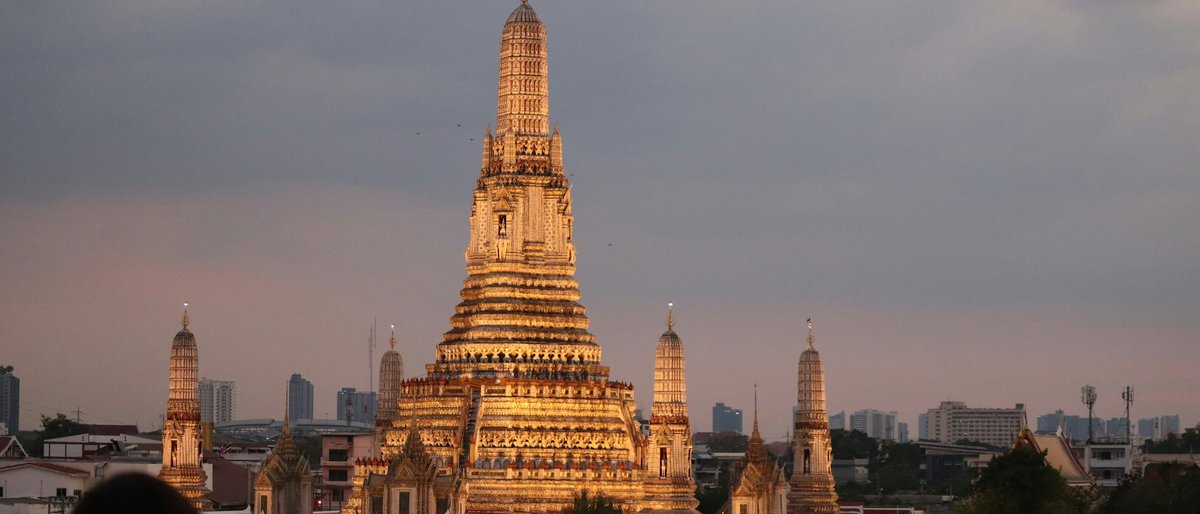
Climbing the central prang costs admission, but viewing the temple from the Chao Phraya riverside is free and arguably the better experience anyway. The late afternoon light hitting the porcelain-encrusted spire turns it from grey-white to warm gold. Cross-river ferries run for a few baht if you want a closer angle from the Maharaj Pier side.
ThonburiTemple -
Museum of Contemporary Art (MOCA Bangkok)
A impressive private collection of modern and contemporary Thai art spread across five floors. The building itself is striking. Currently charges admission for foreign visitors — but Thai nationals and students with valid ID often get in free. Check their current policy, as it has shifted over the years. The sculpture garden out front is freely accessible regardless.
ChatuchakMuseum / Gallery -
Bangkok Art and Culture Centre (BACC)
A public contemporary arts center right at the National Stadium BTS station. The rotating exhibitions across multiple floors are free. You'll find photography, painting, installation work, and mixed media from Thai and international artists. The building has a spiraling walkway design that reveals each floor gradually. Small independent galleries and art bookshops line the corridors. Tends to be quieter on weekday mornings.
PathumwanGallery -
Rot Fai Park (Suan Rot Fai)
Part of the larger Chatuchak green corridor that includes Queen Sirikit Park and Chatuchak Park. This section follows an old railway line and feels surprisingly rural — wide lawns, mature trees, a lake with turtles. Cyclists loop the paths in the early morning. The insect garden section is a quirky touch. Less crowded than Lumphini, and the connected parks together form one of the largest green spaces in the city.
ChatuchakPark -
Saranrom Park
A small, elegant royal park just south of the Grand Palace. Fewer tourists find their way here compared to Lumphini, which gives it a calmer atmosphere. Wrought-iron gates, a memorial pavilion, old trees providing deep shade. Office workers from nearby government buildings eat lunch here. The sound of traffic drops to almost nothing once you're a few meters inside.
RattanakosinPark -
The Giant Swing (Sao Ching Cha)
A towering red teak structure standing 21 meters high near Wat Suthat. Originally used in a Brahmin ceremony where participants would swing to dangerous heights — the practice was banned in the 1930s after several deaths. The swing itself is a landmark you can walk right up to. Free to view and photograph. The surrounding neighborhood is full of old shophouses selling religious supplies and traditional Thai sweets.
Phra NakhonLandmark -
Benjakitti Forest Park
A relatively recent addition that transformed old tobacco factory land into a wetland boardwalk and elevated skywalk through the canopy. The raised walkways give you a bird's-eye view of the planted forest below. Dragonflies, water birds, and the occasional snake make appearances. Connected to the older Benjakitti Park and its lake. The whole stretch from Queen Sirikit Centre to Lumphini is now walkable through green corridors.
Khlong ToeiPark -
Wat Saket (Golden Mount) — grounds only
The temple grounds at the base of the Golden Mount are free to enter and wander. The climb to the top technically asks for a small donation rather than a fixed fee, though most visitors contribute something. The lower courtyards have a quieter atmosphere than the hilltop, with old trees and a canal-side view. During Loy Krathong, the temple fair here is one of the city's oldest and most atmospheric.
Pom Prap Sattru PhaiTemple -
Chalerm La Park (Nang Loeng)
A tiny neighborhood park in one of Bangkok's oldest communities. Not a destination in itself, but if you're exploring Nang Loeng — and you should be — the park anchors a neighborhood that still feels remarkably untouched by mass tourism. The morning market nearby has been running for over a century.
Nang LoengPark
Free activities
-
Walking Rattanakosin Island
The old royal core of Bangkok rewards slow walking more than any other neighborhood. Start near the Democracy Monument, wind past Wat Suthat and the Giant Swing, cut through to Sanam Luang (the royal field opposite the Grand Palace), and follow the river south past old shophouses and quiet soi. The streetscape shifts every few hundred meters — colonial-era buildings give way to temple walls give way to tiny noodle shops with plastic stools spilling onto the sidewalk. No map needed, really. Just drift.
Rattanakosin / Phra NakhonWalking route -
Browsing Chatuchak Weekend Market
Browsing is free. Buying is where it gets you. Over 15,000 stalls sprawled across 35 acres — the scale is honestly a bit overwhelming on first visit. Sections range from vintage clothing and handmade ceramics to live plants and antique furniture. The food section alone deserves an hour. Go early on Saturday morning if you want to actually move through the aisles; by noon the crowds make it a contact sport. The smell of grilled satay and coconut ice cream follows you everywhere.
ChatuchakMarket browsing -
Chinatown evening walk (Yaowarat Road)
Yaowarat after dark is Bangkok at its most sensory. Neon signs in Chinese and Thai script reflect off wet pavement. Smoke from charcoal grills drifts across the road. The sound is a mix of wok clang, motorcycle engines, and shouted orders. Street food stalls line both sides — looking is free, and the spectacle of watching a cook handle three flaming woks simultaneously is worth the walk alone. Duck into the smaller soi for gold shops, old Chinese temples, and herb stores that smell like dried mushrooms and ginseng.
Chinatown (Yaowarat)Walking route -
Exploring Talat Noi street art
This pocket neighborhood between Chinatown and the river has become an informal open-air gallery over the past decade. Murals, installations, and paste-ups cover warehouse walls and old shophouse facades. The art changes regularly — some pieces last years, others get painted over within months. The neighborhood itself is worth the visit: narrow lanes, a Portuguese-influenced shrine, old automotive repair shops still operating alongside converted creative spaces.
Talat NoiStreet art / Walking -
Chao Phraya riverside promenade
Sections of the Bangkok riverfront have been converted into public walkways, around Asiatique and further north near the Maharaj Pier area. The stretch near Yodpiman is less crowded and offers views of Wat Arun across the water. Evening light on the river — when the long-tail boats cut silver lines through brown water and the temple spires catch the last sun — is beautiful. Free to walk anytime.
RiversideWalking route -
Pak Khlong Talat (flower market)
Bangkok's main flower market operates around the clock but peaks between midnight and dawn. Even if you're not buying, walking through the stalls at 3 AM is a surreal experience — mountains of jasmine garlands, marigolds in every shade of orange and yellow, roses bundled by the hundred. The smell is thick and sweet. During the day it's calmer and more manageable, but loses some of the atmosphere. The surrounding streets sell temple supplies and have a few old-school Thai dessert vendors.
Phra NakhonMarket browsing -
Khlong Toei Market morning visit
Bangkok's largest wet market and not remotely set up for tourists, which is exactly the point. The produce sections are a crash course in Thai ingredients — galangal, kaffir lime leaves, morning glory in massive bundles, fish so fresh they're still moving. The meat section is not for the squeamish. Go before 8 AM when the energy peaks. The narrow aisles, shouted prices, and occasional motorbike squeezing through make it feel chaotic, but there's a rhythm to it if you watch long enough.
Khlong ToeiMarket browsing -
Sunset from Phra Athit Road pier
The small pier area at the end of Phra Athit Road, near Santichaiprakarn Park, faces west across the Chao Phraya. Sunset views here are reliable and uncrowded compared to rooftop bars charging for the same sky. A few benches, some shade trees, and the old Phra Sumen Fort nearby. Local university students from Thammasat hang around the area in the evenings. The backpacker stretch of Khao San Road is a short walk east if you need food after.
BanglamphuViewpoint
Free events
-
Gallery openings at BACC
Varies by exhibition cycle, typically every 4-8 weeksThe Bangkok Art and Culture Centre hosts regular exhibition openings that are free to attend. These tend to draw a mix of art students, expats, and local collectors. Some openings include refreshments. The schedule rotates every few months — check BACC's website or their ground-floor information desk for current exhibitions. Thursday and Friday evenings seem to be the most common opening nights.
Bangkok Art and Culture Centre, Pathumwan -
Free concerts at Lumphini Park
Sunday evenings during cool season (approximately December to February), schedule varies annuallyThe Bangkok Symphony Orchestra and other ensembles have historically performed free Sunday evening concerts in Lumphini Park during the cool season, roughly December through February. The concerts happen on the park's main lawn. Bring a mat, maybe some food from a nearby 7-Eleven, and sit on the grass. The programs tend toward accessible classical repertoire. Schedules are announced through the BMA (Bangkok Metropolitan Administration) and local English-language media.
Lumphini Park -
Loy Krathong at public parks and riverfront
Full moon night in November (12th lunar month), annuallyThe November full-moon festival where small floating offerings are released onto waterways. Public celebrations along the Chao Phraya and at major parks are free to attend and participate in. Wat Saket's temple fair during this period is one of the most traditional in the city. The atmosphere along the river — hundreds of small candle-lit krathong floating downstream, fireworks, the smell of incense and flowers — is difficult to overstate. Making your own krathong from banana leaves costs a few baht at most.
Chao Phraya riverside, public parks citywide -
Songkran water festival street celebrations
April 13-15 annually (core dates; celebrations may extend)Thai New Year in mid-April turns large portions of Bangkok into an open-air water fight. Silom Road, Khao San Road, and the area around RCA are the most intense zones. Three days of organized chaos. Free to participate — you will get soaked whether you want to or not. The water is cold, the music is loud, and the chalky paste people smear on each other's faces is an old blessing tradition. Dress in clothes you don't care about. Waterproof your phone.
Silom Road, Khao San Road, and throughout the city -
Chang Chui creative market events
Weekends and select evenings, schedule variesThis airplane-themed creative space in Thonburi hosts rotating art installations, live music, and performance events. Some events and the general grounds have been free to enter, though the policy has shifted at times — it's worth checking current status before visiting. When open, the grounds feature repurposed materials, street art, and open-air stages. The vibe leans artsy and young. Food and drinks are sold, but wandering the space itself has generally been free.
Chang Chui, Thonburi -
Amulet market at Tha Phra Chan
Daily, with peak activity on weekend morningsNot exactly an organized event, but the amulet market near Thammasat University operates daily and intensifies on weekends. Vendors spread out on mats displaying Buddhist amulets, talismans, and small religious objects. The market is a window into a specific Thai subculture — serious collectors examine pieces with magnifying glasses, and prices can range from a few baht to tens of thousands. Browsing is free and the people-watching is fascinating. Saturday and Sunday mornings draw the biggest crowds.
Tha Phra Chan pier area, Phra Nakhon
Temples that still welcome visitors for free
Bangkok has over 400 wats, and the vast majority charge nothing to enter. The famous ones — Wat Pho, Wat Arun, the Grand Palace complex — now charge foreign visitors between 100 and 500 baht. But step one block away from the tourist circuit and you'll find temples that are just as architecturally striking, with nobody asking for a ticket. Wat Suthat, near the Giant Swing, has a modest entry fee but the surrounding temple courtyard is free. Wat Ratchanatdaram, with its distinctive metal castle-like Loha Prasat, charges a small fee for the tower climb but the grounds are open. Wat Benchamabophit (the Marble Temple) charges for entry, so it doesn't quite qualify — but Wat Rakhang across the river in Thonburi is free and far less crowded, with old murals in the monks' quarters that are special. The general rule: if a temple is on the tourist map, it likely charges. If it's not, walk in, remove your shoes, and take your time. Mind you, modest dress is expected everywhere — shoulders covered, knees covered, no exceptions.
Getting around Bangkok cheaply (and sometimes free)
Bangkok's public transit is not free, but some options come close enough to mention. The Chao Phraya Express Boat's orange-flag line runs along the river for 16 baht flat — not free, but close, and the views rival any paid river cruise. Canal boats along Khlong Saen Saep cost similarly little and offer a view of Bangkok that most visitors never see: laundry lines, stilt houses, kids jumping into murky water. Walking remains the cheapest option, and Bangkok is more walkable than its reputation suggests — at least in certain neighborhoods. The old town, Silom, and Sukhumvit are all manageable on foot once you accept that sidewalks are obstacle courses (vendors, motorcycle taxis, spirit houses, the occasional tree growing through concrete). The BTS and MRT are air-conditioned and efficient but run 16-50+ baht per trip, so they add up. To be fair, even paying for transit here costs less than a single subway ride in most Western cities.
Where to cool off for free
Bangkok's heat is relentless from March through May — hovering around 35-38°C with humidity that makes it feel worse. The good news is that free air conditioning exists throughout the city if you know where to look. Shopping malls are the obvious refuge: CentralWorld, MBK, Terminal 21, and Siam Paragon all welcome browsers. The BACC is air-conditioned and free. Public libraries have expanded in recent years — the Bangkok City Library near Ratchadamnoen Avenue is a quiet, cool space open to anyone. Some temples have air-conditioned halls. And Benjakitti's elevated boardwalk, while still outdoors, catches enough breeze to feel noticeably cooler than street level. The trick is planning your outdoor time for mornings and late afternoons, with a midday retreat into somewhere with working AC. Your body will thank you.
Free viewpoints and photo spots
You don't need a rooftop bar to see Bangkok from above. The Mahanakhon Skywalk charges admission, but there are alternatives. Several parking garage rooftops in Silom and Sathorn offer surprisingly good city views — not officially viewpoints, but nobody stops you from walking up. The pedestrian bridge connecting BTS stations at Siam gives you an elevated perspective of the city's busiest intersection, with the light rail curving through towers. At street level, Phra Athit Road and Santichaiprakarn Park give you the old fort with the river behind it. The Memorial Bridge at sunset frames Wat Arun well. Inside Chatuchak Market, the clock tower area has a slightly raised platform with good angles over the stall canopies. These are working spots, not designed as photo ops — which tends to make the pictures more interesting anyway.
FAQ
Is it really possible to visit Bangkok and not spend money on attractions?
, yes. The city has enough free temples, parks, markets, and public spaces to fill a week. The paid attractions — Grand Palace, Wat Pho interior, Safari World — are well-known, but they represent a small fraction of what's available. Most visitors who budget for entrance fees end up spending the majority of their time at places that charge nothing. The street life, the markets, the riverside, the neighborhood temples — that is Bangkok for most people who actually live here.
Which Bangkok temples are free for foreigners to enter?
The majority of Bangkok's 400+ temples are free. The ones that charge — Wat Pho (300 baht), Wat Arun central prang (100 baht), Grand Palace complex (500 baht) — are exceptions, not the rule. Free temples worth visiting include Wat Rakhang, Wat Bowonniwet, Wat Thepthidaram, and most neighborhood wats. Even at temples that charge, the outer grounds are typically free. Dress modestly at all temples: cover shoulders and knees. Some provide cover-ups, but don't count on it.
Are Bangkok's parks safe to visit in the evening?
Lumphini Park, Benjakitti Park, and Rot Fai Park are all used by locals well into the evening — joggers, families, couples. They're generally well-lit and feel safe. That said, common sense applies: stay on main paths, keep valuables secure, and be aware that monitor lizards in Lumphini can startle you in the dark if you're not expecting them. Smaller, less-known parks might not have the same foot traffic after sundown. The larger parks tend to close their gates around 9 PM.
What is the best time of year for free outdoor activities in Bangkok?
The cool season — roughly November through February — is when Bangkok becomes pleasant to be outdoors. Temperatures drop to the mid-20s in the mornings, the humidity eases slightly, and the free concert season in Lumphini starts up. The hot season from March to May makes extended outdoor walking fairly punishing. The rainy season from June to October brings afternoon downpours, usually lasting an hour or two, which can actually cool things down nicely if you don't mind ducking for cover. Each season has trade-offs, but cool season is the clear winner for spending time outside.
Do I need to dress a certain way for free temple visits?
Yes, and this is non-negotiable. Shoulders must be covered and clothing should reach at least the knees — this applies to everyone regardless of gender. No tank tops, no short shorts, no sheer fabrics. Some major temples lend or sell cover-up garments, but smaller neighborhood temples likely won't have this option. A lightweight long-sleeve shirt and pants or a long skirt take up almost no bag space and save you from being turned away. Shoes come off before entering any building with a Buddha image. Socks are optional but nice on hot marble floors.
Can I swim at any beaches in Bangkok for free?
Bangkok is not really a beach city. The nearest actual beach is Bang Saen, about 80 kilometers southeast, which is free but requires a bus or van to reach. Closer to the city, the artificial beach at Klong Lat Mayom or seasonal pop-up beaches in parks are occasional novelties rather than real swimming spots. If you want proper beach time, most visitors head to the Gulf islands (Koh Samet is the closest, a few hours by bus and ferry) or the eastern coast. The Chao Phraya and Bangkok's canals are definitely not for swimming, despite what you might see local kids doing.
Last verified by automated review (v1.7.1) on May 26, 2026. What is automated review?