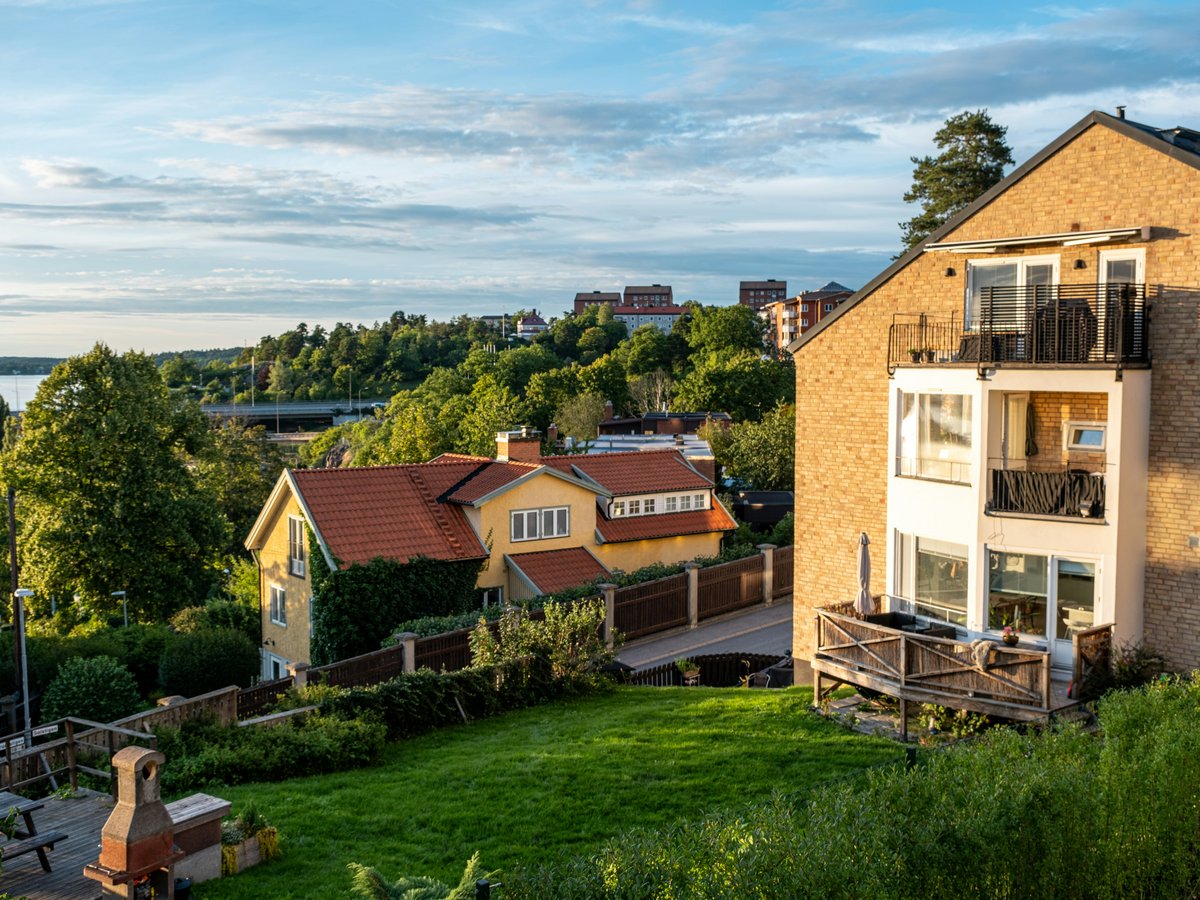
Lidingö, sometimes spelled Lidingo in English-language searches, is an island of about 48,000 people sitting immediately east of Stockholm, connected to the mainland by the Lidingöbron bridge at its southwestern corner. The geography matters here. The western side, closest to Stockholm, tends to be denser and more urban, with apartment blocks from the 1940s through 1970s clustering near the Lidingöbanan tram stops. Move east and north, and the island opens up into detached villa neighborhoods with water views, mature pine forest, and the kind of quiet that feels unlikely for a place 15 minutes from Stureplan. The tram line (Lidingöbanan) runs from Ropsten on the mainland up through the western districts to Gåshaga Brygga at the eastern tip, and it's the spine of daily life for Lidingo residents. Most commercial activity concentrates around Lidingö Centrum on Stockholmsvägen, with smaller pockets at Larsberg and Baggeby. Worth noting, Lidingo is not a budget destination. Property prices currently rank among the highest in Greater Stockholm, and the restaurant scene skews toward neighborhood bistros and cafés rather than nightlife. The island has about 30 km of shoreline, which means most neighborhoods sit within a 10-minute walk of the water.
Neighborhoods
-
Lidingö Centrum
The commercial and administrative core of the island, centered on Stockholmsvägen between the town hall (Stadshuset) and the Lidingö Centrum shopping area. Low-rise commercial buildings from the 1950s and 1960s line the main road, with Systembolaget, ICA Kvantum, and a handful of restaurants filling the ground floors. The pace is unhurried, even on Saturday mornings. You'll hear more Swedish than English here, and the foot traffic is locals running errands, not tourists browsing. This is the closest thing Lidingo has to a downtown, though it still feels more like a large village high street than any kind of urban center.
- Best for
- Visitors who want walkable access to grocery stores, pharmacies, the library, and the few sit-down restaurants on the island without needing a car.
- Key streets
- Stockholmsvägen is the main artery, running roughly east-west. Odenvägen connects south toward the schools and sports fields. The small square outside Lidingö Centrum mall has benches and a coffee kiosk that fills up around 10 AM on weekdays.
-
Larsberg
A 1960s-era residential area near the Lidingo bridge to Stockholm, Larsberg has seen some newer development in recent years. The apartment buildings are mostly 4 to 6 stories, with a small commercial strip at Larsbergs Torg that includes a Hemköp supermarket and a pizzeria. The neighborhood sits right on the tram line, with Larsberg station offering a 5-minute ride to Ropsten. The architecture feels functional rather than beautiful, but the proximity to the mainland crossing makes it the most convenient base on Lidingo for Stockholm day trips. Morning commuters from here can reach T-Centralen in about 20 minutes door to door.
- Best for
- Budget-conscious visitors (by Lidingo standards) looking for a base with fast transit links to central Stockholm. Families with small children will find the playgrounds around Larsbergsvägen practical.
- Key streets
- Larsbergsvägen runs through the center of the neighborhood. Larsbergs Torg is the small square with shops. Södra Kungsvägen connects south toward Bodal and the waterfront.
-
Herserud
This is where you'll find Millesgården, the sculpture garden and former home of Carl Milles, perched on a cliff overlooking Värtan strait. The neighborhood around it is residential and steep. Streets climb sharply from the waterfront, and the houses, a mix of early 1900s wooden villas and 1930s functionalist homes, sit among old oak trees. The whole area has a sheltered, almost hidden feel. On a still morning in May, the only sound might be blackbirds and the distant hum of a ferry crossing to Nacka. Of all the Lidingo neighborhoods, Herserud likely has the most architectural variety per block.
- Best for
- Art-focused visitors and anyone who values a quiet, walkable neighborhood with genuine architectural character. Millesgården alone draws around 100,000 visitors per year.
- Key streets
- Herserudsvägen climbs from the water up past Millesgården. Carl Milles väg leads directly to the museum entrance. Kottlavägen connects north toward Torsvik.
-
Baggeby
A compact neighborhood near Lidingo's western shore, Baggeby sits between the tram line and the water. The housing is a mix of 1950s apartment buildings and some older villas. Baggeby Torg has a small ICA supermarket and a couple of takeaway spots. The area feels residential and settled, with families who have lived here for decades. There's a bathing spot (Baggeby Bad) down by the water where locals swim from May through September, though the water temperature in early June still hovers around 14°C.
- Best for
- Families and anyone who wants a quiet residential base that still has a small grocery store and tram access within a few minutes' walk.
- Key streets
- Baggebyvägen is the main road through the neighborhood. The path down to Baggeby Bad follows a short gravel trail from the end of Strandpromenaden.
-
Bodal
A hillside neighborhood south of the centrum, Bodal is pure residential. The streets are narrow, winding, and lined with detached villas from the 1920s through 1950s, many with stucco facades in faded yellows and whites. The terrain slopes toward the water, and several houses have views across Lilla Värtan toward Nacka. The atmosphere is slow. You might see a cat in a garden. You will not see a restaurant. The nearest café is a 10-minute walk toward Lidingo Centrum.
- Best for
- Visitors with a car or bicycle who prefer total quiet and residential surroundings. Couples who like evening walks along the waterfront path.
- Key streets
- Bovägen and Bodalvägen wind through the hillside. The waterfront path (Strandpromenaden) runs along the southern shore and connects Bodal to Käppala.
-
Käppala
East of Bodal, Käppala is a hillside residential area on Lidingo's southern slope. The houses here are mostly 1960s and 1970s villas on generous lots, with birch and pine screening the gardens from the road. Käppala Skola sits at the center of the area, and the neighborhood empties out during school hours. It fills again around 3 PM when families return. The water is close but not always visible through the trees. In autumn, the birch canopy turns gold before most of Stockholm's mainland parks do, partly because of the exposed island microclimate.
- Best for
- Families with school-age children who want a safe, residential area with nature at the doorstep. The school and nearby sports fields give kids somewhere to go without needing a car.
- Key streets
- Käppalavägen is the central road. Norra Kungsvägen connects north toward Rudboda. The path from Käppalavägen down to the shoreline takes about 5 minutes on foot.
-
Torsvik
Torsvik sits at the northern end of Lidingo's western side, facing Stocksundet and the mainland. It's a mix of older wooden houses from the early 1900s and 1950s-era apartment buildings. The Torsvik tram stop puts you 8 minutes from Ropsten. The neighborhood has a small-town feel, with narrow streets, garden hedges, and a noticeable quiet after 9 PM. The views north across Stocksundet toward Danderyds Sjukhus give some houses an almost lakeside atmosphere, though the channel is saltwater.
- Best for
- Visitors who want a quiet neighborhood with tram access and a slightly more affordable profile than Lidingo's eastern villa areas. Good for couples or solo travelers.
- Key streets
- Torsviksgränd and Torsviks Allé are the main residential streets. Norra Kungsvägen runs along the northern edge and connects to the tram line.
-
Gåshaga
The eastern tip of Lidingo, and the end of the Lidingöbanan tram line at Gåshaga Brygga station. This is villa territory. Houses from the 1930s through 1990s sit on large plots, many with private jetties and views toward Fjäderholmarna. The air smells different out here, more pine resin and seawater, less exhaust. The commercial presence is close to zero. No shops, no cafés, no restaurants within the neighborhood itself. The nearest ICA is a 10-minute tram ride back toward Centrum. That said, the natural surroundings compensate. Elfvik nature reserve begins at the eastern edge of Gåshaga, with trails through old-growth oak forest and meadows that fill with wildflowers in late May.
- Best for
- Nature-focused visitors, birdwatchers, and anyone willing to trade convenience for space and water access. The Elfvik trails connect to Långängen-Elfviks naturreservat, which covers about 200 hectares.
- Key streets
- Gåshagavägen is the main road in from the west. Elfviksvägen leads east into the nature reserve. The area around Gåshaga Brygga station has a small parking area and the tram turnaround.
-
Rudboda
A residential neighborhood in Lidingo's interior, north of Centrum and set back from the shoreline. Rudboda feels more forested than the coastal neighborhoods. The houses, mostly 1950s through 1970s detached villas, sit among mature pine and spruce. The Rudboda tram stop provides access to the Lidingöbanan line. The neighborhood is quieter than the western districts and attracts families who want space without going all the way out to Gåshaga. Ekholmsnäsvägen passes through on its way toward the golf course.
- Best for
- Families who want room to breathe, access to forest walking paths, and tram connectivity without the premium pricing of the waterfront villa areas on Lidingo's east side.
- Key streets
- Rudbodavägen is the central street. Ekholmsnäsvägen runs north toward Ekholmsnäs and the golf course. The paths through the surrounding forest connect to Långängen nature reserve.
FAQ
What is the best neighborhood to stay in on Lidingo for first-time visitors?
Lidingö Centrum gives you the most walkable access to shops, restaurants, and the library, all within a few blocks of Stockholmsvägen. It's also on the Lidingöbanan tram line, so reaching Ropsten and Stockholm's metro takes about 12 minutes. For a first visit to Lidingo, the convenience outweighs what you'd gain from a quieter eastern neighborhood.
How do you get from Lidingo to central Stockholm by public transport?
The Lidingöbanan tram runs from Gåshaga Brygga to Ropsten, where you transfer to the Stockholm metro (Tunnelbana, red line). The tram takes about 25 minutes end to end, and the transfer at Ropsten adds 3 to 5 minutes. From Ropsten, T-Centralen is 7 stops. An SL access card or the SL app works on both the tram and the metro. Total travel time from Lidingo Centrum to T-Centralen is roughly 20 to 25 minutes.
Is Lidingo worth visiting if you only have half a day?
A half-day trip to Lidingo works well if you focus on Millesgården in Herserud. The sculpture garden takes 1 to 2 hours, and the café is worth a stop. Combine it with the walk down Herserudsvägen to the waterfront for views across Värtan strait. From Ropsten, the tram to Herserud takes about 8 minutes. You'll see the most distinctive part of the island without needing a car.
Are there good swimming spots on Lidingo?
Baggeby Bad on the western shore has a wooden dock, grass for sunbathing, and is popular with local families from May through September. The water temperature reaches around 18 to 20°C by mid-July. Sticklinge Udde on the eastern side offers rockier, more secluded swimming with clearer water. Neither spot has lifeguards. Locals on Lidingo tend to prefer the less-visited eastern shoreline spots, though reaching them without a car or bicycle takes some effort.
What is the Lidingöloppet and when does it take place?
The Lidingöloppet is an annual cross-country running race held on Lidingo each September, typically on the last weekend of the month. The course runs about 30 km through the island's forests, hills, and residential neighborhoods, with elevation changes that make it one of Sweden's more demanding races. It has been held since 1965 and draws around 15,000 participants. The trails around Rudboda and Långängen form part of the course, and the race weekend brings noticeably more foot traffic to the island's eastern paths.
Last verified by automated review (v1.7.2) on . What is automated review?