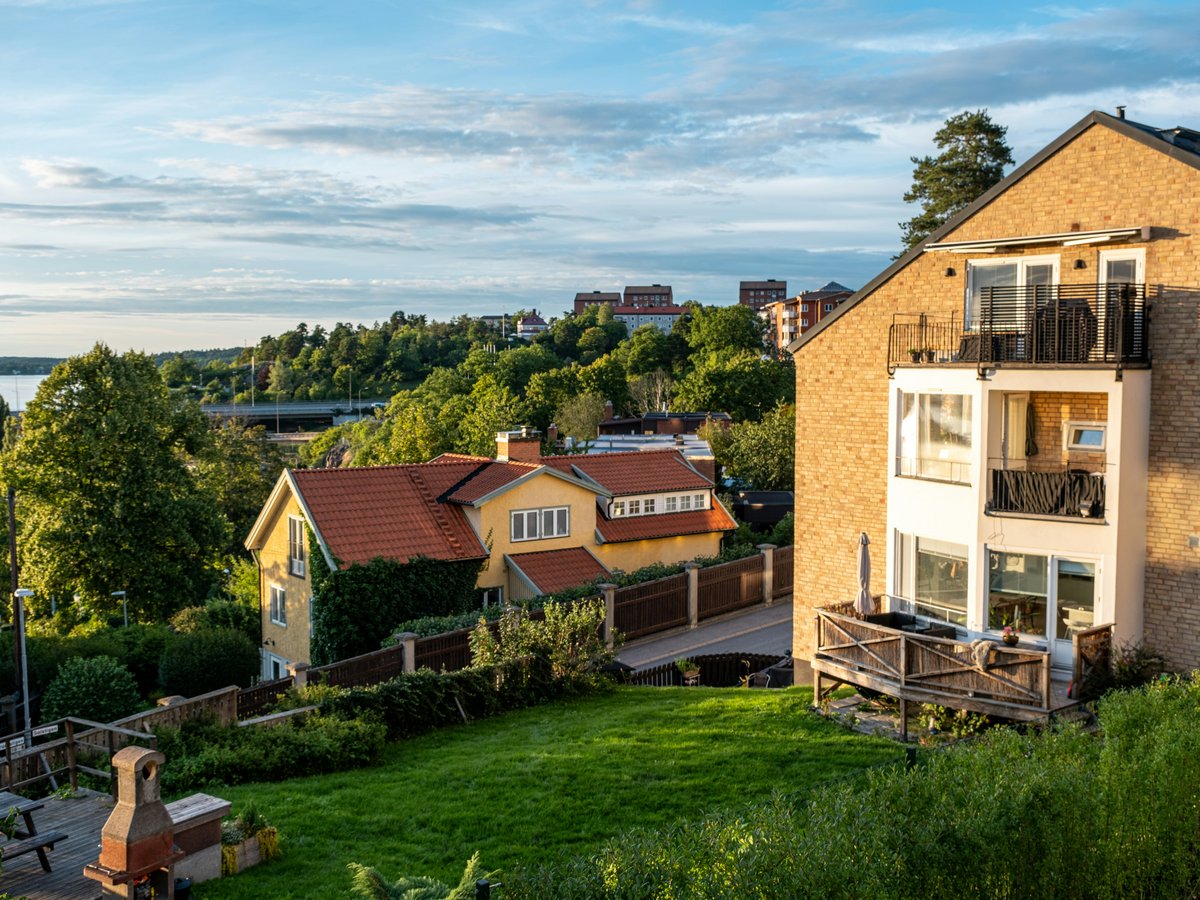
Stay in Lidingo in September
9 hotels in the Trip.com pool for Lidingo, from US$47 a night.
Opens Trip.com on Fri 25 Sep to Sun 27 Sep 2026; change the dates there.
September in Lidingö is defined by one weekend. The Lidingöloppet, held on the last Saturday of the month since 1965, fills this 30-square-kilometer island east of Stockholm with around 30,000 runners competing across multiple distances in one of the world's largest cross-country races. For that single weekend, every forest trail, bus route, and café on the island gets absorbed by the event. The rest of the month, Lidingö returns to its default setting as a quiet residential island where the main sounds are Baltic seabirds and the faint hum of boats passing Fjäderholmarna.
Temperatures average 16.8°C (62°F) during the day and drop to 10.3°C (51°F) at night. That is proper Scandinavian autumn. Rain falls on roughly 9 days totaling about 48mm, which is noticeably drier than August's 93mm. Mornings carry a damp chill, especially along the waterfront in Brevik or near Kottlasjön, and you'll want a real jacket by the third week. Daylight shrinks from around 13.5 hours on September 1 to under 12 hours by the 30th. The low-angle September light across the archipelago, though, has a warm tone that makes the birch forests along Elfvik look like they're lit from within. Worth packing a camera.
To be fair, Lidingö is not a stand-alone tourist destination in the way central Stockholm is. It sits a 15-minute bus ride from Ropsten metro station on the mainland, and most visitors treat it as a half-day trip. You'd come here for Millesgården's Carl Milles sculptures, for the Lidingöloppet, for the Långängen nature trails, or because you want a quiet escape from the city. September rewards all of those reasons, with thinner crowds and lower accommodation prices than July or August.
Why visit in September
- The Lidingöloppet on the last weekend of September draws around 30,000 runners across all race distances and transforms this otherwise quiet island into an international sporting event.
- Autumn foliage begins in the birch and oak forests around Långängen and Elfvik by mid-September, with early peak color typically in the last week of the month.
- September's 48mm of rainfall is roughly half of August's 93mm, making it one of the drier months for hiking and outdoor activities on the island.
- Summer crowds at Millesgården thin after the Swedish school year begins in late August, and Stockholm-area hotel rates drop an estimated 15-25% from the July peak.
- Chanterelle and porcini mushroom foraging reaches peak season in Lidingö's forests, particularly in the Långängen-Elfvik nature reserve.
Worth knowing
- Daylight drops from around 13.5 hours on September 1 to under 12 hours by September 30, limiting late-afternoon outdoor plans and evening walks.
- Water temperature around Lidingö falls to roughly 14°C (57°F) by mid-month, making open-water swimming a cold-tolerance test rather than a comfort.
- Several seasonal kiosks and waterfront cafés close after the August bank holiday, reducing on-island food options to a handful of year-round spots in Hersby and Larsberg.
- Outside Lidingöloppet weekend, the island has essentially no nightlife or evening entertainment. You'll head back to central Stockholm for dinner.
Best for
Think twice if
September on Lidingö settles into proper Scandinavian autumn. Mornings start around 10.3°C (51°F) with damp air and often a thin mist over Kottlasjön that burns off by mid-morning. Afternoons reach a mild 16.8°C (62°F), comfortable for hiking in a light jacket. Rain arrives on roughly 9 days, typically as grey drizzle rather than heavy downpours. Humidity holds steady at 82%, which you'll mostly notice as dew on the forest trails in the early hours. The breeze off the Baltic picks up in the afternoon, and exposed waterfront paths in Brevik or along the eastern shore tend to feel 3-4°C cooler than sheltered forest sections. Compared to August's 93mm of rain, September's 48mm feels noticeably drier, and you'll get stretches of 3-4 clear days between the grey spells.
Year-round climate
Averages from the last 5 years.
| Month | Avg high (°C) | Avg low (°C) | Rainfall (mm) |
|---|---|---|---|
| Jan | 1 | -4 | 62 |
| Feb | 2 | -4 | 35 |
| Mar | 6 | -1 | 27 |
| Apr | 9 | 1 | 32 |
| May | 15 | 6 | 56 |
| Jun | 21 | 12 | 61 |
| Jul | 22 | 14 | 75 |
| Aug | 21 | 13 | 93 |
| Sep | 17 | 10 | 48 |
| Oct | 11 | 6 | 62 |
| Nov | 5 | 1 | 44 |
| Dec | 2 | -3 | 42 |
Headline events
Lidingöloppet
Last weekend of September (Saturday-Sunday)
One of the world's largest cross-country races, held annually since 1965. Around 30,000 runners compete across distances from 10km to 30km over a full weekend on Lidingö's forest trails. The main 30km race takes place on Saturday, with shorter distances and the youth races on Sunday. The course winds through Elfvik's forests, past Kottlasjön, and finishes at Lidingövallen. Spectating is free and locals line the forest paths with cowbells and thermoses of coffee. The smell of wet pine needles and liniment fills the air along the course. Registration for the races typically opens in January and popular distances sell out by midsummer.
Best things to do in September
Run or spectate the Lidingöloppet
sportThe Lidingöloppet is a cross-country race weekend with distances from 10km to 30km across Lidingö's forest trails. Runners navigate roots, hills, and muddy sections through Elfvik and around Kottlasjön. Spectators can position themselves along the forest course for free, watching thousands of runners pass through pine-scented woodland. The finish line at Lidingövallen has food vendors, a festival atmosphere, and the exhausted satisfaction of 30,000 people who ran through the woods.
The Lidingöloppet only takes place on the last weekend of September. It has been running since 1965 and is one of the world's largest cross-country races.Booking tipRace registration opens in January and popular distances sell out by midsummer. If you want to run, register well in advance. Spectating requires no booking.
Chanterelle foraging in Långängen-Elfvik
natureSweden's allemansrätten (right to roam) means you can forage freely in Lidingö's forests. September is peak chanterelle season, and the damp oak and birch woodlands of the Långängen-Elfvik nature reserve are productive ground. The mushrooms grow in mossy clearings and along the edges of forest paths. You'll smell the damp earth and leaf litter before you spot the first golden cap. Bring a knife, a basket (not a plastic bag, which makes them sweat), and a field guide if you're not confident in identification.
Chanterelles and porcini peak in September after the late-summer rains. The forest floor is at its most productive this month before October's cold slows growth.Booking tipNo booking needed. Arrive early morning (before 9:00) for the best foraging. The most experienced locals are already out by 7:00.
Autumn hiking on the Lidingöleden trail
hikingThe Lidingöleden is a marked 33-kilometer trail that circles most of Lidingö, passing through forest, along the shoreline, and through residential areas. In September, the trail takes you through early autumn color in the birch and oak sections, with views across the archipelago water at multiple points. The full loop takes 6-8 hours, but you can pick shorter sections. The southern stretch between Elfvik and Gångsätra offers the best mix of forest and water views.
September's 16°C highs are ideal hiking temperature. The trail is drier than August (48mm vs 93mm rain), and the early autumn foliage adds color that's absent in summer.Booking tipNo booking required. The trail is free, open year-round, and well-marked with orange blazes.
Visit Millesgården in September light
cultureMillesgården, the former home and studio of sculptor Carl Milles and painter Olga Milles, sits on a cliff terrace in Hersby overlooking the water toward Stockholm. The outdoor sculpture terraces are the highlight, with bronze figures posed against open sky and archipelago views. The indoor galleries house both the Milles collection and rotating temporary exhibitions.
September's low-angle afternoon sun side-lights the outdoor sculptures on the terraces. Summer tour groups have thinned after August, and the early autumn plantings in the garden add seasonal color.Booking tipBuy tickets online to skip the entrance queue. Weekday afternoons (Tuesday-Thursday) are the quietest.
Kayaking in the inner archipelago
water sportThe waters around Lidingö are sheltered by the inner Stockholm archipelago, making them suitable for recreational kayaking. In September, the water surface is often calmer than in the windier months that follow. You can paddle from Lidingö toward Fjäderholmarna, a cluster of small islands about 2km away, or trace the island's eastern shoreline past rocky outcrops and summer cottages now quiet for the season. The water is clear and cold at around 14°C (57°F), and you might spot grey herons along the shore.
September is the last month when air and water temperatures are comfortable enough for recreational kayaking without a drysuit. October's winds and cold make the same paddle significantly harder.Booking tipRental kayak operations in the Stockholm area typically wind down by late September. Book at least a week ahead for the last weekend slots.
Cycling Lidingö's trail and road network
cyclingLidingö has a compact network of cycling paths that connect most neighborhoods, plus shared-use forest trails suitable for hybrid or mountain bikes. A loop from the Lidingö bridge through Baggeby, south past Elfvik, and back via Hersby covers about 20km and takes 2-3 hours with stops. September's 16°C highs are comfortable cycling temperature, and the damp forest paths have a pleasant smell of earth and fallen leaves after rain.
September's average 16.8°C (62°F) is ideal cycling weather. Cooler than the summer months, fewer pedestrians on shared paths, and the drier conditions compared to August reduce mud on the forest trails.Booking tipBring your own bike or rent from Stockholm-based bike-share and cycle-rental operators near Ropsten before crossing to the island.
Photograph early autumn foliage and archipelago light
photographyLidingö's mix of forest, water, and residential gardens makes it a strong location for autumn photography. The birch trees along Kottlasjön begin turning gold by mid-September, and the low-angle afternoon light reflected off the archipelago water creates warm, even illumination that's rare in the higher-sun summer months. Key spots include the Millesgården terraces (looking west toward Stockholm), the Kottlasjön loop path, and the eastern shoreline near Sticklinge.
The combination of early foliage color and September's low-angle golden light only lasts about 3-4 weeks. By October, the leaves are falling and the light flattens under grey skies.What to eat in September
In season: fruit
Lingon (lingonberries)
Lingonberries ripen across Sweden in September, and you'll find them both foraged and in every grocery store. The small, tart red berries appear as a condiment alongside meatballs, pancakes, and blood pudding at virtually every traditional Swedish lunch spot. Rårörda lingon (raw-stirred lingonberries with sugar) is the standard preparation, and the sharp taste cuts through richer autumn dishes.
Swedish apples (Ingrid Marie, Cox Orange)
September is apple harvest season in the Stockholm region. Heritage varieties like Ingrid Marie and Cox Orange ripen on trees across Lidingö's gardens and at Elfviks gård. The fruit is smaller and more tart than supermarket imports, with a crisp snap and floral scent. You'll find them at weekend farm stands and in seasonal pies at local cafés.
On menus now
Kräftor (crayfish)
The Swedish kräftskiva (crayfish party) season peaks in August but extends into early September. These small freshwater crayfish are boiled with crown dill and served cold, eaten with your hands at communal outdoor tables. The tradition involves paper bibs, novelty hats, and aquavit. Early September is a good time to catch the tail end of the season at slightly lower prices than the August peak.
Svampsoppa (wild mushroom soup)
A September staple made with freshly foraged wild mushrooms, typically chanterelles and porcini, simmered in cream with thyme. The earthy smell from a bowl of svampsoppa on a damp September afternoon is one of those distinctly Nordic autumn moments. Stockholm restaurants update their menus for mushroom season, and the soup appears everywhere from fine dining to weekday lunch spots.
What to drink
Nyponsoppa (rosehip soup)
Rosehips ripen along Lidingö's coastal paths in September, and nyponsoppa is the traditional way to use them. The soup is served warm or cold, with a sweet-tart flavor and a deep orange-red color. It often appears as a dessert or afternoon snack, topped with cream and crushed almonds. The rosehip bushes along Brevik's waterfront paths are heavy with fruit by mid-September.
In markets
Kantareller (chanterelle mushrooms)
September is peak chanterelle season in the Stockholm archipelago. The golden, trumpet-shaped mushrooms appear on forest floors across Lidingö after late-summer rains. You'll find them on restaurant menus across Stockholm, often sautéed in butter with a pinch of salt, served on toast or alongside cream sauce. Foraging your own in Långängen-Elfvik nature reserve is free under Sweden's allemansrätten (right to roam).
Regular events in September
Mini-Lidingöloppet (youth cross-country race)Free
The youth edition of the Lidingöloppet, with shorter race distances (1-5km) for children and teenagers. The races take place on Sunday of the Lidingöloppet weekend, using sections of the same forest course as the adult event. Thousands of young runners participate, and the atmosphere is loud and encouraging. The event has been running alongside the main Lidingöloppet for decades.
Last Sunday of SeptemberKulturarvsdagen (European Heritage Days on Lidingö)Free
Part of the Sweden-wide European Heritage Days, when historical buildings, manor houses, and cultural sites open their doors to the public. On Lidingö, sites like Elfviks gård and other local heritage properties typically participate with guided tours, exhibitions, and open-house events. The program varies year to year, with a new theme announced each spring.
Second weekend of SeptemberMillesgården autumn exhibition season
Millesgården opens its autumn exhibition program in September, with new temporary shows in the indoor gallery spaces alongside the permanent Carl Milles and Olga Milles collections. The museum also runs guided tours of the sculpture terraces that incorporate the autumn garden plantings.
Ongoing from early SeptemberBest places this September
Millesgården
museumThe former home and studio of Carl Milles, Sweden's most collected sculptor, perched on a cliff terrace in Hersby. The outdoor sculpture garden is the main draw, with bronze figures on tall columns silhouetted against the archipelago. In September, the terrace gardens transition from summer blooms to autumn plantings, and the low afternoon sun creates dramatic side-lighting on the sculptures. The indoor gallery hosts rotating exhibitions alongside the permanent collection.
HersbyLångängen-Elfvik nature reserve
nature reserveA 200-hectare forest and wetland reserve on Lidingö's southern peninsula, with marked trails through old-growth oak and birch forest. In September, this is prime mushroom-foraging territory, and the early autumn colors in the birch sections are among the first on the island. The trails are well-maintained but can be muddy after rain, so waterproof boots help. The reserve connects to the wider Lidingöleden trail system.
ElfvikKottlasjön
lake and trailLidingö's largest lake, surrounded by a 3.5km walking loop through mixed forest. On September mornings, mist sits on the water surface and the surrounding birches begin their shift from green to gold. The loop is flat, easy, and popular with local dog walkers. Benches along the path face the water. The lake itself is a protected nature area, and you might see grey herons or the occasional kingfisher along the reedy eastern shore.
BodalElfviks gård
farm and heritage siteA working farm and cultural site on the southern tip of Lidingö, surrounded by the nature reserve. The apple trees on the farm property fruit in September, and the grounds include meadows with late-summer wildflowers transitioning to autumn seed heads. Elfviks gård sometimes hosts seasonal markets and events, particularly around Kulturarvsdagen in mid-September. The walk from the bus stop through the forest to the farm takes about 20 minutes and is scenic in autumn.
ElfvikEkholmsnäs
viewpoint and recreationAn outdoor recreation area on Lidingö's eastern side, with a hilltop that serves as a ski slope in winter and a hiking viewpoint the rest of the year. In September, the overlook gives panoramic views of the autumn forest canopy stretching across the island's interior. The surrounding trails pass through mixed pine and birch forest with good mushroom-foraging potential.
BoGångsätra ängar (Gångsätra meadows)
meadow and shorelineOpen meadowland on Lidingö's southern shore, with views across the water toward Nacka. In September, the late-summer grasses turn straw-gold, and the waterfront path offers open-sky views that contrast with the enclosed forest trails elsewhere on the island. The area connects to the Lidingöleden trail and makes a good starting point for a southern-shore walk.
Gångsätra
Your packing checklist
Tick items off as you pack. Your progress saves in this browser.
All packed — have a great trip.
Insider tips
The best spectating spot for the Lidingöloppet is along the forest trail section near Elfvik, roughly 8km into the 30km course. Most spectators cluster near the start and finish at Lidingövallen, so you'll see the runners in a quieter setting and hear the sound of thousands of feet on pine-needle trails. Bring a thermos of coffee and arrive by 9:00.
For chanterelle foraging, skip the popular main paths in Långängen and walk the less-trafficked trails between Kottlasjön and Ekholmsnäs instead. The forest floor gets less foot traffic there, and chanterelles tend to fruit where people aren't constantly stepping. Look near mossy patches under birch trees, not in deep shade.
If you're visiting Millesgården, go in the late afternoon between 15:00 and 16:00. The September sun sits low enough to side-light the sculptures on the main terrace, and the archipelago view behind them turns warm amber. Morning visits miss this effect entirely. The café terrace also catches the afternoon light.
Ropsten metro station on the mainland has limited food options, and Lidingö's restaurant scene is sparse. Pick up lunch supplies at a grocery store in central Stockholm before you cross over. On the island, the ICA supermarket near Larsberg or Hersby centrum are your best bets if you need to restock.
Avoid these mistakes
- Driving to Lidingö on Lidingöloppet Saturday without checking road closures. Large sections of the island's road network shut down from early morning until mid-afternoon for the race course. Visitors arriving by car get diverted or turned away. Take the bus from Ropsten metro station instead, and expect the buses to be crowded between 7:00 and 10:00.
- Dressing for the 17°C afternoon high and then freezing on an early morning waterfront walk. The 10°C low, combined with 82% humidity and the wind off the Baltic, can feel closer to 6°C at 8:00 along the water in Brevik. Always bring a warm layer, even when the forecast looks mild and sunny.
- Planning a full day on Lidingö without the Lidingöloppet or a specific hiking agenda. For most visitors, Millesgården takes 1.5-2 hours, and a nature walk adds another 1-2 hours. Without the race weekend or a longer trail plan, you may find yourself running out of activities by early afternoon. Pair a Lidingö morning with a Stockholm afternoon.
Practical tips for September
September schedules on Lidingö shift from summer mode. The SL bus services from Ropsten T-bana station run every 10-15 minutes on weekdays and slightly less frequently on weekends. Buy an SL Access card or use the SL app for contactless payment before you board. During Lidingöloppet weekend (last Saturday and Sunday of September), expect significant road closures across the island from early morning through mid-afternoon, particularly through Elfvik and along the southern shore where the race course runs. If you need to drive to Lidingö that weekend, arrive before 7:00 or after 16:00. Millesgården is open Tuesday through Sunday in September, typically 11:00-17:00, but check their website for current hours as the schedule sometimes changes at the end of the summer season. Restaurants on the island are limited. Hersby centrum and the Larsberg area have a few year-round options, but serious dining means heading back to central Stockholm. Sunset drops from about 19:30 on September 1 to roughly 18:30 by September 30, so plan outdoor activities for morning and early afternoon. Sweden uses the krona (SEK), and card payment is accepted essentially everywhere, including small cafés. Cash is rarely needed.
FAQ
Is September a good time to visit Lidingö?
September is a good time for specific visitors. If you're a runner, the Lidingöloppet on the last weekend of the month is the island's defining event. If you're a nature walker or photographer, the early autumn foliage and September light make the forest trails more scenic than in summer. The weather averages 16.8°C (62°F) highs and 10.3°C (51°F) lows, which is comfortable for outdoor activities in layers. That said, it's not beach season, daylight shortens noticeably, and Lidingö has limited indoor attractions beyond Millesgården. If you're looking for warm weather or an action-packed destination, September on Lidingö likely won't deliver.
What is the weather like in Lidingö in September?
Expect average daytime highs of 16.8°C (62°F) and nighttime lows of 10.3°C (51°F). Rain falls on approximately 9 days, totaling about 48mm, which is drier than the preceding August (93mm). Humidity stays around 82%, giving mornings a damp, cool feel, particularly near the water. You'll want layers, a waterproof jacket, and a warm hat for early mornings. Afternoons in sheltered, sunny spots can feel surprisingly pleasant, but the breeze off the Baltic adds a chill on exposed waterfront paths.
What is the Lidingöloppet and when does it take place?
The Lidingöloppet is one of the world's largest cross-country running races, held annually on Lidingö since 1965. It takes place on the last weekend of September. The main event is a 30km race on Saturday, with shorter distances (15km, 10km) and the Mini-Lidingöloppet youth races on Sunday. Around 30,000 runners participate across all distances over the weekend. The course winds through Lidingö's forests and is known for its hilly, rooty terrain. Spectating is free anywhere along the course. Registration is required to run and popular distances sell out months in advance.
Can you still swim outdoors around Lidingö in September?
Technically, yes. Practically, it depends on your tolerance. Water temperature around Lidingö drops to roughly 14°C (57°F) by mid-September, which is cold by most standards. Some Swedes swim year-round and consider 14°C a normal autumn dip, but if you're not acclimated, it will feel intense. The bathing spots along Lidingö's shoreline are still accessible, though some seasonal facilities (changing rooms, kiosks) close after August. If cold water is your thing, early September offers the warmest window.
How do I get to Lidingö from central Stockholm?
Take the Stockholm metro (T-bana) red line to Ropsten station, the last stop on line 13. From Ropsten, SL buses cross the Lidingö bridge to various points on the island. The bus ride from Ropsten to central Lidingö (Hersby or Bodal) takes about 10-15 minutes. The full journey from Stockholm's T-Centralen to Lidingö is typically 25-35 minutes. A standard SL ticket covers the entire journey including the bus transfer. Cycling from Ropsten across the bridge is also an option, roughly 3km to the nearest neighborhoods.
Find a flight to Lidingo
Live fares to Lidingo appear here once cookies are accepted.
Last verified by automated review (v1.7.2) on . What is automated review?