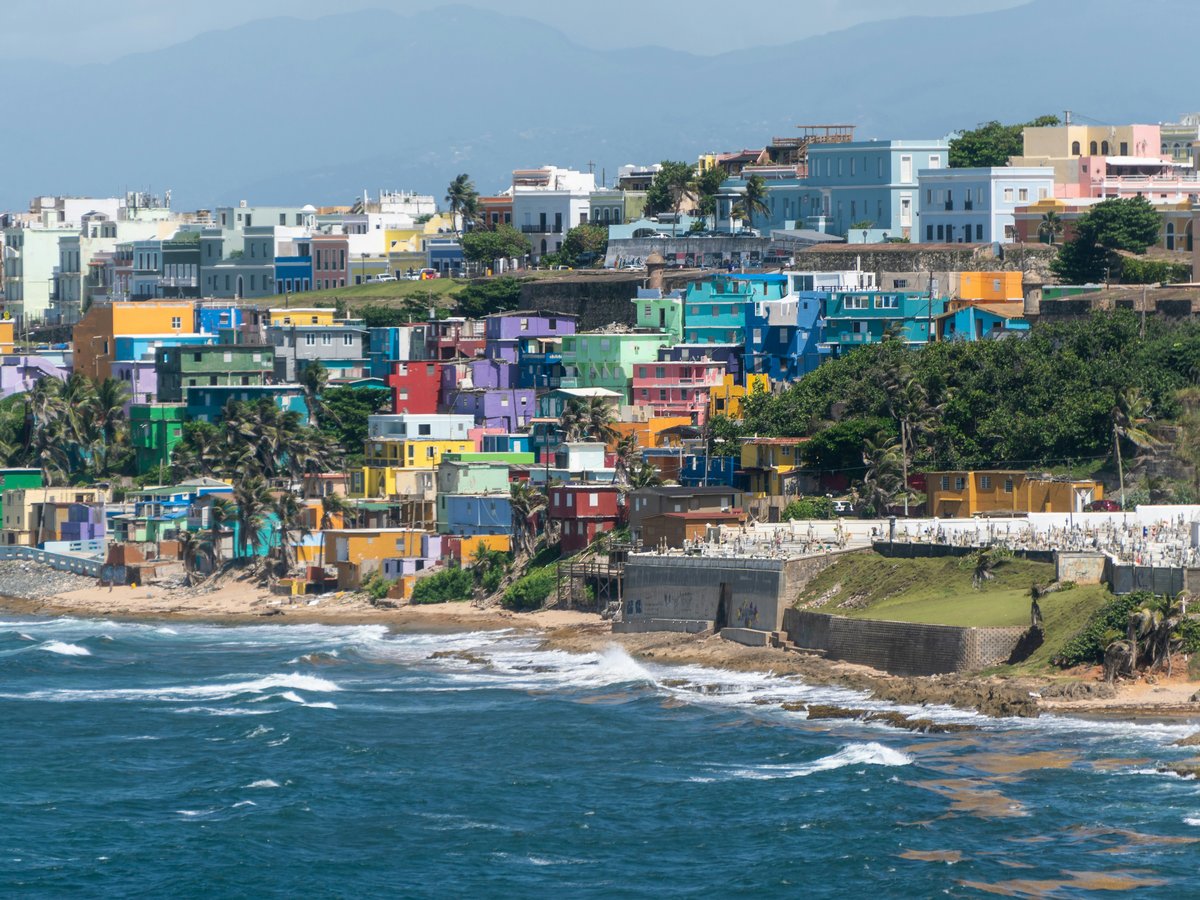
Stay in San Juan in September
22 hotels in the Trip.com pool for San Juan, from US$33 a night.
Opens Trip.com on Fri 3 Sep to Sun 5 Sep 2027; change the dates there.
September is the peak of Atlantic hurricane season, and San Juan sits squarely in its historical track. That is the single most important fact for anyone considering this month. Daytime highs reach 30.6°C (87°F) under humidity that pushes the heat index past 38°C (100°F) by midday, and roughly 20 rainy days make this the wettest period on the island's annual calendar. Storms tend to arrive between 2pm and 4pm, sometimes dropping heavy rain for under an hour before clearing to hazy sunshine. The pavement smells of wet concrete and frangipani for about 15 minutes after each downpour.
Hotels along Ashford Avenue in Condado and the Isla Verde strip drop to their lowest annual rates. Restaurants in Santurce that require reservations in the winter months seat walk-ins on a Tuesday night. Crowds at Castillo San Felipe del Morro thin to a fraction of peak-season levels. You might have a gallery room at Museo de Arte de Puerto Rico nearly to yourself on a Wednesday afternoon. If you can tolerate the heat and accept the real possibility that a tropical system could disrupt 2 to 3 days of your trip, September reveals a San Juan that feels more like a residential city than a resort destination.
The city does not shut down. La Placita de Santurce still fills up on Thursday and Saturday nights, salsa bleeding from the speakers at Bar El Joseo and Brava. The piragua carts still work the waterfront near the Raíces fountain. Roberto Clemente Day on September 15 and Grito de Lares on September 23 both fall in this month, lending a civic rhythm that the tourist high season lacks. The people you share these observances with are mostly Puerto Rican.
Why visit in September
- Lowest accommodation rates of the year. Beachfront properties in Condado and Isla Verde that sell out months ahead in winter often show wide-open calendars, and last-minute availability is the norm rather than the exception.
- Minimal crowds at major sites. On a weekday morning you can walk the ramparts of Castillo San Felipe del Morro with a handful of other visitors instead of the hundreds that pack the grounds in February.
- Ocean temperatures peak near 29°C (84°F), the warmest of the year, making conditions at Balneario El Escambrón ideal for snorkeling without a wetsuit.
- Bioluminescent bay tours at Laguna Grande in Fajardo benefit from warmer water that supports higher concentrations of dinoflagellates, and September's low tourist volume means smaller kayak groups on the water.
Worth knowing
- September is statistically the most active month for Atlantic hurricanes. A named storm within 500 miles of Puerto Rico can cancel flights out of Luis Muñoz Marín International Airport for 1 to 3 days and close beaches entirely.
- Midday outdoor activity becomes uncomfortable and potentially risky between 11am and 3pm. The heat index regularly pushes past 38°C (100°F) in direct sun, demanding shade and water breaks every 20 minutes.
- Some smaller restaurants and independent shops along Calle Loíza in Ocean Park and Calle Canals in Miramar reduce hours or close entirely, since local owners often take late-summer vacations before the October shoulder season.
- Afternoon downpours are nearly guaranteed. They tend to be short, but they can flood the low-lying intersections around Calle Tanca and Calle Recinto Sur in Viejo San Juan within minutes.
Best for
Think twice if
The temperature gap between day and night is only about 5°C, so the city barely cools after sunset. Morning air feels thick and sticky before 8am, the kind of humidity that fogs your sunglasses the moment you step outside. That said, the rainfall pattern is at least predictable. Clear mornings build to fast-moving afternoon squalls lasting 20 to 45 minutes, followed by evenings that tend to be the most comfortable hours. A wind shift from southeast to northwest signals incoming rain, giving you roughly 15 to 20 minutes to duck into a cafe or colmado. Ocean water at Condado Beach reaches its annual peak temperature near 29°C.
Seasonal caution
- September is the statistical peak of Atlantic hurricane season. Monitor NOAA's National Hurricane Center at nhc.noaa.gov daily. Named storms can form near the Lesser Antilles and reach Puerto Rico within 48 to 72 hours over the warm Caribbean waters.
- The combination of 80% humidity and direct sun produces dangerous heat conditions during midday hours. The heat index regularly exceeds 38°C (100°F) between 11am and 3pm. Prolonged outdoor activity without shade, water, and rest breaks risks heat exhaustion, especially for visitors arriving from cooler climates.
- Flash flooding occurs in low-lying areas, particularly along the Caño Martín Peña waterway and at several intersections in Viejo San Juan near Calle Tanca, after heavy afternoon downpours. Avoid driving or walking through standing water.
Year-round climate
Averages from the last 5 years.
| Month | Avg high (°C) | Avg low (°C) | Rainfall (mm) |
|---|---|---|---|
| Jan | 28 | 22 | 55 |
| Feb | 28 | 22 | 80 |
| Mar | 29 | 22 | 55 |
| Apr | 29 | 23 | 90 |
| May | 30 | 24 | 87 |
| Jun | 31 | 25 | 69 |
| Jul | 30 | 26 | 85 |
| Aug | 31 | 26 | 104 |
| Sep | 31 | 25 | 131 |
| Oct | 31 | 25 | 126 |
| Nov | 29 | 24 | 109 |
| Dec | 28 | 23 | 69 |
Holidays and festivals in September
Public holidays
- Labour Day(Día del Trabajo)6 September 2027
Best things to do in September
Early-morning fortress walk at the San Juan National Historic Site
sightseeingThe historic site, established in 1949, encompasses both Castillo San Felipe del Morro and Castillo San Cristóbal across hectares of Atlantic-facing headlands. Tunnels, sentry boxes called garitas, and layered defensive walls date to the 16th century. The grounds include sweeping lawns where locals fly kites on weekends.
September's low visitor counts mean you can explore the tunnels and ramparts without crowds. Morning hours before 10am are the only comfortable window for extended outdoor time.Booking tipNo reservation needed. Gates open at 9am. Arrive right at opening for the coolest air. Check the National Park Service website for current entry fees.
Sunset kayaking on Condado Lagoon
water sportsThe Condado Lagoon Natural Estuarine Reserve sits between the Condado hotel strip and Miramar. Kayak and paddleboard rentals operate from the Miramar shoreline. Manatees surface in the shallows, and iguanas line the mangrove edges.
September sunsets fall around 6:30pm, and the lagoon's flat water stays calmest before late-afternoon storms build. Fewer people renting means no queue at the stands.Booking tipWalk up to the rental stands on the Miramar side near the Caribe Hilton. No advance booking needed in September. Hourly rates vary by operator.
Snorkeling at Balneario El Escambrón
water sportsA reef-protected beach in Puerta de Tierra, between Old San Juan and Condado. Natural rock barriers create a calm, shallow pool where sea turtles and tropical fish concentrate. Lifeguards are on duty during posted hours. The reef shelf is about 3 feet below the surface at low tide.
Sea temperatures hit their annual peak near 29°C in September, warm enough to snorkel comfortably without neoprene. The reef provides calmer water than open-coast beaches on storm-swell days.Booking tipBring your own mask and snorkel. Arrive before 11am for the best visibility and a parking space. Entry to the balneario is free.
Bioluminescent bay kayak tour at Laguna Grande
natureAbout an hour's drive east of San Juan in Fajardo, Laguna Grande's bioluminescent bay glows when you disturb the water. Outfitters run evening kayak tours through a mangrove channel into the open bay, where each paddle stroke leaves a trail of blue-green light.
Warmer water supports higher concentrations of the dinoflagellates that produce the glow. Low tourist volume means smaller groups, and moonless September nights offer the darkest conditions.Booking tipReserve 5 to 7 days ahead through a Fajardo outfitter. Choose a date near the new moon for maximum brightness. Tours cancel for heavy rain, so build a backup night into your schedule.
Gallery circuit in Santurce
cultureThe blocks between Calle Cerra and Calle Loíza hold a concentration of contemporary art galleries and artist studios, including Galería Agustina Ferreyra and Espacio 304. Several spaces are fully air-conditioned, making this an ideal retreat when September's afternoon storms roll in.
The predictable afternoon rain window creates a natural schedule for indoor cultural time. Some galleries rotate exhibitions at the end of summer, so September can catch fresh installations before the fall season opens.Booking tipMost galleries are free and open without reservation. Check hours, as many close on Mondays and Tuesdays.
Evening food walk through La Placita de Santurce
foodPlaza del Mercado de Santurce, known locally as La Placita, is a daytime produce market that transforms after dark. Small restaurants and bars line the surrounding streets, with tables spilling onto sidewalks and speakers competing on salsa and reggaetón. The colmados on the surrounding blocks pour cheap Medalla Light.
Temperatures drop into the mid-20s Celsius after sunset, making outdoor eating comfortable. September's thin tourist presence means you eat alongside Santurce residents rather than tour groups. Thursday and Saturday nights draw the biggest crowds.Booking tipKitchens tend to close by 10pm. Eat early at José Enrique or the ceviche stand at the market entrance, and stay for the music.
Surfing at La Pared, Condado
water sportsLa Pared, the rocky point between Condado Beach and Ocean Park, is San Juan's most accessible surf break. The reef bottom produces a consistent left that works well from waist to overhead height.
Tropical weather systems generate swells that light up the north coast more consistently in September than in the calmer winter pattern. Board rentals operate along the Condado strip near Ashford Avenue.Booking tipCheck conditions at dawn before committing. Rincon Surf School and local instructors along Condado can advise on whether the day's swell suits your level.
Caparra Archaeological Site
historyThe ruins of the first European settlement in Puerto Rico, founded by Juan Ponce de León in 1508, sit in Guaynabo municipality about 20 minutes south of Old San Juan on PR-2. A small museum displays colonial-era artifacts and maps from the earliest years of Spanish contact.
September's low visitor numbers mean you may be the only person at the ruins. The site's mature trees provide shade, making the heat more tolerable here than at the open-air fortifications.Booking tipFree entry. Open Wednesday through Sunday. Allow about 45 minutes for the ruins and museum.
What to eat in September
In season: fruit
Quenepas
The tail end of quenepa season runs through mid-September. Street vendors sell tied bunches of these small green fruits along Calle Loíza in Santurce. You crack the thin shell with your teeth and scrape the sweet-tart flesh off a large central seed. September is your last chance until next June.
Parcha (passion fruit)
Plentiful in late summer, the intense floral-sour juice shows up in cocktails at La Factoría on Calle San Sebastián, in limbers from neighborhood kiosks, and in piragua syrups across the city. Look for wrinkled fruits at produce stands in Río Piedras market. The uglier they look, the sweeter the pulp.
Acerola
Puerto Rico grows acerola cherries commercially, and September's harvest brings fresh fruit to the Río Piedras market near the Universidad de Puerto Rico campus. Tart and fragrant, with one of the highest natural concentrations of vitamin C of any fruit. Often blended into juices or eaten by the handful.
On menus now
Tostones de pana
Breadfruit, called pana locally, reaches peak season in late summer. Sliced and double-fried like plantain tostones, the result is creamier with a slightly nutty flavor. Fondas across the metro serve them as a side dish through October. Try them at La Casita de Quisqueya in Santurce.
Street food peaks
Limber
Puerto Rico's frozen fruit cup, made from coconut, parcha, guanábana, or tamarind puree and sold from home freezers and neighborhood kiosks. September's heat makes these the default afternoon snack across every barrio in the metro.
Piragua
Shaved ice cones drenched in tropical fruit syrup, served from brightly painted wooden carts by piragüeros. Cherry, tamarind, and coconut are the classic flavors. The vendors station themselves near Castillo San Felipe del Morro and along the Paseo de la Princesa, working their longest hours in September's heat.
Regular events in September
Roberto Clemente DayFree
MLB-wide observance honoring the Hall of Fame right fielder who grew up in Carolina, east of San Juan. Puerto Rico marks the day with civic tributes, events at Estadio Hiram Bithorn, and programs at the Roberto Clemente Sports City in Carolina. Clemente's humanitarian legacy resonates well beyond baseball here.
September 15Grito de LaresFree
Anniversary of the 1868 uprising against Spanish colonial rule. The main ceremonies happen in the mountain town of Lares, about 2 hours west of San Juan on PR-111, but cultural organizations in the capital hold talks, film screenings, and small marches near the Capitolio building. The day carries political significance for independence advocates.
September 23Hispanic Heritage Month opening eventsFree
The U.S. observance runs from mid-September through mid-October. The Universidad de Puerto Rico campus in Río Piedras typically hosts public lectures and exhibitions, and the Museo de las Américas in the Cuartel de Ballajá in Old San Juan schedules programming tied to the opening weeks.
September 15 onwardBest places this September
Paseo de la Princesa
promenadeA tree-lined waterfront promenade along the southern wall of Old San Juan, ending at the Raíces fountain. September evenings after the afternoon rain clears bring a breeze off San Juan Bay and shade from mature fig trees. Street vendors sell coconut water and limbers near the fountain. Likely the most comfortable walk in the city during this month.
Viejo San JuanLa Fortaleza
historic siteThe oldest executive mansion in continuous use in the Americas, built in 1533. The blue-and-white facade on Calle Fortaleza is one of the most photographed spots in the colonial district. Free exterior viewing from the street. Guided interior tours run on weekday mornings with smaller groups in September than any other month.
Viejo San JuanCathedral of San Juan Bautista
historic siteFounded in 1529, the second-oldest cathedral in the Americas sits on Calle del Cristo in Old San Juan. The marble tomb of Juan Ponce de León rests inside. September's reduced foot traffic makes the interior feel properly contemplative, and the thick stone walls provide a noticeable drop in temperature from the street.
Viejo San JuanSanta María Magdalena de Pazzis Cemetery
historic siteA colonial-era cemetery founded in 1863, set on a cliff between the Atlantic and the city wall. The white-and-pastel tombs against the ocean backdrop look their most dramatic under September's towering afternoon cumulus clouds. Go in late morning for softer light and fewer shadows across the headstones.
Viejo San JuanPlaza de Armas
public squareSan Juan's main public square since 1521, ringed by City Hall and colonial-era facades. Shade trees, benches, and the Cuatro Estaciones fountain make it a natural rest stop during morning walks through the old city. In September the square feels unhurried, with retirees reading El Nuevo Día and pigeons outnumbering tourists by a wide margin.
Viejo San JuanMuseo de Arte de Puerto Rico
museumThe island's largest art museum occupies a former hospital building on Avenida De Diego in Santurce. Permanent collections span five centuries of Puerto Rican art, from Santos carvings to contemporary installation work. The sculpture garden is free to enter and pleasant in the cooler hours after 5pm.
SanturceCondado Lagoon Natural Estuarine Reserve
nature reserveA protected urban lagoon with boardwalk paths, kayak launches, and resident manatees. The flat water and mangrove shoreline appear at their lushest after September's heavy rains green up the vegetation. The Miramar side near the Caribe Hilton is quieter than the Condado approach off Ashford Avenue.
Condado
Your packing checklist
Tick items off as you pack. Your progress saves in this browser.
All packed — have a great trip.
Insider tips
The afternoon rain follows a reliable pattern. Plan outdoor activities before noon. By 2pm most days, cumulus clouds stack over the central mountains and push rain toward the coast. It typically clears by 4pm, and the post-rain hour often produces the prettiest light for photos along the Paseo de la Princesa and the cemetery cliffs.
Worth noting that Condado Beach develops stronger undertow after tropical storms pass nearby. Balneario El Escambrón, protected by its natural reef, has calmer water and on-duty lifeguards. It is the safer swimming choice during September's rougher ocean conditions.
The piragua vendors near the fortifications keep irregular hours in September's low season. If you spot a painted cart near the Castillo San Felipe del Morro esplanade, stop. You might not see another one for several blocks.
Keep a charged flashlight and a day's worth of water in your hotel room. Power outages from passing squalls can last a few hours, and older buildings in the colonial district along Calle San Sebastián and Calle Sol lose electricity before newer Condado towers come back online.
Skip renting a car for Old San Juan. The 7-block colonial grid has almost no public parking, and the Covadonga parking garage near the cruise port fills before 10am even in low season. Uber from Condado to the Plaza de Armas takes about 10 minutes.
San Juan scores 7.5/10 for LGBTQ+ friendliness (sourced from TTDI's editorial rubric). Condado's Ashford Avenue concentrates the scene, with spots like Oasis and Atlantic Beach Bar open year-round while some venues elsewhere trim hours through September.
Avoid these mistakes
- Scheduling a full day of outdoor walking tours through the colonial district. The midday heat index past 38°C makes prolonged sun exposure genuinely risky. Split outdoor time into a morning window before 10am and an evening window after 5pm, with air-conditioned museums like the Museo de las Américas or galleries in Santurce filling the gap.
- Skipping travel insurance for a September trip. Hurricane Maria struck Puerto Rico on September 20, 2017, and Hugo on September 18, 1989. A named storm can strand you for extra days if flights cancel at SJU, and rebooking without coverage adds up fast.
- Renting a car solely for Old San Juan. The colonial district is a 7-block walkable grid with almost no street parking. The narrow one-way streets flood quickly in downpours, and an Uber from Condado takes about 10 minutes.
- Ignoring NOAA weather forecasts during your trip. A tropical system 4 to 5 days out can change plans rapidly. The National Weather Service office in San Juan, based at the Luis Muñoz Marín airport complex, issues local updates that hotel front desks sometimes lag behind. Bookmark weather.gov/sju on your phone and check each morning.
Practical tips for September
Book accommodation with a flexible cancellation policy. September's hurricane risk means you may need to shift dates on short notice, and rigid bookings cost you money. Keep a screenshot of your airline's storm-related rebooking policy on your phone. Luis Muñoz Marín International Airport (SJU) has air-conditioned waiting areas near gates C and D if your return flight faces weather delays. Dress casually in linen, shorts, and sandals. San Juan is informal in September, though a few upscale Condado restaurants like 1919 and Cocina Abierta request closed-toe shoes at dinner. Tipping follows mainland U.S. customs at 18-20%. No currency exchange is needed, since Puerto Rico uses the U.S. dollar. Major U.S. cell carriers work without roaming charges. Walgreens and CVS locations operate across the metro, so prescription refills and familiar products are straightforward to find.
FAQ
Is September a good time to visit San Juan?
September is a fair month, not a good one. It brings the lowest prices and thinnest crowds of the year, which appeals to budget-conscious travelers who can tolerate weather risk. The trade-off is real. This is the statistical peak of Atlantic hurricane season, humidity sits around 80%, and afternoon rain falls on roughly 20 of the month's 30 days. If you are flexible with plans and carry trip-interruption insurance, the lower costs and emptier sites like Castillo San Felipe del Morro can work in your favor. If you need reliable sunshine or a rigid itinerary, January through April is the safer window.
What is the weather like in San Juan in September?
Hot and humid with predictable afternoon rain. Highs reach about 30.6°C (87°F), lows stay near 25.3°C (77°F), and the 5°C gap between day and night means the city barely cools after sunset. Rain falls on roughly 20 of September's 30 days, mostly as short afternoon bursts lasting 20 to 45 minutes between 2pm and 4pm. Mornings tend to be clear and muggy, with the muggiest stretch between 6am and 8am when the air feels like a damp towel. Evenings after the storms pass are typically the most comfortable hours, especially along the Paseo de la Princesa where the bay breeze picks up around 6pm.
Is San Juan safe for solo travelers in September?
San Juan scores 5.8/10 for solo-traveler safety (see the TTDI Solo-Safety Index). Condado along Ashford Avenue, the Isla Verde hotel strip, and the cobblestone blocks of Old San Juan between Calle Fortaleza and Calle San Sebastián feel comfortable during the day and into the evening. After dark, La Placita de Santurce stays lively until 11pm on Thursdays and Saturdays with enough foot traffic to feel safe. Avoid walking solo south of Avenida Fernández Juncos after 10pm or through the quieter blocks between Miramar and Hato Rey at night. September's lower tourist presence means fewer people on the streets after midnight, so use Uber or local taxi apps like Rideo rather than walking long distances between neighborhoods after sunset. The Tren Urbano runs from Bayamón to Sagrado Corazón station until 11:30pm and is well-lit and monitored.
Are there hurricanes in San Juan in September?
September is statistically the most active month for Atlantic hurricanes, and Puerto Rico sits within the belt where storms typically intensify. The warm Caribbean water east and south of the island fuels rapid development. Tropical systems can go from a disorganized wave near the Lesser Antilles to a named storm within 48 to 72 hours. Hurricane Maria in September 2017 and Hurricane Hugo in September 1989 both struck Puerto Rico. That history is worth taking seriously, even though most Septembers pass without a direct hit. Monitor NOAA's National Hurricane Center daily, buy travel insurance with trip-interruption coverage, and accept that outdoor plans may need to shift if a system tracks within 300 miles.
Is San Juan crowded in September?
No. September is the quietest month on San Juan's tourism calendar. The ramparts at Castillo San Felipe del Morro, which pack 500-plus visitors on a February afternoon, might see 30 people on a September Tuesday. Hotels in Condado and Isla Verde report their lowest occupancy of the year. You can walk into Marmalade on Calle San Sebastián or 1919 at the Condado Vanderbilt without a reservation on a Saturday night. The flip side is that smaller spots like the cafes along Calle Loíza in Ocean Park and several independent restaurants in Miramar reduce hours or close for owner vacations through late September.
Find a flight to San Juan
Live fares to San Juan appear here once cookies are accepted.
Last verified by automated review (v1.7.2) on . What is automated review?