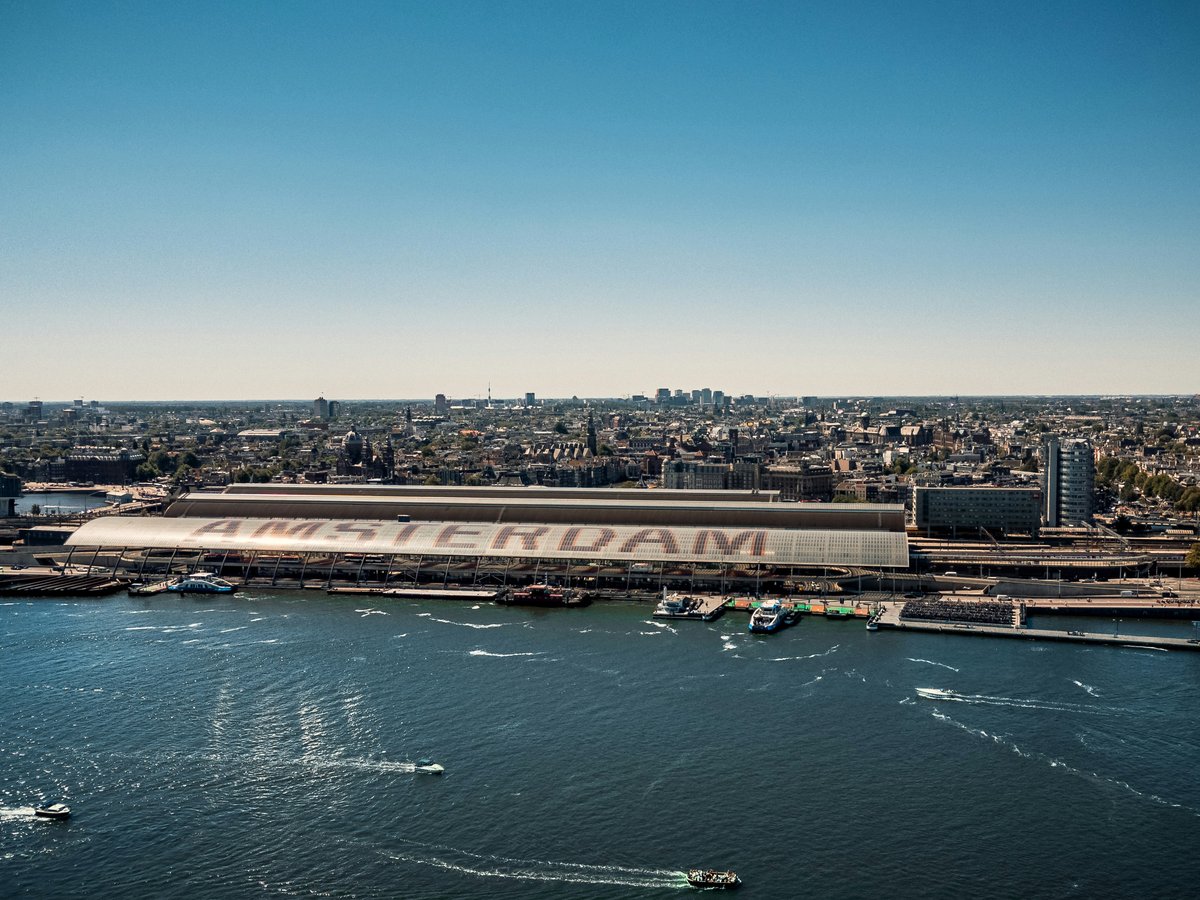
Amsterdam tends to reward wandering more than planning, which works out well if your budget is tight. The city's bones are its canals, its bridges, its parks, and the street life that fills them — and none of that costs a thing. You can spend a full day crossing from the Jordaan to Amsterdam-Noord on a free ferry, browsing markets where vendors will let you taste stroopwafels warm off the press, sitting in a park where a busker plays better jazz than some ticketed venues, and watching the light shift over the Amstel from a bench that nobody charges you for. The paid museums are world-class, sure, but the city between them is where Amsterdam actually lives. Mind you, this is still one of Europe's pricier capitals for accommodation and food — but the stuff worth doing outside of eating and sleeping? A surprising amount of it has always been free.
Free attractions
-
Vondelpark
Amsterdam's most-loved green space, sprawling across 47 hectares just south of Leidseplein. On warm days, the lawns fill with picnickers, jugglers, and impromptu guitar circles. The rose garden near the centre tends to peak in June, and the park's open-air theatre runs free performances through summer. It never feels as manicured as you'd expect — more like a big communal backyard that happens to have flamingos near the pond.
Oud-ZuidPark -
Begijnhof
A medieval courtyard tucked behind a doorway off the Spui that you'd walk right past if you didn't know it was there. Originally a community of lay religious women, the Begijnhof still has occupied residences, so visitors are expected to keep quiet. The Engelse Kerk (English Church) and a wooden house from around 1528 sit inside — one of the oldest surviving wooden structures in the Netherlands. Free to enter during daytime hours, though the gate closes in the evening.
CentrumHistoric courtyard -
Rijksmuseum Gardens
The museum itself carries a steep admission fee, but the gardens around and behind the building are completely free and open year-round. Sculptures, a formal Dutch garden with period-appropriate plantings, and a pleasant café terrace where you can sit without buying anything. The passageway beneath the museum — the one with the street musicians echoing off the tiles — connects the Museumplein side to the Stadhouderskade side. Worth walking through at different hours; the acoustics shift depending on who's playing.
MuseumkwartierGarden / outdoor sculpture -
Schuttersgalerij (Civic Guard Gallery)
A covered street-level passage that's technically part of the Amsterdam Museum, but has always been free to walk through. The walls are hung with enormous 17th-century group portraits of civic guardsmen — the less famous cousins of Rembrandt's Night Watch. You'll often have the corridor to yourself, which feels a little surreal given the scale of the paintings. Currently accessible from Kalverstraat or from the Begijnhof side.
CentrumFree gallery -
Hollandsche Schouwburg
A former theatre on the Plantage Middenlaan that was used as a deportation assembly point during the German occupation. Now a memorial with a contemplative courtyard, an exhibition on the ground floor, and a wall inscribed with the family names of the more than 104,000 Dutch Jews who were murdered. Free admission, always. It sits across the street from the Nationaal Holocaust Namenmonument, which opened in 2021 and is also free — 102,000 individual name stones set into a labyrinth of brick walls.
PlantagebuurtMemorial / museum -
Stadsarchief Amsterdam (City Archives)
Housed in the old De Bazel building on Vijzelstraat — a brick monument from 1926 that was originally the headquarters of a trading company. The building itself is worth visiting for the art deco details in the stairwell and the tiled entrance hall. The rotating exhibitions on Amsterdam's history are free, and the reading room upstairs has a kind of quiet grandeur that makes you want to sit and pretend you're researching something important.
CentrumArchive / free exhibitions -
NDSM Werf
A former shipyard on the north bank of the IJ, now repurposed as a sprawling creative compound. The outdoor areas are free to roam: giant welded sculptures, graffiti murals that change regularly, shipping containers converted into studios, and a crane you can see from across the water. It feels slightly post-apocalyptic in a way that Amsterdam's centre decidedly does not. Take the free NDSM ferry from behind Centraal Station — the ride itself is about 15 minutes and gives you a good look at the harbour.
Amsterdam-NoordArt / cultural zone -
Openbare Bibliotheek Amsterdam (OBA Centraal)
The central library near Centraal Station is free to enter and has one of the better viewpoints in the city from its rooftop terrace on the seventh floor. You can see the IJ waterway, the historic centre, and the Oosterdokseiland development from up there. The interior is worth a wander too — bright, modern, with a generous design section and newspapers from all over. There's a café on the top floor, but nobody will bother you if you just sit and read.
OosterdokseilandLibrary / viewpoint -
Amsterdamse Bos
A massive managed forest south of the city that most tourists never reach. At roughly 1,000 hectares, it dwarfs Vondelpark and has a genuinely rural feel — rowing courses, goat farms, long cycling paths through birch and oak. The pancake house by the water is tempting but the walking is free. You might spot herons, foxes, and Highland cattle in the meadow near the Bosbaan rowing course. Reachable by bus 62 from Amstelveenseweg or by bike in about 25 minutes from the centre.
Amstelveen borderForest park -
Westerpark
Just west of the Jordaan, centred around the old Westergasfabriek complex — a former gasworks turned cultural campus. The park grounds are free and well-used by joggers and dog walkers. On weekends you might stumble into a food truck festival or an outdoor film screening in the Westergasterras area. The Zuiveringshal and other industrial buildings host events, but the park and its ponds are open anytime.
WesterparkPark / cultural campus -
Oosterpark
A neighbourhood park in the Oost that feels more like a local hangout than a tourist destination — which is exactly the appeal. The Slavernijmonument (National Slavery Memorial) stands near the eastern edge, a place worth a few quiet minutes. The park has a small lake, mature trees, and a relaxed atmosphere that reflects the diverse neighbourhood around it. Sunday mornings tend to be especially calm.
OostPark -
Sarphatipark
A tiny jewel in De Pijp, named after the 19th-century physician and philanthropist Samuel Sarphati. The monument fountain in the centre is a local landmark, and on warm afternoons the grass fills with students and young families from the surrounding streets. You can combine a lap of the park with a walk through the Albert Cuypmarkt just a block north — browsing is free, and the sensory overload of raw herring, Surinamese roti, and piles of cheap socks is part of the experience.
De PijpPark
Free activities
-
Canal ring walk (Grachtengordel)
The 17th-century canal ring is a UNESCO World Heritage site, and walking it costs nothing but shoe leather. Start at the Brouwersgracht — widely considered the prettiest canal in the city — and wind south through the Herengracht, Keizersgracht, and Prinsengracht. Each has a distinct character: the Herengracht tends toward grand merchant houses, the Prinsengracht is narrower and livelier with houseboats. The bridges look different at night when the arch lights reflect off the water. Budget about two hours if you want to walk the full ring without rushing.
Centrum / Jordaan / GrachtengordelWalking route -
Free GVB ferries across the IJ
The municipal ferries behind Centraal Station are part of the public transport network and completely free — no OV-chipkaart needed. The Buiksloterweg ferry takes about 5 minutes and drops you near the EYE Filmmuseum and A'DAM Toren. The NDSM ferry runs to the shipyard art campus. Both give you a view of Amsterdam's harbour that you'd otherwise need a boat tour to see. The crossings run frequently, roughly every 10 to 15 minutes depending on the route.
Centraal / NoordTransport / sightseeing -
Albert Cuypmarkt browsing
Amsterdam's largest daily street market stretches along Albert Cuypstraat in De Pijp, six days a week — Monday through Saturday. You're not obliged to buy anything, and the browsing is half the point: stalls selling Dutch cheese, raw herring with onions, fabrics, spices, and things you didn't know you needed. The Turkish and Surinamese food stalls near the eastern end tend to draw the longest queues. Saturdays are busy to the point of claustrophobia; weekday mornings have a calmer feel.
De PijpMarket -
Noordermarkt on Saturday
The Saturday morning market at the Noordermarkt in the Jordaan is split between a farmers' market (organic produce, artisan bread, local cheeses) on the square and a second-hand goods market along the Westerstraat. Locals take it seriously — arrive by 9:30 or the bread stalls sell out. The smell of fresh stroopwafels being pressed tends to anchor you in place for longer than planned. Free to wander, though your wallet may not survive the cheese.
JordaanMarket -
Street art walk in Amsterdam-Noord
Noord's post-industrial landscape has become an unofficial outdoor gallery. Start at the NDSM Werf (take the free ferry) and walk east along the waterfront — you'll pass enormous murals, welded metal installations, and container studios. The Lasloods area and the streets around the IJ-Hallen tend to have the most concentrated work. Pieces rotate as walls get repainted, so each visit looks somewhat different. The whole loop from ferry to NDSM and back can take about an hour and a half at a leisurely pace.
Amsterdam-NoordWalking route / art -
Bloemenmarkt browsing
The floating flower market on the Singel has been operating since 1862 — the stalls sit on barges moored to the canal bank. It's more touristy than it once was (expect a lot of souvenir tulip bulbs alongside actual cut flowers), but the colour and fragrance are still genuine. Walking through costs nothing. Open daily, though Sunday hours tend to be shorter. The stretch is between Koningsplein and Muntplein, so it slots easily into a canal-ring walk.
CentrumMarket -
Jordaan neighbourhood walking
The Jordaan doesn't have a single star attraction — it IS the attraction. Narrow streets, leaning canal houses, small galleries, and brown cafés with condensation on the windows. Walk the Bloemgracht for a canal that's quieter than the main ring, duck into the hofjes (courtyard almshouses) along the Karthuizersstraat and Egelantiersgracht if the gates are open, and let yourself get a little lost. The neighbourhood rewards aimlessness. The Negen Straatjes (Nine Streets) shopping area borders its southern edge — window shopping there is free, actual shopping decidedly less so.
JordaanWalking route
Free events
-
Vondelpark Openluchttheater
June through August, multiple days per weekThe open-air theatre in Vondelpark runs a free programme of concerts, dance, cabaret, and children's shows from June through August. The lineup mixes Dutch acts with international performers — jazz, classical, world music, stand-up. Seating is first-come on the amphitheatre benches; bring something to sit on if the ground is damp. Shows typically start in the late afternoon or early evening. The quality is surprisingly high for something that costs nothing.
Vondelpark Openluchttheater -
Uitmarkt
Last weekend of August (typically three days)Amsterdam's cultural season opener, usually held over the last weekend of August. Stages set up across the Museumplein and surrounding areas host free performances previewing the coming theatre, dance, and music season. It's essentially a three-day tasting menu of Dutch performing arts, plus publisher stalls and food vendors. Tends to draw large crowds, especially Saturday afternoon.
Museumplein and surrounding venues -
Koningsdag (King's Day) vrijmarkt
April 27th annually (Koningsnacht on the 26th)April 27th is Koningsdag, when the entire city becomes a flea market and street party. The vrijmarkt — free market — means anyone can sell anything on the pavement without a permit. Children set up blankets of old toys, adults hawk furniture, DJs plug speakers into lampposts, and the whole city turns orange. The canal boats stacked with sound systems are a spectacle in themselves. Technically a one-day event, but the night of April 26th (Koningsnacht) is when the music really starts.
Citywide, especially Jordaan, Vondelpark surroundings, and Dam Square -
Grachtenfestival free concerts
Mid-August, approximately ten daysThe Grachtenfestival in mid-August is primarily a classical music festival held on and around the canals. While the main concerts are ticketed, the festival programmes a number of free lunchtime and afternoon performances at various locations along the canal ring. The floating stage on the Prinsengracht, visible from the canal banks, is the signature event — and watching from the bridge or the embankment is free.
Various canal-side locations -
First Sundays at Foam
First Sunday of each monthFoam, the photography museum on Keizersgracht, currently offers free admission on the first Sunday of each month. The building — a narrow canal house with creaky stairs — suits the intimate scale of photography well. Exhibitions rotate roughly every quarter. Worth checking their website in advance, as policies on free-entry days can shift from year to year.
Foam Fotografiemuseum, Keizersgracht 609 -
Keti Koti (July 1st)
July 1st annuallyJuly 1st marks the anniversary of the abolition of slavery in the Dutch colonies. Keti Koti has grown from a Surinamese community observance into a broader citywide commemoration, with free events centred around the Oosterpark and the Slavernijmonument. There are speeches, music, food, and a ceremonial wreath-laying. The atmosphere is both celebratory and reflective. Amsterdam's colonial history is complicated, and this is one of the days the city engages with it publicly.
Oosterpark and various locations -
Open Ateliers (Open Studios)
Various weekends in spring and autumn (neighbourhood-dependent)Several Amsterdam neighbourhoods organise annual open-studio weekends where artists open their workspaces to the public. The Jordaan and Westelijke Eilanden editions tend to be the largest, but NDSM and De Pijp have their own versions. You walk from studio to studio, meet the artists, and see work that hasn't been filtered through gallery curation. Dates vary by neighbourhood — usually spring or autumn weekends. Free entry to all participating studios.
Jordaan, Westelijke Eilanden, NDSM, De Pijp
Getting around for free (or nearly free)
Amsterdam's centre is compact enough that walking covers most of what you'd want to see — the distance from Centraal Station to the Rijksmuseum is about 25 minutes on foot. Beyond walking, the free GVB ferries across the IJ waterway connect the city centre to Amsterdam-Noord without needing an OV-chipkaart or any ticket at all. Cycling is the local mode of transport, and while bike rental isn't free, it's the cheapest way to reach the Amsterdamse Bos or the beaches along the IJmeer if your legs are willing. If you have your own bike or can borrow one, the city essentially opens up for nothing. One thing worth knowing: the trams, buses, and metro all require payment. There's no free public transit pass for tourists, and the GVB day passes currently run around €9. But honestly, for a day focused on free activities, you likely won't need one.
Free water and swimming spots
Amsterdam sits on water, and in summer, some of it is swimmable. The Sloterplas in Nieuw-West has a designated swimming area and a sandy beach — it's a local spot, not a tourist draw, and the vibe is families and teenagers with portable speakers. Closer to the centre, the Marineterrein has opened a sheltered swimming pool fed by IJ water, free to use during summer months when the water quality tests pass. The Amstel river south of the Berlagebrug has a small urban beach at Amstelstrand, though the swimming there is informal rather than officially sanctioned. Water temperature in the canals and the IJ tends to hover around 18–21°C in July and August — bearable once you're in, bracing on the way in. Mind you, swimming in the main canals themselves is technically discouraged due to boat traffic and water quality, however tempting it looks on a hot day.
Free viewpoints worth the effort
The OBA (central library) rooftop terrace on the seventh floor remains the most accessible free viewpoint in Amsterdam — take the elevator, walk out onto the terrace, and you're looking across the IJ waterway and the old city rooftops. It's open during library hours, which currently extend to 22:00 on weekdays. From the other direction, the northern bank of the IJ near the EYE Filmmuseum offers a panoramic view back toward Centraal Station and the city skyline — the bench seating along the waterfront is a good spot at sunset, when the light hits the station's facade and the water turns copper. The Magere Brug (Skinny Bridge) over the Amstel isn't elevated, but at night the bridge's 1,200-odd lightbulbs reflect in the river and you get a long sightline in both directions. Not a hidden spot by any means, but the view holds up. For something less central, the top of the hill in the Amstelpark (near the old windmill De Riekermolen) gives a surprisingly open vista toward the Zuidas business district — Amsterdam's modest skyline looks its best from a distance.
What used to be free but no longer is
Worth mentioning a few places that older guides or blog posts might still list as free. The Amsterdam Museum moved to a temporary location and the main exhibitions have always been ticketed — the Schuttersgalerij passage remains free, but the museum proper does not. The Hortus Botanicus, one of the oldest botanical gardens in the world, charges admission (currently around €12.50 for adults). The Scheepvaartmuseum (National Maritime Museum) introduced fees some years ago and hasn't looked back. Several museums that once participated in free-entry days have scaled back those programmes. Foam's first-Sunday policy appears to still hold as of recent visits, but it's the kind of thing that can quietly change — check before you go. The general trend in Amsterdam has been toward fewer free-entry concessions at major institutions, which makes the genuinely free spots listed above all the more worth knowing about.
FAQ
Is the Rijksmuseum free to visit in Amsterdam?
The Rijksmuseum itself is not free — adult tickets currently cost around €22.50, and there's no regular free-entry day for adults. However, the museum gardens surrounding the building are completely free and open year-round, with sculptures, formal plantings, and the covered passageway beneath the building where street musicians often perform. Visitors under 18 get free entry to the museum itself, which is worth knowing if you're travelling with children.
Are there any free museums in Amsterdam?
Fully free museums are limited, but they exist. The Stadsarchief Amsterdam (City Archives) on Vijzelstraat has free exhibitions about the city's history in a striking art deco building. The Hollandsche Schouwburg, a memorial and exhibition space about the deportation of Dutch Jews during the occupation, is free. The Schuttersgalerij — a gallery passage lined with 17th-century civic guard paintings, technically part of the Amsterdam Museum — is free to walk through. Foam photography museum currently offers free entry on the first Sunday of each month, though this policy has shifted in the past. For context, most major Amsterdam museums charge between €15 and €25.
What is the best free park in Amsterdam?
That depends on what you're after. Vondelpark is the most central and liveliest — it has the open-air theatre, a rose garden, and a social energy that makes it feel like the city's communal living room. If you want space and quiet, the Amsterdamse Bos is a proper managed forest at roughly 1,000 hectares, with rowing lakes, cycling paths, and Highland cattle grazing in the meadows. Westerpark has the old Westergasfabriek complex nearby with food events and cultural programming. Sarphatipark in De Pijp is tiny but charming, and it's a block from the Albert Cuypmarkt. For something reflective, Oosterpark has the national slavery memorial and a neighbourhood feel that the bigger parks lack.
Are the canal boat rides free in Amsterdam?
Canal boat tours are not free — commercial tours typically run between €14 and €20 for a standard hour-long circuit. However, the GVB municipal ferries across the IJ waterway behind Centraal Station are completely free, no ticket or transit card needed. They're working commuter ferries, not sightseeing boats, but the views of the harbour and the city from the water are genuine. The Buiksloterweg crossing takes about five minutes; the NDSM ferry about fifteen. Not quite a canal cruise, but the price is right.
When is the best time of year for free activities in Amsterdam?
Late spring through early autumn — roughly May to September — gives you the most free programming. The Vondelpark Openluchttheater runs June through August with free concerts and performances. Koningsdag on April 27th turns the entire city into a free street party. The Uitmarkt in late August previews the cultural season with free shows across the Museumplein. Summer also means the outdoor swimming spots open up, markets run their longest hours, and the canals are at their most photogenic in the long evening light. That said, winter has its own appeal: the Jordaan is arguably prettier with frost on the canal banks, and the city is far less crowded. You just have fewer scheduled free events and shorter daylight.
Is Amsterdam expensive if you stick to free activities?
Amsterdam's big costs are accommodation and food — those are hard to avoid and currently sit at the higher end for European cities. A budget hotel or hostel bed tends to run €35–70 per night; a simple lunch at a café is easily €12–15. But the activities themselves can genuinely cost nothing. Between the parks, canal walks, free ferries, markets, memorials, and the free events calendar, you could fill several days without paying an admission fee. The gap between Amsterdam's reputation as expensive and the reality of its free offerings is wider than most visitors expect. You'll spend money on sleeping and eating, but the actual experiencing-Amsterdam part can be remarkably kind to a tight budget.
Last verified by automated review (v1.7.2) on May 31, 2026. What is automated review?