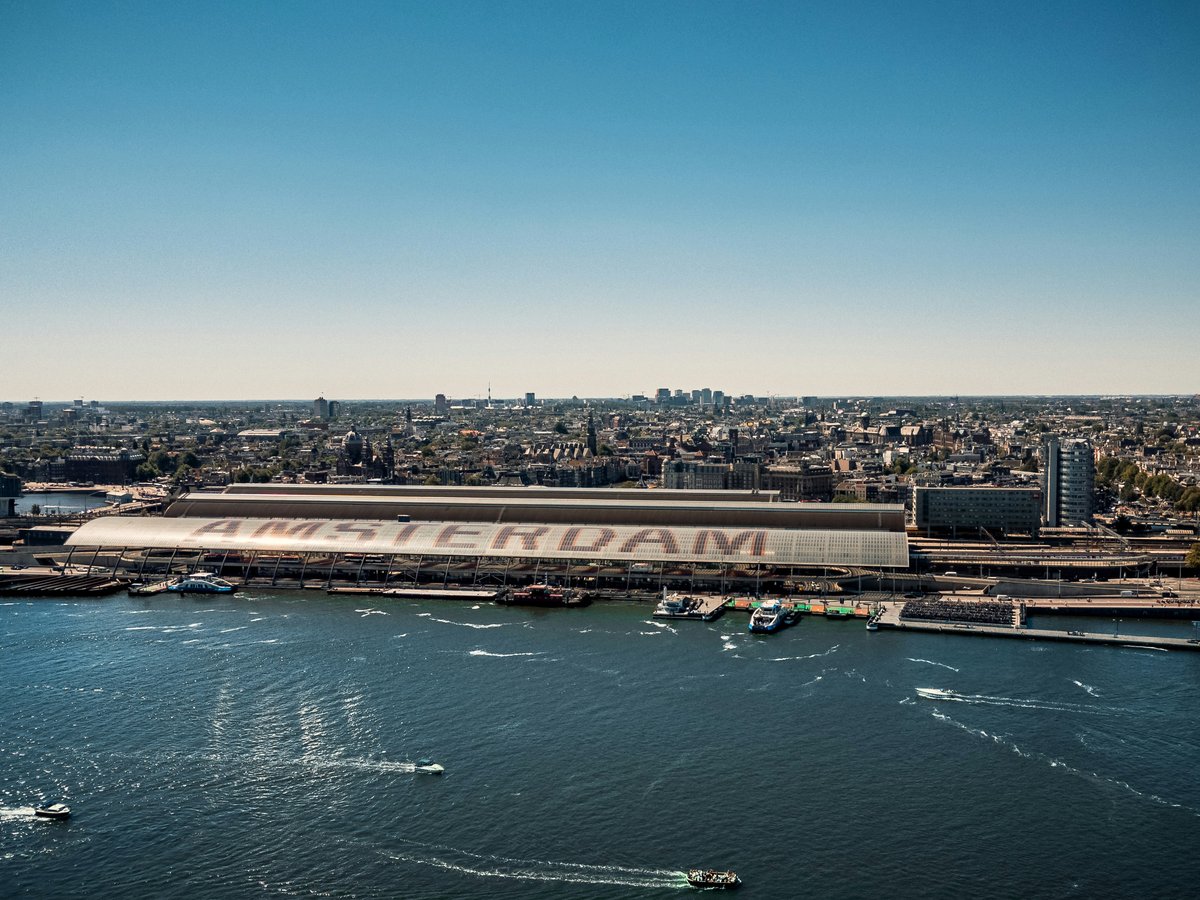
Amsterdam sits at the meeting point of the IJ river and a web of canals, built on reclaimed land that barely rises above sea level. The whole region is flat (genuinely, remarkably flat) which shapes everything about outdoor life here. You won't find elevation gain, but you will find an enormous network of cycling paths, waterways threading through neighborhoods, and surprisingly wild green corridors just minutes from the city center. The wind off the North Sea is a constant companion, sometimes gentle, sometimes the kind that makes you reconsider your jacket choice. Spring through early autumn is when the city turns itself inside out: locals colonize every patch of grass, boats crowd the canals, and the parks fill with picnics that stretch past 10 PM thanks to the long northern light. Mind you, even winter has its appeal: a grey Sunday ride along the Amstel River, with the bare trees and low clouds, has a quiet beauty that the summer crowds never see.
Outdoor activities
-
Cycling the Amstel River route to Ouderkerk aan de Amstel
This is the classic Amsterdam day ride, and for good reason. You follow the Amstel south from the city center through open polder landscape: flat fields, grazing cows, the occasional windmill at Rieker. Ouderkerk aan de Amstel is a small village about 10 km out with a couple of terraces right on the water where you can sit and watch the river traffic. The route is almost entirely on dedicated bike paths and feels surprisingly rural within 15 minutes of leaving the city. Round trip is roughly 20 km, though you can easily extend by continuing toward Abcoude.
- Difficulty
- Easy: flat, paved bike paths throughout
- Duration
- 2-3 hours round trip with a stop in Ouderkerk
- Best season
- April through October, though locals ride year-round
-
Cycling through Waterland to Marken
Head north from Amsterdam Centraal on the free Buiksloterweg ferry and you're immediately in Waterland, a polder landscape of narrow dike roads, wooden houses, and wide-open sky. The route passes through Broek in Waterland (a village so manicured it feels like a film set) and continues along the Markermeerdijk to the former island of Marken. The dike section can be exposed and windy, which is part of the experience. Total distance is about 35 km round trip. Worth noting: the stretch along the dike is single-track in places and gets busy on summer weekends.
- Difficulty
- Easy to moderate: flat but exposed to wind on the dike sections
- Duration
- 3-5 hours depending on stops
- Best season
- May through September for the best light and warmest conditions
-
Bouldering and climbing at Monk Bouldergym
Amsterdam has no natural rock, obviously, so indoor climbing is how the local community trains. Monk has locations in Amsterdam-Noord and the western docklands, with extensive bouldering walls that rotate problems regularly. The community tends to be welcoming to visitors, and you can rent shoes on site. It's a solid rainy-day option, and honestly, you might need a few of those given Amsterdam's weather.
- Difficulty
- All levels: routes from beginner to advanced
- Duration
- 1.5-3 hours per session
- Best season
- Year-round, but especially useful November through March when outdoor options shrink
-
Kitesurfing at Muiderberg or IJmuiden
The Dutch coastline and the IJmeer lake both offer legitimate kite conditions. Muiderberg, about 20 minutes east of Amsterdam on the IJmeer, is a popular spot with relatively shallow water that's forgiving for learners. IJmuiden aan Zee on the North Sea coast is better for experienced riders who want ocean conditions and waves. Wind is rarely an issue: there tends to be plenty of it. Several schools at both locations offer lessons and equipment rental. Water temperatures warrant a full wetsuit even in summer.
- Difficulty
- Moderate to advanced: lessons available for beginners
- Duration
- Half day to full day
- Best season
- April through October, with the strongest winds typically in spring and autumn
-
Running the Sloterplas loop
Sloterplas is a large artificial lake in Amsterdam's western suburbs with a flat, roughly 4 km path circling the water. The surface is paved and well-maintained. On weekday mornings it's mostly quiet, just other runners and dog walkers. The loop connects to Sloterpark, so you can extend your run through grass and tree-lined paths if you want more distance. There's a swimming beach on the south side if you want to cool off afterward, though the water quality varies.
- Difficulty
- Easy: flat and paved
- Duration
- 25-45 minutes for the loop
- Best season
- Year-round, though the path can be slippery after rain in autumn
-
Sailing on the IJmeer and Markermeer
Amsterdam borders two large bodies of water: the IJmeer immediately east and the Markermeer beyond it. Several sailing schools and yacht clubs around the city offer day charters and courses. Conditions tend toward choppy rather than calm, especially when the wind picks up from the west, which it frequently does. The view back toward Amsterdam from the water, with the city skyline low on the horizon, is worth the effort of learning to tack. Durgerdam, a small village on the IJmeer shore, has a yacht harbor and a few good lunch spots.
- Difficulty
- Varies: beginner lessons to experienced sailing
- Duration
- Half day to full day
- Best season
- May through September
Day hikes
-
Kennemerland National Park coastal dune trails
Take the train to Haarlem or Bloemendaal (about 20 minutes from Amsterdam Centraal) and you're at the edge of Zuid-Kennemerland National Park: a stretch of coastal dunes, scrubby pine forests, and open sandy ridges running along the North Sea. This is likely the closest thing to actual hiking terrain you'll find near Amsterdam. The dune landscape has genuine elevation change (modest by mountain standards, but 30-40 meters of relief feels significant after the pancake-flat city). Trails wind through the dunes and connect to the beach at several points. You might spot European bison: a small herd was reintroduced to the park. Trail surfaces vary from sandy to packed earth; after rain, some sections get muddy. Multiple loop options from 5 to 20 km.
- Difficulty
- Easy to moderate: sand can be tiring, some short steep dune sections
- Duration
- 2-5 hours depending on chosen loop
- Best season
- Year-round. Spring for wildflowers in the dune slacks, autumn for emptier trails and dramatic skies. Summer weekends see heavy beach traffic.
-
Naardermeer nature reserve walk
The Naardermeer, about 20 km southeast of Amsterdam, is the oldest nature reserve in the Netherlands: protected since 1906. It's a wetland landscape of reed beds, open water, and marshy woodland. Access is by guided tour only through Natuurmonumenten, which runs walks on weekends. The guided aspect might sound limiting, but the naturalists know the reserve well and can point out nesting cormorants, spoonbills, and purple herons that you'd likely miss on your own. The paths are boardwalks and dike tops: flat, obviously, but the scenery is distinctly different from Amsterdam's manicured parks.
- Difficulty
- Easy: flat boardwalks and dike paths, guided walk pace
- Duration
- 2-3 hours for the guided walk
- Best season
- April through June for breeding bird activity. The reserve has seasonal closures, so check Natuurmonumenten's schedule before going.
-
Gooi and heath trails near Hilversum
The Gooise heathlands, about 30 km southeast of Amsterdam, offer some of the best walking terrain in the region. 't Gooi has sandy heath, scattered pine woods, and a gently rolling landscape that's a genuine contrast to the flat polders. Trails radiate from Hilversum (25 minutes by train) through areas like Zuiderheide and Westerheide, where you walk across open heather that turns purple in August and September. The soil is sandy and well-drained, so trails stay passable even after rain. Various loop options from 6 to 18 km. You might spot Highland cattle grazing the heath: they're used for conservation management.
- Difficulty
- Easy to moderate: gently undulating terrain with sandy paths
- Duration
- 2-4 hours for most loops
- Best season
- August and September when the heather blooms, though spring is also good for birdlife. Winter walks are quiet and moody.
-
Waterland polder walking from Durgerdam to Holysloot
You can reach Durgerdam by bus from Amsterdam Centraal in about 20 minutes, and from there walk along dike paths through the Waterland polder landscape: wide, flat, and open to the sky. The route to Holysloot follows the IJmeer shoreline and then cuts inland through fields where lapwings and godwits nest in spring. Holysloot itself is a tiny village with a community cafe that opens on weekends. The whole walk is about 10 km one way, and you can catch a bus back or loop through Ransdorp. The terrain is entirely flat and mostly paved or hard-packed dike tops, but the exposure to wind and the big-sky views make it feel more substantial than a suburban stroll.
- Difficulty
- Easy: flat paved and gravel dike paths throughout
- Duration
- 3-4 hours one way with stops
- Best season
- April through June for nesting meadow birds. The polder landscape is stark and beautiful in winter too, if you dress for the wind.
Water activities
-
Canal kayaking through central Amsterdam
Several operators rent sit-on-top kayaks and Canadian canoes for self-guided paddling through Amsterdam's canal ring. The water is calm (no current to speak of) and the perspective from canal level, looking up at the gabled houses, is completely different from the street view. Weekday mornings are best; by afternoon on summer weekends the canals fill with rental boats, party vessels, and general chaos. You'll need to duck under some low bridges and navigate around moored houseboats. The Prinsengracht and Brouwersgracht sections tend to be the most scenic and slightly less congested. Most rental operators are based along the eastern canals or near the Plantage neighborhood.
- Difficulty
- Easy, no current, flatwater, basic paddling skills sufficient
- Duration
- 1.5-3 hours
- Best season
- May through September. Possible in spring and autumn but the water and air temperatures make a dry bag for your phone essential.
-
Open-water swimming at Sloterplas
Sloterplas has a designated swimming beach (Sloterpark Strand) on its south shore that opens for swimming in summer. The water is tested regularly and generally meets swimming quality standards, though conditions can vary after heavy rain. It's a proper sand beach with a roped-off swimming area and sometimes a lifeguard on duty. The water is fresh and tends to be cold even in midsummer: you'll want to ease in. The setting is more suburban park than tropical beach, but it's a legitimate place to swim outdoors within Amsterdam city limits. There's also the newly opened swimming pontoon on the IJ river near Amsterdam-Noord, which has become quite popular.
- Difficulty
- Easy: sheltered lake swimming in a designated area
- Duration
- 1-3 hours
- Best season
- June through August when water temperatures are warmest and the beach facilities are fully open
-
Stand-up paddleboarding on the Amstel
SUP has become popular on Amsterdam's waterways, and the Amstel River south of the city center offers a calmer, wider paddling surface than the busy canal ring. Several rental operators are based near the Berlagebrug. Heading south toward Ouderkerk, you paddle past houseboats, under railway bridges, and into increasingly open polder landscape. The current is minimal. Morning sessions tend to have calmer water and less boat traffic. Bring sunscreen: you're exposed on the water and the reflection off the surface doubles the UV exposure. A reasonable upstream paddle and return covers about 6-8 km.
- Difficulty
- Easy to moderate: basic balance and fitness needed, flatwater
- Duration
- 1.5-2.5 hours
- Best season
- May through September, mornings for calmest conditions
-
Sailing or windsurfing at Muiderberg beach
Muiderberg sits on the IJmeer about 15 km east of Amsterdam and has a proper sand beach with sailing and windsurfing schools. The IJmeer is shallow compared to open sea, which makes it a good learning environment, but it still develops proper chop when the wind gets up. Windsurfing lessons typically run about 2-3 hours and equipment rental is straightforward. The beach itself has a relaxed feel with a few cafes and a view across the water toward the Muiderslot castle. You can reach Muiderberg by bus from Amsterdam Amstel station in about 25 minutes.
- Difficulty
- Moderate: beginner lessons available but water can get choppy
- Duration
- Half day
- Best season
- May through September, with spring offering the most consistent wind
-
Rowing on the Bosbaan in Amsterdamse Bos
The Bosbaan is a 2.2 km regatta course built in the 1930s within the Amsterdamse Bos. Several rowing clubs operate here and some offer introductory sessions or equipment rental. The course is dead straight and sheltered by trees on both sides, so conditions are predictable, no current, minimal wind. It's a surprisingly peaceful setting for being within Amsterdam city limits. You can also rent rowboats (the recreational kind, not racing shells) at the Grote Vijver lake nearby, which is more casual and good for families.
- Difficulty
- Varies: recreational rowboats easy, racing shells require instruction
- Duration
- 1-2 hours
- Best season
- April through October
Parks & gardens
-
Vondelpark
FreeThe obvious one, and it earns its reputation. Vondelpark stretches for about 1.5 km through the heart of Amsterdam's museum district, and it functions as the city's communal living room. On a warm Friday afternoon it fills with office workers, families, buskers, and people who've clearly been there since morning. The design is English landscape style: winding paths, irregular ponds, mature trees creating canopy sections that feel properly enclosed. It gets crowded on summer weekends, but even then you can usually find a quieter stretch toward the south end near the rose garden.
Highlights: The open-air theater (Openluchttheater) hosts free performances in summer. The rose garden near the southern entrance has over 70 varieties and peaks in June. Several ponds attract herons that seem entirely unbothered by human company.
-
Amsterdamse Bos
FreeThis is Amsterdam's big green lung: 1,000 hectares of forest, meadow, and water south of the city, originally planted as a Depression-era public works project in the 1930s. It feels genuinely wild in places, especially along the less-trafficked paths in the eastern section. You can easily spend a full day here cycling, rowing on the Grote Vijver, or just walking through stands of oak and birch that have had nearly a century to mature. There's a goat farm (Ridammerhoeve) that kids enjoy, and a rowing course that hosted the 1928 Olympics: the bosbaan. That said, the forest is big enough to absorb crowds without feeling cramped.
Highlights: The bosbaan rowing course with its spectator stands from the 1930s. A herd of Scottish Highland cattle grazes freely in the meadow sections. The cherry blossom grove near the main entrance is spectacular in April: arrive early on weekends or you'll be sharing the path shoulder to shoulder.
-
Westerpark
FreeA former gasworks site in Amsterdam-West that's been converted into a park and cultural complex. The industrial buildings now house restaurants, galleries, and event spaces (Westergas is the anchor) but the park itself wraps around them with wide lawns, an urban farm, and a long pond. It has a different energy than Vondelpark: more neighborhood-oriented, more local. Sunday mornings in summer there's often a farmers' market in the Westergas complex. The northwest corner of the park borders a canal and has some pleasantly overgrown edges.
Highlights: The Westergas cultural complex in the repurposed gasholders. A Sunday market that runs most of the year. Good flat cycling connections west toward Haarlem via the Haarlemmerweg path.
-
Hortus Botanicus
One of the oldest botanical gardens in the world: it dates from 1638, originally established as a medicinal herb garden. It's compact, roughly 1.2 hectares, but intensely planted. The palm greenhouse (Palmenkas) from the 1910s has a humid tropical density that feels startling after the cool Amsterdam air outside. The outdoor sections are organized by region, and the cycad collection is apparently one of the oldest cultivated specimens in Europe. It's the kind of place where you notice something new each visit. To be fair, it fills up quickly on rainy days when every tourist in the city has the same idea.
Highlights: The three-climate greenhouse complex, especially the subtropical section. A Victoria amazonica water lily that blooms in late summer. The 300-year-old Eastern Cape cycad that may be the oldest potted plant in the world.
-
Flevopark and the Distillery De Ooievaar area
FreeFlevopark sits in Amsterdam-Oost and rarely appears in guidebooks, which is part of its charm. It's smaller and wilder-feeling than Vondelpark, with mature trees, a swimming pool (Flevoparkbad) that opens in summer, and paths that wind through slightly overgrown sections. The park borders the Nieuwe Diep waterway, and there's an old distillery building that's been converted into a community space. On a weekday it's mostly local families and dog walkers. The lack of tourists gives it a relaxed, lived-in quality you won't find in the city-center parks.
Highlights: Flevoparkbad: an outdoor swimming pool that opens from May through September. Paths along the Nieuwe Diep waterway with good birdwatching in spring. The distillery building De Ooievaar, which hosts occasional events.
-
Sarphatipark
FreeA small, elegant park in De Pijp that's easy to walk past without noticing. It's roughly two blocks by three blocks, centered on a grand monument to Samuel Sarphati, with curving paths, a pond, and good-sized trees for shade. The surrounding neighborhood is one of Amsterdam's most lively (the Albert Cuypmarkt runs just a few streets away) so the park functions as a sort of breathing space between market runs. Not a destination park, more of a neighborhood jewel. You'll see people reading, napping, eating market stroopwafels.
Highlights: The Sarphati monument at the center. Shaded benches under mature plane trees. Its location steps from the Albert Cuypmarkt makes it a natural picnic spot.
Practical tips
- Rain gear is non-negotiable
- Amsterdam's weather can shift from sunshine to sideways rain in 20 minutes, and this happens year-round. Carry a lightweight waterproof layer every time you go out, even in July. A packable rain jacket that fits in a daypack is more useful than any single piece of outdoor gear you'll bring. Wind-resistant matters more than heavyweight waterproofing: most Amsterdam rain is light but persistent, and the wind drives it horizontally.
- Sun protection on the water
- UV exposure on Dutch waterways is deceptive. The sky might look overcast, but reflected UV off the water surface can still burn exposed skin, especially during long paddling or cycling sessions. A hat with a brim and SPF 30+ sunscreen are worth packing from April through September. Sunglasses with polarized lenses cut glare off canal and lake surfaces significantly.
- Cycling logistics and bike rental
- Rent from a proper bike shop rather than the tourist rental stands near Centraal: you'll get a better maintained bike at a lower price. Shops like MacBike or Black Bikes have locations throughout the city. Get a bike with a coaster brake (back-pedal to stop) if you're not used to Dutch-style bikes: the hand-brake-only options can surprise riders used to different setups. Always lock both the frame lock and a chain lock, even for a 5-minute cafe stop. Bike theft is a genuine and constant problem.
- Drinking water and hydration
- Amsterdam's tap water is excellent: it comes from the dunes near Zandvoort where it's naturally filtered, and it's among the cleanest municipal water in Europe. Fill a reusable bottle before heading out. Public water fountains are scattered through the major parks, including Vondelpark and Amsterdamse Bos, but don't count on finding one on dike paths or in the polders. Carry at least a liter for any ride or hike over two hours.
- Trail and path conditions
- Most cycling and walking paths near Amsterdam are paved or hard-packed gravel and stay usable year-round. The main exception is the coastal dune trails in Kennemerland, where deep sand can be tiring, and forest paths in Amsterdamse Bos, which get muddy after rain. Waterproof shoes or boots are worth it from October through April. In summer, trail shoes or even sturdy sandals work for most Amsterdam-area walking. The dike paths in Waterland can be slippery when wet: the paving stones grow algae.
- Wind awareness
- Wind is the defining weather variable for outdoor activities around Amsterdam, more so than rain or temperature. Westerly and northwesterly winds blow in off the North Sea with real force: sustained 30-40 km/h days are common, especially in spring and autumn. Plan cycling routes to ride into the wind on the outbound leg so you have it at your back when you're tired. On the water, wind creates chop on the IJmeer and Markermeer surprisingly fast. Check the Buienradar app before heading out: it gives wind speed and direction along with the precipitation radar that every local checks reflexively.
FAQ
Is Amsterdam a good city for outdoor activities?
It might not be the first place that comes to mind, but the flat terrain and extensive cycling infrastructure make it genuinely excellent for bike-based exploration. The water network (canals, rivers, and the IJmeer) adds paddling and sailing options that most cities can't match. You won't find mountains or challenging hikes within the city itself, but the coastal dunes and heathlands are easily reachable by train for proper walking. The outdoor culture here revolves around cycling and water rather than hiking, and once you adjust your expectations to that, the city delivers.
When is the best time of year for outdoor activities in Amsterdam?
Late April through September is the main outdoor season. June through August offers the longest days (sunset after 10 PM in midsummer) and warmest temperatures, though rain is still possible at any time. May and September tend to be slightly less crowded with pleasant conditions. August and September are best for the heather blooms in the Gooi region. That said, locals cycle and run year-round: they simply dress for it. Winter outdoor activities are certainly possible if you have proper rain and wind gear, and the empty trails and moody skies have their own appeal.
Do I need to bring my own bike or can I rent in Amsterdam?
Rent locally: bringing your own bike is unnecessary hassle. Multiple rental companies operate throughout the city, with rates typically running 10-15 euros per day for a standard Dutch-style city bike. For longer rides or touring, some shops rent lighter touring bikes or e-bikes at higher rates. The OV-fiets system at train stations lets you rent cheap bikes if you have a Dutch public transit card, but that's harder for short-stay visitors to set up. Most rentals include a lock, sometimes two.
Are the canals safe for swimming?
The city canal ring in central Amsterdam is not a designated swimming area and isn't recommended: water quality is variable, there's significant boat traffic, and the canal walls make getting out difficult. There are, however, designated outdoor swimming spots within the city: Sloterplas beach, the swimming pontoon on the IJ in Noord, and Flevoparkbad in Oost (an outdoor pool, not open water). At Amsterdamse Bos you can swim at De Mirandabad. Water quality at designated spots is tested and posted: check the Zwemwater app for current readings before you go.
How do I get to the coastal dunes and beaches from Amsterdam?
The train from Amsterdam Centraal to Haarlem takes about 15 minutes, and from there you can cycle or bus to the dune entrance at Bloemendaal aan Zee or Overveen. Alternatively, take the train directly to Zandvoort aan Zee (about 30 minutes), which drops you right at the beach. Both access points connect to trail networks in Zuid-Kennemerland National Park. On summer weekends the trains get crowded and beach parking fills early, so public transport is the better option. Bring your own water and snacks: there's limited food service once you're in the dune trails away from the beach cafes.
What apps or resources help with planning outdoor activities around Amsterdam?
Buienradar is the essential weather app: its precipitation radar shows exactly when rain will hit your location, updated every 5 minutes, and locals check it constantly. For cycling routes, the Fietsersbond (cyclists' union) route planner gives turn-by-turn directions on bike-specific paths. Komoot works well for walking routes and has user-generated content for the dune and heath areas. The Zwemwater app shows water quality at all official swimming locations. Google Maps cycling directions are generally reliable for Amsterdam, though they occasionally route you onto busy roads that a local would avoid.
Outdoor experiences in Amsterdam
 Free cancellation
 Amsterdam Cheese, Windmill & Countryside Bike Tour /E-bike Option
Outdoor experience: 3 hours, free cancellation.
via Viator Free cancellation
 Giethoorn Small-Group Tour from Amsterdam (Max. 8 People)
Outdoor experience: 8 hours, free cancellation.
via Viator Free cancellation
 Segway City Tours Amsterdam
Outdoor experience: free cancellation.
via Viator Free cancellation
 Private All-Inclusive Cruise with Captain
Outdoor experience: 1.5 hours, free cancellation.
via ViatorLast verified by automated review (v1.7.2) on . What is automated review?