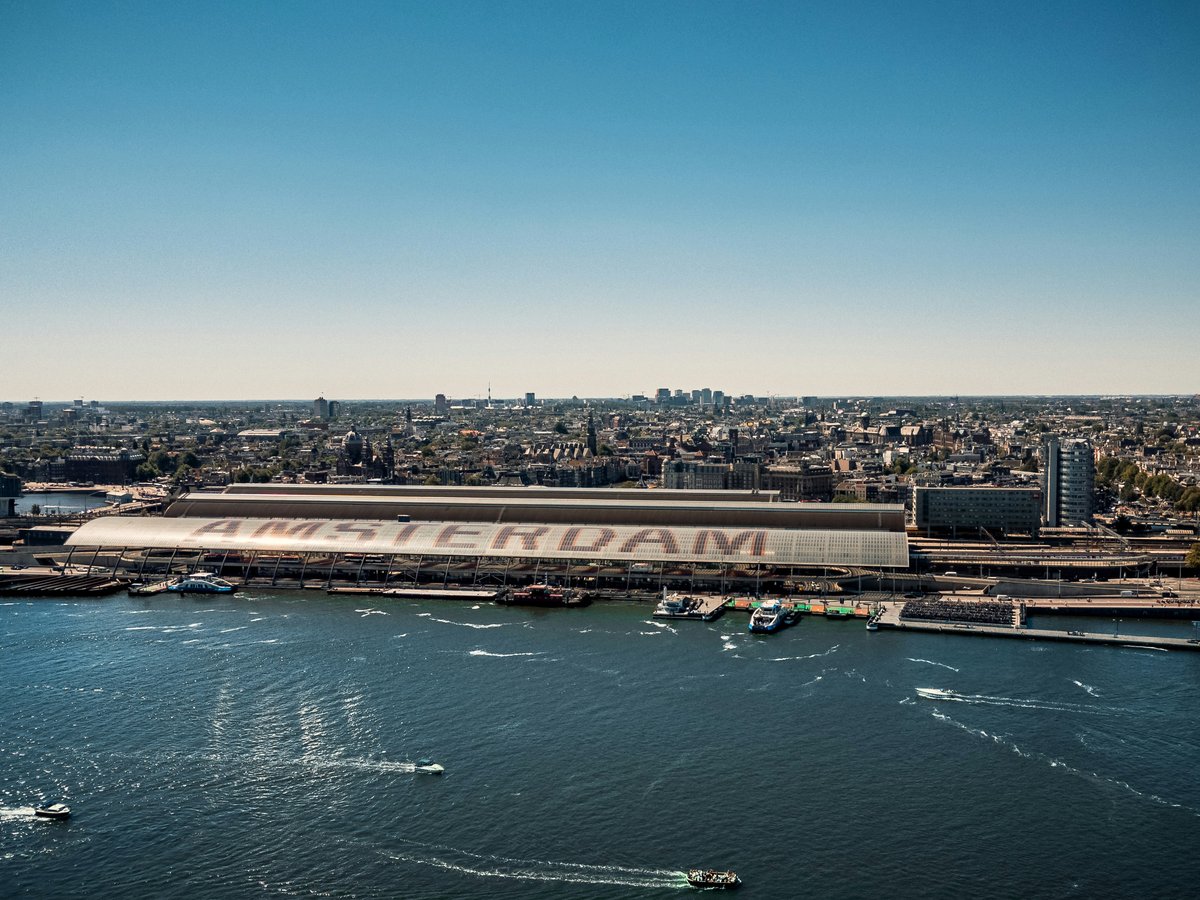
Amsterdam is built on concentric rings of canals radiating outward from Centraal Station, which sits at the top of the horseshoe like a clasp. The canal belt (Herengracht, Keizersgracht, Prinsengracht) wraps around the medieval core, and neighborhoods fan out from there. North is across the IJ river, reached by free ferries. South holds the museums and leafy residential streets. East and west were working-class areas that have shifted considerably over the past two decades. The whole city is compact enough that you can bike from one end to the other in about twenty-five minutes, which means your choice of neighborhood matters less for logistics and more for what you want to wake up to: church bells and cobblestones, or warehouse conversions and waterfront wind.
Neighborhoods
-
Centrum
The medieval core is loud, dense, and layered in a way that rewards patience. Tourists crowd Dam Square and the Red Light District, but slip down any side alley and you'll find a brown café where the ceiling is stained yellow from decades of tobacco smoke. The architecture shifts block by block: Gothic churches pressed against narrow canal houses, 17th-century trading headquarters next to cramped Indonesian restaurants. It smells like fresh stroopwafels near Nieuwmarkt in the morning, and faintly of canal water everywhere else.
- Best for
- First-time visitors who want everything walkable, people who thrive on density and don't mind noise at night
- Key streets
- Warmoesstraat for old-school Amsterdam grit, Zeedijk for the best Chinese and Indonesian food in the city, Nes for small theatres, Spuistraat for bookshops and squatter-era murals that are still holding on
-
Jordaan
Narrow streets at odd angles, built originally for workers and immigrants in the 17th century but now thoroughly gentrified into something quieter: galleries in former warehouses, independent cheese shops, plant-filled café windows. The buildings lean forward over the canals at angles that seem structurally questionable. On Saturday mornings the Noordermarkt farmers' market fills the square with the smell of fresh bread and aged Gouda samples. It still feels residential in a way the center doesn't: people live here and seem mildly annoyed by the visitors, which is honestly fair.
- Best for
- Couples, anyone wanting a quieter base that's still central, people who like browsing without a destination
- Key streets
- Eerste Leliedwarsstraat for restaurants packed close together, Haarlemmerdijk heading toward Haarlemmerplein for independent shops, Westerstraat on market days, the Nine Streets (De Negen Straatjes) along the southern edge for curated boutiques
-
De Pijp
This was the working-class neighborhood that artists and students colonized in the 1970s, and it has now gone through another turn: young professionals, Surinamese roti shops next to natural wine bars, Turkish bakeries beside specialty coffee roasters. Albert Cuypmarkt runs the length of Albert Cuypstraat six days a week, selling everything from raw herring to phone cases to bolts of fabric. The streets are narrower than you'd expect, the buildings slightly lower than in the canal belt. It has an energy that the Jordaan lost: things are still opening and closing here, still being figured out.
- Best for
- Foodies, people in their twenties and thirties, anyone who wants to eat their way through a neighborhood rather than museum-hop
- Key streets
- Albert Cuypstraat for the market and the surrounding side streets for restaurants, Gerard Douplein for terrace drinks, Eerste van der Helststraat for a concentrated strip of good restaurants, Sarphatipark for a moment of quiet
-
Oud-West
Sits between the Jordaan and Vondelpark, anchored by the Foodhallen in a converted tram depot. It's the neighborhood that feels most like it's still settling into its identity: Turkish barbershops and Moroccan grocery stores share blocks with third-wave coffee and design studios. Kinkerstraat has that slightly hectic commercial energy of a real shopping street, not a curated one. The residential side streets are lined with early 20th-century apartment buildings, wider than the canal houses but with that same forward-leaning quality. You hear tram bells constantly.
- Best for
- Visitors who want a neighborhood that still functions as a neighborhood rather than a tourist backdrop, families staying near Vondelpark, people who eat dinner late
- Key streets
- Kinkerstraat for everyday errands and cheap eats, Overtoom for its length of restaurants, the Ten Katestraat market for daily groceries, Bellamystraat and surrounding streets for evening restaurants
-
Amsterdam-Noord
Across the IJ on the free ferry: five minutes from Centraal Station and it feels like a different city. The NDSM wharf is the headline: a former shipyard turned into studios, a monthly flea market, and a string of waterfront bars built from shipping containers. Further into Noord the streets get residential and quiet fast. The wind off the water is constant and cold even in summer. There's still an edge of unfinishedness: construction cranes, empty lots next to new apartment towers, an IKEA where a warehouse used to be. The light is different across the water. Wider skies.
- Best for
- Creative types, budget travelers willing to trade convenience for space, anyone who finds the canal belt too manicured, people who want waterfront views
- Key streets
- NDSM-Plein for the wharf scene, the stretch along the IJ waterfront between the ferry terminals, Overhoeksplein near the EYE Film Museum, Van der Pekstraat for its slow transformation from working-class shopping strip to mixed-use
-
Museumkwartier
Wide streets, tall 19th-century townhouses, the Rijksmuseum and Van Gogh Museum anchoring everything. This is the part of Amsterdam that feels European-capital-proper rather than merchant-city-quirky. Hobbemastraat and the P.C. Hooftstraat have the luxury shops (Chanel, Hermès) and the people walking past them look like they shop there. Vondelpark forms the western boundary and softens the whole thing with its sound of gravel paths and distant children. It's quieter at night than you'd expect for somewhere so central. Slightly stuffy. But undeniably beautiful in that tall-windowed, well-maintained way.
- Best for
- Museum visitors who want a short walk to the big three, families near Vondelpark, couples wanting a calmer upscale base, anyone for whom a five-minute walk to the Rijksmuseum at opening time matters
- Key streets
- Museumplein for the institutions themselves, P.C. Hooftstraat for high-end shopping, Van Baerlestraat for restaurants and the Concertgebouw at its southern end, Vondelpark's east entrance for morning runs
-
Oost (East)
The most genuinely mixed neighborhood in Amsterdam right now: Moroccan tea houses, Javanese restaurants left from the colonial era, a growing number of places that wouldn't look out of place in De Pijp but at lower rents. Oosterpark gives it a green center. The Dappermarkt is the best street market you've probably never heard of: cheaper and less performative than Albert Cuyp, with a Somali section and a Surinamese section and none of it arranged for photographs. The Tropenmuseum sits at the park's edge. The streets east of it get quiet quickly: family neighborhoods with playgrounds and bakeries.
- Best for
- Travelers wanting genuine neighborhood life without polish, market lovers, families, budget-conscious visitors who still want good transit connections
- Key streets
- Dapperstraat for the daily market, Javastraat for its increasingly interesting restaurant strip (Indonesian, Ethiopian, Middle Eastern, the occasional wine bar), Linnaeusstraat heading toward the Tropenmuseum, Beukenplein for its small-square village feel
-
Grachtengordel (Canal Ring)
The UNESCO-listed canal belt is what most people picture when they think Amsterdam: three concentric canals lined with 17th-century merchant houses, their gabled facades reflected in still water. It wraps around the center like a horseshoe and it's genuinely as beautiful as the photographs suggest. Mind you, it's also residential: people live behind those tall windows, and the streets between the canals are often narrow and surprisingly quiet once you step away from the bridges. Houseboats line the Prinsengracht, bicycles lean against every railing, and the light through the elm trees in late afternoon does something particular to the brick.
- Best for
- Anyone wanting the classic Amsterdam experience, romantic trips, visitors who photograph architecture, first-timers with budget for a canal-house hotel
- Key streets
- Prinsengracht for houseboats and the Anne Frank House queue, Herengracht between Vijzelstraat and the Amstel for the Golden Bend (the widest and grandest facades), Utrechtsestraat for a browsing street with character, Reguliersgracht for the Seven Bridges view
FAQ
Which Amsterdam neighborhood is best for a first visit?
Centrum or the Canal Ring (Grachtengordel) puts you within walking distance of most major sights and gives you the classic Amsterdam atmosphere: canals, gabled houses, brown cafés. You'll pay more for accommodation and deal with more street noise, but the trade-off is that you can walk almost everywhere. The Jordaan is a good compromise if you want something slightly quieter but still genuinely central: it's a ten-minute walk from Dam Square and feels more residential once the shops close.
Is Amsterdam-Noord worth staying in or just visiting?
Worth staying in if you don't mind the ferry commute: it takes five minutes from Centraal and runs 24 hours. You'll get significantly more space for your budget, and the NDSM area has a nightlife and food scene of its own. That said, after midnight the ferries run less frequently, and if you're planning late museum visits or evening concerts in the center, the logistics add friction. It tends to suit people on longer stays who want a base rather than people cramming three days with sightseeing.
What is the safest neighborhood in Amsterdam for families?
Amsterdam is broadly safe by European city standards. For families specifically, Oud-West near Vondelpark or the Museumkwartier work well: wide pavements, the park for running around, and a calmer pace once shops close. Oost around Oosterpark is another strong option with good playgrounds and a more local feel. The Red Light District in Centrum is not dangerous but can be uncomfortable for families with children after dark: it's a small contained area and easily avoided.
Where should I stay in Amsterdam on a budget?
De Pijp and Oost currently offer the best value for money while still being well-connected by tram and metro. Amsterdam-Noord has the cheapest options overall, particularly around the NDSM area, though you're ferry-dependent. Oud-West sits in a middle range: cheaper than the Canal Ring but pricier than the eastern neighborhoods. Avoid booking based on the word 'Centrum' alone; some properties marketed as central are in transitional areas near the station that lack neighborhood character.
How do Amsterdam's neighborhoods connect: is a bike necessary?
Nothing is truly necessary given the tram and metro network, but a bike transforms the experience. The city is flat and has dedicated cycling infrastructure on virtually every street. From De Pijp to Centrum is about twelve minutes by bike, Oud-West to Oost maybe fifteen. Most hotels and many Airbnbs offer bike rental or can point you to a nearby shop. That said, the tram system covers the main routes well, and walking between adjacent neighborhoods rarely takes more than twenty minutes. The GVB day pass covers trams, buses, metro, and the Noord ferries.
Last verified by automated review (v1.7.2) on . What is automated review?