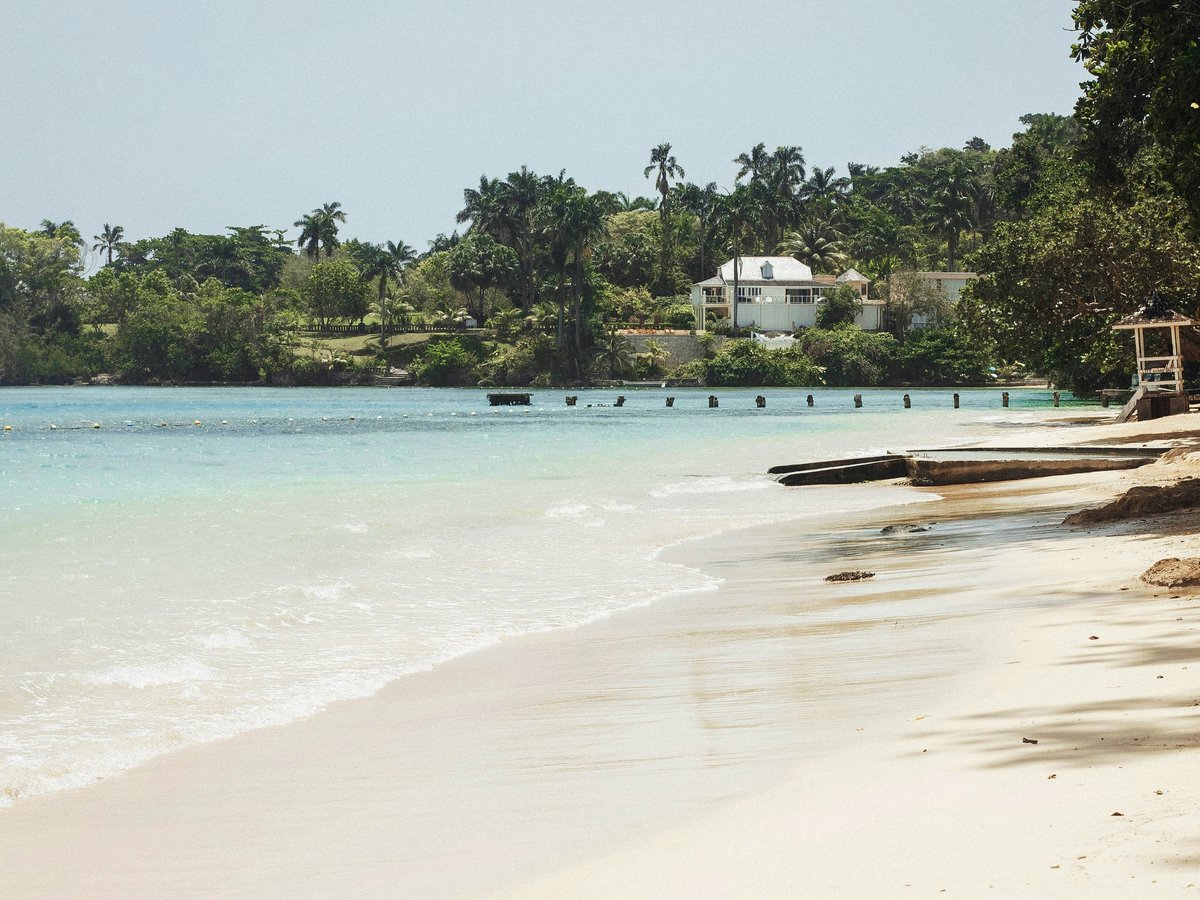
Montego Bay occupies a natural amphitheater on Jamaica's northwest coast, where the limestone foothills of the Cockpit Country roll down to a wide Caribbean bay. The city's outdoor character splits between reef-protected coastline and rough karst terrain 30 minutes south by road. September temperatures currently sit around 32.7°C with 63% humidity, and the heat index can reach 39.4°C on still afternoons. The dry season from December through April tends to be the more comfortable window for hiking and hill rides. Water stays warm year-round, rarely falling below 27°C even in January. Montego Bay scores 6.2/10 for family friendliness (see the TTDI Family-Friendliness Index), and most coastal activities work well for mixed-age groups. Mind you, this is not a compact trail-running destination like the Blue Mountain range in Portland parish. The outdoor options here range from gentle reef snorkeling off Doctor's Cave Beach to scrambling through sinkholes in some of the Caribbean's least-mapped limestone country.
Outdoor activities
-
Zip-lining at Chukka Caribbean Adventures
The Chukka course near Montpelier runs several lines through a canopy of breadfruit and mahogany trees south of Montego Bay. The longest line covers roughly 75 meters over a forested gully. Jamaican parakeets call from the canopy, and the red clay smells sharp and mineral-rich after morning rain. Transfers from MoBay hotels typically take 30 to 40 minutes each way. Operators provide all safety gear, with a weight limit around 113 kg.
- Difficulty
- Easy to moderate
- Duration
- 2 to 3 hours including transfers
- Best season
- December through April (dry season), though it runs year-round
-
Horseback riding along the north coast beaches
Several operators between the Half Moon resort and Braco run beach rides that finish in the sea, where horses walk chest-deep through warm Caribbean water. The coarse coral sand along this stretch grips well under hooves, and most rides follow 3 to 5 km of shoreline. You'll smell the seagrass beds offshore and hear waves folding over the reef about 200 meters out. No riding experience is needed for the beach routes, though the St. James hill rides tend to require some comfort in the saddle.
- Difficulty
- Easy (beach), moderate (inland trails)
- Duration
- 1.5 to 2 hours
- Best season
- Year-round. December through March has the calmest seas.
-
ATV tours through the St. James foothills
Quad-bike operators run guided routes through red-dirt trails and sugar-cane fields in the St. James foothills south of the city. You'll cross streams barely 30 cm deep and climb short, steep grades between farming settlements. The wet season from June through November turns the clay sticky and adds real challenge. Operators along the resort strip provide helmets and goggles, with most tours priced between 6,000 and 12,000 JMD per rider.
- Difficulty
- Moderate
- Duration
- 2 to 3 hours
- Best season
- Year-round. Wet season adds mud and difficulty.
-
Parasailing over Montego Bay
Launches happen from boats off the Hip Strip, lifting you 60 to 90 meters above the bay. From 80 meters up, the reef line stands out as a pale-green ribbon running parallel to the Gloucester Avenue shoreline. The ride is surprisingly quiet at altitude, with the nylon harness creaking in the 15-to-20 km/h trade wind. On calm December-to-March mornings, the bay stays flat enough that the boat barely rocks at takeoff.
- Difficulty
- Easy
- Duration
- 10 to 15 minutes airborne, about 1 hour total with boat time
- Best season
- December through April for the lightest winds
-
Deep-sea fishing beyond the Montego Bay reef
Charter boats head north from the Montego Bay Yacht Club toward deeper water past the fringing reef. Blue marlin, wahoo, and yellowfin tuna run in these north-coast waters, where the continental shelf drops to 200 meters within a few miles of shore. Half-day trips typically last 4 hours, and captains provide all tackle and bait. Shared charters run 60,000 to 95,000 JMD per angler, with higher rates during the August-to-October marlin peak.
- Difficulty
- Easy (you sit and wait), physically moderate if you hook a marlin
- Duration
- 4 to 8 hours
- Best season
- Blue marlin peaks August through October. Wahoo is better December through March.
-
Mountain biking in the Cockpit Country foothills
The unpaved roads between Catadupa and the Cockpit Country rim offer rough, hilly riding through farmland and secondary forest in Jamaica's interior. Elevation gains of 200 to 400 meters per ride are common, and the surface alternates between loose limestone gravel and packed red clay typical of St. James parish roads. Rental options in MoBay remain limited, though a few Half Moon and Rose Hall hotels can arrange bikes and guides for these routes. Water sources dry up past the last Catadupa-area village, so carry at least 3 liters per rider.
- Difficulty
- Moderate to difficult
- Duration
- 3 to 5 hours
- Best season
- December through April, when the clay trails are driest
Day hikes
-
Rocklands Bird Sanctuary trails, Anchovy
Rocklands sits at roughly 300 meters elevation in the village of Anchovy, about 25 minutes south of Montego Bay by car. The trails loop through secondary tropical forest and open gardens where Jamaican mango hummingbirds feed from hand-held sugar-water bottles. The red-billed streamertail, Jamaica's national bird, appears regularly in the early morning hours. Total trail distance is about 2 km on well-maintained paths. Temperatures at Anchovy typically run 3 to 4°C below the coast, and wild ginger grows thick along the wetter trail sections.
- Difficulty
- Easy
- Duration
- 1 to 2 hours
- Best season
- Year-round. Bird activity peaks between 6:30 and 8:00 a.m.
-
Cockpit Country rim walk from Maroon Town
The northern edge of the Cockpit Country begins about 40 minutes south of MoBay by car. The terrain is karst limestone shaped into steep conical hills separated by sinkholes up to 50 meters deep. Local guides from Maroon Town or Accompong lead walks along the rim and into the margins of the interior. The vegetation is dense wet limestone forest, the footing is uneven rock, and humidity stays above 80% even in the dry months. You might hear the Jamaican boa shifting through leaf litter. Do not attempt the Cockpit rim without a guide from one of these communities.
- Difficulty
- Difficult
- Duration
- 4 to 6 hours
- Best season
- December through March, when trails are least slippery
-
Catadupa village walk and Hilton High area
The road from Montego Bay south to Catadupa climbs through banana plantations and small farms at 400 to 500 meters elevation. The Hilton High area offers guided farm walks past coffee plants, pimento (allspice) trees, and breadfruit. You might catch the smell of roasting St. James coffee drifting from a nearby farmhouse. The routes are not formally marked, so a local guide from Catadupa village is the practical approach. Expect to pay 3,000 to 5,000 JMD for a half-day guide.
- Difficulty
- Easy to moderate
- Duration
- 3 to 4 hours
- Best season
- December through April for the driest conditions
-
Kempshot ridge walk above the bay
South of the Catherine Hall area, the residential edges of Kempshot give way to scrubby hillside. A rough track climbs to a ridge overlooking Montego Bay from the south, with about 200 meters of elevation gain over roughly 2 km. The exposed limestone can cut thin-soled shoes, and acacia thorn scrub 1 to 2 meters high grows close to the path in several sections. Long trousers help through the brushier parts. The payoff is an unobstructed view of the bay, Sangster International Airport's runway, and the reef line stretching toward Ironshore.
- Difficulty
- Moderate
- Duration
- 2 to 3 hours round trip
- Best season
- December through April. Exposed rock sections get punishing in midday heat above 33°C.
Water activities
-
Snorkeling in the Montego Bay Marine Park
The fringing reef off Montego Bay's north coast shelters a shallow lagoon with visibility that often reaches 15 to 20 meters on calm winter days. Elkhorn and staghorn coral are recovering in the park's managed zones, with parrotfish and sergeant majors common near the 3-meter reef edge. Snorkel gear rents for about 1,500 to 2,500 JMD per day from vendors along Gloucester Avenue. The best entry points are Doctor's Cave Beach and Cornwall Beach, where the reef sits within 50 meters of the sand.
- Difficulty
- Easy
- Duration
- 1 to 3 hours
- Best season
- December through April for the calmest, clearest water
-
Swimming at Doctor's Cave Beach
The beach that put Montego Bay on the tourist map in the 1920s still has some of the calmest water on Jamaica's north coast. The reef breaks incoming swell and leaves a bathtub-like lagoon where water temperature hovers around 28°C in January and 30°C in August. Entry fees currently run about 900 to 1,000 JMD. Lifeguards, changing facilities, and vendors selling jerk chicken and Red Stripe line the back of the sand. The sandy bottom slopes gradually for the first 30 meters from shore, giving children and weaker swimmers a wide comfortable zone.
- Difficulty
- Easy
- Duration
- As long as you like
- Best season
- Year-round
-
Bamboo rafting on the Martha Brae River
About 30 minutes east of Montego Bay in Trelawny parish, the Martha Brae is a gentle, spring-fed river that runs through thick tropical vegetation. A guide poles a bamboo raft along a 5 km stretch in roughly 90 minutes. The river is shallow, rarely more than 1.5 meters deep, and the current moves at walking pace. Belted kingfishers dart along the Trelawny banks, and the wet clay of the riverbed has an earthy, mineral smell. Water temperature sits around 24°C, noticeably cooler than the Caribbean.
- Difficulty
- Easy (you sit on the raft)
- Duration
- 90 minutes on the water, plus 30-minute transfers each way
- Best season
- Year-round. Higher water from June through November makes for a smoother ride.
-
River tubing on the Great River
The Great River forms part of the St. James and Hanover parish boundary west of Montego Bay. Tubing sections run through a limestone valley with cliffs 10 to 15 meters high and overhanging bamboo, with a moderate current and small Class I rapids. The water runs greenish-clear at about 25°C, and bamboo stalks knock together in the trade wind above the gorge. Operators provide tubes and basic life vests, and the put-in point is about 20 minutes from the Hip Strip. The total float covers roughly 3 km.
- Difficulty
- Easy to moderate
- Duration
- 1.5 to 2 hours on the water
- Best season
- June through November for faster current. December through April is gentler.
-
Sea kayaking along the north coast reef
Sea-kayak rentals are available from operators at Cornwall Beach and along the Rose Hall hotel strip. The inside of the reef provides sheltered paddling in water rarely deeper than 3 meters, and on calm mornings you can see juvenile fish and sea cucumbers through the clear bottom. The paddle from Cornwall Beach east to the Bogue Lagoon mangroves covers roughly 4 km one way. Northeast trade winds tend to pick up after 11:00 a.m., so morning launches are easier on the return leg.
- Difficulty
- Moderate
- Duration
- 2 to 3 hours
- Best season
- December through April for the lightest winds and flattest water
Parks & gardens
-
Rose Hall Great House grounds
The Georgian estate built in 1770 sits on a hill east of Montego Bay's Hip Strip, and its manicured grounds cover several hectares of tropical planting. Bougainvillea and hibiscus line the coral-stone walkways constructed from the same 18th-century quarry blocks as the house. The elevation brings 2 to 3 degrees of relief from the coastal heat and opens up views down to the reef line off Ironshore. The house operates as a museum, but the surrounding grounds are open daily and offer some of the best elevated coastal views in the Rose Hall area.
Highlights: Panoramic bay views from the upper terrace, 18th-century coral-block walls, mature frangipani and poinciana plantings
-
Catherine Hall Sports Complex
FreeThis public sports venue west of downtown Montego Bay hosted events during Jamaica's 2007 Cricket World Cup fixtures and still draws runners and footballers most evenings. The perimeter roads see early-morning joggers before the 7:00 a.m. heat sets in. The grounds are functional rather than ornamental, but the open grass and scattered shade trees make it one of the few reliably accessible green spaces in central MoBay.
Highlights: Running track, open playing fields, shaded perimeter paths popular with local joggers
-
Montego Bay Marine Park shoreline
FreeThe marine park extends along the waterfront and covers roughly 15 square kilometers of reef, seagrass, and mangrove habitat. On the landward side, the Bogue Lagoon area preserves remnant mangrove forest that you can walk at low tide. Salt and decomposing seagrass hang in the air, and brown pelicans roost in the Bogue mangroves each afternoon. The park boundaries reach from the Sangster International Airport fence line east to the Great River mouth.
Highlights: Bogue Lagoon mangrove walks at low tide, reef-edge viewing, pelicans and frigate birds along the shore
Practical tips
- Sun protection
- The UV index in Montego Bay regularly exceeds 11 between 10:00 and 14:00, even on partly cloudy days. SPF 50+ reef-safe sunscreen is essential, and reapply every 90 minutes in the water. A wide-brimmed hat and UV-rated sunglasses make a measurable difference on the exposed Kempshot ridge or any open-water outing. Lightweight, light-colored long sleeves tend to be more comfortable than bare skin and sunscreen once temperatures pass 32°C.
- Hydration
- Carry at least 2 liters per person for any hike over 2 hours in the St. James foothills. Tap water in central Montego Bay is treated and generally safe. In rural areas like Catadupa or Accompong, stick to sealed bottles. A 1.5-liter bottle costs about 150 to 250 JMD from a roadside shop. Coconut vendors along the A1 highway sell fresh green coconuts for 200 to 300 JMD, a decent electrolyte source in the heat.
- Footwear and gear
- Reef shoes or sturdy water sandals with rubber grip matter at rocky entry points like the Cornwall Beach reef access and on the Great River tubing put-in. For inland hikes, especially anything near the Cockpit Country, proper hiking boots with ankle support earn their weight on the sharp limestone. A 10-liter dry bag helps if you're combining water and land activities in the same day. Rental snorkel gear along Gloucester Avenue varies in quality, so bring your own mask if you have one.
- Trail conditions and local guides
- Montego Bay has very few formally marked hiking trails. Most inland walks in St. James follow unpaved farm roads or informal paths that locals know from daily use, not from signage. A guide from the nearest village is standard practice for anything beyond Rocklands Sanctuary. Half-day guide fees run 3,000 to 5,000 JMD. Vegetation grows fast in this parish, and a path that was clear in March may need a machete by August.
- Safety outdoors
- Montego Bay scores 3.2/10 for solo-traveler safety (see the TTDI Solo-Safety Index), so caution matters, particularly after dark and away from the Hip Strip tourist corridor. For outdoor activities, use operators your MoBay hotel can vouch for and avoid unfamiliar inland areas alone. Carry a charged phone, tell your hotel your route, and plan to return before the 5:45 p.m. sunset. The tourist areas along Gloucester Avenue feel markedly different from neighborhoods a few blocks inland.
- Currency and costs
- At the current rate of 1 USD to 158.54 JMD, most organized outdoor activities cost between 3,000 and 15,000 JMD per person. Beach entry fees run 800 to 1,200 JMD at the managed beaches. ATMs are plentiful along Gloucester Avenue and in the Hip Strip area. Many tour operators quote in USD, but paying in JMD at local businesses sometimes gets a slightly better rate. Carry JMD cash for roadside vendors and guides along the A1 and in rural St. James, where card machines are rare.
FAQ
What is the best time of year for outdoor activities in Montego Bay?
The dry season from December through April offers the most comfortable hiking conditions and the calmest seas for snorkeling and kayaking. Temperatures drop a few degrees from the September peak, humidity is lower, and clay trails in the St. James foothills firm up. The wet season from June through November brings afternoon thunderstorms and higher river levels, which can improve rafting on the Martha Brae but makes inland trails slippery. September and October are the wettest months and fall within the Atlantic hurricane season.
Do I need a guide for hiking near Montego Bay?
For anything beyond the Rocklands Bird Sanctuary or the beach promenade, a local guide is strongly recommended. The Cockpit Country rim has no marked trails, and the karst terrain can be disorienting in dense vegetation even at midday. Guides from communities like Maroon Town or Catadupa know the informal routes and can identify plants, birds, and potential hazards. Arranging one through your hotel or a community tourism office in Falmouth or Lucea is the most reliable method.
Is Montego Bay suitable for families who want outdoor activities?
Several MoBay-area activities work well for families with children of different ages. Bamboo rafting on the Martha Brae is calm enough for children over 3, and the lifeguarded swimming at Doctor's Cave Beach has a gradual sandy bottom within the reef-sheltered lagoon. Rocklands Bird Sanctuary near Anchovy is a gentle, short walk where children can feed streamertail hummingbirds by hand. The more physically demanding options like the Cockpit Country hikes, deep-sea fishing, and mountain biking through the Catadupa hills suit older teenagers and adults better.
Can I rent outdoor gear in Montego Bay?
Snorkel gear is widely available at beaches and dive shops along Gloucester Avenue, typically for 1,500 to 2,500 JMD per day. Sea kayaks can be rented from Cornwall Beach operators and along the Rose Hall hotel strip. Mountain bikes are harder to source in MoBay, and most cyclists bring their own or arrange through a tour operator in advance. Hiking boots, trekking poles, and technical outdoor gear should come from home, as the city does not have dedicated outdoor-equipment retailers.
Are the rivers near Montego Bay safe for swimming and tubing?
The Martha Brae and the Great River are both used regularly for recreation and are generally safe in normal conditions. The Martha Brae is spring-fed, shallow (under 1.5 meters in most sections), and slow-moving. The Great River carries a moderate current with small Class I rapids in the tubing zone. Neither river posts lifeguards, so basic swimming ability is expected. After heavy Caribbean rainfall, both rivers can rise 0.5 to 1 meter and turn silty within hours. Avoid river activities during or immediately after a tropical storm, and check locally about conditions if you're visiting between June and November.
Outdoor experiences in Montego Bay
 Free cancellation
 Rastafari Cultural ATV Community Experience from Montego Bay
Outdoor experience: free cancellation.
via Viator Free cancellation
 Dune Buggy, Zipline, River Tubing & Non-Stop Adventure
Outdoor experience: 7 hours, free cancellation.
via Viator Free cancellation
 Jamaica Combo Tour: Dunn's River Falls and Bob Marley’s Nine Mile
Outdoor experience: 9 hours, free cancellation.
via Viator Free cancellation
 Jamwest ATV Off-Road Adventure & Zipline Combo in Negril
Outdoor experience: 3.5 hours, free cancellation.
via Viator Free cancellation
 ATV Jungle Safari Tour from Montego Bay
Outdoor experience: 4 hours, free cancellation.
via Viator Free cancellation
 Private Montego Bay Bamboo Rafting with Limestone Foot Massage
Outdoor experience: 3 hours, free cancellation.
via Viator Free cancellation
 Dunn's River Falls & Blue Hole Tour from Montego Bay
Outdoor experience: free cancellation.
via Viator Free cancellation
 Montego Bay: River Tubing & Beach Club Lunch
Outdoor experience: 5 hours, free cancellation.
via Viator Free cancellation
 Mayfield Falls Tour with Lunch - Discount on groups(Original)
Outdoor experience: free cancellation.
via Viator Free cancellation
 ATV Jungle Ride, Zipline and Ricks Cafe from Montego Bay
Outdoor experience: free cancellation.
via Viator Free cancellation
 Montego Bay: ATV, Rafting & Rick's Cafe Tour
Outdoor experience: free cancellation.
via Viator Free cancellation
 Chukka ATV Safari
Outdoor experience: free cancellation.
via ViatorLast verified by automated review (v1.7.2) on . What is automated review?