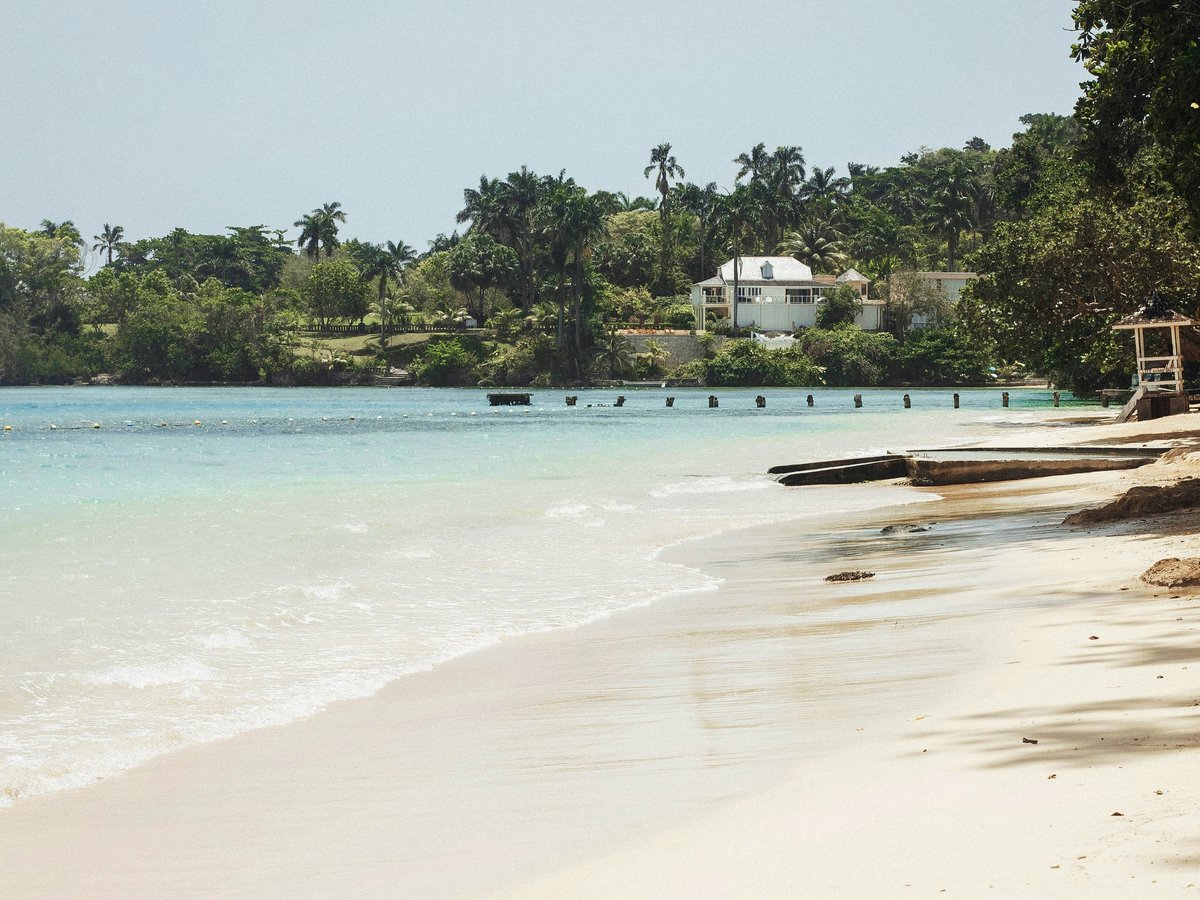
Montego Bay tends to get filed under 'resort town,' which sells it short. Jamaica's second-largest city has a walkable downtown grid around Sam Sharpe Square, free public beaches along Kent Avenue and the Freeport peninsula, and a cluster of 18th-century historic sites that charge no admission. September temperatures currently sit around 32.7°C, feeling closer to 39.4°C with 63% humidity, so those free beaches become the most rational activity on any itinerary. The strip between Fort Montego and Dump-Up Beach covers most of the city's zero-cost highlights in roughly 3 kilometres of walking. Mind you, the free Montego Bay is not the same city you see from a resort pool. It is louder, less polished, and considerably more interesting than what the Gloucester Avenue hotels suggest.
Free attractions
-
Sam Sharpe Square
The civic centre of downtown Montego Bay, named after National Hero Samuel Sharpe who led the 1831-1832 Baptist War. The square holds the Sam Sharpe Monument, a bronze statue depicting Sharpe with a Bible, and Georgian-era buildings ring the perimeter including the restored colonial courthouse. Open 24 hours, no charge.
Downtownlandmark -
Fort Montego
A compact British fortification on Gloucester Avenue, built during the 1750s to guard the harbour entrance. Three original cannons remain on the ramparts. The fort saw remarkably little combat and now sits on a low bluff with a clear sightline across Montego Bay's harbour. No admission fee, and the westward-facing ramparts catch good late-afternoon light.
Gloucester Avenuehistoric site -
The Cage
A small brick-and-stone structure on the north side of Sam Sharpe Square, built in 1806 as a temporary holding cell for runaway enslaved people and disorderly sailors. One of the more sobering landmarks in downtown Montego Bay. Viewable from the pavement at any time, with historical plaques still legible on the facade.
Downtownhistoric site -
Most Blessed Sacrament Cathedral
Montego Bay's Roman Catholic cathedral in the downtown core. The building is open for visitors outside of scheduled mass times, with no entry fee. Stained glass panels along the nave filter the afternoon light, and the stone interior stays noticeably cooler than the surrounding streets. A good midday refuge.
Downtownreligious site -
St. James Parish Church
An Anglican church on Church Street, originally established around 1775. The current structure retains elements from several rebuilds across two centuries. Its churchyard holds headstones from the late 1700s, some still legible under the mango trees. Entry is free. Donation boxes sit near the entrance.
Downtownreligious site -
Dead End Beach
A free public beach at the end of Kent Avenue, popular with locals and budget-conscious travellers. The sand is coarse, the water tends to be calm, and a handful of food vendors nearby sell jerk chicken and fried Festival dumplings. No admission charge, no facilities fee. It gets its name from the road that simply stops at the shoreline.
Kent Avenuebeach -
Dump-Up Beach
A stretch of public sand near the Freeport cruise terminal. Fewer tourists come here than to the Hip Strip beaches, which gives it more of a local character on weekends when families turn up with coolers and portable speakers. Warm water, reasonably clear despite the unglamorous name. Free access.
Freeportbeach -
Old Hospital Park
A small public green space in central downtown Montego Bay, near Union Street. Benches under mature shade trees and a bit of breathing room from the traffic. Locals use it as a lunch spot and a shortcut during weekday afternoons. One of the few patches of grass in the downtown grid.
Downtownpark -
Jarrett Park
A public recreation ground on the eastern edge of the city, used for cricket, football, and community gatherings. The park sits on slightly elevated terrain and catches a breeze that the downtown streets miss entirely. Free to enter at any time, though match days draw crowds that claim the best viewing spots early.
East Montego Baypark -
Catherine Hall Sports Complex
The largest public sports and entertainment venue in western Jamaica. Between major events, the grounds and surrounding fields are open for walking and jogging at no charge. The complex also hosts Reggae Sumfest and other ticketed festivals, so check local listings before assuming access. On quiet weeks, you might have the perimeter track nearly to yourself.
Catherine Hallpark -
Montego Bay Cultural Centre
Housed in the restored 19th-century courthouse on Sam Sharpe Square, the centre includes galleries and exhibition space covering Jamaican history and art. Standard admission applies on most days, but the centre has typically opened for free during Jamaica's Heritage Week in October and on International Museum Day, May 18. Worth timing a visit around those windows if your budget is tight.
Downtownmuseum -
Gallery of West Indian Art
A commercial gallery on Orange Lane in the Reading neighbourhood, about 3 kilometres south of downtown. Jamaican and Caribbean paintings, sculptures, and ceramics fill several rooms. Browsing costs nothing, and the staff tends to be welcoming whether or not you intend to buy. The garden outside has a few benches in the shade.
Readinggallery
Free activities
-
Hip Strip promenade walk
Gloucester Avenue, locally called the Hip Strip, runs roughly 2 kilometres between Fort Montego and the main roundabout near Walter Fletcher Beach. Restaurants, souvenir stalls, and beach bars line both sides. You can walk the full stretch in about 30 minutes without spending anything. The smell of jerk seasoning drifts off the open-air grills, and reggae bleeds out of every other doorway. People-watching alone carries the walk.
Gloucester Avenuewalking route -
Charles Gordon Market browsing
Montego Bay's main public market on Fustic Road in the downtown core. Open daily, liveliest on Saturday mornings when vendors call out prices from every stall. Scotch bonnet peppers, ackee, breadfruit, yams, ground provisions, and local spices fill the tables. You might get offered a taste of sorrel drink or a wedge of fresh sugar cane. Browsing costs nothing, and the market gives you a sense of daily life in MoBay that the hotel strip does not provide.
Downtownmarket -
Downtown heritage walk
A self-guided route starting at the main civic square, heading east along Church Street past the Anglican parish church, then looping north to the waterfront via Harbour Street. The walk passes the colonial courthouse, Georgian-era shopfronts with wrought-iron balconies, and a few street murals. Allow about 45 minutes at a slow pace. No guide fee, though a beef patty from Juici Patties for about 250 JMD makes a reasonable pit stop.
Downtownwalking route -
Sunset from Howard Cooke Boulevard
The waterfront stretch of Howard Cooke Boulevard faces west across the harbour, which means an unobstructed sunset on clear evenings. Locals lean against the railing or sit on the low seawall. Jamaica's latitude near the 18th parallel keeps sunset close to 6 PM year-round. The sky tends to go deep orange over the water for about 15 minutes before dropping. Completely free.
Waterfrontviewpoint -
Plane-spotting near Sangster International Airport
Sangster International Airport's runway ends close to the coast near the Freeport area. The approach path brings aircraft low over the water on final descent, sometimes passing no more than 50 metres overhead. Watching jets from American Airlines, JetBlue, and Caribbean carriers touch down has become a free spectacle for aviation enthusiasts and families. The afternoon arrival window between 1 PM and 4 PM tends to be the busiest.
Freeportactivity
Free events
-
Emancipation Day celebrations
August 1 (annual, national holiday)Jamaica marks Emancipation Day with public drumming, cultural performances, and speeches across the island. In Montego Bay, events tend to centre on the downtown square and adjacent streets. The day commemorates the abolition of slavery in the British Caribbean in 1838 and carries real emotional weight locally. Free and open to everyone.
Sam Sharpe Square and surrounding downtown streets -
Independence Day festivities
August 6 (annual, national holiday)Jamaica's national independence day, celebrated since 1962. Montego Bay hosts street parades, sound system sessions on public roads, and outdoor stage performances. Most of the street-level events carry no admission charge, and the atmosphere reaches several blocks beyond the formal event zones. The bass from the sound systems is audible from Gloucester Avenue.
Various locations across Montego Bay -
Heritage Week open museums
Third week of October (annual)During Jamaica's Heritage Week, museums and heritage properties across the island typically waive their admission fees. In Montego Bay, the Cultural Centre on the downtown square is the primary beneficiary. The week usually includes guided walks, public lectures, and temporary exhibitions focused on Jamaican history.
Montego Bay Cultural Centre and other heritage sites island-wide -
Sunday morning gospel services
Sundays, year-roundSeveral churches in Montego Bay hold open-door Sunday services with choral singing that draws visitors for the music as much as the worship. The Anglican, Baptist, and Pentecostal congregations in the downtown area are all welcoming to guests. The harmonies alone are worth setting an alarm for. Services typically begin between 8 AM and 10 AM.
Downtown churches including St. James Parish Church and various Baptist and Pentecostal congregations
Paid attractions worth knowing about
Not everything in Montego Bay is free, and a few paid sites sit close to the free ones. Rose Hall, a Georgian great house built in 1770, offers guided tours and is the most-visited heritage property in the parish of St. James. Doctor's Cave Beach Club on Gloucester Avenue charges admission but provides loungers, showers, and a roped swimming area with notably fine white sand. Greenwood Great House, about 25 minutes east along the coast road, is another paid heritage tour with period furniture and a hilltop view of the Caribbean. If your budget allows one paid attraction, Rose Hall likely delivers the most history per dollar spent. Wikivoyage's Montego Bay sights section (https://en.wikivoyage.org/wiki/Montego_Bay#See) lists both paid and free options for further planning.
Staying comfortable on a zero-budget day
The heat in Montego Bay is persistent, and the humidity makes conditions feel several degrees beyond what any thermometer reads. Fill a water bottle at your accommodation before heading out, since buying bottles at tourist-facing shops on Gloucester Avenue adds up. The downtown area offers limited shade between buildings, so plan any heritage walking for the morning or late afternoon. Churches and the Cathedral mentioned above provide cool stone interiors and a genuine break from the sun. Tap water in Montego Bay is generally safe to drink, though many residents prefer filtered or bottled. If you are walking the Hip Strip, the northern end near the fort has more tree cover than the southern stretch. That said, even the shaded sections feel warm, so pace yourself and take the beach breaks when they present themselves.
FAQ
Is it safe to walk around Montego Bay independently?
Montego Bay scores 3.2 out of 10 for solo-traveller safety (see the TTDI Solo-Safety Index). Stick to well-trafficked areas like Gloucester Avenue, the waterfront boulevard, and the downtown square during daylight. Avoid side streets south of the downtown core after dark. Petty theft is the most common concern, so carry minimal valuables and keep your phone out of sight in quieter areas. Wikivoyage's safety section (https://en.wikivoyage.org/wiki/Montego_Bay#Stay_safe) has further neighbourhood-level advice.
Do I need Jamaican dollars for a zero-budget day?
If you are sticking to entirely free activities, you will not technically need cash. That said, having a small amount of Jamaican currency is practical for food and transport. The rate currently sits at about 158.5 JMD per 1 USD, so even 1,000 JMD covers a patty and a drink if hunger strikes. Street vendors and market stalls deal almost exclusively in JMD, not US dollars. Wikivoyage's practical section (https://en.wikivoyage.org/wiki/Montego_Bay#Cope) covers money-changing options in the city.
Are the free public beaches clean and swimmable?
Dead End Beach and Dump-Up Beach are both swimmable in normal conditions, with calm water inside the reef line. They lack the manicured feel of the paid beach clubs, and facilities are minimal, so bring your own towel and water. Litter levels vary, tending to improve on weekday mornings when fewer visitors are around. The sand is coarser than at Doctor's Cave Beach Club, but the water quality is comparable for swimming.
Is Montego Bay good for families visiting on a free budget?
Montego Bay scores 6.2 out of 10 for family friendliness (see the TTDI Family-Friendliness Index). The free beaches are shallow enough for younger children near the shore, and the downtown heritage walk is short enough to hold a child's attention at about 45 minutes. The main limitation is heat, since children overheat faster than adults. Plan free outdoor activities for morning hours before 11 AM or after 3 PM on hot days. The plane-spotting near the airport is a consistent hit with kids.
Can I walk from the cruise port to the free attractions?
The Freeport cruise terminal sits about 3 kilometres from Sam Sharpe Square. That distance is walkable in roughly 35 to 40 minutes along Howard Cooke Boulevard, though the route has limited shade. Some cruise passengers take a shared route taxi for a few hundred JMD per person instead. Once downtown, the main free attractions cluster within a 10-minute walk of each other, so you do not need further transport. Wikivoyage's transport section (https://en.wikivoyage.org/wiki/Montego_Bay#Get_around) covers route taxi logistics and fares in more detail.
What should LGBTQ+ travellers know about visiting Montego Bay?
Montego Bay scores 1.5 out of 10 for LGBTQ+ friendliness (sourced from TTDI's editorial rubric). Jamaica's legal and social environment remains unwelcoming for LGBTQ+ individuals, and public displays of affection between same-sex couples carry a real risk of harassment. Exercise significant caution, keep a low profile in public spaces, and be aware that this applies across the island, not only in this city. Resort properties tend to be more insulated from local attitudes, but the free public spaces described in this guide are not.
Last verified by automated review (v1.7.2) on . What is automated review?