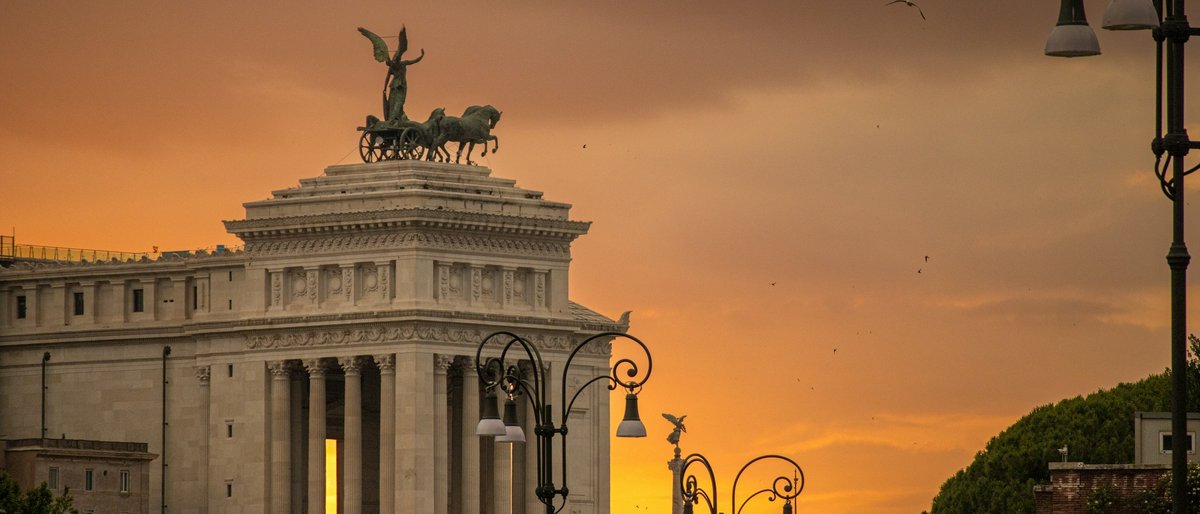
Rome is a city where the streets themselves function as an open-air museum. You could walk for days through the centro storico and stumble across more Renaissance fountains, Baroque facades, and ancient ruins than most cities put behind glass. The thing about Rome — and this tends to surprise first-time visitors — is that so much of what makes the city extraordinary sits right there in the open. Churches that would be headline attractions anywhere else are free to enter, always have been. Public parks sprawl across ancient villa estates. Viewpoints from the city's seven hills cost nothing but the walk up. To be fair, some of the marquee sites do charge admission, and the Pantheon introduced a fee not long ago. But the volume of what remains free is staggering. You could spend a full week here on a zero budget and still leave feeling like you barely scratched the surface. The piazzas alone — Navona, Campo de' Fiori, Santa Maria in Trastevere — are worth the trip. Add in the permanently free municipal museums, the Sunday morning flea markets, the golden-hour light hitting travertine, and you start to understand why people come back year after year. Rome rewards curiosity more than it rewards money.
Free attractions
-
St. Peter's Basilica
The largest church in the world is free to enter, which still catches people off guard. The scale hits you the moment you step through the doors — Bernini's baldachin rising above the papal altar, Michelangelo's Pietà behind glass to your left. The dome climb costs extra, but the basilica floor alone could hold your attention for an hour. Lines can be long, midmorning. Early arrivals — say before 8:30 — tend to walk straight in. Worth noting: shoulders and knees need to be covered, and they do enforce this.
Vatican CityChurch -
Villa Borghese Gardens
Rome's most central park spreads across the Pincian Hill above Piazza del Popolo. The Borghese Gallery inside requires tickets and booking, but the gardens themselves are entirely free — wide gravel paths winding past umbrella pines, a small lake with rowboats for rent, and the Pincio terrace offering one of the best sunset views in the city. On weekends, Roman families take over the lawns. Joggers circle the perimeter. It feels less like a tourist attraction and more like the city's living room.
PincianoPark -
Museo di Scultura Antica Giovanni Barracco
Tucked into a small Renaissance palazzo on Corso Vittorio Emanuele II, this municipal museum holds a compact but impressive collection of ancient sculpture — Egyptian, Assyrian, Greek, Roman. It is permanently free and almost always empty. You might have entire rooms to yourself on a Tuesday afternoon. The building itself, called the Piccola Farnesina, has a quiet courtyard that feels miles from the traffic outside.
Centro StoricoMuseum -
Museo Carlo Bilotti
Sitting inside the old Orangery of Villa Borghese, this small contemporary art museum is permanently free. The permanent collection centers on works by Giorgio de Chirico, with eighteen pieces including paintings and sculpture. The space is intimate — you can see everything in thirty minutes — but the de Chirico works are strong, and the setting, surrounded by the park, makes it a natural stop during a Villa Borghese walk.
Villa BorgheseMuseum -
Basilica di Santa Maria Maggiore
One of Rome's four papal basilicas and free to enter. The fifth-century mosaics along the nave are some of the oldest in any Roman church — glinting gold tessera depicting Old Testament scenes that have survived seventeen centuries of earthquakes, fires, and restorations. The Cosmati floor is equally striking. The Borghese and Sistine chapels inside are ornate to the point of excess, but that is sort of the point.
EsquilinoChurch -
Giardino degli Aranci (Orange Garden)
Formally the Parco Savello, this small garden on the Aventine Hill might be the most romantic viewpoint in Rome. Orange trees — bitter, not eating oranges, mind you — line the paths, and from the terrace wall you look straight across the Tiber toward Trastevere and St. Peter's dome. Arrive near sunset and you will find couples, photographers, and a handful of locals sitting on the wall watching the light change. The garden closes at dusk.
AventinoViewpoint -
Gianicolo (Janiculum Hill)
Not one of the original seven hills, but arguably the best panorama of the city. From the Piazzale Garibaldi at the top, you can pick out the Pantheon's dome, the Vittoriano, Sant'Ivo alla Sapienza's spiral lantern, and on clear days the Alban Hills to the southeast. Every day at noon a cannon fires from the hillside — the colpo di cannone — and it is loud enough to make you jump if you are not expecting it. Free, always open, and surprisingly uncrowded outside of weekend afternoons.
TrastevereViewpoint -
Museo Pietro Canonica
Another permanently free municipal museum inside Villa Borghese, this one occupies the former home and studio of sculptor Pietro Canonica. The ground floor preserves his living quarters — period furniture, personal effects, a certain faded grandeur. Upstairs, his marble and bronze works fill several rooms. It is a niche visit, certainly, but if you are already in the park and want to escape the heat for half an hour, it delivers.
Villa BorgheseMuseum -
Via Appia Antica (Appian Way)
The ancient road running south from the Aurelian Walls is free to walk and still paved with the original basalt blocks in stretches. On Sundays, vehicle traffic is restricted, and the road becomes a kind of open-air promenade — cyclists, joggers, families with strollers rolling past crumbling tombs and umbrella pines. The first couple of kilometers from Porta San Sebastiano pass the catacombs (those charge admission) and several ruined monuments. The further out you walk, the quieter it gets.
Appio-LatinoHistoric Site -
Museo delle Mura
Built into the Porta San Sebastiano gate of the Aurelian Walls, this permanently free museum lets you walk along a stretch of the ancient defensive walls themselves. The interior explains how the walls were built and modified over centuries. The real draw, though, is stepping out onto the ramparts and looking down the tree-lined Via Appia Antica stretching south. It is small and can be done in twenty minutes, but the perspective is unlike anything else in Rome.
Appio-LatinoMuseum -
Villa Doria Pamphilj
Rome's largest public park and considerably less touristed than Villa Borghese. The grounds of a seventeenth-century villa estate sprawl across the Monteverde neighborhood — pine-shaded paths, a formal Italian garden, a lake, and long stretches of open meadow. Romans come here to run, walk dogs, or spread out picnic blankets on Sunday mornings. The Villa itself currently houses the Italian government's official guest quarters and is not open to visitors, but the park is vast and free.
MonteverdePark -
Basilica di San Giovanni in Laterano
Technically the cathedral of Rome — the Pope's church in his role as Bishop of Rome, ranking above even St. Peter's in ecclesiastical terms. Free to enter, and the interior is monumental: a Borromini nave renovation, enormous statues of the apostles lining the central aisle, and a medieval cloister just off to the side (the cloister charges a small fee, but the basilica itself does not). The piazza outside holds the tallest obelisk in Rome.
San GiovanniChurch
Free activities
-
Trastevere Evening Walk
Trastevere after dark is Rome at its most atmospheric. The narrow cobblestone streets fill with the smell of wood-fired pizza and frying supplì. Laundry hangs from upper windows. Buskers set up in Piazza di Santa Maria in Trastevere, where the twelfth-century mosaics on the basilica facade glow gold under floodlights. No agenda needed — just cross Ponte Sisto from the centro storico side and wander. The neighborhood is compact enough that you cannot really get lost, despite what the streets want you to believe.
TrastevereWalking -
Porta Portese Sunday Flea Market
Every Sunday morning, the streets south of Porta Portese gate fill with hundreds of vendors selling everything from vintage clothing and vinyl records to old cameras, kitchenware, and furniture of questionable provenance. It runs roughly from 7:00 to 14:00 and draws a mix of tourists, bargain hunters, and Romans looking for something specific they cannot quite name. The earlier you arrive, the better the selection. By noon the crowds get thick and the good stuff tends to be gone. Free to browse, obviously.
Trastevere / TestaccioMarket -
Ostiense Street Art District
The neighborhood around Via del Porto Fluviale and the old Mercati Generali has become Rome's de facto outdoor gallery for large-scale street art. The murals are enormous — full building facades painted by artists including Blu, JB Rock, and Agostino Iacurci. The former military barracks along Via dei Magazzini Generali are dense with work. No guided tour needed; just walk south from the Piramide metro stop and keep looking up. The area is still gritty and industrial in places, which is part of the appeal.
OstienseStreet Art -
Campo de' Fiori Morning Market
The daily open-air market in Campo de' Fiori has been running since at least the 1800s. Mornings bring stalls of produce, dried spices, chili peppers, and seasonal fruits stacked in colorful pyramids. The vendors are loud and theatrical in the way only Roman market sellers can be. It is a sensory overload — the smell of fresh basil, the sound of haggling over artichoke prices. The market wraps up by early afternoon, and the piazza transforms into a bar-and-restaurant scene by evening.
Centro StoricoMarket -
Historic Center Walking Route: Piazza del Popolo to the Colosseum
You can walk from Piazza del Popolo to the Colosseum in about forty-five minutes, passing through the densest concentration of free landmarks in the city. Down Via del Corso, detour right to the Trevi Fountain, continue south past the Pantheon exterior and Piazza Navona, cut through to Largo di Torre Argentina (where you can see the cat sanctuary and the ruins where Julius Caesar was reportedly killed), and continue to Piazza Venezia and the Vittoriano monument — free to enter, with views from its upper terrace. From there the Imperial Forums line the road down to the Colosseum. Everything along this route is free to see from the outside, and most of the interiors that are open are free too.
Centro StoricoWalking -
Ostia Lido Public Beaches
Rome has a coastline, and getting there costs nothing beyond a metro ticket. The Roma-Lido train from Piramide station reaches the beach in about thirty minutes. The private stabilimenti charge for sunbeds, but the spiagge libere — public beaches — are scattered between them and cost nothing. The water quality has improved considerably in recent years, and on a hot June weekday you might have a stretch of sand mostly to yourself. Weekends in July and August are another story entirely.
OstiaBeach -
Tor Marancia Street Art Project
A public housing estate in the southern suburbs where twenty-two international artists were commissioned to paint the facades of residential buildings. The result is a surreal open-air museum in a working-class neighborhood that most tourists never see. Each building tells a different story. The contrast between the monumental murals and the quiet residential streets gives the whole place an unexpected gravity. Reachable by bus from EUR or Garbatella.
Tor MaranciaStreet Art -
Parco degli Acquedotti Walk
Southeast of the center, this park preserves several ancient Roman aqueducts standing in open fields — the Acqua Claudia and Acqua Felice are the most dramatic, their arches marching across the grass like something from a de Chirico painting. It is one of those places that makes you stop and recalibrate what a city park can be. Sheep still graze here sometimes. The light in late afternoon, when the stone goes warm and golden, is extraordinary. Take Metro A to Giulio Agricola or Subaugusta and walk south.
TuscolanoWalking
Free events
-
Domenica al Museo (Free Museum Sunday)
First Sunday of every monthOn the first Sunday of each month, all Italian state museums and archaeological sites offer free admission. In Rome, this includes the Colosseum, Roman Forum, Palatine Hill, Castel Sant'Angelo, Galleria Borghese, Palazzo Barberini, and several others. The catch, predictably, is crowds — popular sites can have wait times of an hour or more, and the Borghese Gallery still requires a reservation even when free. Arriving early is the only real strategy. That said, some of the smaller state museums remain blissfully quiet even on free Sundays.
All state-run museums and sites across Rome -
Estate Romana
June through September annuallyRome's summer cultural festival runs roughly from June through September, programming free outdoor concerts, film screenings, theater, and dance performances across dozens of venues — parks, piazzas, courtyards, even the banks of the Tiber. The programming changes each year, and the city publishes the full schedule on its culture portal. Not everything is free, but a significant portion is, and the variety is wide enough that you can find something most evenings. The atmosphere at the outdoor screenings in particular — warm night air, cicadas competing with the soundtrack — is distinctly Roman.
Various venues across Rome -
Roma Incontra il Mondo
June through August annually, typically evening showsA long-running summer music festival held at the lake in Villa Ada park. The lineup leans toward world music, jazz, reggae, and Italian indie acts. Many of the concerts are free, though headliner shows sometimes carry a ticket price. The setting — a natural lake surrounded by trees, with the stage reflected in the water — makes even a mediocre band worth seeing. Food stalls and bars surround the venue. It has been running since the early 1990s and remains a staple of the Roman summer.
Villa Ada, Via di Ponte Salario -
Notte dei Musei (Museum Night)
One Saturday in May (date varies annually)Held on a Saturday in May, this Europe-wide initiative opens museums for evening visits at reduced rates or free. Rome tends to participate with gusto — major institutions including the Capitoline Museums and Museo di Roma have offered one-euro entry in past years, while many smaller spaces go entirely free. The city adds concerts, performances, and guided walks to the program. Dates and participating venues shift annually, so checking the Roma Culture website in April is wise.
Participating museums citywide -
Concerti del Tempietto
July and August, evening performancesA summer concert series held in the archaeological area of the Teatro di Marcello — yes, the ancient Roman theater near the Campidoglio. The series has been running for decades, programming classical music, jazz, and occasional world music. Some concerts in the series are free, while others charge modest admission. The setting alone — performing between ancient columns with cats wandering through the ruins — elevates even a standard chamber recital into something memorable. Check their seasonal program for the free dates.
Teatro di Marcello, Via del Teatro di Marcello -
Open House Roma
One weekend annually, typically in May or OctoberPart of the international Open House network, this weekend event opens architecturally significant buildings that are normally closed to the public — private palazzi, embassy interiors, modernist housing complexes, studios, and institutional buildings. Visits are free but some require advance registration. The program typically runs over a single weekend in spring and offers access to spaces you cannot see at any other time of year. The 2024 edition included over two hundred sites.
Various buildings and sites across Rome
Churches Worth Entering (All Free, Always)
Rome has over nine hundred churches, and every single one is free to enter. That fact alone reshapes what a zero-budget visit looks like here. Beyond the major basilicas, the smaller churches often deliver the strongest experiences. Santa Maria del Popolo, just inside the Porta del Popolo gate, holds two Caravaggio paintings — the Crucifixion of Saint Peter and the Conversion of Saint Paul — in the Cerasi Chapel. No ticket, no line, just walk in. Sant'Ignazio di Loyola, near the Pantheon, has Andrea Pozzo's ceiling fresco that creates a false dome so convincing you need to stand on the marble disc in the nave floor to see the illusion properly. San Luigi dei Francesi has three more Caravaggios in the Contarelli Chapel, though you may need to feed coins into the light box to illuminate them — a minor cost, arguably. Santo Stefano Rotondo on the Caelian Hill is circular, ancient, and covered in graphic sixteenth-century martyrdom frescoes that Charles Dickens called the most horrifying things he had ever seen. Santa Prassede, near Santa Maria Maggiore, has a tiny Byzantine mosaic chapel — the Chapel of Saint Zeno — that glows like the inside of a find box. Mind you, some churches close during the middle of the day, typically from 12:30 to 15:30, so timing matters.
Drinking Water and the Nasoni
Rome still has over 2,500 public drinking fountains — the nasoni, or 'big noses,' named for their curved spouts. The water comes from the same aqueduct system that has served the city for centuries, and it is cold, clean, and free. You will find them on street corners, in parks, beside bus stops. The trick that locals know: plug the spout with your finger and the water arcs up through a small hole on top, turning it into a drinking fountain. Carrying an empty water bottle and refilling at nasoni saves money and keeps you hydrated through the summer heat, which can be punishing from late June through August. The temperature of the water stays cool even when the air hits forty degrees. Some of the more ornate nasoni have become minor landmarks in their own right — there is a photogenic one on the Lungotevere near Castel Sant'Angelo.
Sunset Spots That Cost Nothing
Romans take sunset seriously. The passeggiata — that evening ritual of walking, seeing, and being seen — builds toward the golden hour, and the city has viewpoints that seem engineered for it. The Pincio terrace above Piazza del Popolo faces west and draws crowds for good reason: the dome of St. Peter's sits well in the sightline, and the sky behind it turns shades of amber and pink that feel almost theatrical. The Gianicolo is broader and higher, with a panorama that stretches across the entire centro storico. The Orange Garden on the Aventine is smaller and more intimate, the kind of place where you lower your voice without being asked to. For something less expected, try the Ponte Sant'Angelo at dusk — Bernini's angel statues catch the last light, and the walk across with Castel Sant'Angelo ahead of you has a particular quality that photographs rarely capture. That said, the Pincio on a summer Friday can feel overpacked, so the Gianicolo might be the better call if you want breathing room.
Getting Around Free (or Nearly Free)
Rome is a walking city. The centro storico is compact enough that most of the major free attractions cluster within a thirty-minute walk of each other. That said, when your feet give out — and they will, the cobblestones are relentless on the knees — the public transit system is reasonably cheap, even if it is not technically free. A single BIT ticket currently costs €1.50 and covers 100 minutes of bus and tram travel plus one metro ride. Worth mentioning: children under ten ride free on all public transport when accompanied by a ticketed adult. The 116 and 117 electric minibuses snake through the historic center's narrow streets and are useful for covering ground when walking feels excessive. On Sundays, Via dei Fori Imperiali — the boulevard connecting Piazza Venezia to the Colosseum — is closed to traffic and becomes a pedestrian promenade, which makes the walk past the Imperial Forums considerably more pleasant. Cycling is an option too: some areas are flat, though the cobblestones and Roman driving habits make it a choice that requires a certain temperament.
FAQ
Are the Colosseum and Roman Forum ever free to visit?
Yes — on the first Sunday of every month, through the national Domenica al Museo program, state museums and archaeological sites including the Colosseum, Roman Forum, and Palatine Hill offer free admission. Expect significant crowds and longer wait times on these days. Arriving before opening helps. The Colosseum still requires a timed entry, so checking availability beforehand is a good idea even when admission is free.
Is the Pantheon still free to enter?
No, not anymore. The Pantheon introduced a €5 admission fee in July 2023 after centuries of free access. There are some exceptions — residents of Rome, children under 18, and other specific categories may still enter free — but for most visitors it is now a paid attraction. That said, the exterior and the piazza remain free, and the building is still striking from outside. Check for occasional free entry during cultural heritage events.
Which museums in Rome are permanently free, not just on first Sundays?
Several of Rome's municipal museums are permanently free. These include the Museo di Scultura Antica Giovanni Barracco, Museo Carlo Bilotti in Villa Borghese, Museo Pietro Canonica in Villa Borghese, Museo delle Mura at Porta San Sebastiano, and the Museo della Repubblica Romana on the Gianicolo. They tend to be small and specialized, but the quality is genuine, and you will likely have them largely to yourself. The list may shift over time, so verifying on the Roma Culture website before visiting is sensible.
Is Vatican City free to visit?
Partially. St. Peter's Basilica is free to enter — no ticket needed, though security lines can be long. The Vatican Museums and Sistine Chapel, however, charge admission (currently around €17 for adults). The Vatican Museums have historically offered free entry on the last Sunday of each month, though this has been paused and reinstated at various points, so confirm the current policy before planning around it. St. Peter's Square is always free and open, and watching the Swiss Guard at the entrance costs nothing but a moment of your time.
Can you swim at the beach near Rome for free?
Yes. The Roma-Lido rail line runs from Piramide station to the coast at Ostia in about thirty minutes, and several spiagge libere — public beaches — are free to use along the waterfront. You will not have sunbeds or umbrellas unless you bring your own, but the sand and sea are there. The water quality has improved noticeably over the past decade. Weekdays are calmer; July and August weekends draw large crowds. Castel Porziano beach, a bit further south, tends to be less packed and is also free.
What is the best way to find out about free events happening in Rome right now?
The Roma Culture website (culture.roma.it) is the most reliable official source for current free events, exhibitions, and festival programming. For the Estate Romana summer festival specifically, the city publishes a full program each June. Local English-language sites like Wanted in Rome and The Roman Guy also maintain event calendars. Checking weekly is worthwhile, since free concerts and openings tend to be announced with relatively short lead times. Flyers posted on walls around Trastevere and San Lorenzo can also surface smaller neighborhood events that do not make it onto official calendars.
Last verified by automated review (v1.7.1) on May 26, 2026. What is automated review?