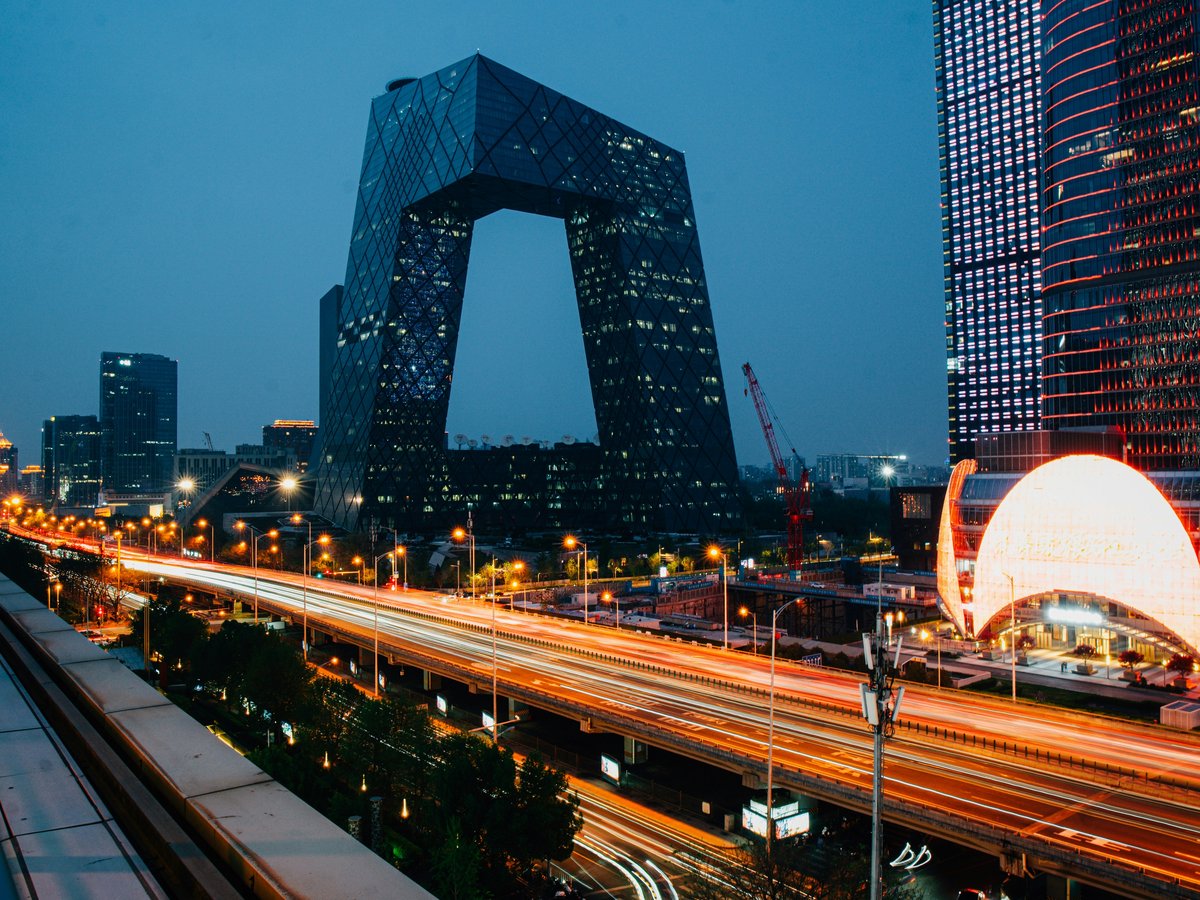
Stay in Beijing in January
90 hotels in the Trip.com pool for Beijing, from US$14 a night.
Opens Trip.com on Fri 1 Jan to Sun 3 Jan 2027; change the dates there.
January is the coldest month in Beijing, and you need to be ready for it. Daytime highs sit around 2°C (36°F), nights regularly drop to -7°C (20°F), and a dry Siberian wind can make even that feel worse. The air tends to carry a faint coal-smoke tang from the city's older heating systems, and winter pollution levels typically run higher than Beijing's improving annual average, though nothing like the grey-out winters of 2013.
That said, January Beijing has a stripped-down quality that the October crowds never see. The Forbidden City under fresh snow, with maybe 30 other visitors in the entire courtyard, is a genuinely different experience from the 80,000-person October version. Hotel rates in Dongcheng and Sanlitun drop 30-40% from the autumn peak. Restaurants that normally need 2-day reservations have open tables at 7pm on a Saturday.
One wild card can reshape the whole month. Chinese New Year falls in late January roughly every third year. It landed on January 29 in 2025 and will do so again on January 26 in 2028. When that happens, Beijing fills with temple fairs at Ditan Park and Longtan Park, red lanterns line Qianmen Street, and the smell of jiaozi dumplings drifts out of every apartment window. If your January trip overlaps with Spring Festival, you'll see a side of Beijing that most foreign visitors never encounter. If it doesn't, you'll get the city at its quietest and cheapest. Check the lunar calendar before booking.
Why visit in January
- The Forbidden City, Temple of Heaven, and Summer Palace are nearly empty compared to the October peak, when the Palace Museum alone sees 80,000 daily visitors. January mornings you might share a courtyard with a dozen people.
- Hotel rates across Dongcheng and Xicheng drop 30-40% from autumn highs, and flight prices from most international hubs tend to follow.
- Natural outdoor ice skating at Shichahai and Beihai Park is a uniquely Beijing winter experience that only runs from late December through mid-February.
- Beijing's winter food culture peaks in January. Lamb hot pot, roasted sweet potatoes from street carts, and tanghulu candied-fruit sticks are all at their seasonal best.
- If Chinese New Year falls in late January, the temple fairs and family celebrations offer a rare window into Beijing's most important holiday.
Worth knowing
- Cold is persistent and inescapable outdoors. Spending more than 2 hours outside without warming up in a cafe or museum requires serious cold-weather gear.
- Winter air quality tends to be the worst of the year. PM2.5 readings in January can spike to 150-200 on bad days, enough to irritate eyes and lungs. Pack N95 or KN95 masks.
- Daylight is limited. Sunrise comes around 7:30am, sunset by 5:00pm, giving you fewer than 10 hours of natural light for sightseeing.
- Some outdoor attractions operate on reduced winter hours or close sections entirely. The Summer Palace boat services shut down when Kunming Lake freezes.
Best for
Think twice if
Beijing in January is cold, dry, and dominated by Siberian high-pressure systems that push temperatures well below freezing most nights. Skies alternate between clear blue and hazy grey depending on wind patterns and pollution levels. Rain and snow are both rare, with total precipitation averaging only 2mm for the entire month. The air feels parched at 40% humidity, which is a sharp contrast to Beijing's muggy July. Wind chill frequently makes the perceived temperature 5-8°C lower than the thermometer reads.
Seasonal caution
- Temperatures regularly drop below -10°C (14°F) at night, with wind chill pushing perceived temperatures to -15°C (5°F) or lower. Exposed skin can develop frostnip within 20-30 minutes in these conditions.
- Winter air pollution spikes are common. PM2.5 readings above 150 can persist for 3-5 consecutive days when wind patterns trap emissions over the city. Check the Beijing Environmental Monitoring Center readings each morning and consider indoor alternatives on heavy-pollution days.
- Icy sidewalks and footpaths, particularly around the hutong neighborhoods and older sections of Dongcheng and Xicheng, can be slippery. Beijing's municipal crews salt major roads but smaller lanes and park paths often stay icy.
Year-round climate
Averages from the last 5 years.
| Month | Avg high (°C) | Avg low (°C) | Rainfall (mm) |
|---|---|---|---|
| Jan | 2 | -7 | 2 |
| Feb | 6 | -5 | 5 |
| Mar | 15 | 2 | 12 |
| Apr | 22 | 9 | 18 |
| May | 27 | 14 | 40 |
| Jun | 33 | 21 | 69 |
| Jul | 32 | 23 | 260 |
| Aug | 30 | 22 | 174 |
| Sep | 27 | 17 | 63 |
| Oct | 18 | 8 | 40 |
| Nov | 11 | 1 | 16 |
| Dec | 3 | -5 | 4 |
Holidays and festivals in January
Public holidays
- New Year's Day(元旦)1 January 2027
Headline events
Chinese New Year (Spring Festival)
Late January in some years (January 29 in 2025, January 26 in 2028). Check the lunar calendar. Falls in February most other years.
The biggest holiday in China transforms Beijing when it falls in late January. Temple fairs fill Ditan Park and Longtan Park with food stalls, performances, and games. Red lanterns and paper cuttings cover Qianmen Street and the hutong neighborhoods. Fireworks and firecrackers fill the air at midnight on New Year's Eve, and the scent of gunpowder lingers for days. Roughly every third year, Spring Festival lands in January rather than February.
Best things to do in January
Ice skating at Shichahai
outdoorThe natural ice rink on Shichahai lake, next to Houhai, opens when the ice thickens to a safe depth in late December or early January. You can rent skates on-site or ride ice bikes and sleds across the frozen surface. The rink sits between old courtyard houses and bare willow trees, with vendors selling roasted sweet potatoes and tanghulu along the shoreline. Entry typically costs 20-30 RMB, and skate rental runs about the same.
The ice is only thick enough for skating from late December through mid-February. January tends to have the most consistently frozen surface.Booking tipWeekday mornings are quietest. Weekend afternoons draw large crowds of local families, and wait times for skate rental can stretch past 30 minutes.
Snow-day visit to the Forbidden City
sightseeingBeijing gets 2-4 snowfalls in a typical January, and when snow sticks to the golden rooftops and red walls of the Forbidden City, the result is one of the most photographed scenes in China. The Palace Museum's social media accounts announce 'snow day' openings that draw local photographers. On non-snow days, January's low visitor counts mean you can walk through the Hall of Supreme Harmony courtyard in near-silence, something impossible from April through October.
Snow only accumulates 2-4 times per winter, and January has the highest probability. Visitor counts drop to a fraction of peak-season levels.Booking tipBook tickets online the night before at the Palace Museum's official site. Same-day tickets are available in January but the system limits daily entries to 30,000 (80,000 in peak season). Follow the Palace Museum's Weibo account for snow-day alerts.
Great Wall winter hike at Mutianyu
outdoorThe Mutianyu section of the Great Wall, 70km (43 miles) northeast of central Beijing, stays open year-round and offers a strikingly different experience in January. Snow sits on the wall and the surrounding mountains, the trees are bare, and on clear days the visibility stretches for kilometers. You might encounter 50 other visitors the entire day, compared to thousands in October. The cable car runs in winter, cutting out the steepest climb.
Near-empty conditions on a wall that typically sees thousands of daily visitors. Snow-covered scenery peaks in January. Cold temperatures keep casual day-trippers away.Booking tipHire a private car or join a small-group tour that departs by 8am. Public buses run less frequently in winter. Bring a thermos of hot water or tea, as the on-site restaurants may operate reduced hours.
Beihai Park frozen lake walk
sightseeingBeihai Park's lake freezes solid in January, and you can walk across sections of it to reach the White Pagoda on Qionghua Island from unusual angles. The park is quieter in winter, and the combination of bare tree branches, grey ice, and the 600-year-old pagoda against cold blue sky creates a stark, beautiful composition. Morning visitors tend to be local retirees practicing tai chi in the covered corridors.
The lake is frozen, allowing a perspective on the park and pagoda that's impossible the rest of the year. Crowds drop to a fraction of summer levels.Booking tipThe park opens at 6:30am in winter. Early morning visits before 9am offer the best light and fewest people.
Winter concert season at the National Centre for the Performing Arts
cultureThe NCPA, the egg-shaped titanium building west of Tiananmen Square, runs its most ambitious programming from November through February. January typically features international orchestras, Chinese opera productions, and ballet performances. The building itself, reflected in its surrounding moat, looks particularly striking on clear winter evenings. Ticket prices range from 80 RMB for upper-balcony seats to 680 RMB for premium positions.
January falls in the heart of the winter performance season, with visiting international ensembles and the NCPA's own resident companies performing their marquee productions.Booking tipBook online through the NCPA's website 2-3 weeks ahead for popular performances. Weeknight shows are easier to get than Friday or Saturday.
Hutong walking tour through Dongcheng
cultureBeijing's old hutong alleyways are best explored on foot, and January's cold keeps the tourist groups away. The narrow lanes between Nanluoguxiang and Wudaoying Hutong are quiet enough to hear the creak of wooden doors and the rattle of bicycle bells. Stop into a courtyard cafe for a warm drink every 30-40 minutes to manage the cold. The low winter sun angles down the east-west lanes in a way that's impossible during summer's overhead light.
Tourist foot traffic drops 60-70% from October peak. The low-angle winter light and bare courtyard trees give the hutongs a different atmosphere from the leafy summer version.Booking tipSelf-guided is fine if you have a map of the Dongcheng hutong network. Guided tours through local operators typically run 150-250 RMB per person and last 2-3 hours.
Day trip skiing at Nanshan Ski Village
outdoorNanshan Ski Village in Miyun District, about 65km (40 miles) northeast of central Beijing, is the closest decent ski area to the city. It has runs for beginners through intermediate skiers, equipment rental, and a terrain park. January conditions are the most reliable of the season, with consistent cold maintaining good snow cover (supplemented by snowmaking). Lift tickets run 200-400 RMB depending on the day.
January has the coldest, most stable snow conditions of the season. Later in February, temperatures can swing above freezing and soften the runs.Booking tipGo on a weekday if possible. Weekend lift lines at Nanshan can stretch to 20 minutes. Book a car service or join a group shuttle from Dongzhimen.
Temple of Heaven at dawn
sightseeingArrive at the Temple of Heaven park before 8am on a January morning and you'll find clusters of retirees practicing tai chi, sword forms, and ballroom dancing on the Long Corridor and in the surrounding cypress groves. Their breath hangs in the cold air. The 600-year-old Hall of Prayer for Good Harvests, with its blue-tiled triple roof, catches the first warm light of the day. The park opens at 6:00am in winter, though the interior hall buildings don't open until 8:30am.
The early-morning exercise groups are most photogenic in cold weather, with visible breath and low golden light. January's empty paths let you experience the park's scale and silence.Booking tipPark entry is 15 RMB, or 35 RMB for the combined ticket that includes the interior halls. The combined ticket is worth it. Arrive by 7:30am for the tai chi groups.
What to eat in January
On menus now
Instant-boiled lamb hot pot (涮羊肉)
Beijing-style hot pot is simpler than its Sichuan cousin. Thin-sliced lamb goes into a plain copper pot of boiling water flavored with ginger and dried jujubes. You dip the cooked meat in sesame paste mixed with fermented tofu, chive flower sauce, and chili oil. The warmth of it on a -5°C evening is the point. Donglaishun, which has been serving this dish since 1903, remains the benchmark.
Lamb spine hot pot (羊蝎子)
A simmered-for-hours pot of lamb vertebrae in a spiced broth. You gnaw the meat off the bone with your hands, which is half the fun. The marrow melts out in the heat. This is peak cold-weather eating in Beijing, and most neighborhood restaurants in Xicheng and Dongcheng run it as a winter special from November through February.
Zhajiangmian (炸酱面)
Beijing's signature noodle dish. Thick wheat noodles topped with a savory fermented soybean paste fried with diced pork, served with julienned cucumber, radish, and edamame. It's eaten year-round, but in January the hot noodles and rich sauce feel especially restorative after a morning in the cold. Most small restaurants in Dashilar and the Qianmen area serve reliable versions for 20-30 RMB.
Street food peaks
Tanghulu (糖葫芦)
Candied hawthorn berries on bamboo skewers, coated in a crackly shell of hardened sugar syrup. The cold January air sets the glaze perfectly, giving each bite an audible snap. Street vendors line Nanluoguxiang and Wangfujing starting in late November, but January is peak season. Modern versions use strawberries, grapes, or kiwi, though purists stick with the tart hawthorn original.
Roasted sweet potatoes (烤红薯)
Street vendors wheel metal drum ovens around the hutong neighborhoods all winter. The smell of caramelizing sweet potato skin drifts down Wudaoying Hutong and the alleys around Houhai on cold mornings. The potatoes cost 5-10 RMB, and they double as hand warmers until you peel and eat them. January's cold makes the contrast between the freezing air and the steaming orange flesh sharper.
Festival food
Laba congee (腊八粥)
A thick rice porridge made with 8 or more ingredients, including red beans, peanuts, lotus seeds, jujubes, and dried longan. Temples and some restaurants serve it free on the Laba Festival, which falls on the 8th day of the 12th lunar month and typically lands in mid-to-late January. Yonghe Temple (Lama Temple) in Dongcheng is one of the traditional distribution points.
Regular events in January
New Year's Day (元旦)Free
January 1 is a 1-day public holiday in China. Parks and museums remain open, and Tiananmen Square sees a flag-raising ceremony at sunrise that draws crowds of domestic visitors. Wangfujing and Sanlitun shopping areas run year-end sales. The holiday weekend is busy by January standards but nothing like October's National Day.
January 1Laba Festival (腊八节)Free
The 8th day of the 12th lunar month marks a traditional Buddhist and folk holiday. Temples including Yonghe Temple (Lama Temple) in Dongcheng distribute free Laba congee to visitors, with queues forming before dawn. The date moves with the lunar calendar but typically falls in mid-to-late January. The congee distribution at Yonghe Temple usually runs from 8am until the pots are empty, often by 10am.
Mid-to-late January (varies with lunar calendar)Beijing New Year's Concert at NCPA
The National Centre for the Performing Arts hosts a gala concert in the first week of January, typically featuring the China National Symphony Orchestra or a visiting European ensemble performing Strauss waltzes and seasonal repertoire. The event has become a tradition since the NCPA opened in 2007 and draws a dressed-up Beijing audience.
First week of JanuaryWinter book fair at Capital MuseumFree
The Capital Museum on Fuxingmen Outer Street in Xicheng runs rotating exhibitions year-round, but January often features a winter cultural fair component with book sales, calligraphy demonstrations, and lectures on Beijing history. The museum itself is free with ID or passport and keeps standard winter hours of 9am-5pm, closed Mondays.
Throughout JanuaryBest places this January
Forbidden City (Palace Museum)
historic siteJanuary transforms the Forbidden City from a crowd-management challenge into something closer to what it was designed to be. With visitor counts capped at 30,000 (versus 80,000 in peak season) and actual numbers often far below that, you can stand alone in the courtyards of the Inner Court. The golden roofs under grey winter sky have a different gravity than the postcard-blue version. On snow days, the Palace Museum opens early and the scene is extraordinary. The cold keeps visits to 2-3 hours, which is honestly enough to see the central axis without rushing.
DongchengShichahai and Houhai
neighborhoodThe connected lakes of Shichahai become Beijing's most atmospheric outdoor space in January. The frozen lake surface hosts a public ice rink, and the surrounding bars and restaurants stay open through winter, their windows fogged with warmth. The old courtyard neighborhoods on the west side of Houhai are quieter in winter, with bare trees opening up sightlines to grey-tiled rooftops you can't see in summer's green canopy.
Xicheng798 Art District
arts districtBeijing's largest contemporary art zone in Dashanzi, northeast of the city center, is an ideal January destination because nearly everything is indoors. The converted factory buildings house galleries, studios, and cafes. The UCCA Center for Contemporary Art anchors the district with major exhibitions that often open in December or January. Foot traffic drops in winter, so you can browse without the weekend crush that makes 798 feel like a shopping mall from April through October.
ChaoyangJingshan Park
parkThe hilltop pavilion at the center of Jingshan Park, directly behind the Forbidden City's north gate, offers the iconic overhead view of the palace complex. On a clear January day, the visibility can stretch to the Western Hills. The park is small enough to visit in 30-45 minutes, making it manageable in cold weather. Sunrise from the summit, though bitterly cold, is the best view of the Forbidden City's roofline in Beijing.
DongchengYonghe Temple (Lama Temple)
templeBeijing's largest Tibetan Buddhist temple is worth a January visit for the Laba Festival congee distribution alone, but even on ordinary days, the incense smoke drifting through cold air and the 18-meter sandalwood Maitreya Buddha inside the Wanfu Pavilion create a memorable atmosphere. The temple stays warm enough inside its enclosed halls, though the courtyard passages are open to the wind. Entry is 25 RMB.
DongchengNanluoguxiang and Wudaoying Hutong
neighborhoodThese two parallel hutong streets in Dongcheng are lined with cafes, small shops, and courtyard restaurants. In January, the tourist souvenir vendors thin out and you see more of the actual residential neighborhood between the commercial stretches. Wudaoying in particular tends to be quieter and has a better ratio of interesting independent shops to chain outlets. Ducking into a courtyard cafe for a 25-RMB latte every half hour is the rhythm for a winter hutong walk.
DongchengCapital Museum
museumThe Capital Museum on Fuxingmen Outer Street houses one of the strongest collections of Beijing-specific artifacts in the city, including porcelain, bronze, jade, and Buddhist statuary spanning 3,000 years. Free entry with ID or passport. The building is modern, well-heated, and large enough for a 2-3 hour visit. In January, it's an essential indoor anchor for days when pollution or cold makes outdoor sightseeing uncomfortable.
XichengDashilar and Qianmen
neighborhoodThe pedestrianized Qianmen Street and the old commercial lanes of Dashilar, south of Tiananmen Square, are worth a January walk for the winter food scene alone. Old Beijing restaurants serving zhajiangmian, baozi, and lamb hot pot line the side streets. The area has been heavily restored, and some of it feels like a theme park, but the food stalls and tea shops in the Dashilar alleys still have a rougher, more local energy, particularly on weekday mornings.
Xicheng
Your packing checklist
Tick items off as you pack. Your progress saves in this browser.
All packed — have a great trip.
Insider tips
Beijing's centralized heating system runs from November 15 to March 15, which means every indoor space in the city, from subway stations to restaurants to museums, is heated to 22-25°C. The real challenge of January isn't surviving the cold, it's managing the 30-degree temperature swing between outdoors and indoors. Dress in removable layers, not one massive coat over a t-shirt.
Follow the Palace Museum's official Weibo account for snow alerts. When snow falls on the Forbidden City (typically 2-4 times each January), the museum posts within hours and locals rush to photograph it. Arriving by 9am on a snow morning gets you in before the crowds who come after seeing it on social media.
The air quality can change dramatically within a single day. Check the US Embassy's PM2.5 monitor (available through most air quality apps) each morning. If the reading is above 150, flip your itinerary to indoor sites like the Capital Museum, 798 Art District, or the NCPA. Save the Great Wall and Temple of Heaven for clear days, which often follow a windy night.
Shichahai's public ice rink is more fun and far cheaper than Beijing's commercial indoor rinks. The experience of skating outdoors between courtyard houses, with tanghulu vendors calling from the shore, is something you can't replicate at an indoor facility. Rent the ice bikes (冰上自行车) rather than skates if you're not confident on blades.
Tap water in Beijing is not drinkable, even in hotels. Buy bottled water or carry a thermos and ask for 开水 (boiled water) at restaurants and hotel lobbies. In January the hot water also serves as a hand warmer, which is why locals carry thermoses everywhere.
Avoid these mistakes
- Scheduling a full day of outdoor sightseeing without indoor breaks. The cold is manageable for 60-90 minutes at a stretch, but 4-5 hours outdoors without warming up leads to genuine discomfort and shortened tempers. Plan museum stops, cafe breaks, or indoor meals every 90 minutes.
- Visiting the Forbidden City on a Monday. The Palace Museum closes every Monday year-round, and this catches visitors who didn't check the schedule. The Temple of Heaven park stays open daily, but its interior halls also close Mondays.
- Underestimating distances and relying on walking between sites. Beijing is enormous. Walking from the Forbidden City to the Temple of Heaven takes 40-50 minutes in good weather, and in January wind that feels much longer. Use the subway (lines 1, 2, and 5 connect most major sites) and save outdoor walking for the sites themselves.
- Not checking whether Chinese New Year falls during your visit dates. In years when Spring Festival lands in late January, the city's rhythm changes completely. Many restaurants close for 3-7 days, tourist sites can get crowded with domestic visitors, and prices spike for that specific week. In other years, late January is one of the quietest weeks of the year.
Practical tips for January
Book the Forbidden City online at least 1 day ahead through the Palace Museum's official ticketing site. January rarely sells out, but walk-up ticket windows have been eliminated. Bring your passport for entry. Most Beijing museums close on Mondays, so plan Monday as a hutong-and-food day instead. Subway hours in winter run approximately 5:30am to 11:00pm on most lines, with trains every 3-5 minutes on central routes. Download Alipay or WeChat Pay before arrival, as cash acceptance has dropped sharply since 2020 and many smaller restaurants and street vendors only accept mobile payment. International credit cards now work with Alipay's Tour Pass feature. The subway costs 3-9 RMB per ride depending on distance. Taxis start at 13 RMB, but ride-hailing through Didi (the Chinese equivalent of Uber) is more reliable and avoids the January cold of waiting at a taxi rank. If Chinese New Year falls during your visit, book restaurants for New Year's Eve dinner at least a week ahead, as reunion dinner (年夜饭) is the most important meal of the year and many restaurants either close for private events or sell set menus that require advance reservation.
FAQ
Is January a good time to visit Beijing?
It's manageable but not ideal. January is the coldest month, with highs around 2°C (36°F) and lows around -7°C (20°F). Air quality tends to be worse than the annual average. That said, the major sites are nearly empty compared to the October peak, hotel prices drop 30-40%, and winter experiences like Shichahai ice skating and snow-covered Forbidden City views are genuinely worth the cold. If you can handle below-freezing weather and pack properly, January rewards you with a quieter, cheaper, and in some ways more atmospheric Beijing.
What is the weather like in Beijing in January?
Cold and dry. Average daytime highs reach about 2°C (36°F), and nighttime lows typically drop to -7°C (20°F). Wind chill can make it feel several degrees colder. Rainfall is minimal at around 2mm for the entire month, and humidity sits near 40%. Snow falls 2-4 times in a typical January but rarely accumulates more than a few centimeters. The sky alternates between clear blue on windy days and hazy grey on still days when pollution settles over the city.
Is Beijing crowded in January?
No. January is one of the least crowded months for international tourism. The Forbidden City caps daily visitors at 30,000 in low season (versus 80,000 in peak), and actual numbers often fall well below the cap. Hotels, restaurants, and the subway are noticeably quieter than the September-October peak. The one exception is if Chinese New Year falls in late January, when domestic travel surges for the holiday week, though many Beijing residents leave the city rather than arriving.
Does it snow in Beijing in January?
Beijing typically gets 2-4 light snowfalls in January, though accumulation is usually modest, between 1-5 centimeters. When it does snow, the city looks transformed, and the Forbidden City under fresh snow is one of the most photographed scenes in China. The snow rarely lasts more than 1-2 days on the ground before temperatures and foot traffic clear it. Snowfall is never guaranteed in any given week, but odds over a 2-week January visit are reasonable.
Is the Great Wall open in January?
Yes. The Mutianyu and Badaling sections of the Great Wall remain open year-round, including January. Mutianyu's cable car operates in winter on a reduced schedule, typically 8:30am to 4:00pm. Visitor numbers drop dramatically. The Jinshanling section, popular with hikers, is also open but has fewer services in winter and requires more self-sufficiency. Dress for exposed mountain conditions, which feel 3-5°C colder than central Beijing due to elevation and wind. Bring a thermos of hot water and snacks, as on-site restaurants may be closed or operating limited menus.
Things to Do in Beijing in January
 Free cancellation
 All-inclusive Day Tours: Tiananmen Sq, Forbidden City, Great Wall
Day trip: free cancellation.
via Viator Free cancellation
 Forbidden City Guided Group Tour with Entry Tickets|Multi‑Departs
City tour: free cancellation.
via Viator Free cancellation
 Mubus: Mutianyu Great Wall Bus Tour with Summer Palace Options
City tour: free cancellation.
via Viator Free cancellation
 Beijing 2-Day Tours: Great Wall, Forbidden City & Top Highlights
City tour: 2 days, free cancellation.
via Viator Free cancellation
 Beijing Essential Full-Day Tour including Great Wall at Badaling, Forbidden City and Tiananmen Square
City tour: 9 hours, free cancellation.
via Viator Free cancellation
 Beijing Classic Full-Day Tour including the Forbidden City, Tiananmen Square, Summer Palace and Temple of Heaven
City tour: 9 hours, free cancellation.
via ViatorFind a flight to Beijing
Live fares to Beijing appear here once cookies are accepted.
Last verified by automated review (v1.7.2) on . What is automated review?