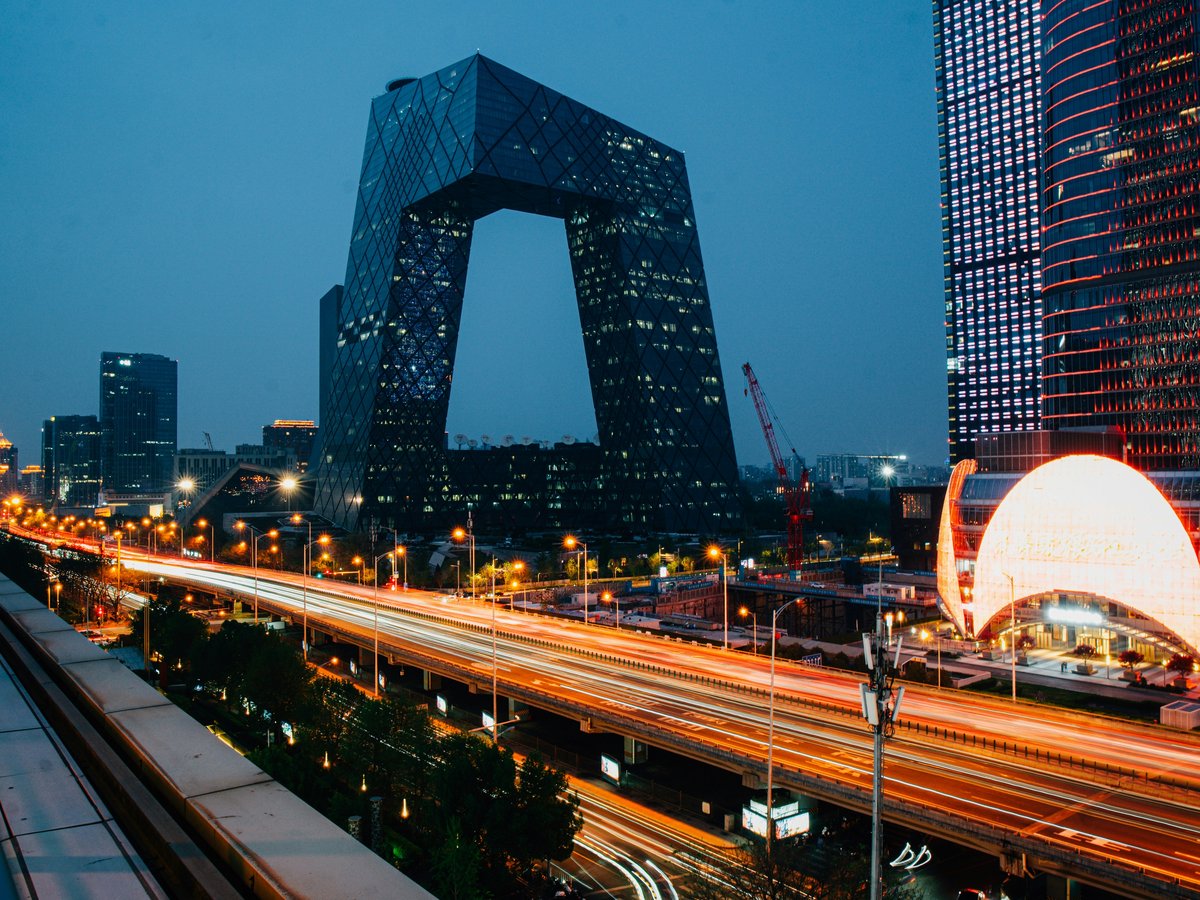
Beijing sits on a flat alluvial plain with its back against the Yanshan Mountains to the north and west. The city sprawls across roughly 16,400 square kilometers, but the western districts climb into genuine hill country within 40 minutes of the 5th Ring Road. From October through mid-November, the air tends to clear and the temperatures settle around 10-18°C, which is likely the best window for anything strenuous outdoors. Spring, from late March to May, works too, though April brings sandstorms that blow in from the Gobi and coat everything in fine yellow dust. Summers are humid, often above 35°C, and the monsoon dumps most of the year's 570mm of rain between June and August. That said, Beijing's outdoor culture is deeply rooted. By 6am on any given morning, the parks fill with tai chi groups, ballroom dancers, and retirees doing backwards walks along the lakeside paths. The mountains to the north hold some of the most varied day hiking in eastern China, and the reservoir system offers pockets of calm water surprisingly close to the urban core. You might not think of Beijing as an outdoor city at first. Give it a weekend, and it changes your mind.
Outdoor activities
-
Cycling the Ming City Wall Ruins and Hutong Lanes
Beijing is flat. That makes it ideal for cycling, and the city still has dedicated bike lanes on most major roads despite the traffic. A good loop starts at the Ming City Wall Ruins Park near Chongwenmen, follows the old wall foundation southeast past Dongbianmen Corner Tower, then cuts north into the hutong grid around Nanluoguxiang and the Drum Tower. The route covers about 18km at a relaxed pace. Shared bikes from Meituan or Hello cost around 1.5 RMB per 15 minutes and you'll find docking stations every few hundred meters. The hutong stretches smell of coal briquettes in winter and jasmine in summer, and the narrow lanes force you to slow down past doorways where residents sit on low stools watching the street. Mind you, traffic around the 2nd Ring Road crossings can be aggressive.
- Difficulty
- Easy
- Duration
- 2-3 hours
- Best season
- September through November, or April through May
-
Rock Climbing at Baihe Crag (白河攀岩区)
The limestone walls along the Baihe River gorge near Huairou District have become Beijing's primary outdoor climbing destination over the past 15 years. The main sectors sit about 90km north of downtown, roughly 2 hours by car. Routes range from 5.7 to 5.13a on the Yosemite Decimal Scale, with most of the bolted sport routes concentrated in the 5.9 to 5.11 range. The rock is generally solid but can be sharp. The approach hike to the main wall takes about 20 minutes from the road. Local climbers have bolted over 200 routes across multiple sectors. Weekends in autumn draw a steady crowd. You'll want your own gear or a connection to the Beijing climbing community, as there's no commercial guiding operation with consistent availability.
- Difficulty
- Moderate to Advanced (varies by route)
- Duration
- Full day
- Best season
- September through November
-
Cross-Country Skiing at Nanshan Ski Village
Nanshan Ski Village in Miyun District, about 65km from central Beijing, opens its Nordic trails once natural snowfall or snowmaking covers the ground, typically from mid-December through late February. The resort maintains several kilometers of groomed cross-country track alongside its downhill runs. Rental gear for cross-country is available on-site, though the selection tends to be limited compared to the alpine equipment. Weekday rates run around 200-280 RMB for a half-day. The air is dry and cold, often minus 10°C or below, so layering matters. Worth noting, the snow conditions vary quite a bit from year to year since Beijing's winters have been getting drier.
- Difficulty
- Easy to Moderate
- Duration
- Half day
- Best season
- Mid-December through February
-
Mountain Biking in the Mentougou Hills
The hills west of Beijing in Mentougou District hold a loose network of trails and old logging roads that local mountain bikers have been riding for over a decade. The terrain around Miaofengshan (1,291m elevation) mixes packed dirt singletrack with rocky descents through scrubby oak forest. The climb from the valley floor gains about 700 meters over roughly 12km of switchbacks. In autumn, the slopes turn gold and rust-red from the walnut and persimmon trees. There's no formal trail system or markings, so downloading a GPX track from a Chinese outdoor app like Liangbuliangbu (两步路) before you go is strongly recommended. Bring spare tubes. The thorns are relentless.
- Difficulty
- Moderate to Difficult
- Duration
- 4-6 hours
- Best season
- September through November
-
Paragliding Tandem Flights at Yanqing
Several small paragliding operators run tandem flights from launch sites in the hills near Yanqing District, about 75km northwest of downtown. The area gained infrastructure from the 2022 Winter Olympics and the road access is now excellent. Tandem flights typically last 15-25 minutes and cost between 600-1,000 RMB depending on the operator and altitude gain. The thermals are most reliable from May through October, with autumn providing the clearest skies. You'll see the Guanting Reservoir from the air on a good day. Operators communicate primarily in Mandarin, so having some Chinese or a bilingual friend helps with the safety briefing.
- Difficulty
- Easy (tandem, no experience needed)
- Duration
- Half day including transport
- Best season
- May through October
-
Trail Running on the Fragrant Hills Loop
Xiangshan (Fragrant Hills) Park in Haidian District sits at the western edge of the city, and the ridgeline trails above the park connect to a longer network running north toward Badachu and south toward the Beijing Botanical Garden. A popular trail running loop starts at the north gate, climbs to Xianglu Peak at 557 meters, traverses the ridge, then descends through Badachu Park. Total distance comes to about 14km with around 500 meters of elevation gain. The trails are well-worn dirt paths with stone steps on the steeper sections. In October, the smoke trees turn crimson and the hillsides draw massive crowds, so early starts before 7am are wise. The stone steps are unforgiving on the knees during the descent.
- Difficulty
- Moderate
- Duration
- 2-3 hours
- Best season
- October through November, or March through May
Day hikes
-
Jiankou to Mutianyu Great Wall Traverse
This is likely the most popular wild-to-restored wall hike near Beijing. Jiankou, about 100km north of the city in Huairou District, is an unrestored section of the Great Wall that sits on a knife-edge ridge at around 1,000 meters elevation. The route traverses east along the wall for roughly 8-10km to reach the restored and touristy Mutianyu section, where you can descend by cable car or toboggan. The Jiankou section has crumbling stairs, sections where the wall has collapsed to rubble, and steep climbs over watchtowers with no guardrails. The Zhengbei Tower (正北楼) midway offers wide views down both sides of the ridge. Loose rock and exposed drops demand genuine attention. Start early, as the hike takes most people 5-7 hours.
- Difficulty
- Difficult (scrambling, exposure, loose rock)
- Duration
- 5-7 hours
- Best season
- September through November, or April through May
-
Mutianyu Great Wall (Restored Section)
For a less demanding wall experience, Mutianyu offers about 5km of well-maintained wall with stone steps, guardrails, and cable car access. It sits 70km north of Beijing and is reachable by bus 916 to Huairou plus a local shuttle. The wall here runs along a forested ridgeline with 23 watchtowers, and the section between towers 14 and 23 is the quietest. A round trip walking the full restored section and back takes 3-4 hours. Ticket prices currently sit at 40 RMB for the wall, plus 120 RMB round trip for the cable car if you want it. The stone steps are steep in places but solid. In October, the surrounding hills blaze with autumn color.
- Difficulty
- Easy to Moderate (well-maintained stone steps)
- Duration
- 3-4 hours
- Best season
- September through November
-
Dongling Mountain (东灵山)
Dongling Mountain at 2,303 meters is the highest point in Beijing Municipality. It sits in the far west of Mentougou District, roughly 120km from central Beijing. The standard route from the Lingshan Scenic Area base follows a gradual trail through subalpine meadows, gaining about 800 meters over 6-7km. Above 1,800 meters, the forest thins to grassland and the wind picks up noticeably. The summit area has a weather station and views west into Hebei Province on clear days. Snow can linger on the upper slopes into April, and summer thunderstorms build fast in the afternoons. The access road is winding and slow. Plan 3 hours each way for driving.
- Difficulty
- Moderate to Difficult (altitude, distance, weather exposure)
- Duration
- 5-7 hours hiking, plus long drive
- Best season
- June through September
-
Yunmengxia Gorge (云蒙峡)
This gorge hike in Miyun District follows a stream valley into the Yunmeng Mountains about 85km north of Beijing. The trail works through narrow gorge sections with small waterfalls and rock pools. Some sections require rock-hopping across the stream, so waterproof boots or sandals you don't mind getting wet help considerably. The full route runs about 10km round trip with roughly 400 meters of elevation gain. The gorge walls block direct sun for much of the day, which makes it one of the more tolerable summer hikes. After heavy rain, the stream rises fast and the rock-hopping becomes genuinely risky, so check conditions before going.
- Difficulty
- Moderate (stream crossings, uneven terrain)
- Duration
- 4-5 hours
- Best season
- May through October (avoid after heavy rain)
-
Huanghuacheng Lakeside Wall Walk
Huanghuacheng is where the Great Wall meets the edge of a reservoir in Huairou District, about 65km from central Beijing. Part of the wall is submerged under the water, which creates unusual scenery. The hike follows the wall east from the reservoir along a semi-restored section for about 4km, with some crumbled watchtowers and moderate scrambling. The lakeside approach path is flat and easy, and you can combine the walk with swimming in the reservoir during summer months (the water is cool and clean). Admission to the scenic area is around 45 RMB. The combination of wall hiking and water access makes this a good full-day outing for families or mixed-ability groups.
- Difficulty
- Easy to Moderate
- Duration
- 3-4 hours
- Best season
- May through October
Water activities
-
Swimming and Picnicking at Huanghuacheng Reservoir
The reservoir at Huanghuacheng in Huairou District has become a popular summer swimming spot, partly because of the unusual backdrop of the Great Wall running down into the water. The swimming area is informal, not a designated beach, so there are no lifeguards. The water is clean by Beijing-area standards and cool enough to be refreshing even in August. Locals set up barbecues on the rocky shore and spend full days here on summer weekends. The reservoir sits at roughly 300 meters elevation, so it's a few degrees cooler than the city. Parking fills early on weekends, so arriving before 9am is wise.
- Difficulty
- Easy
- Duration
- Half day to full day
- Best season
- June through August
-
Kayaking on the Baihe River
The Baihe River in Yanqing and Huairou districts offers the closest thing to a proper paddling experience near Beijing. Several outfitters near the Baihe Gorge area rent inflatable kayaks and run guided float trips on calmer sections of the river, typically from April through October. The gentle stretches run Class I to II at most during normal water levels. The canyon sections have limestone walls rising on both sides and the water runs green-clear outside of monsoon season. A half-day guided trip costs around 200-350 RMB per person. That said, after heavy summer rains the water level rises quickly and conditions change. Check locally.
- Difficulty
- Easy to Moderate (depends on water level)
- Duration
- 3-5 hours
- Best season
- May through June, September through October
-
Boating on Kunming Lake at the Summer Palace
Kunming Lake covers about 220 hectares within the Summer Palace grounds and offers pedal boats, rowing boats, and dragon boats for rent from several docks around the shoreline. Pedal boats run about 80 RMB per hour, rowing boats around 60 RMB. The lake is shallow, rarely more than 1.5 meters deep, and calm. Paddling toward the west causeway in the late afternoon puts the Longevity Hill pagoda against the setting sun, and the light on the water turns copper. The boat rental season runs from roughly April through October. It's not exactly a wilderness experience, but on a weekday afternoon with the tourist crowds thinned, the lake has a genuine stillness to it.
- Difficulty
- Easy
- Duration
- 1-2 hours
- Best season
- April through October
-
Stand-Up Paddleboarding on Miyun Reservoir
Miyun Reservoir is Beijing's largest body of water, covering about 188 square kilometers in the northeast of the municipality. It serves as a primary drinking water source, which means swimming is officially restricted, but stand-up paddleboarding has been gaining popularity on sections where local operators have set up rental services near the southern shoreline. The water is remarkably clear for the Beijing region. Morning sessions before the wind picks up around 11am offer the flattest conditions. A 2-hour SUP rental currently costs around 150-200 RMB. The surrounding hills are largely undeveloped, giving the reservoir a backcountry feel that seems unlikely this close to a city of 22 million people.
- Difficulty
- Easy to Moderate
- Duration
- 2-3 hours
- Best season
- May through September
-
Winter Ice Skating on Houhai Lake
When Houhai Lake in the Shichahai area freezes over, typically from late December through mid-February, the city government opens a section as a public ice rink. Skate rentals run about 30-50 RMB per session, and you can also rent ice chairs, which are metal frames with runners that you push across the surface with ice picks. The rink gets crowded on weekends, particularly around Chinese New Year. The surrounding hutong bars and restaurants offer warm refuge when you need it. The lake rarely freezes thick enough before late December, so don't count on it in early winter. Mind you, the ice quality is rough, not Zamboni-smooth, so sharp blades help.
- Difficulty
- Easy
- Duration
- 1-3 hours
- Best season
- Late December through mid-February
Parks & gardens
-
Temple of Heaven Park (天坛公园)
The 273-hectare grounds around the Temple of Heaven in Dongcheng District feel like a separate world from the traffic outside the walls. Ancient cypresses, some over 600 years old, line the Long Corridor and the paths between the Hall of Prayer for Good Harvests and the Circular Mound Altar. The park opens at 6am, and the early morning hours belong to the locals. You'll hear erhu players near the south gate, see kite flyers on the open lawns, and stumble across groups practicing fan dances under the trees. The sound carries strangely well through the cypress groves.
Highlights: 600-year-old cypress forest, Long Corridor morning music sessions, Echo Wall acoustic effects, Circular Mound Altar geometry
-
Chaoyang Park (朝阳公园)
Chaoyang Park covers 288 hectares in the middle of Beijing's embassy district, and it functions as the city's most popular active recreation green space. The perimeter path runs about 5km around the lake and is packed with joggers after work. On weekends, the lawns fill with picnic groups and frisbee players. The park also hosts an outdoor beach volleyball court and a small rowing lake. Admission is currently 5 RMB. It's not a scenic park in the traditional sense. More a place where Beijing goes to move and breathe. The west gate entrance puts you closest to the running path.
Highlights: 5km lakeside running loop, beach volleyball courts, rowing boat rentals (around 60 RMB per hour), open lawns for group sports
-
Summer Palace and Kunming Lake (颐和园)
The Summer Palace complex covers about 297 hectares, and three-quarters of that is water. Kunming Lake stretches out below Longevity Hill, and walking the full lakeside circuit takes roughly 2 hours at a steady pace. The west causeway, modeled after the Su Causeway in Hangzhou, is the quietest section and offers open views across the water toward the Western Hills. In winter, when the lake freezes solid, locals come out with makeshift ice chairs and slide across the surface. Ticket prices sit at 30 RMB for the grounds, 60 RMB for the combined ticket including the interior halls.
Highlights: Kunming Lake west causeway walk, Longevity Hill summit views, winter ice activities, the 728-meter Long Corridor with over 14,000 painted scenes
-
Olympic Forest Park (奥林匹克森林公园)
FreeBuilt for the 2008 Games and now thoroughly absorbed into local life, this 680-hectare park splits into north and south sections connected by an ecological bridge over the 5th Ring Road. The south section has a paved 5km loop that runners and cyclists share, while the north section is wilder, with wetland paths through reeds and willow groves where you might spot grey herons. On spring mornings, the cherry blossoms and magnolias near the south entrance draw photographers. The park is free. The terrain is flat but the scale is generous enough that the northern reaches feel genuinely quiet on weekday mornings.
Highlights: Paved 5km and 10km running loops, northern wetland bird habitat, cherry blossom grove near south entrance, Yanshan Mountain backdrop on clear days
-
Beihai Park (北海公园)
Beihai is one of Beijing's oldest imperial gardens, dating to the 10th century. The park centers on a lake with the White Dagoba sitting atop Qionghua Island. Renting a pedal boat (around 80 RMB per hour with deposit) and circling the island gives you a vantage point most visitors miss at ground level. The north shore has a quieter section called the Nine Dragon Screen area, and the Five Dragon Pavilions on the northwest edge jut out over the water. In summer the lotus blooms fill the eastern bays, and the air smells thick and sweet. Admission is 10 RMB, or 20 RMB with access to the island buildings.
Highlights: Pedal boat circuits around Qionghua Island, White Dagoba hilltop, summer lotus blooms in the eastern bays, Nine Dragon Screen glazed tile wall
-
Beijing Botanical Garden (北京植物园)
Located at the base of the Western Hills in Haidian District, the Botanical Garden covers about 400 hectares and backs directly onto the Xiangshan trail network. The conservatory houses around 3,000 tropical plant species and stays warm even in January. Outside, the peony garden peaks in mid-April and the rose garden follows in May. The grounds also contain the Cao Xueqin Memorial, connected to the writing of Dream of the Red Chamber. It tends to be less crowded than the marquee parks, particularly on weekday afternoons. Admission is 10 RMB for the grounds, 50 RMB with the conservatory.
Highlights: Tropical conservatory with 3,000 species, mid-April peony bloom, connection to Xiangshan hiking trails from the west gate, Cao Xueqin Memorial Hall
Practical tips
- Air Quality and Masks
- Beijing's AQI still spikes above 200 on bad days, particularly in winter and during spring sandstorms. Download the AQI app or check aqicn.org before any outdoor activity. When the PM2.5 readings climb above 150, strenuous exercise outdoors becomes a genuine health concern. An N95 or KN95 mask weighs almost nothing in your pack and is worth carrying year-round. Autumn, from late September through November, tends to have the cleanest air, often dropping below AQI 50 for stretches of several days.
- Sun Protection
- Beijing sits at roughly 40°N latitude, comparable to Madrid, and the summer UV index reaches 8-10 on clear days. The dry air makes the sun feel deceptively mild even when it's strong. On the Great Wall sections especially, there is zero shade for long stretches. Bring SPF 50 sunscreen, a hat with a brim, and sunglasses. In winter, the low-angle sun reflects off snow at higher elevations and can still burn exposed skin.
- Water and Hydration
- Carry at least 2 liters per person for any hike over 3 hours. The dry climate, particularly from October through April, dehydrates faster than you might expect. Tap water in Beijing is not safe to drink without boiling. Bottled water is available at nearly every convenience store and trailhead vendor for 2-3 RMB per 500ml bottle. On longer hikes like Jiankou, there are no reliable water sources along the wall itself, so pack everything you need.
- Trail Conditions and Navigation
- Marked trail systems like those in Western countries are rare outside of ticketed scenic areas. On the wild Great Wall sections and in the Mentougou hills, navigation relies on GPX tracks from Chinese outdoor apps like Liangbuliangbu (两步路) or Fliggy Outdoors. Download tracks and offline maps before you leave the city. Cell signal can be spotty in the gorges north of Huairou. After summer monsoon rains, trails wash out and stream crossings become dangerous. Check recent trip reports from local hiking groups on WeChat before heading out.
- Getting to Trailheads
- Most hiking destinations sit 65-120km from central Beijing, and public transit coverage thins rapidly past the 6th Ring Road. The most reliable approach is a combination of subway to an outer station (like Huairou or Changping on Line 15 or S2 rail), then a Didi ride to the trailhead. Expect the Didi to cost 50-150 RMB depending on distance. On weekends, arrange your return Didi before you start hiking, as drivers near rural trailheads are sparse in the afternoon. Renting a car through apps like Liantong or Avis China is an option if you have a Chinese driving license or temporary permit.
- Seasonal Gear
- Beijing's continental climate produces extreme temperature swings. Summer hiking means lightweight breathable layers plus rain gear for sudden afternoon downpours. October and November need a midweight fleece and windbreaker, as ridgeline temperatures can drop to near freezing by late afternoon. Winter outings above 1,000 meters demand insulated layers, since temperatures at the Great Wall sections regularly hit minus 15°C. Sturdy hiking boots with ankle support are non-negotiable on the unrestored wall sections, where loose rock and broken steps are the norm.
FAQ
What is the best time of year for outdoor activities in Beijing?
Autumn, specifically late September through mid-November, is widely considered the best window. The air quality tends to be at its annual best, humidity drops from the summer monsoon levels, and temperatures settle into a comfortable 8-20°C range. The locals call it 秋高气爽 (qiūgāo qìshuǎng), which roughly translates to high autumn, crisp air. Spring from late March through May is the runner-up, though April sandstorms can shut down outdoor plans for days at a time. Summer works for water activities and high-altitude hikes on Dongling Mountain, but the heat and humidity below 1,000 meters are punishing.
Do I need permits to hike the wild Great Wall sections near Beijing?
The wild, unrestored sections like Jiankou are technically inside protected zones, and local authorities have periodically cracked down on access. As of recent years, the Jiankou area has posted signs prohibiting entry and there are occasional fines of around 500 RMB. In practice, hikers still go, but enforcement varies. The restored sections at Mutianyu, Badaling, and Huanghuacheng require standard admission tickets (40-65 RMB). If you're planning to hike a wild section, check recent trip reports on Chinese hiking forums or WeChat groups for current enforcement conditions. Going with a local guide who knows the access points is strongly recommended.
How do I check air quality before heading outdoors in Beijing?
The most reliable real-time source is the US Embassy monitoring station data, available through aqicn.org or the AirVisual app. The Chinese government also publishes AQI readings, though the standards differ slightly. As a rough guide, AQI below 50 is excellent for any outdoor activity, 50-100 is acceptable, 100-150 warrants caution for prolonged exertion, and above 150 you should consider staying indoors or limiting activity to a gentle park walk. The readings can change fast, so check the morning of your planned activity rather than the night before.
Can I rent outdoor gear in Beijing if I'm traveling light?
Sanfo Outdoor (三夫户外) operates several stores across Beijing, with locations in Haidian near Wudaokou and in Chaoyang near Sanlitun. They sell and occasionally rent gear. For climbing-specific equipment, the climbing gyms like Rock Plus in Chaoyang sometimes facilitate gear sharing within the local community. Decathlon stores carry budget-friendly hiking and camping basics at locations across the city, including a large store in Daxing. That said, rental infrastructure for specialized gear like kayaks or mountain bikes is limited compared to Western cities. Most water sports outfitters near Baihe provide equipment as part of their guided trip packages.
Are the trails around Beijing well-marked and safe for solo hikers?
Within ticketed scenic areas like Xiangshan, the Summer Palace, and Mutianyu, trails are clearly marked with signs in Chinese and English. Outside those areas, marking drops off sharply. The wild Great Wall sections, Mentougou mountain bike trails, and Yunmengxia gorge routes have minimal or no signage. Solo hiking is common among experienced locals, but if you're unfamiliar with the area, a GPS track is functionally mandatory. Cell signal in the mountain valleys north of the city can be unreliable. The main safety concern on the unrestored wall is loose rock and unprotected drop-offs, not getting lost, though both are real risks.
Is Beijing close enough to the ocean for a beach day trip?
The nearest coastline is at Beidaihe, a beach resort town about 280km east of Beijing in Hebei Province. The high-speed train from Beijing South Station reaches Beidaihe in roughly 2 hours, making it feasible as a long day trip, though an overnight stay is more comfortable. The beaches are sandy and the Bohai Sea water is warm enough for swimming from June through September. Beidaihe has been a retreat for Beijing residents since the 1890s, and the town has a faded seaside charm to it. Expect heavy crowds on summer weekends, particularly around the main beach near Tiger Rock.
Outdoor experiences in Beijing
 Free cancellation
 Beijing: Full-Day Small-Group Great Wall Hiking at Jinshanling
Outdoor experience: 9 hours, free cancellation.
via Viator Free cancellation
 Small Group Morning/Sunset of 6km hiking Jinshanling Great Wall
Outdoor experience: free cancellation.
via Viator Free cancellation
 Mini Group: Beijing Forbidden City Tour with Great Wall Hiking at Mutianyu
Outdoor experience: 8 hours, free cancellation.
via Viator Free cancellation
 Great Wall at Gubeikou and Jinshanling Private Sunset Tour
Outdoor experience: 9 hours, free cancellation.
via Viator Free cancellation
 Private Great Wall Hiking from Jiankou to Mutianyu
Outdoor experience: free cancellation.
via Viator Free cancellation
 Beijing: self-guided group hiking at Jinshanling Great Wall
Outdoor experience: 10 hours, free cancellation.
via Viator Free cancellation
 All Inclusive Private Hiking Tour from Huanghuacheng Water Great Wall to Xishuiyu
Outdoor experience: 8 hours, free cancellation.
via ViatorLast verified by automated review (v1.7.2) on . What is automated review?