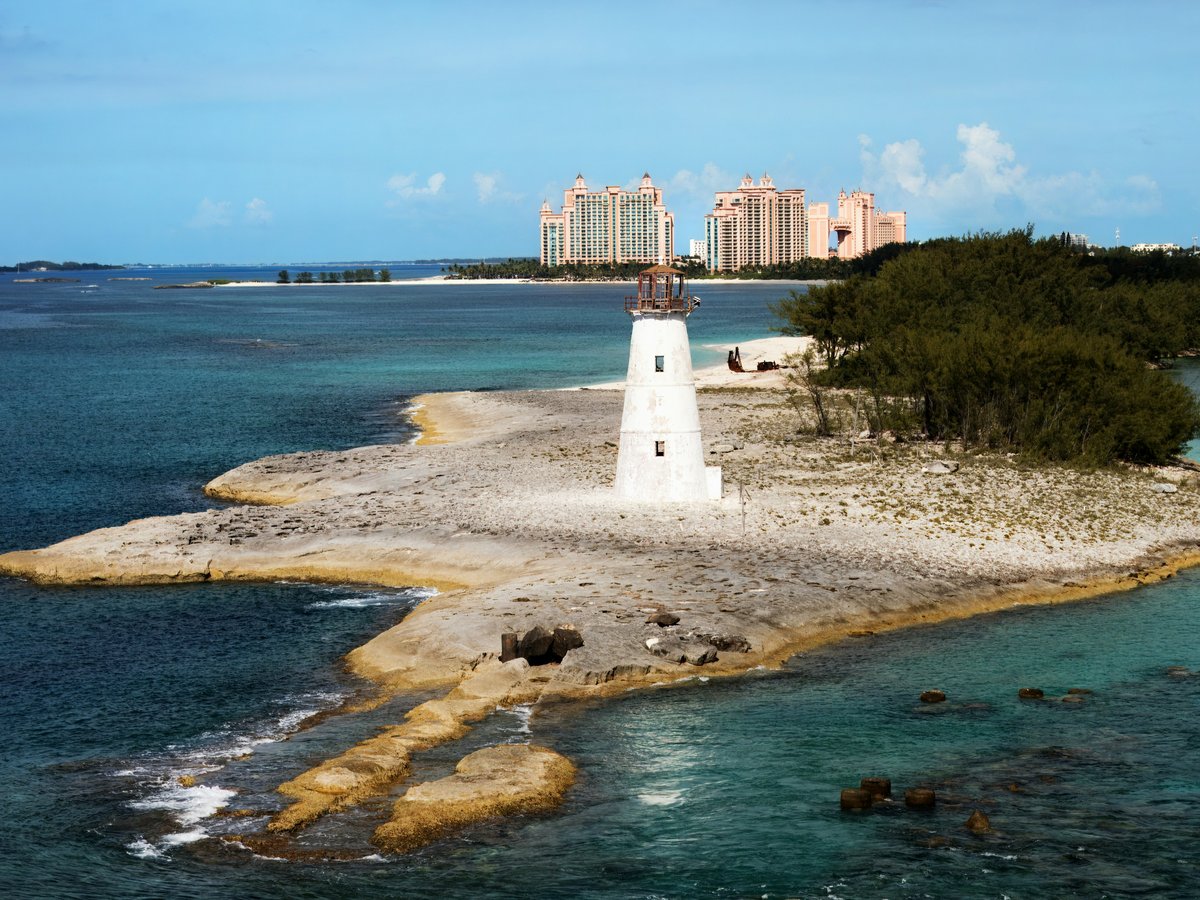
Nassau spreads along the northern coast of New Providence, a limestone island roughly 34 km long and 11 km wide. The island's highest point stands at about 37 meters, and most of the ground sits within a few meters of sea level. You won't find mountain switchbacks here. What New Providence delivers instead is warm, shallow water in a dozen shades of blue-green, pockets of native coppice forest that smell like wild sage after rain, and coral reefs within a 10-minute boat ride of the harbour. The Bahamas National Trust manages several protected green spaces across the island, preserving what the landscape looked like before resort development reached the western shore. September through November falls within hurricane season, so the best months for outdoor activity tend to be December through April, when humidity eases and afternoon squalls become less frequent. That said, even in early September, with air temperatures around 25°C and humidity near 84%, mornings before 10 a.m. are comfortable enough for a coastal walk or a paddle through the mangrove creeks south of the airport.
Outdoor activities
-
Snorkeling at Clifton Heritage National Park
Clifton Heritage National Park occupies the western tip of New Providence, about 20 minutes by car from downtown Nassau. The underwater sculpture garden features bronze figures by Bahamian artist Antonius Roberts, installed on the sandy seabed at depths of 3 to 5 meters. The water is usually clear enough to see the sculptures from the surface. You'll find natural coral heads and sea fans in the surrounding area. Park entry runs around $5 BSD for adults. Bring your own mask and fins, or rent them at the park office near the trailhead.
- Difficulty
- Easy, suitable for confident swimmers
- Duration
- 2 to 3 hours including the coastal walk
- Best season
- December through April for calmest water and best visibility
-
Deep-sea fishing charters from Nassau Harbour
The Tongue of the Ocean, a deep trench roughly 30 km south of New Providence, drops to over 1,800 meters. Charter boats depart from Nassau Harbour and the marinas along East Bay Street. Half-day trips of 4 hours typically run $600 to $900 BSD for a private boat, with mahi-mahi, wahoo, and yellowfin tuna as the main catches. Wahoo season peaks between November and March. Full-day trips push further toward the Exuma Sound. Booking at least 2 days ahead during winter months is worth the effort.
- Difficulty
- Beginner-friendly on guided charters
- Duration
- 4 hours for half-day, 8 hours for full-day
- Best season
- November through March for wahoo, year-round for mahi-mahi
-
Cycling the western New Providence coastal road
The stretch of road from Cable Beach west toward Clifton follows the coastline for roughly 12 km, passing through residential areas and out toward the quieter western communities. The road is flat, and traffic thins considerably past the roundabout at JFK Drive. You'll catch salt air off the shallow banks and pass a few roadside fruit stands selling coconut water for $2 to $3 BSD. No dedicated bike lanes exist, so ride on the left (Bahamians drive on the left) and stay alert near intersections. Rental bikes are occasionally available through hotels, but renting from an outfitter near the cruise port on Prince George Wharf tends to be more reliable.
- Difficulty
- Easy to moderate, flat terrain but road-sharing required
- Duration
- 1.5 to 2.5 hours one way depending on stops
- Best season
- December through April for lower humidity
-
Stand-up paddleboarding at Junkanoo Beach
Junkanoo Beach sits west of the cruise port on West Bay Street, a narrow strip of sand with calm, shallow water. Rental operators set up boards on the sand most mornings, charging around $25 to $40 BSD per hour. The water stays knee-deep for about 50 meters out, which makes it forgiving for first-timers. Early mornings before 9 a.m. tend to be glassier, and the beach is quieter before cruise ship passengers arrive after 10. The bottom is sandy with patches of seagrass that attract small rays and juvenile fish.
- Difficulty
- Beginner-friendly
- Duration
- 1 to 2 hours
- Best season
- Year-round, calmest conditions December through March
-
Guided nature walk through the Primeval Forest National Park
This small reserve on the southwest side of New Providence protects one of the last remaining patches of native broadleaf coppice on the island. A short loop trail winds through gumbo-limbo trees, lignum vitae, and mahogany on raised limestone karst. The air under the canopy feels noticeably cooler than the open road, and you might hear Bahama woodstars and thick-billed vireos overhead. The park is free to enter, though signage is minimal and you may need to ask locally for directions off the main road. Not much more than a 30-minute walk, but the density of native species makes it worth the detour. The last section of trail passes through older-growth coppice where the canopy closes overhead almost completely.
- Difficulty
- Easy, flat ground on rough limestone path
- Duration
- 30 to 45 minutes
- Best season
- November through April, when mosquitoes lighten up
Day hikes
-
Clifton Heritage National Park coastal trail
The coastal path at Clifton Heritage runs along limestone bluffs on the western tip of New Providence, passing through remnants of Loyalist-era plantation ruins and Lucayan archaeological sites. The trail is flat but uneven, with exposed limestone that can be sharp on thin-soled shoes. Interpretive signs mark the historical sites along the route. The full loop takes roughly an hour at a relaxed pace and ends near the beach access point where the underwater sculptures described above are visible from shore. Wear closed-toe shoes with decent grip, as the karst surface punishes sandals.
- Difficulty
- Easy, flat but rocky underfoot
- Duration
- 1 to 1.5 hours
- Best season
- December through April
-
Bonefish Pond National Park trail
The walking path at Bonefish Pond follows the edge of a mangrove creek system and tidal flats on the southern coast of New Providence, near the airport. The air smells brackish and saline, and you'll likely hear ospreys before you spot them in the buttonwood canopy. The trail is not formally maintained, so expect overgrown sections and muddy patches after rain. There is no entry fee and no facilities. This is a quiet, flat walk for birders and mangrove enthusiasts rather than a workout. The trail surface is packed sand and limestone rubble, with standing water in low sections during wet months.
- Difficulty
- Easy, flat but potentially muddy
- Duration
- 45 minutes to 1 hour
- Best season
- December through March, when trails are driest and biting insects are less intense
-
Fort Charlotte to Fort Fincastle urban walk
This roughly 3 km route connects two of Nassau's colonial-era forts through the old city. Start at Fort Charlotte on West Bay Street, built in the 1780s under Lord Dunmore, and walk east along the ridge past residential streets and uphill toward Fort Fincastle on Bennet's Hill. Fort Fincastle sits at Nassau's highest natural point, shaped like a paddlewheel steamer. The Queen's Staircase provides the final approach, 65 steps carved from solid limestone by enslaved workers in the late 18th century. The walk is on paved roads and sidewalks, with a few steep sections near the top. Both forts are free to enter, and the views from Bennet's Hill reach across the harbour to Paradise Island.
- Difficulty
- Easy to moderate, some uphill sections near Fort Fincastle
- Duration
- 1 to 1.5 hours including fort visits
- Best season
- Year-round, but start before 9 a.m. in summer months
Water activities
-
Kayaking the mangrove creeks near Lake Killarney
Lake Killarney is the largest freshwater lake on New Providence, sitting in the island's interior south of JFK Drive. Guided kayak tours launch from access points near the lake and wind through mangrove-lined creeks that connect to the southern tidal flats. The water is shallow, rarely more than a meter deep, and the mangrove roots create a lattice overhead that filters light into green patches on the surface. Green herons and yellow-crowned night herons roost in the branches. Tours typically run $65 to $90 BSD per person. The paddling is gentle, suitable for anyone who can hold a paddle upright.
- Difficulty
- Easy, calm sheltered water
- Duration
- 2 to 3 hours guided
- Best season
- November through May for drier conditions and calmer water
-
Swimming and snorkeling at Cable Beach
Cable Beach runs along the north coast of New Providence for about 3 km, west of downtown Nassau. The sand is fine and pale, the water clear and relatively calm on most days, with gentle swells from the Northwest Providence Channel. Public access points exist between the resort properties along West Bay Street. Small reef patches sit about 75 meters offshore where parrotfish and sergeant majors congregate. No rental facilities are guaranteed on the public stretches, so bringing your own snorkel gear is safer. The beach faces north, so it catches afternoon sun and tends to cool down faster after 4 p.m. than the south-facing beaches.
- Difficulty
- Easy
- Duration
- Half-day
- Best season
- Year-round, warmest water July through October
-
Reef diving with Stuart Cove's Dive Bahamas
Stuart Cove's operates from the southwest coast of New Providence, about 25 minutes by car from downtown. Two-tank morning dives visit reef walls along the edge of the Tongue of the Ocean, where the continental shelf drops from 12 meters to over 600 meters. Visibility often reaches 25 to 30 meters between December and April. Two-tank packages run approximately $130 to $160 BSD. The operation also offers shark-feeding dives with Caribbean reef sharks for certified divers, at higher rates. Water temperatures range from about 24°C in February to 30°C in August.
- Difficulty
- Intermediate, open-water certification required
- Duration
- Half-day including boat transit
- Best season
- December through April for best visibility
-
Blue Lagoon Island beach day and water sports
Blue Lagoon Island, also known as Salt Cay, sits about 5 km northeast of Nassau across the harbour. Ferries depart from the downtown waterfront several times daily, with round-trip tickets around $50 to $70 BSD including basic beach access. The island has a protected lagoon with calm, warm water suited to families and less confident swimmers. Kayak and paddleboard rentals are available on site. The lagoon's sandy bottom and lack of current make it one of the calmer swimming spots near Nassau. The island also operates dolphin and sea lion encounter programs, though these book up on cruise ship days.
- Difficulty
- Easy, calm lagoon water
- Duration
- Full day
- Best season
- Year-round, busiest December through April
Parks & gardens
-
The Retreat Garden
The Bahamas National Trust manages The Retreat, which sits on Village Road in eastern Nassau and covers about 4.5 hectares. The garden holds one of the largest private palm collections in the Caribbean, with over 170 species. Shaded gravel paths wind past royal palms, silver thatch, and several Bahamian-endemic species that are difficult to find elsewhere. The property includes the remains of a historic estate house. Entry costs around $10 BSD for non-members. The canopy blocks enough sun to make even a midday visit comfortable, and the grounds stay quiet on weekdays.
Highlights: Over 170 palm species, native orchids, historic estate ruins, shaded limestone paths
-
Ardastra Gardens, Zoo and Conservation Centre
Founded in 1982, Ardastra covers about 2.2 hectares on Chippingham Road, a 10-minute drive west of downtown. The gardens are built around tropical plantings and house roughly 135 animal species, including Caribbean flamingos trained to march on command. The horticultural collection includes bougainvillea, frangipani, and native coppice plants. Admission runs about $18 BSD for adults. The humid warmth under the tree canopy smells of damp earth and flowering ginger. Worth noting that the flamingo parades are typically scheduled three times daily at 10:30 a.m., 2:10 p.m., and 4:10 p.m., with occasional shifts.
Highlights: Caribbean flamingo marching parade, native reptile exhibits, tropical flowering gardens
-
Government House grounds
FreeThe official residence of the Governor General of the Bahamas stands on Mount Fitzwilliam, one of the higher points in central Nassau. The grounds feature manicured gardens with royal palms, mature ficus trees, and a statue of Christopher Columbus at the front steps. Public access to the interior gardens is limited, but the exterior and the uphill approach from George Street offer a view across the rooftops toward Nassau Harbour. The coral-pink colonial building is among the most photographed structures on the island.
Highlights: Colonial-era architecture, harbour views from Mount Fitzwilliam, Columbus statue, mature tropical plantings
-
Harrold and Wilson Ponds National Park
FreeThis 100-hectare wetland park on the southern side of New Providence, near the junction of Carmichael and Bacardi Roads, protects two interconnected freshwater and brackish ponds. Wading birds feed along the margins, and a raised boardwalk extends over part of the wetland to give you a vantage point without sinking into the mud. The park is free and usually empty. Mosquitoes are aggressive near dusk, so mornings are the better window. The Bahamas National Trust manages the property, though facilities remain minimal. Great blue herons and reddish egrets are the most commonly spotted species from the boardwalk during winter months.
Highlights: Wetland birding, raised boardwalk, reddish egret sightings, brackish pond ecosystems
Practical tips
- Sun protection
- Nassau sits at 25°N latitude, and the UV index reaches 10 to 12 between 10 a.m. and 3 p.m. from April through October. Reef-safe SPF 50 sunscreen is the minimum for outdoor days. Some marine parks are beginning to restrict oxybenzone-based products. A wide-brimmed hat and UV-blocking rashguard will save you from reapplication trouble on long water days. Local pharmacies on Bay Street carry after-sun products, but selection is limited on weekends.
- Hydration and heat
- Carry at least 1.5 liters of water per person for any outdoor activity over 90 minutes. Tap water in Nassau is treated and generally safe, though many locals prefer bottled water at about $1.50 to $2.50 BSD per liter from convenience stores. Heat exhaustion can develop quickly in high humidity, especially between June and October. If you feel dizzy or stop sweating, get into shade and drink immediately. Coconut water from roadside vendors replaces electrolytes faster than plain water.
- Footwear and trail conditions
- Limestone karst terrain is sharp and uneven. Closed-toe shoes with decent grip are necessary for any trail at Clifton Heritage or Bonefish Pond. Flip-flops work fine for Cable Beach or Junkanoo Beach, but they will cut your feet on inland limestone. For water shoes, neoprene reef booties with hard soles work best at the shallow snorkeling sites. After heavy rain, trails on the south side of New Providence can stay muddy for 2 to 3 days.
- Timing your outdoor day
- Start early. By 10 a.m. in summer, the combination of heat and moisture makes sustained outdoor effort unpleasant. The best window for hiking, cycling, or paddling runs from about 6:30 a.m. to 9:30 a.m. Afternoon thunderstorms are common from June through October, usually arriving between 2 p.m. and 5 p.m. and lasting 30 to 60 minutes. The squalls pass quickly, but lightning is a real concern on open water or flat exposed trails.
- Safety awareness
- Nassau's solo-traveler safety sits at 4.2 out of 10 (see the TTDI Solo-Safety Index), so exercise standard urban caution during outdoor activities. Stick to populated beaches and well-traveled trails during daylight. The areas south of Carmichael Road see less tourist traffic and are best visited with a local guide or in a group. Avoid leaving valuables visible in parked rental cars at trailhead areas. Wikivoyage's Nassau page at https://en.wikivoyage.org/wiki/Nassau#Stay_safe covers current safety concerns in more detail.
- Currency and costs
- The Bahamian dollar is pegged 1-to-1 with the US dollar, and both currencies are accepted interchangeably everywhere on the island. Most dive shops, tour operators, and rental outfits accept credit cards. Smaller beach vendors and fruit sellers prefer cash. ATMs are available along Bay Street and at the main shopping plazas on JFK Drive. Budget roughly $50 to $100 BSD per person per day for guided outdoor activities, excluding fishing charters.
FAQ
What is the best time of year for outdoor activities in Nassau?
The dry season from December through April offers the most comfortable conditions. Humidity eases, seas are calmer, and underwater visibility can reach 30 meters on the reef walls south of New Providence. Summer months bring warmer water but also afternoon thunderstorms and higher humidity that makes midday activity exhausting. Hurricane season runs from June through November, with September and October carrying the highest storm risk.
Are there real hiking trails on New Providence island?
New Providence is flat limestone, so there are no mountain trails or significant elevation changes anywhere on the island. The walking paths at Clifton Heritage, Bonefish Pond, and the Primeval Forest offer nature walks of 30 minutes to 90 minutes on level ground. The Fort Charlotte to Fort Fincastle route through old Nassau provides the closest thing to a hill walk, with a climb up Bennet's Hill. Think coastal and forest walks rather than backcountry hiking.
Is Nassau good for families wanting outdoor activities?
Nassau scores 6.8 out of 10 for family friendliness (see the TTDI Family-Friendliness Index). The calm lagoon at Blue Lagoon Island and the shallow water at Junkanoo Beach both suit young swimmers well. The flamingo parade at Ardastra Gardens consistently holds the attention of children under 10. Guided kayak tours through the mangroves near Lake Killarney work for older children without being physically demanding.
Do I need to rent a car to reach outdoor activities from Nassau?
A rental car makes the western parks and southern reserves much more accessible. Public buses, locally called jitneys, run along the main roads for about $1.25 BSD per ride, but schedules are irregular and stops near trailheads are limited. Taxis from downtown to the western end of the island cost roughly $25 to $35 BSD one way. For beach activities along the northern coast, a taxi or jitney works fine. Driving is on the left side of the road.
What snorkeling gear should I bring to Nassau?
Your own mask, snorkel, and fins will serve you better than most rental equipment, which tends to be heavily used. Reef-safe sunscreen is increasingly expected at marine sites across the Bahamas. A rashguard offers more reliable sun protection than sunscreen alone during long sessions. Water shoes help on the rocky entry points at the western parks. An underwater camera or waterproof phone case is worth packing for the seabed sculpture installations.
How hot does it get during outdoor activities in Nassau?
Air temperatures range from about 22°C in January to 33°C in July and August. The feels-like temperature runs 4 to 6 degrees Celsius higher due to humidity, which averages 75% to 85% year-round. The heat is manageable if you start activities before 9 a.m. and take shade breaks. Ocean water temperatures stay between 24°C and 30°C throughout the year, meaning the sea often feels cooler than the surrounding air during summer months.
Outdoor experiences in Nassau
 Free cancellation
 Nassau Island Highlights Sightseeing Tour
Outdoor experience: 2.5 hours, free cancellation.
via Viator Free cancellation
 Pirate Jeep Sightseeing Adventure!
Outdoor experience: 3 hours, free cancellation.
via Viator Free cancellation
 Guided ATV Nassau Tour Beach Stop Hotel Port Pickup Free Samples
Outdoor experience: free cancellation.
via Viator Free cancellation
 Fun Atv tour in Nassau with Lunch: Drivers must be 25 years old
Outdoor experience: 3 hours, free cancellation.
via Viator Free cancellation
 ATV Half Day City Tour in Nassau: Guided Tour With Free Samples
Outdoor experience: free cancellation.
via Viator Free cancellation
 Nassau Shore Excursion: Bahamas Snorkel Adventure
Outdoor experience: 5 hours, free cancellation.
via Viator Free cancellation
 3 Hour Smart Eco Segway Adventure in Nassau
Outdoor experience: 3 hours, free cancellation.
via Viator Free cancellation
 Nassau Atv Island Half-Day City Tour with Free Pick-Up
Outdoor experience: 3 hours, free cancellation.
via Viator Free cancellation
 4hr Private Tour Island Hop Snorkel w/ Turtles & Sip Bahama Mamas
Outdoor experience: 4 hours, free cancellation.
via Viator Free cancellation
 Nassau Jeep tour with Full Bahamian Lunch and Drink
Outdoor experience: 3 hours, free cancellation.
via Viator Free cancellation
 3-Hour Buggy Tour of New Providence (Inclusive of water & local deserts)
Outdoor experience: free cancellation.
via Viator Free cancellation
 Eve Boat Club
Outdoor experience: 4 hours, free cancellation.
via ViatorLast verified by automated review (v1.7.2) on . What is automated review?