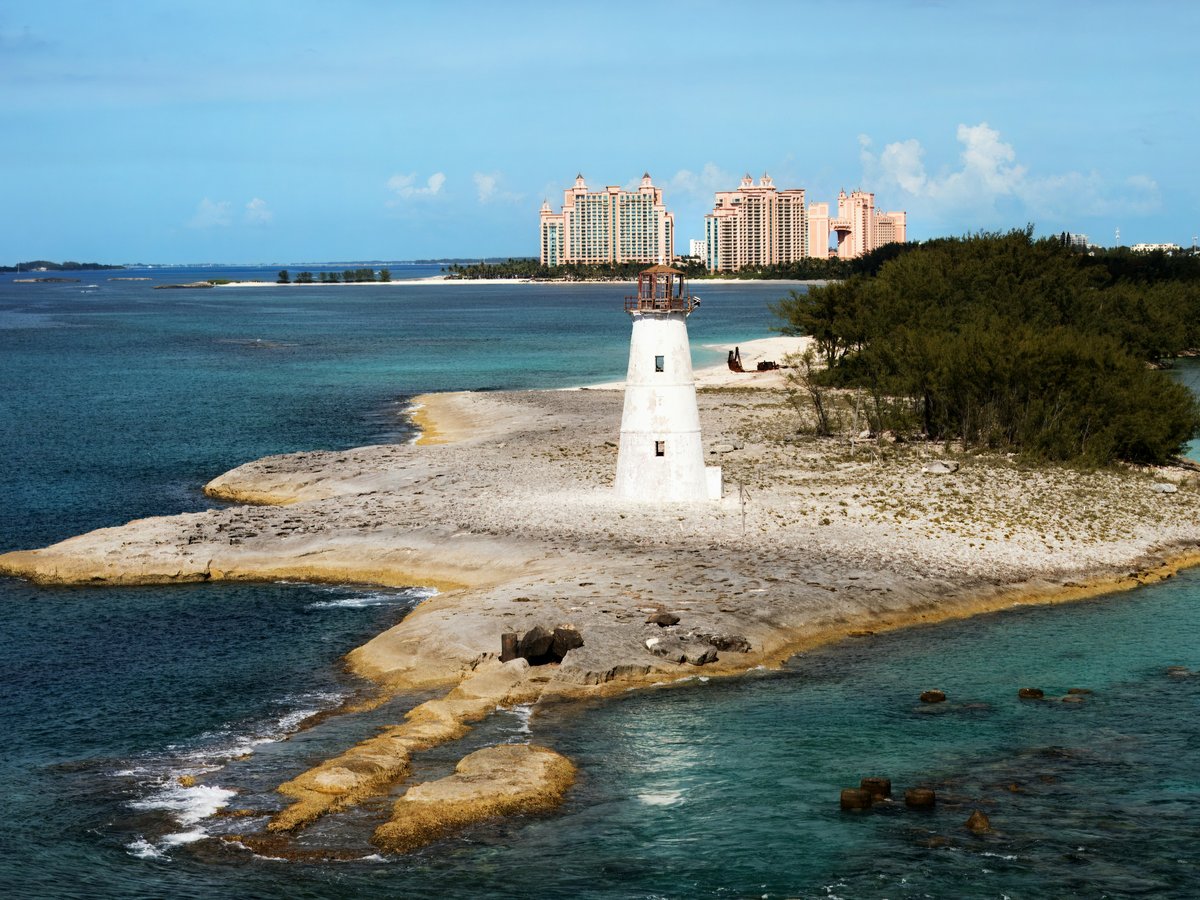
Nassau's nightlife runs on Caribbean time. Locals typically start their weekend evenings around 10 PM, and many bars stay open until 3 or 4 AM. The city spreads its after-dark scene across 4 or 5 distinct areas rather than concentrating on a single strip. Arawak Cay fills with locals and the smell of frying conch on Friday nights. Cable Beach lines up resort lounges with craft cocktails. Paradise Island draws the casino crowd. September sits deep in the off-season, with nighttime temperatures still near 25°C and humidity around 84%, so outdoor drinking means ceiling fans, covered patios, and cold Kalik. The Bahamian dollar trades at exact parity with the US dollar (1 BSD = 1 USD as of September 2026), and most venues accept either currency without hesitation. On weeknights the city goes quiet outside the resort corridors, but Friday and Saturday energy at the local spots around the Fish Fry tends to catch first-time visitors off guard.
Bars in Nassau
Nassau's bar scene splits into two distinct worlds. The resort hotels along Cable Beach and on Paradise Island serve polished cocktails in air-conditioned lounges, often with live piano or acoustic guitar in the background. Rum sits at the center of Bahamian cocktail culture. Coconut rum punches and Bahama Mama variations show up on nearly every menu. The traditional local drink is Sky Juice, a deceptively strong blend of gin and fresh coconut water finished with grated nutmeg. The coconut softens the gin enough that the strength sneaks up on you after the second round. Switcha, made from local key limes, appears in both spiked and soft versions depending on the bar. The other world is the casual open-air bar. Arawak Cay, known locally as the Fish Fry, is the clearest example. Wooden shacks and concrete-block bars line a stretch of waterfront west of downtown, and on Saturday nights the competing sound systems create a wall of bass you can feel from the parking lot. Kalik, brewed locally by Commonwealth Brewery and named for the cowbell sound heard during Junkanoo, is priced affordably at most casual spots. Sands, the other local lager, has its partisans too. Both come cold. Wine bars are scarce across Nassau. The resort properties keep decent wine lists, though markup runs steep on anything imported. Rooftop drinking is not a major part of the local culture. A few hotels offer elevated terraces with harbor views, but the drinking scene sits closer to ground level, oriented toward the water and the salt air. True dive bars exist in the streets south of Bay Street, though they cater almost exclusively to Bahamians. The waterfront bars at Arawak Cay close between 1 and 3 AM depending on the crowd that night.
Clubs and Dancing
The club scene in Nassau is small and concentrated. The largest dedicated spaces operate inside or near the major resorts, with the Atlantis complex on Paradise Island historically anchoring the big-night-out experience. A casino floor that stays active past 3 AM sets the backdrop for the evening. The dominant sound mixes dancehall, soca, and American hip-hop, with local DJs leaning heavier on Caribbean genres as the night deepens. Some Afrobeats filters in, especially during peak tourist season from December through April. Off-season nights skew more local in the playlist, which tends to mean more soca and Bahamian artists on the decks. Dress codes exist at the resort-connected venues. Men generally need closed-toe shoes, and tank tops, athletic wear, and flip-flops are prohibited at the door. Women face fewer restrictions, though beachwear after 10 PM reads as tone-deaf. Cover charges fluctuate by night and season. The largest crowds and steepest covers arrive during the Junkanoo period in late December and early January. If you show up at 10 PM, expect a half-empty room. The peak window runs from about midnight to 2:30 AM before the energy starts draining. Bottle service is available at most resort venues and tends to be the preferred option for groups of 4 or more. In September, you might find a DJ playing to 40 people in a room built for 300.
Live Music After Dark
Bahamian music runs deep, and two traditional forms anchor the sound. Rake-and-scrape builds itself around an accordion, a carpenter's saw bent and bowed for a thin metallic drone, and a goatskin drum. The rhythm is loose, almost conversational. Goombay blends calypso and African percussion patterns into something bouncier and more danceable. Both show up at informal weekend sessions around the Fish Fry and occasionally at hotel-organized cultural nights. Junkanoo is the defining cultural event of the Bahamas. The main parades run down Bay Street on Boxing Day (December 26) and New Year's Day, but the tradition bleeds into the music year-round. In the weeks before the parades, competing groups hold practice sessions called rush-outs in their home neighborhoods. The sound layers goatskin drums, cowbells, brass horns, and whistles at a volume that rattles windows two blocks away. If you happen to be in Nassau during November or December, tracking down a rehearsal through word of mouth is worth the effort. Modern Bahamian musicians blend soca, reggae, and hip-hop with local rhythms. Hotel bars book cover bands and solo acoustic performers regularly during high season, though the off-season calendar thins considerably. September is one of the quietest months for live bookings. Asking a bartender at Arawak Cay for current recommendations tends to be more reliable than searching online, since many smaller gigs get promoted by word of mouth or social media posts a day or two before the show.
Nightlife neighborhoods
-
Arawak Cay (Fish Fry)
Concrete-block bars and wooden food shacks line the waterfront, speakers stacked outside each one. The air carries fried snapper and cracked conch from the open kitchens. On weekend nights the lot fills with cars parked at angles and groups moving between stalls with beers in hand. The crowd splits roughly even between Bahamians and tourists, which gives the area a less manufactured feel than the resort zones.
- Best for
- Casual Friday and Saturday nights, groups who want food and drinks in the same spot, anyone looking to hear local music without a cover charge
-
Bay Street and Downtown Nassau
The main commercial corridor hums during the day when cruise ships dock, then quiets down sharply after 7 PM on most weeknights. The architecture around Christ Church Cathedral, which dates to 1670, gives the evening walk some historic weight. A few bars and restaurants keep later hours, but the side streets south of Bay Street darken quickly after the shops close.
- Best for
- Early evening drinks and dinner before heading to the Fish Fry or Cable Beach, visitors who want to explore before the light fades
-
Cable Beach
The resort corridor along Nassau's northern shore. The Baha Mar complex, which opened in stages starting in 2017, clusters several restaurants, bars, and a casino within walking distance of each other. The atmosphere is climate-controlled and priced accordingly. The beach stretches roughly 4 miles, and some hotel bars set up outdoor seating on the sand during dry-season evenings.
- Best for
- Couples and travelers who prefer cocktail lounges over casual bars, casino evenings, guests who want multiple options without needing a taxi
-
Paradise Island
Connected to downtown Nassau by two road bridges, Paradise Island centers on the Atlantis resort and its casino. The nightlife tilts toward scheduled entertainment, with DJ sets, themed party nights, and poolside bars. The French Cloisters, a 14th-century monastery originally imported from France, sit at the island's quieter eastern end, but the nightlife stays concentrated around the resort complex to the west.
- Best for
- Casino nights, resort entertainment, travelers who want late-night options without leaving the island
Safety after dark
Nassau scores 4.2 out of 10 for solo-traveler safety (see the TTDI Solo-Safety Index), so taking precautions after dark matters. The resort corridors at Cable Beach and Paradise Island are generally the safest late-night environments, along with the well-trafficked Arawak Cay area. The neighborhoods south of Bay Street, collectively known as Over-the-Hill, see higher crime rates and are not recommended for visitors after sunset.
Use licensed taxis rather than accepting rides from unmarked cars. Agree on a fare before getting in, or confirm the driver will run the meter. Some drivers quote inflated rates to tourists leaving bars late at night. Asking your bartender or hotel desk for a rough estimate before stepping outside gives you a useful reference point.
Keep your drink in sight at all times. The standard precautions for tourist-heavy nightlife zones apply in Nassau. Do not leave drinks unattended, and be cautious about accepting rounds from people you met 10 minutes ago. Petty theft of phones and wallets is more common in crowded settings than violent crime against tourists, but situational awareness still helps. Avoid walking alone through quiet streets between downtown and the residential areas after midnight.
LGBTQ+ travelers should note that Nassau scores 3.5 out of 10 on LGBTQ+ friendliness (sourced from TTDI's editorial rubric). The Bahamas remains socially conservative, and public displays of affection between same-sex couples may draw negative reactions, particularly outside the resort properties. The resort areas tend toward more cosmopolitan attitudes, but discretion is advisable in local neighborhoods.
Practical tips
- Tipping
- A 15% gratuity is standard at bars and restaurants in Nassau. Some venues add it to the bill automatically for groups of 6 or more. Check your receipt before doubling up. At casual bars, tipping per drink for the bartender is the norm rather than calculating a percentage.
- Cash vs. Cards
- Credit cards work at resort venues and larger restaurants. The smaller bars at Arawak Cay and around downtown often prefer cash. Both Bahamian and US dollars circulate freely, and you will likely receive change in a mix of the two.
- What to Wear
- Resort venues enforce dress codes after about 9 PM. Closed shoes for men, no athletic wear, no beachwear. The casual spots are more relaxed, but wearing a swimsuit cover-up after dark still reads as out of place. A collared shirt and closed shoes handle most situations.
- Getting Home Late
- Taxis are the main late-night transport in Nassau. Ride-sharing apps like Uber and Lyft do not operate consistently here. Your hotel front desk can call a trusted driver. Agree on a fare before you get in, and ask the hotel desk for a ballpark estimate so you know what to expect.
- Best Nights to Go Out
- Friday and Saturday are the only nights with consistent energy across the city. Weeknights are quiet outside the resort hotels. Off-season months from June through November thin the crowds further, with September among the quietest.
FAQ
What time do people go out in Nassau?
Resort bars open from around 5 or 6 PM. Locals tend to head out around 10 PM on weekends. Clubs fill at midnight and peak somewhere between midnight and 2:30 AM. Early arrivals get plenty of elbow room but not much company.
Is it safe to go out at night in Nassau?
The resort zones and Arawak Cay are generally manageable after dark. The safety section above covers the key precautions in detail. Licensed taxis, populated areas, and awareness of your surroundings go a long way. The neighborhoods south of the main commercial street are best avoided at night.
What do locals drink in the Bahamas?
The local lager is light and suits the heat. The traditional cocktail blends gin with coconut water, and the bar section above covers it in detail. Rum punches appear on every tourist menu, though the versions at casual spots tend to run stronger and less sweet than what the resort bars serve.
Do I need Bahamian dollars for nightlife?
US dollars work everywhere in Nassau thanks to the currency peg noted in the introduction. You will not need to visit an exchange counter. Bring cash for the smaller bars that do not accept cards.
Is Nassau LGBTQ-friendly for nightlife?
The Bahamas remains socially conservative, and dedicated LGBTQ+ venues are extremely rare in Nassau. The resort areas on Cable Beach and Paradise Island tend to be more cosmopolitan, but the broader social climate calls for awareness. The safety section above addresses this in more detail.
Last verified by automated review (v1.7.2) on . What is automated review?