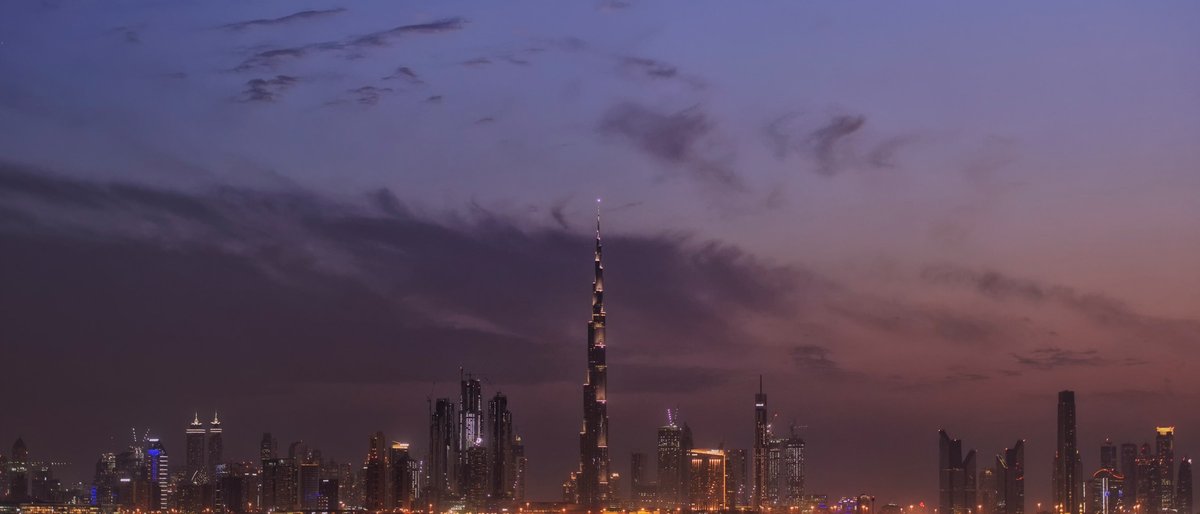
Dubai tends to confuse first-timers because it doesn't follow the typical city logic. There's no single old town that radiates outward into newer rings. Instead, the city stretches along Sheikh Zayed Road (a twelve-lane spine running roughly southwest to northeast) with distinct clusters branching off on either side. The oldest parts sit along Dubai Creek, a saltwater inlet that splits the city into Deira on the north bank and Bur Dubai on the south. From there, things get newer and shinier as you head south toward the Marina and beyond. The distances are real. Getting from the Creek to the Marina is a solid 30-minute drive without traffic, and traffic is almost always a factor. The Metro helps on the Sheikh Zayed Road corridor, but for anything off that line you're looking at taxis or ride-hailing. Worth noting: neighborhoods here can feel like entirely different cities. You'll go from the smell of cardamom and engine oil in Deira to the refrigerated air of a Dubai Mall corridor in twenty minutes. That contrast is the whole story of this place. Where you base yourself matters more than in most cities, because the commute between districts eats into your day fast. Pick the Dubai that matches what you want to do.
Neighborhoods
-
Deira
Deira is the part of Dubai that smells like somewhere. Saffron, dried limes, motor oil, freshly ground coffee: the Gold Souk and Spice Souk corridors hit you with all of it at once. The buildings are low-rise and a bit worn, the signage is multilingual, and the streets are narrow enough that the shade helps in summer. This is where South Asian, Iranian, and East African communities have traded for decades, and the commercial energy still feels genuine rather than curated. The abra stations along the Creek bring a constant flow of people crossing for a single dirham. At night, the neon from budget hotels and exchange houses gives everything a slightly cinematic glow. It's loud, a bit chaotic, and the opposite of the polished Dubai you see in marketing materials.
- Best for
- Budget travelers, food obsessives, anyone who wants to feel the grit and history of a trading port rather than a resort city
- Key streets
- Al Ras Street for the Gold and Spice Souks, Baniyas Road along the Creek waterfront, Al Rigga Street for the concentration of Indian and Filipino restaurants, Naif Road for textile wholesalers and street food
-
Bur Dubai
Just across the Creek from Deira, Bur Dubai has a similar energy but slightly more breathing room. The Al Fahidi Historical Neighbourhood (sometimes still called Al Bastakiya) is the closest thing Dubai has to a preserved old quarter: sand-colored courtyard houses with wind towers, narrow lanes, and a handful of small galleries and cafes tucked inside. It's quiet in there, which feels surreal given what's happening a few blocks away. Step outside that pocket and you're in the thick of Meena Bazaar, where textile shops and Indian sweet stores line the streets. The Hindi Temple and the small Sikh Gurdwara on the same lane are easy to miss but worth finding. The neighborhood has a worn, lived-in quality that the newer parts of the city haven't had time to develop.
- Best for
- Culture-seekers, history buffs, anyone who wants walkable streets with actual street life rather than mall corridors
- Key streets
- Al Fahidi Street along the historical district, the textile souk corridor off the Creek, Khalid Bin Al Waleed Road for electronics and budget shopping, Al Seef promenade for a slightly polished Creek-side walk
-
Downtown Dubai
This is the postcard. Burj Khalifa, Dubai Mall, the choreographed fountains: it's all here, and honestly it delivers on the spectacle even if you're skeptical going in. The scale is hard to process until you're standing at the base of the tower looking straight up. The Dubai Mall is less a shopping center and more a climate-controlled city district: you will get lost in it, and that's partly by design. Outside of the mall and tower zone, the residential streets of Downtown are surprisingly walkable, with Mohammed Bin Rashid Boulevard offering a loop with restaurants, cafes, and a view of the fountain lake. The noise level shifts dramatically: the mall area is a constant low roar of foot traffic, while the boulevard side streets go quiet after 10 PM. Everything here is expensive. That's just how it works.
- Best for
- First-time visitors who want the well-known Dubai experience close at hand, families with kids who'll burn a full day at the Aquarium and VR Park, anyone who doesn't mind paying a premium for location
- Key streets
- Mohammed Bin Rashid Boulevard for the walking loop around the fountain lake, Financial Centre Road connecting to DIFC, Al Asayel Street on the quieter south side
-
DIFC (Dubai International Financial Centre)
DIFC feels like it was designed by someone who visited a European arts district and said, let's do that but newer. The Gate Building is the architectural anchor (a massive frame structure straddling a central axis) and around it you'll find a cluster of galleries, restaurants, and bars that operate under DIFC's own regulatory framework. That last bit matters because it means the liquor licensing is different here, and the bar scene is noticeably more relaxed than in hotel venues elsewhere. The galleries in the DIFC Arts District (like the ones along Gate Village buildings 3 through 6) show interesting contemporary work from Middle Eastern and South Asian artists. During the week it's suits and finance types; on weekends the restaurants fill up with a broader crowd.
- Best for
- Art lovers, people who want a walkable restaurant and bar cluster without the beach-club scene, business travelers who want to eat well near their meetings
- Key streets
- Gate Village pedestrian walkways between buildings 1 through 11, the central promenade under the Gate Building, Happiness Street connecting to the newer extension
-
Jumeirah
Jumeirah is the long residential stretch that runs along the coast between Downtown and the Marina, and it's where a lot of long-term expat families live. The villas are set back from Jumeirah Beach Road behind walls and hedges, and the pace is slower: more school runs and beach walks than nightlife. Kite Beach and Jumeirah Open Beach are the public stretches where people swim and run, and they feel like a completely different city from the malls. The food scene along Jumeirah Beach Road has matured a lot: you'll find good Lebanese at places like Al Mallah, and the cluster around Jumeirah Town Centre and Mercato Mall has Italian trattorias and Japanese spots that cater to residents rather than tourists. The Burj Al Arab sits at the north end, visible from most of the beach strip.
- Best for
- Families with kids, longer stays where you want a neighborhood feel rather than a hotel corridor, beach lovers who'd rather swim than bar-hop
- Key streets
- Jumeirah Beach Road running the full length, 2nd of December Street (formerly Al Diyafah Street) for its dense restaurant row, the stretch around Jumeirah Town Centre and Box Park for independent cafes
-
Dubai Marina & JBR
The Marina is what happens when you build a city district from scratch around a man-made waterway. The towers are dense and tall, the promenade wraps around the marina basin, and at street level it feels like a resort that people happen to live in. JBR (Jumeirah Beach Residence) is the beachfront strip with The Walk, an outdoor retail and restaurant promenade that gets crowded on winter evenings. The beach itself is well-maintained and public, with Ain Dubai (the observation wheel, though it's been intermittently operational) visible across the water on Bluewaters Island. The food scene here skews toward chains and tourist-facing spots, but there are exceptions. The Marina Walk side is slightly more residential and less hectic than JBR. The noise level at JBR on a Friday evening is significant: street performers, restaurant music, families, all layered on top of each other.
- Best for
- Beach-focused visitors, younger travelers who want restaurants and nightlife within walking distance, anyone who prefers a modern urban-resort atmosphere
- Key streets
- The Walk at JBR for the beach promenade and outdoor dining, Marina Walk along the waterway, Dubai Marina Mall for a smaller, less overwhelming shopping stop than the mega-malls
-
Al Quoz
Al Quoz is technically an industrial area, and it still looks like one: warehouses, auto repair shops, building supply yards. But tucked into the warehouse blocks, in Alserkal Avenue, is Dubai's most concentrated arts district. Alserkal is a compound of converted warehouses housing galleries, a cinema (Cinema Akil, which screens independent and arthouse films), coffee roasters, and concept stores. The contrast is stark: you walk past tire shops and then through a gate into a whitewashed gallery showing a solo exhibition by a Lebanese photographer. It's not a neighborhood you'd stay in, but it's where creative Dubai happens. The surrounding streets smell like diesel and concrete dust. It's hot, there's minimal shade, and you need a car or taxi to get there. But if you care about contemporary art, this is the stop.
- Best for
- Art enthusiasts, people tired of malls, anyone looking for Dubai's independent creative scene
- Key streets
- Alserkal Avenue (the main compound off 8th Street / Al Quoz 1), the surrounding industrial streets have a few standalone studios and design offices worth exploring if you know where to look
-
JLT (Jumeirah Lake Towers)
JLT sits right next to the Marina but feels distinctly more residential and less polished. The towers cluster around a series of artificial lakes (currently just landscaped basins: they're not exactly lakes you'd swim in), and the ground-floor retail is a mix of salons, grocery stores, small restaurants, and laundry services. What JLT has going for it is density of affordable food. The restaurant scene here is driven by the South Asian and Filipino communities who live in the towers, and you'll find some of the best biryani, Filipino lechon, and Sri Lankan kottu in the city at prices that seem like a typo compared to the Marina next door. It's not glamorous. The towers all look roughly the same, navigation is confusing because the cluster numbering doesn't follow intuition, and the pedestrian infrastructure between clusters has gaps. But as a base, it's well-connected to the Metro and half the price of staying in the Marina.
- Best for
- Budget-conscious visitors who still want to be near the Marina and beach, food adventurers looking for authentic South and Southeast Asian cooking
- Key streets
- The ground-level retail promenades around Cluster D and Cluster V have the densest restaurant concentration, Lake Level walkways connecting the clusters
-
Business Bay
Business Bay was intended as a commercial district but ended up half-residential, half-office, and still filling in. It borders Downtown and shares the same canal waterway, but the feel is rawer: construction is still finishing on some plots, and the ground-level retail is patchy. That said, the Dubai Water Canal promenade running through it is one of the better walking routes in the city, in the evening when the tower lights reflect off the water. The restaurants along the canal are newer and still finding their footing, but some (like the cluster near Marasi Drive) have settled into a comfortable groove. Hotel prices here tend to be noticeably lower than Downtown proper despite being a 10-minute walk away, which makes it a practical base if you want proximity to the Burj Khalifa area without paying the full premium.
- Best for
- Value-minded visitors who want Downtown proximity at lower rates, business travelers, anyone who appreciates waterfront walks without the beach-resort atmosphere
- Key streets
- Marasi Drive along the Dubai Water Canal, Al Abraj Street running through the tower cluster, Bay Avenue for a small retail and dining complex
-
Al Karama
Karama is where Dubai's working middle class shops, eats, and goes about daily life. It's a grid of low-rise apartment buildings with ground-floor retail, and the Karama Market (sometimes called Karama Centre) is known for two things: cheap clothing and household goods, and a persistent reputation for counterfeit goods that the authorities periodically crack down on. The food here is the real draw. The South Indian restaurants: Kerala-style meals served on banana leaves, dosas at breakfast, fish curry at lunch: are some of the best in the city and cost almost nothing. The streets smell like mustard seeds tempering in hot oil and fresh jasmine garlands sold at the flower stalls. It's noisy, the parking is terrible, and the aesthetic is purely functional. But this is arguably the most authentic daily-life neighborhood in the city.
- Best for
- Budget travelers, food lovers seeking genuine South Indian and Sri Lankan cooking, anyone who wants to see how Dubai functions outside the tourism corridor
- Key streets
- 18th Street through the market area, Kuwait Street for the restaurant concentration, the lanes around Karama Park for the densest street life
FAQ
What is the best neighborhood to stay in Dubai for a first visit?
Downtown Dubai puts you closest to the headline sights (Burj Khalifa, Dubai Mall, the fountains) and the Metro connects you to other districts. You'll pay more for hotels here, but if you're only in town for two or three days and want to minimize transit time, it makes practical sense. The Marina is a strong alternative if you want beach access built into your daily routine, though getting to the Creek-side old town from there takes 30-plus minutes. If budget matters more than proximity to landmarks, Business Bay gives you near-Downtown location at noticeably lower nightly rates.
Is it possible to get around Dubai without a car?
Along the Sheikh Zayed Road corridor, yes: the Metro Red Line connects the airport, Deira, Downtown, and the Marina fairly efficiently. But anything off that line means taxis or ride-hailing apps like Careem or Uber, which are affordable by Western standards but add up over a week. The abra boats cross the Creek for one dirham and are still the fastest way between Deira and Bur Dubai. For areas like Al Quoz or Jumeirah Beach Road, you're essentially car-dependent. The city was designed around driving, and pedestrian infrastructure outside of designated promenades and malls ranges from limited to nonexistent.
Which neighborhoods have the best food scene in Dubai?
Depends entirely on what you're after. For high-end dining, DIFC and Downtown have the concentration of chef-driven restaurants. For the best value and most authentic cooking, Deira, Karama, and JLT are where people who live here go to eat: Pakistani, South Indian, Filipino, Sri Lankan, all at prices that seem impossible once you've seen a Marina restaurant menu. Jumeirah's 2nd of December Street has a solid mid-range Lebanese and shawarma corridor. The Marina and JBR have options but skew toward chains and tourist-priced spots, with some exceptions.
How far apart are Dubai's main neighborhoods?
The distances catch people off guard. Creek area (Deira/Bur Dubai) to Downtown is about 15 kilometers, and Downtown to the Marina is another 15 or so. In light traffic that's 15-20 minutes each leg, but during rush hour (roughly 7-9 AM and 5-8 PM) you can easily double that. The Metro covers this stretch in about 35-40 minutes end to end and avoids road traffic entirely. If you're planning to split time between the old town and the beach areas, expect to spend a meaningful portion of your day in transit unless you base yourself somewhere in the middle, like Jumeirah or Business Bay.
Is Dubai safe for walking around at night?
Generally very safe, in the main tourist and residential areas. Downtown, the Marina, JBR, Jumeirah, and DIFC are all fine for walking late at night. Deira and Bur Dubai are safe too, though they feel grittier and some of the back streets in Deira can be poorly lit. The main practical concern isn't safety but heat: from May through September, walking outdoors after dark still means 35-degree temperatures and heavy humidity. In the cooler months (November through March), evening walks along the Marina or Creek are pleasant. Mind the traffic when crossing roads, as drivers in Dubai are not always attentive to pedestrians.
When is the best time of year to visit Dubai?
November through March is when the city is it's meant to. Temperatures sit between 20 and 30 degrees, outdoor dining is comfortable, and the beach is usable all day. The tourist season peaks around December and January: hotel prices spike, restaurants book up, and the malls hit capacity on weekends. October and April are shoulder months that still work, though April afternoons start getting properly hot. June through September is the off-season for good reason: daytime temperatures regularly hit 45 degrees with humidity that makes it feel worse, and the city essentially moves indoors. You'll find steep hotel discounts in summer, but your experience will be almost entirely air-conditioned.
Last verified by automated review (v1.7.1) on . What is automated review?