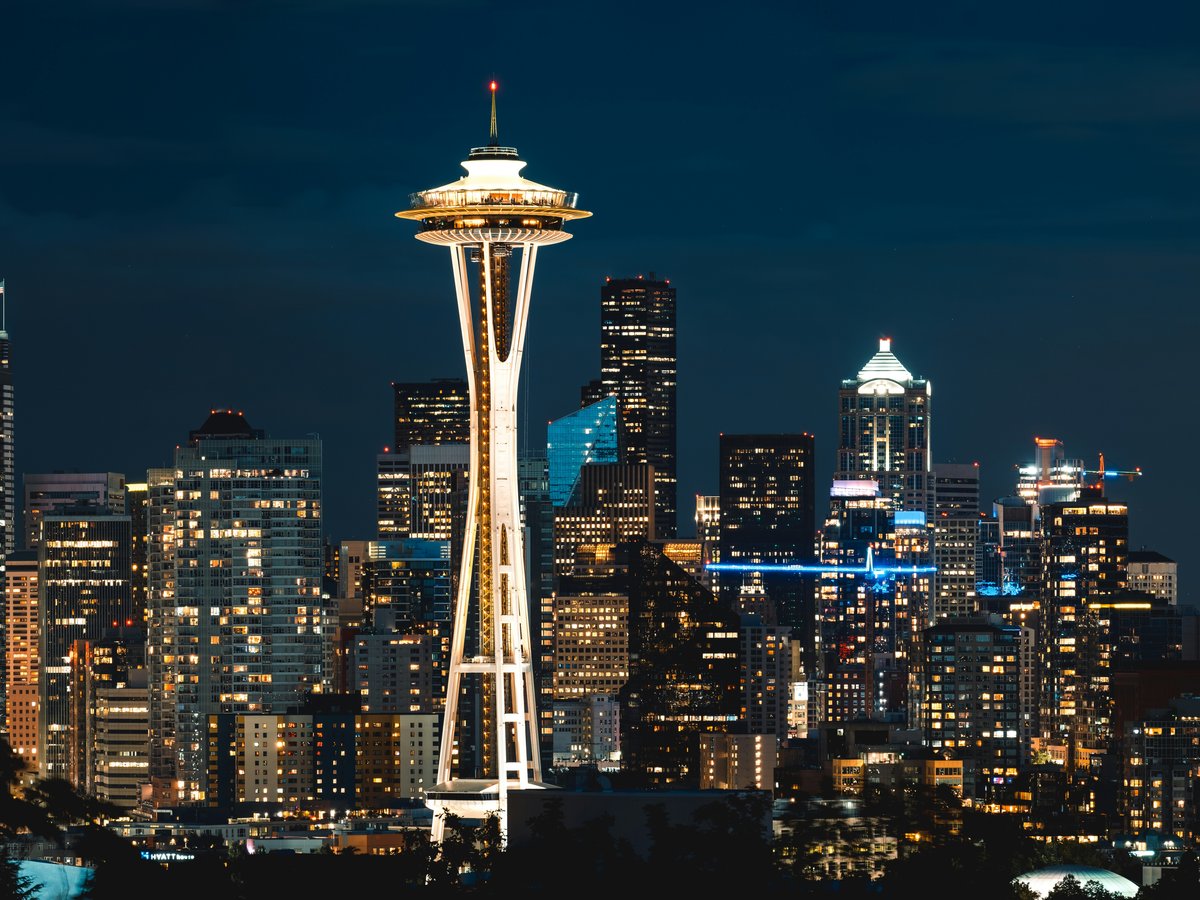
Seattle's nightlife tends to run quieter than you might expect from a city of 750,000 people. Last call hits at 2 AM across Washington state, and most bars start winding down service around 1:30 AM. The culture here leans toward craft cocktails, local beer, and live music over bottle-service clubs. You'll find people in flannel and rain jackets at the same bar as someone in a tailored blazer, and nobody blinks. The after-work crowd fills Pioneer Square and Capitol Hill patios by 5:30 PM on weekdays, but weekend nights don't really pick up until 10 PM or later. Seattle still carries the DNA of its 1990s grunge era, and that shows up in the number of live music stages per capita. The city reportedly has more live music venues per resident than any other major US metro outside Austin and Nashville. Rain keeps the rooftop bar season short, roughly May through September, but the payoff on a clear night is a view of the Olympic Mountains across Elliott Bay.
The Bar Scene in Seattle
Seattle's cocktail culture has been building since the mid-2000s, and Capitol Hill remains the densest concentration of serious drink-making in the Pacific Northwest. The neighborhood's cocktail bars tend toward dim lighting, reclaimed wood, and bartenders who will happily talk you through a 12-ingredient menu. Cocktails at most Capitol Hill or Belltown spots run at typical big-city prices, comparable to Portland or San Francisco. That said, the city hasn't lost its dive bars. Belltown still has a handful of no-frills places where a whiskey and a Rainier tallboy will set you back far less than a craft cocktail across the street. The International District holds a few bars where you might be the only tourist in the room on a Tuesday. Pioneer Square's bars skew toward an older happy-hour crowd during the week, then fill with a younger set on Friday and Saturday nights. Wine bars have been multiplying in neighborhoods like Wallingford and Fremont over the past 5 years. The natural wine movement has a strong foothold here, and you'll find orange wines and pét-nats on menus that would have been all Walla Walla Cabernet a decade ago. Washington state produces more wine than any state outside California, so local pours are everywhere. Rooftop and waterfront drinking is seasonal. From late May through September, hotel rooftops downtown and along the waterfront open their outdoor spaces. The views of Puget Sound and the mountains make the premium pricing feel reasonable, to be fair. By October, most of those spaces close or move indoors. Seattle's beer scene needs mentioning too. The city sits in a metro area with over 150 breweries, and taprooms function as neighborhood gathering spots in places like Ballard, where you can walk to 10 or more within a 15-block stretch along Leary Avenue and 14th Avenue NW.
Clubbing in Seattle
Seattle is not a club city in the way Miami or Las Vegas is. The scene exists, but it's smaller and more niche. Capitol Hill has most of the dance-oriented nightlife, with a strong lean toward house music, techno, and queer-friendly dance parties. Pioneer Square holds a few larger-capacity venues that book hip-hop, Latin, and Top 40 DJs on weekends. Belltown has some spots that blur the line between lounge bar and dance floor. Dress codes are loose by national standards. Most places won't turn you away for wearing sneakers and a flannel, though a handful of downtown and Belltown spots enforce a "no athletic wear" policy on weekend nights. Collared shirts aren't expected anywhere outside a few hotel lounges. Cover charges vary widely depending on the night and the act. Smaller dance nights on Capitol Hill might be free early in the evening and charge a modest door fee later. Larger events in Pioneer Square or SoDo warehouse spaces cost more, especially for touring DJs. The electronic music community here has deep roots going back to the late 1990s rave scene, and warehouse and after-hours events still pop up, often promoted through Instagram and word of mouth rather than traditional listings. Peak hours for clubs tend to be 11 PM to 1:30 AM. Things empty out fast after last call at 2 AM since Washington doesn't have a late-night drinking culture. Mind you, the after-hours food scene picks up the slack. Dick's Drive-In on Broadway stays open until 2 AM, and a few Capitol Hill spots serve food past midnight.
Live Music After Dark
This is where Seattle still punches hardest. The city that produced Jimi Hendrix, Nirvana, Pearl Jam, and Soundgarden maintains a live music ecosystem that's deep for its size. On any given Friday night, you might find 30 or more shows happening across the city, from 50-capacity basement stages to 2,000-seat theaters. Capitol Hill remains the center of the indie and alternative scene. The neighborhood's venues book local and touring acts most nights of the week. Tuesday and Wednesday shows tend to feature local bands with low cover charges, while weekend headliners cost more. Pioneer Square has a cluster of venues that lean toward blues, jazz, and rock. The neighborhood's First Thursday art walks often spill into the bars with live sets. Ballard has developed its own music identity over the past 10 years, with a few venues that focus on Americana, folk, and singer-songwriter acts. Georgetown, the industrial neighborhood south of downtown, hosts punk, metal, and experimental shows in converted warehouse spaces. SoDo, the commercial district between Georgetown and downtown, has larger event venues that book mid-tier touring acts and electronic shows. Jazz still has a foothold in Seattle. A few dedicated clubs operate in Pioneer Square and Capitol Hill, with regular jam sessions on weeknights. The Earshot Jazz Festival runs every October and draws international talent. For something different, the International District occasionally hosts karaoke nights that feel closer to a Tokyo izakaya than an American sports bar. The best nights for live music tend to be Thursday through Saturday. Sunday is typically quiet, though a few venues run open-mic or acoustic sessions. Worth noting, Seattle's all-ages venue tradition remains strong. Several spots run shows for under-21 crowds, a legacy of the city's punk and hardcore scenes from the 1980s and 1990s.
Nightlife neighborhoods
-
Capitol Hill
The densest nightlife district in Seattle, with a strong LGBTQ+ presence and an anything-goes atmosphere. Neon signs reflect off wet sidewalks along Pike and Pine Streets between Broadway and 12th Avenue. The crowd is young, mostly 21 to 35, and the dress code is whatever you feel like wearing. Bars and clubs sit shoulder to shoulder here, and you can hear different music leaking out of every other doorway on a Saturday night.
- Best for
- Cocktail crawls, dance nights, queer nightlife, live indie music, and late-night food on Broadway
-
Belltown
The stretch of 1st and 2nd Avenues between Pike Place Market and Denny Way has been a nightlife corridor since the 1990s. The neighborhood has cleaned up from its rougher days but still has a gritty edge after midnight. You'll find cocktail lounges next to dive bars next to late-night pizza windows. The crowd tends to be a mix of downtown hotel guests, after-work professionals, and locals who've been coming here for years.
- Best for
- After-work drinks, casual bar-hopping on foot, and late-night food runs between 11 PM and 1 AM
-
Pioneer Square
Seattle's oldest neighborhood, built in the 1890s, with brick buildings and iron pergolas that feel atmospheric after dark. The bars here tend to sit below street level in basement spaces or in converted storefronts with exposed brick walls. The energy is calmer than Capitol Hill, with more of a 30-plus crowd on weeknights. Weekend nights bring a younger mix, and the cobblestone streets fill with the hum of live blues and rock drifting out of open doors.
- Best for
- Live blues and jazz, relaxed weeknight drinks, and First Thursday art-walk bar crawls
-
Ballard
Once a Scandinavian fishing village, Ballard now has one of the highest concentrations of breweries and taprooms in the Pacific Northwest. The stretch along Leary Avenue and 14th Avenue NW feels like a beer trail, with tasting rooms every couple of blocks. The vibe is neighborhood-friendly, flannel-and-jeans casual, and the crowd skews late 20s to early 40s. On a warm Friday evening the smell of hops hangs in the air along the brewery corridor.
- Best for
- Brewery crawls, taproom-hopping, and a laid-back neighborhood feel away from the downtown crowds
-
Georgetown
Seattle's self-proclaimed "Republic of Georgetown" is an industrial pocket south of downtown with a DIY spirit. Converted warehouses host punk, metal, and experimental music on weekends. The streets are quieter than Capitol Hill, the lighting dimmer, and the crowd tends toward artists, musicians, and people who think Capitol Hill got too polished. Second Saturday art walks bring the neighborhood to life once a month.
- Best for
- Punk and metal shows, warehouse parties, and a grittier alternative to the Capitol Hill scene
-
Fremont
Fremont calls itself the "Center of the Universe" and has a quirky, slightly older nightlife crowd. The bars here lean toward neighborhood pubs and wine bars rather than clubs. It's the kind of place where you'll end up in a long conversation with a stranger over a pint of local IPA. The Fremont Troll sculpture under the Aurora Bridge sets the tone for the whole neighborhood. Quieter than Capitol Hill, livelier than Wallingford.
- Best for
- Low-key pub nights, wine bars, and a relaxed weeknight drink with a neighborhood feel
Safety after dark
Seattle is generally safe for nightlife, but a few things are worth keeping in mind. Capitol Hill and Belltown can get rowdy after midnight on weekends, so stay aware of your surroundings on quieter side streets. Rideshare apps work well across the city, and the Link Light Rail runs until around midnight on weekdays, roughly 1 AM on Saturdays. Avoid walking alone through Pioneer Square or the SoDo industrial area late at night, as those blocks empty out quickly after the bars close. Keep your phone and wallet secure in crowded venues. Seattle drivers are not always attentive to pedestrians at night, especially on the wider arterials like Aurora Avenue N and Rainier Avenue S, so cross carefully.
Practical tips
- Last call
- Washington state law sets last call at 2 AM. Most bars stop serving around 1:30 AM and start clearing out by 1:45 AM. Plan your night with this hard stop in mind, because there are no after-hours drinking spots.
- Getting around
- The Link Light Rail connects Capitol Hill, downtown, and the University District. Rideshare is widely available but expect longer wait times and higher fares between 1:30 AM and 2:15 AM when bars close. Ballard and Georgetown are easier to reach by car or rideshare than by transit late at night.
- Tipping
- Bartenders in Seattle expect tips on every round. The local norm is roughly a dollar or two per drink, or around 20 percent on a tab. Seattle's minimum wage is among the highest in the country, but tipping remains standard at bars and restaurants.
- Weather preparedness
- Seattle drizzle is real and persistent from October through April. A light waterproof layer is more useful than an umbrella for bar-hopping, since locals rarely carry umbrellas. Summer evenings can drop to 13 or 14 degrees Celsius after sunset, even when daytime temperatures reached 25 or higher.
- ID requirements
- Bars and clubs in Seattle check IDs consistently, even if you look well over 21. Bring a valid government-issued photo ID or passport. Expired IDs are routinely turned away, and most venues will not accept a photo of your ID on your phone.
FAQ
What time does nightlife start and end in Seattle?
The after-work crowd fills bar patios by 5:30 PM on weekdays. Weekend nightlife picks up around 10 PM. Last call is at 2 AM statewide, and most places clear out by 2:15 AM. There is no meaningful after-hours drinking scene.
What is the best neighborhood for nightlife in Seattle?
Capitol Hill has the highest density of bars, clubs, and live music venues in the city. It's the default choice for most visitors. Belltown works well if you're staying downtown and want to walk between spots. Ballard is best for brewery-focused evenings.
Is Seattle nightlife expensive?
Seattle sits in the mid-to-upper range for US cities. Craft cocktails and rooftop drinks carry big-city pricing, but dive bars and brewery taprooms offer more affordable options. Belltown and Capitol Hill have a wide range, so you can find something at most budgets.
Do Seattle clubs have dress codes?
Most places in Seattle are casual. Sneakers, jeans, and flannel won't get you turned away at the majority of venues. A few downtown hotel lounges and Belltown spots enforce a no-athletic-wear policy on weekend nights, but collared shirts are rarely required anywhere.
Is Seattle safe for going out at night?
Seattle is generally safe for nightlife visitors. The main nightlife neighborhoods, Capitol Hill, Belltown, and Ballard, are well-trafficked on weekend nights. Use rideshare or the Link Light Rail rather than walking through quieter industrial areas like SoDo or parts of Pioneer Square after midnight.
Can you find things to do after 2 AM in Seattle?
Drinking stops at 2 AM, but a handful of late-night food spots stay open past last call. Dick's Drive-In on Capitol Hill's Broadway is the classic post-bar stop. A few diners and teriyaki shops in the University District and Capitol Hill serve food into the early morning hours.
Last verified by automated review (v1.7.2) on . What is automated review?