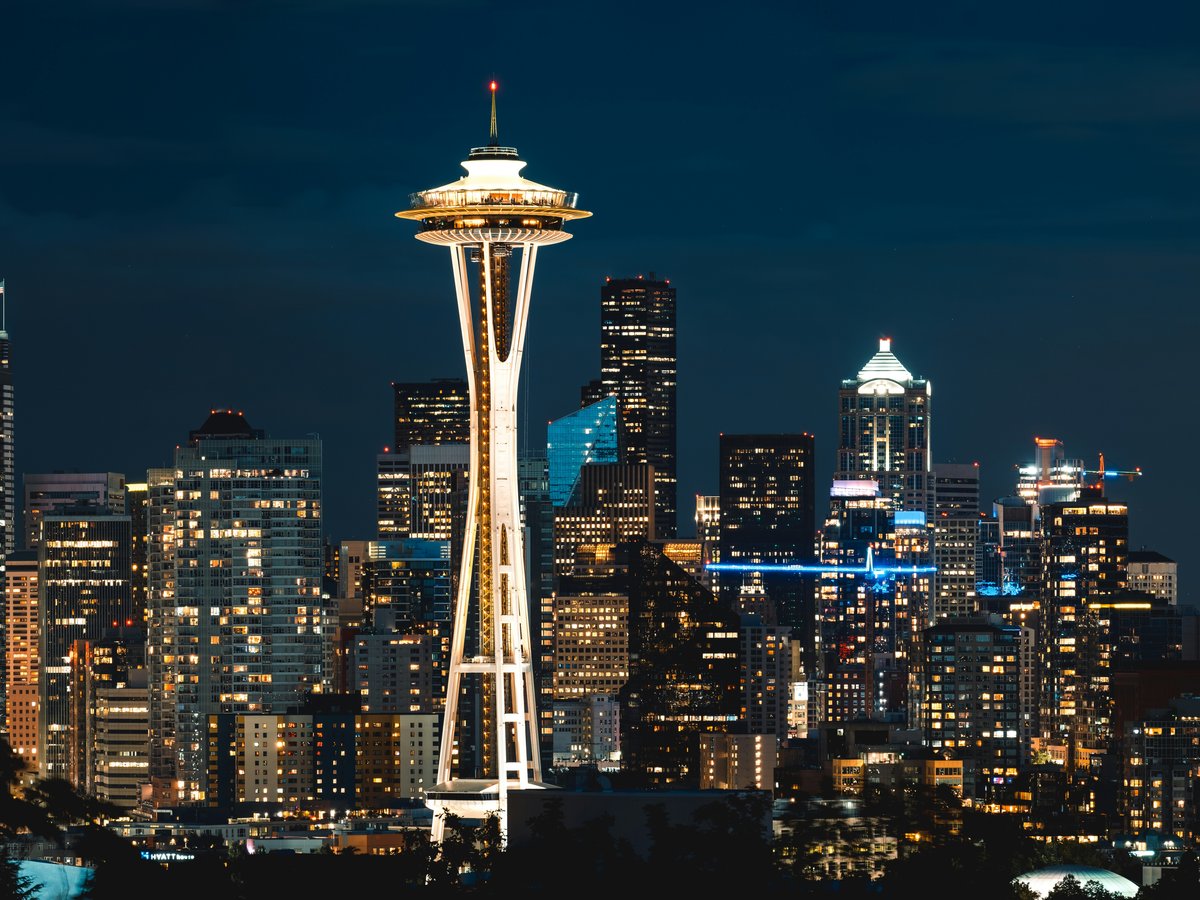
What cultural etiquette should I know for Seattle?
Seattle runs on casual politeness and the Seattle Freeze, both equally real. Tip 20% at restaurants, $1-2 at coffee shops. Nobody carries an umbrella. A rain shell from REI is the local uniform. First names from the first handshake, even in corporate settings. People are warm but slow to make friends. Don't take it personally.
The Seattle Freeze is not a myth. People at Pike Place Market will smile, hold doors, and give you clear directions to the Space Needle. They will not invite you to dinner. Personal space runs wider here than in Chicago or New York, roughly 3 feet more in any direction. Strangers on the Link Light Rail wear headphones as do-not-disturb signals. Small talk at bus stops on 3rd Avenue feels forced to everyone involved. Don't take it personally. Seattleites warm up over repeated encounters at the same Ballard brewery or the same dog park in Magnuson Park, not over a single conversation. If someone at Optimism Brewing on Broadway asks where you're from, that's real interest. But expect the conversation to end with a nod, not an exchange of phone numbers. The warmth is there. It takes 4 or 5 meetings to reach it.
Tipping runs higher in Seattle than the national average. Restaurants expect 20%, and the tablet-based checkout systems at cafes in Capitol Hill and Fremont default their suggested tip to 20% and go up to 30%. Tip the barista $1-2 per drink at Elm Coffee Roasters near Pioneer Square. Bartenders at Capitol Hill cocktail bars or Ballard taprooms get $1-2 per beer, $2-3 per cocktail. Rideshare drivers through Uber or Lyft expect 15-20%. Hotel housekeeping at places like the Edgewater on Pier 67 gets $3-5 per night left on the pillow. Seattle's minimum wage for large employers currently sits above $20 per hour, and some restaurants have adopted no-tipping models with higher menu prices. A note on the menu or a sign near the register will tell you.
Seattle runs at the most casual register of any major U.S. city outside Honolulu. A Gore-Tex shell over a flannel shirt passes at Canlis on Aurora Avenue North, where dinner runs $200 per person. Sneakers work at the Seattle Art Museum on 1st Avenue without a second glance. The damp chill off Elliott Bay from October through May means layers matter more than labels. You'll spot the tourists by their umbrellas. Locals pull on rain shells from REI, the co-op that started in Seattle in 1938, and accept the drizzle as background noise. The sound of light rain on a nylon hood is the city's ambient soundtrack from November to April. Canlis requests business casual. The Walrus and the Carpenter in Ballard does not care if your boots are still muddy from a morning on Rattlesnake Ledge.
The original Starbucks at 1912 Pike Place draws a line that wraps around the corner on summer weekends. That's the tourist line. Locals drink at Victrola Coffee Roasters on Capitol Hill, where the smell of fresh-roasted beans hits you from the sidewalk, or at a Fremont corner shop with 4 tables and no sign. They take their single-origin pour-overs seriously. Don't ask for flavored syrup at a specialty roaster. Order a 12-ounce drip or a cortado, and you'll taste the difference a $22-per-pound Kenyan roast makes. Splitting the check at dinner is standard in Seattle. Servers won't blink. Food allergies and dietary restrictions get real accommodation here. Menus at Plum Bistro on 12th Avenue list every allergen. Asking about ingredients is welcome, not a burden. Copper River sockeye has a season, roughly May through June, and restaurants will tell you when it arrives.
Seattle sits on Duwamish land, and land acknowledgments open events from concerts at Seattle Center to readings at Elliott Bay Book Company on 10th Avenue. Chief Si'ahl, the city's namesake, appears in statues and street names throughout the metro area. The Duwamish Longhouse and Cultural Center at 4705 W Marginal Way S is open for visits on weekdays. Treating Indigenous history as background decoration rather than a living culture is the cultural misstep locals notice most. Don't refer to the Duwamish, Muckleshoot, or Tulalip nations in the past tense. They are active communities with current political presence in King County. On a lighter note, never suggest that Portland does anything better. And if you call the mountain Mount Rainier around old-timers, some may correct you to Tahoma, its Puyallup name. The 14,411-foot peak is visible from Kerry Park in Queen Anne on clear days, where you'll hear both names in the same conversation.
Cultural norms
Seattle runs on friendly informality. A smile and "hey, how's it going" serves as a greeting almost anywhere, though locals rarely expect more than a one-word answer. Physical contact beyond a handshake is uncommon: hugging is reserved for close friends. The "Seattle Freeze" means people are polite but slow to warm; don't mistake a brief conversation for an invitation to exchange numbers. Dress is casual year-round: Gore-Tex shells and sneakers are acceptable even at restaurants like Canlis, though that spot expects a collared shirt. Churches like St. James Cathedral welcome visitors but expect covered shoulders during services.
On public transit, particularly the Link light rail, keep your voice low and avoid occupying priority seating near the doors. Seattleites queue in orderly lines at bus stops and will notice if you cut. Standing on the left side of an escalator (blocking walkers) draws visible irritation, especially at University Street Station during commute hours.
Tipping is expected: twenty percent at restaurants, a dollar per drink at bars, a few dollars for rideshare drivers. Card payment is standard everywhere; some coffee shops, including many small roasters, are cashless entirely. The surest way to offend a local is to confuse Seattle with Portland or to disparage the city's coffee by praising a chain: ordering Starbucks inside an independent café is a recognized faux pas.
Greetings
A casual 'hey' or 'hi there' works everywhere in Seattle. First names from the first handshake, even in meetings at Amazon's South Lake Union campus. On the Burke-Gilman Trail, a quick nod or half-smile to passing joggers is expected. Skip 'sir' and 'ma'am.' Too formal for a city where fleece counts as business attire.
Don't do this
- Don't carry an umbrella if you want to blend in. A rain shell is the local uniform in Seattle. An umbrella in the city's crosswinds marks you faster than a fanny pack.
- Don't throw food scraps in the trash. Seattle's composting ordinance has been mandatory since 2015, and sorting into compost, recycling, and landfill bins is expected at restaurants and public waste stations.
- Don't block the bike lanes on 2nd Avenue downtown or the Burke-Gilman Trail. Cyclists will call you out, and the city sides with them.
- Don't stand on the left side of escalators at Westlake Station or University of Washington Station on the Link Light Rail. Left is for walking.
- Don't honk your car horn on Seattle streets unless there's actual danger. Drivers here are passive, and horn-honking is considered outright aggressive.
- Don't cut the line at Dick's Drive-In on Broadway. The queue has been part of the ritual since 1954, and regulars will notice.
- Don't talk on speakerphone on public transit, at coffee shops, or in the Central Library on 4th Avenue. Seattle has a strong quiet-public-spaces expectation.
- Don't tell locals you prefer Portland. The sibling rivalry between the two cities, 175 miles apart on I-5, runs deeper than visitors expect.
Tipping
Restaurants 20%, coffee shops $1-2 per drink, bars $1-2 per beer and $2-3 per cocktail. Rideshares 15-20%. Leave $3-5 per night for hotel housekeeping. Some Seattle restaurants have gone tip-free with higher menu prices. Check the menu for a note.
Dress code
Layers and a rain shell, never an umbrella. Sneakers pass everywhere except Canlis on Aurora Avenue North, which requests business casual. Gore-Tex is formalwear here. Even the Seattle Symphony crowd at Benaroya Hall skews toward dark jeans and clean boots.
Religious norms
Seattle ranks among the least churchgoing metros in the U.S., with around a third of metro-area adults reporting no religious affiliation. Remove shoes when entering Buddhist temples in the Chinatown-International District. Land acknowledgments of the Duwamish people open most public gatherings, from city council meetings to concerts at Seattle Center. Respect them as civic practice, not performance.
Last verified by automated review (v1.7.2) on . What is automated review?