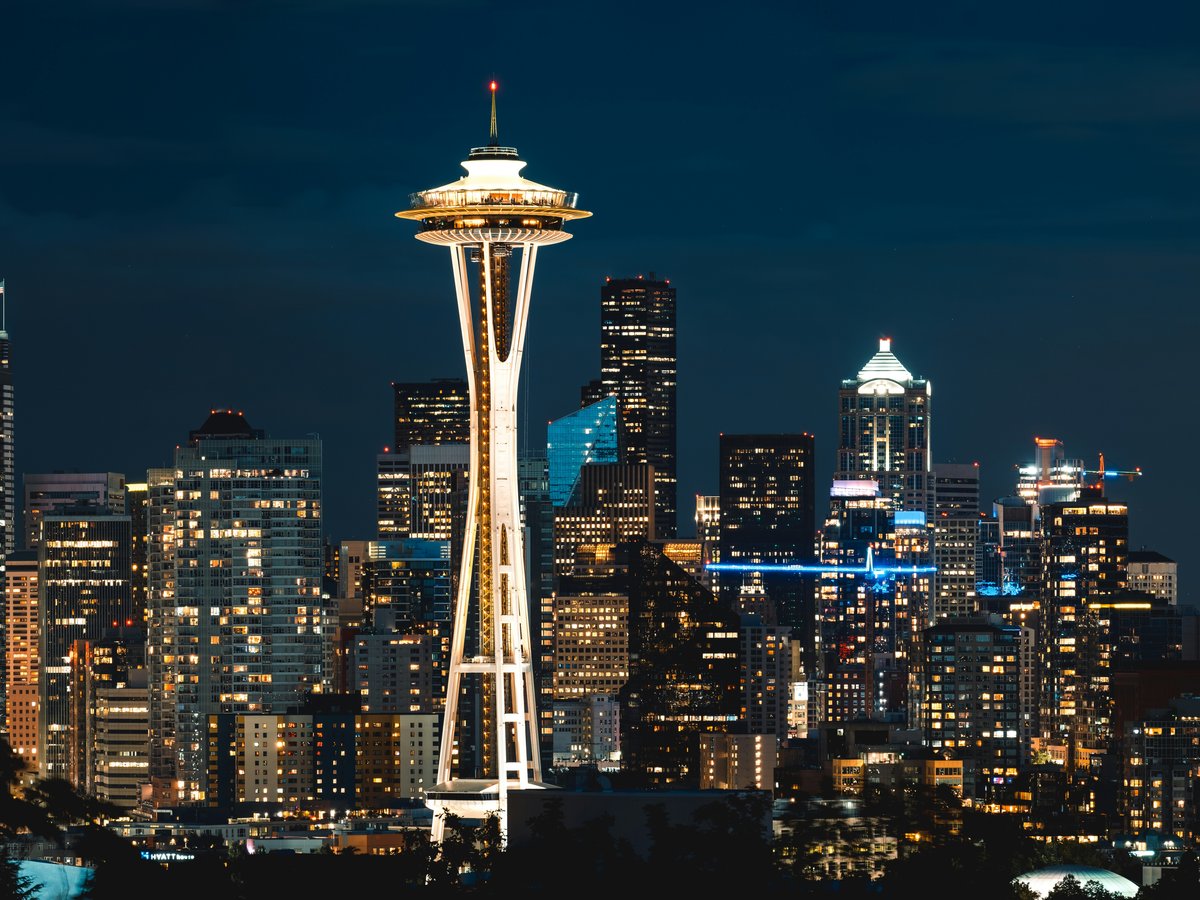
Best Time to Visit Seattle, by Season
Seattle's weather swings from 7.8°C January greys to 25.3°C July highs. This guide maps every month against the trade-off between sunshine, tourist density, and what you'll pay, then names the single best window for each kind of traveller.
Published · Updated
1 December Through February Drops to 8°C, and the Crowds Drop With It
The wind off Elliott Bay in January carries the smell of wet concrete and roasting coffee from the waterfront shops. It's cold, though not in the way you might fear. Seattle's January averages 7.8°C for a high and 2.5°C overnight, a damp chill that seeps through your jacket more than it stings. February barely budges at 7.9°C highs and 2.4°C lows. December sits at 8.1°C and 3.8°C, the warmest of the three by a fraction nobody feels.
What makes this worth considering is price. Seattle's peak-season pricing collapses between December and February. The same hotel room that fills instantly in July sits available at discounted winter rates, and you'll walk into restaurants that would need a reservation weeks out in August. Pike Place Market smells the same in January, fish and flowers and old wooden beams, but you'll have space to stop and browse the stalls instead of shuffling behind tour groups.
The trade-off is honest. Daylight is short. The rain between December's 8.1°C afternoons and January's 2.5°C nights isn't the dramatic downpour of Seattle myth. It's a fine mist that never quite stops, and by week two the grey wears on you. Outdoor attractions lose their pull when the high hasn't cracked 8°C by noon.
This is a window for budget-conscious visitors who came for Seattle's food, its coffee, and its indoor culture without the summer markup. If you're picking among the three months, February's 7.9°C beats January's 7.8°C by a rounding error, but February runs shorter, which tightens a budget trip. December draws visitors for holiday lights, but expect the densest grey of the year at 3.8°C overnight lows and the highest accommodation demand of the winter quarter.
2 March Breaks 10°C and April Reaches 13.4°C Before the Crowds Arrive
You can smell the cherry blossoms from the parking lot at the University of Washington quad in late March, a sharp sweetness that cuts through leftover winter damp. March in Seattle averages 10.9°C for a high and 4.0°C at night, a 3°C jump from February's 7.9°C that you feel on the first sunny afternoon. April accelerates to 13.4°C highs and 5.6°C lows, warm enough to sit outside at a cafe without regretting it.
The spring months are the shoulder season Seattle tourism hasn't fully priced in yet. Flights and hotels sit between winter's floor and summer's ceiling, and most attractions operate without queues. The gamble is consistency. March swings between days near its 10.9°C average and grey stretches where the thermometer stalls nearer February's 7.9°C. April is more reliable but still brings cold snaps, with the 5.6°C low reminding you that spring here starts cautiously.
What you gain is a city waking up. Rain still falls, but it comes in shorter intervals with longer breaks of pale sunlight, not the unbroken grey blanket of December's 8.1°C weeks. The light changes. You can walk from Fremont to Ballard along the Ship Canal at 13.4°C without needing to duck indoors.
The shoulder calculus favors April for most visitors. That 13.4°C average high is comfortable for a full day on foot. The 5.6°C overnight low means a jacket after sunset, not thermal layers. March at 10.9°C is better suited to travelers who want low-season pricing and don't mind layering up. To be fair, both months beat the winter trio on every metric except cost, and neither carries summer's booking pressure. April's 13.4°C sits 11.9°C below July's 25.3°C peak, but that gap buys you a quieter, cheaper city.
3 May Is the Month Seattle Locals Would Rather You Didn't Know About
The air at Gas Works Park on a May afternoon has that particular quality of sun-warmed grass with a breeze off Lake Union that carries diesel and fresh water. May's average high reaches 17.3°C with overnight lows of 9.0°C. That 9.0°C floor means evenings are comfortable in a light jacket, not the fleece you needed in April at 5.6°C.
The jump from April to May is the single largest month-over-month temperature gain in Seattle's year. April's 13.4°C to May's 17.3°C is a 3.9°C leap, and you feel every degree. Outdoor dining becomes the default along Lake Union. Kayak rental shops on the Ship Canal hit their stride. The combination of 17.3°C warmth with shoulder-season pricing creates what might be the best value window of Seattle's year.
This is the month where the budget-quality equation tips hardest in the visitor's favor. May sits before the true peak that starts in June at 21.2°C, when school holidays and cruise ships converge on the city. Hotels and flights still carry shoulder pricing, but the weather has already outpaced the autumn mirror month. October, Seattle's fall shoulder, reaches only 15.4°C. May's 17.3°C beats it by 1.9°C, with longer daylight and greener surroundings.
The catch is rain. May is drier than winter but not the near-desert of July and August. You'll see grey mornings that burn off by noon, and the occasional full grey day that recalls March at 10.9°C. But 17.3°C with a shower beats January's 7.8°C with the same drizzle. For couples and solo travelers, May's 17.3°C highs and 9.0°C lows sit in the exact band where everything outdoors works and the city hasn't yet filled with the summer wave that arrives with June's 21.2°C.
May's 17.3°C highs and 9.0°C lows sit in the exact band where everything outdoors works and the city hasn't yet filled with summer.
4 June at 21.2°C Is When Seattle Finally Looks Like the Postcards
The scent of grilled salmon drifts across the Ballard waterfront in early June and mixes with salt air off the Ship Canal. June marks the true start of Seattle's dry season, when the grey ceiling lifts and Mount Rainier appears from unexpected angles across the city. The average high reaches 21.2°C with an overnight low of 12.2°C.
That 21.2°C is a meaningful jump from May's 17.3°C, nearly 4°C in a single month. It's also where the pricing shifts. June draws the first wave of summer visitors, the ones who booked months ahead to guarantee clear weather. Flight prices climb. Hotels that offered shoulder rates in May start charging peak-season numbers.
Mind you, June's 21.2°C is comfortable, not hot. You won't sweat on the hills of Capitol Hill or Fremont, which makes it arguably better than July at 25.3°C for trips where you plan to walk all day and shade is intermittent. The 12.2°C overnight low means dinner outdoors without shivering, something April at 5.6°C couldn't offer and even May at 9.0°C made questionable past nine in the evening.
The case against June is value. You pay summer prices for temperatures that September at 21.0°C matches within 0.2°C, with September carrying fewer visitors. If your travel dates are flexible, September delivers the same 21°C days with breathing room. If your dates are fixed to June, the first two weeks tend to carry slightly lower rates than the back half, when July's surge starts building.
At 21.2°C, June sits 4.1°C below July's 25.3°C ceiling. That is either a compromise or a feature depending on whether you consider 25°C days a selling point or an inconvenience on a walking trip. The 12.2°C overnight low is the warmest night of the non-summer months. Only July at 14.7°C, August at 15.3°C, and September at 13.0°C run warmer after dark.
5 July Peaks at 25.3°C, and So Do the Hotel Bills
Step off a ferry at Colman Dock in July and you feel the heat before you see the skyline. Warm concrete, dry air, and reflected glare off Elliott Bay. After eight months of damp and grey, Seattle at 25.3°C feels like a different city. The overnight low sits at 14.7°C, warm enough to sleep with a window open and walk the waterfront after dinner without a jacket. August runs nearly identical at 25.0°C highs and 15.3°C lows, marginally cooler by day and slightly warmer at night.
This is the Seattle that the tourism industry sells. Blue skies over the Olympic Mountains. Kayaks on Lake Union. The question isn't whether July and August deliver on weather, because they do. The question is whether they deliver enough more than June at 21.2°C or September at 21.0°C to justify what you'll spend.
July's 25.3°C and August's 25.0°C sit roughly 4°C above June and September's near-identical 21°C band. For swimming at Green Lake or Madison Park Beach, that 4°C gap matters. For walking, food tours, and neighborhood exploring, the 21°C months are arguably better because you won't overheat on Capitol Hill's slopes at 2 PM.
Hotel rates in July and August climb well above what May or September command. Popular viewpoints at Kerry Park fill by early evening. Worth noting, August's 15.3°C overnight low is the warmest night of Seattle's entire year, which makes it the single best month for anyone who plans time outdoors after dark.
If you specifically need guaranteed warm weather, July's 25.3°C is Seattle's annual ceiling. If you want similar conditions with thinner crowds, the final weeks of August at 25.0°C tend to ease as families shift back to school schedules. June at 21.2°C is the budget compromise that still feels like summer, running 4.1°C cooler than July but well above May's 17.3°C.
6 September Quietly Outperforms June by Almost Every Measure
There's a quality to September light in Seattle that photographers talk about. The sun sits lower over the Olympics and casts long shadows across the waterfront by five in the afternoon. The air still carries summer's residual warmth. September averages 21.0°C for a high and 13.0°C at night, numbers that are functionally identical to June's 21.2°C and 12.2°C.
Look at those figures twice. September's 21.0°C versus June's 21.2°C is a 0.2°C difference, the width of a rounding error. The overnight lows tell a similar story. September's 13.0°C against June's 12.2°C is a 0.8°C gap, and it favors September. September nights are the warmer of the two. For any activity that depends on temperature, the two months are interchangeable.
Where September wins is everything surrounding the thermometer. The summer wave has broken. Hotels move back toward shoulder pricing. Restaurants have breathing room. You can walk the waterfront on a 21.0°C afternoon and pass a fraction of the people who were there in July at 25.3°C or August at 25.0°C.
The one risk is autumn's leading edge. Seattle's drop from September's 21.0°C to October's 15.4°C is 5.6°C, the steepest month-over-month decline in the city's year. If your trip lands in late September, you might catch that slide starting. But September proper, at 13.0°C overnight lows and 21.0°C days, delivers summer weather on an autumn budget.
This is the month for first-time visitors who want Seattle outdoors without competing for space. June at 21.2°C runs the same temperature but carries early-summer pricing. September at 21.0°C carries the quiet of a city that has settled back into rhythm. The 13.0°C lows allow comfortable evening walks, and the 21.0°C highs give an 8.0°C daily range that keeps both daytime and after-dark plans on the table.
September's 21.0°C versus June's 21.2°C is a 0.2°C difference. September nights are the warmer of the two.
7 October and November Are the Last Clear Window Before Five Months of Grey
Damp leaves on the sidewalks around Volunteer Park in October, the smell of woodsmoke and espresso from the cafes along 15th Avenue. October in Seattle is autumn done well when the weather cooperates. The average high reaches 15.4°C with a 9.2°C overnight low, still mild enough for a full day outside with the right layers.
October mirrors May in interesting ways. May's 17.3°C and October's 15.4°C sit within 1.9°C of each other, and both occupy that shoulder zone between comfortable and cold. The difference is trajectory. May warms toward June's 21.2°C. October falls toward November's 10.3°C and the long grey plateau of winter. That downward pull colors the experience. By late October you can feel December's 8.1°C approaching in the shortened daylight and the bite after sunset when the temperature slides toward 9.2°C.
November settles the question. At 10.3°C highs and 5.5°C lows, the city has returned to its cool-weather default. November is nearly March's twin. March averages 10.9°C and 4.0°C, making November the fractionally cooler of the pair. But November comes with heavier skies, shorter light, and a sense of closing down rather than opening up.
For travelers considering the October window, the first half of the month tends to track closer to the 15.4°C average while the second half leans toward November's 10.3°C. October works well for visitors who want fall color, quieter trails before snow closes the higher passes, and hotel rates that have dropped from the summer peak. November is a harder sell unless you're drawn to Seattle's indoor culture and restaurants that are easier to book when the tourists have left.
The drop from October's 15.4°C to November's 10.3°C is 5.1°C, a full season compressed into 30 days. That makes October a narrow target. Arrive in the first week and you catch the 15.4°C days at their best. Wait until the final week and you're living November's 10.3°C with steadier rain.
8 Budget Travellers Want February, Families Want July, and Everyone Else Wants September
Step out of your hotel on a September morning in Seattle and the city sounds different. The summer crowds have thinned. The waterfront smells of salt and damp timber instead of sunscreen. That shift tells you something about timing, and the temperature data confirms it.
Budget travelers with flexible schedules should target February. At 7.9°C highs and 2.4°C lows, the weather demands layers and indoor plans, but Seattle's food scene, museums, and coffee culture cost the same in February as in July. February is short, which tightens a budget trip, and competition for hotel rooms sits at its annual low. If February's 2.4°C nights feel too bleak, May at 17.3°C and 9.0°C is the next-cheapest month with genuinely pleasant weather.
Families with school-age children are pinned to July and August. July's 25.3°C highs and 14.7°C lows give the widest outdoor window. August at 25.0°C and 15.3°C is functionally identical and may thin out in its final weeks. Between the two, August's warmer overnight low of 15.3°C edges out July's 14.7°C for families staying out past sunset.
Couples and solo travelers have the widest field, and September is their answer. At 21.0°C highs and 13.0°C lows, the weather matches June's 21.2°C and 12.2°C within a fraction of a degree, with lower prices and fewer visitors. If September doesn't work, May at 17.3°C and 9.0°C is the spring equivalent, cooler by 3.7°C but equally uncrowded.
Outdoor enthusiasts chasing hiking and long daylight should book between late June and early September, when highs range from 21.0°C to 25.3°C and rain all but vanishes. The sweet spot is late July, when 25.3°C highs and 14.7°C lows combine with the year's longest evenings.
The month to avoid is November. At 10.3°C and 5.5°C, it delivers winter cold without winter pricing, because December's holiday demand hasn't arrived. January at 7.8°C and 2.5°C is colder but cheaper. If November is your only option, shift into October's 15.4°C or forward into December at 8.1°C with holiday lights to compensate.
Budget travelers want February. Families want July. Everyone else wants September.
Last verified by automated review (v1.7.0_onboard-seattle-flagship-2026-06-19) on . What is automated review?