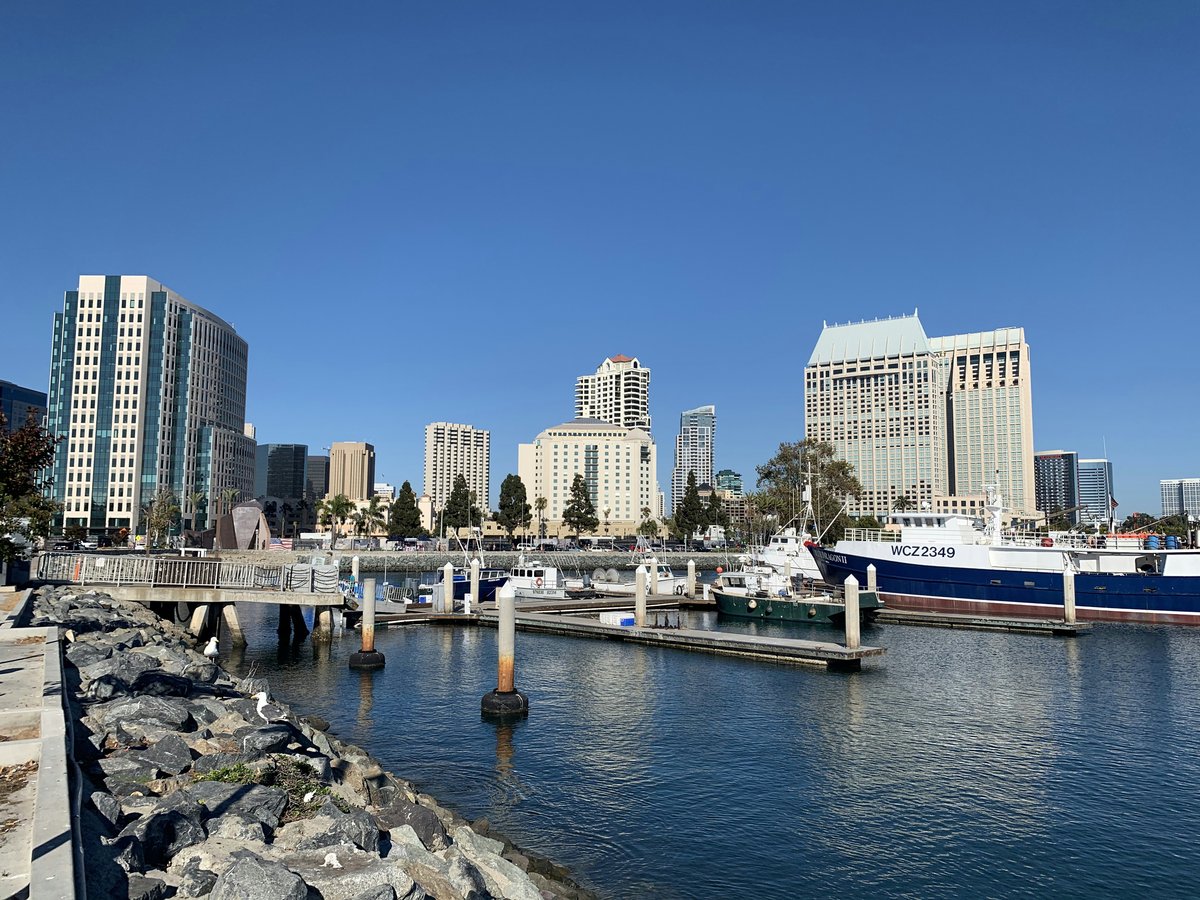
San Diego sits on a narrow coastal shelf between the Pacific Ocean and the Laguna Mountains, with elevations running from sea level to over 1,800 meters within 90 minutes of downtown. The climate is Mediterranean semi-arid. Average annual rainfall hovers around 260 mm, nearly all of it falling between November and March. Summer humidity can still surprise you, though. Right now, mid-August, conditions are overcast at 21.4°C with 88% humidity, which is typical of the marine layer that tends to blanket the coast through morning before burning off by noon. The city scores 9.5/10 for family friendliness (see the TTDI Family-Friendliness Index), and that tracks with what you'll notice on the ground. Trails, tide pools, and public beaches are well-maintained and accessible. Torrey Pines, Mission Bay, and the Cuyamaca backcountry each feel like different ecosystems entirely, yet none is more than an hour's drive from the Gaslamp Quarter. Worth noting, San Diego County contains roughly 190 miles of coastline, and the terrain shifts from salt marsh at the estuaries to chaparral-covered mesas to oak and pine forests in the eastern mountains. That range is the city's real outdoor personality.
Outdoor activities
-
Mountain Biking at Mission Trails Regional Park
Mission Trails Regional Park covers over 23,000 hectares of chaparral and grassland in the eastern part of the city. The trail network includes roughly 65 miles of multi-use paths. The North Fortuna loop, about 8 miles round trip, climbs through sage scrub with loose rock sections that keep things interesting. You'll smell wild buckwheat and black sage on the exposed ridgelines. Intermediate riders might prefer the Oak Canyon trail for its shadier, more technical singletrack.
- Difficulty
- Moderate to difficult depending on route
- Duration
- 2-4 hours
- Best season
- October through May, when temperatures on exposed ridges stay below 30°C
-
Rock Climbing at Mount Woodson
Mount Woodson, roughly 50 km northeast of downtown near Poway, is the most popular climbing area in the county. The granite boulders and faces range from V0 to V10 for bouldering, with top-rope routes in the 5.6 to 5.12 range. The rock is coarse-grained granodiorite, grippy but rough on skin. You'll hear woodpeckers hammering away in the surrounding oaks. Weekends get crowded at the main wall, so aim for a weekday session if you can.
- Difficulty
- Beginner to advanced, route-dependent
- Duration
- Half day
- Best season
- November through April, when the granite isn't scorching to the touch
-
Surfing at Black's Beach
Black's Beach, below the Torrey Pines cliffs, is San Diego's most consistent surf break. The reef-sand bottom produces hollow waves that tend to hold shape at 1 to 2.5 meters. Access is steep. The trail down from the Gliderport drops about 90 meters over rough switchbacks, and you'll carry your board the whole way. The salt spray and kelp smell hit you about halfway down. Summer south swells and winter northwest swells both work here, though winter brings larger and less predictable sets.
- Difficulty
- Intermediate to advanced (strong currents, cliff access)
- Duration
- 2-4 hours including the hike in
- Best season
- September through February for consistent swell
-
Paragliding at Torrey Pines Gliderport
The Torrey Pines Gliderport has been an active launch site since the 1930s, perched on the 100-meter cliffs above Black's Beach. Tandem flights with USHPA-certified instructors typically run $175 to $250 for 20 to 30 minutes of airtime. The thermal lift off the sandstone bluffs is remarkably reliable on afternoons with onshore winds. You'll see pelicans at eye level. Not every day is flyable, so call ahead.
- Difficulty
- No experience needed for tandem flights
- Duration
- 20-30 minutes airtime, plus briefing
- Best season
- April through October for most consistent onshore thermals
-
Trail Running in Los Penasquitos Canyon Preserve
Los Penasquitos Canyon Preserve stretches about 11 km through a riparian corridor between Rancho Penasquitos and Sorrento Valley. The main out-and-back trail follows a creek bed with a small waterfall about 5 km in. The terrain is mostly flat, packed dirt with a few rocky stream crossings. You'll hear red-tailed hawks overhead and might spot mule deer in the early morning. The canyon walls block wind, so it stays warmer than you'd expect.
- Difficulty
- Easy to moderate
- Duration
- 1.5-2.5 hours for the full out-and-back
- Best season
- Year-round, though creek crossings may be impassable after heavy winter rain
Day hikes
-
Cowles Mountain via Barker Way
Cowles Mountain is the highest point within San Diego city limits at 480 meters. The Barker Way trail on the south side is about 5 km round trip with roughly 280 meters of elevation gain. The trail is wide and well-maintained, mostly exposed with no tree cover. It gets hot. You'll feel the radiant heat off the granite by mid-morning in summer. The summit has a 360-degree view of the city, Mission Valley, and, on clear days, the mountains of northern Baja California. This is the most-hiked peak in the county, so expect company, especially on weekend mornings.
- Difficulty
- Moderate (steep sections, full sun exposure)
- Duration
- 1.5-2.5 hours round trip
- Best season
- October through May for comfortable temperatures; summer hikers should start before 7 AM
-
Iron Mountain via Ellie Lane
Iron Mountain, about 50 km north of downtown near Poway, tops out at 850 meters. The Ellie Lane approach covers roughly 9.5 km round trip with about 350 meters of gain. The trail passes through coastal sage scrub and grassland, with a steeper final push through chaparral to the summit. Wildflowers carpet the lower slopes in March and April. You'll smell Cleveland sage after rain. The peak has views east to Cuyamaca and Palomar.
- Difficulty
- Moderate to strenuous
- Duration
- 3-4 hours round trip
- Best season
- February through April for wildflowers, October through December for cool clear days
-
Potato Chip Rock via Mount Woodson Trail
The Mount Woodson Trail to Potato Chip Rock starts from the Lake Poway parking area and covers about 12 km round trip with roughly 600 meters of total elevation change. The trail surface alternates between fire road and rocky singletrack. The namesake rock formation, a narrow slab of eroded granite, sits near the summit at about 850 meters. The line to take a photo on the rock can stretch 20 to 30 people deep on weekends. Lake Poway charges a $10 parking fee on weekends and holidays.
- Difficulty
- Strenuous (distance and elevation gain)
- Duration
- 3.5-5 hours round trip
- Best season
- November through April; the trail is fully exposed and temperatures above 35°C are common in summer
-
Torrey Pines Beach Trail Loop
This loop combines the Beach Trail with the Razor Point Trail inside Torrey Pines State Natural Reserve. The total distance is about 3.5 km with minimal elevation change on the upper section and a steep descent to the beach. The sandstone formations along the cliffs show layered sedimentary deposits dating back roughly 40 million years. You'll hear waves crashing below before you see the ocean. The beach section can be impassable at high tide, so check tide tables at the visitor center before heading down.
- Difficulty
- Easy to moderate (the beach-to-bluff climb is steep but short)
- Duration
- 1.5-2 hours
- Best season
- Year-round, though winter storms occasionally close sections of the bluff trail
-
Three Sisters Falls
Three Sisters Falls sits in the Cleveland National Forest about 80 km east of San Diego, near the community of Descanso. The trail is roughly 7 km round trip with about 370 meters of elevation loss on the way in, which means the climb out is the hard part. The falls drop about 24 meters in three tiers into a pool. The creek runs strongest from January through April. In summer, the canyon holds heat like an oven, with temperatures reaching 40°C or higher. Several hikers have required rescue here during summer months, so this one demands respect and an early start.
- Difficulty
- Strenuous (steep, rocky, very hot in summer)
- Duration
- 4-6 hours round trip
- Best season
- January through April when the falls are flowing and temperatures are manageable
Water activities
-
Kayaking La Jolla Sea Caves
Seven sea caves line the sandstone cliffs north of La Jolla Cove, carved by wave action into the 75-million-year-old rock. Guided kayak tours from La Jolla Shores Beach run about $50 to $80 per person for 90 minutes and paddle roughly 3 km along the coast. The largest cave, Sunny Jim, was once accessible via a hand-dug tunnel from the street above. Leopard sharks gather in the sandy shallows near the launch point from June through September. The water is usually around 18 to 22°C in summer.
- Difficulty
- Beginner-friendly on calm days, moderate when swell is up
- Duration
- 1.5-2 hours for a guided tour
- Best season
- June through October for calmest conditions and warmest water
-
Snorkeling at La Jolla Cove
The San Diego-La Jolla Underwater Park protects 2,400 hectares of ocean floor from harvesting. The cove itself is a small sandy beach flanked by rocky reefs. Visibility on good days reaches 6 to 10 meters. You'll see garibaldi, the bright-orange California state marine fish, within seconds of entering the water. Sea lions and harbor seals swim alongside snorkelers regularly. The smell of the nearby seal colony at Children's Pool is, to be fair, quite strong on warm days. No collecting of any kind is allowed.
- Difficulty
- Easy in calm conditions, not recommended when surf exceeds 1 meter
- Duration
- 1-2 hours
- Best season
- July through October for best visibility and water temperature above 20°C
-
Stand-Up Paddleboarding on Mission Bay
Mission Bay's protected waters rarely see waves above 15 cm, which makes it one of the best places in Southern California to learn to paddleboard. Rental shops along Mission Boulevard charge roughly $25 to $35 per hour for board and paddle. The Sail Bay area near Santa Clara Point is popular with beginners because it stays shallow and calm. Morning sessions before 10 AM tend to have glassy, windless conditions. By afternoon, the westerly breeze usually picks up to 10-15 knots.
- Difficulty
- Beginner
- Duration
- 1-2 hours
- Best season
- Year-round, though winter mornings can feel chilly on the water at 15°C
-
Surfing at Mission Beach and Pacific Beach
The beach breaks along Mission Beach and Pacific Beach offer consistent waist-to-head-high waves suitable for beginners and intermediate surfers. Crystal Pier in Pacific Beach creates a reliable sandbar on its south side. Board rentals along the boardwalk run about $10 to $15 per hour for a foam longboard. Water temperatures drop to around 14°C in winter, so a 3/2mm wetsuit is standard from November through May. The south end of Mission Beach near the jetty tends to be less crowded.
- Difficulty
- Beginner to intermediate
- Duration
- 2-3 hours
- Best season
- Late summer through early fall for warm water and consistent south swells
-
Swimming at Coronado Beach
Coronado Beach stretches about 2.5 km along the Silver Strand, with wide, flat sand that reflects the sky in a thin film of water at low tide. The beach slopes gently and the surf is typically mellow compared to the north county breaks. Lifeguard stations are staffed daily from late May through September. The sand has a faint glitter from mica flakes. Water clarity is generally good, though it drops after rain. The Hotel del Coronado, built in 1888, anchors the north end of the beach.
- Difficulty
- Easy, family-friendly
- Duration
- Half day
- Best season
- June through September for water temperatures above 19°C and consistent lifeguard coverage
Parks & gardens
-
Balboa Park
FreeBalboa Park, established in 1868, covers 490 hectares in the center of the city. It's one of the oldest public recreation areas west of the Mississippi. The grounds hold more than 17 museums, multiple performance venues, and extensive botanical collections. You'll walk under Moreton Bay fig trees with canopies spanning 30 meters. The air smells like eucalyptus and star jasmine depending on the season. The park's free areas are enormous, though individual museums and the Zoo charge admission.
Highlights: The Alcazar Garden (free, modeled after the gardens in Seville), the Desert Garden with 1,300 plants along 2.5 acres, the Palm Canyon with 58 species, and the Zoro Garden butterfly habitat
-
Kate Sessions Memorial Park
FreeKate Sessions Park sits on a hillside in Pacific Beach at about 60 meters elevation. It's a simple grassy slope, no formal gardens, but the unobstructed view across Mission Bay to the ocean is the draw. On clear days you can see the Coronado Islands roughly 30 km to the south. Locals bring picnics. The grass gets warm in the afternoon sun, and you'll feel the onshore breeze pick up around 3 PM. Named for the horticulturist who planted much of Balboa Park's original tree stock.
Highlights: Panoramic sightlines over Mission Bay, grassy hillside for picnics, sunset views facing west-northwest
-
Torrey Pines State Natural Reserve
Torrey Pines protects one of the rarest pine species in North America, Pinus torreyana, found wild only here and on Santa Rosa Island. The reserve covers about 810 hectares of eroded sandstone bluffs, chaparral, and salt marsh along the coast. The Guy Fleming Trail, roughly 1 km, loops through the pine groves with views down to the beach. The bark of the Torrey pine has a warm, vanilla-like scent in the sun. Dogs, bikes, and drones are not permitted. Parking is $20 per vehicle as of 2025.
Highlights: Razor Point overlook, the Broken Hill trail to the beach, fossilized shell beds visible in the cliff faces, native plant restoration areas along the North Fork
-
Mission Bay Park
FreeMission Bay Park covers roughly 1,860 hectares of water and land, making it the largest aquatic park in the United States. The eastern shore has quieter grassy areas, while the western side near Belmont Park is busier. Fiesta Island, a sandy peninsula in the center, is one of the few off-leash dog areas in the city. The water here is calm and shallow, rarely deeper than 3 meters in most coves. Temperatures in the bay tend to run 2 to 3 degrees warmer than the open ocean.
Highlights: Fiesta Island off-leash area, the De Anza Cove calm-water swimming spot, bonfire pits at several beach locations, the 13-km paved loop trail around the bay perimeter
-
Ellen Browning Scripps Park
FreeScripps Park occupies a grassy headland at the south end of La Jolla Cove, above the San Diego-La Jolla Underwater Park ecological reserve. The lawn is flat and small, maybe 2 hectares, but the position above the cove makes it a prime spot for watching sea lions on the rocks below. On calm days the water is transparent down to about 6 meters. The reserve extends 10 km along the coast, and snorkelers enter from the cove's small beach.
Highlights: Views directly above La Jolla Cove and the sea lion colony, the Coast Walk trail heading north along the bluffs, direct access to the underwater ecological reserve
Practical tips
- Sun Protection
- San Diego's UV index regularly reaches 10 or 11 between 10 AM and 3 PM from May through September. A wide-brimmed hat, mineral sunscreen rated SPF 50+, and UV-blocking sunglasses are not optional. Reapply sunscreen every 90 minutes if you're sweating. Exposed inland trails like Cowles Mountain and Iron Mountain have zero shade. On those routes, a sun hoodie with UPF 50 fabric works better than sunscreen alone because you won't forget to reapply something you're wearing.
- Hydration
- Carry a minimum of 2 liters of water for any hike over 5 km, and 3 liters for inland trails in the warmer months. There are no reliable water sources on most San Diego County trails. Three Sisters Falls in particular has no shade and no water access on the climb out. A hydration bladder with a bite valve is easier to drink from on steep terrain than a bottle. Electrolyte tablets help on days above 30°C.
- Trail Conditions and Footwear
- Most San Diego trails are decomposed granite, packed dirt, or exposed rock. Trail running shoes with good grip work for maintained paths like Cowles Mountain. For rockier routes like Mount Woodson or Three Sisters Falls, a low-cut hiking shoe with a stiffer sole gives better protection against ankle rolls on loose scree. After winter rains, creek crossings in Los Penasquitos Canyon and along the Three Sisters trail can be knee-deep. Gaiters are rarely necessary.
- Marine Layer and Morning Weather
- The marine layer, locally called June Gloom, is thickest from late May through early July. Coastal areas may stay overcast and 16 to 18°C until noon while inland valleys are already above 28°C. If you're planning a coastal hike at Torrey Pines, the cloud cover is pleasant for walking but brings reduced visibility at overlooks. Layers help. A light windbreaker handles the damp morning air and packs away by midday.
- Parking and Access Fees
- Torrey Pines State Natural Reserve charges $20 per vehicle; arrive before 9 AM on weekends or the lot fills and the road gate closes to new entries. Lake Poway charges $10 on weekends and holidays for the Mount Woodson trailhead. Mission Trails Regional Park and Los Penasquitos Canyon Preserve currently have free parking. Street parking near La Jolla Cove is metered at $2.50 per hour with a 2-hour limit, so the pay lot on Prospect Street ($20-30 for a half day) is more practical for longer water outings.
- Wildlife Awareness
- Rattlesnakes are active on San Diego trails from April through October, especially on warm mornings and evenings. Stay on maintained trails, watch where you place your hands when scrambling over rocks, and give any snake you see a wide berth of at least 2 meters. Coyotes are common in Mission Trails and Los Penasquitos Canyon but rarely approach hikers. In the ocean, stingrays frequent shallow sandy areas at La Jolla Shores and Coronado from July through September. Shuffle your feet when wading to avoid stepping on one.
FAQ
What is the best time of year for outdoor activities in San Diego?
October through May is the most comfortable window for hiking and trail running, with average highs between 18°C and 24°C along the coast. Water activities peak from June through October when ocean temperatures reach 20 to 22°C and visibility is best for snorkeling. The marine layer keeps coastal mornings cool through early July, which is ideal for dawn hikes at places like Torrey Pines. Winter brings the only significant rainfall, usually 5 to 8 rainy days per month from December through February, which can temporarily close trails but also fills the seasonal waterfalls in the backcountry.
Are San Diego's outdoor areas safe for solo visitors?
San Diego scores 6.8/10 for solo-traveler safety (see the TTDI Solo-Safety Index). Popular trails like Cowles Mountain and the paths through Torrey Pines see heavy foot traffic, which adds a layer of social safety. For less-traveled routes like Three Sisters Falls, it's wise to tell someone your plan and carry a charged phone, though cell coverage is spotty in the Cleveland National Forest canyons. Coastal activities at La Jolla Cove and Mission Bay are well-patrolled by lifeguards in season.
Do I need a wetsuit for ocean swimming in San Diego?
From June through October, water temperatures hover between 19°C and 22°C, and most people swim without a wetsuit. November through May, temperatures drop to 14 to 17°C, and a 3/2mm wetsuit makes a significant difference for sessions longer than 20 minutes. Surfers tend to wear wetsuits year-round for extended time in the water. Rental shops along Mission Beach and La Jolla Shores carry wetsuits in all sizes for around $10 to $15 per day.
Can I visit Cabrillo National Monument for outdoor activities?
Cabrillo National Monument, established in 1913 on the tip of the Point Loma peninsula, offers a 2-mile Bayside Trail with views across the harbor and coastal sage scrub habitat. The tide pools on the western shore are among the most accessible in the county, best visited during winter low tides (check NOAA tide predictions for Point Loma). Entry costs $20 per vehicle, valid for 7 days. Gray whale watching from the overlook runs December through March, with peak sightings in January. The monument closes at 5 PM daily.
Is San Diego good for families who want outdoor activities?
The city's family-friendliness score of 9.5/10 (see the TTDI Family-Friendliness Index) reflects what you'll find at ground level. Mission Bay's calm, shallow water is suitable for children as young as 3 or 4. The visitor center at Torrey Pines runs free Junior Ranger programs on weekends. Balboa Park, mentioned above for its gardens, also houses the San Diego Zoo, which has been operating since 1916. Most beaches have lifeguard coverage from late May through September, and the paved paths around Mission Bay accommodate strollers and training wheels.
Where can I rent outdoor gear in San Diego?
Adventure 16 on Sports Arena Boulevard carries hiking shoes, daypacks, and camping gear. REI's San Diego location in Mission Valley stocks a full range of outdoor equipment and rents kayaks, paddleboards, and camping kits. For surf and water gear, Cheap Rentals on Mission Boulevard and La Jolla Kayak on Avenida de la Playa rent boards, wetsuits, and kayaks by the hour or day. Bike rentals are available through multiple shops in Pacific Beach and along the Embarcadero, typically $10 to $15 per hour for a standard cruiser.
Outdoor experiences in San Diego
 Free cancellation
 San Diego Whale Watching & Dolphin Cruise
Outdoor experience: free cancellation.
via Viator Free cancellation
 San Diego Harbor Speed Boat Adventure
Outdoor experience: 2 hours, free cancellation.
via Viator Free cancellation
 San Diego Sunset Cruise from Mission Bay
Outdoor experience: 1.2 hours, free cancellation.
via Viator Free cancellation
 Luxury Sailing Tour of San Diego's Bay and Coastal Waterways
Outdoor experience: 2 hours, free cancellation.
via Viator Free cancellation
 2-Hour GoCar Tour: Downtown San Diego and Old Town or Beaches
Outdoor experience: free cancellation.
via Viator Free cancellation
 Private Balboa Park Segway Tour
Outdoor experience: 2 hours, free cancellation.
via Viator Free cancellation
 Deluxe Day Sail in San Diego
Outdoor experience: 2.5 hours, free cancellation.
via Viator Free cancellation
 2-Hour GoCar Tour of Downtown and Balboa Park
Outdoor experience: 2 hours, free cancellation.
via Viator Free cancellation
 Balboa Park Electric Scooter Tour with Pictures
Outdoor experience: 1.5 hours, free cancellation.
via Viator Free cancellation
 San Diego Off Road Tours
Outdoor experience: free cancellation.
via Viator Free cancellation
 Private Day Sail in San Diego up to 12 guests
Outdoor experience: 2.5 hours, free cancellation.
via Viator Free cancellation
 Explore Coronado Island by E-Scooter with Photos Included
Outdoor experience: 1.5 hours, free cancellation.
via ViatorLast verified by automated review (v1.7.2) on . What is automated review?