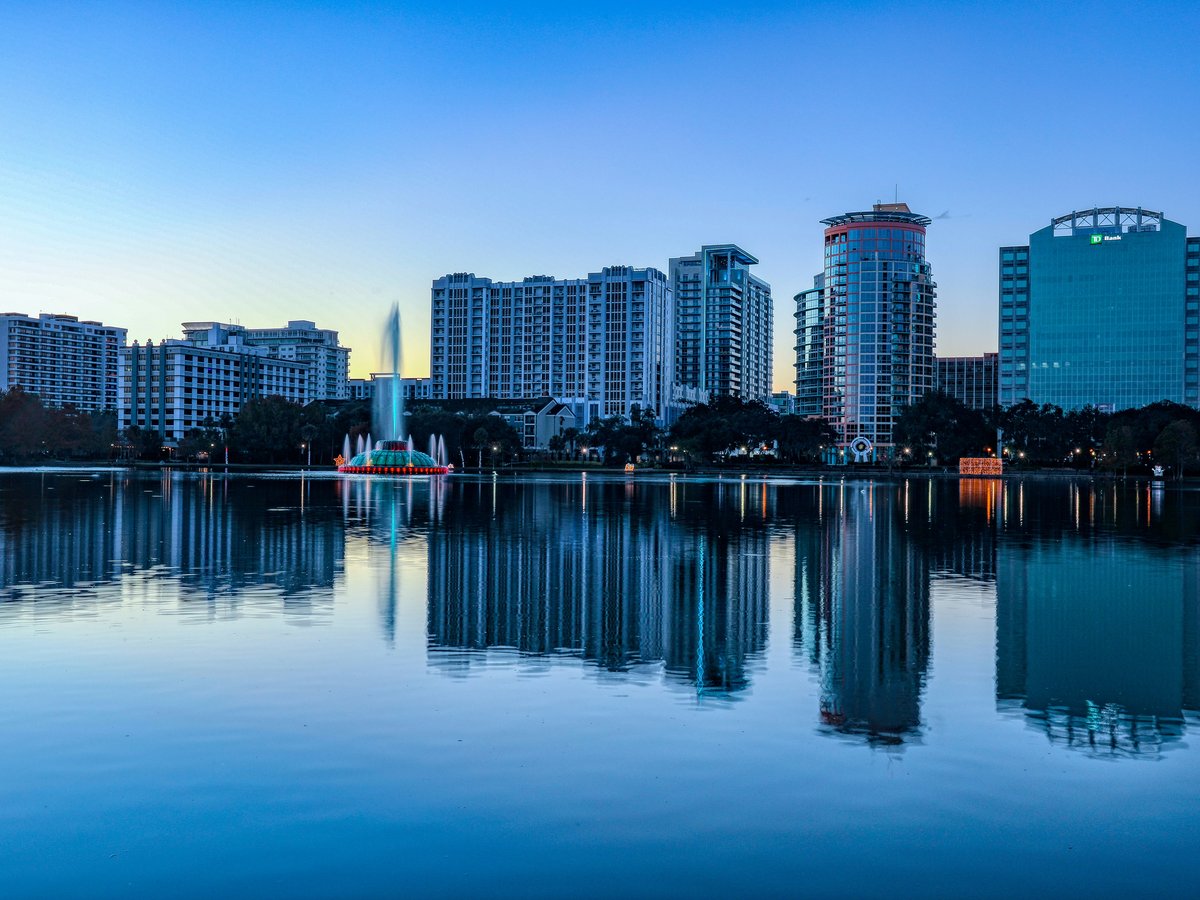
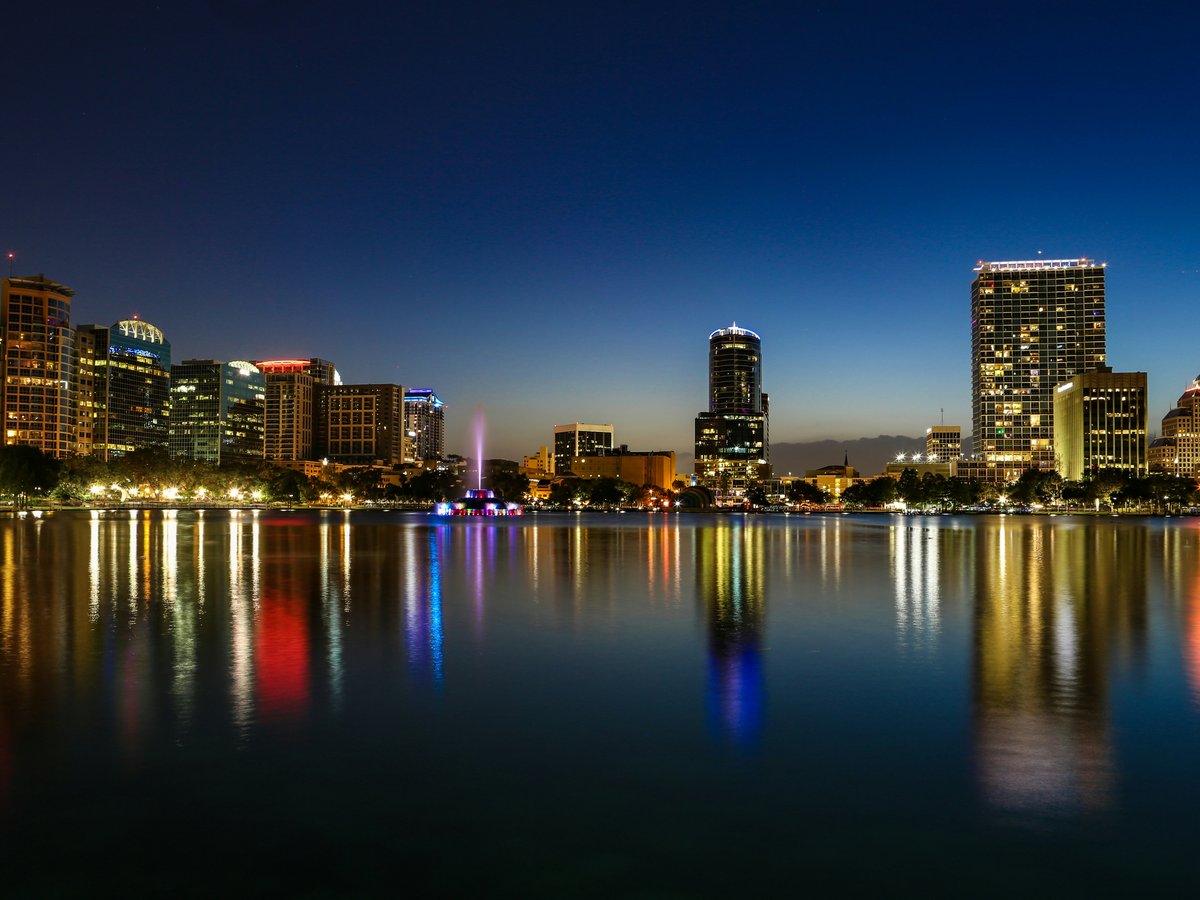
Orlando sits on a stretch of central Florida flatland pocked with more than a hundred named lakes, a geography that defined the city as a citrus town long before the first theme park broke ground. Walt Disney's scouts chose this corridor in the mid-1960s because land was cheap, the weather stayed warm year-round, and the intersection of I-4 and the Florida Turnpike made it reachable from both coasts. That decision turned a modest agricultural city into the most-visited destination in the United States, drawing roughly seventy-five million visitors a year to a metro whose permanent population remains surprisingly small at just over three hundred thousand within city limits. But Orlando the city and Orlando the tourist economy occupy different mental maps. The International Drive corridor, where most visitors spend their time among ticket booths and chain restaurants, sits in unincorporated Orange County and feels almost detached from the actual municipality. Downtown Orlando, anchored by Lake Eola and its iconic fountain, has a walkable core with a growing restaurant scene along Church Street and Mills Avenue that owes more to the University of Central Florida's enormous student body than to tourism dollars. Locals talk about Winter Park, technically its own city but functionally Orlando's most polished neighborhood, where Park Avenue's brick-lined sidewalks and the Morse Museum's Tiffany glass collection offer the kind of quiet afternoon no theme park can replicate. The Milk District east of downtown and the Mills 50 corridor, home to one of the strongest concentrations of Vietnamese restaurants in the American South, reveal a side of this city that rarely appears in guidebooks. First-time visitors who spend every day inside park gates miss this version of Orlando entirely, and the smartest itinerary sets aside at least one full day to see what exists when the turnstiles stop spinning.
Orlando in photos
Orlando right now
Answers about Orlando
-
Airport to city
Orlando International Airport (MCO) sits 11 miles southeast of International Drive. Uber or Lyft from Ground Transportation costs $20-30 to I-Drive or $35-55 to Walt Disney World. The trip takes 25-45 minutes depending on I-4 traffic. Mears Connect runs shared shuttles to Disney resort hotels for $16 per adult. If you're visiting multiple parks, rent a car at MCO's Terminal C garage.
Read the full answer → -
Best time to visit
October through early December and late February through mid-April offer the best balance of manageable heat and shorter wait times at Walt Disney World and Universal Orlando. Summer temperatures reach 34°C (93°F) with daily thunderstorms and theme park queues above 90 minutes. Late October adds Epcot's Food & Wine Festival and evening temperatures around 21°C (70°F).
Read the full answer → -
Cost per day
Orlando runs $65/day without theme parks (hostel dorm, grocery runs, Lynx bus) or $200/day with one park admission, a mid-tier hotel on International Drive, and sit-down meals. A single theme park ticket accounts for more than half the midrange daily spend.
Read the full answer → -
Cultural etiquette
Orlando runs on American tipping culture, 18-20% at sit-down restaurants and $2-5 per drink at bars. Theme park queues at Walt Disney World and Universal Studios have strict no-cutting norms that other visitors will call out loudly. Dress is very casual, but bring closed-toe shoes for parks and long walking days on hot concrete.
Read the full answer → -
Best day trips
St. Augustine, 170 km north on I-95, is the strongest single-day trip from Orlando for couples. The coquina-shell Castillo de San Marcos dates to 1695, and the walkable St. George Street district fills a full day without theme-park crowds. Kennedy Space Center at 70 km east and the lakeside town of Mount Dora at 55 km northwest are the next-best options.
Read the full answer → -
Digital nomads
Orlando scores 7.2/10 for digital nomads (sourced from TTDI's editorial rubric). AT&T Fiber and Spectrum deliver 300-1,000 Mbps in the downtown zip codes, and Florida charges no state income tax. The score stays at 7.2 because you need a car for everything, summer humidity exceeds 80%, and tourism pricing inflates short-term rentals. Monthly all-in budget runs about $2,800 in Mills 50 or Thornton Park.
Read the full answer → -
Family-friendly
Orlando might be the most family-equipped city in the US, with summer heat and ticket prices as the honest caveats. Walt Disney World, Universal Orlando, and SeaWorld anchor most trips, but ICON Park, Gatorland, and the free splash pads at Disney Springs fill off-days without another $150-per-person gate fee. Strollers roll fine on park property. Every restroom in Magic Kingdom has a changing table.
Read the full answer → -
Food culture
Orlando's food culture runs on its immigrant corridors, not its theme parks. Mills 50 is one of the strongest Vietnamese neighborhoods in the American South. Sand Lake Road holds a deep bench of Korean and Chinese restaurants. Semoran Boulevard near Goldenrod has become a Colombian and Puerto Rican destination since 2017. The theme parks are where you spend money. The corridors are where you eat.
Read the full answer → -
Getting around
Orlando has no subway. Rental cars ($45-75/day) or Uber/Lyft ($20-30 from International Drive to Walt Disney World) cover most visitor trips. Disney runs free buses, monorails, and the Skyliner gondola between its 4 parks and resort hotels. The I-Ride Trolley covers the I-Drive tourist corridor for $2 per ride.
Read the full answer → -
How to get there
Orlando International Airport (MCO), 18 km southeast of downtown, handles over 57 million passengers per year with nonstop service from 150+ cities including London Gatwick, Frankfurt, and São Paulo. Most US domestic round-trips cost $120-350. Budget alternative Orlando Sanford (SFB), 50 km northeast, serves Allegiant Air's network of 60 smaller cities at $80-200 round-trip.
Read the full answer → -
Is it safe?
Orlando is safe enough for solo travel, though the fine print sits outside the theme park gates. TTDI scores its solo-traveler safety at 5.8/10 (see the TTDI Solo-Safety Index). The theme parks are among the most heavily secured places in Florida, but the real risks are the six-lane roads around International Drive, rental-car break-ins, and Orange Blossom Trail after dark. Dial 911 for any emergency.
Read the full answer → -
Layover guide
Orlando International Airport sits about 25 minutes from downtown by rideshare, making a 5-hour layover the realistic floor for leaving the terminal. Walt Disney World and Universal are out of reach. Head to Lake Eola downtown or the Mills 50 Vietnamese corridor along East Colonial Drive for pho and a lakeside walk before your next flight.
Read the full answer → -
LGBTQ-friendly
Orlando scores 7/10 for LGBTQ+ friendliness (sourced from TTDI's editorial rubric). The queer scene carries geographic weight in Thornton Park and the Milk District, with county-level anti-discrimination protections backing it up. Gay Days at Walt Disney World have been a fixture for over three decades. Florida's state politics run conservative, but metro Orlando itself leans progressive and safe for same-sex couples.
Read the full answer → -
Where locals go
Orlando locals skip International Drive entirely. Mills 50 along Colonial Drive east of I-4 is the real neighborhood, with 15+ Vietnamese restaurants and coffee roasters like Lineage where remote workers camp all day. The Milk District and Audubon Park fill weeknight evenings. Lake Eola's Sunday market runs 10am to 3pm year-round.
Read the full answer → -
Must-see
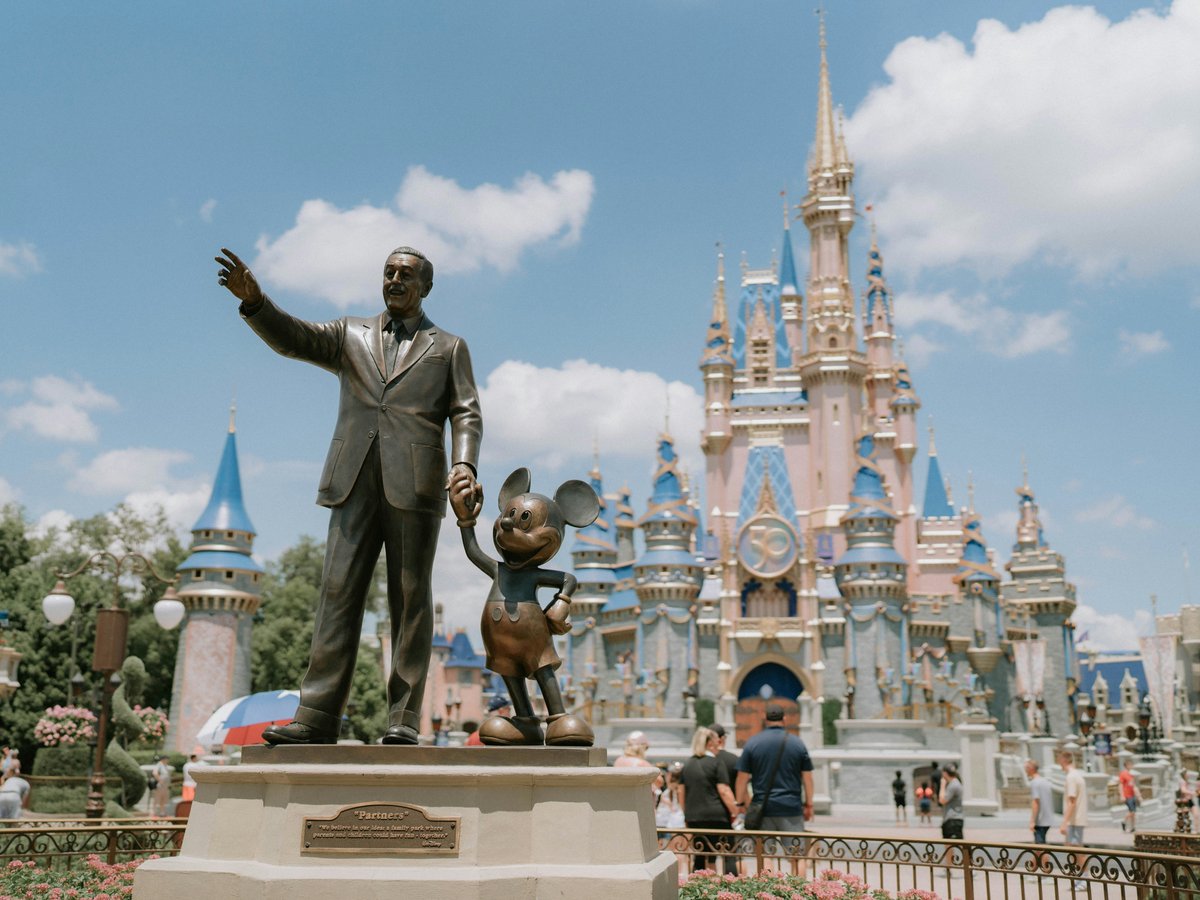
Magic Kingdom at Walt Disney World, open since October 1971, draws over 17 million visitors a year. The park's 6 themed lands spread across 107 acres in Bay Lake, anchored by Cinderella Castle. Space Mountain and Seven Dwarfs Mine Train are the signature rides. Both queues regularly pass 90 minutes by midday on peak days.
Read the full answer → -
Solo travel
Orlando is a mixed bag for solo travel. Theme parks work well alone. Single-rider lines at Universal cut waits by half, Disney prices per room with no single supplement, and the Mills 50 Vietnamese district on East Colonial Drive has counter-seating restaurants where solo diners fit right in. The catch is transit. Without a car, budget $20 per rideshare between zones.
Read the full answer → -
This week
Orlando's week runs on two clocks. Theme parks thin out Tuesday through Thursday, and the daily 3pm thunderstorm clears by 4:30pm and drops the temperature 5 degrees. Blue Man Group plays ICON Park nightly. Off the tourist strip, Mills 50 fills its restaurant patios Thursday through Saturday, and Will's Pub and Lil' Indies run live shows most nights.
Read the full answer → -
3-day itinerary
Day 1 is Magic Kingdom from rope drop at 8 AM through the 9 PM fireworks. Day 2 moves 20 minutes northeast to Universal's Islands of Adventure and Universal Studios Florida on a 2-park ticket. Day 3 skips the turnstiles for Winter Park's Park Avenue, the Morse Museum's Tiffany collection, and dinner on downtown Orlando's Church Street. About 25 kilometres of walking total.
Read the full answer → -
What to avoid
Skip the International Drive kiosks selling cheap Disney tickets, because each one is a timeshare pitch that eats half a day, and give the same wide berth to Magic Kingdom on arrival day, a rental car without a toll plan, and the Uber queue at park closing. In October, plan around afternoon lightning, and keep children away from the edge of every Florida lake, because alligators live in them.
Read the full answer → -
What to pack
Pack broken-in walking shoes, a packable rain poncho (not an umbrella), moisture-wicking clothes for 30-35°C heat with 80%+ humidity, and a light layer for aggressive indoor AC at Walt Disney World and Universal. Sunscreen and a refillable water bottle matter more than extra outfits. Buy ponchos at Dollar Tree on International Drive for $1.25.
Read the full answer → -
Where to stay
Stay in Lake Buena Vista if Disney is your focus, or along Universal Boulevard for Universal parks. First-timers doing both parks should base near International Drive, which sits between the two resort clusters. Budget $120-180 per night for a reliable mid-range hotel. Downtown Orlando, 20 minutes north, has the better restaurants but adds a car commute to every park day.
Read the full answer →
Deep guides for Orlando
Curated lists for Orlando
accommodation
-
Best boutique hotels
Orlando spreads its hotel inventory across a wide arc of highway corridors, lake-ringed downtown blocks, and theme-park buffer zones, and that sprawl is the first thing to understand before booking. The city has no single walkable center the way a European capital does; instead, neighborhoods cluster around the attractions they serve or the airport they feed. International Drive runs its neon strip south of Universal, Lake Buena Vista sits in Disney's gravitational pull, and the downtown lakes offer the only genuinely pedestrian-scaled streets in the metro. Prices swing less by season than by proximity to a park gate, and a mid-range room near SeaWorld can cost the same as a downtown suite with a lake view. These neighborhoods are ordered by hotel density, not desirability; the right one depends on whether your trip orbits a theme park, an airport connection, or the quieter side of Orlando that most visitors never see.
See the picks → -
Best hostels
Orlando spreads across a car-dependent sprawl where the neighborhood you pick determines whether you spend your evenings walking to restaurants or sitting in traffic on I-4. The theme park corridors along International Drive and Lake Buena Vista concentrate most of the budget inventory, but identical chain brands charge noticeably different rates depending on which side of the highway they sit. For travelers hunting budget beds, the real question is proximity versus price. Staying inside the Disney orbit costs more in resort fees and ride-hail surcharges than the nightly rate suggests, while the airport corridor trades atmosphere for clean rooms and early-morning shuttle access. International Drive splits into two distinct stretches, north and south, with different price floors and different walking ranges. The neighborhoods below run from the densest hotel clusters to the thinnest, and each one answers a different version of the same question: how much of your Orlando budget should go to the room, and how much to the park tickets that brought you here in the first place.
See the picks → -
Best luxury hotels
Orlando's luxury hotels split along a clear line: standalone resort compounds that treat the parks as a day trip, and park-adjacent properties that keep families on-site for the week. The Grande Lakes zone anchors two flagships on the same parkway. The Disney World Resort zone clusters properties near the gates. The Universal Studios Area operates its own on-site resorts with direct park access. Nightly rates span from USD 228 to USD 979; the gap buys meaningfully different experiences in grounds, amenity depth, and how much of your stay the hotel expects you to absorb. These eight properties represent the top tier of what Orlando offers, from self-contained resort compounds to the best park-adjacent addresses, each earning the rate on its own terms.
See the picks → -
Where to stay
Orlando's hotel map does not radiate from a single downtown core the way most cities do. Instead, inventory clusters around three theme-park zones and the airport corridor, with a thin scattering near the actual city center. That geography means your neighborhood choice is less about walkability to a historic quarter and more about which anchor you want to orbit: Universal, Disney, SeaWorld, or none of them. Travelers who skip the parks entirely will find the airport strip and Callahan, Orlando's small downtown, quieter and cheaper. Families and repeat visitors split along a predictable axis. The Universal side of town, anchored by International Drive and Florida Center, puts dining and nightlife within reach after the gates close. The Disney side trades that convenience for resort-bubble self-containment, where a car sits parked for days. Price tiers overlap more than the brochures suggest; a budget room near the airport can outperform a mid-range room on Disney property in square footage and quiet. The real decision is not which hotel, but which gravity well you want pulling your itinerary.
See the picks →
attractions
-

Best museums
Orlando's museum map is not the one the theme-park brochures draw. The serious collections sit north of downtown and up in Winter Park, where art museums have outnumbered the roller coasters for decades. Two of the strongest are anchored in Winter Park, one at 445 North Park Avenue and one on the Rollins College campus at 28.5923, -81.3486, while the Loch Haven Park cluster north of downtown pairs an American-art specialist at 902 Princeton Street with the city's flagship art museum a short walk away at 28.5727, -81.3644. The list closes with the Magic Kingdom's own steam railroad at Town Square in Lake Buena Vista, included because a working steam operation is itself a piece of living transport history worth reading as a museum. This is a list for visitors who want to spend a morning with a Tiffany window or a Highwaymen landscape and then decide, over lunch, whether they still care about the parks.
See the picks → -

Must-see attractions
Orlando's honest must-see list turns out to be a roster of buildings the theme parks never touched. St. James Cathedral dates from 1952 and the Cathedral Church of St. Luke from 1925, while St. George Antiochian Orthodox Church dates from 1926 and holds a listing on the National Register of Historic Places. From there the frame widens: a basilica, a temple of the LDS Church, Guang Ming Temple, dating from 2007, and Knowles Memorial Chapel on the campus of Rollins College in Winter Park. The one concession to spectacle is The Wheel, a Ferris wheel dating from 2015. We'd hand this list to a traveler with a free morning between park days who wants to see the city its residents built for themselves. It asks a little in return: check service times, dress for a house of worship, and keep your voice down.
See the picks →
food
-

Best cafes
Orlando's cafe map is not one thing. Downtown around 32801 leans on espresso bars and bakery counters that open before the office lights come on; the Mills 50 stretch of 32803 has turned into the city's tea belt, where bubble tea and matcha have colonised the block; the SoDo stretch of South Orange Avenue keeps its own coffee crowd; and Millenia at 32839 anchors the west-side bubble tea run. Twelve rooms below, opinionated, sit across those pockets. Some open at 06:00 for people on their way somewhere; others do not unlock the door until 11:30 or 12:00 because the drink they make is an afternoon drink. A few are Latin bakeries where a colada is the point; a couple are third-wave roasters where the pour-over is; several are tea rooms where the boba matters more than the coffee. The list is arranged for a visitor with a morning to spend downtown and an afternoon to spend crossing town, not for a driver looking for the nearest Starbucks. Read the hours before you go.
See the picks → -
Best restaurants
Orlando's downtown grid, roughly bounded by Lake Eola on the east and Church Street on the west, holds more owner-run kitchens than the theme-park corridor suggests. This list stays inside that walkable core and one short drive south, along South Orange Avenue and the Summerlin blocks that ring the lake. It leans hard on independents and short chains with a single downtown address, because a visitor with one lunch and one dinner to spend is better served by a kitchen that answers its own phone than by a name they already know from the airport concourse. The mix is deliberate: two pizzerias that share a lake but argue about crust, a Korean grill and a ramen bar that make the case for Central Florida's East Asian pantry, an American room that opens Tuesday to Sunday because the chef needs a Monday off, and a taqueria that pours a proper margarita. Every venue below is mapped, sourced, and reachable by phone. Read the hours before you walk; several of these kitchens close earlier than a tourist expects.
See the picks →
Browse by traveler type
- For foodies
Orlando for foodies
- For families with kids
Orlando for families
- For digital nomads
Orlando for digital nomads
- For solo travelers
Orlando for solo travelers
- For couples
Orlando for couples
- For budget travelers
Orlando on a budget
- For luxury travelers
Orlando for luxury travelers
- For first-timers
Orlando for first-time visitors
Book experiences in Orlando

Rock Springs 2-Hour Glass Bottom Guided Kayak Eco Tour
Outdoor experience: 2.5 hours.
via Viator Free cancellation
 Kennedy Space Center with Transport from Orlando and Kissimmee
Day trip: 11 hours, free cancellation.
via Viator
Glass Bottom Kayak Eco Tour through Rainbow Springs
Outdoor experience: 2 hours.
via Viator Free cancellation
 One-Hour Airboat Ride Near Orlando
Outdoor experience: 1 hour, free cancellation.
via Viator Free cancellation
 30-Minute Airboat Ride near Orlando
Outdoor experience: 30 minutes, free cancellation.
via Viator
Orlando Dune Buggy Tour
Outdoor experience: 3 hours.
via Viator Free cancellation
 Day 16 miles Private Helicopter Tour over Fun Spot
Outdoor experience: free cancellation.
via Viator Free cancellation
 Sassy’s Silver Springs Kayak and Paddleboard Tours
Outdoor experience: 2.5 hours, free cancellation.
via Viator Free cancellation
 Kennedy Space Center All Inclusive Small Group VIP Experience
Day trip: 11 hours, free cancellation.
via Viator
Winter Park Chain of Lakes Day Time Clear Kayak Paddle
Outdoor experience: 2 hours.
via Viator
Clear Kayak Sunset Tour through The Winter Park Chain of Lakes
Outdoor experience: 2 hours.
via Viator Free cancellation
 Silver Springs Clear Kayak Tour – Manatees & Monkeys Tour
Outdoor experience: 2 hours, free cancellation.
via ViatorBrowse by interest
Compare Orlando with
Find a flight to Orlando
Live fares to Orlando appear here once cookies are accepted.
Last verified by automated review (v1.7.2) on . What is automated review?