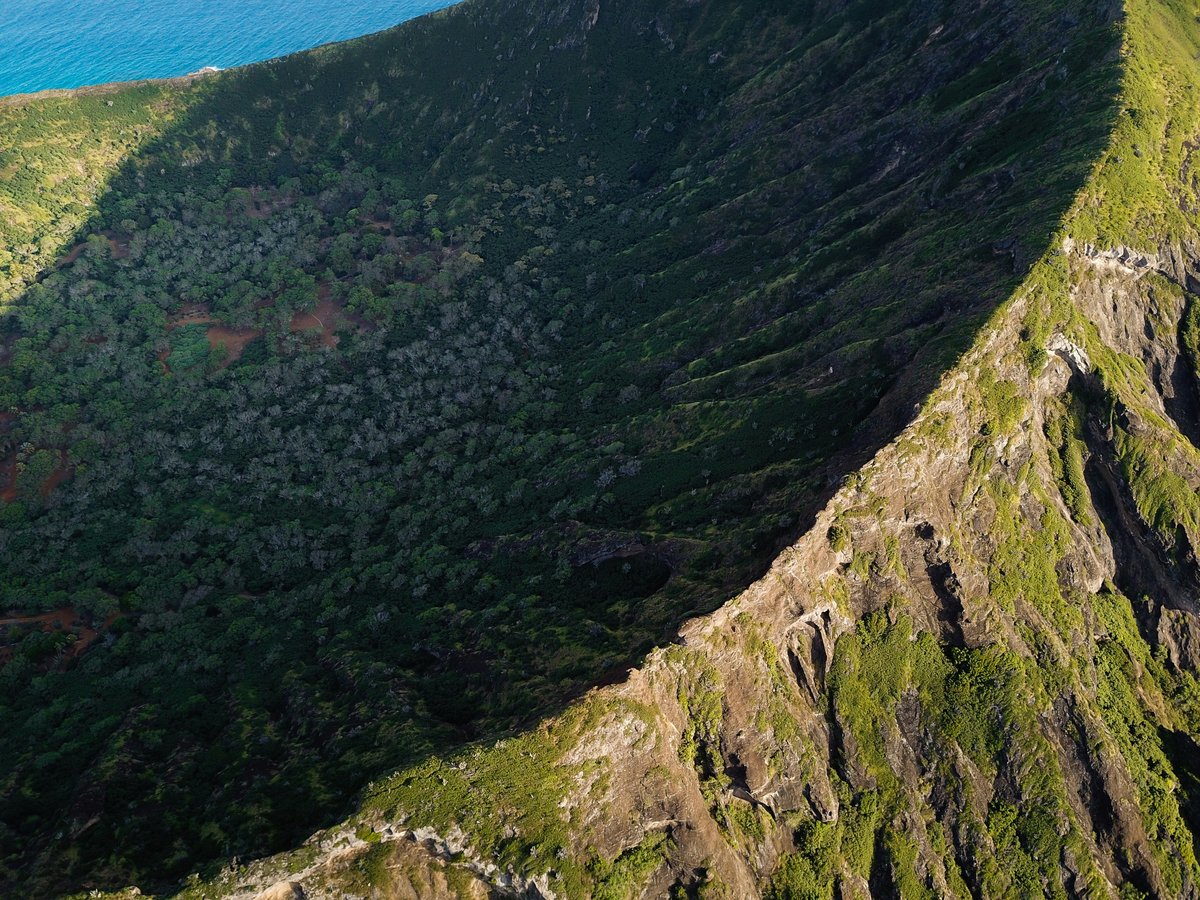
Big Island covers roughly 4,028 square miles, making it larger than all other Hawaiian islands combined. The terrain runs from sea-level lava flats along the Kona coast up to Mauna Kea's 13,796-foot summit, where early mornings in late August can sit below 12°C while coastal towns 40 miles downslope hover in the low 30s. That range of landscape is the reason a zero budget still buys a remarkably full trip here. Active volcanic terrain around Kīlauea still reshapes the island's southeast coast. Waterfalls drop hundreds of feet along the Hamakua Coast. Green and black sand beaches line the Kaʻū shore, each with a different mineral story. The island scores 7.8/10 for family friendliness (see the TTDI Family-Friendliness Index), and much of that rating reflects how freely accessible its signature features are. Mind you, the Big Island measures roughly 93 miles long and 76 miles wide. The drive between Hilo on the windward coast and Kailua-Kona on the leeward side takes about 2.5 hours via the northern route. The county's Hele-On Bus system connects those towns but does not serve most remote free attractions. Budget around $40 to $60 daily for a rental car. After that, the island itself rarely charges admission.
Free attractions
-
Ka Lae (South Point)
The southernmost point in the United States sits at the end of South Point Road, an 11-mile side road off Highway 11 through open cattle pastureland. Wind hits hard here, a steady 20 to 30 mph most days that bends the grass flat and makes standing near the cliff edge feel precarious. The cliff drops straight into rough Pacific water. Near the parking area you can see the rusted remains of a hoist crane that local fishers once used to lower boats into the sea. The terrain is bare ʻaʻā lava rock and dry scrub. No entrance fee, no facilities beyond a gravel lot. The site holds deep significance as one of the earliest Polynesian settlement points in the Hawaiian Islands, likely reaching back to around 400 CE.
Kaʻūlandmark -
Punalu'u Beach
This black sand beach on the Kaʻū coast is one of the most visited free stops on the island. The sand is ground basalt from ancient lava flows, fine-grained and noticeably warm underfoot on sunny afternoons. Hawaiian green sea turtles, known locally as honu, haul out on the beach regularly. You'll likely spot 3 or 4 resting near the waterline on any given afternoon. A county park behind the beach has picnic pavilions, restrooms, and shaded areas under coconut palms. Swimming tends to be difficult because of strong currents and a rocky shelf beneath the surface, but wading and watching the turtles draw most of the visitors. The beach sits roughly 8 miles north of the turnoff toward the island's south end.
Kaʻūbeach -
Papakolea Beach (Green Sand Beach)
One of only 4 green sand beaches in the world, Papakolea gets its color from olivine crystals that erode out of a cinder cone called Puʻu Mahana, estimated at roughly 49,000 years old. Getting here requires a round-trip walk of about 5 kilometers from the parking area south of Nāʻālehu, across open terrain with no shade and persistent wind. The trail is not officially maintained, and the ground alternates between packed dirt and loose cinder. Some locals operate unofficial shuttle rides in 4WD vehicles for a fee, but the hike itself costs nothing. The beach sits inside a partially collapsed cone, and the sand shifts from olive green to gold depending on the angle of sunlight. Weekday mornings tend to be uncrowded.
Kaʻūbeach -
Rainbow Falls (Waiānuenue)
The Wailuku River drops about 80 feet over a natural lava cave into a broad pool at this free state park site in Hilo. On sunny mornings, particularly between 9 and 11 AM, mist from the falls catches the light and throws reliable rainbows across the pool. The Hawaiian name, Waiānuenue, translates roughly to 'rainbow water.' A paved path from the parking lot leads to the overlook in under 2 minutes. Enormous banyan trees and tropical foliage frame the view from above. Worth noting, the falls flow strongest after rain, and Hilo averages about 130 inches of rainfall per year, so dry periods are rare here.
Hilowaterfall -
Liliʻuokalani Gardens
This roughly 24-acre Japanese-style garden on Banyan Drive in Hilo opened in 1917, named after Hawaiʻi's last reigning monarch, Queen Liliʻuokalani. Stone bridges arc over koi ponds. Pagodas and torii gates sit among stands of monkeypod trees. The garden occupies a peninsula that juts into Hilo Bay, and the breeze off the water carries the smell of salt and wet grass most mornings. Free and open daily from dawn to dusk. On weekday mornings you might be the only visitor on the paths. A pedestrian footbridge at the far end connects to Coconut Island, called Mokuola, which adds a small beach and a view back toward the Mauna Kea massif on clear days.
Hilogarden -
Mokupāpapa Discovery Center
This NOAA-run museum in downtown Hilo focuses on the marine ecosystems of Papahānaumokuākea Marine National Monument, the protected area stretching northwest of the main Hawaiian Islands. Exhibits cover coral reef biology, deep-water species found at depths below 3,000 feet, and the cultural significance of the Northwestern Hawaiian Islands to Native Hawaiians. A 3,500-gallon saltwater aquarium near the entrance holds reef fish and anemones. Admission is always free. The center occupies the ground floor of the S. Hata Building, an early-20th-century commercial structure on Kamehameha Avenue. Currently open Tuesday through Saturday, typically 9 AM to 4 PM.
Hilomuseum -
Waipiʻo Valley Lookout
The overlook at the end of Highway 240 looks straight down into Waipiʻo Valley, a steep-walled amphitheater carved by the Waipiʻo Stream. The valley floor sits roughly 900 feet below, visible as a patchwork of taro farms, coconut palms, and a curving black sand beach at the river mouth. On clear mornings you can see Hiʻilawe Waterfall in the back of the valley, falling an estimated 1,450 feet in two tiers, one of the tallest in the state. The lookout itself is a paved parking area with no admission charge. Descending to the valley floor means tackling a road with a 25% grade, which requires 4WD and is not covered by most rental car agreements. To be fair, the view from the top is usually enough.
Hamakua Coastviewpoint -
St. Benedict's Painted Church
Father John Velghe, a Belgian Catholic priest, painted biblical scenes on the interior walls and ceiling of this small wooden church near Captain Cook between 1899 and 1904. He designed the paintings to teach scripture to a congregation that could not read, and the style mixes European religious imagery with tropical elements. Palm trees and volcanic landscapes appear alongside saints and parables. The colors remain vivid after more than a century, deep blues and reds against the white-painted ceiling, preserved in part by the dry Kona climate. The church still holds regular services but is open to visitors during daytime hours at no charge. It sits on a hillside above Kealakekua Bay, with coffee and macadamia orchards falling away toward the coast.
South Konahistoric site -
Wailoa River State Recreation Area
This park along the Wailoa River in Hilo was rebuilt after the 1960 tsunami destroyed the Shinmachi neighborhood that once occupied this low-lying ground. A memorial to the 1946 and 1960 tsunamis stands near the entrance. The park's open lawns surround a spring-fed estuary where locals fish for tilapia and ʻamaʻama (mullet), and a large bronze King Kamehameha I statue presides over the riverbank. The Wailoa Center, a state-run gallery inside the park, hosts free rotating art exhibitions and is open Monday through Friday. The park itself is free, open daily, and connected by footpath to Hilo's bayfront.
Hilopark
Free activities
-
Browsing Hilo Farmers Market
The open-air market on the corner of Mamo Street and Kamehameha Avenue in downtown Hilo runs daily, but Wednesday and Saturday mornings are the big days, when more than 200 vendors spread across the lot. Stalls sell tropical fruit, cut flowers, local honey, and prepared food. You can sample lilikoi (passion fruit), rambutan, and apple bananas that rarely appear in mainland grocery stores. The air smells like plumeria leis and roasting macadamia nuts. Browsing costs nothing. Saturday mornings by 7 AM the market is already crowded, so arriving early gives you room to move.
Hilomarket -
Walking Aliʻi Drive in Kailua-Kona
Aliʻi Drive runs about 5.5 miles along the Kona waterfront from Old Kona Airport park south through Kailua village center. The stretch between Kailua Pier and Keauhou Bay passes lava rock seawalls, small beach parks, and open-air restaurants where ukulele music drifts out over the sidewalk in the evenings. Hulihee Palace and Mokuaikaua Church, two of Kona's oldest structures, sit within the first half-mile near the pier. The walk is flat, mostly paved, and free. Late afternoon is the best time, when the sun drops low over the ocean and the heat eases off.
Kailua-Konawalking route -
Tide pooling at Richardson Ocean Park
Richardson, locally called Richardson's, sits at the end of Kalaniana'ole Avenue on the Hilo side. The beach is a mix of black sand and smooth lava rock, with natural tide pools formed by old pāhoehoe flows. At low tide the pools fill with sea urchins, small crabs, juvenile reef fish, and the occasional sea cucumber. Hawaiian green sea turtles feed on limu (seaweed) in the shallows here more reliably than almost anywhere else on the island. The park has free parking, restrooms, and lifeguards during peak hours. Bring reef-safe sunscreen and water shoes for the rocky shoreline.
Hilobeach activity -
Coffee farm tasting at Greenwell Farms
Greenwell Farms in Kealakekua, on the slopes above Kealakekua Bay, has been growing Kona coffee since the 1850s and currently offers complimentary self-guided tours of its processing facility and orchard. You walk through rows of coffee trees, see the pulping and drying operation, and finish at a tasting room where several Kona coffee varieties are available to sample at no charge. The farm sits at roughly 1,500 feet elevation, where the air is noticeably cooler and smells of damp red volcanic soil and coffee cherry. Tours typically run during business hours Monday through Saturday.
South Konafarm visit -
Beach walking at Old Kona Airport State Recreation Area
The former Kona Airport runway, which closed to flights after air traffic moved to the Keāhole facility in the early 1970s, now operates as a free public beach park at the north end of Kailua-Kona. The old tarmac is still visible in places, bleached and cracked by decades of salt air. A series of sheltered coves and tide pools line the shoreline, protected by a reef that calms the water enough for wading. Locals use the flat former runway for morning jogs and evening walks. The park has restrooms, pavilions, and free parking.
Kailua-Konabeach and walking
Free events
-
Merrie Monarch Festival
One week in April (typically Easter week)Hilo's flagship cultural event since 1964, the Merrie Monarch runs for a week each April and centers on competitive hula. The headline competition requires tickets that sell out months in advance, but the festival's opening parade through downtown Hilo, the craft fair at Edith Kanakaʻole Stadium, and the hoʻolauleʻa are free and open to the public. The parade alone draws thousands of spectators. Expect closed roads and packed hotels across Hilo during festival week.
Downtown Hilo and Edith Kanakaʻole Stadium -
Kona Coffee Cultural Festival
10 days in NovemberThe Kona Coffee Cultural Festival has run annually since 1970 and stretches over 10 days each November across the Kona coffee belt. Several community events are free, including farm tours, a cupping competition open to spectators, and cultural demonstrations tied to the region's coffee heritage. The festival centers on the growing district between Holualoa and Captain Cook. Ticketed events such as the recipe contest and gala dinner run separately.
Various venues across the Kona coffee belt -
Hawaiian cultural activities at Kings' Shops
Weekly, schedule varies seasonallyThe Kings' Shops outdoor mall in the Waikoloa Beach Resort area has for years hosted free weekly Hawaiian cultural activities. These tend to include hula performances, lei-making demonstrations, and guided walks to the nearby Waikoloa Petroglyph Preserve, a field of over 3,000 ancient carvings etched into pāhoehoe lava. Schedules shift seasonally, so checking the shopping center's posted calendar on arrival is worth the 2 minutes. The petroglyph field is the main draw, covering roughly 0.5 miles of lava trail.
Kings' Shops, Waikoloa Beach Resort
Two coasts, one island
Most of the free attractions cluster in two zones separated by up to 2 hours of driving. The Hilo side, on the wet windward coast, holds the Japanese gardens and free museum spaces downtown, plus the falls and valley overlooks scattered north along Highway 19. The Kona side, drier and sunnier on the leeward shore, has the beach parks, the waterfront walking route, the painted church up near Captain Cook, and the coffee farm stops at elevation. A practical approach is to base yourself 2 to 3 nights on each coast rather than looping back and forth across the island each day. Hilo's accommodation tends to cost less because it draws fewer resort visitors, with vacation rentals near the bayfront starting around $90 to $120 per night in recent years. Kailua-Kona's strip is busier, though hostels and older condo units sometimes bring the nightly rate below $80. For a broader orientation to the island's layout and transport options, the Wikivoyage Big Island guide is a useful starting reference (see https://en.wikivoyage.org/wiki/Big_Island).
Paid sights between the free ones
Not everything on Big Island is free, and a few prominent stops do charge admission. Hulihee Palace on Aliʻi Drive in Kailua-Kona, built in 1838 as a vacation residence for Hawaiian royalty, currently operates as a museum with paid entry. ʻAkaka Falls State Park, home to a 442-foot waterfall north of Hilo, requires a non-resident parking and entry fee. Hawaiʻi Tropical Botanical Garden, a 40-acre garden in a valley along the Onomea Coast north of town, charges roughly $20 for adult entry. Puʻuhonua o Hōnaunau National Historical Park, one of the island's most significant cultural sites on the Kona coast, is a National Park Service unit with its own separate entrance fee. None of these is exorbitant, and each tends to be well worth the cost if your budget allows. The distinction mainly matters when planning a truly zero-dollar day, where sticking to state-managed waterfalls, public beaches, and town walks keeps the total at nothing. Wikivoyage's sightseeing overview covers these and more (see https://en.wikivoyage.org/wiki/Big_Island#See).
FAQ
Is Hawaiʻi Volcanoes National Park free to visit?
Not on regular days. The park, established in 1916, currently charges $30 per private vehicle for a 7-day pass. However, the National Park Service designates several fee-free days each year, typically including dates in April during National Park Week, late September for National Public Lands Day, and November 11 for Veterans Day. On those days the entire park, including the Kīlauea Visitor Center exhibits and all crater rim trails, is free. Check the NPS website before your trip for the current year's schedule.
Do I need a car to reach the free attractions?
Strongly recommended. The island's public bus service covers a limited set of routes between the main towns, and most of the best free stops sit along rural highways or at the ends of side roads without transit access. The green sand beach, the painted church, the valley overlook. None of them has a bus stop. A rental car is likely your single largest daily expense, but it opens up the entire island. Wikivoyage's transport section covers routes and bus options in more detail (see https://en.wikivoyage.org/wiki/Big_Island#Get_around).
Are all Big Island beaches free to use?
Yes. Under Hawaiʻi Revised Statutes Chapter 115, all beaches below the high-water mark are public, regardless of what resort or private land sits behind them. You can legally access any beach on the island. In practice, a few beach parks charge for vehicle parking. Hāpuna Beach State Recreation Area, for example, has been charging non-residents a per-car parking fee. But the beach itself is always free. Walking in from a public road or right-of-way avoids the parking charge at most spots.
Is Big Island safe for solo travelers?
The island rates 7.8/10 for solo-traveler safety (see the TTDI Solo-Safety Index). Violent crime directed at tourists is uncommon. The main risks tend to be environmental rather than human. Ocean currents, remote hiking terrain, and volcanic gas emissions near active vents all require genuine caution. Stay out of the water at unguarded beaches if you are not a confident swimmer, carry more water than you think you need on any hike, and respect all posted warnings near volcanic areas. For neighborhood-level safety notes, Wikivoyage's Big Island coverage has a useful section (see https://en.wikivoyage.org/wiki/Big_Island#Stay_safe).
Is Big Island welcoming for LGBTQ+ visitors?
The island scores 8.5/10 for LGBTQ+ friendliness (sourced from TTDI's editorial rubric). Hawaiʻi was among the first U.S. states to extend civil union protections, and the social climate on the Big Island generally reflects that openness. Both the Kona side and Hilo have visible LGBTQ+-friendly businesses. That said, the island is more rural and less nightlife-oriented than Honolulu, so the scene is quieter and more dispersed than what you might find on Oʻahu.
Can I work remotely from Big Island?
The island scores 5.2/10 for digital-nomad suitability (sourced from TTDI's editorial rubric), which reflects real infrastructure limitations. Cellular coverage drops out along rural stretches of the northern coast and in the deep valleys. Many vacation rentals advertise Wi-Fi, but speeds can be inconsistent outside the Kona and Hilo urban cores. Coffee shops in Kailua-Kona and downtown Hilo tend to offer workable connections during business hours. If reliable internet is critical, verify speeds with your accommodation before booking.
Last verified by automated review (v1.7.2) on . What is automated review?