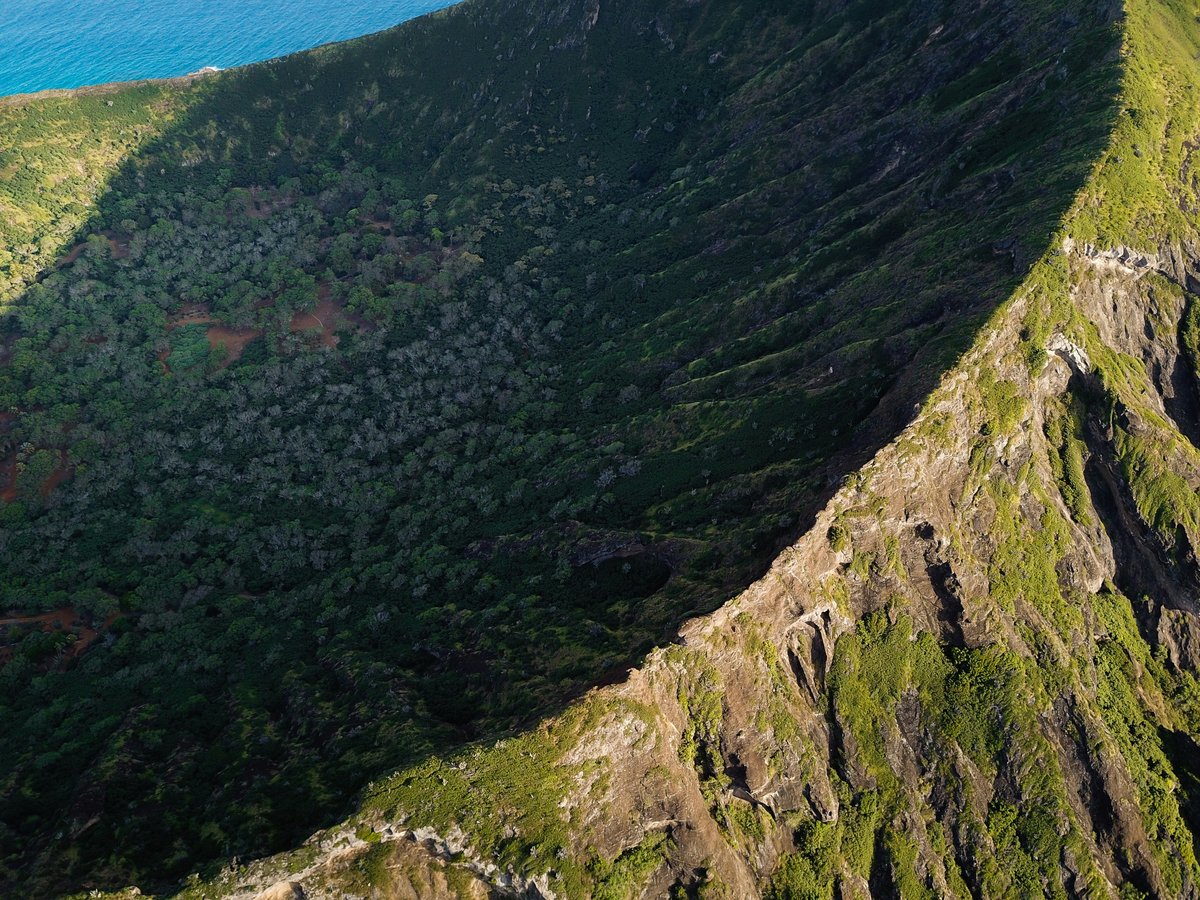
Stay in Big Island in October
16 hotels in the Trip.com pool for Big Island, from US$89 a night.
Opens Trip.com on Fri 30 Oct to Sun 1 Nov 2026; change the dates there.
October on Big Island is shaped by a single event. The Ironman World Championship typically arrives in Kailua-Kona for a week in mid-October, drawing athletes and spectators from over 50 countries. If you're not here for the race, plan around it. Accommodation across the Kona corridor tightens significantly during race week, and restaurant tables fill out well in advance.
Outside that stretch, October is a genuine shoulder season. The summer crush from mainland families has cleared, and the winter wave of visitors escaping cold from the Pacific Northwest and California won't begin until late November. The island's transition toward its wetter months is underway, but the shift feels gradual. Trade winds typically hold steady, keeping the leeward coast comfortable for snorkeling and beach days. The Hilo side stays true to its reputation, collecting more rain than the Kona coast even on otherwise clear days.
Renting a car remains close to a requirement on Big Island. Public transit coverage runs thin, and the drive between Kona and Hilo takes about 2.5 hours on the northern route through Waimea. That drive is part of the experience, though. You pass through cattle ranch country at 900 meters (3,000 feet) where the landscape smells like wet grass and red dirt, looking more like Montana rangeland than anything you'd expect in the tropics.
Why visit in October
- The Ironman World Championship transforms Kailua-Kona in mid-October. Even if you're not racing, the spectator atmosphere is free and genuinely electric, especially at the midnight finish cutoff when the final athletes stagger across the line.
- Shoulder-season rates on Kohala Coast resorts and Waikoloa vacation rentals tend to run 20-30% below their December-through-February winter peaks, making October one of the better-value months for an upscale stay.
- Ocean conditions along the Kona coast are typically calm in October, with North Pacific winter swells still weeks away. Water activities like snorkeling and manta ray night dives see fewer weather cancellations than they will by December.
- Kona coffee cherry-picking season runs from September through January, and October brings the first fresh-roasted batches from the new harvest to estate tasting rooms. The smell of roasting beans drifts across the hillside roads above the coast.
Worth knowing
- Ironman race week, typically the second week of October, inflates hotel prices across the entire Kailua-Kona corridor. Booking 3-4 months ahead is standard for that stretch.
- Rainfall begins trending upward from September's drier pattern, with about 11 rainy days spread across the month. The Hilo side catches most of it, but brief afternoon showers reach the Kona coast too.
- Vog from Kilauea can settle over the Kona coast when trade winds weaken, washing out sunset views and carrying a faint sulfur smell on bad days.
Best for
Think twice if
October on Big Island is warm and humid at sea level, with steady trade winds keeping the leeward Kona coast comfortable. Coastal daytime highs along the Kona and Kohala coasts typically reach 29-31°C (85-87°F), cooling to around 22-23°C (72-74°F) overnight. Hilo tends to sit a couple of degrees lower and catches 2-3 times the rainfall of the dry western side. The dramatic elevation range on the island means conditions shift fast once you leave the coast. Hawai'i Volcanoes National Park at 1,200 meters (3,900 feet) sees daytime temperatures closer to 18-20°C (65-68°F), and Mauna Kea's visitor station at 2,800 meters (9,200 feet) can dip below 5°C (41°F) after sunset. Rainfall comes mostly as brief afternoon showers on the windward side, while the Kona coast might go days without a drop. Trade winds generally hold through October, keeping humidity manageable along the leeward shore.
Seasonal caution
- Hurricane season in the Central Pacific runs through November 30. Direct landfalls on Hawaii are rare, but tropical systems can bring heavy surf, flooding rain, and flight disruptions on short notice. Check NOAA's Central Pacific Hurricane Center forecasts in the weeks before travel.
- Kilauea's volcanic emissions create vog (volcanic smog) that drifts toward the leeward coast during Kona wind episodes when trade winds weaken. People with asthma or respiratory conditions should check the Hawai'i Interagency Vog Information Dashboard for daily air quality readings before committing to outdoor activities on the west side.
Year-round climate
Averages from the last 5 years.
| Month | Avg high (°C) | Avg low (°C) | Rainfall (mm) |
|---|---|---|---|
| Jan | 15 | 6 | 72 |
| Feb | 14 | 5 | 85 |
| Mar | 14 | 6 | 111 |
| Apr | 15 | 6 | 91 |
| May | 16 | 7 | 77 |
| Jun | 17 | 8 | 25 |
| Jul | 18 | 8 | 54 |
| Aug | 18 | 8 | 87 |
| Sep | 18 | 8 | 53 |
| Oct | 17 | 8 | 76 |
| Nov | 16 | 7 | 86 |
| Dec | 15 | 7 | 65 |
Holidays and festivals in October
Public holidays
- Columbus Day(Columbus Day)12 October 2026
- Indigenous Peoples' Day(Indigenous Peoples' Day)12 October 2026
When is Halloween in 2026?
31 October 2026
Halloween is a major cultural celebration in Big Island. In 2026 it falls on 31 October 2026.
Headline events
Ironman World Championship
Saturday in mid-October, typically the 2nd Saturday
The original Ironman triathlon has called Big Island home since the race moved from Oahu in 1981. Athletes swim 3.86 km (2.4 miles) in Kailua Bay, bike 180 km (112 miles) through the lava fields north along Queen Ka'ahumanu Highway, and run a full 42.2-km (26.2-mile) marathon to the finish line on Ali'i Drive. The course cuts through stark black lava, coastal winds, and relentless sun. For spectators, the best atmosphere is at the waterfront finish line from late afternoon through the midnight cutoff, when the final athletes cross under floodlights to roaring crowds.
Best things to do in October
Spectate the Ironman World Championship
spectator sportWatching 2,500 athletes from over 50 countries race across Big Island's lava landscape is a spectator event unlike any other endurance race. Position yourself along the waterfront to feel the crowd energy build from the afternoon age-group finishers through the midnight cutoff, when the last racers cross under floodlights.
The Ironman only races on Big Island once per year, in October. No other month offers this experience.Booking tipNo tickets needed. Stake out waterfront spots by mid-afternoon for the best vantage points near the finish.
Stargazing from Mauna Kea's Visitor Information Station
natureFree public stargazing programs at 2,800 meters (9,200 feet) on Mauna Kea, run by dedicated volunteers with quality telescopes pointed at planets, nebulae, and galaxies. The air is thin, dry, and remarkably still. The Milky Way overhead looks three-dimensional.
October nights at altitude are clear more often than the winter months that follow, when North Pacific storm systems push cloud cover onto the summit.Booking tipArrive 30-45 minutes before sunset to acclimate to the elevation. Bring warm layers. It gets cold fast after dark.
Snorkeling at Kealakekua Bay
water sportsThis marine life conservation district on the west coast holds some of the clearest water and densest coral coverage in Hawaii. Spinner dolphins frequently cruise the bay in the mornings. The underwater visibility on a good October day can reach 30 meters (100 feet).
North Pacific winter swells haven't ramped up yet. October waters along the Kona coast stay calmer than any month from December through March.Booking tipKayak permits through the state DLNR are limited and competitive. Book several weeks ahead or join a guided snorkel boat tour from Keauhou Bay.
Hiking the Kilauea Iki Trail in Hawai'i Volcanoes National Park
hikingA 6.4-km (4-mile) loop that drops through a fern-covered rainforest, then crosses the floor of a solidified lava lake inside Kilauea Iki crater. Steam vents hiss from cracks in the rock underfoot. The scale of the crater is hard to grasp until you're standing in the middle of it.
October temperatures at the park's 1,200-meter (3,900-foot) elevation run cooler than summer, making the exposed crater crossing comfortable rather than punishing.Booking tipStart early in the morning for the best light and thinner crowds. Parking at the Kilauea Iki Overlook trailhead fills by mid-morning on weekends.
Coffee estate tours in the Kona district
food and drinkGuided walks through active coffee farms above Captain Cook during harvest season. You can watch cherry pickers work the rows, learn the wet-milling process, and cup the new season's roast while looking out over the coast 500 meters below.
October is early harvest. Cherry-picking is actively underway, and several estates only open their doors for guided tours during harvest months.Booking tipMost farms take reservations through their websites. Weekday mornings have smaller groups.
Manta ray night snorkel off the Kona coast
water sportsOperators set up underwater lights that attract plankton, which in turn draws manta rays with wingspans reaching 3-4 meters (10-13 feet). The rays glide within arm's length, mouths agape, completely indifferent to the snorkelers floating above. It is a strange, quiet, unforgettable encounter.
October's calmer seas reduce weather cancellations significantly. Operators off Keauhou Bay report some of the highest success rates during fall months.Booking tipBook at least a week ahead for weekend slots. Operators run trips nightly, but group sizes are capped.
Waipi'o Valley hike
hikingThe lookout over Waipi'o Valley reveals a 300-meter (1,000-foot) deep amphitheater valley with a black-sand beach, taro patches, and waterfalls streaming down the far walls. The hike down to the valley floor follows a road with a 25% grade that takes about 20 minutes down and a solid 40 minutes back up.
October rainfall is moderate enough to keep the valley floor accessible without the deep mud and swollen stream crossings that form in December and January.Booking tipNo permits needed for the lookout or the road down. The valley floor beyond the beach requires a guide or local permission.
What to eat in October
In season: fruit
Apple banana
Smaller and tangier than standard Cavendish, these grow on Hamakua Coast farms and come into good supply in fall. The texture is creamier, almost custardy when fully ripe.
Lilikoi (passion fruit)
Late-season lilikoi still hangs on backyard vines and roadside trees across the island in October. The tart, intensely fragrant pulp shows up in butter spreads, shave ice syrup, and cheesecake at Hilo cafes.
On menus now
Ahi poke
Yellowfin tuna catches run strong through fall. October brings quality ahi to poke counters at the Suisan Fish Market in Hilo, where the cubes are dressed in shoyu, sesame oil, and limu seaweed, still cold from the dock.
What to drink
Fresh Kona coffee
October marks the start of cherry-picking season in the Kona hills. The first fresh-roasted batches from the new harvest appear at farm stores along Mamalahoa Highway, with a brightness and floral quality that fades in older stock.
In markets
Breadfruit (ulu)
Traditional Hawaiian staple that fruits well in autumn. Roasted over coals or fried in slices, it has a starchy, chestnut-like flavor and a dense, satisfying bite.
Purple Okinawan sweet potato
Fall harvest brings fresh stock to the Hilo and Kona farmers markets. The vivid purple flesh turns up in pies, mochi, and haupia-topped desserts at bakeries island-wide.
Regular events in October
Ironman Race Week Expo and Pre-Race EventsFree
The days leading up to the Ironman include a free athlete expo, panel discussions with pro athletes, community celebrations, and the traditional Underpants Run on Thursday, where competitors jog the Kailua-Kona waterfront in nothing but underwear. The expo runs Monday through Friday of race week.
Monday through Friday of the 2nd week of OctoberKailua Village Halloween CelebrationFree
Kailua-Kona's main street closes to traffic for a Halloween celebration with costume contests, trick-or-treating for families, live music, and street food vendors. The event draws both locals and visitors, and the costumes tend toward creative rather than store-bought.
October 31Best places this October
Pu'uhonua o Hōnaunau National Historical Park
historical siteA restored Hawaiian place of refuge on the Kona coast south of Captain Cook. October's warm but manageable temperatures make exploring the exposed lava rock grounds and reconstructed temples more comfortable than the hotter summer months. Coconut palms, carved ki'i (wooden images), and a reconstructed royal fishpond line the shore. The adjacent Two Step entry point is one of the island's best shore snorkeling spots.
South KonaAkaka Falls State Park
natureA short, paved loop trail through dense tropical vegetation leads to views of the 135-meter (442-foot) Akaka Falls near Hilo. October's early-season rains keep the waterfall flowing well without the heavy downpours that make the path slippery in deep winter. The air in the gorge smells like wet ferns and ginger flowers.
Honomu (near Hilo)Pololu Valley Lookout
viewpointAt the northern tip of the Kohala Coast, this overlook gives dramatic views of a steep-walled valley and black-sand beach below. Fewer visitors make the drive here compared to the more famous Waipi'o Valley. October mornings tend to be clear at this end of the island, offering sharp light for photography.
North KohalaHilo Farmers Market
marketOpen Wednesdays and Saturdays, this market fills several blocks of downtown Hilo with tropical produce, flowers, baked goods, and local crafts. October brings seasonal lilikoi, rambutan, and apple bananas to the fruit stalls. The scale dwarfs any Kona-side farmers market.
Downtown HiloKohala Petroglyph Preserve (Waikoloa)
archaeological siteAn open-air field of ancient Hawaiian rock carvings set into pahoehoe lava flows near the Waikoloa Beach Resort area. Over 3,000 petroglyphs depict human figures, canoes, and abstract symbols. October's overcast mornings improve visibility of the carvings compared to harsh midday sun, when the shadows flatten out and the figures disappear.
WaikoloaRichardson Ocean Park
beachA black-sand beach in Hilo where green sea turtles haul out regularly on the rocks. The protected cove offers calmer snorkeling conditions than the open coast. October water temperatures are still warm, and the turtles are reliably present in the morning hours.
Hilo
Your packing checklist
Tick items off as you pack. Your progress saves in this browser.
All packed — have a great trip.
Insider tips
Weather apps typically pull Big Island forecasts from the Hilo airport station, which gets 2-3 times more rain than the Kona coast. If your phone shows rain for the island, the west side might be completely dry. Check the Kona-specific forecast at weather.gov before canceling outdoor plans.
For Mauna Kea, skip the summit drive unless you're properly acclimated to altitude. The free evening stargazing programs lower on the mountain use quality telescopes, and the volunteers who run them are passionate amateur astronomers who will walk you through the sky object by object. The experience is honestly better than squinting through binoculars at the summit.
The road down to Waipi'o Valley floor has a 25% grade, and most car rental contracts explicitly prohibit driving it. Walk down instead. It takes about 20 minutes on foot, though the hike back up is a genuine workout. Bring water and allow 40 minutes for the return.
If you're on Big Island during Ironman week but not for the race, drive to the Hilo side or up to Waimea. Kailua-Kona itself is wall-to-wall athletes and spectators, but the rest of the island feels like any other quiet October week.
Avoid these mistakes
- Only booking a Kona-side hotel and skipping the east coast entirely. Hilo gives you access to Akaka Falls, the farmers market, and the national park without the 2-hour-plus drive from the west side. Spending at least 2 nights near Volcano Village or downtown Hilo reveals a completely different island.
- Underestimating driving distances. Big Island covers 10,432 square kilometers (4,028 square miles). A day trip from Kailua-Kona to the national park eats nearly 5 hours of driving round-trip. Plan for full-day excursions, not quick afternoon detours.
- Assuming the whole island has the same weather. Hilo receives roughly 3,300 mm (130 inches) of rain per year. The Kohala Coast, barely 100 km away, gets under 250 mm (10 inches). Pack for both sides, and check conditions for each coast separately.
- Booking an ocean-facing Kona hotel room during Ironman week without realizing the pre-dawn cannon start, helicopter flyovers, and PA system begin around 5:30 AM on race Saturday. If you want to sleep in, stay in Waikoloa or Hilo that weekend.
Practical tips for October
Book Kona-area accommodation well ahead if your dates overlap with Ironman race week, typically the second week of October. Rental cars sell out island-wide during that period too. For the rest of the month, 2-3 weeks' advance booking is usually sufficient for hotels and vacation rentals. A 4WD vehicle is worth the premium if you plan to visit Mauna Kea's summit road or explore the backcountry around Saddle Road. Most gas stations close by 9 PM outside Kona and Hilo, so fill up before long drives. Grocery prices on Big Island run noticeably above mainland averages. The Costco in Kona is where most locals stock up for the week. Inter-island flights from Kona to Hilo take about 40 minutes and can save a long drive if you want to base on both coasts.
FAQ
Is October a good time to visit Big Island?
October is a good time. It falls in the shoulder season between summer and winter peaks, so crowds and prices are moderate across most of the island. The main variable is Ironman race week in Kailua-Kona, which fills the town to capacity and pushes rates up. Outside that window, October offers comfortable conditions, calm Kona coast waters, and the start of the coffee harvest season in the hills.
What is the weather like on Big Island in October?
Big Island's October weather is warm and tropical at the coastal elevations where most visitors stay. Kona coast daytime highs typically reach 29-31°C (85-87°F), with overnight lows around 22-23°C (72-74°F). Hilo runs a couple of degrees cooler and noticeably wetter. The humidity sits around 70-75%, tempered by steady trade winds that keep the leeward side comfortable. Rain falls mostly as brief afternoon showers on the windward Hilo side. Higher elevations tell a different story. Hawai'i Volcanoes National Park at 1,200 meters (3,900 feet) drops to around 18-20°C (65-68°F) during the day, and Mauna Kea's summit area can approach freezing. Pack layers if you plan highland excursions, but the beach days feel solidly tropical.
Is Big Island crowded in October?
Outside Ironman race week, Big Island in October feels noticeably quieter than the December-through-February winter peak or the June-July summer season. You won't have trouble finding parking at most Kona coast beaches, and restaurant tables are generally available same-day. During Ironman week, Kailua-Kona itself gets packed, but Hilo, Waikoloa, and the national park stay at their normal, uncrowded levels.
Is Big Island safe for solo travelers?
Big Island scores 7.8 out of 10 for solo-traveler safety (see the TTDI Solo-Safety Index). The main practical concerns are driving distances and cell coverage rather than personal safety. Signal drops out in remote areas like Waipi'o Valley and sections of Saddle Road. Tell someone your itinerary if you're hiking alone, carry a charged phone with offline maps downloaded, and fill up your gas tank before heading into less-developed stretches.
Can you see active lava on Big Island in October?
That depends entirely on Kilauea's activity cycle, which shifts between eruption and quiet periods. Check the USGS Hawaiian Volcano Observatory's daily updates before visiting Hawai'i Volcanoes National Park. Even without active surface flows, the park's Chain of Craters Road, Thurston Lava Tube, steam vents, and the Kilauea Iki crater crossing are worth the trip. The volcanic landscape itself is the draw, not solely the active lava.
Find a flight to Big Island
Live fares to Big Island appear here once cookies are accepted.
Last verified by automated review (v1.7.2) on . What is automated review?