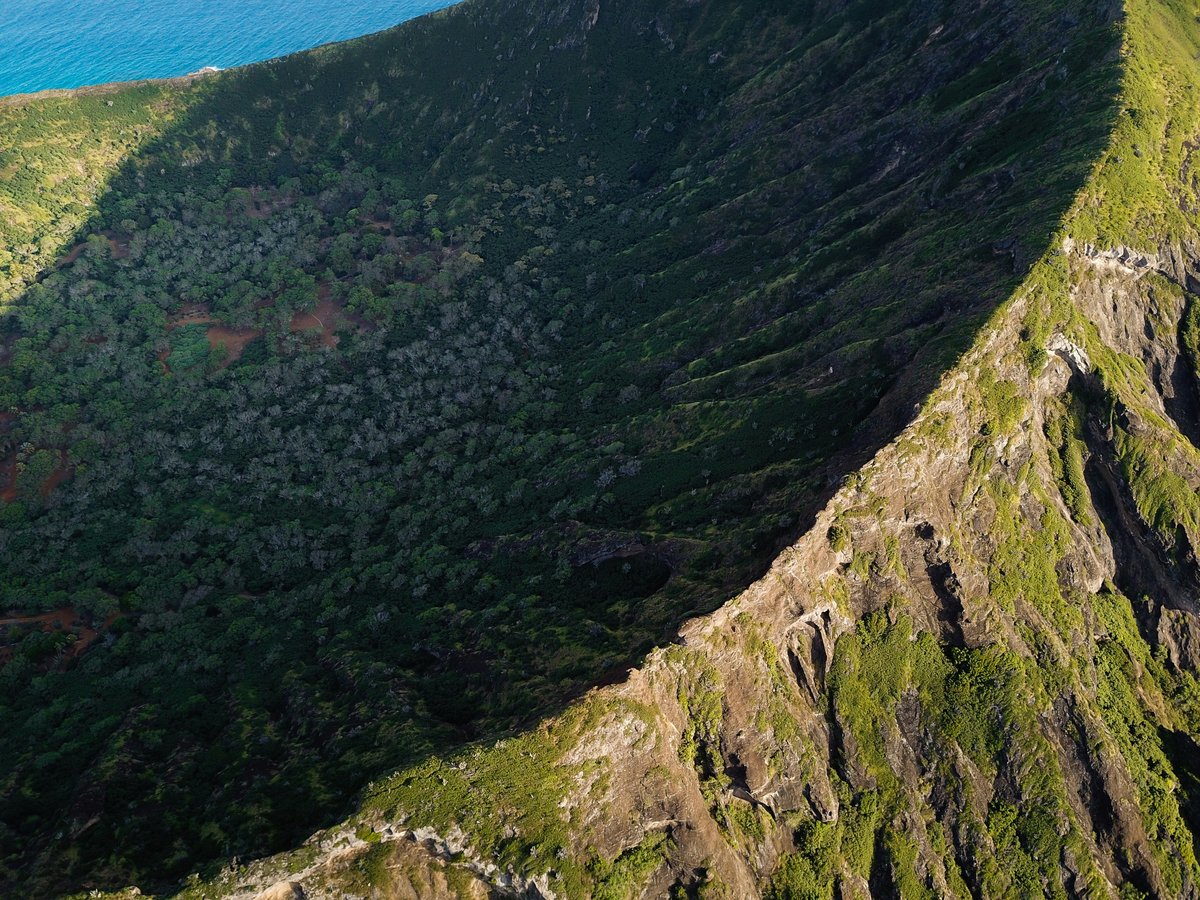
Hawaii Island covers more than 4,000 square miles, which is nearly twice the combined area of every other Hawaiian island, and that scale is the first thing that reshapes your expectations. Locals call it Big Island to sidestep confusion with the state, and the nickname understates the point: this is a place where you drive from tropical rainforest into a lava desert and then up into cattle ranch country in under two hours. The western Kona side stays dry and sunny almost year-round, its coastline lined with dark volcanic rock that drops into clear water. The eastern Hilo side receives something like 130 inches of rain a year, making it the wettest city in the United States, and the difference shows in every yard and roofline. Between them sits Waimea, a cool upcountry town where the paniolo tradition, the Hawaiian cowboys who predate their mainland counterparts by decades, still shapes the culture and the menu. Down south, Kilauea has been erupting in some form since 1983, and Hawaii Volcanoes National Park lets you walk across land that did not exist when your parents were born. The green sand beach at Papakolea, one of only four in the world, sits at the end of a wind-beaten coastal hike that no resort shuttle will take you on. Kailua-Kona's Ali'i Drive is where most first-timers orient themselves, a strip of shops and restaurants that backs onto the original royal seat of Kamehameha I, but the real character of the island lives further out, in Captain Cook's coffee farms terraced above Kealakekua Bay, in the black sand at Punalu'u where hawksbill turtles rest on the shore, in the steep-walled Waipio Valley that remains home to taro farmers who access their plots by four-wheel drive. A week here covers only a fraction of the ground.
Big Island right now
Answers about Big Island
-
Airport to city
Rent a car at Kona International (KOA). Big Island has no rail, no airport shuttle, and ride-hailing coverage is thin. Drives between major stops range from 90 minutes to 3 hours across the largest Hawaiian island. Pre-book to avoid steep walk-up premiums at the terminal counters. Budget $60-100 per day.
Read the full answer → -
Best time to visit
Mid-April through May and September through October are the months to book on Hawai'i's Big Island. The Kona Coast stays dry and warm, resort rates along Kohala drop well below their December ceiling, and both Hapuna Beach and Hawai'i Volcanoes National Park are manageable without peak-season crowds. Humpback whale season, December through March, is the one exception worth paying the premium for.
Read the full answer → -
Cost per day
Big Island runs $100/day budget (hostel dorm in Hilo, plate lunches, split car rental), $220 midrange (Kona condo, sit-down dinners, own rental car), $550+ luxury (Fairmont Orchid, helicopter over Kilauea). A rental car is non-negotiable. Hele-On Bus is fare-free but runs Hilo-to-Kona only 2-3 times daily, and the 3-hour ride leaves most of the island out of reach.
Read the full answer → -
Cultural etiquette
Big Island etiquette starts with shoes off at every doorstep and 'aloha' spoken with warmth, not as performance. Never take lava rocks from Hawai'i Volcanoes National Park. Give honu (green sea turtles) a wide berth per NOAA regulations. Standard US tipping applies. Cover shoulders at heiau. Learn 'mahalo' before anything else.
Read the full answer → -
Best day trips
Big Island's 4,028 square miles make it the only Hawaiian island large enough for proper day trips by car. Hawai'i Volcanoes National Park is the clear first pick from either coast. Kealakekua Bay works as a half-day from Kona. North Kohala, Hilo, and Mauna Kea each fill a full day with room for couples to split or share the agenda.
Read the full answer → -
Digital nomads
Big Island scores 5.2/10 for digital nomads (sourced from TTDI's editorial rubric). Fiber broadband reaches 200-300 Mbps in Kailua-Kona and Hilo town centers but drops to fixed wireless or satellite in rural subdivisions. Budget $3,500-4,200 per month including a rental car, which is non-negotiable on an island with almost no public transit. Coworking is minimal. You're trading infrastructure for 4,200-meter summit sunrises and black sand beaches.
Read the full answer → -
Family-friendly
Big Island scores 7.8/10 for family friendliness (see the TTDI Family-Friendliness Index). The volcano park, free rainforest zoo, and calm Kohala Coast beaches keep kids occupied across all ages. The catch is distance. Towns sit 45 minutes to 2.5 hours apart, so nap logistics require real planning around your home base. A rental car is non-negotiable.
Read the full answer → -
Food culture
Big Island food descends from Japanese, Filipino, Portuguese, Korean, and Chinese plantation workers who each brought separate cooking traditions. Drive-in counters across the island serve plate lunch (rice, mac salad, protein) from 7am. Poke, loco moco, malasadas, and lau lau define the local diet. Lunch is the main meal, and most restaurants close well before 9pm.
Read the full answer → -
Getting around
Rent a car. Big Island covers 4,028 square miles with no rail, no metro, and a public bus that runs roughly once per hour on its best routes. Driving from Kona to Hilo takes about 2 hours on Highway 19. Uber and Lyft operate in Kona and Hilo but coverage fades fast outside town limits.
Read the full answer → -
How to get there
Two airports serve Hawai'i's Big Island. Kona International (KOA) on the west coast handles most mainland nonstops from Los Angeles, San Francisco, Seattle, and Phoenix. Hilo International (ITO) on the east side receives limited seasonal mainland service. Nonstop flights from the US West Coast take 5 to 6 hours, with round-trip fares typically between $350 and $800 depending on season.
Read the full answer → -
Is it safe?
Big Island scores 7.8 out of 10 for solo-traveler safety (see the TTDI Solo-Safety Index). Violent crime against visitors is rare. The real dangers are the ocean and the isolation. Rip currents at unguarded beaches, car break-ins at remote trailheads, and long highway stretches with no cell reception are the actual risks. You need a rental car. Call 911 for any emergency.
Read the full answer → -
Language basics
English, spoken everywhere on Hawai'i Island. It's a US state. Hawaiian is co-official since 1978 and appears constantly in place names, road signs, and menus. Learn mauka (toward the mountain) and makai (toward the ocean) before anything else. Those two words replace compass directions in local conversation from Kona to Hilo.
Read the full answer → -
Layover guide
Big Island has two airports close to town. Kona International (KOA) is 15 minutes from Kailua-Kona's waterfront, and Hilo International (ITO) is 10 minutes from downtown Hilo. No immigration on domestic connections. Four hours is the floor to taxi out, see one stop, eat, and clear security on return.
Read the full answer → -
LGBTQ-friendly
Big Island rates 8.5/10 for LGBTQ+ friendliness (sourced from TTDI's editorial rubric). Hawaii legalized same-sex marriage in December 2013, two years before the federal ruling. The island has no dedicated gay district, but Hilo and the Kona coast are openly welcoming to same-sex couples, with broad state-level anti-discrimination protections backing the local culture.
Read the full answer → -
Where locals go
Big Island locals split along the Hilo-Kona divide. Hilo's east side is where residents gather, from the 24-hour diners and Wednesday farmers market on Kamehameha Avenue to the kava bars along the bayfront. On the Kona side, head uphill past Alii Drive to Holualoa's coffee-farming village or south to Captain Cook for working communities beyond the resort strip.
Read the full answer → -
Must-see
Hawaiʻi Volcanoes National Park on Kīlauea's rim. Entry costs $30 per vehicle, valid 7 days, no reservation needed. Sulfur-laced steam rises from vents you can walk right up to. Drive from Kona takes 2.5 hours on Highway 11, so budget a full day or overnight in Volcano Village, where the elevation keeps nights cool even in August.
Read the full answer → -
Solo travel
Big Island scores 7.8/10 for solo-traveler safety (see the TTDI Solo-Safety Index) but rates lower for overall solo-friendliness because you need a rental car for everything and the social infrastructure is thinner than on Oahu or Maui. Base in Kailua-Kona for the best chance of meeting other travelers. Safe, but isolation is the real challenge.
Read the full answer → -
This week
Big Island runs on geography, not a weekly calendar. Wednesday and Saturday mornings belong to Hilo Farmers Market on Mamo Street, with 200 vendors and $1.50 malasadas. Kona-side evenings mean manta ray snorkels off Keauhou Bay. Hawai'i Volcanoes National Park stays open 24 hours. Afternoon rain hits Hilo by 2pm most days, so plan the Kona coast for afternoons.
Read the full answer → -
3-day itinerary
Day 1 covers the Kona Coast from Kahalu'u Beach to Pu'uhonua o Hōnaunau. Day 2 drives north through Kohala to Pololū Valley and Hāpuna Beach. Day 3 crosses the island to Hawai'i Volcanoes National Park and finishes in Hilo. A rental car is non-negotiable. Total distance across three days runs about 490 kilometres, nearly all by car.
Read the full answer → -
What to avoid
Skip the overpriced helicopter tours sold at Kona cruise-ship kiosks, the generic hotel lu'aus, and any itinerary that assumes you can drive the whole island in a day. Big Island covers 4,028 square miles. Underestimating the 2.5-hour drive between Kailua-Kona and Hilo on Highway 19 is the single most common first-timer mistake, and winter shorebreak kills experienced swimmers at unguarded beaches.
Read the full answer → -
What to pack
Pack reef-safe sunscreen (Hawaii bans oxybenzone as of 2021), sturdy hiking shoes for lava rock at Hawai'i Volcanoes National Park, and warm layers for the 20°C temperature swing between Kona's coast and Mauna Kea's near-freezing 4,205-meter summit. A packable rain shell is non-negotiable on the Hilo side. Skip the umbrella.
Read the full answer → -
Where to stay
Kailua-Kona for a first visit. The dry leeward coast sits 15 minutes from KOA airport, with Ali'i Drive restaurants in walking distance and mid-range hotels around $200 per night. The Kohala Coast resorts run $400-800. For the volcano side, Hilo has hotels under $180 and sits 45 minutes from Hawaii Volcanoes National Park.
Read the full answer →
Deep guides for Big Island
-
Best Time to Visit Big Island, by Season
Big Island's Kona coast highs range from February's 27°C to August's 31°C, a swing of roughly 4°C. The month you pick depends on crowds, cost, and Hilo-versus-Kona rainfall, not temperature. Here is the month-by-month breakdown, with a single best window named for each kind of traveler.
Read the guide → -
Big Island Restaurants: What's Worth It
The Big Island's restaurant scene splits into twelve kitchens across Hilo, Honokaa, and Kailua-Kona, sorted into two tiers with a named verdict on six. Every recommendation built from the working-cook layer of the island, not the hotel lobby.
Read the guide →
Curated lists for Big Island
attractions
-
Best free attractions
These ten places are for travellers who would rather walk than book, judging a day by the ground covered rather than the tickets they collected. The list runs from a national park dating from 1916 that holds UNESCO World Heritage Site status, to a town square in Hilo and a state monument in Pāhoa, with a state park whose hours run 08:00 to 17:30, two gardens with founding dates in the 1970s, and a handful of state and county parks that never make the brochure covers filling out the middle. The island is large. Our honest advice: pick a side and stay on it for the day rather than chasing every pin on the map. Hilo alone gives you three of these entries, so a slow morning in town pairs naturally with a single drive out. This is a list for walkers, for people who come back to the same place twice, and for anyone who wants the island itself rather than a tour of it.
See the picks → -
Must-see attractions
Big Island's must-see list is not a beach list. These twelve entries are churches, temples, heiau, a landmark headland, and a royal-era palace, and together they trace how the island has been settled, ruled, and worshipped in. The oldest date in the set is 1790, carried by an archaeological site on the island of Hawaiʻi, and Hulihee Palace on Aliʻi Drive dates from 1838. Several entries hold National Historic Landmark status, Ka Lae and Puʻukoholā Heiau National Historic Site among them, and others are listed on the National Register of Historic Places, including Mokuaikaua Church and the Star of the Sea Painted Church. This list is for the traveller who will trade one afternoon of sand for an hour of standing somewhere that matters. Many of these places are still in use by worshippers or residents, so treat them that way: dress for a church, keep your voice down, and check opening details before you drive. The island is large and the sites are spread across it, so plan your days by coast and do not try to see them all at once.
See the picks →
food
-
Best cafes
Big Island coffee is not a metaphor: it is a crop, grown on the slopes above Kailua-Kona and down in Ka'ū, and the cafes worth your time are the ones that treat it that way. This list runs from Hilo's rainy bayfront to the dry Kohala coast, from a mill's own retail counter in Pahala to a bubble-tea window on Manono Street, because a cafe on this island is rarely just a cafe: it is a farm stand, a surfer's stop before dawn, a lunch counter for the hospital shift, a resort concession, a vegan kitchen. What ties them together is proximity to the bean and to the people who drink it every day. The twelve below are ordered for a visitor who wants somewhere real to sit at 07:00, somewhere to refill a thermos before the Saddle Road drive, and somewhere to end a Volcano day with something warm. Every address, phone number, and service hour is drawn from the venue's own listing; the opinions are the editor's.
See the picks → -
Best restaurants
The Big Island's restaurant scene divides cleanly along its two coasts: the windward Hilo side, where a compact grid of one- and two-story storefronts along Kamehameha Avenue and Kilauea Avenue holds most of the town's kitchens, and the Kona side to the west, where the eating scatters along Palani Road and out toward Honokaa on the northern uplands. What the list below tracks is the working-cook layer of the island: pizza ovens that also fire regional plates, a drive-in that treats donuts and burgers with equal seriousness, ramen counters, poke windows, Thai kitchens run by their namesakes. These are not resort dining rooms. Addresses skew to 96720 in Hilo and 96740 in Kailua-Kona, with a handful in Honokaa's 96727; hours skew early and close by 21:00 on most nights. If you are eating your way around the island rather than staying inside a hotel, this is the layer that will feed you: twelve rooms chosen for cooking that argues for itself against the address, not for the address.
See the picks →
Browse by traveler type
Find a flight to Big Island
Live fares to Big Island appear here once cookies are accepted.
Last verified by automated review (v1.7.2) on . What is automated review?