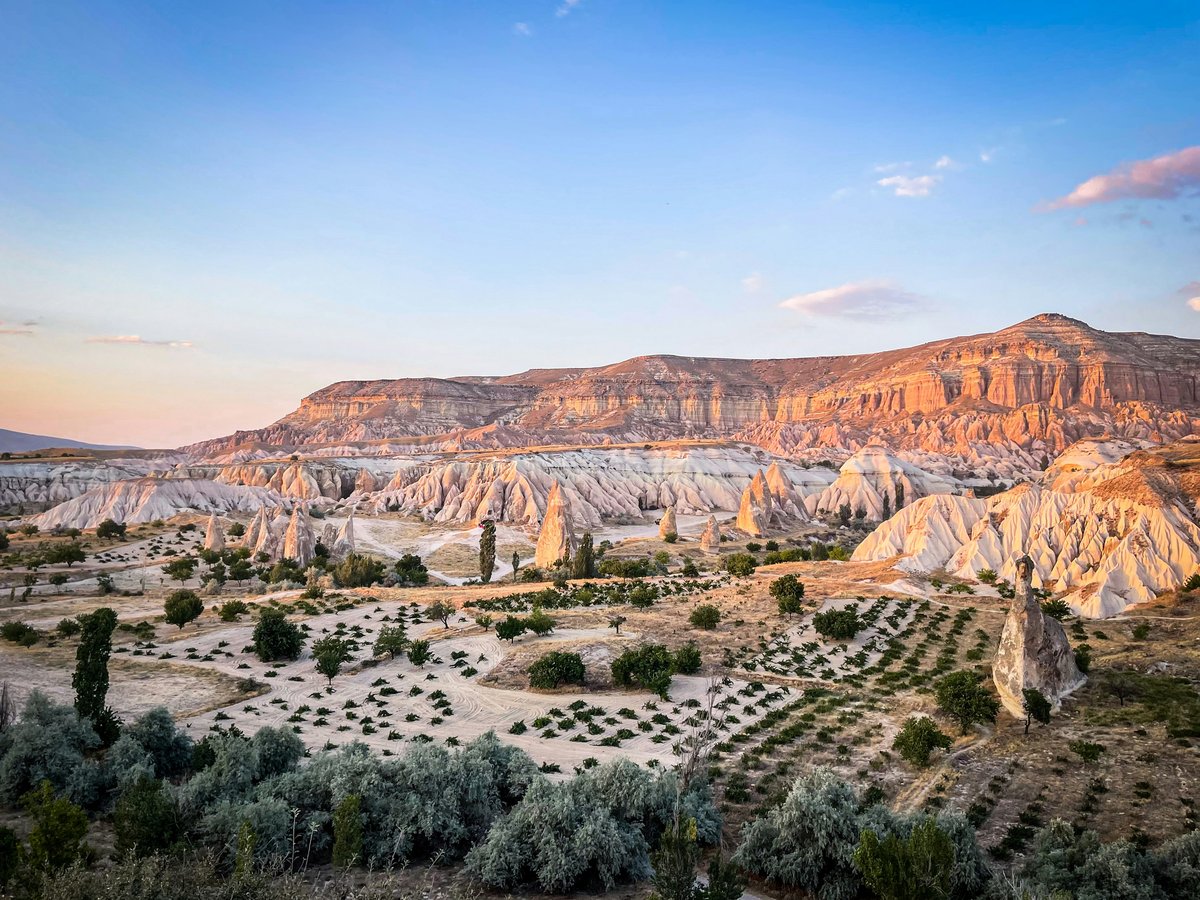
Best Time to Visit Cappadocia, by Season
Cappadocia's volcanic valleys swing from -4.5°C February nights to 31.9°C August afternoons. This guide projects the five-year climate averages across all 12 months and names the single best window for seven kinds of traveller, from photographers and hikers to families locked into school calendars.
Published · Updated
1 January and February Drop Below -4°C at Night. That's the Whole Point.
You hear it before you see it. A propane burner fires somewhere above Göreme before dawn, and the sound cuts through February air that averages -4.5°C at its lowest. The fairy chimneys below carry a dusting of snow, the tufa glowing faintly pink against the grey Anatolian plateau. February is Cappadocia's coldest month, with an average high of only 6.2°C. January is barely warmer at 7.1°C, its overnight lows averaging -3.5°C.
The cold is the point for a certain kind of visitor. Cappadocia's volcanic formations look different under frost. The hoodoos in Devrent Valley take on a lunar quality when coated white. Pigeon Valley's cliff faces hold snow in their pockmarks for days. Photographers who know the region tend to target late January through mid-February for this light.
That said, balloon flights get cancelled frequently when conditions hover near those February lows. Operators in Göreme sometimes ground flights for several consecutive mornings in deep winter. If the balloon ride is your primary reason for visiting, January and February are a gamble.
The cave hotels in Ürgüp and Göreme handle the cold well. Volcanic rock insulates naturally, and the underground cities at Derinkuyu and Kaymakli hold a steady temperature year-round regardless of the freeze on the surface. Rose Valley and Love Valley trails get icy patches when mornings sit near -3.5°C or -4.5°C, but January afternoons at 7.1°C are walkable with layers.
For budget travellers, January and February tend to carry the lowest accommodation rates across the region. Tourism demand at a 6.2°C average high is thin. Derinkuyu and Kaymakli make strong full-day winter excursions from Göreme, keeping you underground and warm while January's -3.5°C or February's -4.5°C does its work above.
Cappadocia's volcanic formations look different under frost. The hoodoos in Devrent Valley take on a lunar quality.
2 March Averages 11.3°C but Still Freezes at Night. Don't Be Fooled.
The sun hits the cliff face above Uçhisar Castle early on a March morning, and for a moment the stone looks warm. It is not. March in Cappadocia averages 11.3°C for a high and -1.0°C for a low. The swing from a comfortable afternoon down to sub-zero night crosses the freezing line daily, and that transition catches visitors off guard.
March is Cappadocia's misleading month. The daytime number sounds walkable, and it is. You can cover Ihlara Valley's gorge in reasonable comfort by midday when the air sits in double digits. But the region rests on the high central Anatolian plateau, and that altitude makes the overnight drop steep. At -1.0°C, frost still forms on the vineyards around Avanos and along the trail heads in Rose Valley.
Balloon operators in Göreme see more consistent flying windows in March compared to January's 7.1°C freeze and February's 6.2°C average. The 11.3°C daytime high means calmer morning conditions, though early March still leans toward the pattern those colder months set. Late March behaves more like a cool April.
For hiking, March rewards layering. Göreme's Open Air Museum and the paths through Pigeon Valley are comfortable in direct sun by late morning, but shaded sections in Love Valley stay cold well into the afternoon. The 11.3°C high and the -1.0°C low are not different days. They're the same one.
Accommodation in Ürgüp and Göreme during March tends to price below the April-May window, and the valleys are quiet. Mind you, some restaurants in Avanos may still run reduced winter hours until April brings the 18.5°C highs. The spread between 11.3°C in the afternoon and -1.0°C at night means you should pack for both seasons even if you only plan to be outdoors at midday.
The 11.3°C high and the -1.0°C low are not different days. They're the same one.
3 April at 18.5°C and May at 22.1°C Are the Window Most Visitors Should Book
The wildflowers come first. By mid-April, the slopes above Göreme carry patches of yellow and purple that you won't see in any other month. The air at 18.5°C for an April average high sits in that narrow band where you can hike all day without overheating or layering up. Nights cool to an average of 5.2°C, enough for comfortable sleep in a cave hotel with the window cracked open.
May pushes the high to 22.1°C with lows around 8.4°C. This is the month where everything in Cappadocia works at once. Balloon flights launch most mornings. The trails through Rose Valley and Red Valley are dry and firm underfoot. Outdoor dining in Ürgüp and Göreme moves onto terraces. The gap between April and May is worth understanding if you're choosing between them. April at 18.5°C is cooler and tends to draw fewer visitors. May at 22.1°C is warmer and the landscape is fully green, but you'll share it with more people.
For first-time visitors who want the full Cappadocia experience, May is likely the single best month. The 22.1°C average high is warm enough for a full day outside but stays well below the June reading of 26.8°C, where heat fatigue starts to factor in. The 8.4°C overnight low means you'll still feel a chill at dawn during a balloon launch, but a light jacket handles it.
April is the better pick for hikers and photographers who prefer cooler conditions. At 18.5°C, you can spend a full afternoon working through the Devrent Valley formations or cover Ihlara Valley end to end without heat becoming a factor. The 5.2°C nights call for a proper jacket at evening meals in Avanos or Uçhisar.
These two months represent the point where Cappadocia's value runs highest against the weather. April's 18.5°C and May's 22.1°C bracket the most versatile outdoor conditions the region sees all year, and the landscape between Göreme and Ürgüp is at its greenest.
May at 22.1°C is the month where everything in Cappadocia works at once.
4 June Through August Hits 31.9°C and Brings Cappadocia's Biggest Crowds
The shade disappears from Love Valley's narrow corridor by late morning in July. At 30.7°C for an average high, the exposed tufa formations radiate heat back at you from both sides. Your water bottle feels warm within the hour. Peak season. The temperatures explain both why the crowds come and why they probably shouldn't.
June eases in at 26.8°C with lows of 12.8°C. Early June still feels like a warm extension of May's comfortable 22.1°C window. To be fair, it remains genuinely pleasant. But the climb is rapid after that. July averages 30.7°C with 15.4°C nights. August is the hottest month at 31.9°C highs and 16.2°C lows.
The balloon launch window shifts in summer. Operators in Göreme push takeoff earlier to beat the thermal turbulence that builds as the plateau heats through the morning. The flight itself remains the signature Cappadocia experience, but at 30.7°C and 31.9°C on the ground, the rest of the day needs a plan.
The underground cities at Derinkuyu and Kaymakli become natural retreats from the surface temperatures, staying cool regardless of August's 31.9°C above. Göreme's Open Air Museum gets hot in the afternoon, and the rock-cut chambers inside provide only modest relief.
The case against summer comes down to numbers. June at 26.8°C is manageable but marks the start of peak pricing across Cappadocia. July at 30.7°C is hot and crowded. August at 31.9°C is the most expensive month and the least comfortable for outdoor activities. If you have any flexibility, September's 25.9°C delivers nearly everything summer promises with fewer concessions.
Worth noting, the overnight lows in summer are Cappadocia's most comfortable. June's 12.8°C, July's 15.4°C, and August's 16.2°C mean you can eat on a terrace in Avanos or walk the streets of Uçhisar after dark without a jacket. The nights are the real draw of summer Cappadocia. The days are the cost.
If you have any flexibility, September's 25.9°C delivers nearly everything summer promises with fewer concessions.
5 September Averages 25.9°C in Cappadocia and Most Tourists Have Already Left
The light changes in September. It drops lower over the Göreme valley by late afternoon, and the fairy chimneys throw longer shadows than they did under July's flat overhead glare. The average high of 25.9°C sits 6 degrees below August's 31.9°C, and you feel every one of those degrees on the trail.
September's overnight low of 11.4°C brings back the kind of temperature swing that makes Cappadocia's dawn balloon launches feel distinct from the rest of the day. The air carries a slight bite at altitude. By midmorning the warmth comes up, but it never reaches July's punishing 30.7°C mark. You can hike Red Valley from end to end without rationing water.
This might be Cappadocia's most underrated month. The 25.9°C high is warm enough for every outdoor activity the region has. Pigeon Valley and Ihlara Valley are both comfortable all day. The terraces in Ürgüp and Avanos stay open for evening meals, and the 11.4°C low makes a light layer feel right rather than necessary. Compared to May's 22.1°C high and 8.4°C low, September runs about 4 degrees warmer by day and 3 degrees warmer at night.
The crowds thin noticeably after the first week. European summer holidays end, and visitor numbers in Cappadocia fall well before the weather turns. Hotels in Göreme and Uçhisar begin adjusting rates, though the discount is less steep than the October drop that follows when highs fall to 19.5°C.
For couples and solo travellers who want warm weather without peak-season pressure, September at 25.9°C is arguably the single best month to visit Cappadocia. You lose the wildflower bloom that April's 18.5°C brings to the slopes. You gain clear skies and the golden-hour light over Devrent Valley and Love Valley that built the region's reputation among photographers. The 11.4°C overnight low keeps cave hotels in Göreme comfortable without heating.
This might be Cappadocia's most underrated month.
6 October Drops to 19.5°C, November to 14.6°C. The Quiet Shoulder Opens.
The vine leaves turn in Avanos first. By the second week of October, the vineyards along the road toward Ürgüp carry patches of copper and gold against the grey tufa behind them. The average high of 19.5°C makes October feel like a cooler echo of April's 18.5°C, and in many ways it is. The 5.7°C overnight low sits close to April's 5.2°C.
But the feel is different. Days are shorter. The light slants. Sunset comes earlier over Uçhisar Castle, and balloon operators in Göreme start seeing more weather-related cancellations than they did through the September run at 25.9°C. October is still a functional hiking month. Rose Valley and Pigeon Valley hold warmth through midday, and the 19.5°C high keeps Ihlara Valley's gorge comfortable.
November brings a more decisive shift. The average high drops to 14.6°C, putting it close to March's 11.3°C territory. The 1.8°C overnight low means frost returns to the valleys around Göreme and Avanos. This is the month where Cappadocia's outdoor season effectively ends for most visitors. Love Valley and Devrent Valley are still walkable in midday sun, but the window between cold morning and cold evening is narrow.
December continues the decline. A 9.0°C average high and -1.3°C overnight low bring the region back to winter conditions. The underground cities at Derinkuyu and Kaymakli become the primary draw again, their chambers temperature-stable while the surface cools into single digits.
For budget-conscious travellers, the October-through-November window carries steep price drops that still come with usable weather. October at 19.5°C is genuinely comfortable for hiking, balloon flights, and outdoor dining in Ürgüp. November at 14.6°C requires layers and shorter days, but accommodation rates across Göreme tend to reflect the quieter demand. December at 9.0°C edges back toward the winter photography window that January and February own.
October at 19.5°C feels like a cooler echo of April's 18.5°C, and in many ways it is.
7 The Verdict. One Month Per Traveller, No Hedging.
A sunrise over Göreme in May at 22.1°C is not the same experience as a sunrise over Göreme in January at 7.1°C. Both are worth having. The question is which weather window matches what you need from Cappadocia.
For first-time visitors who want everything, May is the answer. The 22.1°C average high and 8.4°C low hit the range where every activity works. Balloon flights, full-day hikes through Rose Valley, outdoor dinners in Ürgüp. Aim for the second or third week.
For photographers chasing snow and empty landscapes, February at 6.2°C highs and -4.5°C lows delivers conditions no other month matches. Accept the balloon cancellation risk. The fairy chimneys above Göreme under frost are worth it.
For hikers who prioritize trail comfort, April at 18.5°C with 5.2°C nights is the pick over May. Cooler, less crowded, and the wildflower bloom adds colour to Rose Valley and Pigeon Valley that fades by June's 26.8°C.
For couples who want warm evenings and golden light without peak-season density, September at 25.9°C and 11.4°C is the window. The closest thing Cappadocia has to an insider's recommendation.
For budget travellers willing to bundle up, January at 7.1°C highs and -3.5°C lows tends to come with the year's lowest rates. November at 14.6°C is the milder fallback, still well below peak pricing.
For families locked into summer by school calendars, early June at 26.8°C with 12.8°C lows is far more comfortable than late July at 30.7°C or August at 31.9°C. Avoid the second half of July onward.
For underground-city enthusiasts who care more about Derinkuyu and Kaymakli than balloon flights, the month barely matters. Those subterranean complexes hold steady temperatures whether it's February at -4.5°C or August at 31.9°C above. October at 19.5°C and 5.7°C is a reasonable compromise if you also want surface time in Ihlara Valley and Devrent Valley.
A sunrise over Göreme in May at 22.1°C is not the same experience as a sunrise in January at 7.1°C. Both are worth having.
Last verified by automated review (v1.7.0_onboard-cappadocia-flagship-2026-06-24) on . What is automated review?