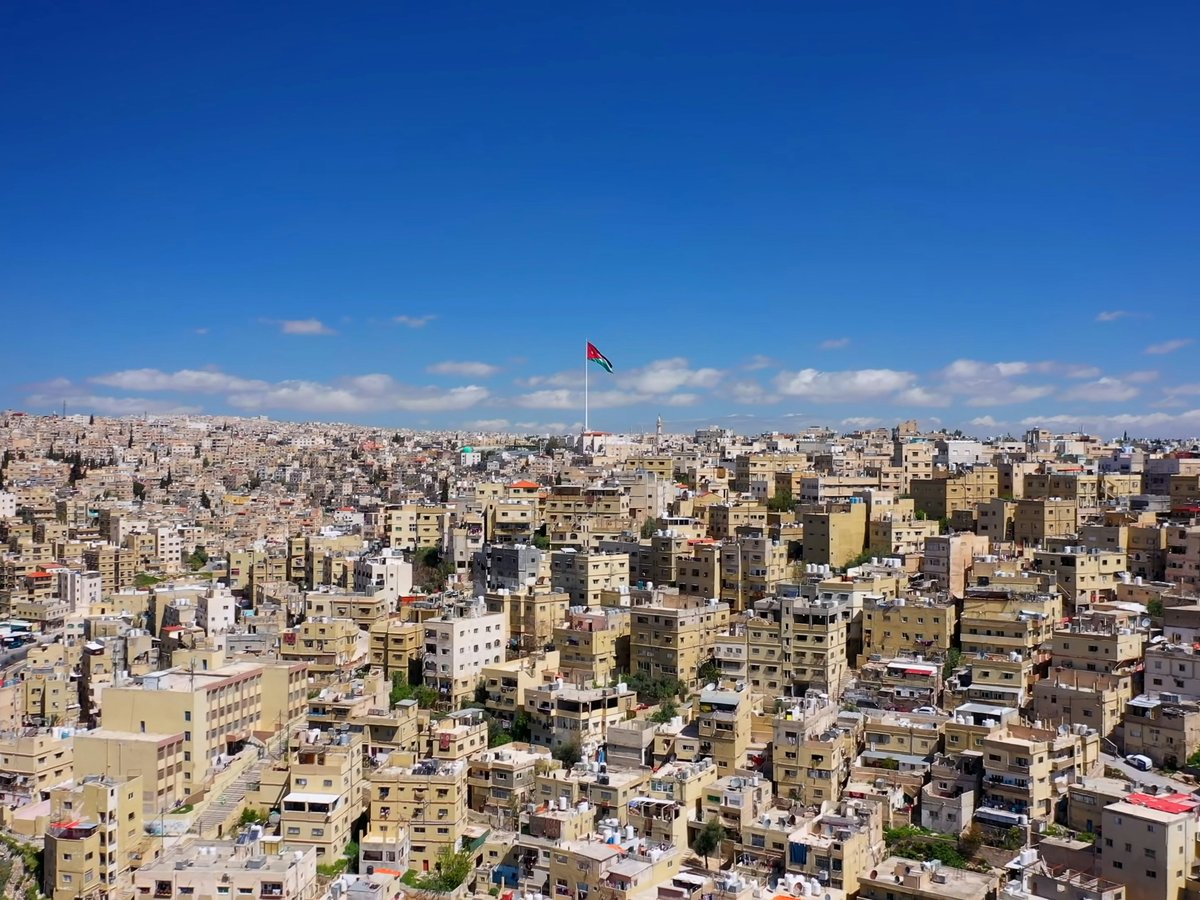
Best Time to Visit Amman, by Season
Amman's temperature swings from February lows of 5.7°C to August highs of 33.6°C, creating sharply different cities depending on your arrival month. Here is the month-by-month case, with the single best window named for every kind of traveller.
Published
1 Amman Is Not the Desert You Imagine, and February's 5.7°C Nights Prove It
You step off the plane at Queen Alia International Airport in January and the cold catches your throat before you reach the taxi queue. A raw wind scrapes across Amman's limestone hills, carrying the mineral smell of damp stone that locals know from childhood. January's average high holds at 13.2°C. Evenings drop to 6.3°C. February barely moves the needle, with highs at 13.1°C and lows dipping to 5.7°C, the coldest overnight average in Amman's entire calendar.
This surprises nearly every first-time visitor to Amman. The city perches on a high plateau, and that altitude strips away the warmth people expect from a capital in the Levant. Compare February's 5.7°C low to August's 22.0°C low. That is a 16.3°C gap between the city's coldest and warmest nights, and it reshapes what you pack, where you eat, and how long you stay outside in Amman.
December belongs in this cold bracket too. Its average high of 15.0°C and low of 8.5°C mark the onset of Amman's winter, though December tends to feel slightly more forgiving than the January-February trough. The stone steps of Downtown Amman hold their chill well past noon in December. By January, when the high drops that final 1.8°C back to 13.2°C, café owners along Rainbow Street move their chairs fully indoors.
The trade-off for visiting Amman in winter is real, though. Fewer visitors crowd the Citadel and quieter streets thread through Jabal al-Weibdeh. Hotel pricing across Amman tends to drop when temperatures do. To be fair, some travellers find Amman below 10°C genuinely uncomfortable. The swing between July's 33.1°C high and January's 13.2°C high spans 19.9°C, nearly a full climate band. But if you own a decent jacket and prefer the Temple of Hercules without tour groups in every frame, February's 13.1°C days offer enough warmth for walking by midafternoon, and the 5.7°C evenings carry a dry, clean bite that London or Amsterdam at the same reading cannot match.
February's 13.1°C days offer enough warmth for walking by midafternoon, and the 5.7°C evenings carry a dry, clean bite that London or Amsterdam cannot match.
2 March to April: The 7.2°C Jump That Opens the City
March's warmth arrives with the smell of orange blossoms along the side streets of Jabal Amman. After months of grey limestone and damp cold, Amman loosens. March's average high reaches 17.0°C, a noticeable jump from February's 13.1°C. Nights still sit at 8.2°C, cool enough for a proper jacket on Rainbow Street after dinner. Then April lands and Amman shifts tempo entirely. Highs reach 24.2°C. Lows climb to 13.2°C. The 7.2°C leap from March's 17.0°C to April's 24.2°C is the largest monthly swing in Amman's entire year.
April's 24.2°C hits close to the ideal temperature for all-day exploration on foot across Amman. Warm enough for shirtsleeves at the Roman Theatre by noon, cool enough at 13.2°C overnight that you sleep with the window cracked. Worth noting, this April high of 24.2°C closely mirrors October's 26.0°C, making those two months Amman's twin comfort windows. But April has one edge. It leads into warmth, so each passing week in Amman feels more generous. October leads into November's 20.8°C decline.
March deserves its own assessment. At 17.0°C for the average high, it is warmer than December's 15.0°C but still carries a morning bite at 8.2°C that catches visitors expecting instant relief from a northern winter. The Citadel's exposed hilltop in March can feel noticeably cooler than the 17.0°C thermometer reading downtown would suggest, since wind across the ruins strips the sun's warmth away fast. March also brings green hillsides across the outskirts of Amman, a visual window that vanishes by May when 27.7°C highs bake the grassland to brown.
The practical question for travellers with flexibility is whether March or April better suits their trip to Amman. April is the cleaner pick. Its 24.2°C high versus March's 17.0°C makes the difference between comfortable and tolerable for a full day walking between Jabal Amman and Jabal al-Weibdeh. April's 13.2°C lows still call for a light layer after dinner on Rainbow Street, but March's 8.2°C mornings demand the winter coat you thought you could leave at home.
3 May Is the Hinge Month Most Visitors Misjudge
By May, the shade side of every street in Downtown Amman becomes the important side. You cross near Al-Husseini Mosque and feel the temperature difference between sun and shadow on your forearms, the sunny pavement radiating 27.7°C of stored heat while Amman's narrow alleys still hold morning cool. Nights have softened to 16.3°C, warm enough that restaurant terraces along Rainbow Street fill after sunset and stay full past midnight.
May sits in a strange position on Amman's calendar. It is not April's 24.2°C comfort and it is not June's 31.5°C wall of heat. Its 27.7°C average high is warm but workable in Amman's dry air. You can still walk the city's hills for hours if you carry water and rest during early afternoon. The gap between May's 27.7°C and June's 31.5°C is only 3.8°C, but those degrees cross a line that changes behaviour. At 27.7°C in Amman, you sightsee on a normal schedule. At 31.5°C, you plan your day around air-conditioned retreats.
May tends to perform better than its reputation suggests. Many writers lump it with Amman's summer, but the temperature data tells a different story. May's low of 16.3°C runs 3.5°C below June's 19.8°C, meaning evenings in Amman stay genuinely pleasant. Compare that to July's 21.6°C or August's 22.0°C lows, where the heat never fully releases from the stone after dark.
The case against May in Amman is the transition effect. Each week runs warmer than the last, so a visit in early May might feel closer to April's 24.2°C, while late May pushes toward June's 31.5°C territory. If your dates are fixed in late May, you are functionally visiting summer Amman. Mind you, even late May's warmest days leave you well below July's 33.1°C peak and August's 33.6°C ceiling. For the traveller who missed the April window, early May at 27.7°C remains a strong secondary pick for exploring Amman on foot.
4 June Through August: Amman's 33.6°C Plateau and the Case for Going Anyway
Amman's summer heat is a dry, insistent pressure on the top of your skull. By late June, when afternoon highs average 31.5°C, you feel the warmth radiating off the pavement the moment you step out of any doorway in Downtown Amman. July pushes to 33.1°C. August peaks at 33.6°C, the hottest average high in Amman's year, though the difference between July and August amounts to a barely perceptible 0.5°C. The three months form a heat plateau across Amman that does not meaningfully break until September.
The nighttime figures in Amman tell a separate story. June lows average 19.8°C, still a temperature where a walk through Jabal al-Weibdeh after dinner feels rewarding. By July, lows reach 21.6°C. August lows of 22.0°C mean the stone walls of Downtown Amman radiate stored warmth well past midnight. That 2.2°C range across summer nights in the city, from June's 19.8°C to August's 22.0°C, is narrow enough that you will not notice the difference without a thermometer.
Amman's dry heat does behave differently than the same reading in coastal cities. The 33.6°C peak in August likely feels less oppressive than Istanbul or Athens at 30°C, where moisture thickens every breath. You can walk the Citadel grounds at sunrise, when Amman's temperature sits near August's 22.0°C overnight floor, and have the Temple of Hercules nearly to yourself before the day's heat builds.
The practical case for Amman in summer comes down to economics. June through August is the lowest-price, lowest-crowd window across the city. The traveller who accepts June's 31.5°C to August's 33.6°C range and builds an indoor-heavy itinerary around Amman's museums and galleries can experience a version of the city that barely resembles spring. September's 30.4°C average high signals the first relief. By October, highs drop to 26.0°C. But leaving Amman in early September means catching the initial easing at 30.4°C before the autumn crowds discover the same idea.
5 October Is April's Mirror, and It Might Be the Better Pick
The first thing you feel in October is the absence of weight. After September's lingering 30.4°C highs, the shift to October's 26.0°C average across Amman is like someone turned down a dial behind your eyes. The light changes too. Limestone buildings along Jabal Amman glow amber in October's lower sun, and shadows stretch longer across the staircases of Jabal al-Weibdeh in a way that June's overhead glare never allows.
October's 26.0°C high in Amman compares directly to April's 24.2°C. The difference between the two months is only 1.8°C. But October's low of 16.7°C runs 3.5°C warmer than April's 13.2°C, making October evenings in Amman more forgiving for outdoor dining and late walks through the city. April can still sting after dark if you are sitting on a rooftop in Jabal Amman with no shelter from the wind. October at 16.7°C keeps you comfortable in a light shirt well past sunset.
So why does April in Amman get the attention? Partly seasonal momentum. Travellers escaping European winters want March or April as a warm-up destination, and April's 24.2°C delivers on that promise. October works against the northern-hemisphere calendar, when most visitors are returning from summer trips rather than starting new ones. The result is that October in Amman, despite its near-identical comfort zone at 26.0°C, tends to see fewer visitors and lower pricing.
The case for October sharpens when you compare what follows each month. After April, you head into May's 27.7°C and June's 31.5°C, meaning any extended stay faces diminishing comfort. After October, you descend into November's 20.8°C and December's 15.0°C, a cooling trend that rewards an extra week in Amman with crisp walking weather rather than punishing it with heat. November at 20.8°C, with lows of 12.9°C, might be the most underrated month on the whole calendar. October's 26.0°C is the single best daytime temperature in Amman's year for the traveller who wants to walk all day and eat outdoors at 16.7°C after dark.
October's 26.0°C is the single best daytime temperature in Amman's year for the traveller who wants to walk all day and eat outdoors at 16.7°C after dark.
6 November and December: Amman's Underpriced Shoulder Season
A tea vendor near the Roman Theatre pours from a dented brass kettle, and the cardamom steam dissolves into November air at 20.8°C. It is sweater weather across Amman, not coat weather. November occupies a narrow band that most travellers overlook, a month where Amman's daytime temperature still permits full outdoor exploration while the 12.9°C lows make sleeping effortless. November likely draws fewer visitors to Amman than almost any other month, partly because 20.8°C sounds cold to travellers comparing against Jordan's desert reputation.
December marks the real transition in Amman. Highs drop to 15.0°C. Lows settle at 8.5°C. The streets of Downtown Amman grow quieter as December progresses, and the walk from King Faisal Street up to the Citadel, fully exposed to wind on the upper ridge, can feel bracing by late afternoon. You notice December's 8.5°C mornings in a way you did not notice November's 12.9°C. That 4.4°C gap between the two months' overnight lows changes the calculation for early risers planning a sunrise visit to the ruins.
For perspective, December's 15.0°C high sits close to February's 13.1°C and January's 13.2°C, placing all three months in Amman's cold bracket. But December has one advantage over January and February in the city. It arrives before the deepest cold. January's 6.3°C lows and February's 5.7°C lows represent the absolute floor of Amman's temperature range. December's 8.5°C feels forgiving by comparison.
The budget case for November and December in Amman is strong. With summer crowds long gone and spring still months away, both months offer the city with less competition for everything from restaurant tables in Jabal Amman to guided day trips to Jerash. November in particular deserves consideration from the traveller who finds April's 24.2°C appealing but cannot travel in spring. At 20.8°C, November delivers a cooler but still comfortable version of the same walking city, with Amman's 12.9°C lows keeping even the latest evening stroll manageable.
7 The Verdict: Your Best Month in Amman Depends on What You Came For
Stand on the Citadel in April at 24.2°C and Amman looks like a postcard, warm stone under clear sky, the sun on your shoulders but not yet on your nerves. That is what the best travel month delivers. Weather disappears as a factor, and you can focus on the city. For most visitors to Amman, the choice comes down to April or October.
For the first-time visitor who wants the most comfortable experience in Amman, April wins. Its 24.2°C high and 13.2°C low provide the widest comfortable window for outdoor activity. You can walk from the Roman Theatre up to the Citadel and back through Rainbow Street without stopping for heat or reaching for a jacket at any point in the day.
For the repeat visitor or the traveller who has seen the Levant in spring, October at 26.0°C high and 16.7°C low is the stronger pick for Amman. Warmer evenings than April, fewer crowds at Jabal al-Qal'a, and a different quality of amber light across the seven hills.
For the budget traveller who tolerates cool conditions, January offers Amman's lowest crowd density. Highs of 13.2°C and lows of 6.3°C call for proper layering, but the Citadel and Rainbow Street remain fully accessible year-round, and pricing across Amman drops with the temperature.
For heat-tolerant travellers, June at 31.5°C gives Amman's deepest low-season pricing with dry heat that feels manageable in the morning hours before the 19.8°C overnight floor has fully lifted.
For families with children, late March at 17.0°C and late October at 26.0°C bracket most school-holiday calendars on both ends. March requires layers at 8.2°C overnight in Amman. October is warm enough for a full day at the Dead Sea without July's 33.1°C or August's 33.6°C readings bearing down.
The single least comfortable month for most visitors to Amman is August, at 33.6°C average highs and 22.0°C lows that never let the stone cool. The single best month, weighed across comfort, crowds, and cost, is October. April's 24.2°C is the more popular choice for Amman, but October at 26.0°C with 16.7°C evenings tends to be the smarter one.
The single best month, weighed across comfort, crowds, and cost, is October at 26.0°C and 16.7°C.
Last verified by automated review (v1.7.2_onboard-amman-flagship-2026-09-13) on . What is automated review?