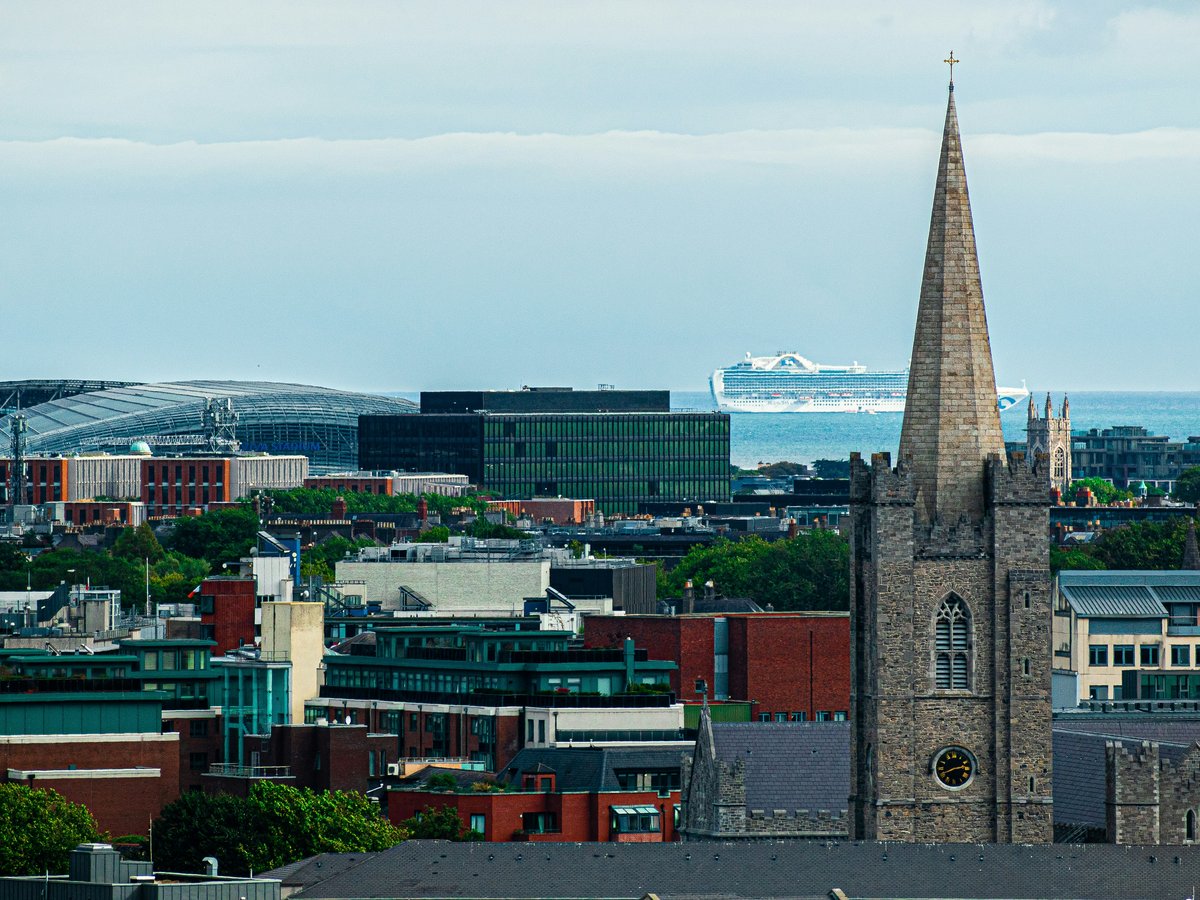
Dublin With Kids: What Works
Dublin earns an 8.2 for family friendliness, a number that maps to a specific daily rhythm of Phoenix Park mornings, free museum afternoons, and DART escapes to Howth. Follow that shape and the city delivers. Break it and you are queuing for the Book of Kells with a screaming toddler.
Published
1 Dublin Scores 8.2 for Families, but That Number Has a Shape You Need to Know
The rain hits sideways on Grafton Street and your three-year-old has decided the cobblestones are a personal insult. Dublin's family-friendly score of 8.2 seems generous in that moment, but it is not wrong. That number reflects a city where family infrastructure clusters south of the Liffey and along the DART line, rewarding a specific daily rhythm and punishing the default tourist one.
Here is the shape. Phoenix Park and Dublin Zoo anchor the morning, with zoo admission currently around €22 per adult and €17 per child for a roughly three-hour circuit that absorbs peak energy. The free museum circuit fills the post-lunch window. The Natural History Museum, the National Gallery, and the National Museum of Ireland on Kildare Street sit within 200 metres of each other, all free, all indoors. When the city starts to feel too tight, the DART to Howth runs about 25 minutes from Connolly Station on a Leap card fare of roughly €3.50 for adults.
The traps are equally specific, and you should know them before you plan anything. Skip the Book of Kells with children under ten. An €18 adult ticket, a 30-to-60-minute queue with no shade, and a dim room where whispering is enforced. Your child will last 90 seconds. Trinity College is for adults travelling without children. Temple Bar funnels families into €16 lunches when Camden Street, two blocks south, serves the same food for €9. St. Stephen's Green looks like the obvious park, but its 3.5 hectares of flowerbeds and rails serve a sitting park. Phoenix Park's 707 hectares serve a running park. When your child has been confined to a hotel room since half past six, that distinction is everything.
The seven sections that follow map these choices. Not the Dublin of guidebook aspiration, but the Dublin that works when someone in your group has a nap window and another one has opinions about cobblestones.
That 8.2 is earned, but it assumes you know which Dublin to show your children and which to walk past.
2 Phoenix Park Is the Escape Hatch Every Dublin Day Needs, but Start at the Wrong End and You Will Regret It
Wet grass and cold earth. That is what Phoenix Park smells like at half past nine on a June morning, before the school groups arrive and the café queue reaches the door. A jackdaw screams from a sycamore near the Parkgate Street entrance. Somewhere ahead, fallow deer graze maybe 30 metres from the path near the Papal Cross, unbothered by the toddler who has discovered grass at speed.
Phoenix Park covers roughly 707 hectares, about five times the size of London's Hyde Park. The scale is the point. This is not a manicured city square with railed-off flowerbeds and a pond. This is somewhere that absorbs the full energy output of a four-year-old and asks for more.
Dublin Zoo sits at the park's eastern edge, roughly a 15-minute walk from the Parkgate Street entrance. It has operated here since 1831, making it one of the oldest zoos in Europe. The layout currently skews younger than most comparable institutions. The farmyard section and the playgrounds near the entrance are built for under-sevens, and the compact circuit means small children can walk the whole thing without a buggy crisis. On a dry morning, plan for about three hours.
The mistake most families make is arriving from the Chapelizod side or driving to the Magazine Fort car park. Both dump you into open parkland that is beautiful but means nothing to a child who wants to see animals now. Start at Parkgate Street. Dublin Zoo is right there, the playground near the visitor centre is right there, and the fallow deer are a short walk toward the Fifteen Acres.
Skip St. Stephen's Green entirely if your children are under seven. It is 3.5 hectares of flowerbeds, ducks, and benches. Lovely for adults. Useless for children who need to run and fall and shout without a park keeper's disapproval. Dublin locals bring their kids to Phoenix Park, not St. Stephen's Green. Follow the locals on this one.
Phoenix Park absorbs the full energy output of a four-year-old and asks for more.
3 The Book of Kells Queue Is a Toddler Meltdown Waiting to Happen. Do Dublinia Instead
You can hear the queue before you see it. The shuffle of tour-group feet on wet pavement outside the Nassau Street entrance to Trinity College, someone's audio guide bleeding tinny narration into the damp air. The line moves in five-minute increments. There is no shade. There are no seats. Adult tickets currently run around €18, children aged 12 to 17 pay €8, and a family of four is looking at roughly €52 before anyone has stepped inside.
The Book of Kells is a legitimate cultural landmark. Nobody is disputing that. But the experience of visiting it with young children breaks down to this. A queue of 30 to 60 minutes on a summer morning. A dim, climate-controlled room where touching is forbidden and speaking above a whisper earns looks from strangers. The Long Room of the Old Library, which is admittedly striking but is fundamentally a 65-metre corridor of roughly 200,000 books behind glass. The total time that holds a child's attention is about 90 seconds. The total time you invested to reach those 90 seconds is closer to an hour and a half. Skip it. Come back without the children.
Dublinia sits about 800 metres west, a 10-minute walk toward Christ Church Cathedral. It opened in 1993 inside the old Synod Hall, connected to Christ Church by a covered stone bridge. Adult admission currently runs around €14, children €8. Children can try on chainmail that clinks cold against their wrists. They can climb the medieval tower's narrow stone staircase. They can stand in a reconstructed Viking house and smell the rushes on the floor, that earthy, slightly damp scent that no touchscreen exhibit replicates. The whole place is loud, tactile, and built for exactly the age group that melts down in the Book of Kells queue. A full visit takes about 90 minutes.
The trade-off is real. Dublinia is a simpler institution. It will not make anyone's list of great cultural experiences. But for families with children between three and ten, it outperforms Trinity College on every measure that matters. Save Trinity for a return trip without the buggy.
The total time the Book of Kells holds a child's attention is about 90 seconds. The time you invested to reach those 90 seconds is closer to an hour and a half.
4 The Dead Zoo Wins Every Afternoon and It Costs Exactly Nothing
The giant Irish elk skeleton stops every child who walks through the door of the Natural History Museum on Merrion Street. It stands in the ground-floor gallery, antlers spanning roughly three and a half metres, and for about forty-five seconds your child will be completely silent. That silence is worth the visit alone.
Dublin locals call this place the Dead Zoo, and the nickname is honest. The Natural History Museum has barely changed since it opened in 1857: the same Victorian mahogany cases, the same taxidermied specimens, the same creaking wooden floors under your feet. There is no interactive digital media. There are no touchscreens. There are glass cases full of animals, floor to ceiling, three floors of them, and somehow this works better for children than any purpose-built exhibit in the city.
The reason is simple: density. Every case holds something recognisable (a badger, a fox, a basking shark jaw) and children move through it at their own pace, pointing. The building is compact enough that you can do the ground floor in about forty minutes, and the upper galleries add another twenty if access is open. Total visit: roughly an hour. Total cost: nothing.
Mind you, the real trick is what sits next door. The National Gallery of Ireland is also free, and Merrion Square (with its playground) is directly across the road. This three-stop circuit (the Dead Zoo, the National Gallery, the Merrion Square playground) is likely the best two-and-a-half-hour block in Dublin for families, and it costs zero. Start at the Natural History Museum around half past one, when the morning energy has burned off and you need somewhere indoors. Move to the National Gallery if attention holds: it tends to work for children over about six. Finish at the Merrion Square playground regardless of age.
A hot afternoon, a rainy afternoon, a tired afternoon: this circuit handles all of them. The 8.2 family score leans heavily on exactly this kind of free, walkable clustering.
5 Take the DART to Howth When the City Gets Too Tight
The salt air hits before the train doors fully open at Howth station. Kelp and diesel and something frying. You can smell the harbour before you see it. This is the move that saves a Dublin family trip when the city centre starts to close in.
The DART runs from Malahide and Howth in the north down to Greystones in the south. Howth is about 25 minutes from Connolly Station. A Leap card fare runs roughly €3.50 for adults, about €1.50 for children, and kids under five ride free. The journey itself is half the point. The line hugs Dublin Bay, and on a clear day the views across to Dalkey Island and the Wicklow Mountains quiet a restless car. Briefly.
Howth is a fishing village built around a small harbour. The cliff walk is the draw for adults, a loop of roughly 6 kilometres with about 200 metres of cumulative elevation gain and open sea views. It suits older children, maybe nine and up, who can handle uneven terrain and exposed cliff sections. For families with small children, the harbour loop is better. Flat, about 2 kilometres, and it ends near the Howth Market where fish and chips from the stalls run €10 to €14 without a restaurant's time pressure or a waiter's schedule.
Skip the sit-down seafood restaurants on the West Pier. They are tourist-priced, often €22 to €28 for a main, and the wait times with children are painful. The chipper stalls at the harbour and the Howth Market food vendors serve the same fish, fresher in some cases, for half the price and no reservation. Locals eat standing up at the harbour wall. Do the same.
The alternative is heading south on the DART instead. Dún Laoghaire has the East Pier, about 1.5 kilometres of flat, sheltered walking that works for buggies. Bray, at the end of the line, has a seafront promenade and an aquarium with adult admission around €15. Neither has Howth's character, to be fair, but both are legitimate options if you want a coastal afternoon without the cliff-walk question.
The DART is not a smooth, quiet ride. It rattles along the north Dublin coastline, and the seats are commuter-grade. But it goes to the sea, and for a family that has spent two days on Dublin's pavements, the sea fills a gap that no museum can.
The salt air hits before the train doors fully open at Howth station. You can smell the harbour before you see it.
6 Temple Bar Is a Trap at Every Price Point: Here Is Where Dublin Families Eat
The smell of stale beer drifts out of Temple Bar at eleven in the morning, which tells you everything about the area's relationship with families. The cobblestone district between Dame Street and the Liffey is Dublin's most recognisable tourist zone, and it is calibrated for one specific customer: adults spending freely on pints and live music. Lunch here with children is possible. It is just more expensive, louder, and slower than it needs to be.
Walk south instead. Camden Street and the streets around George's Street Arcade have a density of casual food options that Temple Bar only pretends to offer. George's Street Arcade itself: a covered Victorian market running between South Great George's Street and Drury Street: has food stalls at the Drury Street end where you can assemble a lunch without sitting down. This matters more than it sounds. The ability to eat standing up, at the pace your child dictates, without a waiter's expectations or a bill's timeline, is the single most undervalued feature in family dining abroad.
For a proper sit-down meal, the area around Fade Street and South William Street tends toward places that tolerate children without resenting them. That said, Dublin's restaurant culture skews adult in the evening: book lunch, not dinner, when eating out with under-tens. You will have a better experience and your children will behave better. Both of those things are related.
The option families consistently overlook: supermarket picnics. Tesco, Dunnes Stores, and SuperValu all carry prepared-food sections that will give you a reasonable lunch for a fraction of restaurant cost. Eat it in Merrion Square or on a bench in St. Stephen's Green. No wait, no negotiation over the children's menu, no bill shock. A family of four eating picnic lunches instead of restaurant lunches in Dublin saves enough over a five-day trip to fund an extra day out.
That is not glamorous advice. It is honest advice, and it might be the most useful thing in this entire guide.
7 The Itinerary Shape That Survives Children Under Five
The sound of a buggy wheel catching on a Georgian cobblestone sums up Dublin family logistics better than any paragraph could. The city is walkable, the distances are short, and the surface underfoot fights you the entire way. That is the context for every plan you make.
Morning: Phoenix Park and Dublin Zoo. Arrive at the Parkgate Street entrance by half past nine, before the school groups. Dublin Zoo first, then the fallow deer near the Fifteen Acres if energy holds. This block runs until about half past twelve and absorbs the day's peak energy output.
Lunch: do not go into the city centre. The Phoenix Park visitor centre has a café, or pick up food on the way out and eat on a bench. You have been on your feet for three hours. Sitting down matters more than what you eat.
Afternoon: the free museum circuit. Bus or DART to Merrion Street for the Natural History Museum: the Dead Zoo. Next door to the National Gallery if your children are old enough to hold attention in a gallery. Finish at the Merrion Square playground. This block runs roughly half past one to four, and every stop is within a two-minute walk of the next.
Late afternoon: back to your accommodation. This is the part every itinerary skips and every parent knows is non-negotiable. Between four and six, with under-fives, you are not at a tourist attraction. You are doing damage control.
That is one day. For a second day, substitute Dublinia and Christ Church Cathedral for the museum circuit, and take the DART to Howth for the afternoon. For a third day, the National Museum of Ireland on Kildare Street fills a morning, and Dún Laoghaire or Bray fills an afternoon.
Dublin's 8.2 family-friendly score works when you follow this rhythm: outdoor morning, indoor early afternoon, green space or coast late afternoon, finished by four. Break that shape (push past the nap window, queue for the Book of Kells, eat in Temple Bar) and the score drops fast. The number is real. The shape is what makes it true.
Between four and six, with under-fives, you are not at a tourist attraction. You are doing damage control.
Last verified by automated review (v1.7.0_2026-08-02-schema-drift-31-a1) on . What is automated review?