Stay in Cannes in February
59 hotels in the Trip.com pool for Cannes, from US$57 a night.
Opens Trip.com on Fri 5 Feb to Sun 7 Feb 2027; change the dates there.
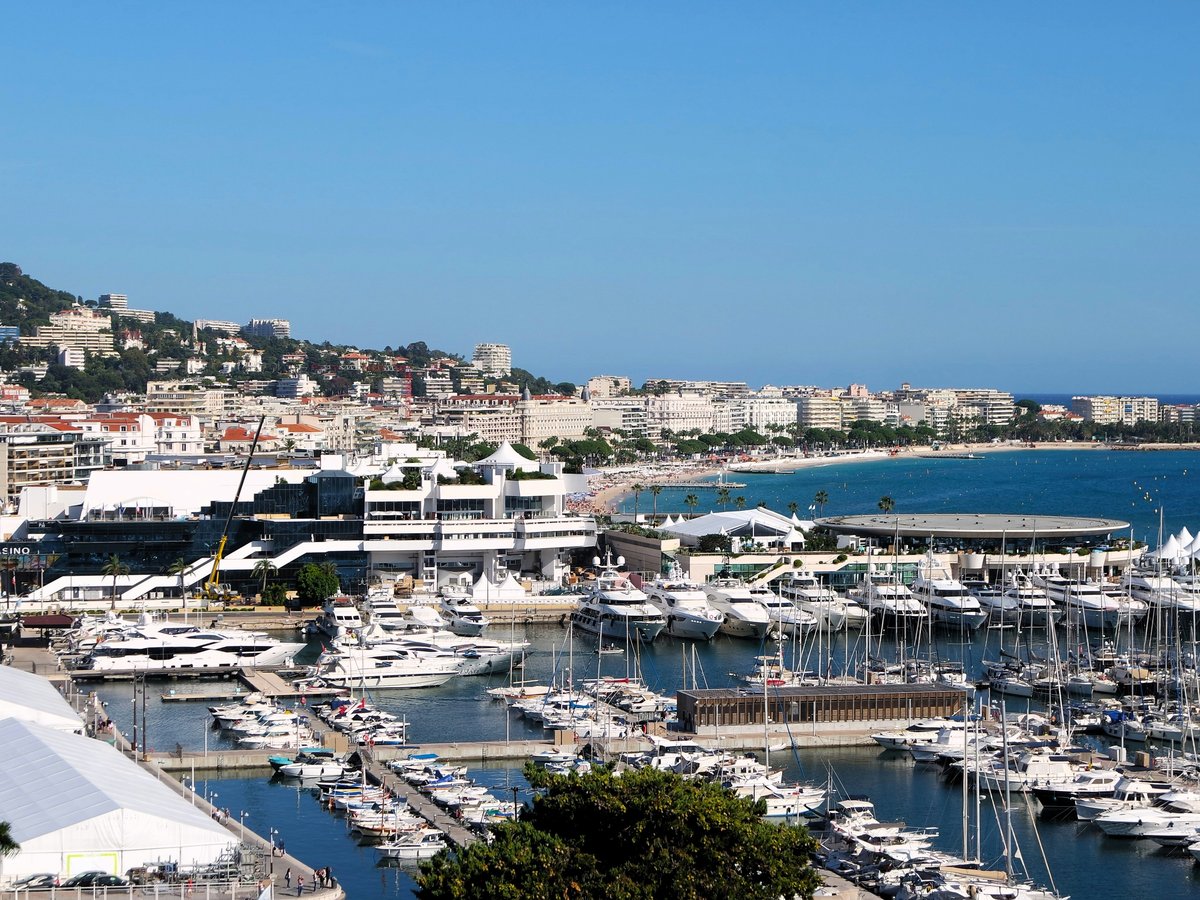
February in Cannes is quiet. That is the single most important thing to know. The Croisette, that famous seafront promenade lined with luxury hotels and private beach clubs, sits largely dormant. Most of those beach restaurants won't reopen until April or May. Daytime temperatures hover around 14°C (58°F), which feels pleasant in the sun but drops to 6-7°C (44°F) after dark. You'll likely have stretches of clear, bright Mediterranean sky, though roughly 6 days will bring rain totaling about 71mm (2.8 inches). The glamour machine that powers Cannes runs on the May Film Festival and the summer beach season. In February, it's switched off.
That said, the Côte d'Azur doesn't stop being beautiful because the crowds leave. The light along the coast in winter has a particular quality, low and golden, that drew painters like Picasso and Bonnard to this stretch of coastline for a reason. Le Suquet, the old hilltop quarter above the port, is yours to wander without elbowing past tour groups. Marché Forville, the covered market near the old town, still operates Tuesday through Sunday with winter produce, fresh fish from the morning boats, and Provençal olives. And Cannes sits within easy reach of two genuinely worthwhile February festivals. The Carnaval de Nice, 30 minutes east by train, fills the Promenade des Anglais with flower battles and parade floats for two weeks. The Fête du Citron in Menton, about an hour east, builds towering sculptures entirely from citrus fruit.
To be fair, if you're coming specifically for Cannes itself, February demands adjusted expectations. This is not a beach holiday. Several restaurants along Rue d'Antibes and near the port operate on reduced winter hours or close entirely between January and March. But hotel rates can drop 50-60% compared to May or July, and the mild winter weather still allows comfortable walking, market browsing, and day trips along the coast. For the right traveler, there's a real appeal to seeing this polished resort town with its guard down.
Why visit in February
- Hotel rates drop 50-60% from peak season, with 4-star properties along La Croisette available at prices that would barely cover a 2-star in May
- The Carnaval de Nice and Fête du Citron in Menton, two of the biggest winter festivals on the French Riviera, are both accessible by a short train ride
- Mild daytime temperatures around 14°C (58°F) allow comfortable sightseeing without the summer heat that pushes above 30°C in July and August
- Restaurants that remain open, particularly around Le Suquet and Rue Meynadier, tend to serve a more local clientele in winter, which shifts the menu toward seasonal Provençal cooking rather than tourist-oriented fare
- Black truffle season peaks in February across Provence, and you'll find them at Marché Forville and on winter menus at restaurants that would price them even higher in high season
Worth knowing
- Most private beach clubs along La Croisette close from October through March or April, removing a core part of the Cannes experience
- The sea temperature sits around 13°C (55°F), far too cold for swimming without a wetsuit
- Several restaurants and shops operate on reduced winter schedules, and some close entirely between New Year and Easter, particularly around the port and along Boulevard de la Croisette
- Evenings get cold enough, dropping to 6-7°C (44°F), that outdoor dining is uncomfortable without heaters, and many terraces are shuttered for the season
Best for
Think twice if
February on the Côte d'Azur tends to be the tail end of the mild Mediterranean winter. Expect clear mornings that warm to about 14°C (58°F) by early afternoon, with temperatures falling to around 7°C (44°F) after sunset. The Mistral wind can blow in from the northwest on some days, dropping the wind chill and making even sunny afternoons feel sharp. Roughly 6 days out of the month bring rain, totaling about 71mm (2.8 inches), usually in short bursts rather than all-day downpours. Humidity sits around 70%. The light is noticeably different from summer, lower on the horizon and warmer in tone, which gives the coastline a photogenic quality that fades under the harsh midday sun of July.
Seasonal caution
- The Mistral wind can arrive without much warning, dropping wind chill significantly even on sunny days. Gusts along the exposed Croisette waterfront can reach 60-80 km/h (37-50 mph) during strong Mistral episodes, making waterfront walks unpleasant for 2-3 days at a stretch.
Year-round climate
Averages from the last 5 years.
| Month | Avg high (°C) | Avg low (°C) | Rainfall (mm) |
|---|---|---|---|
| Jan | 13 | 6 | 88 |
| Feb | 14 | 7 | 71 |
| Mar | 16 | 8 | 101 |
| Apr | 18 | 10 | 75 |
| May | 22 | 14 | 58 |
| Jun | 27 | 19 | 52 |
| Jul | 30 | 22 | 10 |
| Aug | 31 | 22 | 32 |
| Sep | 26 | 18 | 62 |
| Oct | 22 | 15 | 123 |
| Nov | 17 | 9 | 81 |
| Dec | 14 | 7 | 78 |
Headline events
Carnaval de Nice
Mid-February to early March (typically runs 2 weeks, dates shift annually)
One of the largest carnival celebrations in the world, filling Nice's Place Masséna and Promenade des Anglais with elaborate floats, flower battles (Bataille de Fleurs), and costumed parades over roughly two weeks. Nice is 30 minutes from Cannes by TER train. The event draws around 150,000 spectators across its run. Worth noting, the grandstand seats for the main corso sell out weeks in advance.
Fête du Citron (Menton Lemon Festival)
Mid-February to early March (roughly 2-3 weeks, overlapping with Carnaval de Nice)
Menton, about 60 minutes east of Cannes by train, builds massive sculptures and float displays from roughly 145 tonnes of citrus fruit in the Jardins Biovès and along the seafront. The festival has run since 1934 and draws over 200,000 visitors. Each year follows a different theme. The scent of citrus oil in the February air around the exhibition grounds is strong enough to notice from a block away.
Best things to do in February
Day trip to the Carnaval de Nice
festivalTake the TER train from Cannes station to Nice-Ville (30 minutes, under 7 EUR each way) for the afternoon and evening parades along Place Masséna. The corso carnavalesque features elaborate floats up to 12 metres tall, and the Bataille de Fleurs on the Promenade des Anglais pelts the crowd with fresh flowers. The evening parades, lit up after dark, tend to have a different energy than the daytime ones.
The Carnaval runs for roughly 2 weeks in February, one of the only times of year Nice stages this scale of public spectacle.Booking tipGrandstand tickets for the best viewing spots sell out 2-3 weeks before the event. Standing areas along the route are free but fill up 1-2 hours before parade time.
Day trip to the Fête du Citron in Menton
festivalThe train from Cannes to Menton takes about an hour along the coast. The citrus sculptures in the Jardins Biovès are on display throughout the festival period, and the corsos (parades of citrus-decorated floats) run on select days. The gardens smell intensely of lemon and orange oil. Mind you, the parade days get crowded, so the exhibition gardens on a weekday morning offer a more comfortable experience.
The festival only runs from mid-February to early March, and the citrus sculptures are dismantled immediately after.Booking tipBuy combined exhibition-and-parade tickets online before arriving. Single-day parade tickets cost roughly 12-15 EUR.
Winter truffle hunting in the Var backcountry
food and drinkSeveral farms in the Var department, about 45-60 minutes inland from Cannes, offer guided truffle hunts with trained dogs through oak woodland. You'll typically spend 2-3 hours walking wooded terrain before sitting down to a truffle-heavy lunch at the farm. The damp soil and cool temperatures of February make it likely you'll see the dog find something.
February is the last full month of Tuber melanosporum season. By mid-March, the black winter truffle is largely finished.Booking tipMost farms require reservations at least a week ahead and have minimum group sizes of 4-6 people. Some operators in Aups and around Draguignan offer English-language tours.
Walking Le Suquet without the crowds
sightseeingThe old quarter of Cannes climbs steeply from the Vieux Port to the Musée de la Castre and Notre-Dame de l'Espérance church at the summit. In summer, the narrow lanes and viewpoint at the top are packed. In February, you might share the panoramic view over the bay and the Îles de Lérins with a handful of other people. The morning light on the terracotta roofs and the harbour below is worth the steep walk up.
Summer crowds can make the narrow streets of Le Suquet feel congested. February offers the same views and architecture with a fraction of the foot traffic.Boat trip to Île Sainte-Marguerite
natureThe largest of the Îles de Lérins sits 15 minutes by ferry from the Vieux Port. The island holds the Fort Royal, where the Man in the Iron Mask was imprisoned from 1687 to 1698, plus eucalyptus and pine forest laced with walking trails. In February, the island is nearly empty. The air smells of pine resin and salt. Ferries run year-round, though the winter schedule reduces frequency to roughly 3-4 departures per day.
Summer sees up to 4,000 visitors per day on the island. In February, you might encounter 50-100. The solitude changes the experience entirely.Booking tipCheck the winter ferry schedule with Trans Côte d'Azur before going. The last return boat tends to leave around 16:00-16:30 in winter.
Browsing Marché Forville for winter Provençal produce
food and drinkThis covered market in the heart of Cannes, between Le Suquet and Rue Meynadier, operates Tuesday through Sunday. February stalls carry winter citrus from Menton, black truffles, fresh sea urchins, Niçoise olives, goat cheese from the arrière-pays, and bunches of mimosa. The vendors are noticeably more willing to chat on a quiet February morning than during summer when they're processing a line 10 people deep.
The winter produce, particularly the truffles, sea urchins, and Menton citrus, is at its peak or nearing end of season. By April, these are gone and the stalls shift to summer produce.Visiting La Malmaison art gallery
cultureThis exhibition space on La Croisette, inside a remaining wing of the former Grand Hôtel, hosts rotating contemporary art shows. The intimate scale, typically 2-3 rooms, makes it a 30-45 minute visit. February tends to fall within the winter exhibition run, and the small space means you'll likely have the art to yourself rather than viewing over someone's shoulder.
Winter exhibitions tend to be quieter, and the gallery provides a worthwhile indoor activity on the rainy days that February delivers roughly 6 times.Mimosa trail walk near Mandelieu-la-Napoule
natureThe Route du Mimosa, a 130-kilometre marked trail from Bormes-les-Mimosas to Grasse, passes through the hills above Cannes. February is peak bloom for the mimosa trees, which cover the hillsides in bright yellow clusters. The section near Mandelieu-la-Napoule, about 10 minutes west of Cannes by car, offers several short loop walks through mimosa-covered slopes. The flowers have a sweet, powdery scent that carries on the breeze.
Mimosa blooms from late January through early March, with peak flowering typically in February. By mid-March, the bloom is finished.What to eat in February
In season: fruit
Agrumes de Menton (Menton citrus)
Menton lemons and oranges reach peak season in February, coinciding with the Fête du Citron. The Menton lemon is distinctively less acidic and more aromatic than standard varieties. You'll find them at Marché Forville and at citrus stands along the coast, often sold alongside limoncello and lemon marmalade from local producers.
On menus now
Daube provençale
This slow-braised beef stew, cooked in red wine with olives, orange peel, and herbs de Provence, is a cold-weather staple across the region. February is exactly when you want it. The dish typically simmers for 3-4 hours and appears on winter menus at traditional Provençal restaurants around Rue Meynadier and Le Suquet.
Soupe de poisson
A blended fish soup made from small rockfish, served with rouille (a saffron-garlic mayonnaise), croutons, and grated Gruyère. It's available year-round but feels most appropriate in February's cool evenings. The soup has a deep, concentrated flavor from the roasted fish bones and tomato base.
Street food peaks
Socca
A thin, crispy chickpea-flour flatbread cooked in a wood-fired oven, traditionally from Nice but widely available in Cannes. Best eaten hot, torn by hand, with black pepper. The slightly charred edges and nutty, warm flavor make it a satisfying February street snack. Chez Astoux near the port area serves a version, and the Nice originals at Chez Pipo are a 30-minute train ride away.
In markets
Oursins (sea urchins)
Sea urchin season runs from roughly November through April on the Mediterranean coast, and February is peak harvest. You'll find them at Marché Forville and on the menus of seafood restaurants around the Vieux Port. They're typically served raw on the half shell with lemon and bread, the briny, iodine-rich flavor at its most intense in cold water months.
Truffe noire du Périgord (black winter truffle)
Tuber melanosporum peaks from December through February across Provence. February is the last full month of the season, and prices tend to drop slightly as supply peaks. Marché Forville carries them from regional suppliers, and several winter menus in Le Suquet feature truffle omelets, truffle-shaved pasta, and brouillade aux truffes (scrambled eggs with truffle).
Regular events in February
Fête du Mimosa in Mandelieu-la-NapouleFree
A local festival celebrating the mimosa bloom in the commune adjacent to Cannes, featuring a flower-decorated float parade through the town center, mimosa markets, and guided walks through the mimosa forests of the Tanneron massif.
Third week of February (dates vary, usually a weekend)MIPIM preview events and industry gatherings
The major MIPIM real estate conference takes place in March at the Palais des Festivals, but preliminary networking events, side conferences, and industry dinners begin appearing in late February. These bring a small influx of business travelers to the hotels along La Croisette, though nothing approaching the main event's 20,000+ attendees.
Late FebruaryLes Nuits du Sud preview concerts (occasional)
Some years, winter warm-up concerts are staged at smaller venues in the Cannes area as previews for the summer music festival series. These are not guaranteed annually but worth checking local listings at the Palais des Festivals box office.
Variable, check local listingsBest places this February
Marché Forville
marketThe covered market between Le Suquet and Rue Meynadier is the most honest window into what locals eat. In February, the stalls carry winter citrus, sea urchins sold by the dozen, black truffles displayed in small glass cases, and freshly cut mimosa branches. Open Tuesday through Sunday, with the fish vendors arriving earliest. Monday is brocante (flea market) day.
Le SuquetMusée de la Castre
museumPerched at the top of Le Suquet in a medieval castle, this small museum holds an eclectic collection of Mediterranean antiquities, ethnographic objects from Oceania and the Himalayas, and a square stone tower with a 360-degree panorama of the bay, the Esterel mountains, and the Îles de Lérins. In February, you'll likely have the tower viewpoint to yourself. The climb through the old town streets to reach it is steep but short, about 10 minutes from the port.
Le SuquetÎle Saint-Honorat
islandThe smaller of the two Lérins islands, home to the Abbaye de Lérins where Cistercian monks have lived since the 5th century. The monks produce wine and a herbal liqueur called Lérina. The island has about 1.5 km of walking trails through pine forest and along the rocky shoreline. Ferry service runs from the Vieux Port but on a reduced winter schedule, so check departure times. The silence on a February afternoon is striking.
Rue Meynadier
streetA narrow pedestrian shopping street running parallel to the port, lined with fromageries, bakeries, olive oil shops, and small food stores. It's the street where locals shop, as opposed to the designer boutiques on Rue d'Antibes. In February, several shops display truffle products, tapenade, and winter preserves. The street connects Marché Forville to the western end of town.
CarnotLa Croix-des-Gardes nature park
parkA 77-hectare forested hill in western Cannes, covered with Aleppo pine, mimosa, and eucalyptus. Walking trails loop through the woods and up to the summit cross, which offers a wide view over the bay and the Esterel coastline. February is when the mimosa trees within the park bloom, turning patches of the hillside yellow. The park is free, open daily, and rarely busy even in summer.
La BoccaPalais des Festivals et des Congrès
landmarkThe concrete and glass building on the waterfront where the Cannes Film Festival takes place each May. In February, there's no red carpet and no security barriers. You can walk up the famous 24-step staircase, look at the handprints of past stars set in the pavement along the Allée des Stars, and take photographs without competing with 500 other tourists for the shot. The building also hosts smaller conferences and exhibitions year-round.
La CroisetteVieux Port de Cannes
harbourThe old harbour sits at the foot of Le Suquet, lined with fishing boats and smaller yachts. In February, the mega-yachts that dock here during the Film Festival and summer season are elsewhere. The harbour feels more like a working port, with fishing boats heading out in the early morning. The quay-side restaurants that stay open in winter tend to serve straightforward seafood at more honest prices than their summer menus suggest.
Le Suquet
Your packing checklist
Tick items off as you pack. Your progress saves in this browser.
All packed — have a great trip.
Insider tips
Marché Forville on Monday becomes a brocante (flea market) instead of the usual food market. The dealers sell Provençal pottery, vintage linens, and old postcards of the Riviera. Prices are negotiable, and the regular vendors tend to start low because foot traffic in February is thin.
The TER regional train between Cannes and Nice costs under 7 EUR each way and runs roughly every 20-30 minutes. For the Carnaval de Nice, take the train rather than driving. Parking in central Nice during carnival weekends fills by mid-morning, and the parade route closes multiple streets.
If the Mistral is blowing hard along La Croisette, head inland to Le Cannet, the hilltop commune directly above Cannes. The Musée Bonnard, dedicated to painter Pierre Bonnard who lived there from 1926 until 1947, sits sheltered from the coastal wind. The museum is small enough for a focused 45-minute visit.
Sea urchin platters at port-side restaurants in Cannes carry a significant markup. The same oursins at Marché Forville cost roughly half the restaurant price. Buy a dozen, ask the vendor to open them, and eat them right there with a squeeze of lemon.
The free Palmbus (Bus Azur network) connects Cannes to Mandelieu-la-Napoule in about 20 minutes for the Fête du Mimosa. The Line 22 drops you near the town centre. Check schedules at the Gare Routière next to the train station.
Avoid these mistakes
- Booking a hotel expecting beach club access. Nearly all private beach clubs along La Croisette close from October through March or April. The public beaches remain accessible, but there are no loungers, no service, and the water at 13°C (55°F) is for looking at, not swimming in.
- Planning a full day of restaurant-hopping without checking winter hours. Several restaurants, particularly along the port and Boulevard de la Croisette, either close entirely in February or open only for lunch. Call ahead or check Google Maps hours, which are more reliably updated than restaurant websites in winter.
- Visiting the Carnaval de Nice on a weekend without buying grandstand tickets in advance. The free standing zones fill quickly, and the best float-viewing spots along Place Masséna go to people who arrive 90 minutes or more before the parade starts. Weekday parades are noticeably less crowded.
- Underestimating the Mistral wind. A sunny 14°C forecast becomes an uncomfortable 6-8°C wind chill experience along the exposed waterfront. Check wind forecasts before planning a full day outdoors on La Croisette or the islands.
Practical tips for February
February is low season, so most logistics are straightforward. Nice Côte d'Azur airport (NCE), about 25 km east of Cannes, has reduced but still regular flights from major European hubs. The airport bus (Line 210) runs to Cannes roughly every 30 minutes and costs about 22 EUR. Taxis from the airport to central Cannes run a fixed fare of approximately 80-95 EUR. The SNCF train station (Gare de Cannes) connects to Nice in 30 minutes and to Marseille Saint-Charles in about 2 hours on the TER. Most museums and cultural sites keep regular winter hours, though some smaller galleries close on Tuesdays. Restaurant reservations are rarely needed in February except for weekend dinners at the better-known spots in Le Suquet. ATMs are plentiful along Rue d'Antibes and near the train station. Pharmacies follow the rota system for Sunday and evening openings, posted on every pharmacy door. Dress code is relaxed compared to summer but still leans toward smart-casual for evening dining. French school holidays (les vacances d'hiver) sometimes overlap with late February, which can briefly increase family tourism from Paris and Lyon, but the effect on Cannes is modest compared to ski resorts.
FAQ
Is February a good time to visit Cannes?
It depends on what you're after. February is not a good time for a beach holiday, nightlife, or the glamorous Cannes of Film Festival fame. But it's a genuinely pleasant time for budget-conscious travelers who want mild winter weather, empty streets, and easy access to the Carnaval de Nice and the Fête du Citron in Menton. Hotel rates drop 50-60% from peak season. If your idea of a good trip involves market browsing, coastal walks, winter Provençal food, and day trips by train, February works well. If you want swimming, beach clubs, and packed terraces, wait until June.
What is the weather like in Cannes in February?
Expect average highs around 14°C (58°F) and lows near 7°C (44°F). About 6 days bring rain, totaling roughly 71mm (2.8 inches), usually in short bursts rather than all-day downpours. Humidity sits around 70%. Sunny days feel comfortable in a light jacket, but the Mistral wind can blow for 2-3 days at a stretch, making the waterfront noticeably cold. Evenings require a proper coat. Snow is extremely rare at sea level, though you might see it dusting the pre-Alps inland.
Is Cannes crowded in February?
No. February is one of the quietest months in Cannes. Most of the city's tourism infrastructure is built around the May Film Festival and the June-August beach season. In February, you'll find short queues at museums, available tables at restaurants without reservations, and large stretches of La Croisette with very few pedestrians. The only time crowds appear is if the French school holidays (vacances d'hiver) overlap, bringing family visitors, but even then it's nothing like summer.
Can you swim in the sea in Cannes in February?
Technically, yes. Practically, most people would not. The Mediterranean water temperature sits around 13°C (55°F) in February. There's no lifeguard service on the beaches, and the private beach clubs with their heated facilities are closed until spring. A few hardy locals and cold-water swimmers do go in, but for most visitors this is not a swimming month. The public beaches are still nice for walks.
What festivals happen near Cannes in February?
The two big ones are the Carnaval de Nice (roughly 2 weeks from mid-February, 30 minutes by train from Cannes) and the Fête du Citron in Menton (similar dates, about 60 minutes by train). The Fête du Mimosa in Mandelieu-la-Napoule, the commune adjacent to Cannes, celebrates the mimosa bloom with a smaller local parade, usually during the third week of February. All three are worth the trip.
Things to Do in Cannes in February
 Free cancellation
 Yacht Me Up All Inclusive Private Cruise Cannes Lérins Sailing
Day trip: 4 hours, free cancellation.
via Viator Free cancellation
 Cruise / Navigation / Sunset in the Lerins Islands
Day trip: 3.5 hours, free cancellation.
via Viator Free cancellation
 Eze and Monaco Private Half-Day Tour
Day trip: 5 hours, free cancellation.
via Viator Free cancellation
 Taste Cannes – A Full French Riviera Food Tour by Do Eat Better
Day trip: 3.5 hours, free cancellation.
via Viator Free cancellation
 The best French Riviera Full-Day from Cannes Small-Group Shore Excursion
Day trip: 9 hours, free cancellation.
via Viator Free cancellation
 Monaco, Monte Carlo, Eze, la Turbie, 7H Shared Tour from Cannes
Day trip: 7 hours, free cancellation.
via ViatorFind a flight to Cannes
Live fares to Cannes appear here once cookies are accepted.
Last verified by automated review (v1.7.2) on . What is automated review?