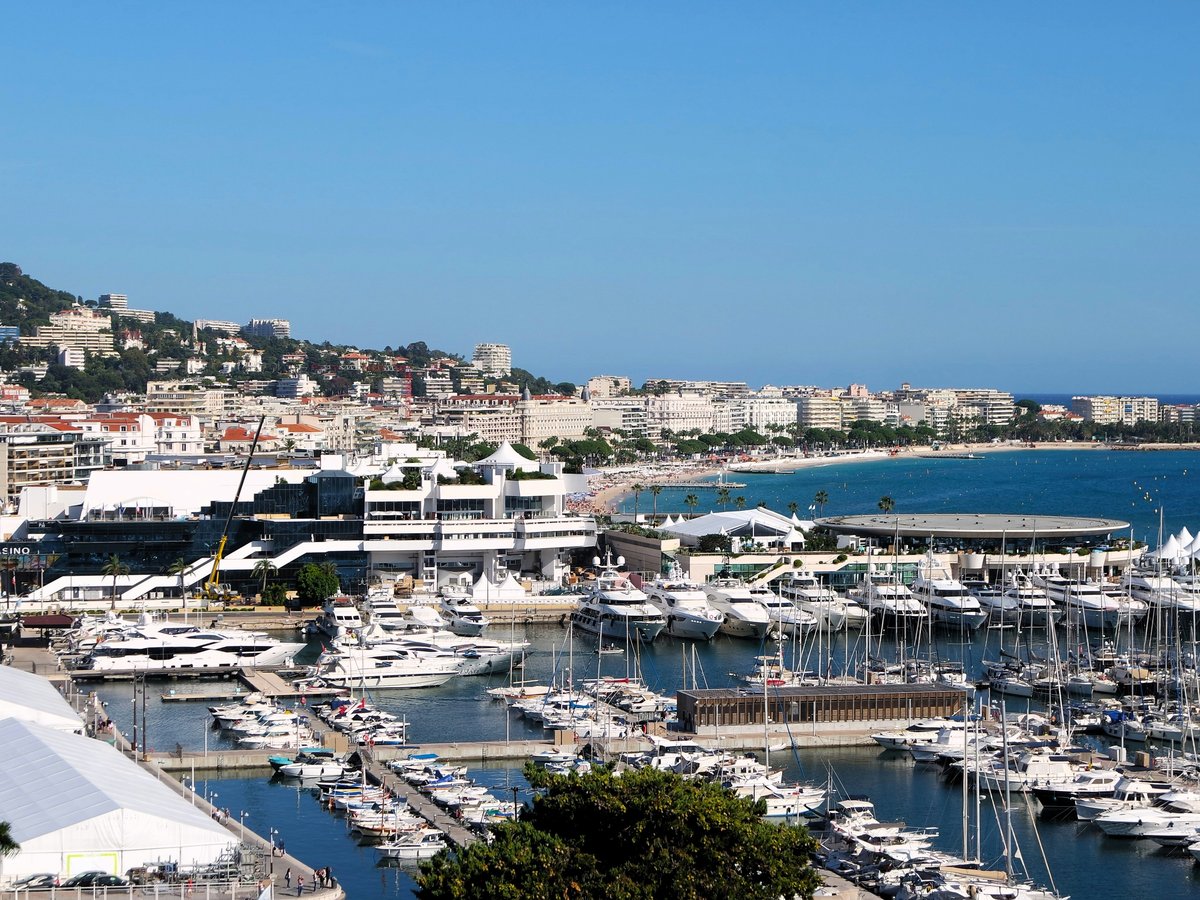
Cannes stretches along roughly 8 kilometers of coastline on the western end of the French Riviera, about 33 kilometers southwest of Nice. The city reads west to east, from the working-class district of La Bocca through the old fishing hill of Le Suquet, past the famous Boulevard de la Croisette, and out to the residential heights of La Californie. Most of what visitors care about sits in a surprisingly compact strip between the train station (Gare de Cannes) and the waterfront, maybe 600 meters north to south. The Croisette curves along the Baie de Cannes for about 2 kilometers, and nearly everything tourist-facing clusters within walking distance of it. That said, Cannes has real neighborhoods behind the postcard. The further you move from the seafront, the more the city feels like a normal Provençal town, with weekday markets, tabac shops, and bakeries where nobody speaks English. Worth knowing before you book.
Neighborhoods
-
Le Suquet
The original fishing village sits on a low hill at the western end of the old port. Narrow stone lanes wind uphill past shuttered townhouses with faded ochre and terracotta walls. It is quieter than you might expect for a place this central. You can hear pigeons and the occasional clatter of plates from a kitchen window. The Church of Notre-Dame d'Espérance, built between 1521 and 1648, anchors the top of the hill, and the Musée de la Castre occupies the medieval tower beside it. The neighborhood has maybe 15 restaurants, mostly small, with 2 or 3 tables set on the cobbles outside.
- Best for
- Couples and solo travelers who want atmosphere and proximity to the old port without the Croisette price tag
- Key streets
- Rue Saint-Antoine is the main artery uphill. Place de la Castre at the summit has the best view of the bay. Rue du Suquet runs parallel lower down and tends to be less crowded after 9 p.m.
-
La Croisette
The Boulevard de la Croisette is the seafront promenade everybody pictures. It runs about 2 kilometers from the Palais des Festivals east to the Pointe Croisette. The north side is lined with grand hotels built mostly between the 1860s and 1920s. The Majestic, the Carlton (currently under renovation by a Saudi investment group, with reopening projected for 2025 or 2026), and the Martinez anchor the strip. The south side is the beach, divided into private concessions that charge 25 to 60 euros per day for a sunbed during summer. The noise level is moderate. Traffic hums along the boulevard, and in the evening you hear heels on pavement and the low buzz of hotel terraces. The smell of sunscreen and grilled fish from the beach restaurants carries on the wind.
- Best for
- First-time visitors who want the classic Cannes experience, and anyone attending events at the Palais des Festivals
- Key streets
- The full length of Boulevard de la Croisette is the obvious walk. Rue du Commandant André cuts inland to connect with Rue d'Antibes. The Allées de la Liberté, a plane-tree-shaded square near the old port end, hosts a flower market most mornings.
-
Rue d'Antibes and Surrounding Streets
This is the real commercial spine of Cannes, running parallel to La Croisette about 200 meters inland. It stretches roughly 1.5 kilometers and holds most of the city's mid-range shopping, from Zara and Sephora to independent Provençal soap shops and leather goods stores. The architecture is 5- to 6-story Haussmann-influenced buildings with shops at street level and apartments above. It feels urban and a little rushed during the day, with delivery vans double-parked and locals weaving past tourists. Side streets like Rue Hoche and Rue des Serbes connect down to the Croisette and have smaller bistros where a plat du jour runs 14 to 18 euros.
- Best for
- Budget-conscious travelers who want a central location, shoppers, and anyone who prefers city energy over beach calm
- Key streets
- Rue d'Antibes itself, obviously. Rue Meynadier runs from the old port area westward and feels more local, with cheese shops, wine caves, and a poissonnier. Rue Hoche has a cluster of restaurants that fill up around 8 p.m.
-
La Banane
The name means 'the banana' and refers to the crescent-shaped block of streets between Rue d'Antibes and La Croisette, roughly between Rue des États-Unis and Rue du Commandant André. This is where Cannes goes out at night. It is dense with bars, cocktail spots, and late-night restaurants packed into a 3- or 4-block radius. During the Film Festival in May, this area becomes nearly impassable after 11 p.m. The rest of the year it is busy but manageable. The architecture is nothing special, mostly postwar apartment blocks, but the ground floors have been converted into a tight concentration of nightlife. It smells like cigarettes and cologne after midnight. Noise levels are high until 3 or 4 a.m. in summer.
- Best for
- Night owls, younger travelers, and anyone who wants to be in the middle of the social scene without the formality of hotel bars
- Key streets
- Rue des Frères Pradignac and Rue du Docteur Gérard Monod are the two streets with the highest density of bars. Place Gambetta, technically at the edge of the zone, has a few calmer terrace spots.
-
La Californie
A residential hillside neighborhood east of the city center, climbing above the Croisette toward the Croix-des-Gardes forest. The streets are steep and quiet, lined with Belle Époque villas behind high walls and gates. Bougainvillea and jasmine spill over stone walls. The air smells different up here, more pine and dry herb than salt. Picasso lived and worked at the Villa La Californie (now called Pavillon de Flore) from 1955 to 1961, and the neighborhood still has that mid-century artistic reputation, though today it is mostly wealthy retirees and second-home owners. There is almost no commercial activity. You will need to walk 10 to 15 minutes downhill to reach restaurants or shops.
- Best for
- Travelers with a car or who do not mind walking hills, anyone seeking quiet and views, and visitors renting a villa or apartment for a week or longer
- Key streets
- Avenue du Roi Albert leads uphill from the eastern end of the Croisette. Boulevard de la Californie winds through the upper section with occasional viewpoints. Chemin de Saint-Antoine connects to trails above the city.
-
Le Cannet
Technically a separate commune that borders Cannes to the north, Le Cannet sits on a hillside about 2 kilometers from the Croisette. Most visitors never go there, which is part of the appeal. The old village center (Vieux Cannet) has a Provençal square with a few restaurants, a boulangerie, and the Bonnard Museum, dedicated to Pierre Bonnard, who lived in Le Cannet from 1926 until his death in 1947. The streets are steep and narrow, with pastel-painted facades and cats sleeping on warm stone. It feels like a small hill town, not a suburb of a resort city. A meal here tends to run 10 to 15 euros less per person than the same quality in central Cannes.
- Best for
- Art-interested travelers, families with a car, and anyone willing to trade beach proximity for lower prices and a quieter pace
- Key streets
- Rue Saint-Sauveur in the old village, Boulevard Carnot connecting down to Cannes, and Place Bellevue for the view. The Chemin des Collines has several Bonnard-related markers.
-
La Bocca
The westernmost district of Cannes, roughly 3 kilometers from the Croisette, and it feels like a different city. La Bocca is working-class and multicultural, with North African grocers, halal butchers, and small cafés serving mint tea and makroud pastries for 2 euros. The housing is mostly 1960s and 1970s apartment blocks, functional rather than scenic. The beach at La Bocca is public, sandy, and genuinely uncrowded even in August, when the Croisette beaches are shoulder to shoulder. There is an industrial zone at the western edge near the Cannes-Mandelieu airport. The neighborhood is louder during the day from traffic on the Route de Fréjus (the D6007) but quiets down after 8 p.m.
- Best for
- Budget travelers, repeat visitors looking for an authentic non-tourist experience, and families who want uncrowded beaches
- Key streets
- Avenue Francis Tonner is the main commercial street, with most shops and services. Avenue Pierre Semard runs closer to the beach. Rue de la Gendarmerie has a small cluster of North African restaurants.
-
Pointe Croisette and Palm Beach
The eastern tip of the Croisette peninsula narrows to a point where a casino, a public garden, and a small beach occupy the headland. The Palm Beach Casino, originally built in 1929, sits at the end. This area is quieter than the main Croisette strip, with more of a residential feel once you step off the waterfront. The south-facing beach here is rockier and less groomed than the main bay beaches, but the water tends to be clearer because there is less boat traffic. The Jardin des Rives de la Croisette, a small park at the tip, has pine shade and benches. On windy days you can smell rosemary from the plantings.
- Best for
- Swimmers who prefer cleaner water over sand comfort, joggers who want a turnaround point, and anyone after a quieter stretch of the Croisette
- Key streets
- The far eastern section of Boulevard de la Croisette loops around the point. Avenue Maréchal Juin leads inland toward the residential areas of Basse Californie.
FAQ
Which neighborhood in Cannes is best for a first visit?
La Croisette and the streets immediately behind it (toward Rue d'Antibes) put you within walking distance of the beaches, the Palais des Festivals, and the old port. Hotels here range from around 120 euros per night for a 2-star on a back street to 500 euros and up at the grand seafront properties. You can reach Le Suquet, La Banane, and the train station on foot in under 15 minutes from anywhere along this strip.
Is it possible to visit Cannes without a car?
For the central neighborhoods, yes. The Croisette, Le Suquet, Rue d'Antibes, and La Banane are all walkable within a compact area of roughly 2 square kilometers. Palm Bus (the local network) covers La Bocca and Le Cannet for 1.50 euros per ride. La Californie is the only neighborhood where a car helps significantly, since the steep hills and lack of shops make walking less practical for daily errands. The train station connects to Nice (35 minutes, around 7 euros), Antibes (12 minutes), and Monaco (about 70 minutes).
Where should I stay in Cannes on a budget?
La Bocca and the streets north of Rue d'Antibes (toward the train station, around Rue Jean Jaurès and Rue des Serbes) have the lowest accommodation prices. Studios in La Bocca rent for 50 to 80 euros per night in summer on most booking platforms. The tradeoff is a 25-minute walk or 10-minute bus ride to the Croisette. Le Cannet is another option, with apartments averaging 60 to 90 euros per night and a 12-minute bus connection to the center.
How does the Cannes Film Festival affect neighborhoods and pricing?
The Festival de Cannes typically runs for 12 days in mid-May. Hotel rates across all neighborhoods rise by 200 to 400 percent during this period. La Banane and La Croisette become extremely crowded after dark, and some restaurants switch to fixed-price festival menus at higher prices. Le Suquet and La Californie are less affected by the crowds, though prices still climb. If you are not attending the festival, mid-May is likely the worst value-for-money window of the year. Early June offers similar weather with normal pricing.
Are Cannes beaches really free or do I have to pay?
Both. The Croisette has roughly 30 private beach concessions that charge 25 to 60 euros per day for a sunbed, parasol, and changing facilities. Between them, public sections (plages publiques) are free and open to everyone. The public beaches at La Bocca and near the Palais des Festivals (Plage du Zamenhof) are the least crowded. Private beaches typically include restaurant service and cleaner sand, but the water is identical.
What is the best neighborhood for food in Cannes?
Le Suquet has the highest concentration of independent restaurants in a small area, with most mains between 18 and 28 euros. Rue Meynadier (between Le Suquet and Rue d'Antibes) is the best street for specialty food shops, including a fromagerie, a charcuterie, and a wine cave. For North African and Middle Eastern food at low prices, La Bocca's Avenue Francis Tonner has options in the 8 to 14 euro range. The Croisette hotel restaurants are expensive (mains from 35 to 55 euros) and tend to serve polished but conventional French-Mediterranean cooking.
Last verified by automated review (v1.7.2) on . What is automated review?