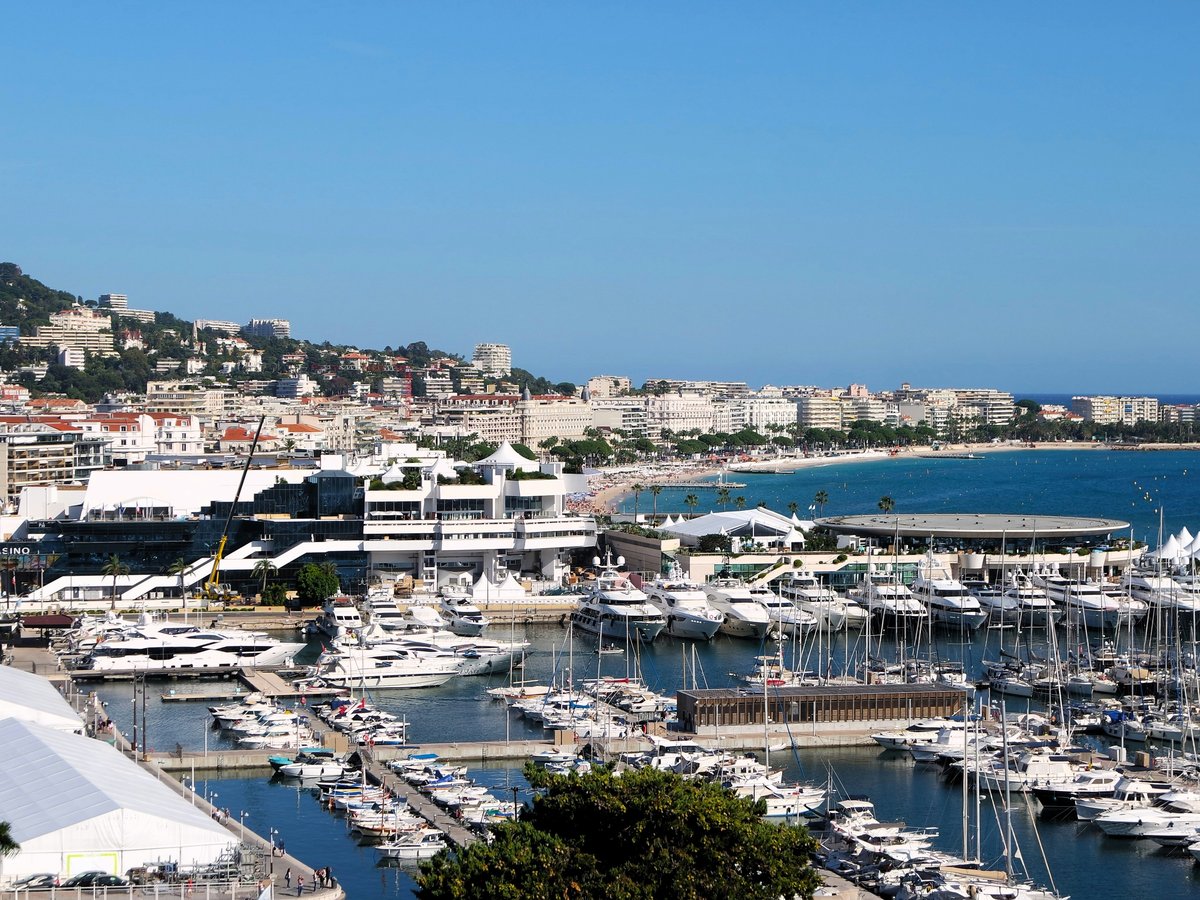
Cannes for families
Cannes (Grand Jas) Cemetery is a hillside necropolis above the city, walked rather than queued. St. Michael the Archangel Church is a working Russian Orthodox parish, not a tour-bus stop.
Cannes for families with kids, in numbers
- Score for families
- 7.8 out of 10
- Picks on this page
- 24 places across 2 lists, led by Cannes (Grand Jas) Cemetery, St. Michael the Archangel Church, Kiosque à musique des allées de la Liberté
Questions families with kids ask about Cannes
-
Family-friendly
Cannes scores 7.8/10 for family friendliness (see the TTDI Family-Friendliness Index). La Croisette's flat promenade is stroller-ready, and Marineland in Antibes (10 km east) is the region's biggest kid draw. The sandy beaches along La Croisette are mostly private concessions charging €25-40 per sunbed setup, though free public sections sit between them. Le Suquet's steep medieval lanes defeat any wheeled device. July temperatures regularly hit 30°C.
Read the full answer → -
Is it safe?
Cannes scores 7.8/10 for solo-traveler safety (see the TTDI Solo-Safety Index), and violent crime against visitors is rare. The risks that touch you are pickpockets on La Croisette and at Gare de Cannes during the Film Festival in May, watch snatching, and autumn flash floods. Dial 112 for any emergency.
Read the full answer → -
What to pack
Cannes has sandy beaches, not the pebble you'll find in Nice, but the best La Croisette stretches are private concessions. Bring smart-casual evening wear because La Croisette restaurants enforce dress codes year-round. A Type E plug adapter handles France's 230V outlets. SPF 50 and a light jacket for the post-sunset sea breeze round out the non-obvious items. Skip umbrellas and toiletries. Buy them cheaper at Monoprix.
Read the full answer → -
Getting around
Walking covers central Cannes from Le Suquet to La Croisette in about 20 minutes. Palm Bus handles local routes for 1.50 EUR a ride. TER trains connect to Nice in 30 minutes and Antibes in 10. Uber operates but driver supply is thin. Trans Côte d'Azur ferries reach the Îles de Lérins from the Vieux Port in 15 minutes.
Read the full answer → -
Best time to visit
Mid-September through mid-October gives you Cannes at its most liveable. Daytime temperatures sit around 22-25°C, the Mediterranean is still warm enough for swimming at Plage du Midi, and hotel rates along La Croisette drop 40-60% from their July peak. The summer crowds have thinned, but every restaurant in Le Suquet stays open.
Read the full answer →
Curated for families with kids
-
Must-see attractions
The 12 places here are stone and ironwork, not sand: churches, chapels, a cemetery, a bandstand, a war memorial, and 2 castles. What ties them is paperwork. Most carry a heritage designation, from the classified historical monument at Église Notre-Dame-de-l'Espérance to the Monument historique inscrit status of the Chapelle de la Miséricorde, with dates that stretch from the Grand Jas Cemetery of 1866 through the Russian Orthodox church of 1896 to a chapel of 1949. The list reaches past the city, too: the top entry is a castle in Cagnes-sur-Mer, and the chapel Henri Matisse designed is in Vence. Our records give addresses and designations but no opening hours for any of them, so confirm before you travel. This is a list for visitors who would trade an afternoon on a sun lounger for a building with a story on file.
See the picks → -
Best museums
Be honest about the geography before you plan anything: Cannes itself contributes one museum to this list, the Musée des Explorations du Monde, set in the town's medieval castle. The other eleven are spread along the coast and into the hills behind it, and that is the point. Mougins has a private art museum devoted to women artists and a museum of classical art; Antibes has its Picasso Museum and the Foundation Hartung Bergman; Nice supplies a fine arts museum and a museum of naïve art. This is a list for visitors who treat Cannes as a base, not a boundary, and who would sooner spend a morning with one good collection than an afternoon drifting between shop windows. Several of these places keep irregular hours, and for a few we could verify no hours at all. Where that is the case we say so plainly and point you to the official site.
See the picks →