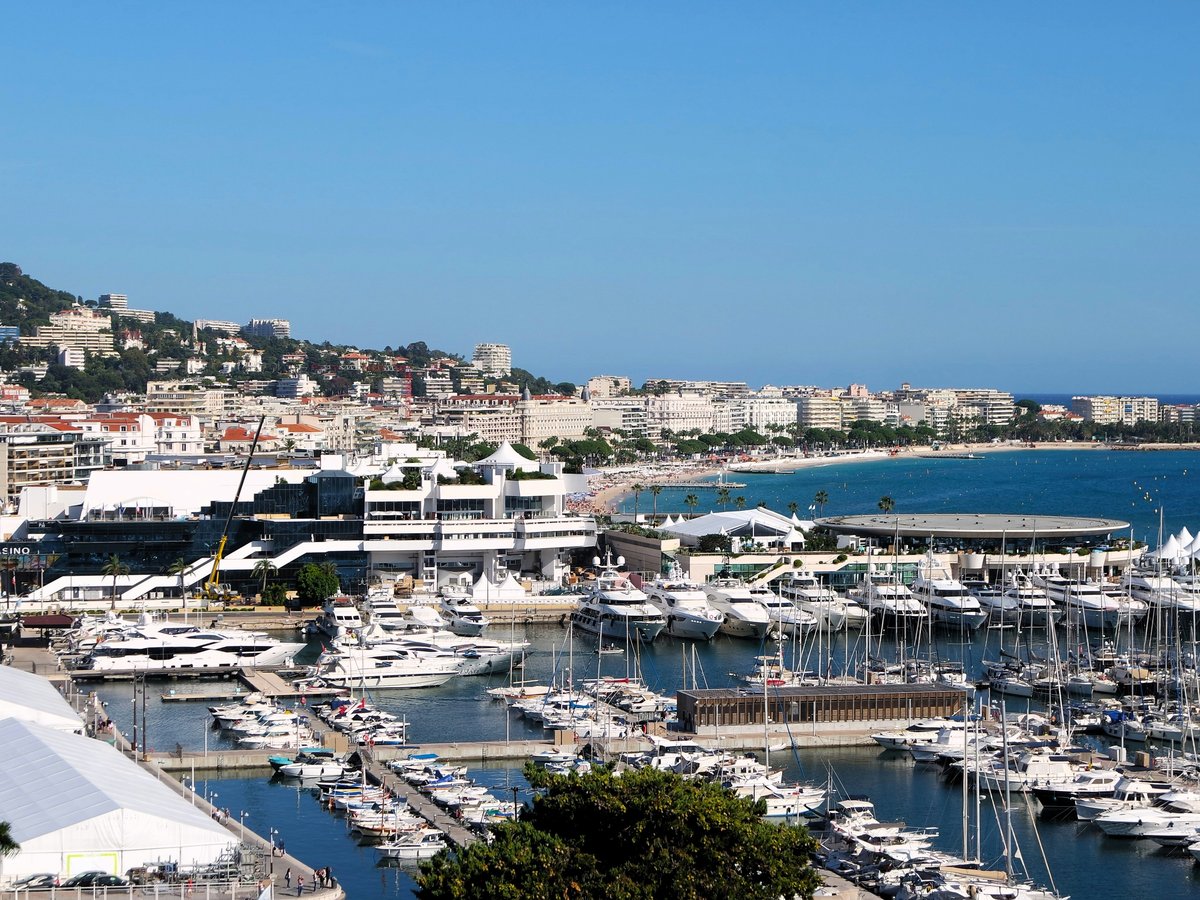
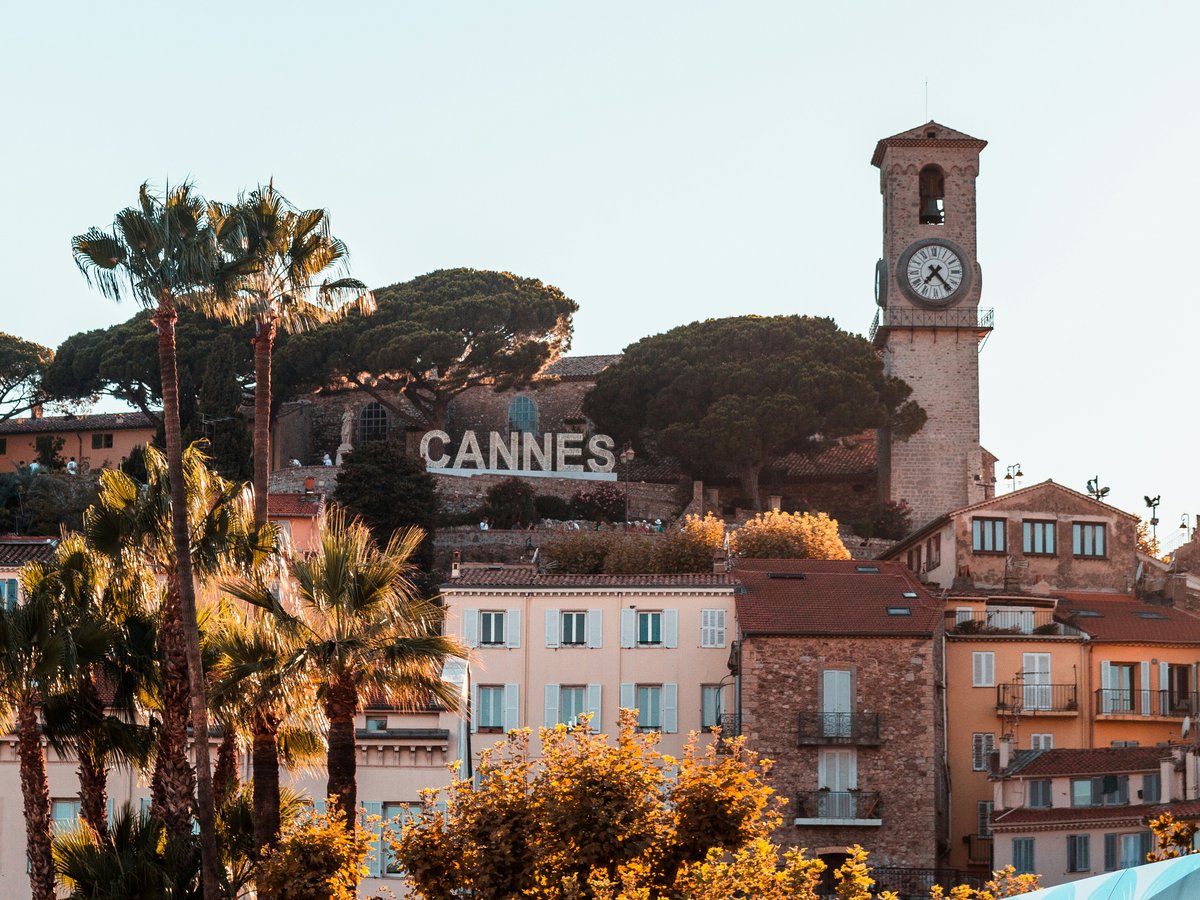
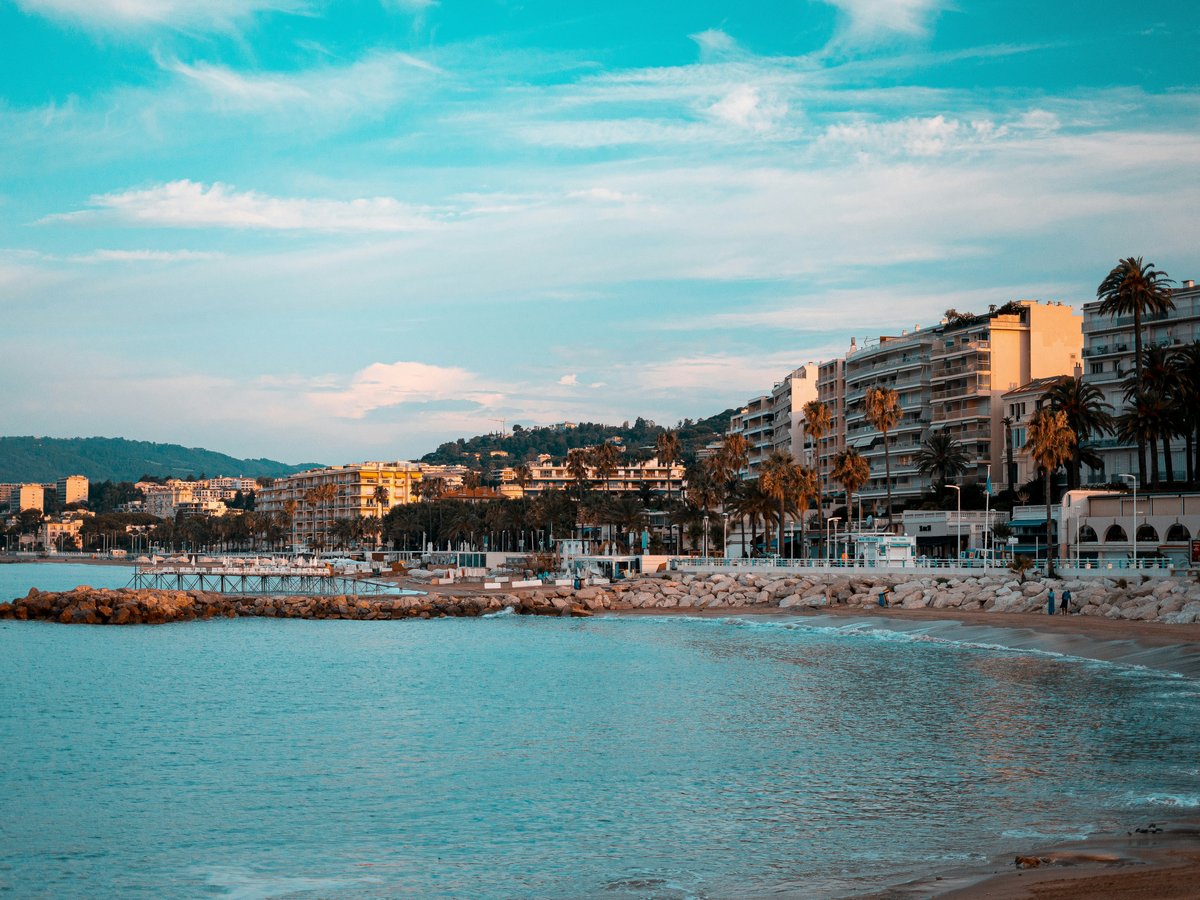
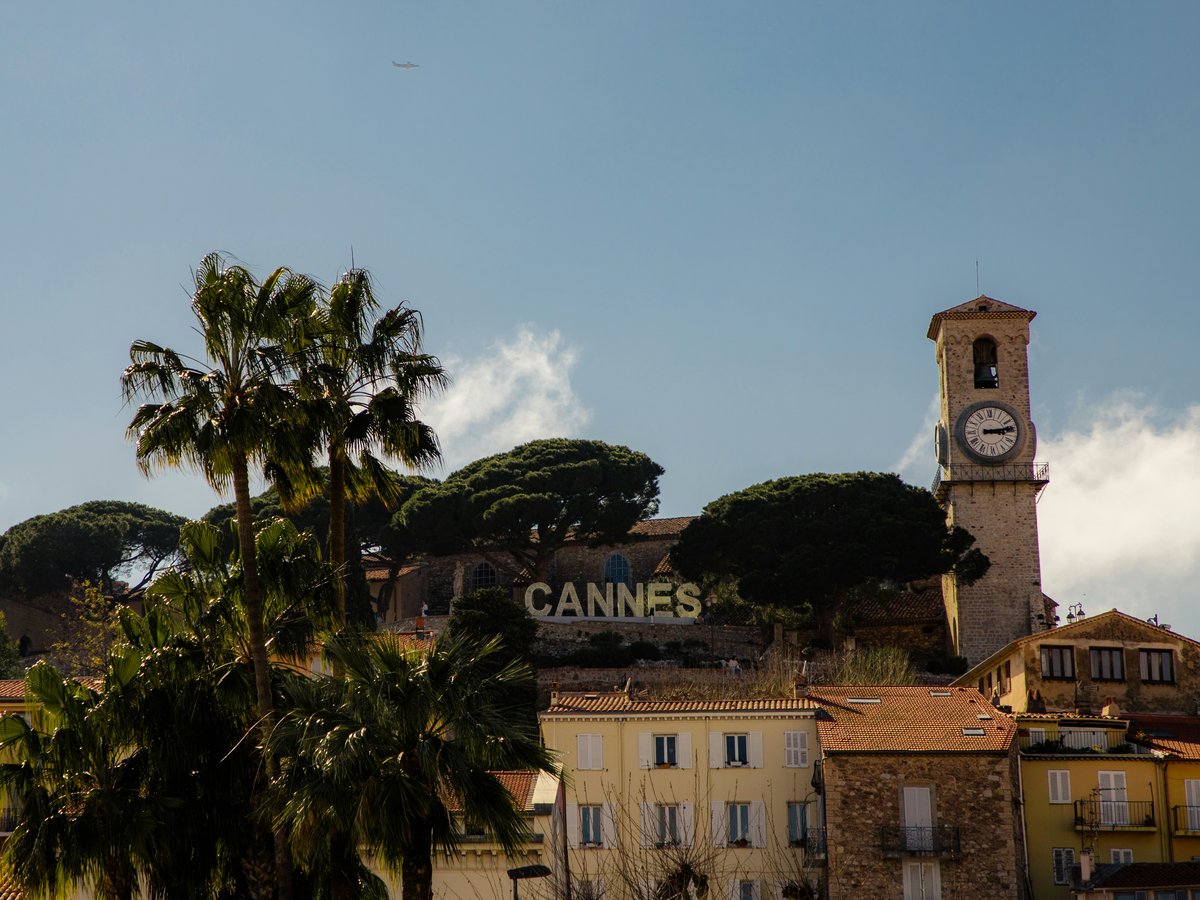
The Croisette is shorter than you think: barely two kilometres of seafront promenade curving between the old port and the Pointe Croisette, and that compactness is what makes Cannes feel less like a city of 74,000 and more like a stage set built at human scale. The town sits on the western Côte d'Azur, sheltered from the mistral by the Esterel massif, whose red porphyry rock turns sunsets a colour you won't find in Nice or Antibes. Before the winter of 1834, when Lord Brougham got stuck here by a cholera quarantine and decided to build a villa, Cannes was a fishing settlement clustered around the hill of Le Suquet, and that original quarter: stone staircases, a twelfth-century watchtower, the covered Forville market where stallholders sell socca and courgette flowers: still anchors the western end of town against the palace hotels to the east. The Palais des Festivals, that concrete bunker on the harbour where the film festival runs each May, dominates the town's international reputation but occupies roughly two weeks of the calendar; the other fifty belong to the conference trade, to the sailing crowd provisioning at the old port, and to residents whose daily rhythm runs from coffee on Rue Meynadier through an afternoon on the free public beaches west of the Croisette to an aperitif along Rue Saint-Antoine. The Îles de Lérins sit twenty minutes offshore: Sainte-Marguerite with its pine forest and the fort where the Man in the Iron Mask was held, Saint-Honorat with its working Cistercian monastery and small-batch wines. What catches first-time visitors off guard is the scale: you can walk from end to end in forty minutes, eat well for less than a Nice prix fixe, and never once feel the city is performing for you rather than getting on with its own life.
Cannes in photos
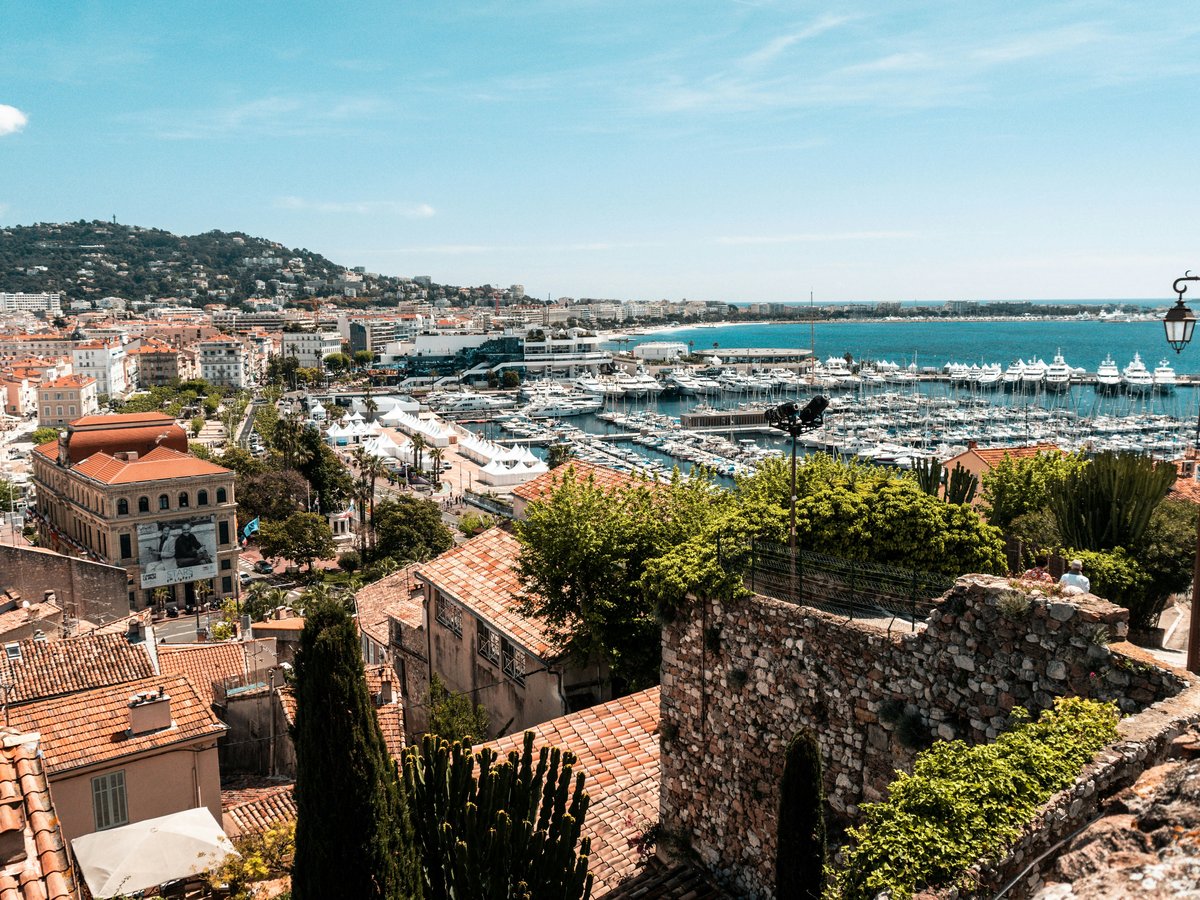
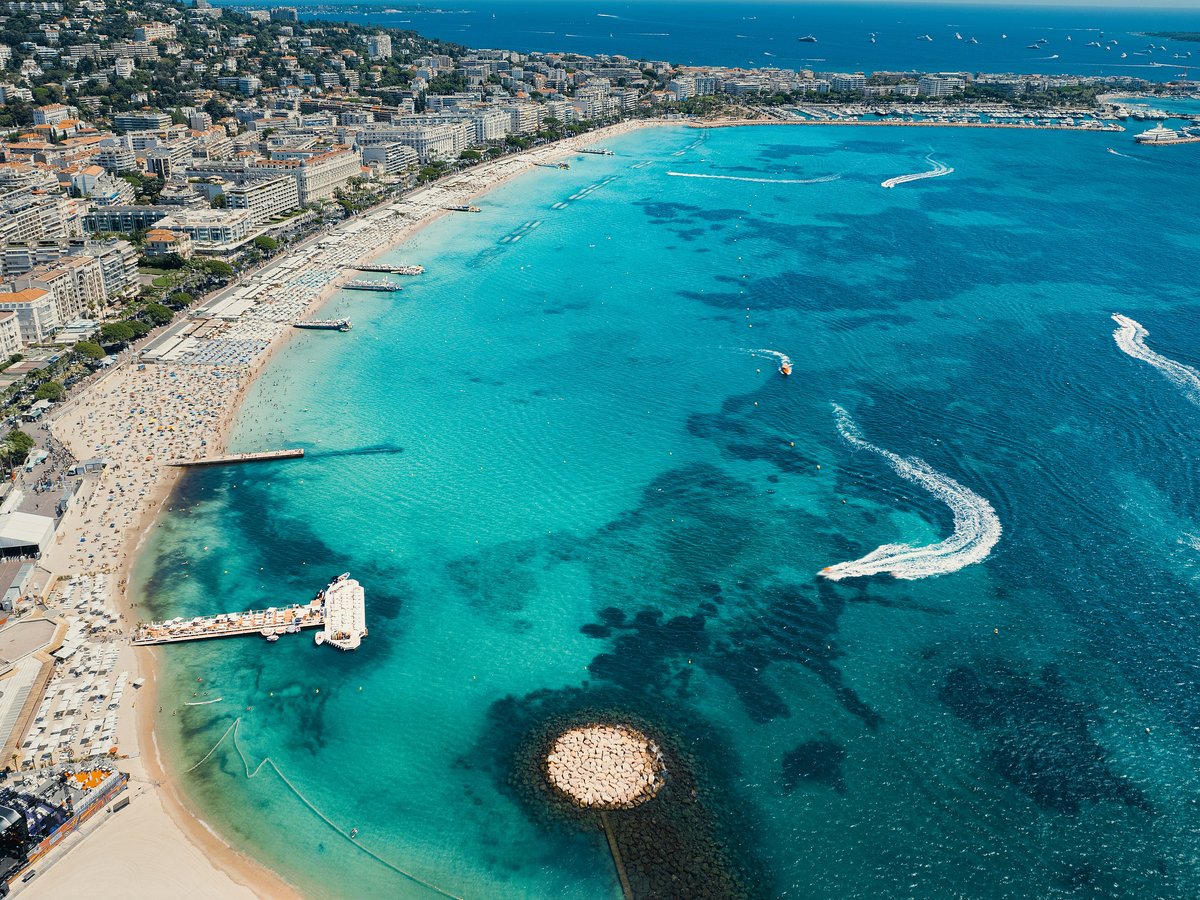
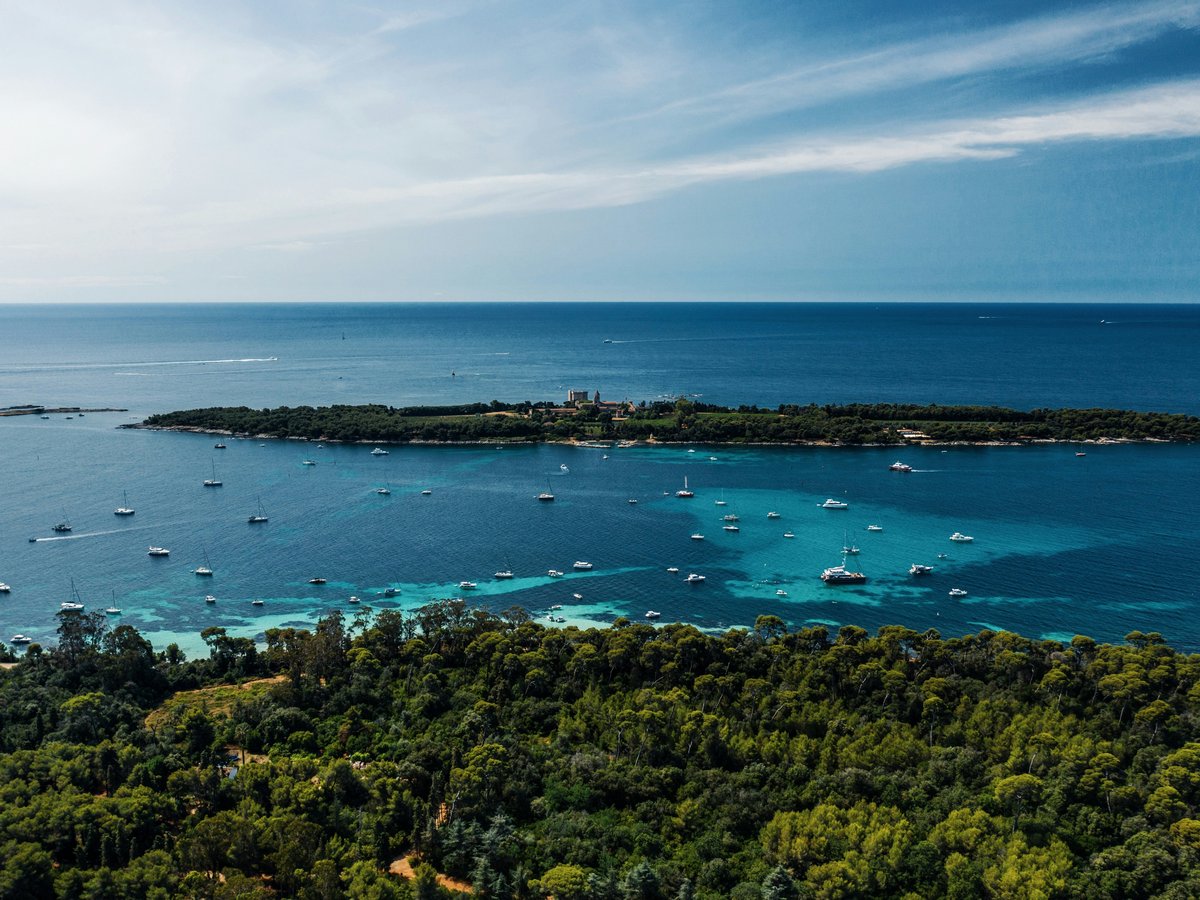
Cannes right now
Answers about Cannes
-
Airport to city
Cannes has no commercial airport. Fly into Nice Côte d'Azur (NCE), 27 km east along the coast. Take the free shuttle to Nice St-Augustin station, then a TER regional train to Gare de Cannes, about 35 minutes for roughly €6 ($7). Trains run every 20-30 minutes until around 9pm. After that, pre-book a taxi or Uber for approximately €60-90.
Read the full answer → -
Best time to visit
Mid-September through mid-October gives you Cannes at its most liveable. Daytime temperatures sit around 22-25°C, the Mediterranean is still warm enough for swimming at Plage du Midi, and hotel rates along La Croisette drop 40-60% from their July peak. The summer crowds have thinned, but every restaurant in Le Suquet stays open.
Read the full answer → -
Cost per day
Budget travelers can get through a day in Cannes on about €57 ($65) with a hostel dorm in Le Suquet, boulangerie breakfasts, and free public beaches. Midrange runs €170 ($195) with a 3-star near Rue d'Antibes and sit-down meals. The Riviera tax hits hardest on La Croisette, where a café crème costs double what it does two blocks inland.
Read the full answer → -
Cultural etiquette
Say 'bonjour' before anything else in every shop and restaurant in Cannes. Skip it, and the interaction goes cold. Service is included on all bills (15% by law), so tipping means leaving €2-5 at dinner. Bread goes on the tablecloth, not your plate. Hands stay on the table during meals. Cover shoulders and knees at Notre-Dame d'Espérance and Le Suquet's chapels.
Read the full answer → -
Best day trips
The Îles de Lérins are the best single-day trip from Cannes. A 15-minute ferry from the Vieux Port costs about €15 return. For couples splitting interests, Antibes pairs the Picasso Museum with a Provençal market morning, 12 minutes by TER for around €3. Nice fills a full day at 30 minutes by train. Grasse and Saint-Paul-de-Vence need a car or the Zou! regional bus.
Read the full answer → -
Digital nomads
Cannes scores 4.2/10 for digital-nomad suitability (sourced from TTDI's editorial rubric). The city's calendar revolves around the Cannes Film Festival and 50-plus annual trade shows, not remote work. Coworking is thin, short-term rents track resort pricing at €1,500-2,200 a month, and fewer than 75,000 year-round residents means the nomad community never reaches critical mass. Nice, 30 minutes east by TER, is the stronger base.
Read the full answer → -
Family-friendly
Cannes scores 7.8/10 for family friendliness (see the TTDI Family-Friendliness Index). La Croisette's flat promenade is stroller-ready, and Marineland in Antibes (10 km east) is the region's biggest kid draw. The sandy beaches along La Croisette are mostly private concessions charging €25-40 per sunbed setup, though free public sections sit between them. Le Suquet's steep medieval lanes defeat any wheeled device. July temperatures regularly hit 30°C.
Read the full answer → -
Food culture
Cannes eats Provençal, not Parisian. The Marché Forville market sets the daily rhythm from 7am, and the city's best meals happen within 3 blocks of it. Socca, pan bagnat, and farcis niçois are the local plates. Avoid La Croisette's waterfront restaurants, where a salade niçoise costs 28 EUR and arrives pre-made. The real food is on Rue Meynadier and in Le Suquet.
Read the full answer → -
Getting around
Walking covers central Cannes from Le Suquet to La Croisette in about 20 minutes. Palm Bus handles local routes for 1.50 EUR a ride. TER trains connect to Nice in 30 minutes and Antibes in 10. Uber operates but driver supply is thin. Trans Côte d'Azur ferries reach the Îles de Lérins from the Vieux Port in 15 minutes.
Read the full answer → -
How to get there
Nice Côte d'Azur (NCE), 27 km east, is the primary airport for Cannes. Delta flies nonstop from JFK seasonally (May through October, $800-1,400 round-trip). From London, easyJet and BA reach Nice in 2 hours for £50-180. The TGV from Paris Gare de Lyon takes 5 hours and arrives in central Cannes for €35-90.
Read the full answer → -
Is it safe?
Cannes scores 7.8/10 for solo-traveler safety (see the TTDI Solo-Safety Index), and violent crime against visitors is rare. The risks that touch you are pickpockets on La Croisette and at Gare de Cannes during the Film Festival in May, watch snatching, and autumn flash floods. Dial 112 for any emergency.
Read the full answer → -
Language basics
French, with a southern Provençal accent. English proficiency along the Boulevard de la Croisette and inside the Palais des Festivals runs higher than most French coastal cities, thanks to 80 years of the Film Festival's international crowds. Move inland to Marché Forville or up into Le Suquet's lanes and it drops sharply. "Bonjour" before any request is non-negotiable.
Read the full answer → -
Layover guide
Yes, with 7 hours or more at Nice Côte d'Azur (NCE). The Express 620 bus takes under an hour to reach Cannes. That gives you 2-3 hours to walk La Croisette, climb Le Suquet for the harbor view, and eat socca at Marché Forville before busing back. Below 7 hours, stay airside at NCE.
Read the full answer → -
LGBTQ-friendly
Cannes scores 8.5/10 for LGBTQ+ friendliness (sourced from TTDI's editorial rubric). France's legal protections for same-sex couples are among Europe's strongest, and the Riviera service industry treats queer visitors as routine. The local scene is compact, but nearby Nice has a dedicated queer quarter with its own nightlife. Visible couples draw no second looks here.
Read the full answer → -
Where locals go
Cannois avoid La Croisette. The real daily rhythm runs along Rue Meynadier and Marché Forville, where fishmongers sell the morning catch by 8am. Plage du Midi west of the Palais draws local swimmers year-round. La Bocca, 3km west, has the €2.50 espresso bars and €8 lunch plates that actual residents depend on. Le Suquet's upper streets empty of tourists by 6pm.
Read the full answer → -
Must-see
Île Sainte-Marguerite, a 15-minute ferry from Cannes' Vieux Port. The 3.2-kilometre-long island holds the 17th-century Fort Royal where the Man in the Iron Mask was imprisoned from 1687 to 1698. Pine and eucalyptus trails lead to swimming coves along the south shore that beat any beach on La Croisette. Return ferry costs about €16.
Read the full answer → -
Solo travel
Cannes rates 7.8/10 for solo travel. The compact 5 km coastal core is safe, walkable, and connected by TER trains to Nice and Antibes in under 30 minutes. The Croisette stays patrolled past midnight. The downside is real. This is a couples-and-networking city with no hostel scene, so meeting people takes more initiative than in Nice or Marseille. Single-occupancy rates outside festival season run 65-120 EUR.
Read the full answer → -
This week
Cannes this week runs on its summer rhythm. Mornings belong to Marché Forville for stone fruit and socca, open Tuesday through Sunday from 7am. Afternoons reach 25-28°C along La Croisette. The Palais des Festivals and nearby outdoor venues host concerts most evenings. Aperitifs start around 7pm in Le Suquet.
Read the full answer → -
3-day itinerary
Day 1 covers La Croisette and Le Suquet on foot, starting at Marché Forville by 8:30am and climbing to the Musée de la Castre. Day 2 takes the 15-minute ferry to Île Sainte-Marguerite for Fort Royal and coastal swimming. Day 3 rides the 12-minute train to Antibes for the Picasso Museum and Marché Provençal. About 25 kilometres of walking total.
Read the full answer → -
What to avoid
Skip the overpriced La Croisette beachfront restaurants, avoid the Film Festival fortnight in May without accreditation, and never take an unmetered taxi from Nice airport. The private beach clubs charge €25-40 for a sunbed on sand that is technically public. Walk 10 minutes west to Plage du Midi instead.
Read the full answer → -
What to pack
Cannes has sandy beaches, not the pebble you'll find in Nice, but the best La Croisette stretches are private concessions. Bring smart-casual evening wear because La Croisette restaurants enforce dress codes year-round. A Type E plug adapter handles France's 230V outlets. SPF 50 and a light jacket for the post-sunset sea breeze round out the non-obvious items. Skip umbrellas and toiletries. Buy them cheaper at Monoprix.
Read the full answer → -
Where to stay
Stay between Rue d'Antibes and Boulevard de la Croisette for a first visit to Cannes. You're five minutes from the Palais des Festivals, the main beach, and Gare de Cannes. Three-stars on side streets like Rue Hoche run $140-205 in summer. Le Suquet, the old hilltop quarter west of the port, costs $105-170 and is quieter after dark.
Read the full answer →
Deep guides for Cannes
Curated lists for Cannes
accommodation
-
Best boutique hotels
Cannes stretches along the Côte d'Azur in a narrow arc between the Esterel hills and the Mediterranean, and its hotel map follows the same curve. The Croisette's beachfront palaces get the headlines, but most visitors sleep inland, in quieter residential quarters where a short walk still reaches sand. The city's train station at Gare de Cannes splits the hotel belt in two: east toward the festival quarter and the beaches, west toward La Bocca's lower rates and local bakeries. Altitude matters here; the hillside neighborhoods above Boulevard Carnot trade sea views for steeper walks and thinner restaurant choices. Price tiers compress during the film festival in May and MIPIM in March, when even a budget room near the Palais can triple, but for the rest of the year the spread is wide enough that an $87 room in Passy and a $199 villa suite in La Californie sit on the same itinerary. The city's inventory clusters into 10 neighborhoods, and each one answers a different question about what kind of Cannes trip you want.
See the picks → -
Best hostels
Cannes splits into three practical zones for budget travelers. The western stretch of La Bocca trades Croisette glamour for beachfront quiet and lower nightly rates. Le Suquet, the old hilltop quarter above the port, keeps you close to the Marché Forville and the narrow lanes where restaurant prices drop the moment you step off the waterfront. Most visitors overpay for a Croisette address they will only sleep at; the neighborhoods behind the film festival facade hold cleaner rooms at half the cost. La Bocca's two distinct pockets, one near the Plage du Midi and one closer to the town centre, anchor the budget tier, while Le Suquet puts a bed within walking distance of both the old port and the Palais des Festivals. Cannes rewards the traveler who books by neighborhood, not by postcode.
See the picks → -
Best luxury hotels
Cannes luxury hotels divide along two lines: the Croisette boulevard properties facing the sea, and the smaller addresses in the old port and residential streets behind. The boulevard names command the beachfront and the festival-season energy; the compact properties trade spectacle for discretion. What they share is a concentration of spa, pool, and beach amenities unusual for a city this size, and Trip.com guest ratings that cluster tightly enough to make the details decisive. This is not a city where the lowest-rated luxury option disappoints; it is a city where the right booking depends on whether you want a full-service beachfront resort or a quiet property where the staff knows every guest by name. The twelve addresses below span the Croisette, the Palais des Festivals district, the Le Suquet old town, and the quieter residential neighborhoods beyond the center.
See the picks → -
Where to stay
Cannes splits into neighborhoods that serve very different travelers, and the choice of where to sleep shapes the trip more than the choice of which hotel. The Croisette and the Old Port draw the festival crowds and the waterfront strollers; the hills behind them hold quieter residential pockets where rates drop and noise fades. West toward La Bocca, budget beds line a stretch of local beach that most visitors never see. The train station at Carnot anchors the practical middle ground: walkable to the sea, walkable to the shops on Rue d'Antibes, and priced below the promenade. Cannes is small enough that a walking loop covers most of it, but the character of those blocks changes street by street. The waterfront is where the money lands; the backstreets behind the Croisette are where the value hides. These 10 neighborhoods differ by what is within walking distance, what tier of hotel each one supports, and which kind of traveler it fits.
See the picks →
attractions
-
Best free attractions
Free in Cannes, done well, means trading the seafront for soil and rock. This list is for the visitor who would rather walk than queue, and who plans around opening hours rather than a reservation. Two of the four are gardens: one a weekday-only botanical garden with its own heritage designation, the other the botanical garden of Nice, worth the day out. The other two are open-air parks, each with its own page on the Département 06 Randoxygène hiking site, one of them a cone of volcanic origin in the Esterel. Be clear-eyed about geography: not every entry sits inside Cannes itself. San Peyre is in Mandelieu-la-Napoule, and the last garden carries Nice in its own name. None of these places asks you to buy anything, but they do ask for decent shoes, some water and a little planning, which is a fair trade for an afternoon that doesn't feel like it was sold to you.
See the picks → -
Best museums
Be honest about the geography before you plan anything: Cannes itself contributes one museum to this list, the Musée des Explorations du Monde, set in the town's medieval castle. The other eleven are spread along the coast and into the hills behind it, and that is the point. Mougins has a private art museum devoted to women artists and a museum of classical art; Antibes has its Picasso Museum and the Foundation Hartung Bergman; Nice supplies a fine arts museum and a museum of naïve art. This is a list for visitors who treat Cannes as a base, not a boundary, and who would sooner spend a morning with one good collection than an afternoon drifting between shop windows. Several of these places keep irregular hours, and for a few we could verify no hours at all. Where that is the case we say so plainly and point you to the official site.
See the picks → -
Must-see attractions
The 12 places here are stone and ironwork, not sand: churches, chapels, a cemetery, a bandstand, a war memorial, and 2 castles. What ties them is paperwork. Most carry a heritage designation, from the classified historical monument at Église Notre-Dame-de-l'Espérance to the Monument historique inscrit status of the Chapelle de la Miséricorde, with dates that stretch from the Grand Jas Cemetery of 1866 through the Russian Orthodox church of 1896 to a chapel of 1949. The list reaches past the city, too: the top entry is a castle in Cagnes-sur-Mer, and the chapel Henri Matisse designed is in Vence. Our records give addresses and designations but no opening hours for any of them, so confirm before you travel. This is a list for visitors who would trade an afternoon on a sun lounger for a building with a story on file.
See the picks →
food
-
Best cafes
Twelve cafes in Cannes, and we'll be honest about what holds them together: addresses we can verify, and our own opinions about how to use them. Three of the twelve sit on Rue Hoche, at numbers 3, 26 and 32, and two share the door number 18 on Rue Bivouac Napoléon. The category is loose on purpose: alongside the coffee shops you will find a bubble tea counter, two ice cream addresses and a tea address. Confirmed opening hours exist for only three, one opening at 07:30, one at 09:00 and one at 10:00, and where the facts run out we say so instead of filling the gap with atmosphere. This list is for the visitor who would sooner have a correct address and a plain opinion than a paragraph of adjectives. Call ahead where a number is given, and trust your own eyes at the door.
See the picks → -
Best restaurants
Cannes sells itself on one boulevard, and 2 of these 12 tables do carry its name: MÖYE at 84 Boulevard de la Croisette and Hyde Beach, addressed simply to the Croisette. The other 10 are where the list earns its keep, sitting on streets a visitor has less reason to walk: Rue Hoche, Boulevard de la République, Avenue de Grasse, Boulevard Carnot, and an address numbered 17 at Marché Forville. The range is wider than the postcard suggests: Provençal, bistro, Mediterranean, steak, pizza, even poffertjes. What we can vouch for is addresses, cuisines and hours, so each entry gives you those, with the clock treated as seriously as the cooking. Several of these places close between lunch and dinner, one shuts at 17:00 and takes Monday off, and one opens only at 18:00. Read the hours before you walk. This list is for visitors who would rather eat off the boulevard than pay for a view, and who do not mind being told when a door will be shut.
See the picks →
Browse by traveler type
- For foodies
Cannes for foodies
- For families with kids
Cannes for families
- For digital nomads
Cannes for digital nomads
- For solo travelers
Cannes for solo travelers
- For couples
Cannes for couples
- For budget travelers
Cannes on a budget
- For luxury travelers
Cannes for luxury travelers
- For first-timers
Cannes for first-time visitors
Book experiences in Cannes
 Free cancellation
 Yacht Me Up All Inclusive Private Cruise Cannes Lérins Sailing
Day trip: 4 hours, free cancellation.
via Viator Free cancellation
 Cruise / Navigation / Sunset in the Lerins Islands
Day trip: 3.5 hours, free cancellation.
via Viator Free cancellation
 Eze and Monaco Private Half-Day Tour
Day trip: 5 hours, free cancellation.
via Viator Free cancellation
 Monaco and Eze Small Group Day Trip from Cannes
Day trip: 10 hours, free cancellation.
via Viator Free cancellation
 Taste Cannes – A Full French Riviera Food Tour by Do Eat Better
Day trip: 3.5 hours, free cancellation.
via Viator Free cancellation
 The best French Riviera Full-Day from Cannes Small-Group Shore Excursion
Day trip: 9 hours, free cancellation.
via Viator Free cancellation
 Private sailing excursion & Provencal picnic
Day trip: free cancellation.
via Viator Free cancellation
 Monaco, Monte Carlo, Eze, la Turbie, 7H Shared Tour from Cannes
Day trip: 7 hours, free cancellation.
via Viator Free cancellation
 French Riviera Private Full-Day Tour
Day trip: 8.5 hours, free cancellation.
via Viator Free cancellation
 Cannes Shore Excursion: Private Day Trip to Monaco and Eze
Day trip: 8 hours, free cancellation.
via Viator Free cancellation
 Shore excursion to Eze, Monaco & Monte-Carlo from Cannes
Day trip: 7 hours, free cancellation.
via Viator Free cancellation
 Perfect for U best eco-museum lerin islands
Day trip: 3.5 hours, free cancellation.
via ViatorBrowse by interest
Find a flight to Cannes
Live fares to Cannes appear here once cookies are accepted.
Last verified by automated review (v1.7.2) on . What is automated review?