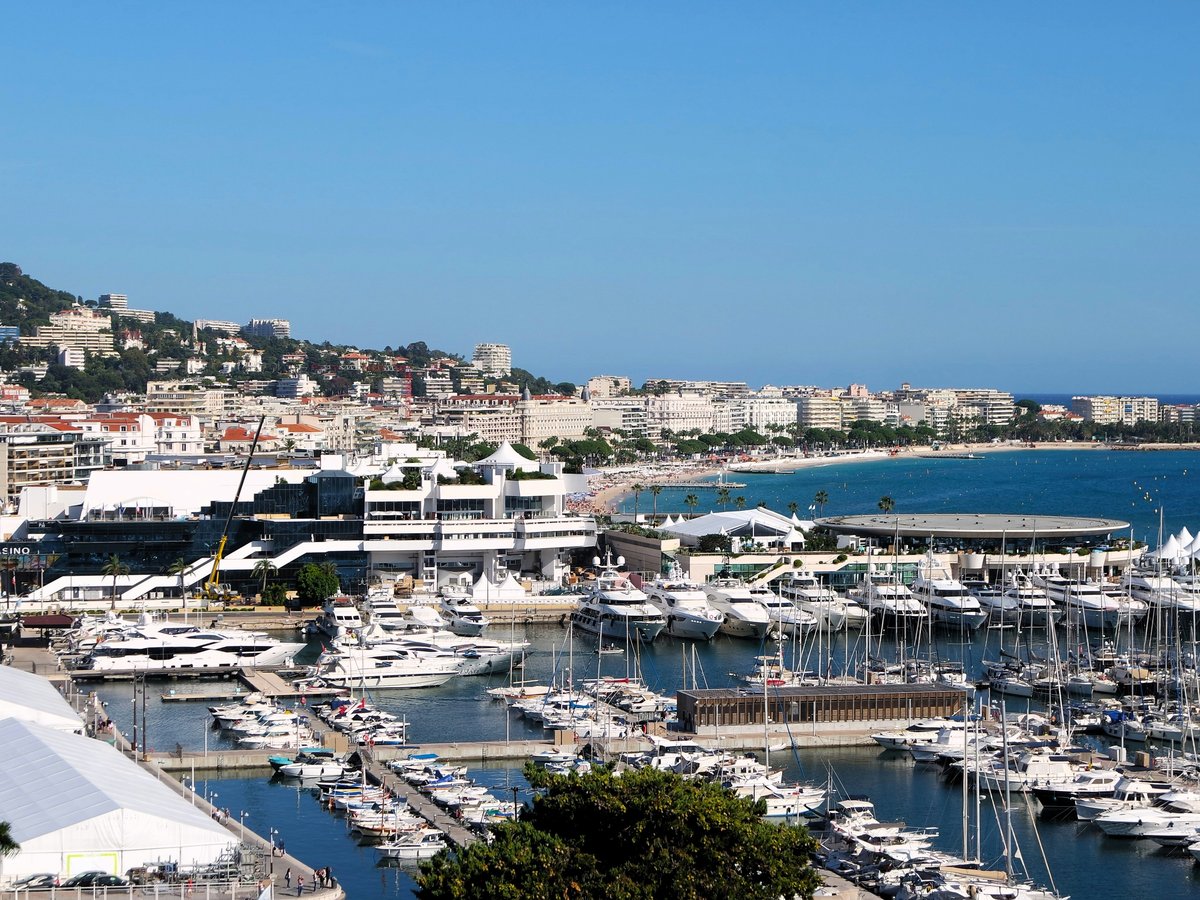
What's the food culture in Cannes?
Cannes eats Provençal, not Parisian. The Marché Forville market sets the daily rhythm from 7am, and the city's best meals happen within 3 blocks of it. Socca, pan bagnat, and farcis niçois are the local plates. Avoid La Croisette's waterfront restaurants, where a salade niçoise costs 28 EUR and arrives pre-made. The real food is on Rue Meynadier and in Le Suquet.
Cannes runs on Marché Forville time. The covered market on Rue du Marché opens at 7am Tuesday through Sunday, and by 7:30 the fish vendors are laying out rouget, loup de mer, and whatever the overnight boats pulled from the Lérins Channel. The smell of brine and wet stone fills the Forville hall before the coffee vendors even set up. Monday is a flea market, no food. Get there by 8 if you want the best socca from the vendor near the market's south entrance, where it comes off a copper pan the size of a car tire, blistered and peppery, 3 EUR a portion. By 10am the cheese stalls are offering aged tomme de montagne from the Mercantour hills, 45 minutes north. This market is where Cannes eats, not on La Croisette.
La Croisette is where you pay 26 EUR for a salade niçoise that arrives with iceberg lettuce and canned tuna. That is not a niçoise. Walk 4 blocks inland to Rue Meynadier, a pedestrian street that runs parallel, and the same city feels 40% cheaper. Fromagerie Ceneri at number 22 has been cutting comté and wrapping chèvre in chestnut leaves since the 1960s. The bakeries here sell fougasse, a Provençal flatbread slashed open and loaded with olives or lardons, for 3.50 EUR. Le Suquet, the old quarter that climbs the hill west of the Vieux Port, has restaurants that still cook for residents. Aux Bons Enfants on Rue Meynadier has no printed menu. The owner tells you what arrived at Forville that morning, and you eat that. Expect 20-30 EUR for a 2-course lunch with wine. Cash only.
The dishes that matter here are Niçois, not generically French. Socca is a chickpea-flour crêpe cooked in a wood-fired oven until the edges blacken and the center stays soft and slightly grainy. Pan bagnat is a round bread roll soaked in olive oil, filled with tuna, hard-boiled egg, olives, anchovies, tomato, and raw peppers. It should be heavy and dripping. If yours is dry, send it back. Pissaladière, an onion tart topped with anchovy fillets and small black Niçois olives, shows up at every bakery by 11am for about 4 EUR a slice. Farcis niçois are courgettes, tomatoes, and peppers hollowed out, stuffed with a pork-and-breadcrumb mixture, and baked until the tops crisp. You'll find them at the traiteurs around Forville for 8-12 EUR a portion, ready to eat warm or at room temperature. These are weekday lunches in Cannes, not restaurant dishes.
Dinner in Cannes starts at 8pm. Before 7:30, you're eating with other tourists. The port-side restaurants along Quai Saint-Pierre serve grilled fish and bouillabaisse for 25-45 EUR. The bouillabaisse here is lighter than Marseille's version, more brothy, with rouget and loup de mer instead of the heavier rascasse. Mind you, a proper bouillabaisse at a sit-down restaurant will likely run 40-55 EUR per person. For something less formal, the pizza places on Rue du Batéguier do thin-crust pissaladière-style pies with local toppings for 12-16 EUR. During the Film Festival in May, restaurant prices rise 30-50% and reservations at La Palme d'Or in the Hôtel Martinez need booking 2-3 weeks ahead. The rest of the year, Cannes is a city of 74,000 people, and walking into most restaurants at 8:15 on a Tuesday gets you a table.
Cannes sits between Nice, 30 minutes east by train for 6.20 EUR, and Grasse, 40 minutes north by bus 600. Both are better day-trip food destinations than anything along the Croisette hotel strip. Nice's Cours Saleya market is larger and louder than Forville. Grasse has a morning market on Place aux Aires where you'll find candied violets, orange-blossom water, and fougassette, a brioche-like bread flavored with orange blossom that costs 2.50 EUR and tastes the way the south of France smells. Back in Cannes, the late-night options are thin. After 10pm your best bet tends to be the kebab shops on Rue Jean Jaurès, where a shawarma plate runs 9-11 EUR. Most kitchens in the centre close by 10:30pm outside festival season.
Signature dishes
-
Socca
A chickpea-flour crêpe cooked in a wood-fired oven until the edges blister and blacken. Eaten hot, cut into irregular pieces, with nothing but black pepper and coarse salt. About 3 EUR at Marché Forville.
-
Pan bagnat
A round bread roll soaked through with olive oil, stuffed with tuna, hard-boiled egg, raw peppers, tomato, olives, and anchovies. Should be heavy and dripping. The sandwich form of salade niçoise, sold at bakeries for 5-7 EUR.
-
Pissaladière
An onion tart baked on bread dough, topped with anchovy fillets and small black Niçois olives. Sold by the slice at bakeries from mid-morning for about 4 EUR.
-
Farcis niçois
Courgettes, tomatoes, and peppers hollowed out, stuffed with a seasoned pork-and-breadcrumb mixture, and baked until the tops turn golden. Sold warm at market traiteurs for 8-12 EUR a portion.
-
Salade niçoise
The real version uses raw peppers, never cooked green beans. Tuna, hard-boiled egg, anchovies, tomato, Niçois olives, and olive oil on lettuce. No vinaigrette. About 14-18 EUR at sit-down restaurants in Le Suquet.
-
Daube provençale
Beef braised slowly in red wine with orange peel, olives, and herbes de Provence until the meat falls apart. A winter dish that still appears on Cannes menus year-round. Around 18-22 EUR at traditional restaurants.
-
Bouillabaisse
A fish stew served in two parts. The broth arrives first with croutons and rouille, a saffron-garlic mayonnaise. Then the fish on a separate plate. The Cannes version uses rouget and loup de mer. Expect 40-55 EUR.
-
Fougasse
A Provençal flatbread slashed into a leaf shape, baked with olives, lardons, or anchovies folded into the dough. Crisp outside, soft and oily inside. About 3.50 EUR from bakeries on Rue Meynadier.
Meal times
Breakfast is coffee and a croissant, 7-9am. Lunch runs 12-2pm and kitchens close hard at 2. Most restaurants reopen at 7:30pm for dinner, with locals arriving closer to 8:30. Sunday lunch is the big social meal and often stretches past 3pm.
Tipping
Service is included by law, 15% built into every price. Leaving 1-2 EUR in coins on the table for good service is common but not expected. No percentage calculation needed.
Dietary notes
Vegetarian options exist but require effort. Most Provençal cooking relies on anchovies, tuna, or pork, even in vegetable dishes like farcis. Gluten-free awareness is growing but limited outside hotel restaurants. Halal options concentrate in the La Bocca district west of the centre. Nut allergies need active mention, as many dishes use pine nuts.
Go deeper into Cannes
Last verified by automated review (v1.7.2) on . What is automated review?