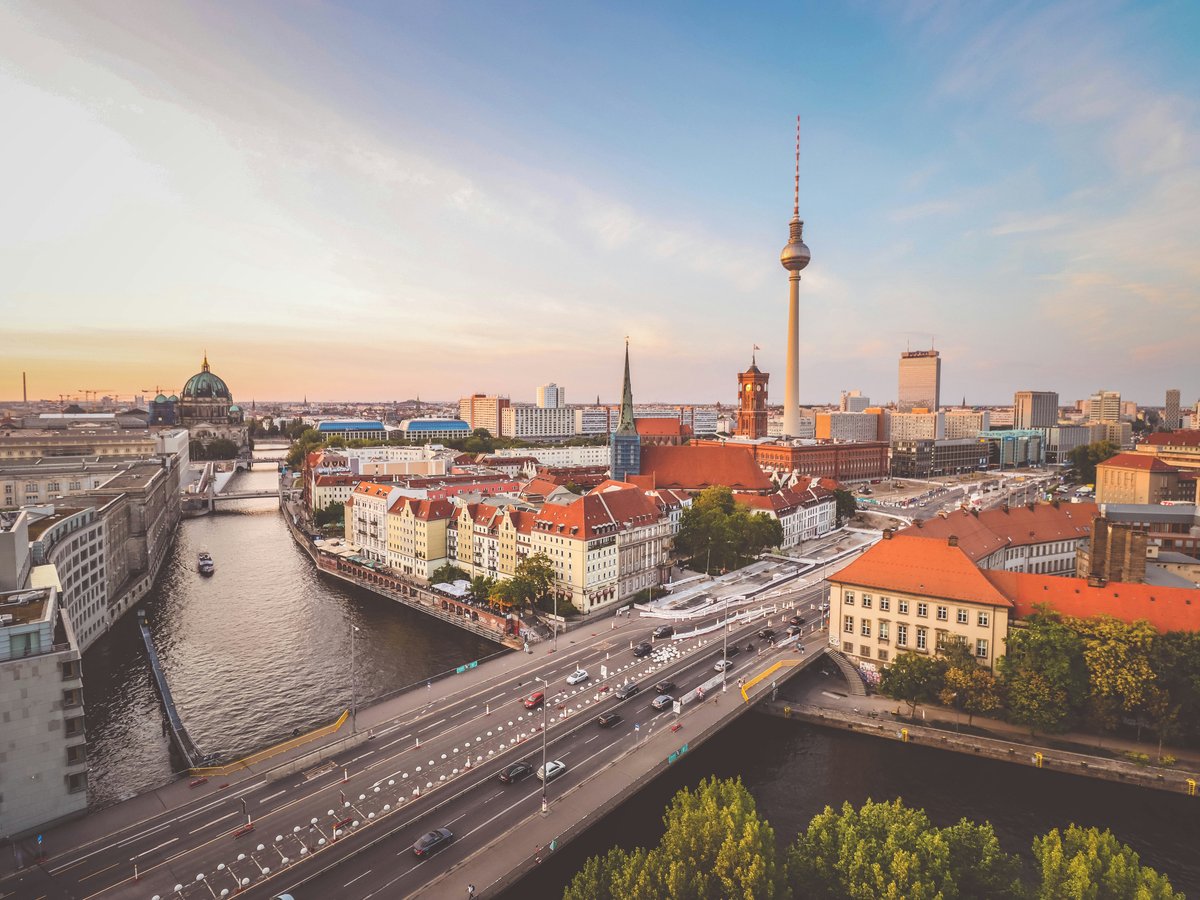
Stay in Berlin in January
137 hotels in the Trip.com pool for Berlin, from US$14 a night.
Opens Trip.com on Fri 1 Jan to Sun 3 Jan 2027; change the dates there.
January in Berlin is dark. That's the first thing you need to know. The sun doesn't rise until after 8:15 and sets by 4:00 in the afternoon, giving you fewer than 8 hours of daylight. Temperatures hover around 4.5°C (40°F) during the day and regularly dip below freezing at night, with an average low of -0.1°C (32°F). The Christmas markets packed up in late December, the holiday tourists went home, and what's left is Berlin at its most raw and local. The city feels quieter. Some might say emptier.
That said, there's a strange appeal to Berlin in deep winter. The cold pushes everything indoors, and Berlin's indoor life is arguably its strongest suit. The club scene runs hardest in winter. The museums on Museumsinsel are blissfully uncrowded. Restaurants in Kreuzberg and Neukölln that have 45-minute waits in June will seat you immediately. Hotel rates drop to their lowest point of the year, and flights from most European cities are at rock-bottom prices. If you're here for culture, food, and nightlife rather than strolling through Tiergarten in the sunshine, January works.
Mind you, it takes a certain temperament. The grey skies can sit over the city for days without breaking. Rain, sleet, and occasional snow make the streets slick. You'll spend a lot of time in heated U-Bahn stations and warm cafes in Prenzlauer Berg, watching condensation streak down the windows. If that sounds miserable to you, come in June instead. If it sounds like the setup for a good novel, keep reading.
Why visit in January
- Hotel rates in Mitte and Charlottenburg typically drop 30-50% below summer peaks, with 3-star rooms often available under 70 EUR per night
- Museumsinsel, the Pergamonmuseum, and the Gemäldegalerie have minimal queues. You can stand in front of Nefertiti's bust at the Neues Museum without a crowd of selfie sticks
- The club and live music scene peaks in winter. Berghain, Tresor, and smaller venues in Friedrichshain run extended weekend sets, and the CTM Festival brings experimental electronic acts from around the world in late January
- Internationale Grüne Woche at Messe Berlin is one of the world's largest food and agriculture fairs, running 10 days in mid-to-late January with over 1,800 exhibitors from 60+ countries
- Restaurants across the city serve hearty winter menus. Seasonal dishes like Grünkohl and Eintopf are at their best, and reservations at popular spots in Kreuzberg are easy to get
Worth knowing
- Fewer than 8 hours of daylight. The sun rises around 8:15 and sets before 4:00, which limits outdoor sightseeing to a short window
- Persistent overcast skies. Berlin averages only about 1.5 hours of sunshine per day in January, less than London or Stockholm in the same month
- Temperatures frequently drop below freezing overnight, and wind chill along the Spree river can make 3°C feel closer to -3°C (27°F). Exposed skin gets uncomfortable fast
- Some outdoor attractions lose their appeal. The Mauerpark flea market is either closed or a shadow of its summer self, and the beer gardens in Prenzlauer Berg won't reopen until April
Best for
Think twice if
Berlin in January is cold, grey, and damp. The average high sits at 4.5°C (40°F) and the low dips to -0.1°C (32°F), though cold snaps can push nighttime temperatures to -10°C (14°F) or below for a few days. Humidity tends to hover around 85%, which makes the cold feel heavier than the thermometer suggests. You'll get roughly 60mm of precipitation spread across about 14 days, falling as rain, sleet, or wet snow. The snow rarely sticks for long in the city center, turning to grey slush on the sidewalks within hours. Wind off the North European Plain adds a bite, particularly along the Spree and at exposed spots like Alexanderplatz.
Seasonal caution
- Temperatures can drop to -10°C (14°F) or lower during cold snaps, typically lasting 3-5 days when Arctic air pushes south. Exposed skin risks frostnip within 30 minutes at those levels, especially with wind
- Black ice forms on sidewalks and bike paths overnight and persists into mid-morning. Slip injuries rise sharply in January. Watch the pavement, especially on bridges and in shaded areas near the Spree
- Short daylight (sunrise 8:15, sunset 4:00) combined with persistent overcast can affect mood. If you're prone to seasonal low energy, a vitamin D supplement and deliberate morning light exposure help
Year-round climate
Averages from the last 5 years.
| Month | Avg high (°C) | Avg low (°C) | Rainfall (mm) |
|---|---|---|---|
| Jan | 5 | 0 | 60 |
| Feb | 6 | 0 | 54 |
| Mar | 11 | 1 | 35 |
| Apr | 14 | 5 | 36 |
| May | 19 | 9 | 52 |
| Jun | 25 | 14 | 57 |
| Jul | 25 | 15 | 92 |
| Aug | 25 | 15 | 60 |
| Sep | 21 | 12 | 37 |
| Oct | 15 | 8 | 54 |
| Nov | 8 | 3 | 55 |
| Dec | 5 | 1 | 57 |
Holidays and festivals in January
Public holidays
- New Year's Day(Neujahr)1 January 2027
- Epiphany(Heilige Drei Könige)6 January 2027
Headline events
Internationale Grüne Woche
Mid-to-late January, usually spanning 10 days (approximately January 17-26)
One of the world's largest consumer fairs for food, agriculture, and horticulture. Over 300,000 visitors sample products from 60+ countries across the Messe Berlin exhibition grounds. You can eat your way through regional German specialties, African street food, South American wines, and Japanese wagyu all under one roof. It's been running since 1926.
Best things to do in January
Museum marathon on Museumsinsel
cultureBerlin's UNESCO-listed Museum Island holds 5 world-class museums, including the Pergamonmuseum, the Neues Museum, and the Alte Nationalgalerie. In January, you can move through galleries at your own pace without the shoulder-to-shoulder crowds of July. The Ishtar Gate, the bust of Nefertiti, and Caspar David Friedrich's landscapes are all better experienced in relative quiet.
Visitor numbers drop to their lowest point of the year. Queue times at the Neues Museum typically fall from 30-45 minutes in summer to near zero.Booking tipThe Museum Island day pass (Bereichskarte) covers all 5 museums for around 22 EUR. Buy online to skip even the short winter queue.
Club nights and all-weekend sets in Friedrichshain
nightlifeBerlin's techno scene doesn't hibernate. It intensifies. Berghain's weekend parties can run from Saturday midnight to Monday morning. Tresor, Sisyphos (when open for winter events), and smaller clubs like OHM in Kreuzberg all run regular January programming. The dark, cold city outside makes the warm, loud rooms inside feel like a different planet.
Winter is peak season for Berlin's club scene. DJs and promoters front-load January and February calendars because the audience is captive and hungry for indoor experiences.Booking tipBerghain has no advance tickets and no guaranteed entry. Arrive between 1:00 and 3:00 AM, dress dark and plain, and accept that the door policy is unpredictable.
Eat through the Internationale Grüne Woche
foodThe 10-day food and agriculture fair at Messe Berlin is part trade show, part international food court. Over 1,800 exhibitors offer tastings, cooking demonstrations, and regional products. The German federal states hall alone covers 10,000 square meters, and you can sample everything from Thuringian bratwurst to Bavarian pretzels to Schleswig-Holstein oysters.
Grüne Woche runs exclusively in January. It's been held annually since 1926 and draws over 300,000 visitors across 10 days.Booking tipGo on a weekday to avoid the worst crowds. Day tickets are around 15 EUR. Budget extra for food tastings, which add up quickly.
Berliner Philharmonie concert
cultureThe Berlin Philharmonic's January program typically features major orchestral works in the concert hall's distinctive vineyard-style seating. Herbert von Karajan conducted here, and the acoustics remain among the finest in the world. The warm, golden interior is a stark contrast to the dark streets outside.
The Philharmonic's main season runs September through June, with January offering some of the strongest programs. Cold evenings make a 2-hour concert followed by dinner in the Kulturforum area feel like a complete night out.Booking tipTickets for popular programs sell weeks in advance. Check the Philharmonie website in early December. Standing-room tickets (around 10 EUR) sometimes open closer to the date.
Explore the Hamburger Bahnhof contemporary art museum
cultureHoused in a former railway station in Moabit, this museum holds one of Europe's strongest contemporary collections. Works by Joseph Beuys, Andy Warhol, and Anselm Kiefer occupy the cavernous main hall. January's low visitor count means you can sit with a Beuys installation for 20 minutes without interruption.
Winter exhibitions tend to be the museum's most ambitious. The empty galleries let the scale of the architecture register in a way that's lost when 500 people are shuffling through.Booking tipFree admission on the first Sunday of each month. In January, that falls on the first weekend, often the quietest day of the quietest month.
CTM Festival for experimental music
musicClub Transmediale runs for about 10 days in late January and early February, staging experimental electronic music, sound art, and audiovisual performances across venues in Kreuzberg and Friedrichshain. Past editions have featured artists like Arca, Ben Frost, and Holly Herndon. Performances happen in clubs, galleries, and churches.
CTM runs exclusively in late January and early February, coinciding with the Transmediale art and digital culture festival. The two together create a week-long concentration of experimental culture.Booking tipFestival passes sell out for the most popular years. Individual event tickets are also available and tend to hold until closer to the date.
Winter sauna session at Liquidrom or Vabali Spa
wellnessBerlin has a strong public bathing and sauna culture, and January is when it makes the most sense. Liquidrom near Potsdamer Platz has an underwater-music saltwater pool and multiple saunas. Vabali Spa in Moabit has Balinese-themed outdoor pools where you sit in 38°C (100°F) water while snow falls on your shoulders.
The contrast between freezing outdoor air and hot water or steam is the whole point of the German sauna tradition. January maximizes that contrast. A 3-hour session after a cold day of sightseeing resets everything.Booking tipWeekend afternoons at both venues get busy. Go on a weekday evening for the best experience. Note that German saunas are textile-free (nude), which surprises some visitors.
Street Food Thursday at Markthalle Neun
foodEvery Thursday from 5:00 to 10:00 PM, this restored 19th-century market hall in Kreuzberg fills with 30-40 food vendors. In January, the offerings lean toward warming dishes. Ramen, dumplings, smoked meat sandwiches, and seasonal German soups rotate through the stalls. The iron-and-brick hall traps heat and the smell of grilled food.
The winter menu rotation brings heavier, warmer dishes that match the season. The crowd is mostly local in January, with fewer tourists than the summer editions.Booking tipArrive by 5:30 PM to beat the post-work rush. Bring cash, as some stalls don't accept cards.
What to eat in January
On menus now
Grünkohl mit Pinkel
Curly kale braised low and slow with smoked sausage (Pinkel) and mustard. January is peak kale season in northern Germany, and the first hard frost is said to sweeten the leaves. You'll find versions at traditional restaurants in Charlottenburg and Schöneberg.
Eintopf
A one-pot stew that changes by household and restaurant. Lentil Eintopf with Mettwurst and root vegetables is the January standard in Berlin. The thick, warming broth is the kind of thing you want after an afternoon walking along the Landwehrkanal in 2°C drizzle.
Königsberger Klopse
Veal meatballs in a creamy white caper sauce, a Berlin winter classic with East Prussian roots. The sauce has a distinctive tang from the capers and a squeeze of lemon. Traditional Gaststätten in Mitte and Charlottenburg serve this year-round, but it feels right in January.
Street food peaks
Pfannkuchen (Berliner)
Jam-filled doughnuts that Berliners call Pfannkuchen (not Berliner, that's what everyone else calls them). Bakeries across the city stock them heavily through January, left over from the Silvester tradition. The filling is typically plum or apricot jam, dusted in powdered sugar.
What to drink
Glühwein and Eierpunsch
Mulled wine lingers into early January at the few Christmas market stalls that stay open through the first week. After that, bars in Kreuzberg and Neukölln still serve house versions. Eierpunsch, a warm egg-based punch with vanilla and rum, is the stronger local alternative.
In markets
Winter root vegetables at Markthalle Neun
January is peak season for German storage crops. The Thursday Street Food market at Markthalle Neun in Kreuzberg features parsnip, celeriac, black salsify, and Jerusalem artichoke in soups, roasted dishes, and fermented preparations.
Regular events in January
CTM Festival (Club Transmediale)
A 10-day festival of experimental electronic and digital music, sound art, and performances spread across multiple venues in Kreuzberg and Friedrichshain. Typically pairs with the Transmediale art festival.
Late January into early FebruaryTransmediale
An international art and digital culture festival held at Haus der Kulturen der Welt in Tiergarten. Features exhibitions, panel discussions, screenings, and performances exploring the intersection of art, technology, and society.
Late January into early FebruaryBerlin Fashion Week
Runway shows, trade fairs, and designer presentations spread across venues in Mitte and Kreuzberg. Smaller than Milan or Paris but increasingly influential for emerging German and Scandinavian designers.
Early to mid-JanuaryLange Nacht der Museen (Long Night of Museums)
Roughly 80 museums and galleries across Berlin stay open until 2:00 AM, with a single ticket granting access to all participating venues. Shuttle buses connect locations across the city. The January edition, when it falls in this month, draws locals more than tourists.
Usually one Saturday in late January (varies by year)Ultraschall Berlin
A festival of contemporary concert music organized by Deutschlandfunk Kultur and rbb, held at venues including Radialsystem and the Berghain Kantine. Features premieres and performances of new classical and experimental works.
Mid-to-late JanuaryBest places this January
Markthalle Neun
marketA 19th-century iron-and-brick market hall that hosts regular vendors during the week and the popular Street Food Thursday event. In January, the hall's enclosed warmth and seasonal German dishes make it a comfortable place to graze for an hour or two. The Thursday night crowd skews local in winter.
KreuzbergGemäldegalerie
museumOne of Europe's finest old-master painting collections, with works by Rembrandt, Vermeer, Caravaggio, and Botticelli. Housed in the Kulturforum complex near Potsdamer Platz. January means you might be alone in a room with a Vermeer, which almost never happens in summer.
TiergartenKaDeWe (Kaufhaus des Westens)
shoppingThe largest department store in continental Europe, located on Tauentzienstrasse in Schöneberg. The 6th-floor food hall is the real draw. Over 34,000 products across counters selling oysters, sushi, charcuterie, and German pastries. January sales hit the fashion floors hard, with reductions of 30-50% on winter stock.
SchönebergNeues Museum on Museumsinsel
museumHome to the Egyptian collection, including the 3,300-year-old bust of Nefertiti. David Chipperfield's restoration preserved bomb damage alongside new construction. In January, you can spend an unhurried hour in the Egyptian galleries with only a handful of other visitors.
MitteBerliner Philharmonie
concert hallHans Scharoun's 1963 concert hall, with its distinctive tent-like roof and vineyard-style interior seating. The acoustics are exceptional from every seat. January programs tend to feature major symphonic repertoire, and the warm interior is a welcome retreat from the cold.
TiergartenTempelhof Feld
parkThe former airport turned public park is bleak in January. Flat, exposed, and windswept. But on the rare clear day, the vast open space and runway-flat horizon have a strange beauty. The lack of trees means you get wide views of the winter sky. Dress for wind.
NeuköllnClärchens Ballhaus
entertainmentA dance hall in Mitte that has been operating since 1913. The upstairs ballroom, restored after years of closure, hosts swing, tango, and ballroom nights. The crumbling plaster and chandeliers give it an atmosphere that feels like stepping into old Berlin. Check their January calendar for themed dance evenings.
MitteSchwarzes Café
cafeA 24-hour cafe on Kantstrasse in Charlottenburg that has been serving since 1978. It's the kind of place where you end up at 2:00 AM with a coffee and a plate of Schnitzel after wandering through cold streets. In January, the all-night opening hours and warm interior make it a natural gathering point.
Charlottenburg
Your packing checklist
Tick items off as you pack. Your progress saves in this browser.
All packed — have a great trip.
Insider tips
The Berlinale film festival runs in February, but tickets go on sale in mid-to-late January. If you're in town, you can sometimes grab early-bird passes at the Potsdamer Platz box office before the rush. Check the Berlinale website for exact sale dates.
Markthalle Neun's regular weekday vendors (Tuesday to Saturday) sell better produce at lower prices than the Thursday Street Food event. The cheese counter and the Turkish grocery stalls stay open all week and rarely have a queue in January.
The BVG day ticket (Tageskarte) for zones AB costs around 9 EUR and covers unlimited U-Bahn, S-Bahn, bus, and tram rides. In January's cold, you'll use transit constantly. A 7-day pass (about 39 EUR) pays for itself by day 5.
Many Berlin museums offer free admission on the first Sunday of the month, including the Hamburger Bahnhof and several Museumsinsel institutions. In January, these free Sundays are far less crowded than in summer.
Berlin tap water is safe, clean, and hard (high mineral content). Restaurants will try to sell you bottled water at 3-4 EUR a glass. Ask for Leitungswasser and most places will bring it for free, though a few still resist.
Avoid these mistakes
- Planning a full day of outdoor sightseeing. You have fewer than 8 hours of daylight, and by 3:30 PM it's getting dark. Front-load outdoor stops like the East Side Gallery and Brandenburg Gate to the morning, and save museums and restaurants for the afternoon.
- Packing for autumn rather than winter. Some visitors see '4°C average high' and think a medium jacket will do. Wind chill, rain, and hours of walking in 85% humidity make it feel colder than the number suggests. Dress as you would for a city that regularly dips below freezing.
- Assuming everything is open on January 1. Neujahrstag is a public holiday. Most shops, many restaurants, and some museums close entirely. Supermarkets are shut. Stock up on December 31 or accept a quiet day with limited options.
- Skipping the U-Bahn for walking between Mitte attractions. The distances look short on a map, but 20 minutes of walking at -2°C (28°F) in January wind is a different proposition than the same walk in June. Use the BVG transit system freely. The stations are heated.
Practical tips for January
Book accommodation at least 2 weeks ahead if your dates overlap with Internationale Grüne Woche (mid-to-late January), which fills hotels near Messe Berlin in Charlottenburg. Otherwise, January bookings can often be made just days in advance at low-season prices. Restaurants rarely require reservations in January, though weekend dinner at popular spots in Kreuzberg and Neukölln still benefits from a same-day call. Most shops close by 8:00 PM on weekdays and 4:00 PM on Saturdays. Sunday closures are the law in Berlin, not the exception. Grocery stores, retail, and most non-restaurant businesses are shut on Sundays. Plan accordingly. Dress in removable layers because you'll alternate between freezing outdoor air and aggressively heated indoor spaces throughout the day. The temperature swing between a January street and a heated museum gallery can be 25°C (45°F), and you'll make that transition 5 or 6 times daily.
FAQ
Is January a good time to visit Berlin?
It depends on what you're after. January is not Berlin's strongest month. It's cold (highs around 4.5°C / 40°F), dark (under 8 hours of daylight), and grey. Outdoor attractions lose their appeal. But if you're drawn to museums, clubs, winter food, and low prices, January delivers. Hotel rates drop 30-50% from summer, Museumsinsel has no queues, and the Internationale Grüne Woche food fair is a genuine highlight. It ranks 11th out of 12 months for a general visit, but for culture-focused and budget travelers, it punches above that ranking.
What is the weather like in Berlin in January?
Cold and damp. The average high is 4.5°C (40°F) and the average low is -0.1°C (32°F), with 60mm of precipitation across roughly 14 days. Humidity sits around 85%. Expect overcast skies most days, with only about 1.5 hours of sunshine daily on average. Snow falls occasionally but rarely accumulates in the city center for more than a day or two. Cold snaps can push temperatures to -10°C (14°F) for 3-5 days. Pack for genuine winter conditions, not a mild chill.
Does it snow in Berlin in January?
Sometimes. Berlin gets snow in January, but it's unreliable. Some years see several snowfalls that briefly coat the city, others stay wet and grey without significant accumulation. When snow does fall, it tends to melt within a day or two in the city center, where foot traffic and building warmth turn it to slush. The surrounding Brandenburg countryside holds snow longer. Don't plan a trip around the expectation of a white Berlin, but don't be surprised if you wake up to a dusting on the rooftops in Prenzlauer Berg.
Is Berlin crowded in January?
No. January is one of Berlin's quietest months for tourism. The holiday visitors leave after New Year, and the next wave doesn't arrive until the Berlinale film festival in mid-February. Museumsinsel, the Brandenburg Gate, and Checkpoint Charlie are all noticeably less busy. The exception is the 10-day Internationale Grüne Woche at Messe Berlin, which draws over 300,000 visitors, but those crowds concentrate at the exhibition grounds in Charlottenburg, not at typical tourist sites.
What should I do in Berlin on a rainy January day?
Berlin's indoor life is strong enough that rain barely changes the plan. Spend a morning on Museumsinsel (the Pergamonmuseum and Neues Museum need 2-3 hours each). Eat lunch at Markthalle Neun in Kreuzberg. Warm up at a sauna session at Liquidrom near Potsdamer Platz. Browse the KaDeWe food hall in Schöneberg. Catch an evening concert at the Berliner Philharmonie. Most of Berlin's best January experiences happen indoors anyway, so rain is less of a disruption here than it would be in a beach or outdoor-focused destination.
Things to Do in Berlin in January
 Free cancellation
 Discover Berlin Half-Day Walking Tour
City tour: 3.5 hours, free cancellation.
via Viator Free cancellation
 Berlin: Sachsenhausen Concentration Camp Tour in English
Day trip: 5.5 hours, free cancellation.
via Viator Free cancellation
 Third Reich Berlin: Hitler and WWII Walking Tour
City tour: 3 hours, free cancellation.
via Viator Free cancellation
 Communist East Berlin and Berlin Wall Walking Tour
City tour: 2 hours, free cancellation.
via Viator Free cancellation
 Sachsenhausen Concentration Camp Memorial Tour (Max. 15 Guests)
City tour: 6 hours, free cancellation.
via Viator Free cancellation
 Cold War, Berlin Wall, Spies and the East Side Gallery
City tour: 3 hours, free cancellation.
via ViatorFind a flight to Berlin
Live fares to Berlin appear here once cookies are accepted.
Last verified by automated review (v1.7.2) on . What is automated review?