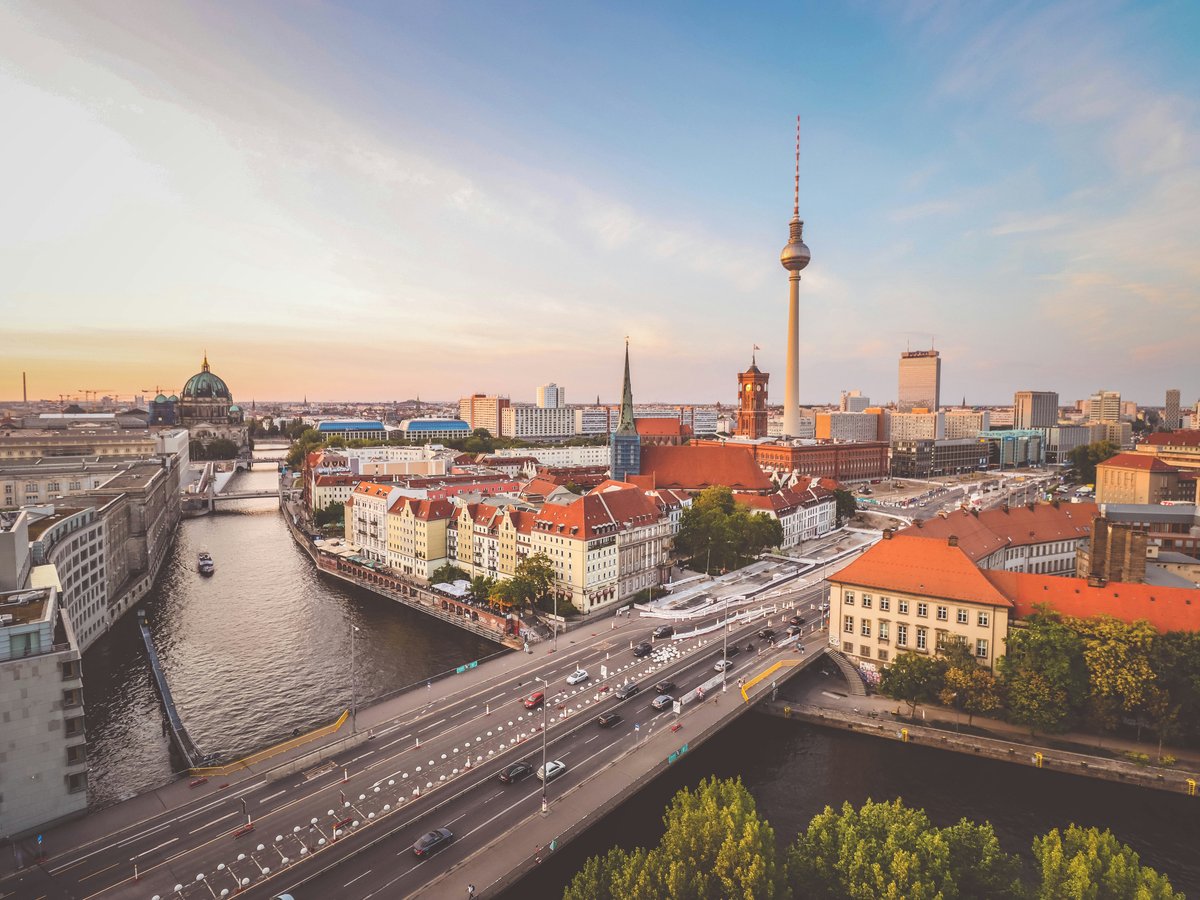
When's the best time to visit Berlin in 2026?
Go in May, June, or September, when Berlin's beer gardens and Spree-side bars are open, highs sit in the high teens to low 20s °C, and June daylight lasts past 21:30. Plan around the Berlin Marathon in late September. First-timers should skip January and February, which are grey, near freezing, and dark by late afternoon.
May is when Berlin wakes up. Highs climb to around 19°C, and the Prater beer garden in Prenzlauer Berg fills with the scrape of wooden benches and the smoke of grilled Bratwurst. White asparagus (Spargel) season runs until 24 June, so menus from Mitte to Kreuzberg list it with hollandaise and boiled potatoes, mild and faintly sweet, a safe first order if German menus make you nervous. By mid-June the sun sets after 21:30, which gives you about three more hours of light on Museum Island than a December visitor gets. The Karneval der Kulturen parade fills Kreuzberg over the Whitsun weekend, in May or June depending on the year. In late June the linden trees along Unter den Linden flower, and the whole avenue smells of honey.
September is our pick if you can choose only one month. Days stay warm in Berlin, the Holzmarkt bars on the Spree keep their sand and deckchairs out, and the August school-holiday queues at the Fernsehturm have gone. The one weekend to dodge is the Berlin Marathon on the last Sunday of September: a Mitte room that costs €150 (about $168) the week before can double that weekend, and the streets around Tiergarten close for the race. October cools to around 13°C, and for roughly ten days early in the month the Festival of Lights projects colour onto Berlin Cathedral and the Brandenburg Gate. Pack a light rain jacket, because the October drizzle tends to blow sideways off the Spree.
July and August are possible, but not the months we'd choose first. Heat waves push Berlin past 30°C, many older hotels in Friedrichshain and Prenzlauer Berg have no air conditioning, and free Reichstag dome slots, which must be booked online, can disappear days in advance. July does bring the Christopher Street Day parade, and Berlin scores 9.5/10 for LGBTQ+ friendliness (sourced from TTDI's editorial rubric). December earns its place as a shoulder month through the Christmas markets at Gendarmenmarkt and outside Charlottenburg Palace, where Glühwein steams in ceramic mugs carrying a €3 to €5 deposit and the air carries the smell of roasted almonds. January and February are the months we tell first-timers to skip: locals call the flat, cold sky Berliner Grau, and darkness falls around 16:30. The Berlinale film festival in February is the one good reason to accept that.
Month-by-month outlook
- Jan Avoid
- Feb Avoid
- Mar
- Apr Shoulder
- May Ideal
- Jun Ideal
- Jul Shoulder
- Aug Shoulder
- Sep Ideal
- Oct Shoulder
- Nov Avoid
- Dec Shoulder
Year-round climate
Averages from the last 5 years.
| Month | Avg high (°C) | Avg low (°C) | Rainfall (mm) |
|---|---|---|---|
| Jan | 5 | 0 | 60 |
| Feb | 6 | 0 | 54 |
| Mar | 11 | 1 | 35 |
| Apr | 14 | 5 | 36 |
| May | 19 | 9 | 52 |
| Jun | 25 | 14 | 57 |
| Jul | 25 | 15 | 92 |
| Aug | 25 | 15 | 60 |
| Sep | 21 | 12 | 37 |
| Oct | 15 | 8 | 54 |
| Nov | 8 | 3 | 55 |
| Dec | 5 | 1 | 57 |
Highs average about 3°C in January and 24°C in July, and about 570 mm of rain falls across the year, spread fairly evenly, with summer thunderstorms. June days last over 16 hours; December daylight drops under 8.
Go deeper into Berlin
Last verified by automated review (v1.7.2) on . What is automated review?