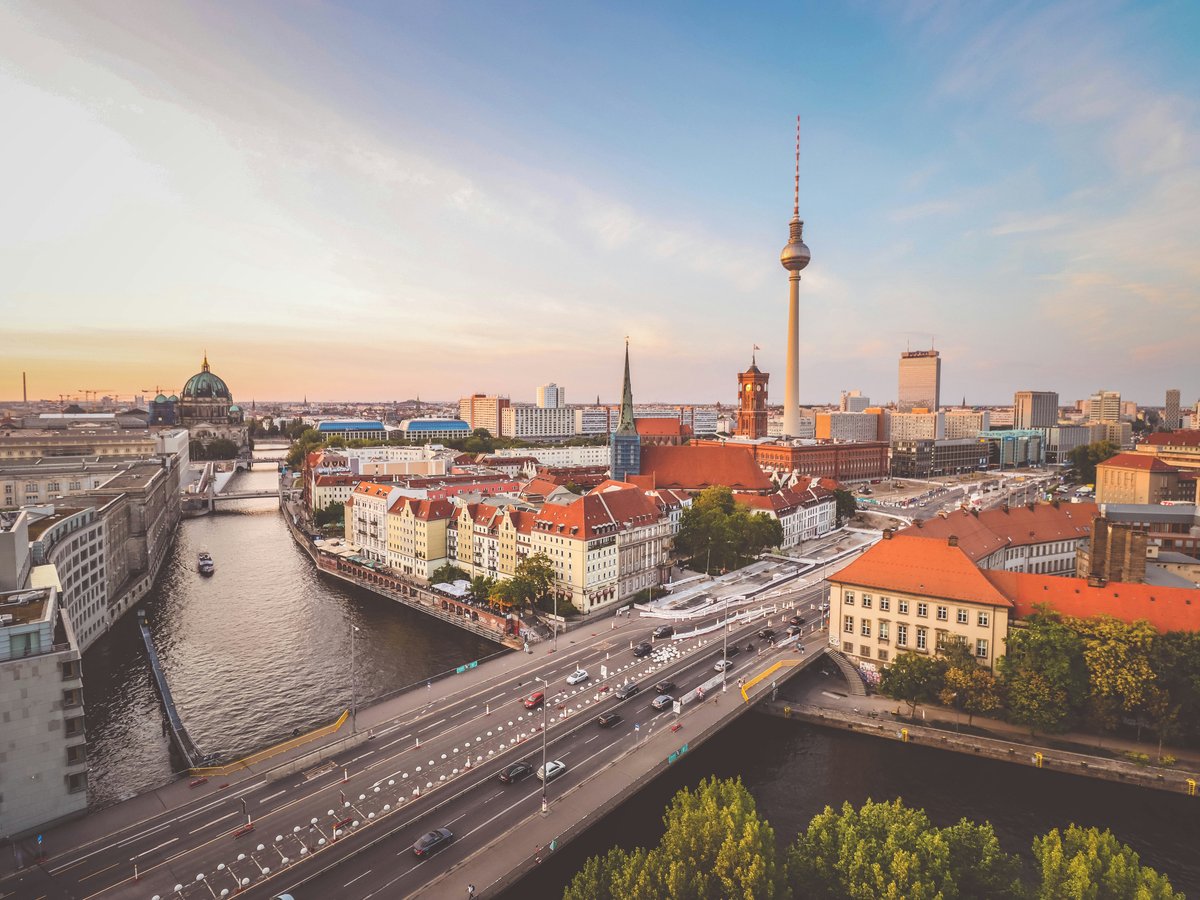
What's the food culture in Berlin?
Berlin's food identity runs through immigrant kitchens more than traditional German cooking. The city's 1,600-plus döner shops set the daily rhythm alongside Vietnamese pho in Lichtenberg, Turkish breakfast spreads in Kreuzberg, and a vegan restaurant density that likely leads Europe. Currywurst remains the street-food constant, but the real eating happens in Neukölln and Wedding, not Mitte.
Berlin eats döner the way New York eats pizza. The city has over 1,600 döner shops, and the Berlin version is specific. Shaved veal or chicken in a warm flatbread pocket with red cabbage, herbs, and three sauces applied in a fixed order. Prices rose from around 3.50 EUR to 7-8 EUR between 2020 and 2025, a shift Berliners still grumble about at the counter. Mustafa's Gemüse Kebap on Mehringdamm in Kreuzberg draws a 30-to-45-minute line for a grilled-vegetable version at 7 EUR. Worth it? Probably, though Rüyam Gemüse Kebab near Hauptbahnhof makes something comparable with almost no wait. Beyond döner, Kreuzberg's Oranienstraße has lahmacun bakeries where the flatbread comes thin enough to see through, rolled tight around parsley and squeezed lemon, 3-4 EUR. Imren Grill on Kottbusser Damm cooks Adana kebab over charcoal, the smoke carrying cumin and Aleppo pepper across the sidewalk, meat ground fresh each morning, served on warm bread with raw onion and sumac for about 10 EUR.
Currywurst goes back to 1949, when Herta Heuwer mixed ketchup with curry powder at her stand on Kantstraße in Charlottenburg. Konnopke's Imbiss has operated under the elevated U2 tracks at Eberswalder Straße in Prenzlauer Berg since 1930, and its version, around 3.80 EUR, leans sweet rather than spicy. Curry 36 at Mehringdamm runs hotter. You eat either one standing at a metal counter with a small wooden fork, fries underneath soaking up red sauce. For older Berlin cooking, Zur Letzten Instanz on Waisenstraße near Alexanderplatz has served meals since 1621. The Eisbein there, boiled and pickled pork knuckle with sauerkraut and mashed peas, runs about 19 EUR and could feed two. Rogacki on Wilmersdorfer Straße in Charlottenburg, a deli counter since 1928, sells smoked eel sliced to order. The flesh peels away in flakes that taste like salt and wood smoke, about 8 EUR per portion. The herring counter next to it moves faster, mostly locals picking up rollmops for the week.
Markthalle Neun in Kreuzberg holds Street Food Thursday each week from 5pm to 10pm, with 30-40 rotating vendors and plates from 4-9 EUR. Quality varies by stall. The permanent weekday market inside the same 1891 hall is the better reason to visit. The cheese counter stocks raw-milk wheels from Brandenburg farms that smell like wet grass and straw. In Lichtenberg, the Dong Xuan Center, a Vietnamese market complex, has a food court where phở bò goes for 6 EUR and the broth tastes like it has been on the stove since 5am, star anise and charred ginger floating in a deep beef stock. Berlin's Vietnamese community traces back to GDR guest-worker programs of the 1980s, and the food in Lichtenberg reflects that history more honestly than any Mitte fusion restaurant. KaDeWe's 6th-floor food hall near Wittenbergplatz is the upscale counterpoint, over 30 food counters and an oyster bar. Expect to spend 25-40 EUR per person there.
Weekend brunch runs from 10am to 2pm across Prenzlauer Berg and Friedrichshain. Most café-restaurants set out a Frühstück platter with bread rolls, cold cuts, cheese, soft-boiled eggs, and Quark, a fresh dairy spread thicker than yogurt, for 9-14 EUR. House of Small Wonder on Johannisstraße near Friedrichstraße does a Japanese-German breakfast with miso soup and dark rye that sounds unlikely but works. Berlin's vegan restaurant count passed 250 by late 2025 according to Happy Cow listings. Kopps in Mitte runs a plant-based tasting menu at around 65 EUR. Vöner near Südstern station sells a vegan döner for 6.50 EUR that splits opinion, but the line at lunch hour suggests the fans are winning. Even Konnopke's now carries a vegan currywurst. Traditional Imbiss stands in Neukölln and Friedrichshain stock at least one plant-based item on the menu board.
Signature dishes
-
Döner Kebab
Berlin's version uses shaved veal or chicken in a warm flatbread pocket with red cabbage, fresh herbs, and three sauces. The city has over 1,600 döner shops, and prices currently sit around 6-8 EUR. Eaten standing at the counter.
-
Currywurst
A sliced pork sausage doused in curry-spiced ketchup, invented in 1949 by Herta Heuwer in Charlottenburg. Served at Imbiss stands with fries underneath, eaten with a small wooden fork. Konnopke's in Prenzlauer Berg has served it since 1930.
-
Eisbein
Boiled and pickled pork knuckle served with sauerkraut and mashed peas. The skin is gelatinous, the meat falls off the bone. Zur Letzten Instanz near Alexanderplatz has plated it since 1621, about 19 EUR.
-
Berliner Pfannkuchen
A deep-fried yeast doughnut filled with plum jam and dusted with powdered sugar. Called Pfannkuchen in Berlin, Berliner everywhere else in Germany. Bakeries sell them year-round for 1.50-2.50 EUR.
-
Boulette
Berlin's meatball, made from pork and beef with soaked bread rolls, onion, and mustard. Denser than a south-German Frikadelle and eaten cold or warm from deli counters. Rogacki on Wilmersdorfer Straße sells them by weight.
-
Senfeier
Hard-boiled eggs in a creamy mustard sauce with boiled potatoes. A Berlin Hausmannskost staple that appears on pub menus across Kreuzberg and Neukölln for around 8-10 EUR.
-
Königsberger Klopse
Veal meatballs in a white caper sauce with boiled potatoes. Named after the former East Prussian capital, now Kaliningrad. A cold-weather fixture on traditional restaurant menus across Berlin, typically 12-15 EUR.
Meal times
Weekday breakfast 7-9am, weekend brunch 10am-2pm. Lunch at 12-1pm. Kaffee und Kuchen around 3-4pm. Dinner from 7pm, restaurants serve until 11pm. Döner and currywurst stands stay open past midnight on weekends.
Tipping
Tip 5-10% at sit-down restaurants by rounding up and stating your total to the server. Cash preferred. Counter-service Imbiss stands do not expect tips.
Dietary notes
Berlin has over 250 vegan-friendly restaurants, likely the highest density in continental Europe. Halal is widely available in Kreuzberg, Neukölln, and Wedding. Gluten-free options are growing in newer restaurants. Kosher dining is limited to a few spots near the synagogues in Mitte and Charlottenburg.
Go deeper into Berlin
Last verified by automated review (v1.7.2) on . What is automated review?