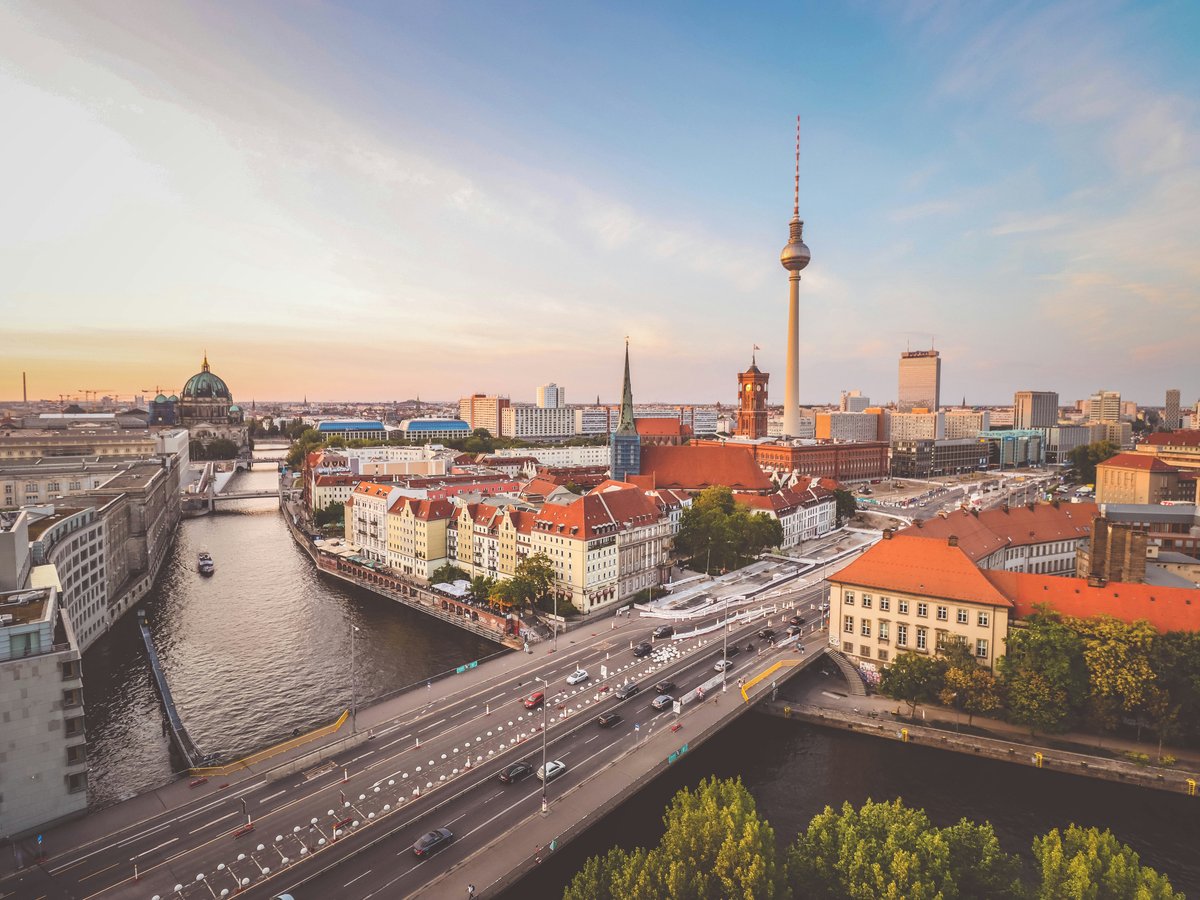
Berlin doesn't have a single center the way Paris or London does. The city grew from two medieval trading towns, Berlin and Cölln, then swallowed dozens of surrounding villages as it expanded outward along the Spree River. You can still feel that polycentric DNA today. Each Kiez, the Berlin word for neighborhood, operates like its own small town with bakeries, bars, a weekly market, and a personality that shifts noticeably every 10 or 15 blocks. The old East-West divide still shapes things, too. Former East Berlin neighborhoods like Mitte, Prenzlauer Berg, and Friedrichshain tend to have wide Soviet-era boulevards and restored Altbau apartment blocks, while western districts like Charlottenburg and Schöneberg kept their postwar West German character. The S-Bahn ring, a roughly circular rail line about 37 kilometers long, is the easiest mental map. Inside the ring is where most visitors spend their time. Outside it, places like Spandau, Köpenick, and Tegel feel more suburban, with lakes and forests within a 20-minute train ride. Getting between neighborhoods is straightforward. The U-Bahn and S-Bahn run until about 12:30 a.m. on weekdays, and all night on Fridays and Saturdays. A single AB-zone ticket costs 3.50 euros and covers everything inside the ring.
Neighborhoods
-
Mitte
Mitte is Berlin's historical and political core, stretching from the Brandenburg Gate east to Alexanderplatz. It feels like a capital city here. Wide limestone sidewalks, government buildings behind glass facades, and clusters of tourists moving between Museum Island's five museums. The northern section around Hackescher Markt still has some of the old courtyard culture. Heckmann Höfe on Oranienburger Strasse is quieter than the famous Hackesche Höfe and worth ducking into. South of Unter den Linden, the streets get emptier and more monumental. The neighborhood has changed rapidly since reunification in 1990, and rents in Mitte now sit around 18 to 22 euros per square meter, pricing out most of the galleries and studios that defined it in the early 2000s.
- Best for
- First-time visitors, history buffs, museum-goers, and anyone who wants to walk to the Reichstag, Checkpoint Charlie, and the Memorial to the Murdered Jews of Europe without transferring trains
- Key streets
- Unter den Linden runs the full east-west axis from the Brandenburg Gate to the Berliner Dom. Friedrichstrasse crosses it and has the department stores. Auguststrasse, north of the main drag, still has a few independent galleries between the coffee shops. Rosenthaler Platz is where Mitte starts blending into Prenzlauer Berg.
-
Kreuzberg
Kreuzberg has two distinct halves, and locals still use the old postal codes to tell them apart. SO36, the eastern section near the canal, is the louder, grittier half. Turkish grocery stores line Oranienstrasse, Kottbusser Tor smells like döner and spilled beer at most hours, and the buildings still carry decades of street art. The western half, SW61 around Bergmannstrasse, is noticeably calmer. Tree-lined blocks, independent bookshops, and a Saturday flea market at Marheinekeplatz. Kreuzberg sits south of the Spree and shares a long border with Mitte and Friedrichshain across the Oberbaumbrücke. The area has deep roots in the Turkish community that arrived as Gastarbeiter in the 1960s and 1970s, and that influence still shapes the food scene more than anything else.
- Best for
- Travelers in their 20s and 30s who want street food, late-night bars, canal-side walks, and a neighborhood that doesn't feel sanitized for tourists
- Key streets
- Oranienstrasse is the main artery through SO36, loud and crowded on weekend nights. Adalbert strasse runs perpendicular and has a few of the older Turkish restaurants. Bergmannstrasse in the western half has brunch spots and vintage shops. The Paul-Lincke-Ufer along the Landwehr Canal is where people sit on the stone embankment with beer from the Spätkauf on warm evenings.
-
Friedrichshain
Friedrichshain sits east of the Spree, directly across from Kreuzberg. It still has a scrappy, late-night energy that the neighborhoods further west have largely lost. Karl-Marx-Allee, the 90-meter-wide boulevard lined with Stalinist wedding-cake apartment blocks, anchors the northern edge. The buildings were constructed between 1952 and 1960 as a socialist showcase, and they look it. South of there, the streets around Simon-Dach-Strasse and Boxhagener Platz fill up with bar-hoppers after 10 p.m. on weekends. The neighborhood is also where you'll find the East Side Gallery, a 1.3-kilometer stretch of the Berlin Wall along Mühlenstrasse, though it tends to feel more like a tourist corridor than a neighborhood attraction. RAW-Gelände, a former rail repair yard on Revaler Strasse, houses clubs, a climbing wall, a skate park, and a Sunday flea market.
- Best for
- Nightlife-focused visitors, budget travelers, and anyone who doesn't mind a neighborhood that's louder and rougher around the edges than Prenzlauer Berg
- Key streets
- Simon-Dach-Strasse is the main bar strip, packed on Friday and Saturday nights. Boxhagener Platz hosts a Saturday flea market and a Sunday food market. Warschauer Strasse is the transit hub, with both U-Bahn and S-Bahn connections. Karl-Marx-Allee is worth walking for the architecture alone, especially the stretch between Strausberger Platz and Frankfurter Tor.
-
Prenzlauer Berg
Prenzlauer Berg went through one of the most dramatic demographic shifts in modern European urban history. In 1990 it was a crumbling East Berlin district full of squatters, artists, and coal-heated apartments. By 2010 it had become Berlin's stroller capital. The renovation wave restored block after block of late-19th-century Wilhelmine apartment buildings, and the neighborhood now has some of the most intact Gründerzeit architecture in Germany. Kastanienallee runs north from the U-Bahn station at Eberswalder Strasse, lined with small boutiques and cafes. The pace here is slower than Kreuzberg or Friedrichshain. Weekend mornings at Kollwitzplatz feel almost village-like, with an organic farmers' market on Saturdays and families filling the playgrounds. It's quiet after 11 p.m. on most nights.
- Best for
- Couples, families with young children, and visitors who prefer a quieter base with good restaurants and easy U2 line access to Mitte in under 10 minutes
- Key streets
- Kastanienallee from Eberswalder Strasse south toward Rosenthaler Platz is the main strolling street. Kollwitzplatz is the neighborhood's living room, ringed by restaurants. Schönhauser Allee runs north-south with the elevated U2 tracks overhead, a defining visual. Helmholtzplatz is a smaller, slightly less polished square with a good bar or two.
-
Neukölln
Neukölln might be the most rapidly changing neighborhood in Berlin right now. The northern strip along Sonnenallee and Karl-Marx-Strasse is dense, noisy, and heavily Middle Eastern and Turkish. Arabic bakeries, shisha bars, and halal butchers line the main roads. Walk south past the Schillerkiez area near Tempelhofer Feld, the former Tempelhof Airport that closed in 2008 and reopened as a 380-hectare public park, and the feel shifts to something more residential and slightly hip. Weserstrasse, a few blocks east of Hermannplatz, has become the bar and small-gallery corridor over the past decade. Rents have been climbing, from around 6 euros per square meter in 2010 to 14 or 15 euros now, pushing some of the earlier wave of artists further south toward Britz.
- Best for
- Adventurous eaters, travelers who want to see a neighborhood in transition, and anyone interested in Berlin's immigrant food cultures. Not ideal for families with small children or visitors wanting a quiet base.
- Key streets
- Sonnenallee from Hermannplatz south is the main commercial strip, sometimes called Arab Street informally. Weserstrasse runs parallel a few blocks east and has the cafe and bar scene. Schillerpromenade faces Tempelhofer Feld and is one of the nicer residential streets. Karl-Marx-Strasse is the transit and shopping artery, anchored by the Neukölln Arcaden mall at its northern end.
-
Charlottenburg
Charlottenburg feels like a different city from Kreuzberg or Neukölln. This is old West Berlin, the side that had the department stores, the opera, and the wide shopping boulevards while the East had the wall. The Kurfürstendamm, still called Ku'damm by everyone, stretches 3.5 kilometers west from the ruined Kaiser Wilhelm Memorial Church. The side streets off Ku'damm are quieter, with Jugendstil apartment buildings from the early 1900s and a few remaining old-Berlin Kneipen. The area around Savignyplatz has bookshops, wine bars, and restaurants that have been open for 20 or 30 years. Charlottenburg Palace and its gardens sit at the neighborhood's northern edge. The pace here is unhurried and noticeably older than the eastern districts.
- Best for
- Visitors over 40, architecture lovers, classical music fans near the Deutsche Oper, and anyone who prefers a quieter, more established neighborhood over the late-night eastern districts
- Key streets
- Kurfürstendamm is the main boulevard, with KaDeWe department store at its eastern end on Tauentzienstrasse. Savignyplatz is the square for sit-down dining and bookshops. Kantstrasse runs parallel to Ku'damm one block north and has Berlin's best concentration of East Asian restaurants, particularly around the Kantstrasse 30 to 40 stretch. Schlossstrasse leads up to Charlottenburg Palace.
-
Schöneberg
Schöneberg is where West Berlin's liberal, countercultural energy took root. The neighborhood was the center of gay life in Berlin from the Weimar era onward, and Nollendorfplatz still has a cluster of gay bars and clubs, though the scene has spread citywide. David Bowie lived at Hauptstrasse 155 from 1976 to 1978. Winterfeldtplatz hosts one of Berlin's best Saturday markets, with cheese vendors, flower stalls, and a strong brunch crowd at the surrounding cafes. The architecture is a mix of Wilhelmine-era buildings and some postwar infill. It tends to attract a slightly older, professional crowd than neighboring Kreuzberg, but the two neighborhoods share a border along Yorckstrasse and bleed into each other.
- Best for
- LGBTQ+ travelers, foodies who prefer sit-down restaurants to street food, and visitors who want a central but residential base. Nollendorfplatz U-Bahn connects to U1, U2, U3, and U4 lines.
- Key streets
- Nollendorfplatz and Motzstrasse for the bar and nightlife scene. Winterfeldtplatz is the market and cafe hub. Goltzstrasse has several good independent restaurants. Hauptstrasse runs south and is more residential, with the Bowie apartment marked by a small plaque.
-
Wedding
Wedding sits north of Mitte, still inside the S-Bahn ring but largely ignored by tourists. It was a working-class district in West Berlin and still feels that way. The streets are wider, the buildings plainer, and the rents lower, currently around 10 to 12 euros per square meter compared to Mitte's 18-plus. Leopoldplatz is the commercial center, with discount shops and a busy street market on Tuesdays and Fridays. The neighborhood has been attracting artists and small galleries priced out of Mitte and Kreuzberg. The Uferhallen complex on Uferstrasse, a former bus depot, now holds studio spaces. Panke river runs through the neighborhood, and the green corridor along it makes for a surprisingly quiet walk. Wedding still feels like the Berlin that most of the other neighborhoods used to be 15 years ago.
- Best for
- Budget-conscious travelers, repeat visitors who already know the central neighborhoods, and anyone curious about Berlin's working-class immigrant districts without the Neukölln hype
- Key streets
- Müllerstrasse is the main commercial street, running north from the U6 station at Wedding. Leopoldplatz is the transit hub and market square. Gerichtstrasse has a few newer cafes and bars opening up. Uferstrasse along the old industrial canal has the Uferhallen and a couple of studios worth visiting on open-door weekends.
FAQ
Which Berlin neighborhood is best for a first-time visitor?
Mitte makes the most practical base for a first visit. The Brandenburg Gate, Museum Island, the Reichstag, and Checkpoint Charlie are all within walking distance. The U6 and S-Bahn hub at Friedrichstrasse station connects to every major neighborhood in under 20 minutes. Hotel prices in Mitte tend to run 100 to 180 euros per night for a mid-range room, which is higher than Friedrichshain or Neukölln but saves time on transit. If you want something slightly less touristic while still being central, Prenzlauer Berg is one U2 stop north and noticeably quieter after dark.
Is it easy to get between Berlin's neighborhoods without a car?
Berlin's public transit is extensive and runs frequently. The U-Bahn has 10 lines and 175 stations. The S-Bahn ring connects the inner-city neighborhoods in a roughly 60-minute loop. A day pass for zones A and B costs 9.50 euros and covers unlimited rides on U-Bahn, S-Bahn, trams, and buses. Most neighborhoods mentioned in this guide are 15 to 25 minutes apart by train. Cycling is also practical. Berlin is flat, has over 1,000 kilometers of bike lanes, and bike rental runs about 12 euros per day from shops or around 1 euro per ride through Nextbike or Lime.
Where should I stay in Berlin for nightlife?
Friedrichshain and Kreuzberg's SO36 area are the two main nightlife districts. Friedrichshain has RAW-Gelände and several clubs along Revaler Strasse. Kreuzberg's Kottbusser Tor area stays loud until 4 or 5 a.m. on weekends. Worth noting, Berlin's clubs famously don't get going until 1 a.m. or later, and many stay open through Sunday afternoon. Berghain, Berlin's most well-known techno club, sits at the Friedrichshain-Kreuzberg border on Am Wriezener Bahnhof. There's no guest list. You wait in line, sometimes 2 hours or more, and the bouncers decide at the door. Staying in either neighborhood puts you within walking distance of most venues.
Is Neukölln safe for tourists to stay in?
Northern Neukölln around Hermannplatz and Sonnenallee can feel rough, especially late at night. It's not dangerous in the way some American cities can be, but petty theft and loud street activity are more common here than in Prenzlauer Berg or Charlottenburg. The Schillerkiez area south of Hermannstrasse is calmer and borders Tempelhofer Feld. Neukölln accommodation tends to run 50 to 90 euros per night, noticeably cheaper than Mitte. If you're comfortable in a neighborhood that's gritty and still changing, it's fine. If you prefer quieter evenings, Schöneberg or Prenzlauer Berg might suit you better.
How different do the former East and West Berlin neighborhoods still feel?
More different than you might expect for a city that reunified over 35 years ago. The architecture is the biggest tell. Former East neighborhoods like Friedrichshain and parts of Mitte still have the wide Stalinist boulevards and Plattenbau prefab housing blocks alongside the restored older buildings. Former West districts like Charlottenburg and Schöneberg have a more continuous pre-war and 1950s-era built fabric. The cultural differences are subtler now but still present. Eastern neighborhoods tend to skew younger and more nightlife-oriented. Western neighborhoods tend to have more established restaurant scenes and older residents. The economic gap has narrowed significantly since the 1990s, but average rents in Mitte reached 22 euros per square meter in 2024 while Wedding, also in former West Berlin, stayed around 11 euros.
Last verified by automated review (v1.7.2) on . What is automated review?