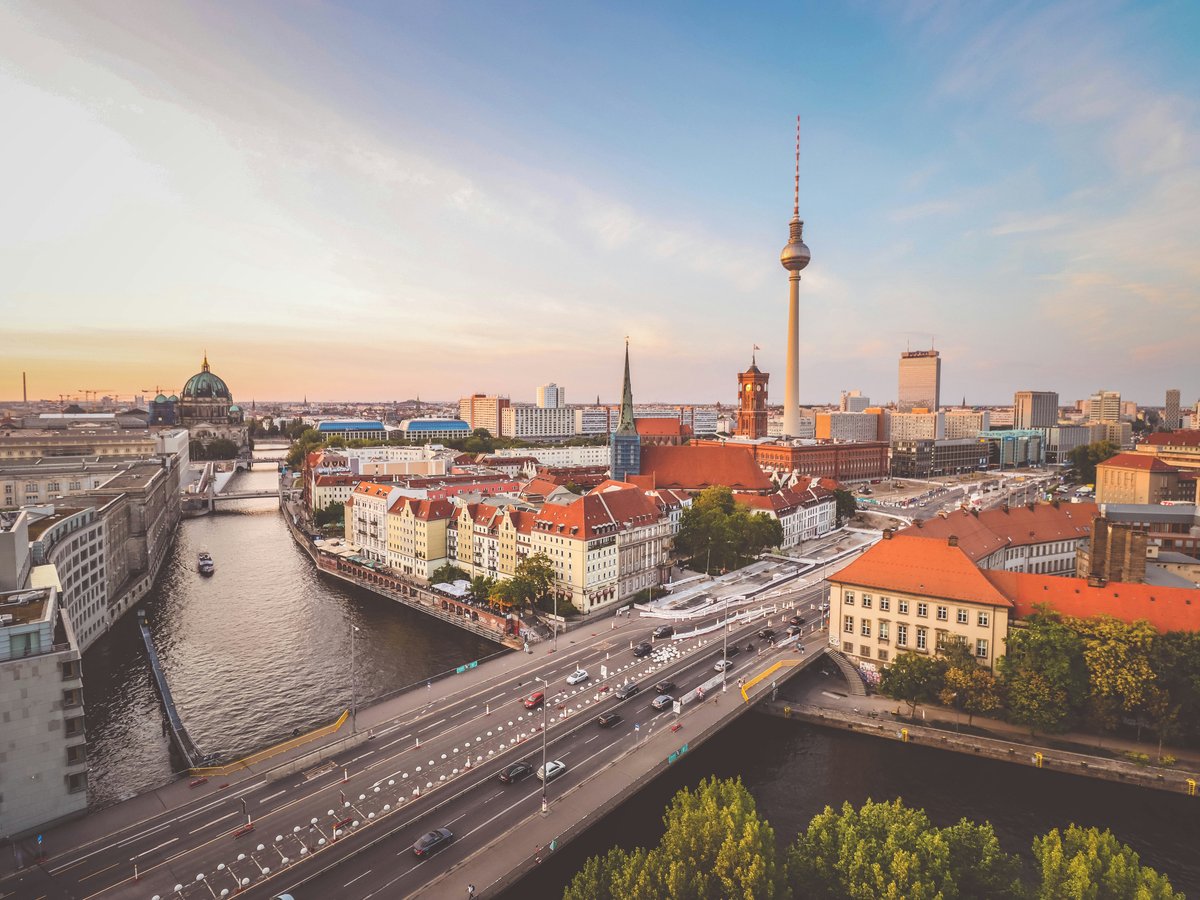
Berlin's nightlife runs on its own clock. The city has operated as a kind of open laboratory for after-dark culture since reunification in 1990, and the results are still unfolding. Most Berliners don't head out for dinner before 9 PM, and the serious clubbing crowd might not leave the house until 1 or 2 AM on a Saturday. Sunday morning is prime time at many of the city's techno institutions. The whole thing tends to feel less like a night out and more like a loosely scheduled marathon, with Spätis (the city's ubiquitous late-night corner kiosks) serving as pit stops between destinations. Berlin still has no official closing time for bars and clubs, a holdover from the deregulation that shaped West Berlin's Cold War-era nightlife. That lack of a curfew defines the rhythm here. You won't feel rushed.
The Bar Scene, from Corner Kiosks to Cocktail Dens
Berlin's drinking culture sits closer to the casual end of the spectrum. The Späti is the foundation. These small shops number around 1,000 across the city, most open until well past midnight, and Berliners treat them as default gathering points. You'll find groups of 4 or 5 people sitting on crates outside a Späti on Weserstraße in Neukölln on any warm evening, a 0.5-liter Berliner Pilsner going for around 1.50 to 2 euros. It smells like cigarette smoke and cheap lager. That's the baseline. The cocktail scene has grown considerably since the mid-2010s, particularly around Mitte and the northern edges of Kreuzberg. Bars in this tier tend to charge 12 to 16 euros per drink, which still feels modest compared to London or New York pricing. The mood runs darker and quieter than you might expect. Dim lighting, exposed brick, the clink of ice in heavy glassware. Many don't take reservations and keep their signage minimal. Dive bars are everywhere, and they're genuinely rough in a way that cities like Copenhagen or Amsterdam can't quite replicate. Kreuzberg around Kottbusser Tor has a dense cluster. Sticky floors, mismatched furniture, 3-euro beers drawn from a limited tap selection. Some of these places have been open since the 1980s. Rooftop bars exist, though they're less central to Berlin's identity. A few hotels in Mitte and Charlottenburg offer terrace drinking with views over the Spree or the Tiergarten, but the city's bar culture lives at street level and below it. Wine bars have multiplied in Prenzlauer Berg and parts of Neukölln over the past 5 or 6 years, serving mostly natural and biodynamic bottles from German, Austrian, and French producers. Expect to pay 6 to 10 euros a glass. The crowd skews a bit older, late 20s to 40s, and the pace is slower.
Clubbing in Berlin, the Main Event
Techno built Berlin's global nightlife reputation, and the genre still dominates. The city's club culture grew out of the abandoned warehouses and bunkers left behind after the Wall fell in 1989. That raw, industrial DNA remains. Berghain, housed in a former power plant near Ostbahnhof, is the one everyone has heard of. Its door policy is famously unpredictable. There is no dress code in the conventional sense, but bouncers select based on what might be called attitude and intent. Flashy clothes, large groups, phones held out for selfies. Those tend to count against you. Dark, minimal clothing seems to help. The wait can stretch past 2 hours on a Saturday night, and rejection is common. Worth noting that the club runs continuously from Friday midnight through Monday morning. Beyond Berghain, the techno ecosystem is wide. Tresor occupies a former department store's underground vault near Leipziger Straße, and the low ceilings and cage-like architecture give it a claustrophobic intensity. The bass hits your chest before you hear it properly. Watergate sits right on the Spree in Kreuzberg, with a terrace that catches the sunrise over the river. That golden light at 6 AM, reflected off the water, with a DJ still going. Hard to forget. Cover charges vary. Expect 10 to 20 euros at most mid-size to large clubs on a weekend night. Some smaller venues charge 5 to 8 euros or nothing at all on weekdays. Card payment at the door is still inconsistent. Bring cash, specifically euros in small denominations. Dress codes are minimal across most of Berlin's clubs. Black is the default palette in the techno world, and comfort matters more than fashion. Sneakers are fine almost everywhere. The KitKatClub, known for its fetish-friendly nights, does enforce a themed dress code at the door, and you'll be turned away in regular street clothes on those evenings. Peak hours shift late. Most clubs feel empty before 1 AM. The real energy tends to build around 2 to 3 AM and can hold until well past noon the next day. Sunday afternoon sessions are a Berlin institution. The crowd on a Sunday at 4 PM in a warehouse club off Revaler Straße is a mix of people who never went home and people who woke up and decided to start fresh.
Live Music, Beyond the Turntables
Berlin has a deep live scene that often gets overshadowed by the club reputation. SO36 in Kreuzberg has been running punk and indie shows since 1978 and still books 4 to 5 nights a week. The room holds maybe 400 people and the sound bounces hard off the tiled walls. Lido, also in Kreuzberg near Schlesisches Tor, handles a broader range, from hip-hop to post-punk to experimental electronic acts, in a converted cinema that seats around 600. Jazz has a quiet but persistent presence. The A-Trane in Charlottenburg has hosted international acts since 1992, with shows starting around 9 PM on most nights. Seats fill up by 8:30 on Fridays. Across the city, Neukölln's smaller bars sometimes run free jazz sessions on weekday evenings, though these are the kind of thing you find by word of mouth rather than listings. For classical and experimental crossover, Radialsystem near the Ostbahnhof programs performances that blend live scoring, dance, and installation art, often running Thursday through Saturday. The space is a converted 19th-century pumping station on the Spree, and the acoustics inside carry a warmth that newer venues struggle to match. Berlin's local music identity currently leans toward a few threads. The techno lineage is obvious, but there's a growing lo-fi and bedroom-pop scene rooted in Neukölln and Wedding, plus a hip-hop community that has been building momentum since the early 2000s. Monday and Tuesday nights are generally quiet across the city. Wednesday through Saturday is where the bookings concentrate. If you're looking for something on a Sunday, a few venues in Friedrichshain run matinee-style afternoon sets.
Nightlife neighborhoods
-
Kreuzberg
Kreuzberg splits roughly into two zones. The area around Kottbusser Tor feels gritty and dense, with Turkish grocery shops open late and the smell of döner and shisha smoke mixing in the air. The southern half near Bergmannstraße trends quieter and more residential after dark. The Oranienstraße corridor is the main nightlife artery, and it gets loud on weekends.
- Best for
- Bar-hoppers and punk or indie fans, especially Thursday through Saturday nights
- Standouts
- SO36 for punk and live shows, numerous dive bars along Oranienstraße, cocktail spots near Moritzplatz
-
Friedrichshain
The RAW-Gelände compound off Revaler Straße is a former train repair yard turned nightlife campus. Graffiti-covered buildings house multiple clubs, bars, and a skatepark. The area around Simon-Dach-Straße can feel touristy, with bar after bar offering 3-euro happy-hour cocktails, but move a few blocks east and things get rougher and more interesting. You'll hear techno leaking from warehouse walls at 3 AM.
- Best for
- Club nights from Friday through Sunday, especially for those who want options within walking distance of each other
- Standouts
- Multiple club and bar venues within the RAW-Gelände complex, Berghain is technically on the Friedrichshain-Kreuzberg border near Ostbahnhof
-
Neukölln
Neukölln's nightlife has shifted noticeably over the past decade. Weserstraße remains the main drinking corridor, lined with small bars that each hold 30 to 50 people. The crowd is international, and you'll hear German, English, Turkish, Arabic, and Spanish within a single block. The neighborhood still smells like warm flatbread from the bakeries that stay open past midnight. Things run later here than in Mitte but earlier than Friedrichshain's club circuit.
- Best for
- Casual weeknight drinking, wine bars, and the lo-fi music scene
- Standouts
- Small bars along Weserstraße and Sonnenallee, occasional pop-up DJ nights in converted storefronts
-
Mitte
The historic center has higher-end cocktail bars concentrated around Torstraße and Rosenthaler Platz. The architecture is grand, the lighting in most bars is deliberately low, and the prices climb 20 to 30 percent above the Kreuzberg average. It's quieter than the eastern districts and tends to wind down by 2 AM. Mind you, there are exceptions. A few basement bars keep going.
- Best for
- Date nights, cocktail enthusiasts, visitors staying in central hotels
- Standouts
- Cocktail bars near Torstraße, hotel rooftop terraces with Spree views
-
Schöneberg
Berlin's historically queer neighborhood still carries that identity, though gentrification has blurred the edges. The area around Nollendorfplatz has been the center of LGBTQ+ nightlife since the Weimar era in the 1920s. You'll find a mix of leather bars, drag venues, and low-key pubs, some of which have barely changed their interiors in decades. The mood is warmer and more communal than the techno circuit.
- Best for
- LGBTQ+ nightlife, quieter pub crawls, anyone who prefers conversation to bass
- Standouts
- Cluster of LGBTQ+ bars and clubs around Nollendorfplatz and Motzstraße
-
Wedding
Wedding is still emerging as a nightlife destination, and that's part of the appeal. A few warehouse-style event spaces have opened in former industrial buildings along Gerichtstraße and Panke. Rents remain lower than Neukölln, which means smaller operators can experiment. The crowd tends to be local and art-school adjacent. You might walk into a bar and find a noise-music set happening in the back room with 15 people watching. It smells like old carpet and fresh Augustiner from the tap.
- Best for
- Those looking for something off the established circuit, weeknight events, and experimental music
- Standouts
- Small gallery-bars and project spaces along Gerichtstraße, the Panke riverside area
Safety after dark
Berlin is generally a safe city for going out at night, but a few things are worth being aware of. The U-Bahn and S-Bahn run all night on weekends (Friday and Saturday), with trains roughly every 15 minutes between midnight and 5 AM. On weeknights, night buses replace the U-Bahn, and routes are posted at each stop. Taxis are reliable and metered. The base fare is around 3.90 euros with roughly 2 euros per kilometer after that. Ride-hailing apps like Bolt and FreeNow work across the city.
Pickpocketing happens most frequently on crowded trains and at tourist-heavy spots in Mitte, less so in the club and bar districts. Keep your phone in a front pocket. Drink spiking, while not common, does occur. Don't leave your glass unattended, and if something feels off, tell the bar staff. Most Berlin venues have awareness teams or trained security, and many clubs post the number for a safety contact near the entrance.
The area around Kottbusser Tor can feel edgy late at night, with open drug use visible. It's not typically dangerous, but stay aware of your surroundings. Alexanderplatz sees occasional late-night confrontations. In general, Berlin's nightlife districts are busy enough that you're rarely isolated. Trust your instincts. If a situation feels wrong, walk toward a Späti or a busier street.
Practical tips
- Cash
- Many Berlin bars and smaller clubs still operate cash-only, or accept cards only above a 10-euro minimum. ATMs are common, but withdrawal fees from non-German banks can run 3 to 5 euros. Bring enough cash for the night, especially if you plan to hit multiple venues.
- Tipping
- Tipping at bars is standard but modest. Most Berliners round up to the nearest euro or add 1 euro per drink. A 10-percent tip at a sit-down cocktail bar is considered generous. At clubs, there's often a 1-euro tip jar at the bar. Coat check, where it exists, is typically 1 to 2 euros.
- Cover charges
- Door fees at Berlin clubs typically range from 5 euros on a quiet weeknight to 20 euros at larger venues on Saturday nights. Some clubs charge more for special events or guest DJ sets. The door price is almost always cash-only. A few bars charge a small cover on weekends, usually 3 to 5 euros.
- Phone etiquette in clubs
- Berlin's club culture has a strong no-photography norm, especially in the techno scene. Many clubs place stickers over your phone camera at the door. Taking photos or filming inside is considered a serious breach of etiquette and can get you removed by security. Leave the phone in your pocket.
- Getting in
- Arrive in small groups of 2 to 4 people. Large groups, especially all-male groups, face more scrutiny at the door. Speaking German helps at some venues, though English is widely understood. Don't argue with bouncers. If you're turned away, move on. Queuing for 90 minutes and then being rejected is a real possibility at the bigger clubs.
- Sunday sessions
- Sunday clubbing is a genuine Berlin tradition, not a novelty. Some clubs open fresh on Sunday afternoon, while others are continuations of Saturday-night events that haven't stopped. If you're arriving Sunday around noon or 1 PM, the crowd inside has likely been there for hours. The energy tends to be looser and friendlier than peak Saturday-night intensity.
FAQ
What time should I go out clubbing in Berlin?
Most clubs feel sparse before 1 AM, even on Saturdays. The typical window is 2 AM to 6 AM for peak energy. If you arrive at midnight, expect to be among the first on the floor. Sunday mornings from around 8 AM to early afternoon are also popular at venues that run continuous weekend sessions. Bars tend to fill up between 10 PM and midnight.
Is Berlin nightlife expensive compared to other European capitals?
Berlin remains one of the more affordable nightlife cities in Western Europe. A beer at a Späti costs 1.50 to 2.50 euros, a cocktail at a mid-range bar runs 10 to 14 euros, and club entry is typically 10 to 20 euros. Compare that to London, where a cocktail might cost 14 to 18 pounds and club entry can reach 25 to 30 pounds. That said, prices in Berlin have been rising steadily since around 2019.
Do I need to speak German to get into Berlin clubs?
English is widely spoken across Berlin's nightlife scene, and you won't be refused entry for speaking English at most venues. That said, at a few of the more exclusive techno clubs, addressing the bouncer in German (even a simple greeting) can help set a tone. The door selection at places like Berghain is less about language and more about demeanor and group size.
What should I wear to go out in Berlin?
Berlin's nightlife dress code trends heavily toward dark, comfortable, understated clothing. Black jeans, dark t-shirts, and sneakers are the uniform in most techno clubs. Avoid anything flashy, branded, or formal. Collared shirts and dress shoes might work in Mitte cocktail bars but will look out of place in Friedrichshain or Kreuzberg. The KitKatClub enforces specific fetish or themed dress codes on certain nights.
Is Berlin safe for solo nightlife?
Berlin is generally considered safe for solo nightlife, and it's common to see people out alone, especially in the club scene. The public transit system runs all night on weekends, which helps. Stay aware around Kottbusser Tor and Alexanderplatz late at night, keep your belongings secure on trains, and don't leave drinks unattended. Most established venues have awareness teams you can approach if you feel uncomfortable.
Are Berlin clubs really open all weekend without stopping?
Some of them, yes. Berghain's weekend marathon from Friday night into Monday morning is the most well-known example, but several other venues in Friedrichshain and Kreuzberg run continuous 24-to-48-hour events. The crowd rotates as people leave and new arrivals come in. By Sunday afternoon, the atmosphere shifts noticeably. It's looser, more communal, and the dancing tends to be less intense.
Last verified by automated review (v1.7.2) on . What is automated review?