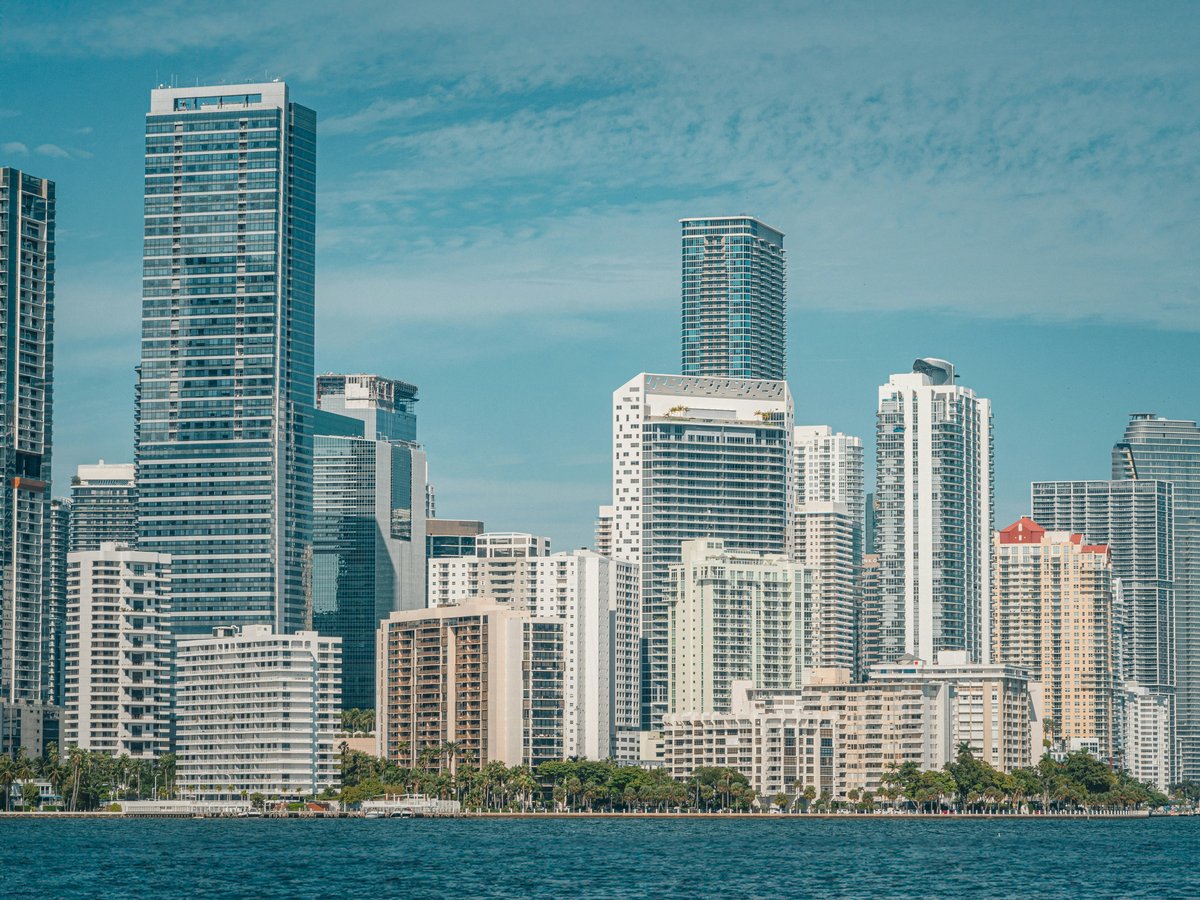
January is the driest month of the year in Miami, and everyone seems to know it. Average highs sit around 23.9°C (75°F), lows settle near 16.8°C (62°F), and the suffocating humidity of summer drops to a manageable 73%. The rainfall total of 59mm is the lowest you'll see on the calendar. That combination of mild, dry weather turns Miami into a magnet for half the Eastern Seaboard. Snowbirds from New York, New Jersey, and Quebec have already moved into their seasonal rentals in Sunny Isles Beach and Aventura by New Year's Day, and the hotels along Collins Avenue in South Beach run close to full capacity through the month.
The trade-off is real, though. This is peak season, and Miami prices itself accordingly. Hotel rooms in South Beach can run roughly double their September rates in January. Restaurant waits in Brickell and Wynwood tend to stretch past an hour on Friday and Saturday nights without a reservation. You'll feel the density on Lincoln Road, at Bayfront Park, and on the sand south of 5th Street. Mind you, the crowds aren't suffocating the way a July subway car in Manhattan is. They're spread across a metro area that runs 50 km (31 miles) north to south.
That said, January earns its premium. The air carries a dry, almost crisp quality that South Florida loses completely by May. You can walk the Art Deco Historic District for 2 hours without overheating. Evenings in Coconut Grove feel genuinely cool. Art Deco Weekend takes over Ocean Drive and the surrounding blocks in mid-January, drawing around 100,000 visitors across 3 days. The Miami Marathon closes out the month with 25,000 runners crossing the MacArthur Causeway at sunrise. If you can absorb the cost, this is likely the single best month to be here.
Why visit in January
- The driest month of the year at 59mm of rainfall across roughly 10 days, most of it in brief afternoon showers that clear within 20 minutes
- Daytime temperatures of 24°C (75°F) are comfortable for walking tours, cycling, and outdoor dining without the oppressive heat and humidity of June through September
- Dry season concentrates Everglades wildlife around shrinking water sources, making January one of the 2 best months for spotting alligators, wading birds, and manatees
- The cultural calendar peaks with Art Deco Weekend, the Miami Marathon, and gallery openings in Wynwood and the Design District
- No hurricane risk. The Atlantic hurricane season ended November 30, and January sits at the opposite end of the calendar from the August-October peak
Worth knowing
- Peak-season hotel rates run 40-60% above Miami's annual average, with South Beach properties commanding the steepest premiums in the metro area
- Crowds concentrate heavily along South Beach, Lincoln Road, and Wynwood, especially on weekends when day-trippers from Fort Lauderdale and Boca Raton add to the tourist population
- Atlantic water temperature hovers around 23°C (73°F), which feels brisk compared to the 29°C (84°F) of August. Swimmers who dislike cool water will notice the difference
- Cold fronts push through once or twice during the month, occasionally dropping nighttime lows to 10°C (50°F) or below for 1-2 nights. Visitors who packed only shorts and tank tops get caught off guard
Best for
Think twice if
January delivers Miami's most comfortable weather. Daytime highs average 23.9°C (75°F) under mostly clear skies, with lows around 16.8°C (62°F) that make evenings feel genuinely pleasant. Humidity sits at 73%, noticeably drier than the 80%+ of summer. Rainfall totals roughly 59mm spread across about 10 days, typically as short afternoon showers that pass within 15-20 minutes. The trade winds keep the air moving. Worth noting, the occasional cold front from the north can drop temperatures sharply for a day or two, sometimes bringing lows into the low teens or even single digits Celsius. These fronts pass quickly but catch underprepared visitors off guard.
Seasonal caution
- Cold fronts pass through Miami 1-2 times in January, occasionally pulling nighttime lows to 10°C (50°F) or below for 24-48 hours. These fronts arrive with little warning and can feel genuinely cold in a city with minimal indoor heating.
- UV index reaches 6-7 in January despite the comfortable air temperatures. The low winter sun angle directs rays into your face rather than down on your scalp, making sunburn on the cheeks, nose, and forehead common among visitors who skip sunscreen because it feels like winter.
Year-round climate
Averages from the last 5 years.
| Month | Avg high (°C) | Avg low (°C) | Rainfall (mm) |
|---|---|---|---|
| Jan | 24 | 17 | 59 |
| Feb | 25 | 19 | 65 |
| Mar | 27 | 20 | 89 |
| Apr | 27 | 21 | 87 |
| May | 30 | 23 | 109 |
| Jun | 30 | 24 | 279 |
| Jul | 31 | 26 | 127 |
| Aug | 32 | 26 | 150 |
| Sep | 30 | 25 | 232 |
| Oct | 29 | 23 | 133 |
| Nov | 27 | 21 | 118 |
| Dec | 25 | 19 | 118 |
Holidays and festivals in January
Public holidays
- New Year's Day(New Year's Day)1 January 2027
- Martin Luther King, Jr. Day(Martin Luther King, Jr. Day)18 January 2027
Headline events
Art Deco Weekend
Third weekend of January (Friday through Sunday)
The largest Art Deco festival in the world takes over Ocean Drive and the surrounding blocks of the Art Deco Historic District in South Beach. Around 100,000 visitors attend across 3 days for guided architecture tours, live music on outdoor stages, vintage car displays, a street fair with local vendors, and lectures on preservation. The event celebrates the roughly 800 Art Deco, Streamline Moderne, and Mediterranean Revival buildings in the district, most built between 1923 and 1943. It is free to attend.
Best things to do in January
Walking tour of the Art Deco Historic District
cultureThe Miami Design Preservation League runs daily guided tours from the Art Deco Museum Welcome Center at 1001 Ocean Drive in South Beach. The 90-minute walk covers roughly 2 km through the district's 800+ buildings, most dating from 1923 to 1943. The pastel facades, porthole windows, and neon signage look sharpest in the low-angle January light. Tours run at 10:30 AM.
January's dry air and 24°C highs make the 90-minute outdoor walk comfortable. During summer, the same route in 33°C heat and 85% humidity cuts most groups short.Booking tipThe morning tour fills up on weekends during Art Deco Weekend. Book through the MDPL website at least 3 days ahead for that particular weekend.
Airboat tour of the Everglades
natureDry season shrinks the water table across the 6,100 km² Everglades ecosystem, concentrating alligators, wading birds, anhingas, and the occasional Florida panther track around the remaining pools. Airboat operators along Tamiami Trail (US-41) west of Miami run 45-minute to 1-hour tours through the sawgrass. The noise is tremendous. Ear protection is provided.
January's low water levels concentrate wildlife into visible clusters along the remaining channels. By June, the wet season floods the prairie and disperses animals across millions of acres.Booking tipMorning departures between 8 and 9 AM tend to catch the most active wildlife. The afternoon heat, even in January, sends alligators deeper into cover.
Snorkeling at Biscayne National Park
natureBiscayne National Park protects 700 km² of water, reef, and mangrove coastline south of Key Biscayne. The park's snorkeling trips depart from the Dante Fascell Visitor Center at Convoy Point and run about 3 hours round-trip. January water visibility typically reaches 15-20 meters on calm days. You'll likely see parrotfish, sergeant majors, sea fans, and elkhorn coral.
Winter's drier conditions and reduced runoff from the mainland improve underwater visibility. Summer storms churn sediment and cut visibility to 5-8 meters on many days.Booking tipThe park concessioner runs trips on weekends only in January. Reserve through the National Park Service website at least a week ahead, as boats cap at around 20 passengers.
Cycling the Rickenbacker Causeway
outdoorThe 10 km ride from Brickell across the Rickenbacker Causeway to Key Biscayne climbs a long, gentle bridge with open views of Biscayne Bay, the downtown skyline to the north, and Stiltsville's wooden houses standing on pilings in the shallows to the south. The return descent toward Virginia Key picks up speed. Citi Bike stations sit at both ends.
January's low humidity and manageable 24°C highs make the exposed, shadeless causeway ride comfortable. In July's 34°C heat, the same ride can feel punishing by the halfway point.Booking tipStart before 9 AM on weekends to avoid sharing the narrow bike lane with heavy beach traffic heading to Crandon Park.
Kayaking through the Oleta River mangroves
outdoorOleta River State Park in North Miami Beach covers 680 hectares and sits at the mouth of the Oleta River where it meets Biscayne Bay. Kayak rentals are available inside the park. The marked mangrove trail winds through tunnels of red mangrove roots where the water is shallow, quiet, and green-filtered. You might spot manatees in the warmer channels near the bay mouth.
Manatees move into the warmer shallow waters near the bay during January's cooler periods. The dry weather also means fewer mosquitoes along the mangrove channels compared to summer months.Booking tipWeekend mornings fill the kayak rental fleet quickly. Arriving by 9 AM on Saturdays helps secure a boat without a wait.
Browsing the Coconut Grove Farmers Market
foodThe Saturday morning market runs in the parking area near Peacock Park in Coconut Grove. Vendors sell tropical fruit from Homestead farms, including mamey sapote, starfruit, and dragon fruit. Local bakers bring sourdough and guava pastries. The market typically runs from 10 AM to around 5 PM.
January hits the peak of Florida's tropical fruit harvest for several species. The comfortable weather also makes the open-air market pleasant instead of the sweltering experience it becomes by June.Visiting Vizcaya Museum and Gardens
cultureThe 1916 Italian Renaissance-style villa on Biscayne Bay in Coconut Grove sits on 11 hectares of formal gardens, native woodland, and waterfront. The 34 furnished rooms display European antiques from the 15th through 19th centuries. The outdoor gardens face east across the bay, and the morning light in January hits the stone barge breakwater at a low angle that photographers tend to favor.
January's mild temperatures make the extensive outdoor gardens comfortable for the 1-2 hours most visitors spend walking them. Summer visits in 34°C heat and full sun tend to cut garden time short.Booking tipVizcaya closes on Tuesdays. Wednesday and Thursday mornings see the lightest crowds.
Exploring Wynwood Walls and galleries
cultureThe open-air street art museum at NW 2nd Avenue between 25th and 26th Streets in Wynwood displays large-scale murals by artists from over 15 countries. The surrounding blocks hold dozens of galleries that rotate exhibitions monthly. January sees a wave of new installations following Art Basel Miami Beach in December. The paint smell in some galleries is still fresh.
The post-Art Basel January period brings new gallery openings and mural commissions. Many artists who came for Basel in December stay through January to finish commissioned walls.What to eat in January
In season: fruit
Florida strawberries
Plant City, about 4.5 hours north in Hillsborough County, ships its peak strawberry harvest in January. You'll find them at the Robert Is Here fruit stand in the Redland agricultural district south of Miami, and at farmers markets in Coconut Grove and Pinecrest. They tend to be smaller than California berries but noticeably sweeter.
Kumquats
Florida kumquat season peaks in January. The tiny oval citrus fruits appear at produce stands across Miami-Dade, often sold by the pint. You eat them whole, skin and all. The rind is sweet, the juice tart, and the combination makes them a sharp, bright snack between meals.
On menus now
Florida stone crab claws
Stone crab season runs from October 15 through May 15, and January lands in the peak harvest window. Joe's Stone Crab on Washington Avenue in South Beach has served them with mustard sauce since 1913, though the wait for a table during peak season can stretch past 2 hours. The claws arrive pre-cooked and chilled, cracked at the table with a wooden mallet. The meat is sweet, dense, and faintly briny.
Street food peaks
Conch fritters
Conch appears on menus year-round in Miami, but January's tourist influx means the seafood shacks along the waterfront in Key Biscayne and the restaurants in Bayside Marketplace go through high volume. The fritters come deep-fried with a peppery batter, typically served with a Key lime dipping sauce. The texture inside is chewy and faintly oceanic.
What to drink
Cafecito
Miami's signature Cuban espresso is a year-round staple, but January's cooler mornings make the hot, sweet shot feel particularly good. Ventanitas (walk-up windows) at bakeries along Calle Ocho in Little Havana pull shots of the dark, sugar-whipped coffee for under a couple of dollars. The crema on top is thick enough to hold its shape for a few seconds.
Regular events in January
Miami Marathon and Half Marathon
Around 25,000 runners follow a course that crosses the MacArthur Causeway, passes through Coconut Grove, and finishes at Bayfront Park downtown. The flat course and January's cool morning temperatures, typically around 17°C at the 6 AM start, make it one of the faster winter marathons in the United States.
Late January (last Sunday)Coconut Grove Arts Festival preparationFree
While the festival itself falls in mid-February, January sees the Grove's Peacock Park area begin setup. Local galleries along Main Highway in the Grove run pre-festival exhibitions and opening receptions throughout the second half of January.
Second half of JanuaryThree Kings Day (Día de los Reyes)Free
Little Havana celebrates January 6 with a parade along Calle Ocho (SW 8th Street) that draws families from across Miami-Dade County. The procession includes floats, live music, and children receiving small gifts. Cuban bakeries along the route sell rosca de reyes, a ring-shaped sweet bread.
January 6Best places this January
Everglades National Park
natureThe 6,100 km² wetland ecosystem is at its most wildlife-accessible in January. The Anhinga Trail at Royal Palm, about 65 km southwest of downtown Miami, offers boardwalk-level views of alligators, anhingas drying their wings, and great blue herons hunting in the shallow pools. The Shark Valley tram tour runs 24 km into the park's interior.
HomesteadArt Deco Historic District
cultureThe roughly 800 buildings between 5th Street and 23rd Street along Ocean Drive, Collins Avenue, and Washington Avenue form the densest concentration of 1920s-1940s architecture in the United States. The pastel paint schemes and neon signage look best in January's clear, low-angled light. The district was listed on the National Register of Historic Places in 1979.
South BeachVizcaya Museum and Gardens
cultureJames Deering's 1916 waterfront estate at 3251 South Miami Avenue features 34 rooms of European decorative arts and 4 hectares of formal Italianate gardens overlooking Biscayne Bay. The carved stone barge breakwater sits in the bay below the main terrace.
Coconut GroveFairchild Tropical Botanic Garden
natureThe 34-hectare garden in Coral Gables holds one of the world's largest collections of tropical palms and cycads, with over 3,400 species. January's dry weather coincides with flowering in several tropical species. The Wings of the Tropics butterfly conservatory houses hundreds of free-flying butterflies in a climate-controlled glass house.
Coral GablesLittle Havana and Calle Ocho
cultureThe stretch of SW 8th Street between 12th and 17th Avenues is the cultural center of Miami's Cuban-American community. Domino Park (Máximo Gómez Park) at 15th Avenue draws daily crowds of older men playing dominoes. The ventanitas at nearby bakeries serve cafecito and pastelitos filled with guava and cheese.
Little HavanaBill Baggs Cape Florida State Park
natureThe park occupies the southern tip of Key Biscayne and includes the 1825 Cape Florida Lighthouse, one of the oldest structures in South Florida. The beach on the Atlantic side is less crowded than South Beach and tends to have clearer water. The lighthouse offers guided tours to the top on Thursday and Friday mornings.
Key BiscaynePérez Art Museum Miami (PAMM)
cultureThe waterfront museum at 1103 Biscayne Boulevard in the Museum Park district opened in 2013 in a Herzog and de Meuron building. The permanent collection focuses on 20th and 21st century art from the Americas, with a concentration on Caribbean and Latin American artists. The hanging gardens on the exterior terraces overlook Biscayne Bay.
Downtown
Your packing checklist
Tick items off as you pack. Your progress saves in this browser.
All packed — have a great trip.
Insider tips
The southernmost stretch of South Beach below 5th Street, locally called SoFi, is noticeably quieter than the blocks between 8th and 14th Streets. The sand is the same, the water is the same, and the towel density drops by about half.
For stone crab without the wait at the famous spots, try the fishmonger counters in the Epicure market on Alton Road or at the fish markets in the Redland district south of the city. You can buy claws by the pound and crack them at home or at a park bench.
The free trolley system covers Brickell, Downtown, Wynwood, Midtown, and Coconut Grove. The routes connect most of the neighborhoods tourists want to visit, and they run every 15-20 minutes. The Biscayne trolley connects to the Brightline station for trips up to Fort Lauderdale.
Sunset at Bayfront Park faces west across the bay toward the Brickell skyline. The view from the amphitheater steps at the south end of the park catches the light on the glass towers. It tends to draw a smaller crowd than the South Pointe Park pier.
The Deering Estate at Cutler, about 30 minutes south of downtown, covers 180 hectares and gets a fraction of Vizcaya's visitors. The property includes a 1920s Mediterranean Revival house, native pine rockland habitat, and a Tequesta burial mound dating back roughly 1,500 years.
Avoid these mistakes
- Packing only warm-weather clothing. At least 1-2 cold fronts will push through in January, and Miami's buildings generally lack heating. Visitors in shorts and flip-flops at 10°C have limited options besides buying a sweatshirt at a tourist shop on Ocean Drive.
- Skipping sunscreen because the air feels cool. The UV index at Miami's latitude (25.7°N) stays high enough in January to burn unprotected skin in about 30 minutes of direct exposure.
- Trying to visit South Beach, Wynwood, Little Havana, and the Everglades in a single day. These areas are spread across 50+ km of the metro. Pick 2 per day and budget 30-45 minutes of driving between them, longer during the 4-7 PM rush on I-95 and US-1.
- Not making restaurant reservations for weekend dinners. Peak-season Friday and Saturday nights in Brickell, Wynwood, and South Beach can mean 60-90 minute waits at popular spots without a booking.
- Assuming the Everglades are a quick side trip. The main entrances at Shark Valley (off Tamiami Trail) and the Ernest Coe Visitor Center (via Florida City) are each 60-75 minutes from South Beach without traffic. Budget a full half-day minimum.
Practical tips for January
Book accommodations well in advance for January, as peak-season demand fills the most popular areas weeks ahead. Rental cars are similarly competitive, so reserve early if you plan to visit the Everglades or venture beyond the Metrorail and trolley network. Carry a light layer everywhere, even on warm days, because air conditioning runs hard in restaurants, malls, and museums across Miami-Dade. The Metromover, a free elevated train, connects Downtown, Brickell, and Omni/Edgewater and runs every 90 seconds during peak hours. For beach days, arrive before 10 AM to secure parking at public lots near South Beach and Key Biscayne. January's dry air and breeze can be deceptive, so drink water consistently and reapply sunscreen every 2 hours.
FAQ
Is January a good time to swim in the ocean in Miami?
The Atlantic sits at about 23°C (73°F) in January. That feels cool when you first wade in, but most people adjust after a few minutes. It's noticeably different from the bathwater-warm 29°C of August. If you tend to avoid anything below pool temperature, you might find it brisk. The beaches are still full of swimmers, though.
How crowded is Miami in January compared to other months?
January is one of the 3 busiest months, alongside February and March. South Beach, Lincoln Road, and Wynwood see the heaviest foot traffic. That said, neighborhoods like Coral Gables, Little Havana, and Key Biscayne still feel manageable even on peak weekends. The crowds thin noticeably once you move away from the main tourist strips.
Do I need a car to get around Miami in January?
It depends on your plans. The free Metromover, Metrorail, and trolley system connect Downtown, Brickell, Wynwood, Coconut Grove, and Coral Gables reasonably well. For the Everglades, Key Biscayne, or the Redland agricultural district, you'll need a car or a ride service. South Beach itself is walkable within a 2 km radius of Lincoln Road.
What should I wear in Miami in January?
Shorts, a T-shirt, and sandals handle most daytime hours at 24°C. Bring a light fleece or long-sleeve layer for evenings when temperatures drop toward 17°C, and keep one warmer jacket for the 1-2 cold fronts that might push lows to 10°C. Restaurants in Brickell and the Design District tend to enforce a smart-casual dress code for dinner.
Is it worth visiting the Everglades in January?
January is arguably the best month for it. The dry season shrinks the water table and concentrates alligators, wading birds, and other wildlife around the remaining pools. You'll see far more animals along the Anhinga Trail in January than during the flooded summer months when they disperse across millions of acres. Budget a full half-day from Miami.
Things to Do in Miami in January
 Free cancellation
 Speedboat Sightseeing Adventure of Miami
Day trip: 45 minutes, free cancellation.
via Viator Free cancellation
 Everglades Small-Group Tour from Miami with Transportation
Day trip: free cancellation.
via Viator Free cancellation
 Miami Biscayne Bay rich and famous Sightseeing Boat Tour
Day trip: 1.3 hours, free cancellation.
via Viator Free cancellation
 Everglades Airboat, Wildlife Exhibit, & Roundtrip Bus from Miami
Day trip: 5 hours, free cancellation.
via Viator Free cancellation
 Private Miami Boat Charter: Sightseeing, Sunset & Sandbar
Outdoor experience: free cancellation.
via Viator Free cancellation
 Miami Millionaires Sightseeing Cruise
Day trip: 1.5 hours, free cancellation.
via ViatorFind a flight to Miami
Live fares to Miami appear here once cookies are accepted.
Last verified by automated review (v1.7.2) on . What is automated review?